Key takeaways
- Automated SEO software now falls into four groups: classic suites adding AI tracking, content optimizers, autonomous agents, and AI visibility platforms. Few cover all of them.
- Automation depth matters more than feature count. A tool that only reports a problem saves you less time than one that drafts, publishes, and re-checks the fix.
- ChatGPT's citations lean heavily toward product pages (22.4%) and landing pages (16.8%), per Promptwatch Data. Automation that only churns out blog posts misses most of what AI cites.
- Check that a tool tracks real AI interfaces and ties AI traffic to crawler logs or analytics. Without that, you are guessing.
- Vendor-written rankings, including several in the research for this guide, are biased toward their authors. Trial two or three tools before committing.
What 'automated SEO software' means in 2026
The phrase covers a lot of ground. A rank tracker that emails you a report is automated. So is an agent that finds a content gap, writes the article, and pushes it to WordPress. These are very different products.
The second thing changed in the last two years: Google rankings are no longer the only outcome. People ask ChatGPT, Gemini, and Perplexity for recommendations, and those answers cite a handful of pages. If your SEO software cannot tell you whether you are among them, it is covering half the job.
So the useful question when shopping is not "does it have AI features?" Almost everything does now. It is "which steps of the SEO cycle does it run without me, and does that include AI search?"
The six steps worth automating
Frase published a useful framing in its AI SEO agents ranking: research, strategy, write, audit, monitor, fix. Frase ranks itself first in that piece, so take the scoring with salt, but the six-stage lens is a good checklist for any tool.
For AI search specifically, I would adjust it slightly:
- Find the prompts and topics AI answers in your category.
- See which pages and sources get cited, yours and competitors'.
- Check whether AI crawlers can actually read your site.
- Create or refresh content to close the gaps.
- Publish it without copy-pasting between five tabs.
- Measure whether it got crawled, cited, and clicked.
Most tools do two or three of these well. That is fine if you know which ones you are buying.
What AI search actually rewards
Before picking software, it helps to know what the automation should be producing. Promptwatch Data's ChatGPT citation share by content type report (Sep 28 to Oct 4, 2026) breaks down what ChatGPT cited:
- Product pages: 22.4%
- Landing pages: 16.8%
- Listicles: 13.6%
- How-to guides: 8.7%
- Documentation: 7.5%
- Comparisons: 5.9%
- News: 5.7%
For commercial prompts like "best CRM for small businesses", product pages jump to 26.0% and landing pages to 20.6%. Reviews matter more for branded prompts, at 5.6%, more than triple their overall share.
The takeaway is a little uncomfortable for content-mill automation. About 39% of citations go to pages describing what a company sells. A tool that publishes 30 blog posts a month while your product pages stay thin is optimizing the wrong thing.
Content also ages differently by type. In Promptwatch Data's content half-life study, landing pages and docs stayed cited longest while news lost half its pages within about 36 days. Automation that refreshes content on a schedule earns its keep here.
Crawlability is the boring part that decides everything
AI can't cite what it can't read. Promptwatch's AI crawler traffic report shows OpenAI at 79.8% of verified AI crawler requests in the week of Aug 31 to Sep 6, 2026, down from 94.8% in early June, with Anthropic, Google, Perplexity, and Mistral taking the rest. Their advice is simple: check robots.txt, CDN, and WAF rules for every provider, then compare your logs to that mix. If a provider is big in the report and near zero in your logs, you are probably blocked.
That is a task for software, because nobody reads server logs by hand every week.
The four kinds of tools
1. Traditional SEO suites with AI tracking added
Semrush, Ahrefs, Moz, SE Ranking, and seoClarity started from keywords and backlinks and have added AI visibility modules. They are the safest buy if your team already lives in one of them and you want one login.
Semrush and its unified Semrush One bundle are the obvious examples.
SE Ranking pairs a classic toolkit with an AI visibility add-on, and Ahrefs offers Brand Radar for AI mentions.
The trade-off: AI tracking tends to be a bolt-on with fixed prompt sets and less depth. You will see mentions, but rarely crawler logs or AI traffic attribution.
2. Content optimizers
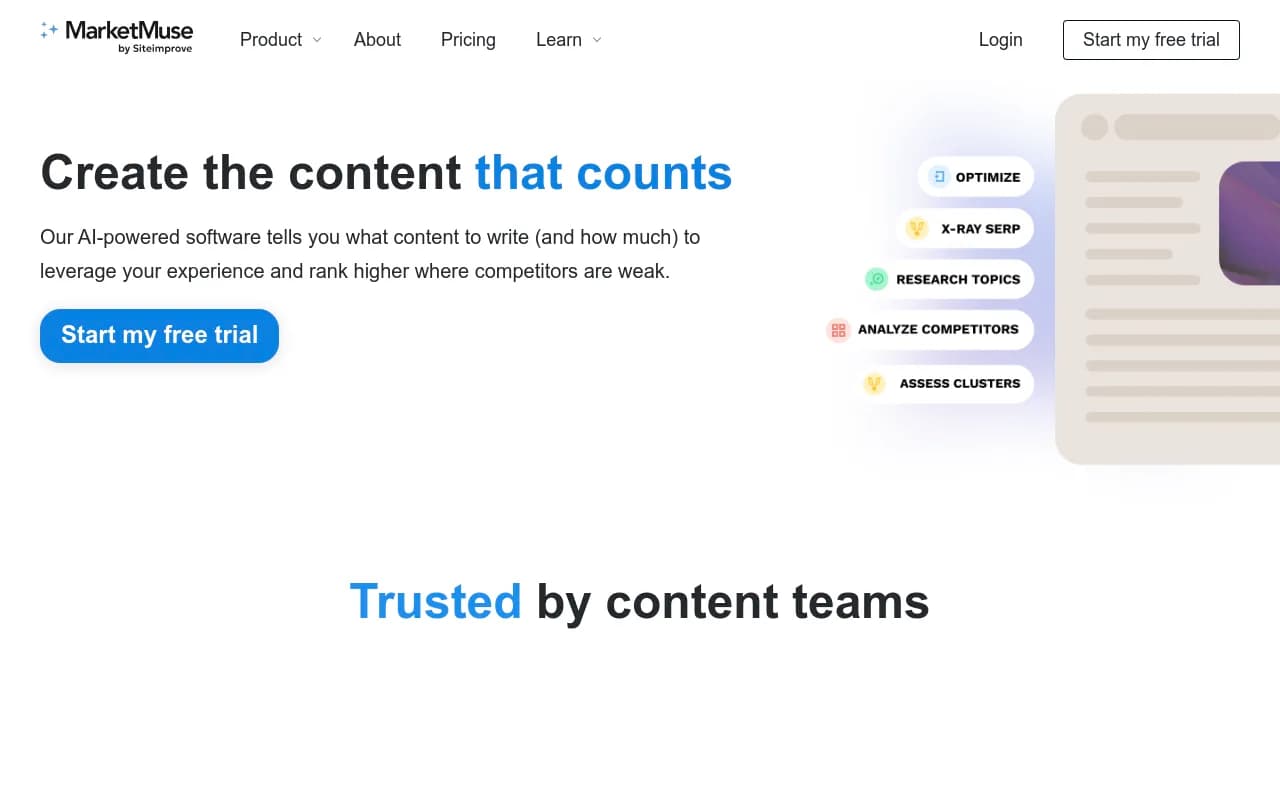
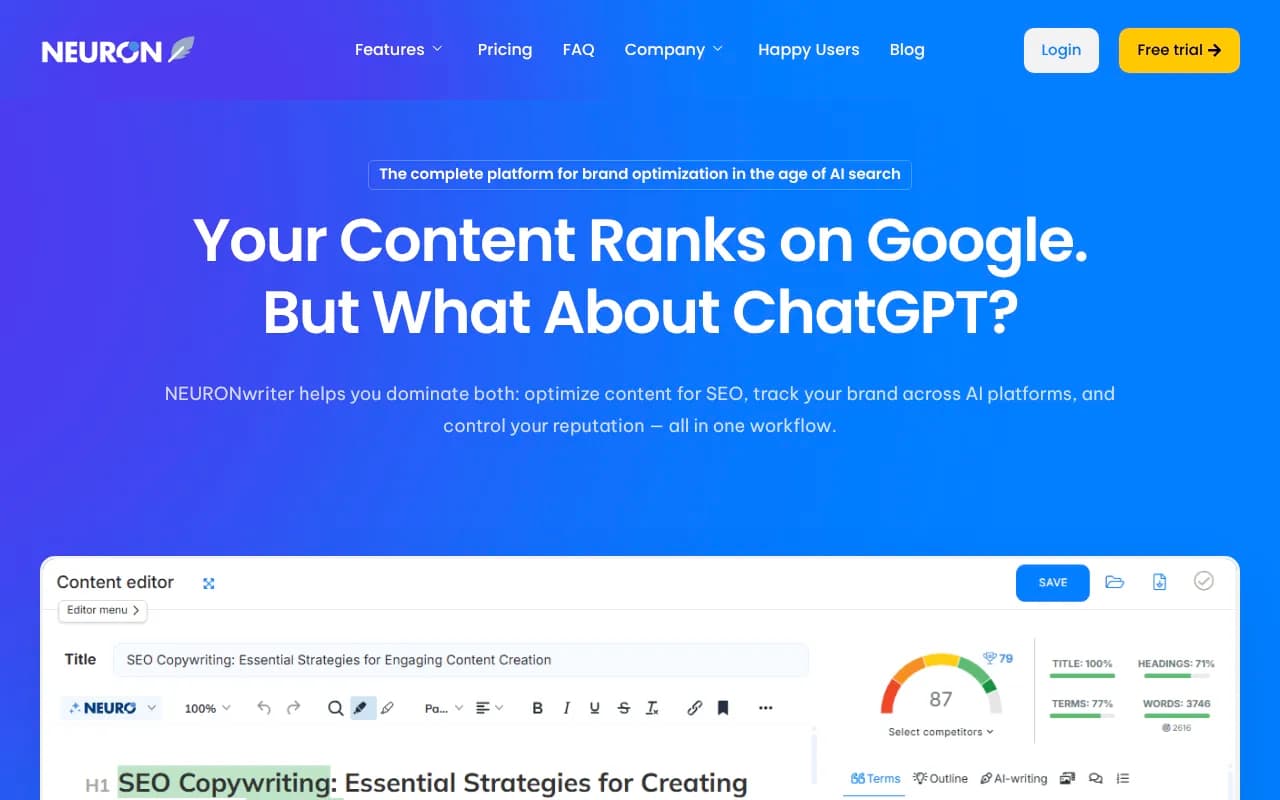
Surfer SEO, Clearscope, MarketMuse, NeuronWriter, and Frase score your drafts against what ranks. Several now advertise AI citation features.

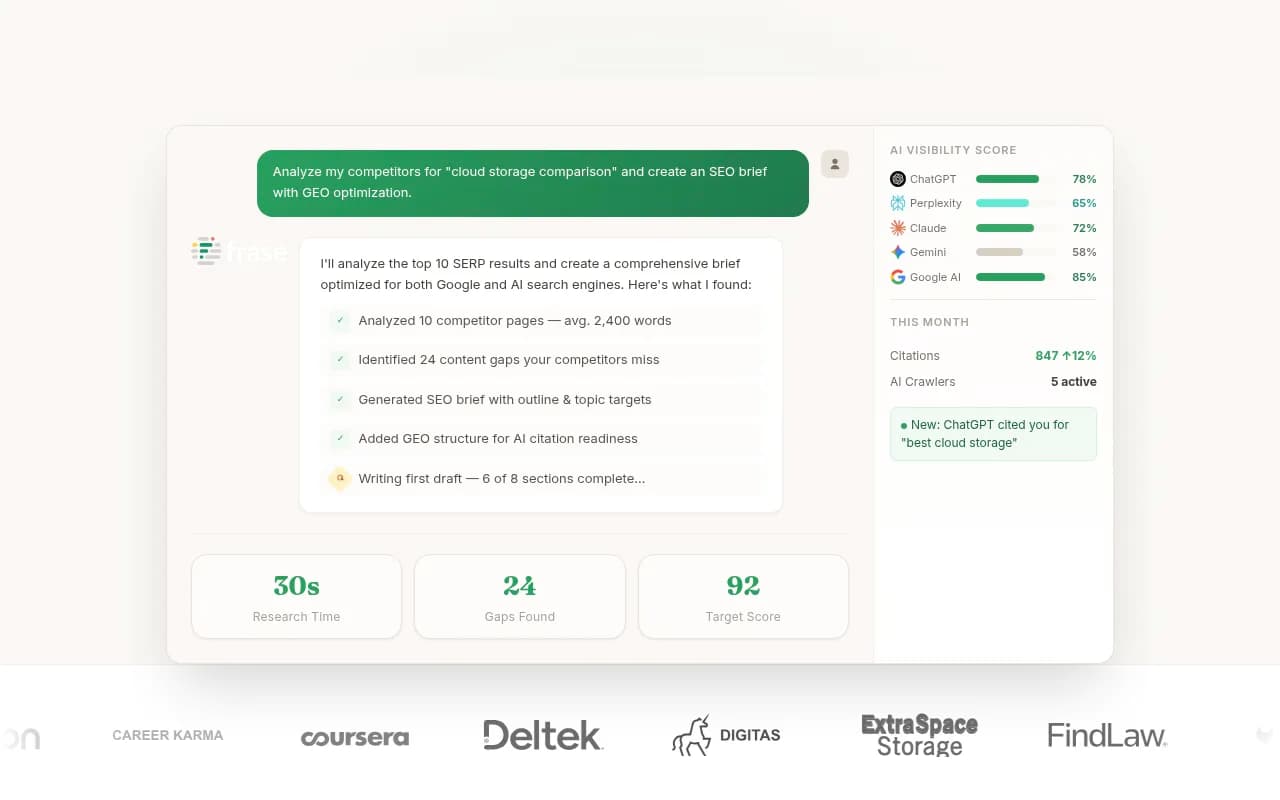
Frase leans hardest into the agent idea, combining research, writing, and an AI visibility tracker. These tools are strongest at on-page work. They are weaker at telling you why a page isn't cited, because they don't see crawler behavior.
3. Autonomous SEO agents
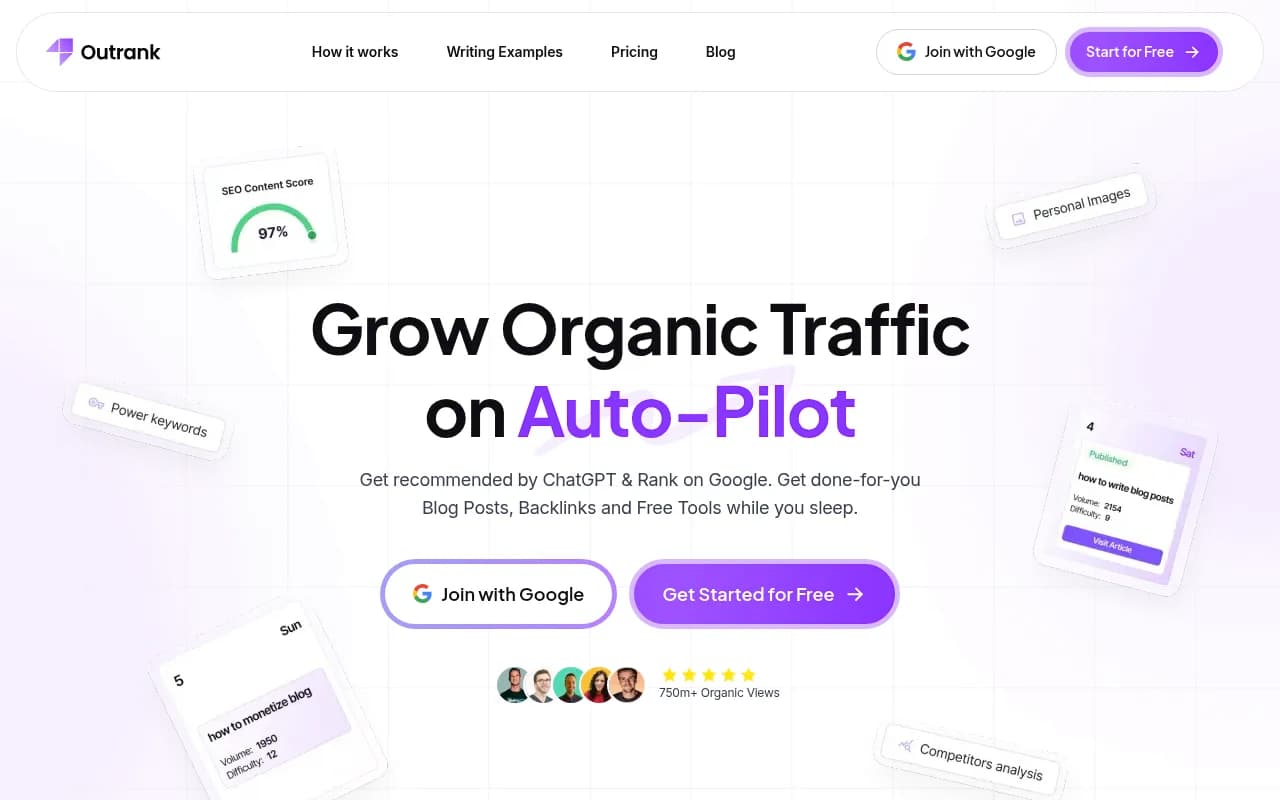
This is the fastest-growing group. These tools claim to run on autopilot: find opportunities, write, publish, and sometimes ship technical fixes.
- Outrank automates content and backlinks.
- Seology ships fixes as pull requests.
- Alli AI pushes on-page changes at scale.
- Relixir bundles an AI-native CMS with autonomous content.
- Roki and Blogged publish SEO and GEO content on autopilot.

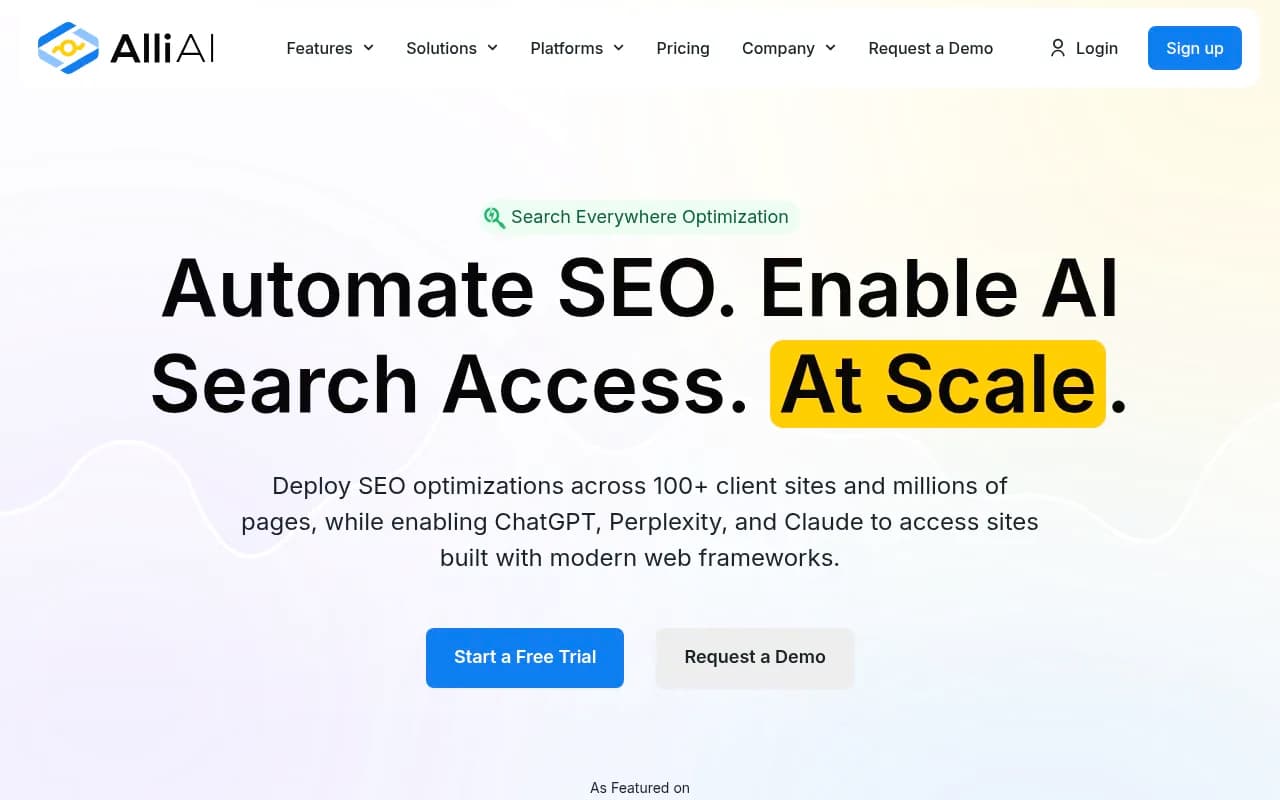
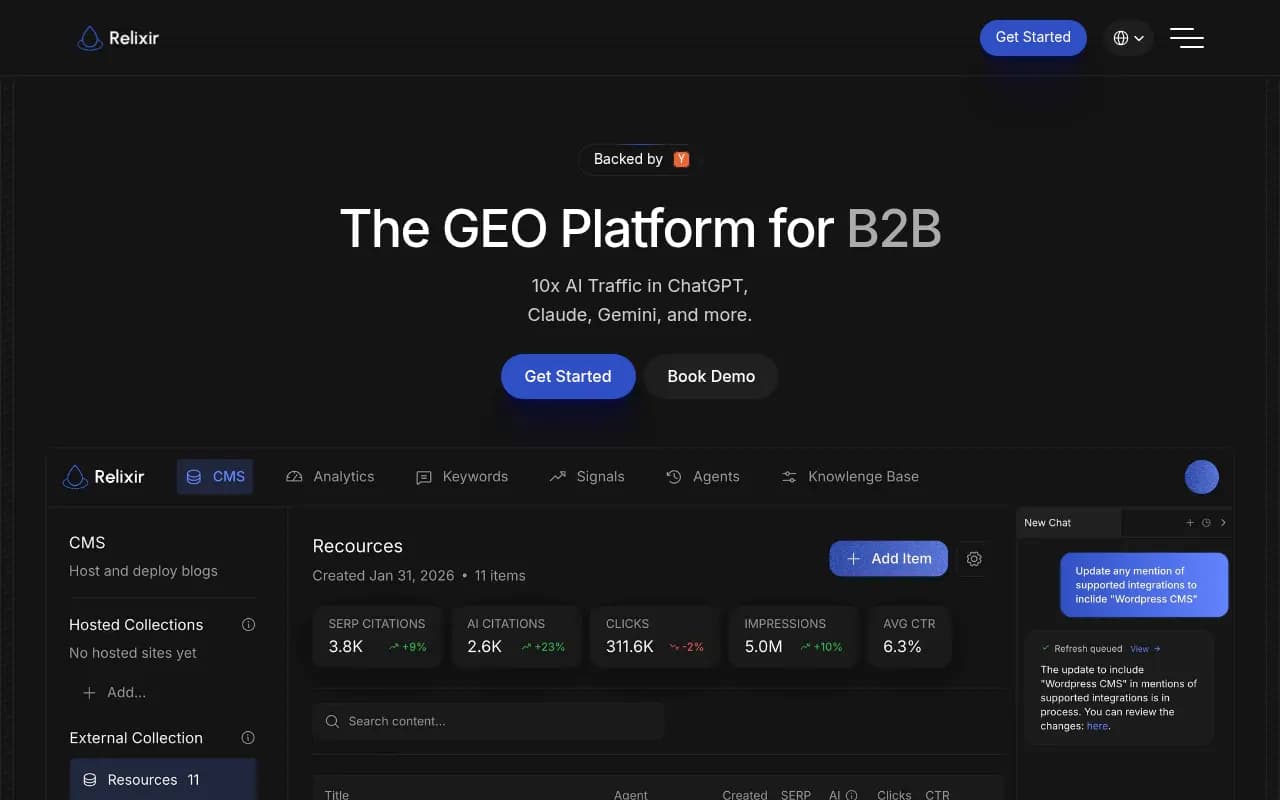
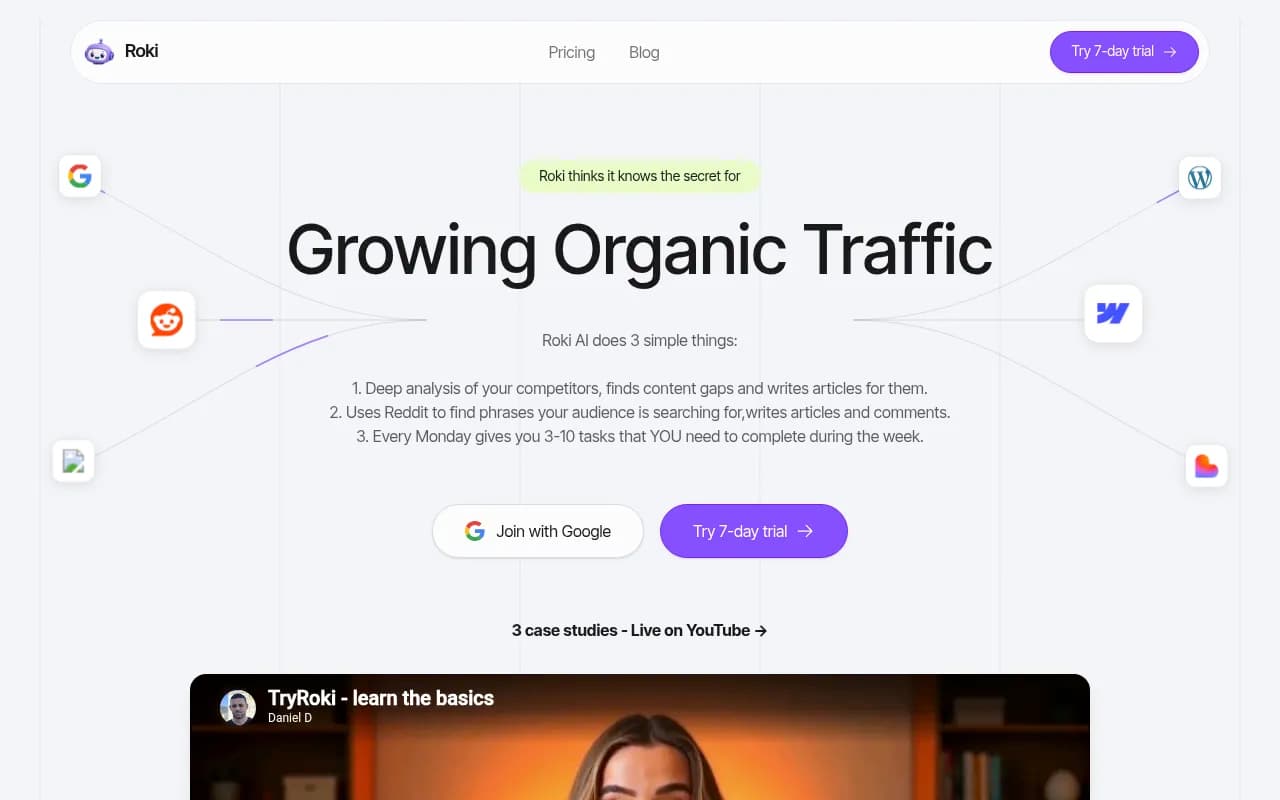
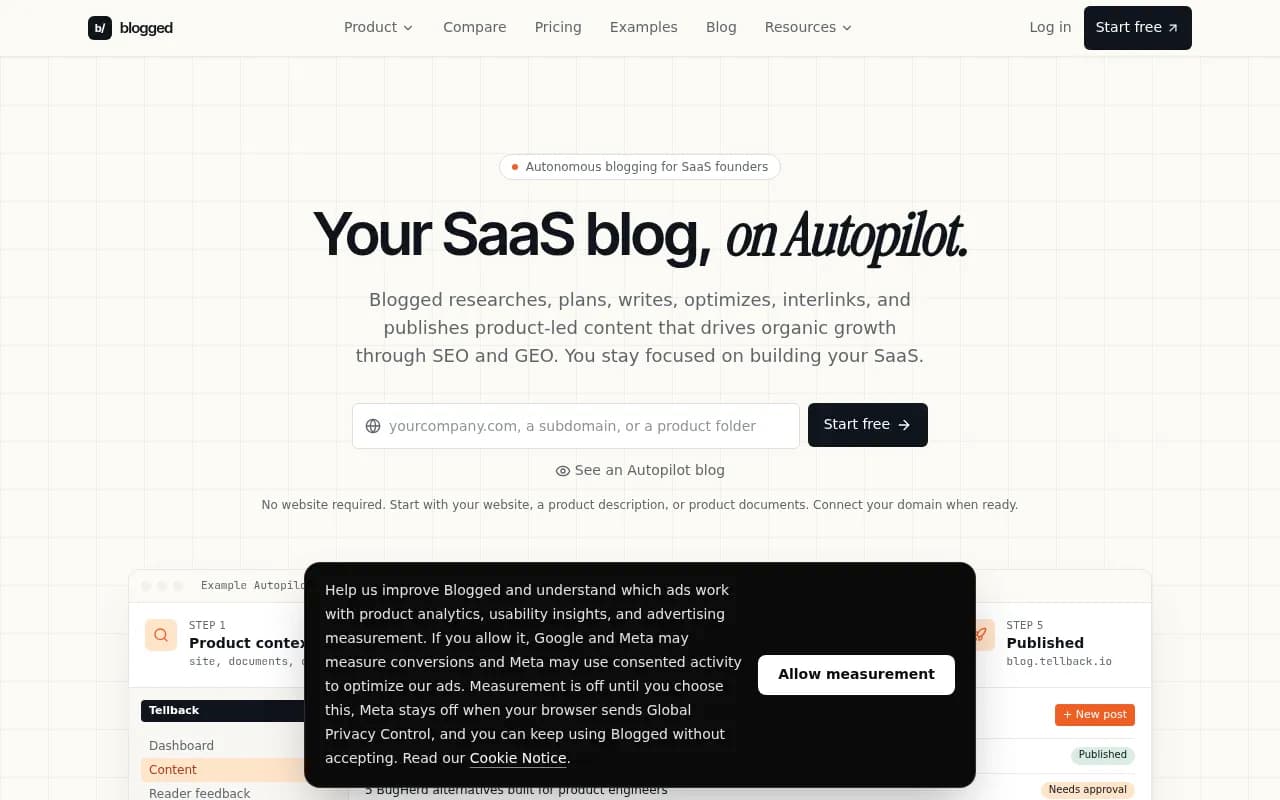
My honest view: autopilot is great for a small SaaS with no content team and risky for a brand with reputation to protect. Set it to a review inbox, not hands-off, until you trust the output.
4. AI visibility platforms with action layers
These start from AI search and work back to the fix. Many only monitor. A smaller number close the loop.
Promptwatch is the one that goes furthest on the full cycle. It tracks real interfaces (ChatGPT, Google AI Overviews, AI Mode, Gemini, Perplexity, Copilot, Meta AI, Claude and others), reads IP-verified AI crawler logs, and attributes AI-referred traffic. Then its Content Agent drafts and publishes to WordPress, Webflow, or Framer, and the Action Board lists what to fix next. Published pages are tracked through crawls, citations, and clicks, so underperformers come back as new actions.

Others worth a look in this group:
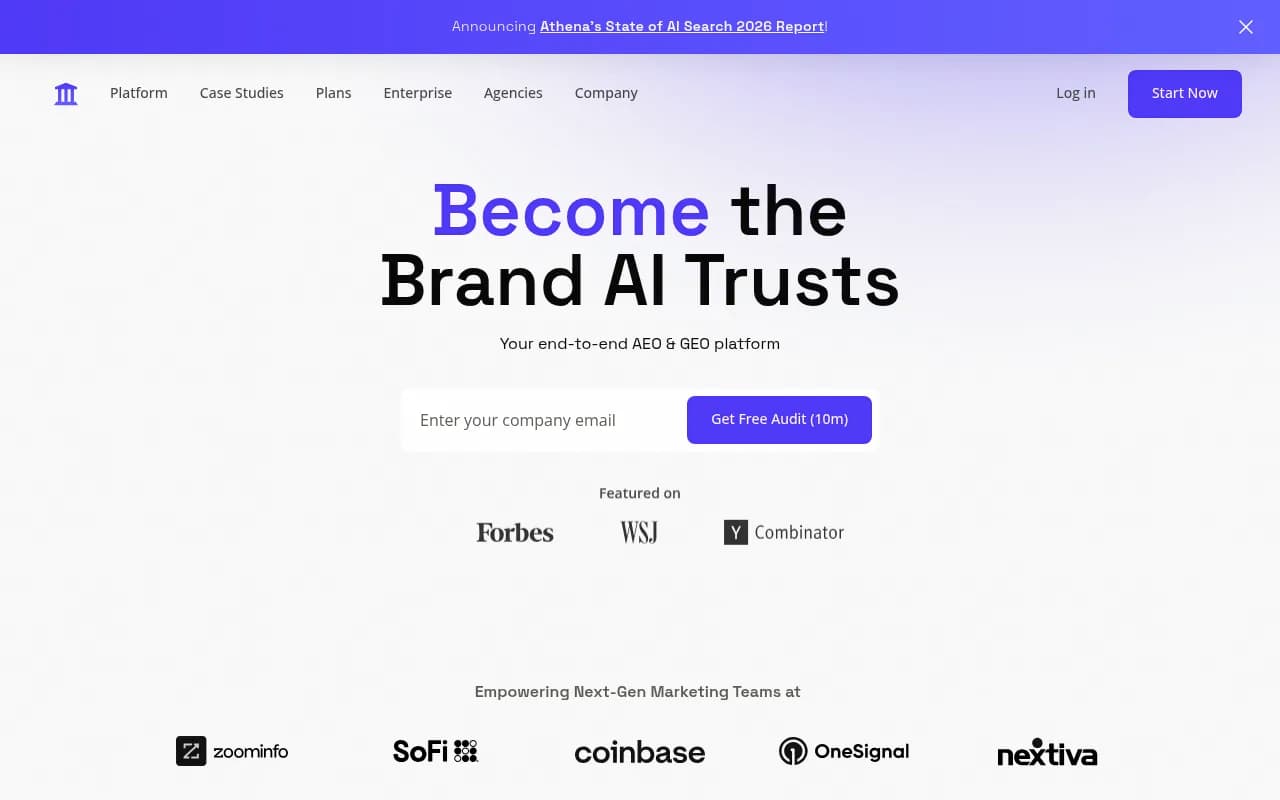
- Profound and AthenaHQ are strong at monitoring across many engines.
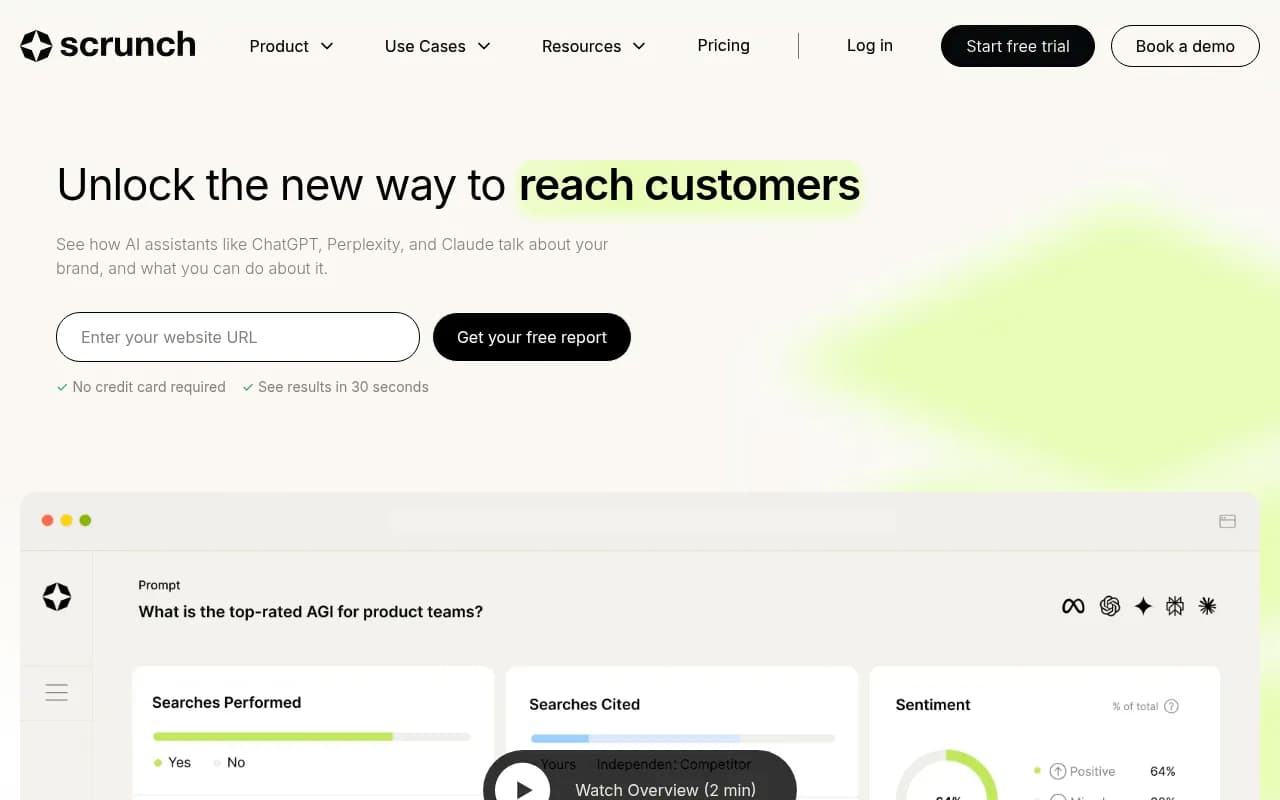
- Scrunch, Peec AI, and Otterly.AI are lighter, cheaper trackers.
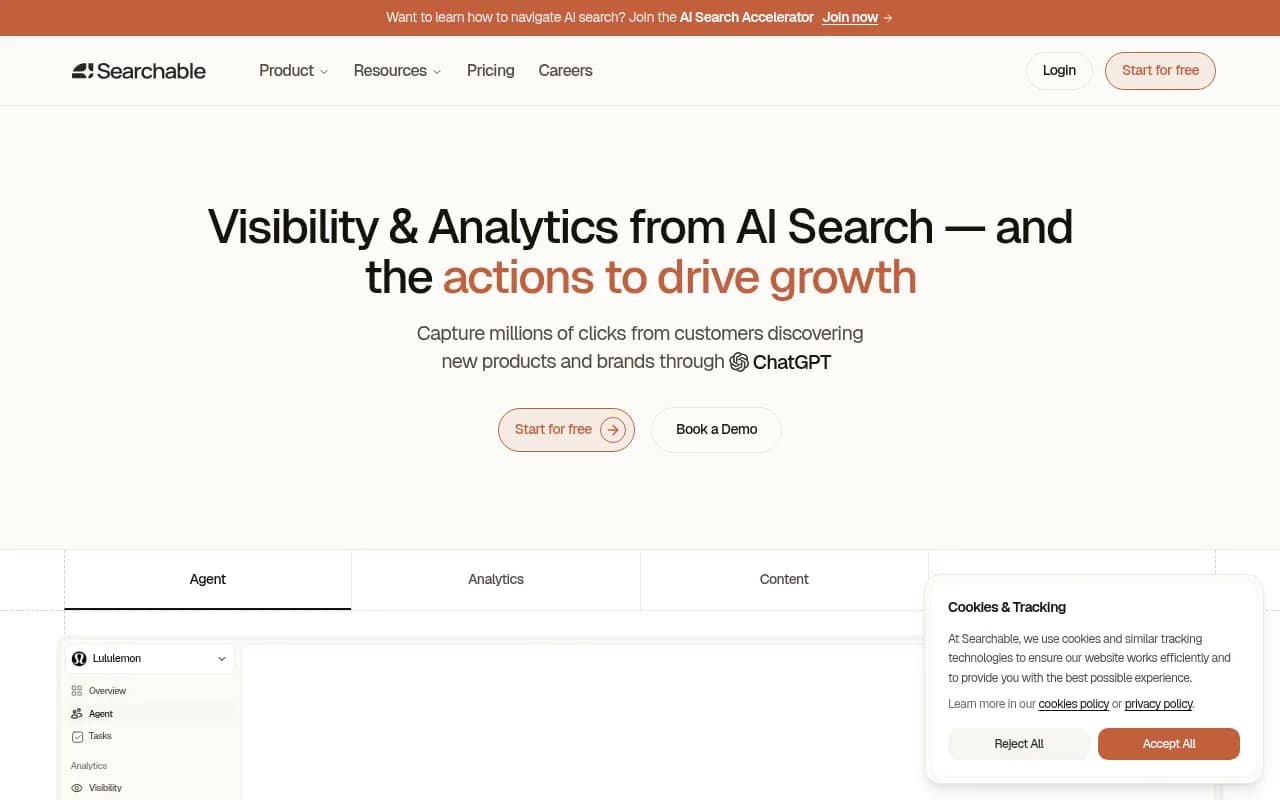
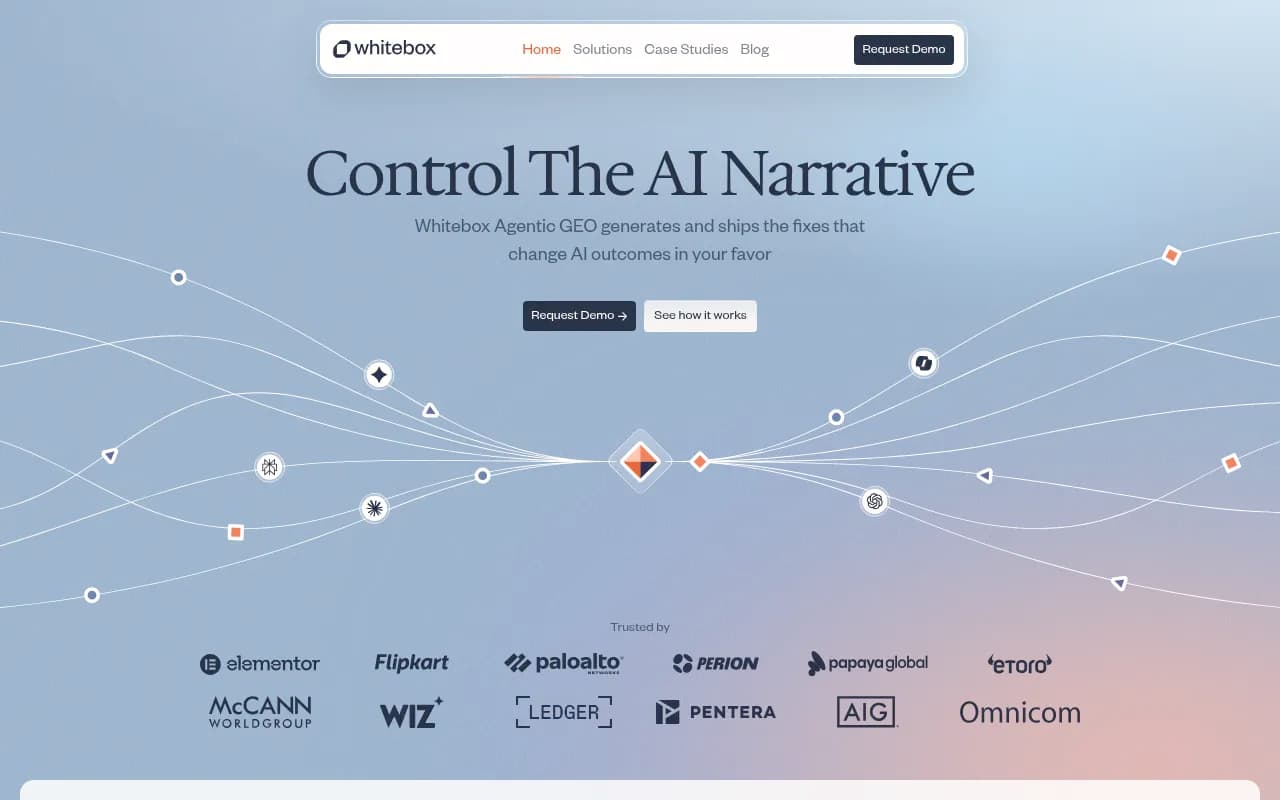
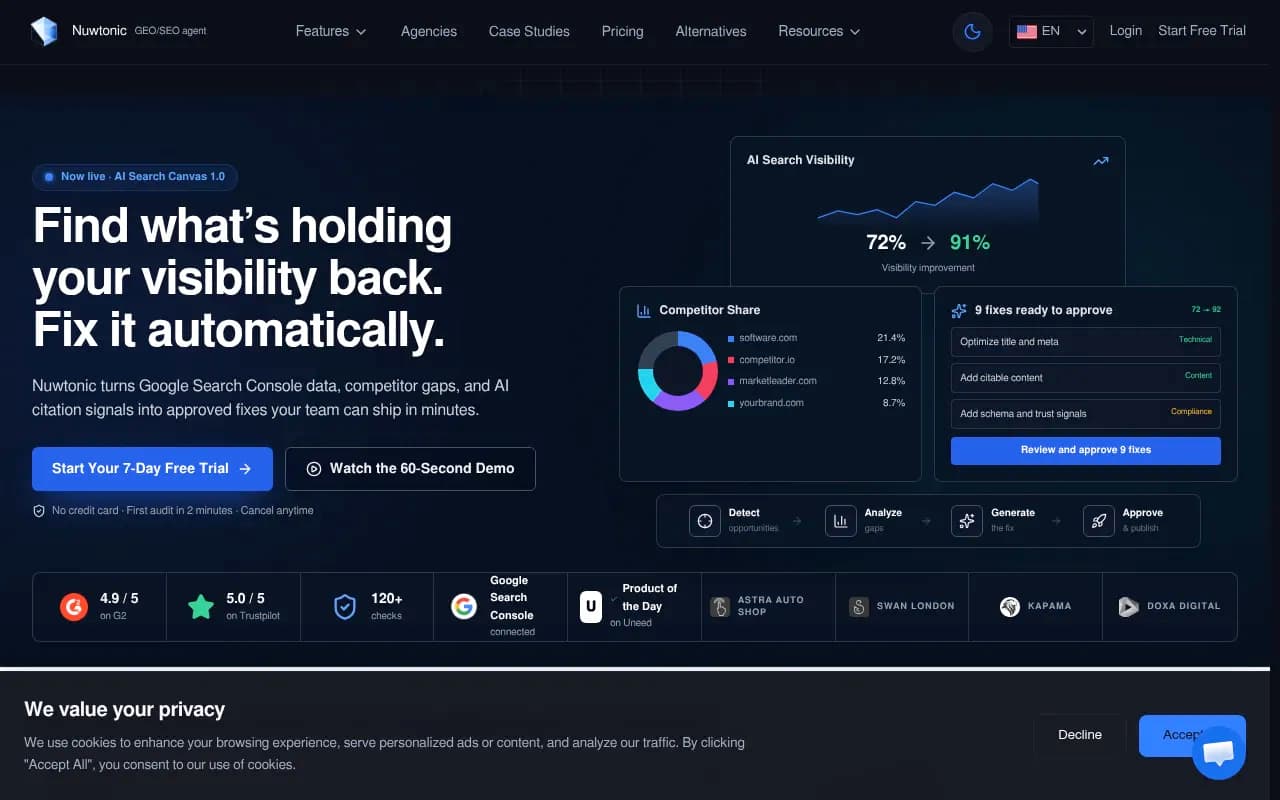
- Searchable, Whitebox, and Nuwtonic lean toward agentic fixes.
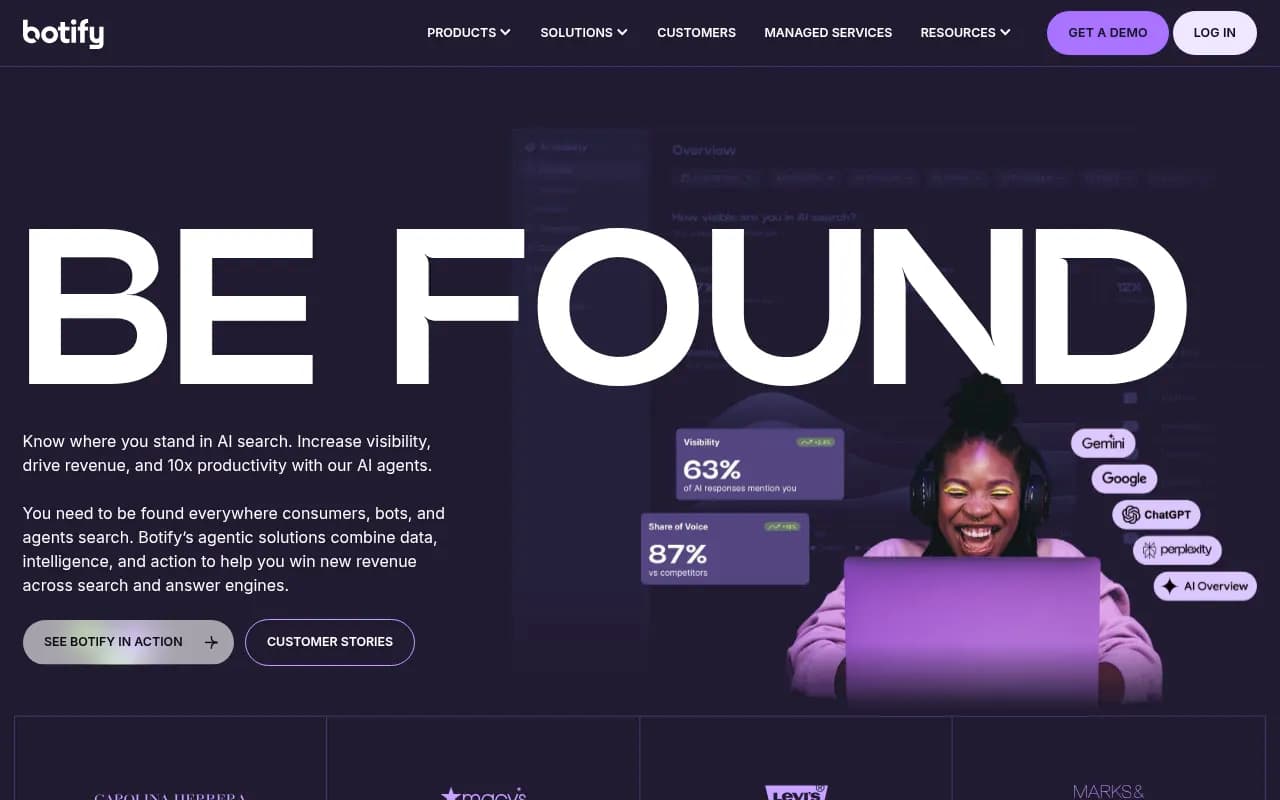
- BrightEdge and Botify serve enterprise teams.



Comparison table
This is a condensed view based on each vendor's positioning. Verify current features and pricing on their sites before buying.
| Tool | Starts from | AI search tracking | Content creation | Auto-publishing | Crawler or traffic data |
|---|---|---|---|---|---|
| Promptwatch | AI visibility | Real UIs, many models | Yes (Content Agent) | WordPress, Webflow, Framer | IP-verified crawler logs, AI visitor analytics |
| Frase | Content | Yes (AI Visibility) | Yes | Yes | Limited |
| Semrush One | Classic SEO | Yes | Yes (writing tools) | Limited | Limited |
| Surfer SEO | Content scoring | Partial | Yes | No | No |
| Profound | AI monitoring | Yes | Limited | No | Limited |
| Otterly.AI / Peec AI | AI monitoring | Yes | No | No | No |
| Outrank / Roki | Content autopilot | Varies | Yes | Yes | No |
| Seology / Alli AI | Technical fixes | Varies | No | Code or on-page changes | Site-level |
| BrightEdge / Botify | Enterprise SEO | Yes | Some | Some | Site-level |
The column that separates tiers is the last one. Tools without crawler or traffic data can tell you that you are missing, not why.
How to choose
Ask what the tool does after it finds a problem
Any tracker can show a red number. Ask the vendor to demo the path from "we're not cited for this prompt" to "here's the published page" to "here is whether it worked." If the answer is an export to CSV, you are buying a report.
Check the data source
AI answers in the actual ChatGPT interface can differ from API responses, including in what gets cited and what shopping results appear. Tools that rely on APIs alone give you a model's training-time beliefs, which is useful but not the same as what a user sees. Ask which one the tool measures.
Match the tool to your content mix
Given the citation data above, a store or SaaS company should weight product and landing page optimization heavily. A publisher should weight freshness. A local business should look for location-aware tracking, which only some platforms offer.
Be skeptical of rankings written by vendors
The research for this guide includes listicles from Frase, AirOps, Semrush, and an automation vendor, and each ranks its own product at or near the top. That is normal marketing, but it means no single ranking is neutral. The Whatagraph and SEO.com roundups are broader, though they mostly cover classic AI writing and optimization tools rather than AI search visibility.
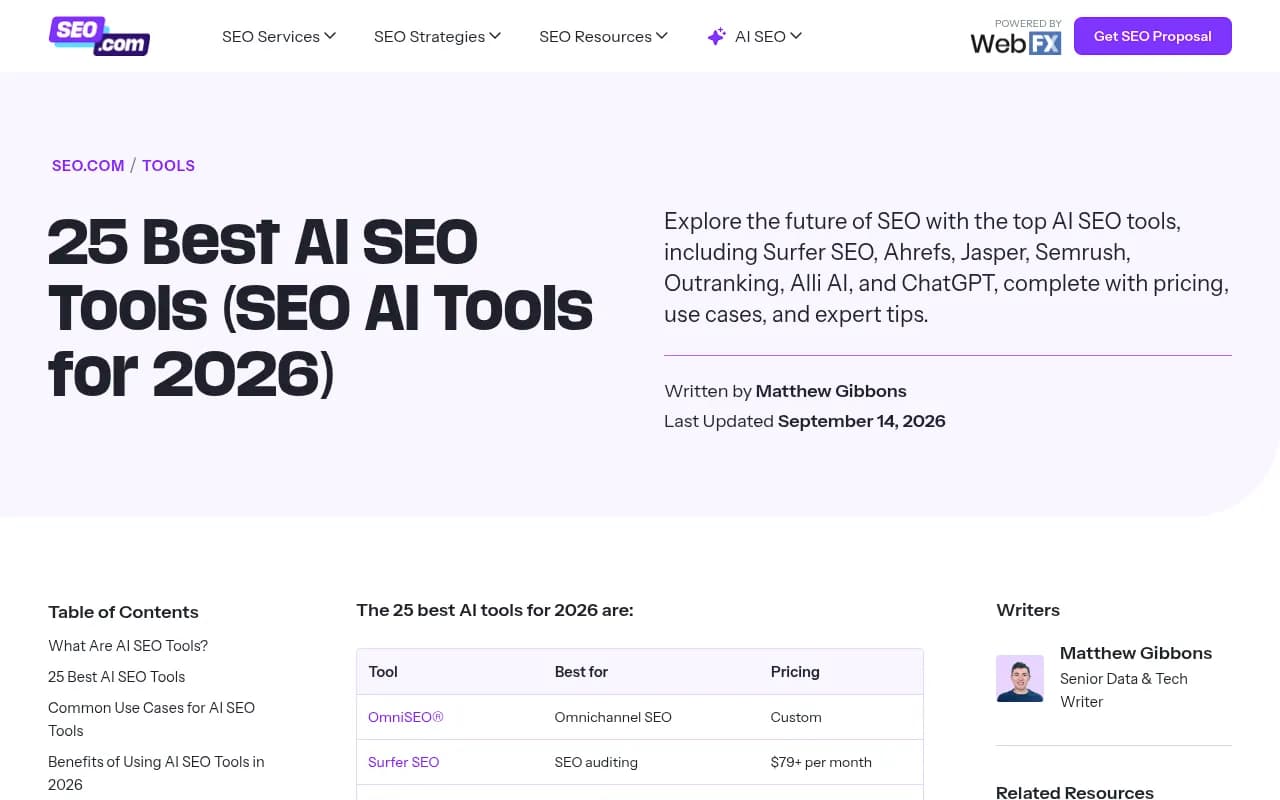
Useful for a broad survey, but note how few of its 25 entries address AI search citation directly.
Picks by team type
| Team | Sensible stack |
|---|---|
| Solo founder or small SaaS | An autopilot content tool (Outrank, Roki) plus a cheap tracker (Otterly.AI, Peec AI), or one platform with an agent like Promptwatch Essential |
| In-house SEO team of 2 to 5 | Existing suite (Semrush or Ahrefs) plus a visibility platform with action tracking |
| Agency | A platform with multi-client workspaces, white-label reports, and per-client crawler data |
| Enterprise | BrightEdge, Botify, or a platform with SSO, audit logs, and security certifications such as ISO 27001 |
| E-commerce | Tools that track product visibility in AI shopping results and keep product pages accurate |
If you want to browse beyond these names, the GEO software directory at bestgeosoftware.com lists far more options, and agenticseotools.com focuses on the agent-style tools.
A workable automation setup in practice
Here is the loop I would run, regardless of which brands you pick.
- Weekly audit. Automated site audit plus a crawler check. Confirm GPTBot, OAI-SearchBot, ClaudeBot, and PerplexityBot are not blocked by robots.txt or your WAF.
- Prompt set. Build 50 to 150 prompts across commercial, informational, and branded intent. Include competitor comparisons.
- Gap analysis. Find prompts where competitors are cited and you are not, and note which page types win.
- Draft and refresh. Generate new pages and refresh old ones. Prioritize product pages, comparisons, FAQs, and docs before more blog posts. Promptwatch's own advice from the content-type report is to keep specs, prices, and positioning complete on product pages, publish comparisons, keep docs crawlable, add FAQs, and collect reviews on trusted sites.
- Review before publish. Use an approval step. Fully hands-off publishing is tempting and, in my experience, how you end up with confidently wrong pages.
- Measure. Check crawls, citations, and AI-referred visits for each published page after two to four weeks. Kill what does nothing.
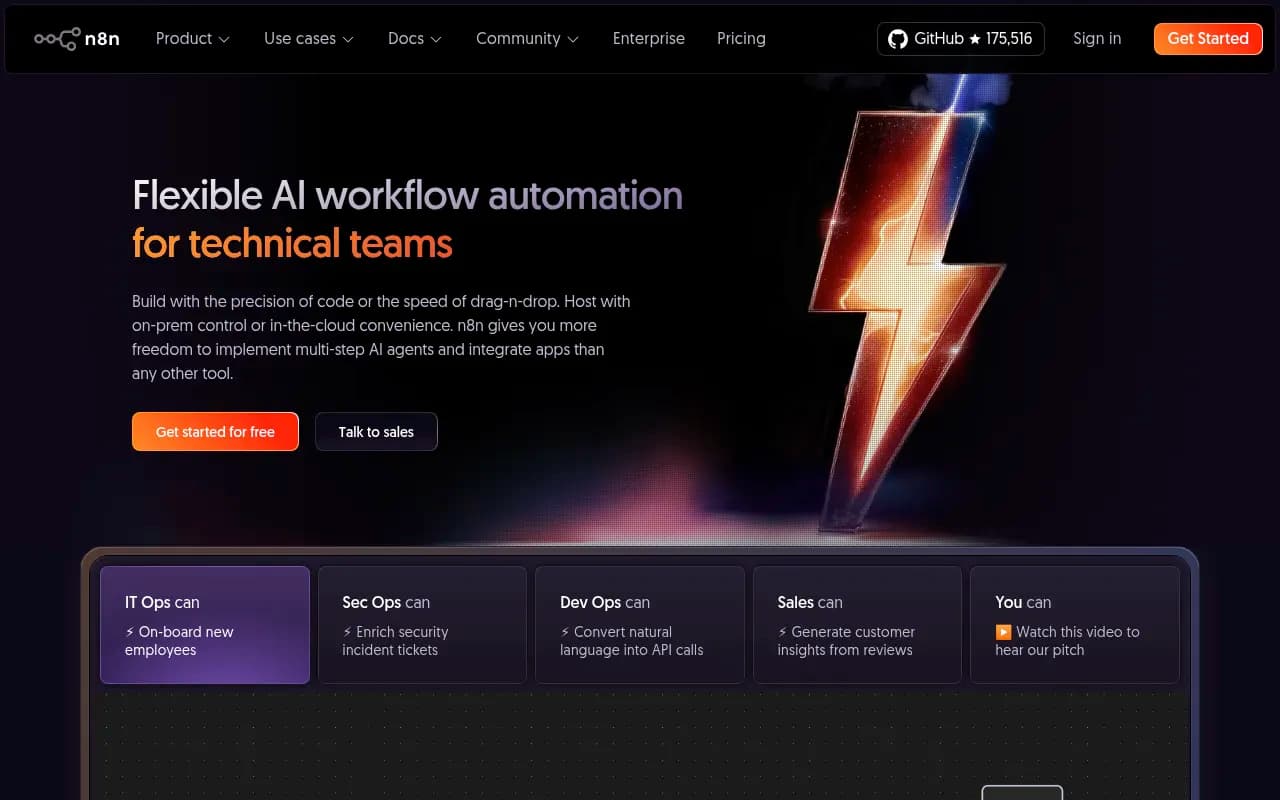
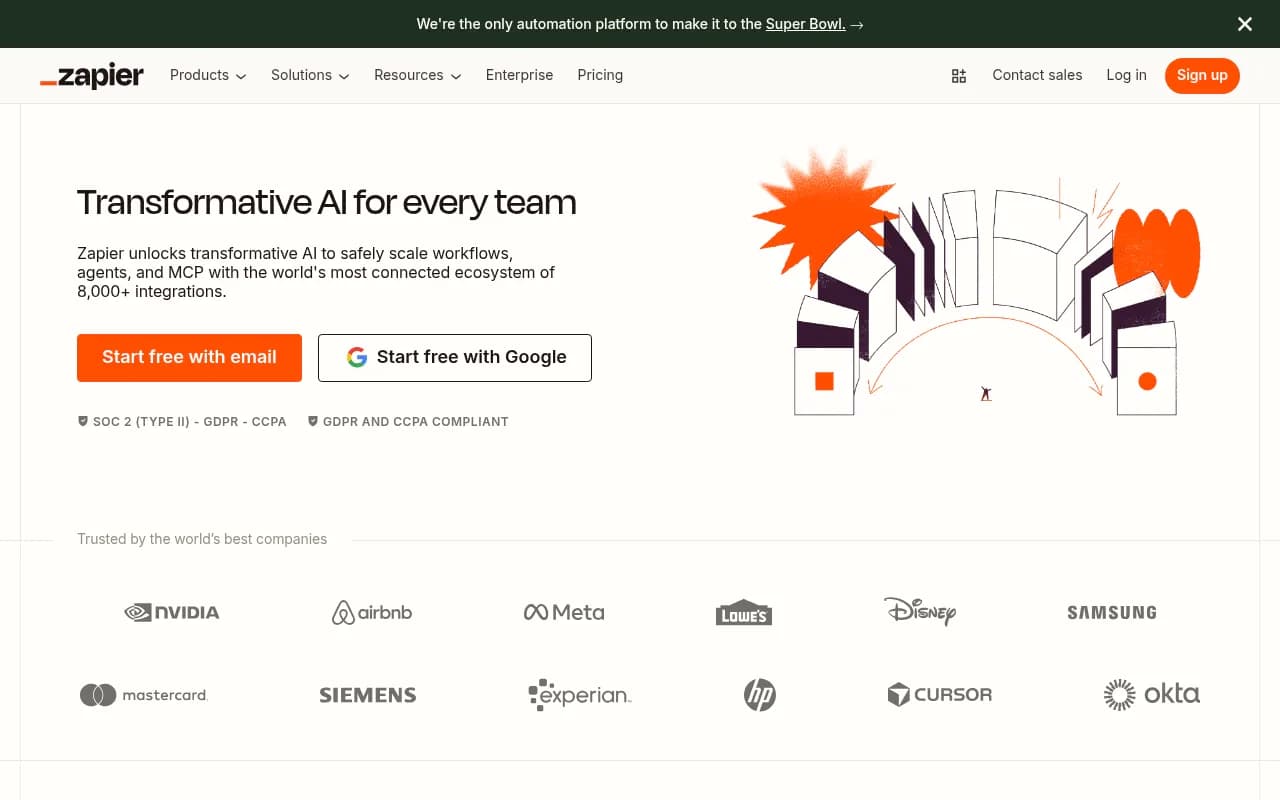
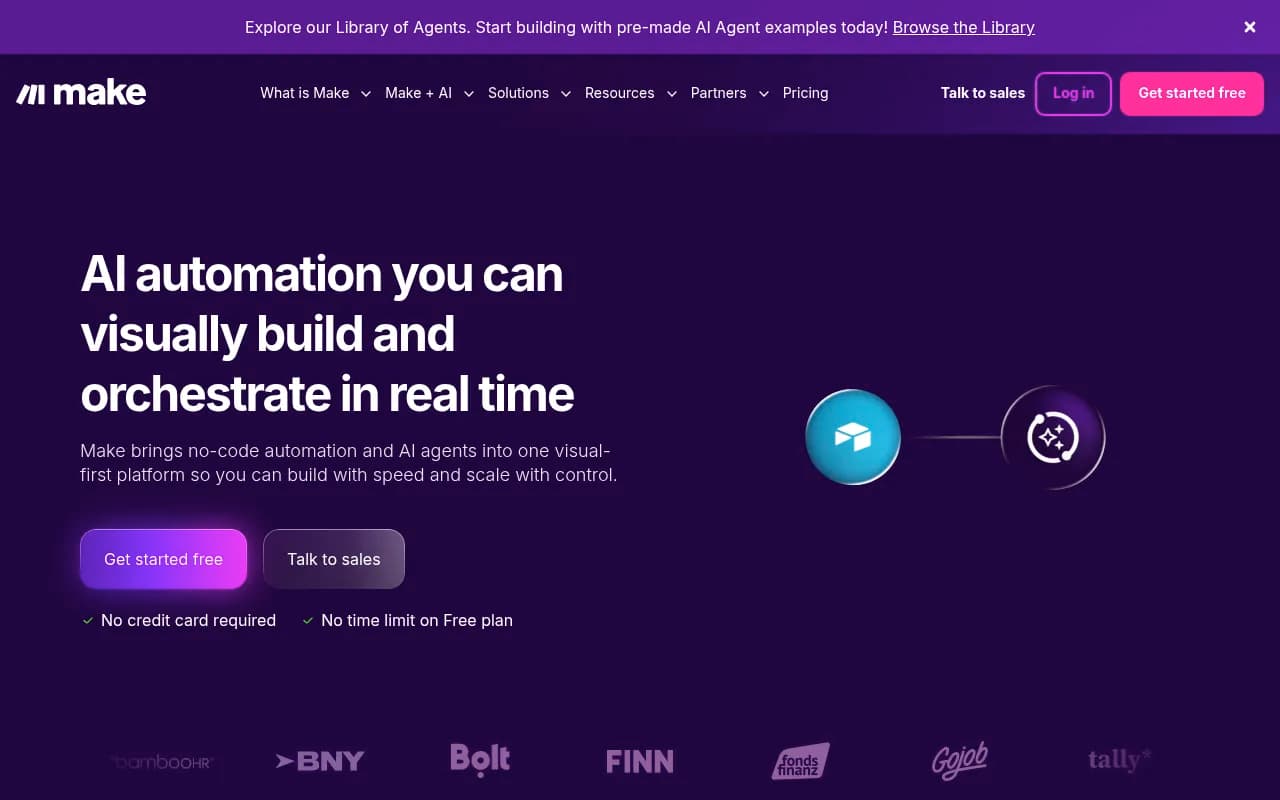
For glue between tools, workflow builders like n8n, Zapier, and Make can move alerts and briefs between your stack and Slack or a CMS.
Things that changed this year and affect your tools
AI search behavior shifts quickly, and your software should keep up.
- On August 8, 2026, ChatGPT began using the
site:operator at scale in fan-out queries, going from about 0.4% to about 17%, per Promptwatch Data's site: operator report. Your own domain structure and page titles matter more for those lookups. - ChatGPT's reddit.com citation share fell from about 4% to 0.5% on August 14, 2026, according to Promptwatch's Reddit data. Strategies built around Reddit seeding need a second look for ChatGPT, though AI Overviews pulled social sources at 12.2% versus ChatGPT's 0.46% in the Sep 28 to Oct 4 social citations report.
- Mid-authority sites (DR 46 to 75) earned almost half of ChatGPT citations in August 2026, while DR 91 to 100 fell to about 3%, per the domain rank report. Smaller brands have a real shot.
- Markdown files are only 0.05% of AI search citations, so skip any tool that sells markdown versions of your pages as an AI search tactic. Details in Promptwatch's markdown study.
Mistakes to avoid
- Buying a tracker and calling it automation. Monitoring is step one.
- Publishing at volume without product-page work.
- Ignoring crawlers. A perfect article behind a blocked bot gets nothing.
- Trusting a single week of citation data. Models shift, so look at trends.
- Over-automating YMYL topics like health and finance without human review.
Bottom line
If you already pay for Semrush, Ahrefs, or similar, start there and add an AI visibility layer. If you want the loop closed, from crawler logs and citation gaps through to published, tracked content, a platform such as Promptwatch fits best, and its 7-day trial on monthly plans lets you test it on a real site. Confirm current plans at promptwatch.com/pricing. If you are on a tight budget, pair a cheap tracker with a content autopilot, keep a human approval step, and measure AI-referred traffic so the tools have to prove themselves.