Key takeaways
- YMYL queries get a "higher bar" for sources in Google AI Overviews, so a tracker has to show you which sources are cited, not just whether your brand appeared.
- Healthcare AI Overview prevalence is flat (23.9% to 24.0%, per Search Engine Land's YMYL analysis), so measure presence on your own query set rather than assuming it.
- Look for source-level citation data, location and market splits, approval workflows, and security documentation. A share-of-voice chart alone will not cut it.
- Promptwatch, Profound, BrightEdge, Peec AI, Otterly.AI, and Semrush or Ahrefs Brand Radar cover different budgets and team shapes. Every vendor claim here needs checking against current pricing pages.
- Track ChatGPT and other assistants too. Patients ask them health questions at huge volume, and their citation habits differ from AI Overviews.
Why healthcare and YMYL need a different kind of tracker
Most AI visibility tools were built to answer one question: was my brand mentioned? For a SaaS company that is fine. For a hospital system, a telehealth startup, an insurer, or a lender, it is not enough.
Google says so itself. In its AI Overviews documentation, it describes an "even higher bar for showing supporting information from reliable and trustworthy sources" on Your Money or Your Life queries. Search Engine Land's YMYL AI Overviews guide puts it plainly: in some industries AI Overviews appear for nearly half of queries, while in YMYL sectors they may not appear at all. When they do, Google leans on highly trusted sources rather than simply citing the top-ranking pages.
That changes what you need from a tracker.
- You need to know whether an Overview appears for a given query at all, because in YMYL it often will not.
- You need to see which sources get cited when it does, so you can find out why you are missing.
- You need to catch inaccurate claims about your brand, products, or treatments.
- You need to split results by location, because patients search for care near them.
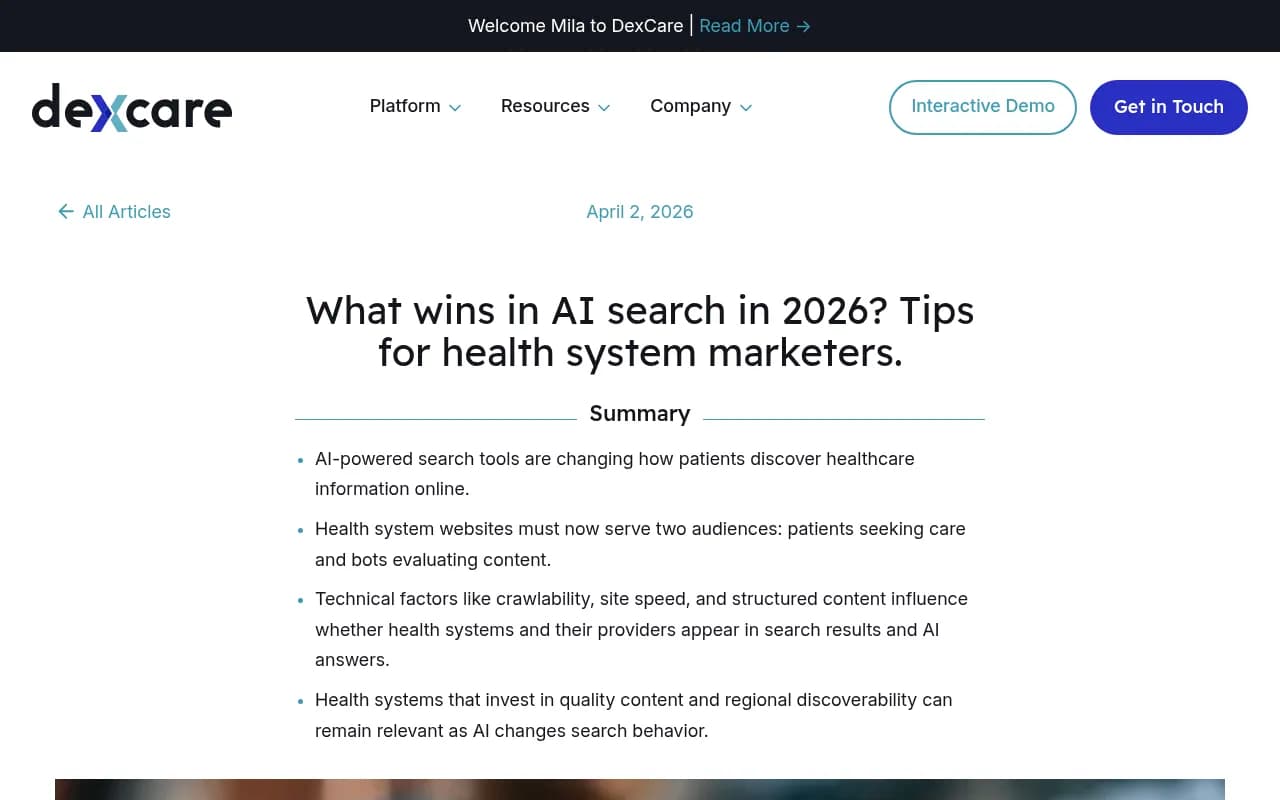
The demand side is large. DexCare, citing Healthcare Brew, reports that 79% of U.S. adults go online for health questions and that ChatGPT gets health and wellness questions from more than 230 million people each week. Seer Interactive data quoted in the same piece says click-through rates drop from 1.6% to 0.6% when an AI Overview appears. Even if you take those figures as directional, the point holds: some patients never reach your site, and others skip Google entirely.
What the data says about healthcare citations
Before comparing tools, it helps to know what you are trying to move. Promptwatch Data's healthcare citation report for ChatGPT covers organic healthcare prompts from Sep 9 to Oct 8, 2026, and the picture is not what most brand marketers expect.
- NIH is the top source at 5.46% of healthcare citations across six nih.gov subdomains, with PubMed Central at 2.38% and PubMed at 2.33%.
- The FDA is second at 1.76% and the NHS third at 1.1%.
- Mayo Clinic (0.49%) and Cleveland Clinic (0.4%) are the only hospitals in the top 20.
- The American Society of Plastic Surgeons (0.64%) and the American Academy of Dermatology (0.54%) together out-earn Mayo and Cleveland combined.
- Government and public health sites account for 7.06% of healthcare citations among the top 20 domains, and medical associations for 1.39%.
My read: if you are a provider or healthtech brand, you are competing with the NIH and with specialty societies, not just with the hospital down the road. A tracker that only reports "you were mentioned in 12% of answers" hides that. You want one that shows the cited source list so you can see who is actually winning the slot.
AI Overviews behave differently from ChatGPT. Promptwatch Data's June 2026 AI Overview citation share report shows YouTube (4.16%), Reddit (2.72%), and google.com (2.30%) at 2026 highs, and Google-owned sources making up around 6.5% of AI Overview sources. Meanwhile, Promptwatch's social media citations report found ChatGPT drew just 0.46% of its citations from social platforms from Sep 28 to Oct 4, 2026, versus 12.2% for Google AI Overviews. So a Business Profile, a YouTube channel, and help content matter on Google, while they barely register in ChatGPT.
What to look for in an AI Overview tracker for YMYL
Here is the checklist I would use before booking any demo.
Source-level citation visibility
Can you click from a response to the exact pages cited? For YMYL this is the whole game. If your claim about a treatment is being displaced by a PubMed paper, the fix is different than if a competitor's patient guide is winning.
Real interface data
AI Overviews and ChatGPT's consumer interface can differ from API outputs. Ask each vendor whether they collect from the real user interface in each country, or from an API proxy.
Location and market splits
Multi-location providers and urgent care chains need results that change by city. Ask whether tracking works by country, state, city, or exact coordinates.
Control over prompts and claims
You should be able to set the prompts, add brand aliases, and flag specific claims you care about (dosage, outcomes, pricing, eligibility).
Governance and security
Regulated buyers need to ask about SSO, audit logs, role permissions, and certifications. Some vendors are still working toward SOC 2. Others hold ISO/IEC 27001. Get this in writing, since a tracker holding no patient data is still subject to your procurement review.
A path from insight to action
Finding a gap is easy. Closing it with accurate, reviewed content is the hard part. In healthcare, approval workflows matter more than speed.
Comparison of AI Overview trackers for healthcare and YMYL
The table below is a starting shortlist, not a ranking. Pricing and features change, so confirm each on the vendor's page.
| Tool | Strength for YMYL | Coverage | Best for |
|---|---|---|---|
| Promptwatch | Real-UI tracking, crawler logs, content workflows, ISO 27001 | ChatGPT, AI Overviews, AI Mode, Gemini, Perplexity, Copilot, Claude, more | Teams that want to track and fix |
| Profound | Enterprise governance and security focus | Multi-engine | Large regulated enterprises |
| BrightEdge | AI Overview presence, citation sources, overlap with rankings | Google-focused plus AI | Enterprise SEO teams already on BrightEdge |
| Peec AI | Analytics depth across models and countries | Multi-model | Analytics-led marketing teams |
| Otterly.AI | Affordable AI Overview, ChatGPT, Perplexity monitoring | Multi-engine | Smaller teams starting out |
| Semrush / Ahrefs Brand Radar | Added to an existing SEO suite | Multi-engine | Teams already using the suite |
| Scrunch AI | Monitoring and AI-readable site delivery | Multi-engine | Brand and marketing teams |
The tools worth shortlisting
Promptwatch
Promptwatch is the one I would start with if you want more than a dashboard. It monitors the real interfaces of ChatGPT, Google AI Overviews, Google AI Mode, Gemini, Perplexity, Copilot, and others, by country and language, and shows which pages get cited rather than only whether you were named. For healthcare that source view is the useful bit: you can see whether PubMed, an association, or a competitor is taking your slot.

A few features matter specifically for YMYL teams. Content gap analysis maps your pages against the prompts AI answers. IP-verified AI crawler logs show whether bots can read your clinical pages or hit errors. State and city tracking, plus local targeting at exact coordinates on Business plans, covers multi-location groups. The Content Agent publishes to WordPress, Webflow, or Framer with a review inbox, so a clinician or compliance reviewer can approve, edit, or decline before anything goes live. Promptwatch is ISO/IEC 27001 certified and GDPR compliant, which helps with security review. Plans start at $95 a month (Essential) with a free Explore tier for ChatGPT only. Check promptwatch.com/pricing for current numbers.
If you want a quick baseline first, the free AI Visibility Report and Agentic Readiness Check need no login.
Profound
Profound tends to come up for regulated enterprises that want deep governance and security controls. SearchEye's healthcare roundup (a vendor listicle, so treat it as opinion) calls it the strongest fit for that profile. Expect an enterprise price point and a monitoring-heavy product.

BrightEdge
BrightEdge's Generative Parser measures AI Overview presence, citation sources, result size, brand mentions, sentiment, and overlap between citations and conventional rankings. That overlap measure is relevant given Search Engine Land's finding that nearly 80% of AI Overviews in healthcare cite sources that also rank, versus just over 20% in ecommerce. If your organic rankings are strong, BrightEdge can show whether they convert into citations.
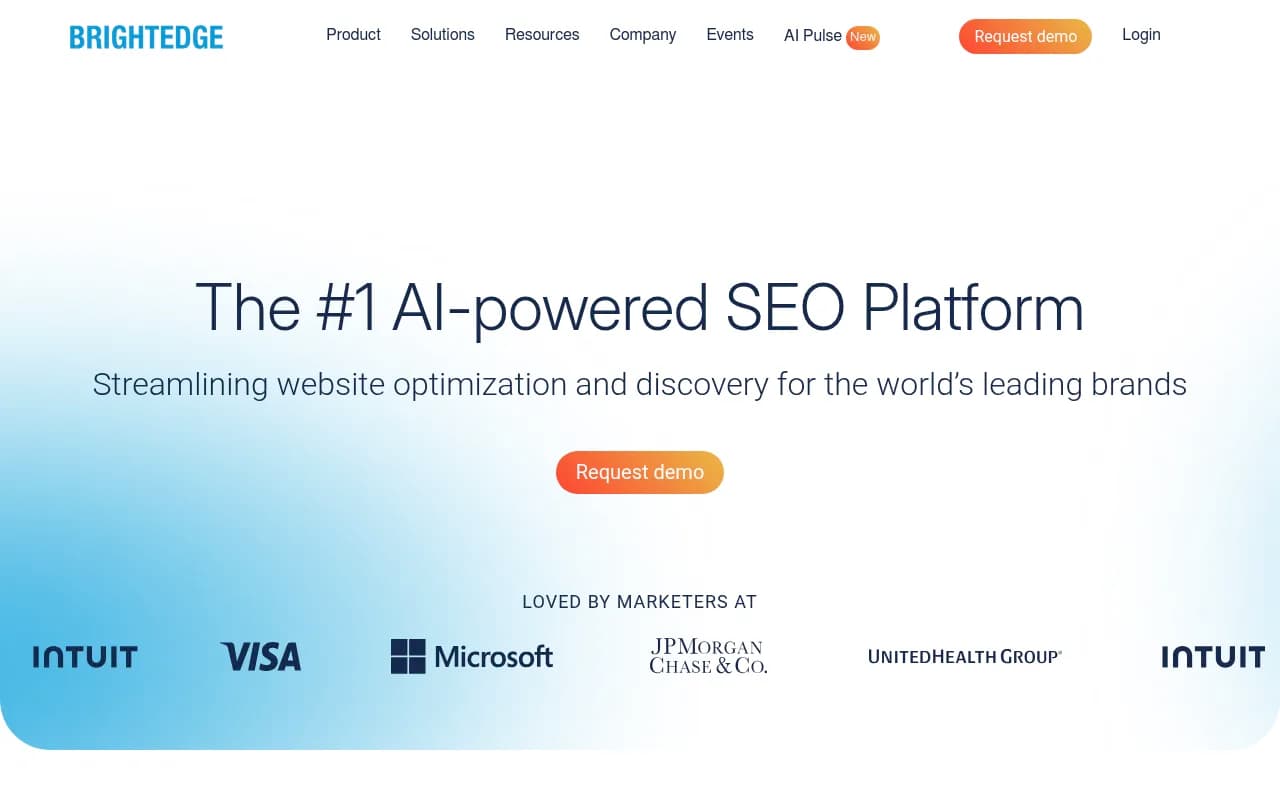
The newer AI Catalyst suite targets enterprise AI search optimization.
Peec AI
Peec AI is known for multi-language, multi-country analytics and unlimited users on standard brand plans. One caveat from SearchEye's write-up: Peec says it is pursuing SOC 2 but is not yet certified. That may matter for your procurement team.

Otterly.AI
Otterly.AI positions itself as an affordable monitor for Google AI Overviews, ChatGPT, and Perplexity. It is a reasonable first purchase for a small clinic group or a digital health startup that needs to see where it stands before investing more. It is a monitoring tool, so you will do the fixing elsewhere.

Semrush and Ahrefs Brand Radar
If your team already lives in one of these suites, adding AI tracking is low friction. The tradeoff is that suite-based tracking often uses fixed prompt sets and shallower AI-specific data than dedicated platforms.

Scrunch AI
Scrunch covers monitoring across major assistants and is worth a demo if your brand team wants a polished interface.
More options worth a look
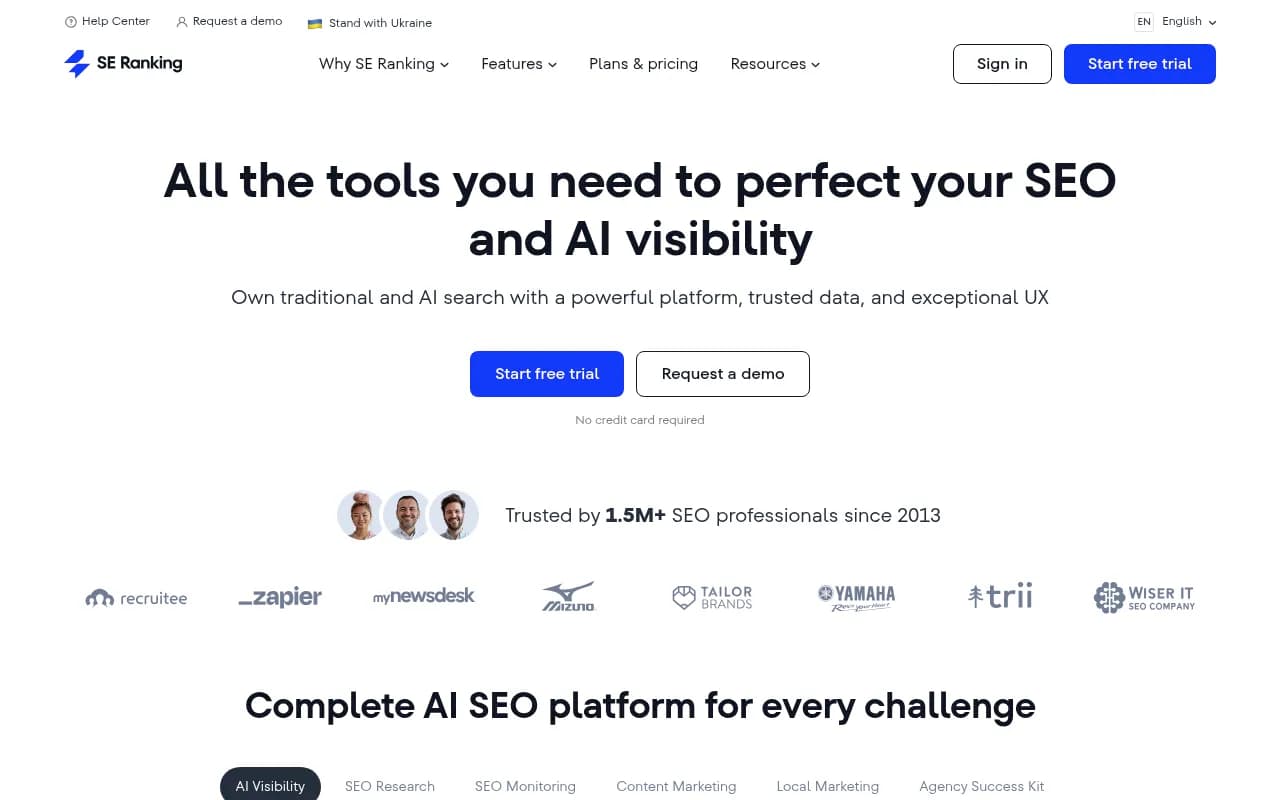
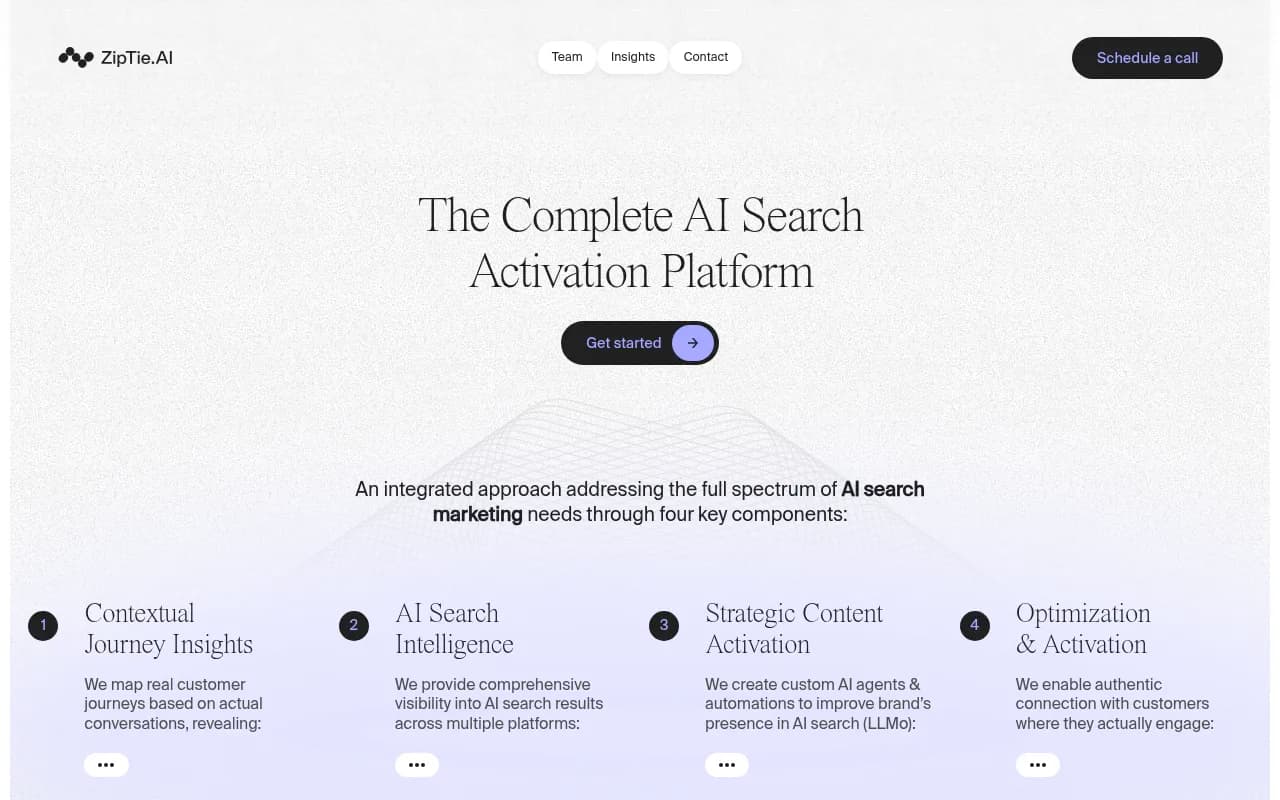
Other tools in this space that show up in 2026 roundups include SE Ranking, ZipTie, Conductor for enterprise content groups, and Knowatoa for AI Overviews and AI Mode monitoring.
For wider lists, the GEO software directory at bestgeosoftware.com is a decent place to browse by category.
A note on vendor-written rankings
Much of what ranks for this topic is written by vendors. SearchEye ranks itself first, Cintra's agency list leads with Cintra, and Otterly's roundup features Otterly. SearchEye's author at least says so openly, saying "I run SearchEye." That is fine, but read every "best" list as a pitch. I also did not verify pricing for most tools above, so run your own trial with your own prompts.
How to run a fair trial
Give every shortlisted tool the same test. Otherwise you are comparing demos, not products.
- Build a prompt set of 40 to 60 queries across patient symptoms, treatment comparisons, provider searches near a location, and branded questions.
- Include a handful of claim-sensitive prompts about things you say publicly, like outcomes or pricing.
- Run it for two weeks and check whether the tool shows the cited sources for each response.
- Ask to see results for at least two cities or countries.
- Check what happens after you find a gap: is there a workflow, an approval step, an audit trail?
- Send the security questionnaire early.
Metrics that matter more than mentions
Read these together rather than in isolation.
| Metric | What a weak result usually means |
|---|---|
| Share of voice | You are not in enough answers (coverage) |
| Position in answer | You appear late (prominence) |
| Mentions without citations of your own pages | Content or crawlability problem |
| Weak sentiment | Reputation or accuracy problem |
| AI Overview presence per query set | Whether the surface is worth the effort at all |
That last row matters for YMYL. Search Engine Land's table shows healthcare AI Overview prevalence barely moving (23.9% to 24.0%), while restaurants jumped 4.2 points. Measure your own query set, since category averages will mislead you.
What to do once you have data
Trackers only matter if the findings turn into work. Based on Promptwatch's healthcare report, these actions come up first:
- Back up medical claims with peer-reviewed studies and link to them on PubMed or PubMed Central.
- Make sure pages agree with official FDA, CDC, NHS, and NICE guidance, and link to it.
- Work with the medical associations in your specialty, since they out-earn many hospital sites.
- Keep doctor profiles complete on directories like Doctify and WebMD.
- Treat Google surfaces (Business Profile, YouTube, help content) as assets, given their growing AI Overview share.
- Fix crawler access. If bots cannot read a clinical page, no amount of monitoring helps.
For agencies that handle this work for hospital or finance clients, 1001 SEO Media is one option that combines technical SEO, content, and AI search work, though you should still insist on clinician review for any medical copy.
Which one should you pick?
- Want tracking plus the ability to fix gaps and publish with review steps: Promptwatch.
- Large regulated enterprise with heavy governance demands: Profound, and ask about certifications.
- Already on BrightEdge for Google: add its AI Overview features.
- Small team testing the waters: Otterly.AI or Peec AI.
- Already in Semrush or Ahrefs: start with their built-in AI modules, then outgrow them.
Whatever you choose, run the same prompt set across two or three tools for two weeks. The tool that shows you the cited source behind each answer is the one that will help you most in a YMYL category.