Key takeaways
- Classic rank tracking still matters, but a position on Google no longer tells you whether ChatGPT, Gemini or an AI Overview mentions your brand.
- Most traditional trackers now sell AI visibility as an add-on. The headline price usually leaves it out, so total cost can double.
- Compare prompt counts, refresh frequency and engine coverage. A cheap plan with weekly refreshes and four engines is a different product from a daily plan with eleven.
- Semrush, SE Ranking and AccuRanker are the strongest all-in-one picks. Dedicated AI platforms like Promptwatch go further when you want to fix visibility, not just watch it.
- Pricing pages change constantly and third-party reviews disagree. Check vendor pages before you commit.
Why rank tracking needs an AI layer now
Your rankings look fine. Traffic is down anyway. That pattern is common right now, and the usual explanation is that an AI answer resolved the query before anyone clicked. Your position never moved. Your visibility did.
A classic tracker answers one question: where does this URL sit in an ordered list of results? AI search has no ordered list. ChatGPT cites roughly five sources per web-search answer, while Google AI Overviews and Perplexity cite about ten each, according to Promptwatch's average sources per response data. Copilot has swung from under two citations to nearly seventeen. So "rank" becomes a mix of mention, citation, placement and share of voice, and it differs by engine.
There is a second wrinkle. The prompts you track are not the queries the engine actually runs. Promptwatch's ChatGPT query fanout data shows average fanouts per response falling from 2.15 in December 2025 to about 1.84 by early March 2026, with average query length shrinking too. Then on August 8, 2026, ChatGPT started using the site: operator at scale, jumping from 0.37% to 16.8% of fanout queries, per Promptwatch's site: operator report. Any keyword-to-prompt mapping built before that date is stale. That is a strong argument for continuous, automated monitoring over one-off audits.
What to look for in an automated tracker with AI add-ons
I would skip the giant feature checklist and check six things.
- Update frequency. Daily for Google, and daily for AI too if you can get it. Some tools only refresh AI data weekly.
- Engine coverage. Which of ChatGPT, Gemini, Perplexity, AI Overviews, AI Mode and Copilot are included, and whether AI Mode and AI Overviews are both covered.
- Prompt allowance. Fifty prompts is a pilot. A few hundred is a program.
- Location and device precision for the classic side.
- Reporting, white-label options and API access, which often unlock only on higher tiers.
- Total cost, meaning base plan plus the AI module.
A note on sources. Many best-of lists are written by vendors who sell the products they rank. The pricing below comes from several 2026 reviews that disagree in places, so treat it as a starting point.
Comparison at a glance
| Tool | Classic tracking | AI search add-on | Rough AI cost | Best for |
|---|---|---|---|---|
| Semrush | Daily, Google and Bing | AI Visibility Toolkit, Semrush One | $99/mo per domain, or One from $199/mo | Teams wanting one suite |
| Ahrefs | Rank Tracker | Brand Radar | $50 custom prompts to $699 all models | Data scale and accuracy |
| SE Ranking | Strong value | AI Search Toolkit, SE Visible | From $89/mo add-on, or $99 standalone | Agencies and growing teams |
| AccuRanker | Fast on-demand | AccuLLM | Not confirmed | Large keyword sets |
| Nightwatch | Granular local | Citation Intelligence | From EUR 159/mo | Local and multi-location |
| Promptwatch | Not a SERP tracker | Full AI visibility and optimization | From $95/mo | Fixing AI visibility |
Semrush
Semrush is the heavy, complete option. Position Tracking runs daily on Google and Bing, and the AI side now covers AI Overviews and ChatGPT Search. There are two routes in. The standalone AI Visibility Toolkit is $99 per month per domain with 25 tracked prompts. Semrush One Starter is $199 per month and bundles AI visibility with the SEO tools, with one review citing 50 tracked prompts and MCP access.
The catch is cost per keyword. One comparison put Semrush around $0.28 per keyword per month, the highest on its list. If rank tracking is the only job, you are paying for a lot you will not use. If you also need keyword research, audits and backlinks, it is hard to beat having it all in one login.
Ahrefs Rank Tracker and Brand Radar
Ahrefs is the tracker many SEOs trust most when accuracy matters. Its AI layer, Brand Radar, is split in two. Prompt Tracking is free on every paid Lite plan and above, with custom prompts from $50 per month. The AI Visibility Index, built on real prompt data rather than synthetic queries, starts at $199 per month for AI Overviews and AI Mode, ChatGPT, Perplexity and Gemini. All models cost $699 per month. Ahrefs describes the index as 514M real prompts, and older reviews quote 371M or 449M, so the number keeps growing.

Two cautions. Rankability points out that the $50 custom-prompt plan is not equivalent to index access. And core plan prices vary wildly by source, from $29 for Rank Tracker to $129 for Lite, so a $29 headline plus a $199 to $699 add-on changes the picture a lot.
SE Ranking and SE Visible
SE Ranking is the value pick, especially for agencies, with white-label reporting and an Agency Pack. Its AI Search Toolkit tracks presence, mentions and competitors in AI Mode, AI Overviews, ChatGPT, Gemini and Perplexity. The Core bundle is listed at $129 per month with 100 daily AI prompts, and existing customers can add AI Search from $89 per month.
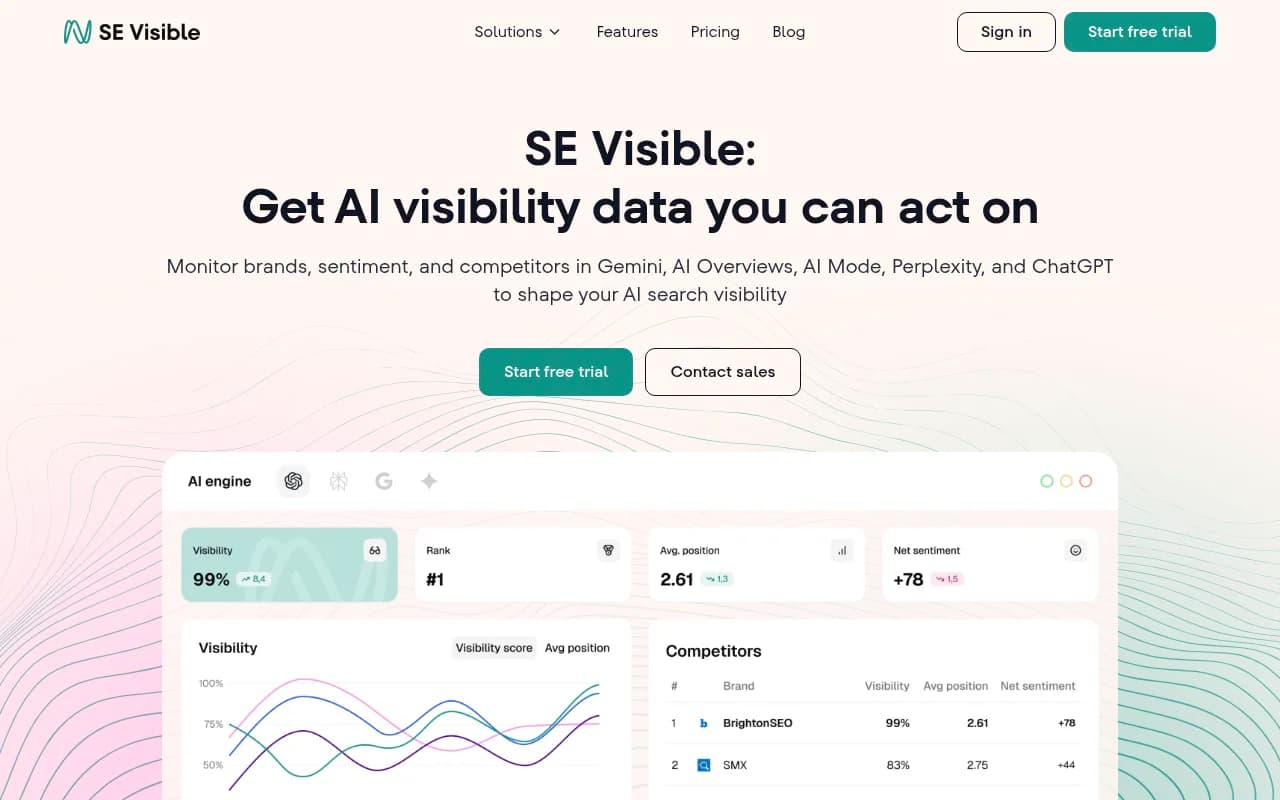
SE Visible is the separate product, $99 per month with 200 prompts, daily refresh and five engines. It suits teams that already have a Google rank tracker and only want the AI half.
AccuRanker and AccuLLM
AccuRanker is built for speed. On-demand refreshes mean you can diagnose a ranking drop right now rather than waiting for tomorrow. Tag-based workflows slice big keyword lists, which is why large e-commerce sites with tens of thousands of SKUs like it. AccuLLM extends this to ChatGPT, Perplexity, AI Overviews and AI Mode, reporting average rank across the models, brand mentions and domain citations.
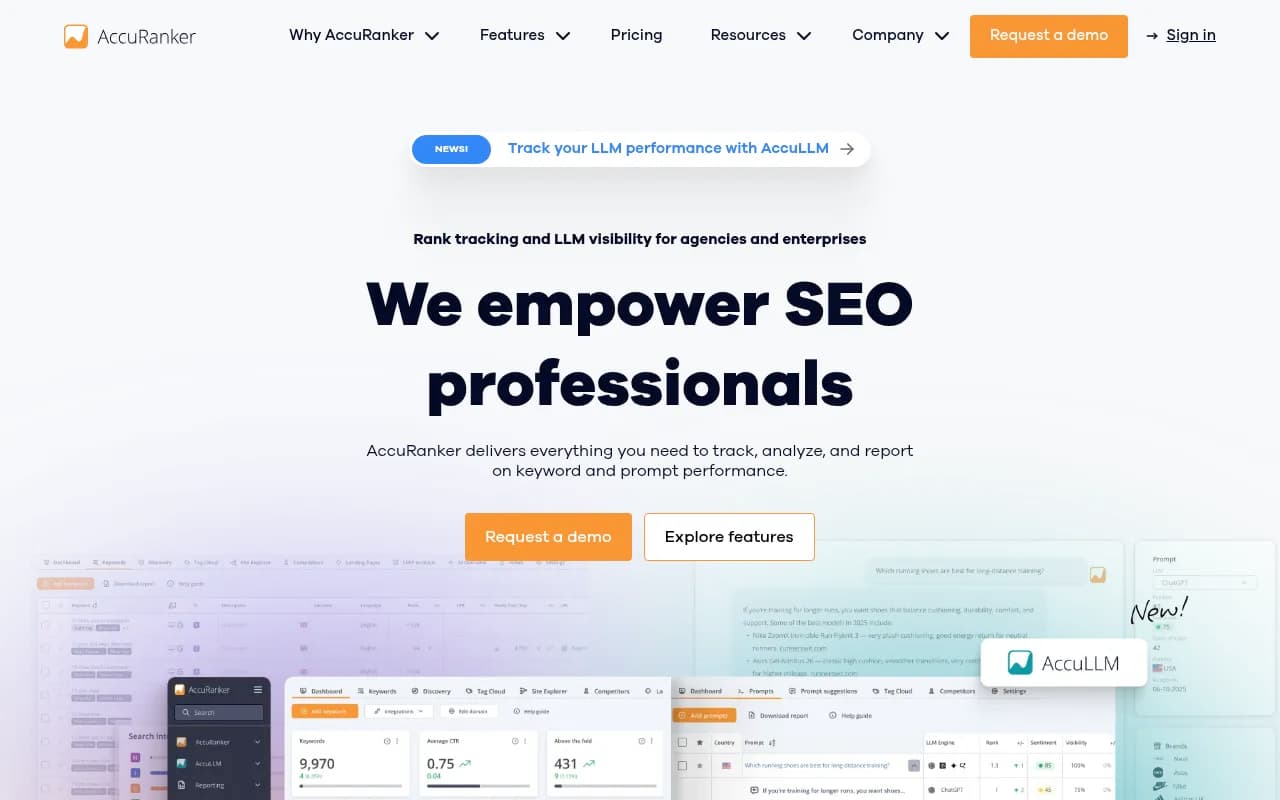
Pricing is where you need to be careful. Professional is listed at $224 per month for 2,000 keywords, and Expert at $764 per month for 10,000 keywords. Looker Studio and API access unlock only at Expert. AccuLLM is an add-on, and I could not confirm its standalone price.
Nightwatch, Advanced Web Ranking and other classic names
Nightwatch is the pick when granular local tracking is the priority, and its Citation Intelligence module starts from EUR 159 per month. Advanced Web Ranking has an AI Visibility module on top of two decades of SERP accuracy.
SEOmonitor suits agencies, but note that its AI tracking for ChatGPT, Gemini and Perplexity updates weekly. Daily refresh is only available for Google rankings and AI Overviews.
On the other side, Wincher and Mangools SERPWatcher had no AI visibility tracking as of August 2026, so they are fine for classic tracking only.
Enterprise teams should also look at seoClarity and BrightEdge, both of which bundle AI search visibility into larger platforms.
Dedicated AI visibility trackers worth pricing out
If your classic tracker is fine and you only need the AI side, a dedicated tool can be cheaper and deeper. Rankability's 2026 pricing comparison lists these approximate entry points:
| Tool | Price | Prompts | Notes |
|---|---|---|---|
| Otterly Lite | $29/mo | 15 daily | Four engines |
| LLMrefs | $79/mo | Not stated | Weekly refresh |
| Promptwatch Essential | $95/mo | 50 daily | All models on paid plans |
| Peec AI | About $95/mo | Varies | Multi-language |
| Rankability | $97/mo | 100 daily queries | 11 platforms |
| Analyze AI | $99/mo | 25 | AI Mode, not necessarily AI Overviews |
| Trakkr | $100/mo | 50 | 8 engines |
| Searchable | $125/mo | 100 | Monitoring plus content |
| Scrunch | $300/mo | 350 | Higher price tier |
| Keyword.com | From $9.80/mo | Varies | Cheap entry point |


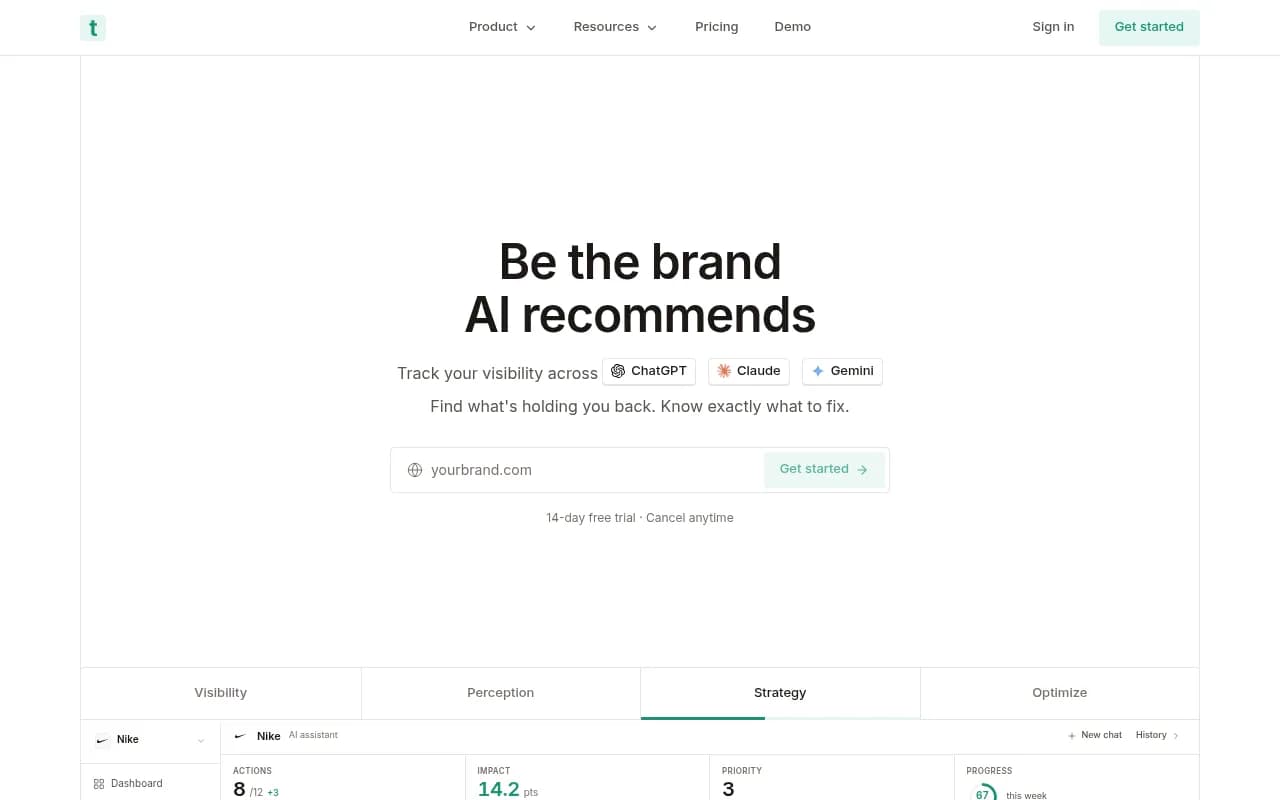
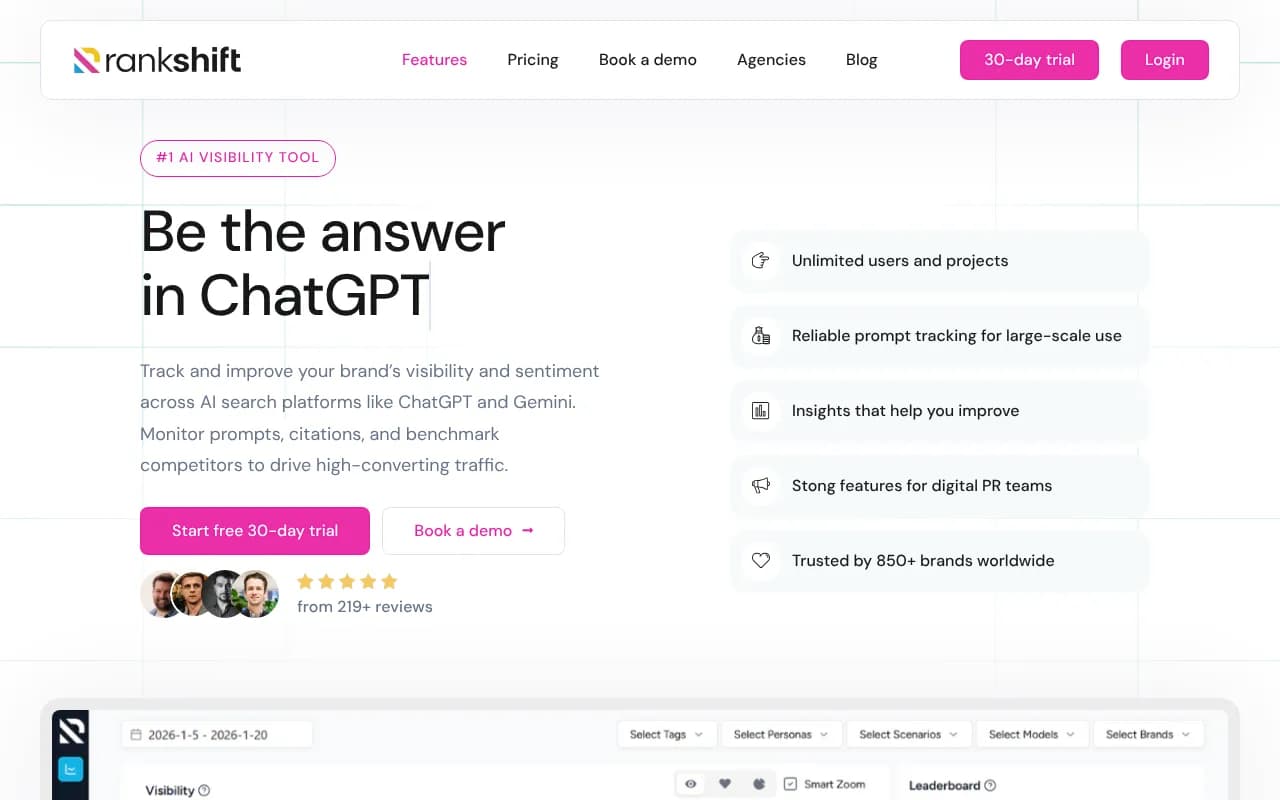
Two more things to watch in this table. Search Atlas's $99 Starter plan has zero LLM queries, and its $199 Growth plan has 100. And credit-based schedules can cap effective frequency: Rankshift offers 9,500 credits per month for 150 prompts, which is not the same as 150 daily prompts.
When monitoring is not enough
Most add-ons answer "was my brand mentioned?" They stop there. If the answer is no, you still need to work out why, write the content, publish it and check whether it worked.
Promptwatch is built around that loop. It tracks the real interfaces of ChatGPT, Google AI Overviews, AI Mode, Gemini, Perplexity, Copilot and others, then adds IP-verified AI crawler logs, visitor analytics for AI-referred traffic, content gap analysis, and a Content Agent that can plan, write and publish to WordPress, Webflow or Framer. Published pages are tracked through crawls, citations and clicks, and underperformers come back as actions on the Action Board. It also pulls in Google Search Console and Bing data so you can ask which pages rank but never get cited by AI. Paid plans start at $95 per month for Essential, and the full list is on promptwatch.com/pricing.

It is not a classic SERP rank tracker. Pair it with Semrush, Ahrefs or AccuRanker for position data, and let it handle the AI side. For more options in this category, the GEO software directory at bestgeosoftware.com and the AI rank tracking directory at ai-rank-tools.com list many alternatives.
How to choose
If you want one login for everything
Semrush One or the SE Ranking Core bundle. Semrush is deeper and pricier. SE Ranking is cheaper and agency friendly.
If keyword volume is huge and speed matters
AccuRanker with AccuLLM. Budget for the Expert tier if you need the API.
If accuracy and link data matter most
Ahrefs, but price Brand Radar into the total before you decide. $29 plus $199 is not $29.
If local is the priority
Nightwatch, with its Citation Intelligence module for the AI side.
If you want to improve AI visibility, not just report it
A dedicated platform like Promptwatch, paired with whichever classic tracker you already like.
Pitfalls to avoid
- Judging by price alone. Compare prompts, refresh rate and engines.
- Assuming AI Mode and AI Overviews are both covered. Some tools only do one.
- Trusting old prompt mappings. After the August 8 ChatGPT change, a prompt list built in July is out of date.
- Treating all engines the same. Because citation counts differ by engine, measure each one separately. Perplexity, which cites almost exactly ten sources daily, is a stable test bench. Copilot is better judged on monthly trends.
- Believing every pricing page. Rankability noticed on October 16, 2026 that many tools' offers differed from earlier published prices.
A practical setup
Here is the stack I would start with for a mid-size team. Keep a classic tracker for Google rankings, daily, by location and device. Add one AI module with at least 100 daily prompts covering ChatGPT, AI Overviews, AI Mode, Gemini and Perplexity. Review prompts monthly against what the engines actually search. Then check crawler access and citation rates on your key pages, because a mention without a citation to your own site usually points to a content or crawlability problem.
For related research, Promptwatch's data hub is free and updated regularly, and Surferstack lists more rank tracking tools with reviews and comparisons.
Bottom line
The best automated tracker in 2026 is whichever one covers your Google positions daily and your AI engines at a prompt count you will actually use. Semrush and SE Ranking are the safest suites, AccuRanker is the speed pick, and Ahrefs wins on data if you accept the add-on cost. If you are done watching and want to act, add a platform that writes and publishes the fix. Confirm every price on the vendor's own page first.