LLMrefs Review 2026
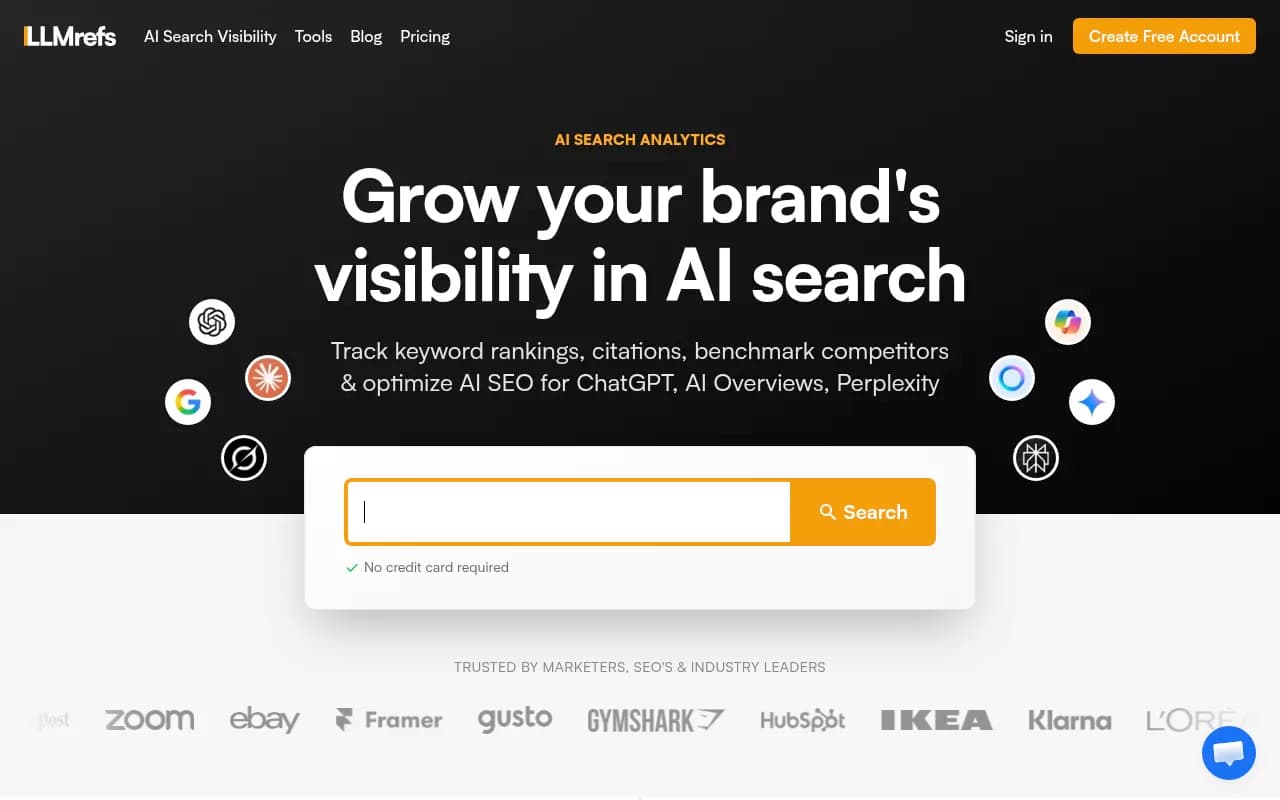
LLMrefs is an AI search analytics platform that tracks keyword rankings, citations, and brand visibility across ChatGPT, Google AI Overviews, Perplexity, Claude, Gemini, and more. Built for SEO teams and agencies, it automatically generates prompt variations from real conversations, benchmarks compe
Summary
- Monitoring-only tool -- tracks brand mentions and citations across 11 AI models but lacks content generation, AI crawler logs, and traffic attribution that Promptwatch offers
- Strong keyword-based approach with auto-generated prompt fan-outs based on real user conversations
- Transparent competitor benchmarking using share of voice and position metrics instead of vague visibility scores
- Unlimited projects and team seats at $79/mo makes it agency-friendly
- Missing optimization features: no content gap analysis, no AI writing agent, no visitor analytics to connect visibility to revenue

LLMrefs is a GEO (Generative Engine Optimization) platform that helps brands and agencies track how they appear in AI search results. Instead of forcing you to manually create hundreds of prompts, it works like traditional SEO tools -- you input keywords, and it automatically generates variations based on how real users actually talk to ChatGPT, Perplexity, and other AI models. The company is led by James Berry and has attracted notable clients including eBay, HubSpot, IKEA, Shopify, and The Washington Post.
The pitch is simple: AI search is replacing traditional search, but tracking it is messy. Large language models are non-deterministic (same prompt, different answer), there are multiple engines to monitor, and users ask questions in infinite ways. LLMrefs tries to solve this by aggregating data at the keyword level and handling the complexity of prompt variations behind the scenes.
What it actually does
You create a project, add your brand name and domain, then import your SEO keyword list. Within minutes, the dashboard shows where your brand ranks across 11 AI models: ChatGPT (including ChatGPT Search), Google AI Overviews, Google AI Mode, Google Gemini, Perplexity, Claude, Grok, Microsoft Copilot, Meta AI, and DeepSeek. The platform automatically generates "fan-out prompts" -- variations of each keyword based on real conversations users have with AI chatbots. For example, if you track "running shoes", it might generate prompts like "What are the best running shoes for marathon training?" or "Which running shoe brands last longest?"
Each keyword gets a weekly refresh. The system queries AI models continuously to ensure statistical significance, then aggregates the results into a single view. You see your brand's share of voice (percentage of citations across all prompts for that keyword), average position (where you rank when mentioned), and total citation count. Competitor brands are ranked alongside yours using the same metrics -- no vague visibility scores, just transparent data on who's winning and by how much.
Citation and source tracking
One of the more useful features is the source analysis. LLMrefs shows exactly which URLs AI models cite when answering questions about your keywords. You can filter by domain (Reddit, YouTube, Wikipedia, Amazon, Yelp, etc.) to see where the influence is coming from. This reveals content and outreach opportunities -- if competitors are getting cited from Reddit threads or YouTube reviews, you know where to focus.
The platform tracks citations at the URL level, so you can see which specific pages on your site (or competitors' sites) are being referenced. This is helpful for understanding what content AI models trust, but it stops there. You get the data, but no guidance on what to do with it.
Geo-targeting and multi-language support
LLMrefs supports 50+ countries and 20+ languages. You can segment results by country to see how your brand performs in different markets. For example, you might rank #1 in ChatGPT for "CRM software" in the US but not appear at all in the UK. This is particularly useful for international brands or agencies managing clients across regions.
Agency and team features
Unlimited projects and team seats are included at every pricing tier. You can organize keywords by client, invite your whole team, and export data as CSV or via API. The interface is clean and the workflow is straightforward -- create a project, add keywords, view results, repeat. There's no per-seat pricing or project limits, which makes it more affordable than competitors that charge per domain or per user.
What's missing compared to Promptwatch
LLMrefs is a monitoring tool. It shows you where you rank and which sources AI models cite, but it doesn't help you close the gap. Here's what it lacks:
- No content gap analysis: You can see that competitors rank higher, but you don't get a breakdown of which specific prompts or topics you're missing. Promptwatch's Answer Gap Analysis shows exactly which prompts competitors are visible for but you're not, plus the specific content your site is missing.
- No AI content generation: LLMrefs doesn't create content. Promptwatch's AI writing agent generates articles, listicles, and comparisons grounded in 880M+ citations, prompt volumes, and competitor analysis -- content engineered to get cited by AI models.
- No AI crawler logs: You can't see which AI crawlers (ChatGPT, Claude, Perplexity) are hitting your site, which pages they're reading, or errors they encounter. Promptwatch provides real-time crawler logs so you can fix indexing issues and understand how AI engines discover your content.
- No traffic attribution: LLMrefs doesn't connect visibility to revenue. You can see your brand mentioned in ChatGPT, but you don't know if anyone clicked through or converted. Promptwatch offers visitor analytics (code snippet, GSC integration, or server log analysis) to track actual traffic from AI search.
- No Reddit or YouTube insights: While LLMrefs shows citations from Reddit and YouTube, it doesn't surface the specific threads or videos influencing AI recommendations. Promptwatch highlights these discussions directly.
- No ChatGPT Shopping tracking: LLMrefs doesn't monitor product recommendations or shopping carousels in ChatGPT.
- No prompt intelligence: You don't get volume estimates or difficulty scores for individual prompts, and there's no query fan-out visualization showing how one prompt branches into sub-queries. Promptwatch provides both, helping you prioritize high-value, winnable prompts.
Who is it for
LLMrefs works best for SEO teams and agencies that want to monitor AI search visibility without changing their existing workflow. If you're already tracking keywords in Ahrefs or Semrush and want to extend that to AI models, LLMrefs is a natural fit. The unlimited projects and team seats make it particularly attractive for agencies managing 10-20 clients who each need AI visibility tracking.
It's less suited for brands that want to actively improve their AI search rankings. If you're trying to figure out why competitors rank higher and what content to create, you'll hit a wall. LLMrefs shows the problem but doesn't help you solve it.
Pricing
One plan: $79/month for 500 prompts (which translates to roughly 50-100 keywords depending on fan-out), unlimited projects, unlimited team members, all 11 AI models, geo-targeting in 50+ countries, weekly refreshes, CSV export, and API access. There's a 7-day free trial with no credit card required. The pricing is straightforward and competitive -- most GEO platforms charge $200-500/month for similar coverage.
Integrations and ecosystem
LLMrefs offers CSV export and API access but no native integrations with SEO tools, analytics platforms, or CMS systems. You can pull data into Google Sheets or Looker Studio manually, but there's no Zapier connector or pre-built dashboards. The platform includes a few free tools (AI crawlability checker, Reddit threads finder, LLMs.txt generator) that are useful but feel like add-ons rather than core features.
Strengths
- Keyword-based tracking: The auto-generated prompt fan-outs save hours of manual work. You think in keywords, not individual prompts.
- Transparent competitor benchmarking: Share of voice and position metrics are clear and actionable. No black-box visibility scores.
- Broad AI model coverage: 11 models including ChatGPT Search, Google AI Mode, and DeepSeek. Most competitors cover 6-8.
- Agency-friendly pricing: Unlimited projects and seats at $79/mo is a steal for agencies.
- Source and citation tracking: Seeing which URLs AI models cite is genuinely useful for content strategy.
Limitations
- Monitoring only: No content gap analysis, no AI writing agent, no optimization tools. You see the data but you're on your own to act on it.
- No AI crawler logs: You can't see how AI models are crawling your site or fix indexing issues.
- No traffic attribution: Visibility doesn't connect to revenue. You don't know if AI search is driving actual business results.
- Limited integrations: CSV export and API are fine, but no native connections to SEO tools or analytics platforms.
- No Reddit/YouTube deep dives: Citations are tracked, but you don't get the specific threads or videos influencing AI recommendations.
Bottom line
LLMrefs is a solid monitoring tool for SEO teams and agencies that want to track AI search visibility without learning a new workflow. The keyword-based approach, transparent benchmarking, and agency-friendly pricing make it easy to adopt. But if you want to actually improve your rankings -- not just watch them -- you'll need a platform like Promptwatch that offers content gap analysis, AI content generation, crawler logs, and traffic attribution. LLMrefs shows you the scoreboard. Promptwatch helps you win the game.
Frequently asked questions
What is LLMrefs and what does it do?
How much does LLMrefs cost?
Which AI models does LLMrefs track?
Who is LLMrefs designed for?
Does LLMrefs offer a free plan?
How does LLMrefs generate prompts for tracking?
What is the difference between LLMrefs and Promptwatch?
Can LLMrefs track competitor performance?
Similar and alternative tools to LLMrefs