Key takeaways
- Most buyers should benchmark against the category median of roughly $99/month, not the average of $337/month, which is skewed upward by a handful of enterprise deals.
- The real difference between a cheap tracker and a full platform usually isn't "more engines," it's whether the tool closes the loop from monitoring to actual content fixes.
- Watch for the entry-tier bait and switch: almost every vendor advertises 7-11 engines on their homepage, then caps your actual paid plan at 3-4.
- A single tracked "prompt" often represents multiple retrieval events under the hood, which is part of why per-prompt pricing varies so much between tools.
- Start cheap to validate the channel, then upgrade only when you have a specific gap a pricier platform actually closes.
Why this decision is harder than it looks
Every AI visibility vendor's pricing page is designed to make you feel like you're getting a deal. $29/month sounds cheap until you realize Gemini, Claude, and Google AI Mode are all locked behind add-ons. $99/month sounds reasonable until you discover it's ChatGPT-only. And $500/month sounds like overkill until you actually need the content generation layer that comes with it.
I've read through pricing pages for a couple dozen of these tools while researching this piece, and the pattern that jumps out isn't which tool is "best." It's that most comparisons answer the wrong question. They rank tools by feature count when the real question is simpler: what are you actually going to do with the data once you have it?
Rankability's analysis of 20 AI visibility tools found prices ranging from $20 to $3,000 a month, with an average of $337 but a median of just $99. That gap matters. A handful of enterprise deals are dragging the average up, so if you're a mid-market team benchmarking against "average price in the category," you're anchoring on the wrong number. Benchmark against the median instead.
What a "cheap" tracker actually gives you
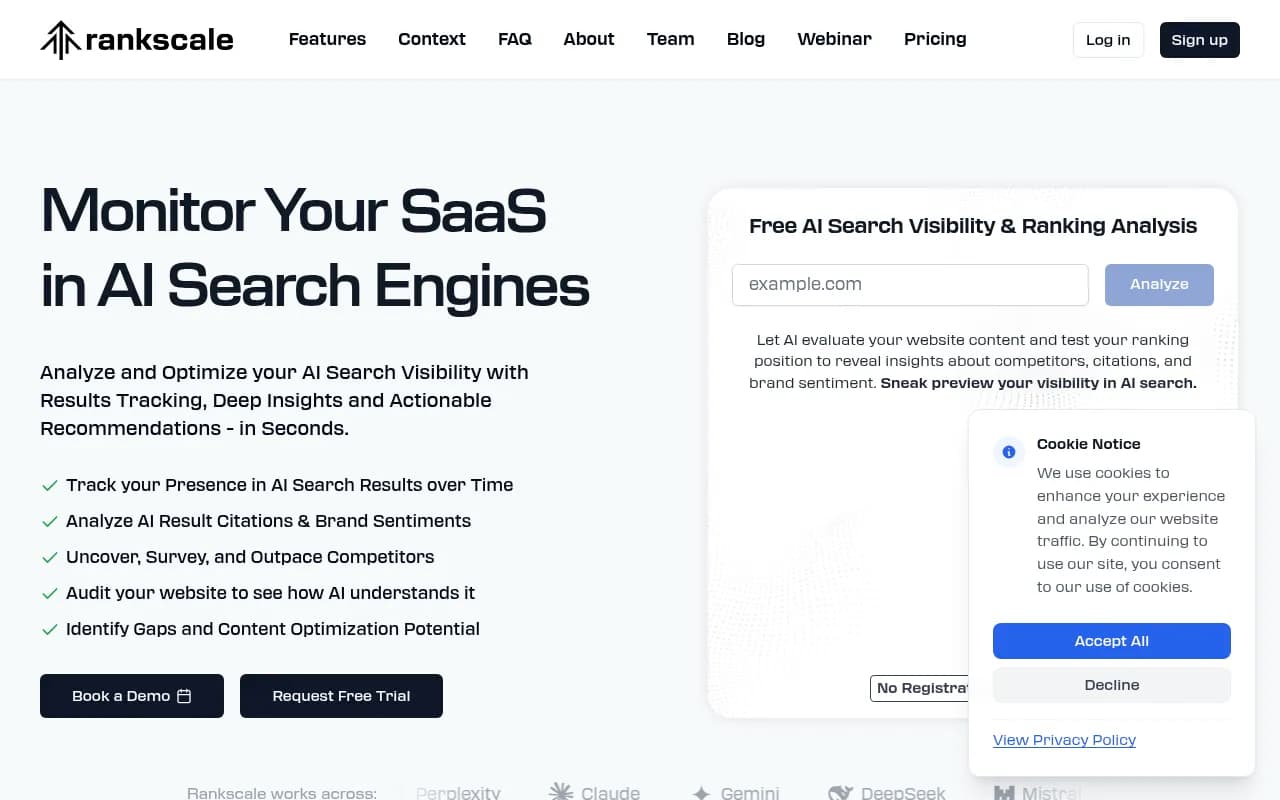
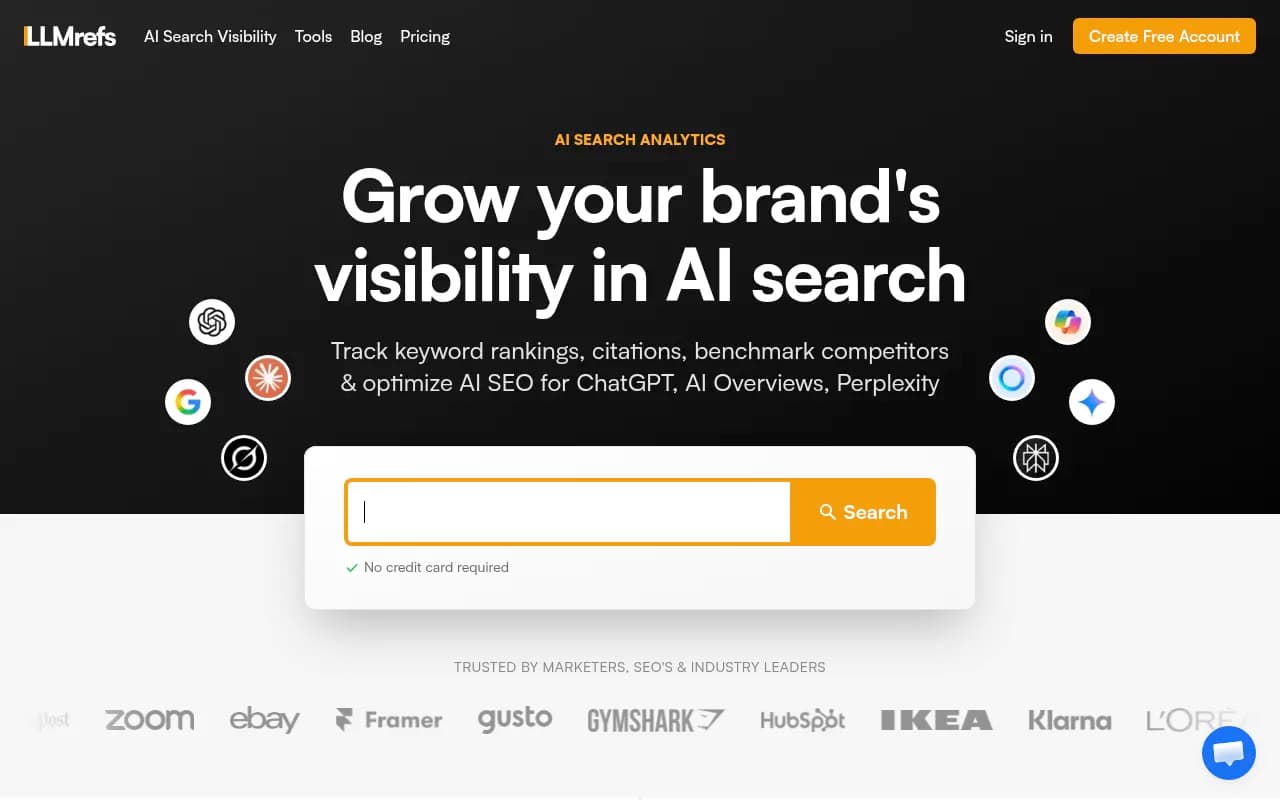
Budget tools in the $20-$99/month range (Otterly.AI at $29, Rankscale at €20, LLMrefs around $79) share a common shape: they run a fixed set of prompts against a handful of AI engines and report back mentions, sometimes sentiment, and maybe a citation list. That's it. No content generation, no crawler logs, no CMS publishing.
For teams still deciding whether AI search is worth budget at all, that's often exactly right. You don't need a $500/month execution platform to answer "does anyone mention us in ChatGPT." You need a cheap, reliable signal.

The catch is the engine cap. Otterly.AI's Lite plan covers ChatGPT, Google AI Overviews, Perplexity, and Copilot, but Google AI Mode, Gemini, and Claude are paid add-ons rather than included. That's a pattern across nearly every budget tool: the headline price gets you 3-4 engines, and the vendor's blog post touting "9 AI engines tracked" is describing their top tier, not the plan you're about to buy.
Why prompt volume matters more than it sounds
A cheap plan with 15 or 50 prompts sounds like plenty until you think about what a "prompt" actually represents. ChatGPT doesn't run one search per prompt, it fans out into multiple separate queries per response, each hitting a different angle of the question. Promptwatch's query fanout data shows this averaged close to 2 queries per response for most of early 2026 before dropping sharply. So a tool tracking "50 prompts" is sampling something closer to 50-100 underlying retrieval events, not 50 static questions.
This is also why SparkToro's research on AI recommendation consistency matters here: there's less than a 1% chance ChatGPT gives you the same brand list twice if you ask the same question 100 times. A tracker running your prompts once a week on a thin plan is sampling a genuinely noisy system. More prompts and more frequent runs aren't a luxury feature, they're what makes the data statistically meaningful instead of anecdotal.
What a full GEO platform adds (and what it actually costs)
Once you cross into the $250-$600/month range, you're generally paying for three things: broader engine coverage without add-on fees, deeper reporting (citation trends, competitor benchmarking, crawler logs), and some form of an action layer that turns findings into content.
Here's how the pricing actually breaks down once you check the live vendor pages rather than a review site's older screenshot:
| Platform | Entry price | What you get at entry | Where the real cost kicks in |
|---|---|---|---|
| Profound | $99/mo | ChatGPT only, 50 prompts | Growth tier ($399/mo) needed for 3 engines; enterprise runs $2,000-$5,000+/mo |
| Scrunch AI | $250/mo (Core) | 4 LLMs, 125 prompts, 1 page optimization/month | Full AXP execution layer and advanced content generation are Enterprise-only, custom quote |
| Peec AI | $95/mo (Starter) | 3 of 7-8 engines, 1 project, unlimited seats | Extra engines are $35-165/mo each depending on tier |
| AthenaHQ | $295/mo (or ~$245 annual) | 8-11 LLMs, 3,600 credits, basic content optimization agent | Advanced deep-research optimization and revenue attribution are Enterprise-only |
| Semrush AI Toolkit | $99/mo per domain | 25 prompts, requires an active Semrush subscription on top | Extra domains $99 each, extra prompts $60 per 50 |



Notice the pattern: nearly every platform's entry tier is a funnel toward its second tier. Profound's $99 Starter is widely described by reviewers as a nudge toward the $399 Growth plan, since multi-engine coverage and API access are gated above it. Peec AI's engine cap of 3 is fixed across all three self-serve tiers, so "unlimited seats" doesn't help you if you also need Claude and Gemini and have to pay $85-165/month extra for them.
Scrunch and AthenaHQ both show the monitoring-vs-execution gap explicitly in their own pricing tables. Scrunch's Core plan includes monitoring and citation tracking but only one page optimization per month; the full Agent Experience Platform, its actual content-fixing layer, is Enterprise-only. AthenaHQ's Starter plan gets you a "basic" content optimization agent, but the advanced deep-research version and revenue attribution live behind a custom Enterprise quote. In both cases, you're paying the mid-tier price for what is essentially still a monitoring tool, with the execution layer dangled one tier up.
The real differentiator: monitoring vs. execution
This is the part most comparison articles skip past. Dageno AI's own framing of the category nails it: the most commonly underweighted evaluation criterion is whether a tool closes the loop from monitoring insight to actual marketing execution. Most platforms diagnose. Few help you act.
That gap is exactly where price and value stop correlating cleanly. A $500/month tool that hands you a beautiful dashboard and a PDF export is not automatically better than a $95/month tool, if neither one produces a next step your team will actually take. Conversely, a platform that costs more but includes crawler logs, content briefs, and CMS publishing might save you the cost of hiring a separate content ops person.
This is where Promptwatch sits differently in the market. Instead of stopping at "here's your visibility score," it pairs monitoring with Content Agents that plan, write, and publish GEO-optimized content directly to Webflow, Framer, or WordPress, plus Unified Actions, a prioritized to-do list generated from your actual crawler, citation, and prompt data. It also tracks AI crawler logs (which most trackers under $300/month don't touch at all), Reddit and YouTube citations, and ChatGPT Shopping placements. Pricing starts at $95/month for the Essential plan, which is competitive with Peec AI or Profound's entry tier, but includes MCP and API access and all-LLM tracking from day one rather than gating engines behind add-ons.

A practical decision framework
Rather than ranking tools by feature count, work through these four questions in order.
1. Are you validating the channel, or already committed to it?
If you've never checked whether AI engines mention your brand, don't buy a platform. Run a free grader or a $20-$29/month tool for 30 days first. You're testing whether this channel matters for your category, not building infrastructure yet.
2. How many engines does your plan actually include, not the marketing page?
Check the live pricing page, not a review site's screenshot from three months ago. Scrunch AI ran a different pricing ladder earlier in 2026 that's since been retired, and AthenaHQ's price has been reported differently across sources within the same year. This category moves fast. Confirm the current entry-tier engine list, then price out what full coverage (adding Claude, Gemini, Grok if they're add-ons) actually costs before you compare two vendors' headline prices.
3. Do you have someone who will act on the data?
If your team has a content person or agency ready to turn "we're invisible for this query cluster" into a published page, a monitoring-only tool at $95-$250/month is fine, since you already own the execution layer. If you don't, either budget for a platform with a built-in content/action layer, or accept that a cheaper tracker will sit unused after month two.
4. How many brands or clients are you tracking?
Agency tiers exist for a reason. Paying Peec AI's agency pricing to track one company, or paying for 25 client seats when you manage three, is the single most common overspend pattern reviewers flag. Match seat and project counts to your actual client roster, not your growth plan for next year.
Common mistakes that blow the budget either way
| Mistake | What it looks like | Fix |
|---|---|---|
| Engine bait-and-switch | Buying based on "tracks 9 engines" then discovering your tier covers 3 | Check the exact engine list on the tier you're paying for, not the top tier |
| Add-on creep | Base plan looks cheap, then Gemini, extra domains, and extra prompts double the bill | Model your real usage (engines, prompts, seats) before comparing sticker prices |
| Credits vs. prompts confusion | AthenaHQ and Scrunch price in credits (1 credit = 1 AI response), which obscures true cost per prompt per engine | Convert everyone's pricing to a common unit before comparing |
| Treating visibility as a vanity metric | Reporting share-of-voice with no link to actual traffic or pipeline | Connect AI referral traffic to CRM or analytics, or use a platform with built-in visitor analytics |
| Buying premium before you need it | Paying $500+/month while still validating whether AI search matters for your category | Start at $20-$99/month, upgrade only when you hit a specific ceiling |
So which one should you actually pick?
If you're a solo founder or small team just checking whether this channel is worth budget, start with Otterly.AI, Rankscale, or a similar $20-$99/month tracker. Don't overthink it. You're gathering signal, not building infrastructure.
If you're a growing team with a content function already in place and you need broader engine coverage without a big add-on bill, Peec AI's unlimited-seat model or Promptwatch's Essential tier at $95/month are both reasonable starting points, depending on whether you value unlimited users (Peec) or built-in crawler logs and content publishing (Promptwatch).
If you're at the stage where visibility data alone isn't moving the needle and you need someone (or something) to actually produce the fix, that's when the $250-$600/month tier earns its price, but only if the plan you're buying includes the execution layer, not just a promise that it exists at the Enterprise tier.
For teams exploring the wider field before committing, the GEO software directory at bestgeosoftware.com is a reasonable place to compare more options side by side, and the AI rank tracking directory at ai-rank-tools.com is useful if you're purely focused on the tracking layer rather than execution.
Whatever you pick, run it for 30 days before signing an annual contract. Write down 20-30 real prompts your customers would plausibly type into an AI assistant, run them through the trial, and see whether the output actually points to something you can fix this month. If it doesn't, the tool's price tag was never the problem.