Key takeaways
- Restaurant GEO is mostly a local problem: accurate listings, reviews, menus and schema matter more than clever prompts.
- You need two kinds of tools. One layer fixes your local data (listings, reviews, social). The other measures whether AI assistants mention you.
- Promptwatch's data from Sep 28 to Oct 4, 2026 shows ChatGPT cites social platforms in just 0.46% of citations, while Google AI Overviews takes 12.2% from them. Where you invest depends on which engine your diners use.
- Single-location owners can start with a free scan and a cheap tracker. Multi-unit groups should look at listing and reputation platforms first.
- Agencies are an option, but verify any restaurant-specific claims yourself.
Why restaurants need GEO tools at all
Picture someone at 6pm typing "best Italian place near me with outdoor seating" into ChatGPT or Gemini. They don't scroll ten blue links. They get a short answer with three or four names. If yours isn't one of them, you didn't lose a ranking, you lost the table.
The numbers back this up. DoorDash's 2026 restaurant SEO guide, citing its Trends Report, says 51% of consumers discover restaurants through Google Search, and 22% have already used AI tools like ChatGPT or Gemini to help choose where to eat. Google Consumer Insights, cited in the same guide, says 76% of mobile searchers visit a restaurant within 24 hours. Search intent in this category is close to a purchase.
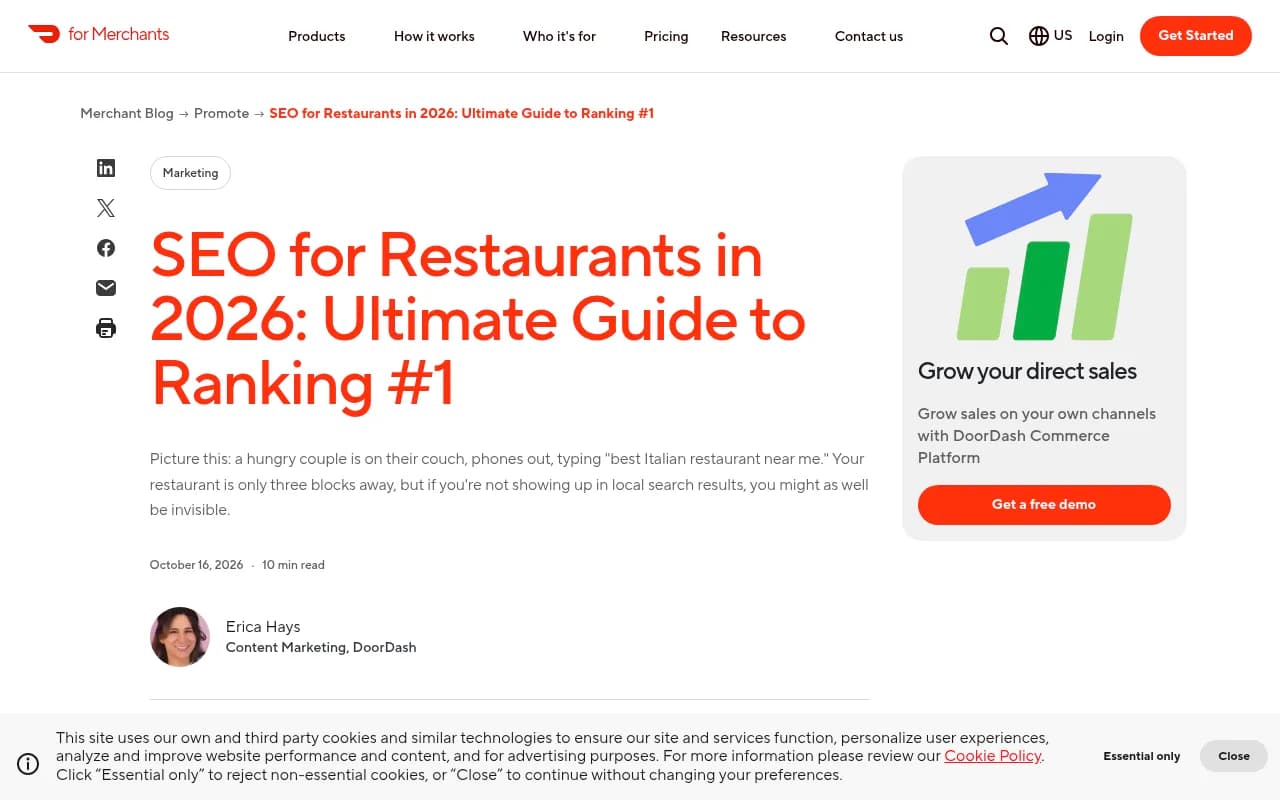
The DoorDash guide is worth a read for the keyword basics: branded searches (your name plus menu, hours, reservations) versus non-branded ones (cuisine, occasion, dish, neighborhood). Most new-customer discovery happens in the non-branded group, and that is exactly where AI answers now compete with the map pack.
What GEO means for a restaurant (and what it doesn't)
GEO, generative engine optimization, is the work of getting AI systems to name and cite your business. For a restaurant, that breaks down into plain jobs:
- Consistent name, address, phone, hours and menu across Google, Apple, Yelp, Tripadvisor and delivery apps
- A steady flow of recent, specific reviews
- Restaurant, Menu and LocalBusiness schema markup on your site (Chowly's 2026 guide lists this among its priorities)
- Mentions in local guides, press and listicles
- Complete public social profiles, depending on the engine
Notice what is missing: no one is asking you to stuff keywords into a blog. A lot of generic GEO advice is written for SaaS companies and does not transfer. A taqueria needs correct hours and a menu AI can read, not a 3,000-word thought leadership piece.
What the data says about where AI looks
I checked Promptwatch's research before deciding which tool categories matter. There is no restaurant-specific report, so the travel and social reports are the closest proxies.
On social, the split between engines is large. In Promptwatch's social media citations report (Sep 28 to Oct 4, 2026):
- ChatGPT took 0.46% of its citations from the seven tracked social platforms. Reddit fell to 0.09%, and LinkedIn was the top social source at 0.3%.
- Google AI Overviews took 12.2% from social platforms: YouTube 4.28%, Facebook 2.38%, Instagram 1.61%, LinkedIn 1.55%, Reddit 2.15%.
- Perplexity sat at 2.7%.
The practical reading: if your diners lean on Google, keep your public Facebook page and Instagram profile complete and active, and think about YouTube. Don't count on a Reddit thread to get you into ChatGPT. The same dataset shows reddit.com's share of ChatGPT citations dropped from about 4% to 0.5% in August 2026, per Promptwatch's Reddit citation report.
For hospitality-style prompts, the ChatGPT travel citation report (Sep 28 to Oct 4, 2026) shows Skyscanner, Going and Tripadvisor leading, with booking and search sites taking 2.42% of travel citations versus 0.86% for review and advice sites and 0.37% for guides like Lonely Planet and Time Out. Restaurants aren't travel, but the pattern is a useful hint: third-party listings, review sites and local guides carry weight. Keep them accurate. Get into the guides.
And on format, ChatGPT favors listicles, guides and comparisons, per Promptwatch's content type data. "Best brunch in Leeds" articles on other people's sites are often what gets cited, which is why PR and local press count.
The two layers of a restaurant GEO stack
Here is how I'd think about it.
| Layer | Job | Example tools | Best for |
|---|---|---|---|
| Local data and reputation | Keep listings, reviews and social accurate and active | Yext, SOCi, Birdeye, Hootsuite | Multi-location groups |
| AI visibility tracking | Measure whether ChatGPT, Gemini, Perplexity and AI Overviews mention you | Promptwatch, Otterly.AI, Peec AI, Profound | Anyone who wants proof |
| Technical and content | Schema, crawlability, menu pages, guides | Screaming Frog, Sitebulb, Surfer SEO | Sites with their own web presence |
| Mention and PR monitoring | Spot press, blog and social mentions | Brand24, Mention, Awario | Brands chasing local coverage |
Most restaurants skip the first layer's importance and jump straight to tracking. That is backwards. A tracker tells you that you're invisible. It doesn't fix a wrong phone number on Apple Maps.
Layer 1: local listings, reviews and social
Yext
Yext pushes consistent business data (hours, menus, locations, attributes) to a large network of publishers and AI-facing sources. For a group with dozens of locations where a holiday-hours change needs to land everywhere at once, this is the backbone. For a single café, probably overkill.
SOCi
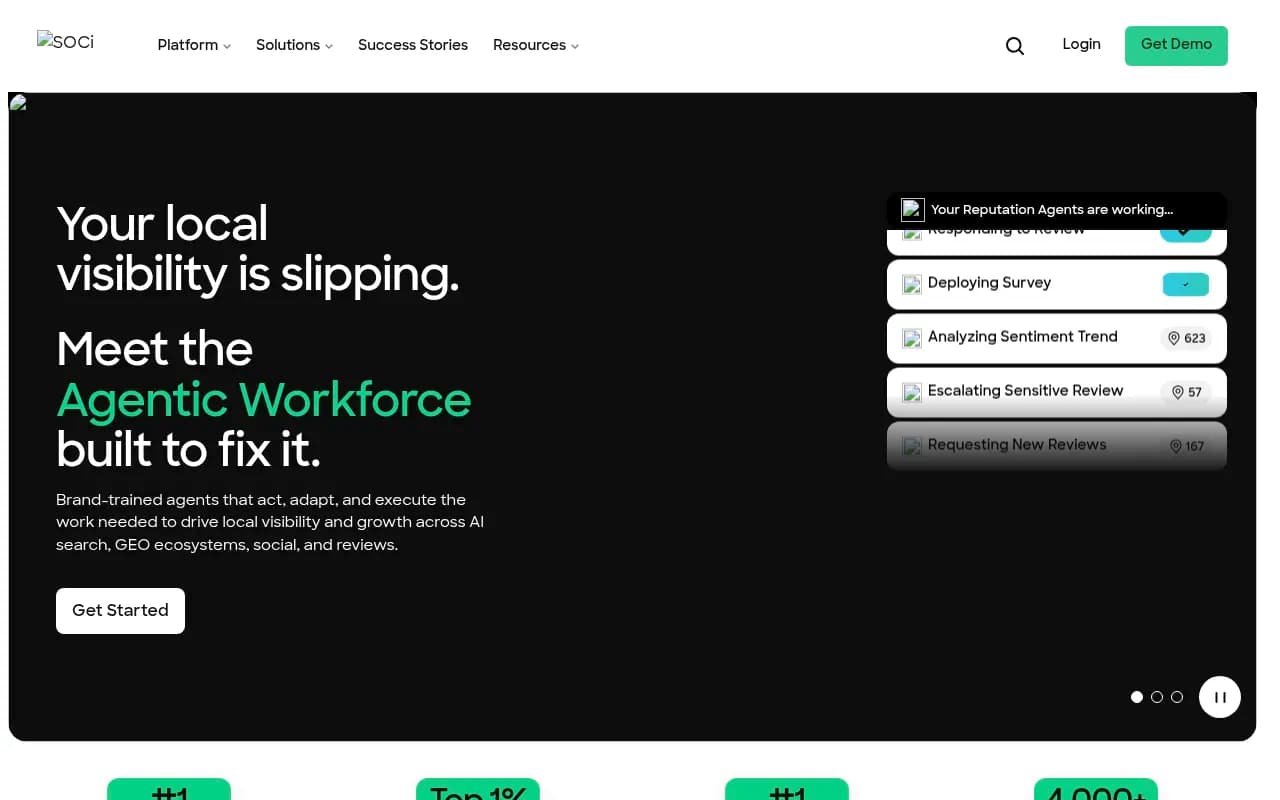
SOCi describes itself as agentic AI that runs local search, social and reviews for multi-location brands. It suits franchise and multi-unit operators who want one place to manage all three.
Birdeye
Reviews matter a lot here, since review and advice sites are among the sources AI engines lean on. Birdeye handles review requests, replies and reputation across locations.
Hootsuite
If you take the AI Overviews findings seriously, a complete and active Facebook and Instagram presence is worth maintaining. Hootsuite or a similar scheduler keeps that from depending on whoever remembers to post.
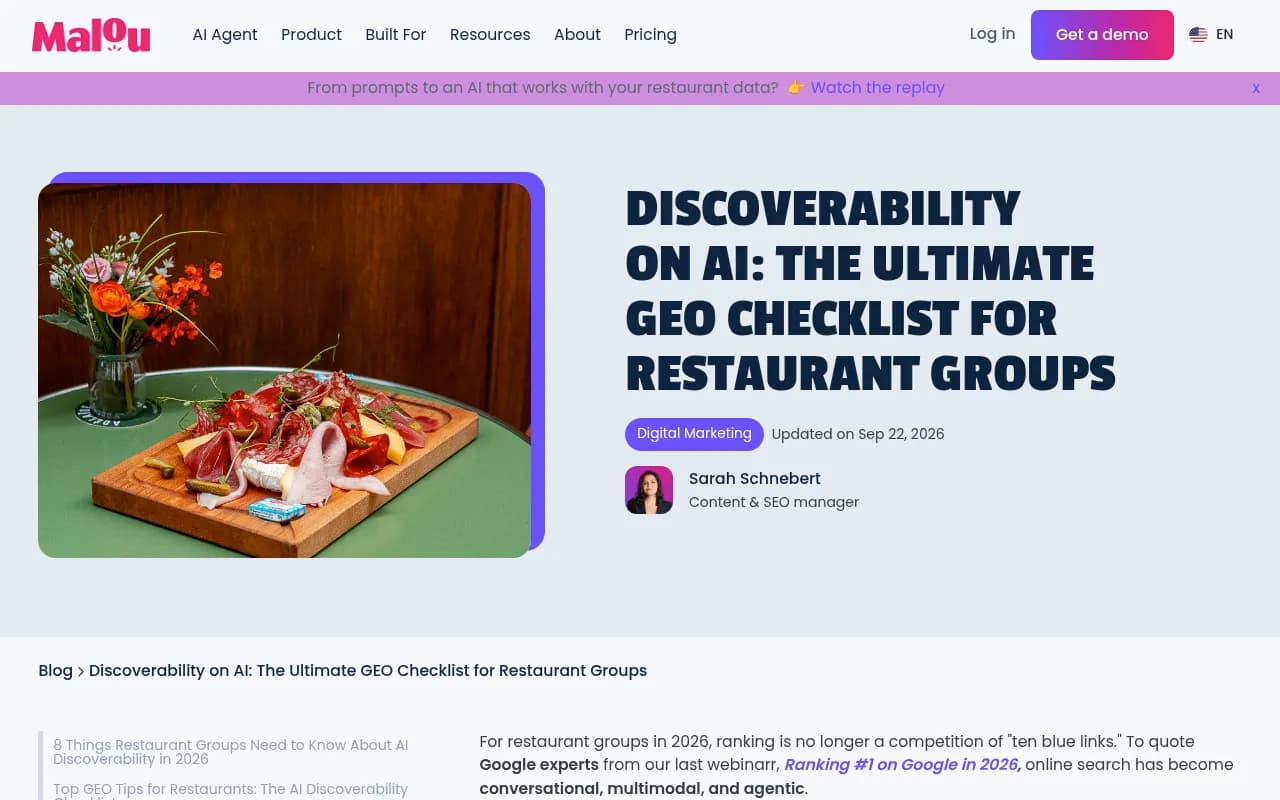
The hospitality-specific platform Malou also publishes a 2026 GEO checklist for restaurants and sells restaurant-group tooling. It is not in our catalog, so I haven't evaluated it, but the checklist is a reasonable reference if you run a group.
Layer 2: AI visibility tracking
This is where you find out what ChatGPT, Gemini and Perplexity actually say about you. The key restaurant use case: track prompts like "best sushi in [city]", "romantic dinner near [neighborhood]", "vegan brunch [city]" and watch whether you appear, where, and which sources the AI cites for the winners.
Promptwatch
Promptwatch is the one I'd start with if you want more than a mention counter. It tracks the real interfaces of ChatGPT, Google AI Overviews, AI Mode, Gemini, Perplexity and others by country (state and city tracking starts on the Business plan, which matters for local food brands). It shows which pages and third-party sources get cited, which Reddit, YouTube and LinkedIn items AI uses, and flags gaps where competitors are cited and you aren't. The Action Board turns that into a to-do list, and the Content Agent can draft and publish pages to WordPress, Webflow or Framer. For a restaurant, the useful part is seeing which local guides and listicles feed the answers you want to be in.
Pricing runs from a free Explore tier (1 project, 10 prompts, ChatGPT only) to Essential at $95/month and Professional at $245/month. Agencies have their own plans from $199/month. Confirm current numbers at promptwatch.com/pricing.

There is also a free AI Visibility Report that scans without a login, which is a decent first step before paying for anything.
Otterly.AI and Peec AI
Both are lighter prompt trackers. If you only need a monthly look at whether your name appears for a set of local queries, they are cheaper and simpler. You won't get crawler logs or content workflows, so treat them as a thermometer.


Profound
Profound is a strong monitoring platform aimed at larger brands. For a national restaurant chain with a real analytics team it is worth a demo. For a neighborhood bistro, the price point doesn't make sense.

Smaller and budget trackers
A long tail of cheaper tools exists, including Airefs, BrandAxis, Atyla and Mentionable. If you're a solo owner, these are fine for a sanity check. I'd be careful about paying for anything that only counts mentions without showing the sources behind them, because sources are what you can act on.
Layer 3: your own website
Many restaurant sites are a PDF menu and a reservation widget. AI crawlers can't do much with that. Three fixes pay off:
- Put the menu on the page as real HTML text, not an image or PDF.
- Add Restaurant, Menu and LocalBusiness schema. Chowly's 2026 restaurant SEO guide lists schema among its top priorities.
- Check that crawlers can reach the site and that nothing is blocking them.
For crawl audits, Screaming Frog and Sitebulb are the standard picks. Both are overkill for a five-page site but good for chains with hundreds of location pages.
For writing location pages and neighborhood guides, Surfer SEO helps with structure, though be wary of generic AI text. Local specifics (the dish, the street, the owner's story) are what make these pages worth citing.
Layer 4: mentions and press
Because AI engines pull from listicles and guides, being named in other people's "best of" pieces matters. Monitoring tools like Brand24, Mention and Awario will alert you when your restaurant is named, including without a link, so you can thank a writer or correct a detail.
Picking by business type
| Business | Start with | Add later |
|---|---|---|
| Single restaurant or café | Free AI Visibility Report, Google Business Profile, schema | Promptwatch Essential or Otterly.AI |
| Small group (2 to 10 sites) | Birdeye or similar for reviews, Promptwatch Professional | Yext for listings |
| Franchise or large chain | Yext or SOCi, Promptwatch Business (city tracking) | Profound or enterprise suites |
| Food brand selling online (CPG, meal kits) | Promptwatch with Shopping tracking, Surfer SEO | Mention monitoring |
| Agency serving restaurants | Promptwatch agency plans, white-label reporting | Brand24 for client PR |
Food brands that sell products (sauces, snacks, drinks) have a different problem: ChatGPT shopping carousels and product pages. Promptwatch's own data says product pages are the most cited content type in ChatGPT at 22.4% of citations (Sep 28 to Oct 4, 2026), so product page quality is the lever, not a blog.
A 30-day plan that doesn't need a big budget
- Week 1: Audit your listings. Google, Apple Maps, Yelp, Tripadvisor, delivery apps. Fix hours, phone, address, menu. This is free.
- Week 1: Run a free AI visibility scan and ask ChatGPT, Gemini and Perplexity ten real diner questions by hand. Screenshot the answers.
- Week 2: Make the menu crawlable HTML and add schema.
- Week 3: Ask your last 30 happy customers for reviews on the platforms AI cites. Reply to every review.
- Week 3: Pitch two local food writers or guide sites. A mention in a local roundup is often worth more than a blog post on your own site.
- Week 4: Start tracking 20 to 50 local prompts in a tool, and review which sources show up when competitors win.
Should you hire an agency?
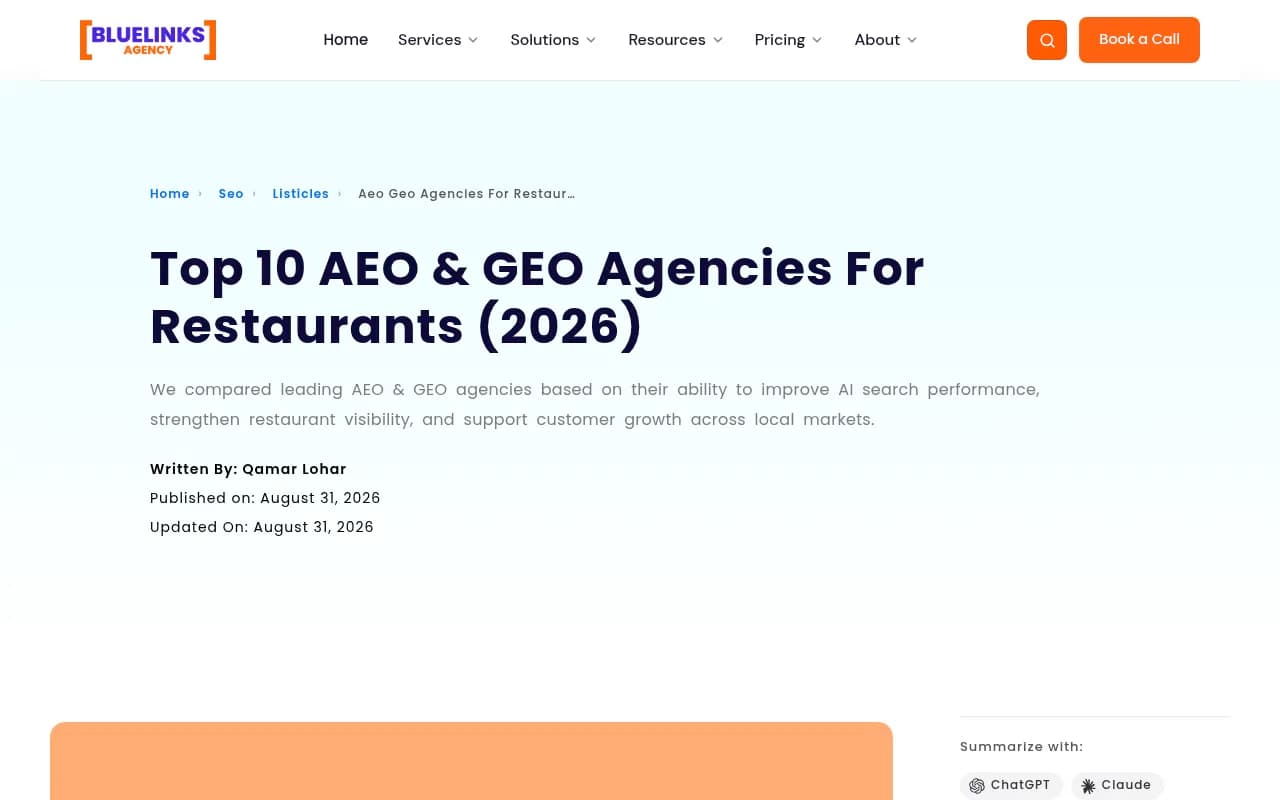
Some restaurants will. Bluelinks Agency published a list of AEO and GEO agencies for restaurants (August 2026), naming firms like Brandtailers, Hudson Creative, Gourmet Marketing and The Digital Restaurant. Note that the list is published by an agency that ranks itself first, so I'd treat it as a starting list, not a verdict.
If you want a broader SEO and GEO partner, 1001 SEO Media, which publishes this site, offers local SEO, technical SEO and AI search work with no long-term contracts. Whoever you pick, ask what they will track and how they will show the change in AI mentions, not just rankings.
For wider comparisons beyond restaurants, the GEO software directory at bestgeosoftware.com lists more options.
Mistakes I see repeatedly
- Buying a tracker before fixing listings. You'll just watch the wrong data get repeated.
- Chasing Reddit for ChatGPT visibility. The data says it barely registers there now.
- Ignoring Google AI Overviews. If your diners use Google, Facebook, Instagram and YouTube presence counts more than for ChatGPT.
- Tracking only your own name. Branded prompts tell you little. Track the non-branded ones: cuisine, occasion, neighborhood.
- Treating one snapshot as truth. AI answers vary by run, location and model. Look at trends over weeks.
Bottom line
Get the local data right first, then measure. For most single-location restaurants that means a free scan, clean listings and a crawlable menu. For groups, a listings and reviews platform plus a tracker like Promptwatch that can follow prompts by city and show which third-party pages the AI is leaning on. The tools are the easy part. The work is making sure every source an AI might read says the same true thing about your restaurant.