Key takeaways
- Local GEO for real estate is about being named when a buyer asks an AI assistant for the best agent, brokerage or neighborhood expert in a specific market. Rank tracking alone won't tell you that.
- You need three layers: AI answer tracking by location, local listing and review consistency, and content that AI can actually cite. Few tools cover all three.
- Individual agents and small teams should start with a lightweight tracker plus a local listings tool. Portals and multi-market brokerages need page-level data, crawler logs and market-by-market reporting.
- Product and landing pages are the most cited content types in ChatGPT, per Promptwatch Data. Neighborhood and service-area pages deserve the same care as your homepage.
- I did not find real estate-specific pricing in the research behind this guide, so confirm every price with the vendor before you buy.
What local GEO means for real estate
A buyer used to type "realtor near me" into Google and scroll a map pack. Now they ask ChatGPT, Gemini or Perplexity something like "who are the best agents for first-time buyers in Fort Collins?" and get a short list with reasons. If you're not on it, you're not in the conversation.
The National Association of REALTORS has started covering this directly. Its piece on finding your GEO to land your next referral from AI frames the idea of the AI-recommended agent, and it's worth a read if you want the industry framing.
Here's the awkward part. Local GEO isn't one discipline. It's a mix of classic local SEO (Google Business Profile, citations, reviews), AI answer monitoring, and content work. Real estate adds its own wrinkles: listings change daily, IDX pages are often thin or rendered by JavaScript, and agents are judged on reviews and local proof more than almost any other profession.
The Bulletproof test of real estate SEO vendors on September 30, 2026 shows the technical gap. On the sites it checked, real estate agent schema was added by JavaScript after load on 3 of 9 Luxury Presence sites, and 0 of 11 Sierra Interactive sites had anything beyond generic Organization schema with no location or service area. If your site platform does that, an AI crawler may never see who you are or where you work.
How AI engines pick local real estate answers
Two findings shape how I'd spend a budget.
First, content type. Promptwatch Data for Sep 28 to Oct 4, 2026 shows product pages at 22.4% of classified ChatGPT citations and landing pages at 16.8%, about 39% together. Listicles are 13.6%, how-tos 8.7% and FAQ pages 3.3%. For commercial prompts like "best X for Y", product and landing pages, listicles and comparisons make up almost 70% of citations. This report isn't real estate-specific, so treat it as a directional signal. Translated to your site: service-area pages, neighborhood guides, buyer and seller landing pages, and comparison content ("renting vs buying in Denver") are your best bets.
Second, social sources differ by engine. In the same period, Promptwatch Data on social citations shows social platforms made up 0.46% of ChatGPT citations but 12.2% of Google AI Overviews citations. YouTube was 4.28% and Facebook 2.38% in AI Overviews. Agents who post local video and keep a public Facebook page active have a real reason to keep doing it, at least for Google-driven discovery. Reddit's share in ChatGPT collapsed in August 2026, so don't build a ChatGPT strategy on it.
One more number: almost half of ChatGPT responses cite 10 or more unique domains. Local answers are assembled from many sources, so your profile on third-party sites matters as much as your own pages.
Who needs what
Onely's research on real estate SEO agencies makes a useful point: AI answers for "best real estate SEO agency" are written for an individual agent choosing a website, and 7 of the 17 providers the engines named sell a real estate website or CRM. Brokerage networks, portals and developers barely appear. The same split applies to tools.
| Buyer type | Main problem | What to prioritize |
|---|---|---|
| Solo agent | Not named when buyers ask for local agents | Local listings sync, reviews, a simple AI tracker |
| Team or small brokerage | Inconsistent profiles across agents and offices | Listings management, social and review tooling, prompt tracking by city |
| Multi-office brokerage | Many markets, uneven visibility | Per-market reporting, content gap analysis, crawler data |
| Property portal or marketplace | Millions of pages, AI can't read or cite them well | Crawler logs, technical audits, page-level citation tracking |
| Proptech and developers | Selling across regions and languages | Multi-country tracking, content operations |
Best tools for tracking local AI visibility
These answer the first question: when someone asks an AI engine about agents or property in my market, am I named?
Promptwatch
Promptwatch is the one I'd shortlist first for brokerages and portals, because it goes past "were you mentioned" into why and what to do next. It monitors the real interfaces of ChatGPT, Google AI Overviews, AI Mode, Gemini, Perplexity and Copilot, with country tracking on every paid plan and state and city tracking from the Business plan. For a brokerage that cares about "best agent in Austin" versus "best agent in Dallas", that city-level tracking is the feature that matters.

For portals, the IP-verified AI crawler logs are useful: they show whether GPTBot or other AI crawlers are reading your listing and neighborhood pages or hitting errors. Its Content Agent can then draft and publish pages to WordPress, Webflow or Framer against the gaps it finds. Pricing starts at $95/month for Essential and $579/month for Business; check promptwatch.com/pricing for current numbers.
Profound, Scrunch and AthenaHQ
These are strong monitoring platforms aimed at larger brands. Profound tends to be priced for enterprise buyers, which makes it more realistic for a national brokerage than a five-agent team.

Otterly.AI, Peec AI and LLM Pulse
These are lighter trackers. They suit a small team that wants to check a few dozen prompts such as "best realtor in [city]" and watch the trend. You won't get crawler logs or content workflows, but you will get a straightforward visibility readout.


Budget trackers for solo agents
If you're a single agent, a full platform is probably overkill. BrandAxis, Atyla and Radix AI are all pitched as lower-cost options for small teams. I haven't verified their local-prompt handling, so run a free trial with your actual market queries before paying.
SE Ranking and Semrush
If you already pay for a traditional SEO suite, check the AI visibility add-ons first. SE Ranking has an AI visibility toolkit, and Semrush One bundles AI tracking with classic SEO. The trade-off is that prompt sets tend to be more fixed than in dedicated platforms.
Best tools for local presence and reviews
AI engines lean on the same local signals Google does: consistent name, address and phone data, reviews, and active profiles. Tracking tools won't fix those.
Yext and SOCi
Yext is a digital presence platform that pushes consistent business data across directories and AI answer sources. It's built for multi-location businesses, so it fits brokerages with several offices better than a solo agent.
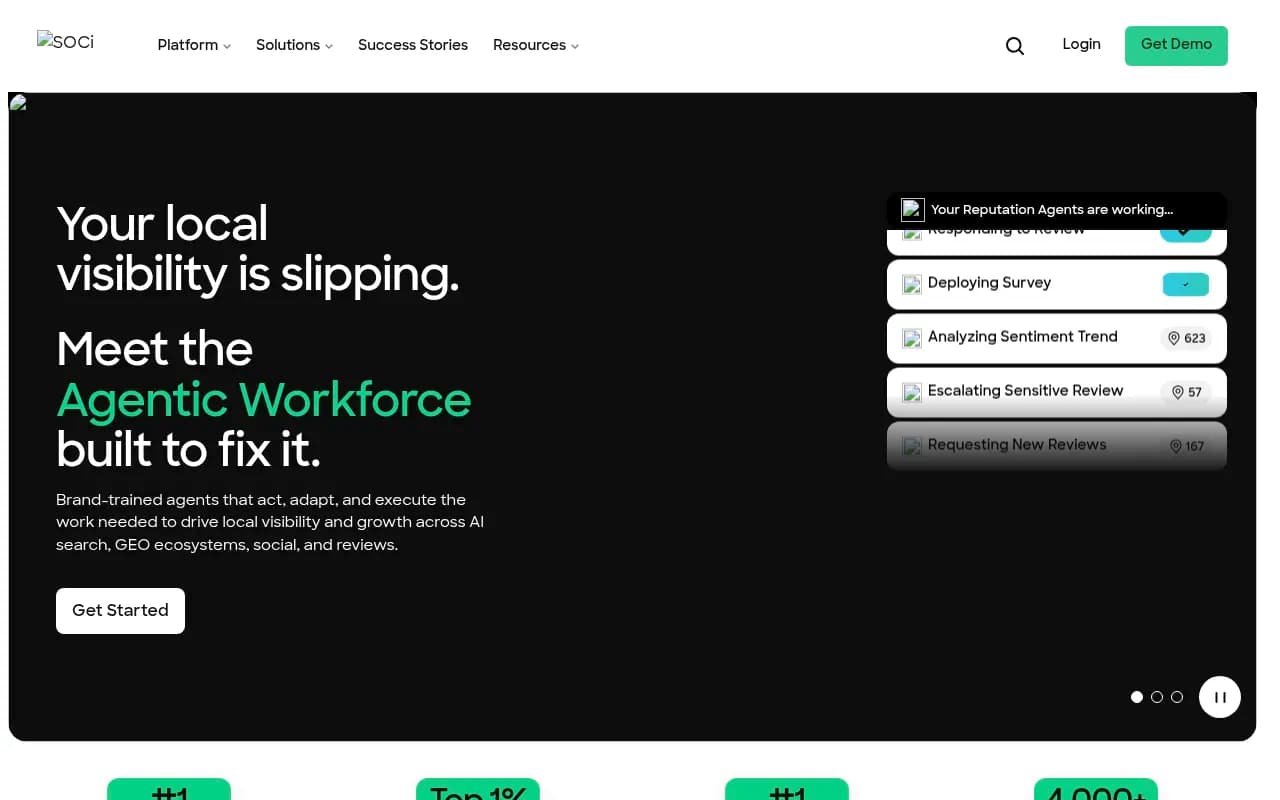
SOCi is positioned around agentic local search, social and reviews for multi-location brands. Think of it as the layer that keeps every office profile alive.
Birdeye
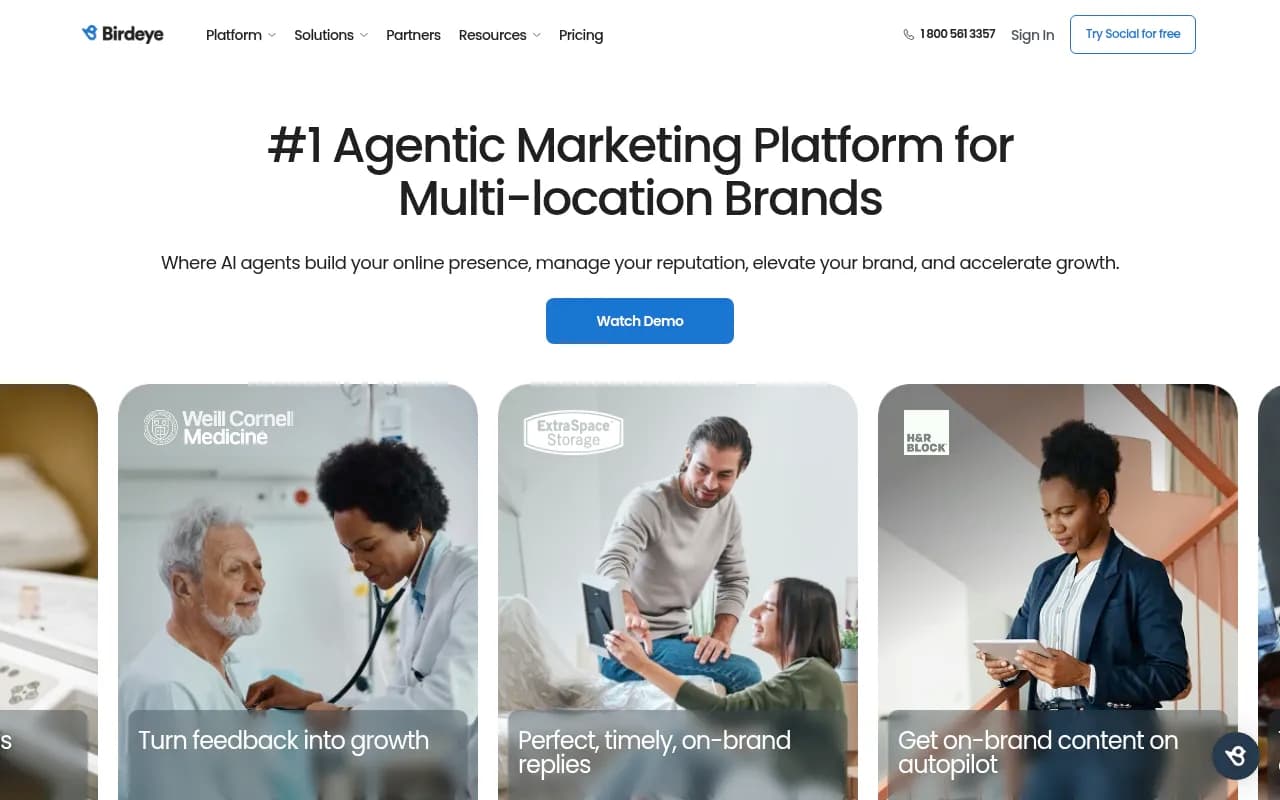
Reviews matter for branded prompts. Promptwatch's content type report found reviews at 5.6% of citations for branded prompts, more than three times their overall share. Birdeye handles review requests and reputation management, which is the unglamorous work that feeds this.
Best tools for technical health and content
This is where portals and big brokerages win or lose. If AI crawlers can't read your pages, nothing else counts.
| Tool | Use it for | Best for |
|---|---|---|
| Screaming Frog | Crawling listing and neighborhood pages, checking schema and rendering | Any site with technical SEO resources |
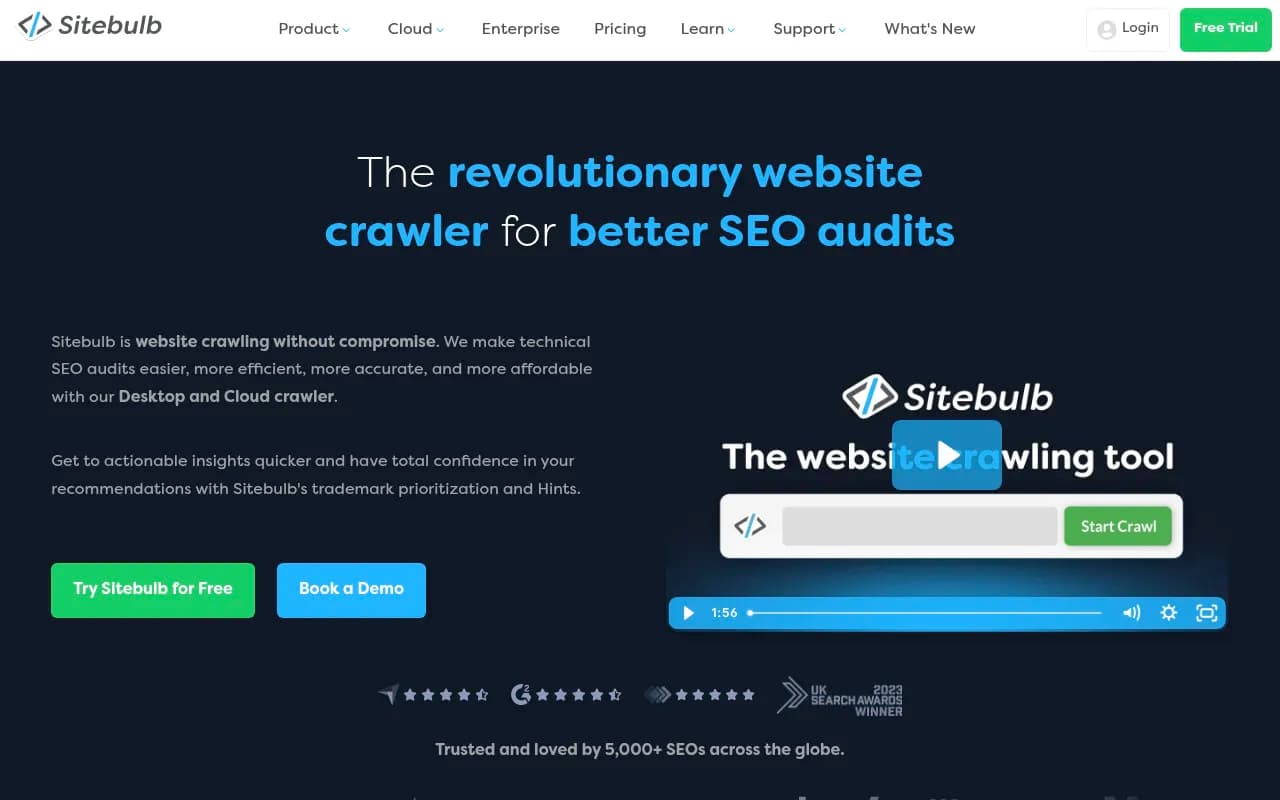
| Sitebulb | Visual technical audits and reporting | Agencies and in-house SEOs |
| Botify | Enterprise crawl and GEO data | Large portals |
| Lumar | Site health at scale | Multi-market brokerages |
| InLinks | Entity-based internal linking and schema | Teams building neighborhood content clusters |
| Surfer SEO | Optimizing local landing pages and guides | Content teams |
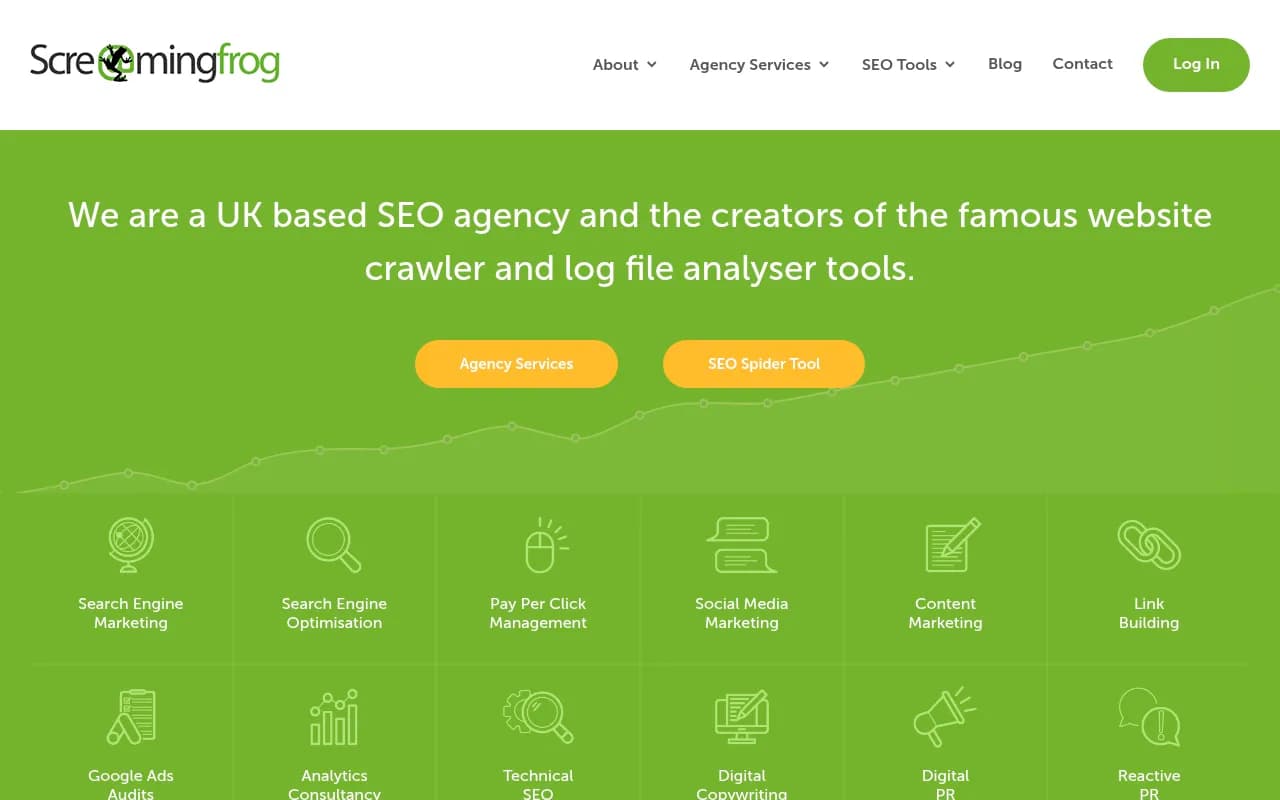
A quick test worth running: crawl your agent or office pages with JavaScript disabled and check whether your service area and agent schema still show up. If not, you've found the same issue Bulletproof flagged on several real estate platforms.
Best tools for AI drafting and workflow
HouseCanary's list of 18 AI tools for agents covers valuation, forecasting and market intelligence tools like its own AVM and PropStream, and MoxiWorks lists CRM-centered options such as BoldTrail, Lofty and Rechat. Those help you run the business. They aren't GEO tools, so I'd treat them as separate purchases.
For the content side of GEO, general models work fine for first drafts of neighborhood guides if a human adds local facts.
For automation, such as sending new-listing data into a content workflow, Zapier and n8n are the usual choices.
Side-by-side comparison
| Tool | Local/city tracking | Content or action features | Best fit |
|---|---|---|---|
| Promptwatch | Country on all paid plans, state/city from Business | Content Agent, Action Board, crawler logs | Brokerages, portals, agencies |
| Profound | Monitoring focus | Limited execution | Large national brands |
| Otterly.AI | Basic prompt tracking | None | Small teams |
| Peec AI | Multi-language tracking | None | Small teams, multi-language |
| SE Ranking | Add-on to SEO suite | SEO tooling | Teams already on SE Ranking |
| Yext | Listings and local data | Data distribution | Multi-office brokerages |
| SOCi | Local social, reviews | Agentic local marketing | Franchise-style brokerages |
| Birdeye | Reviews | Reputation workflow | Any agent or office |
Verify the location features of each vendor yourself. The research behind this guide did not include real estate-specific feature or pricing comparisons.
A practical local GEO workflow
Here's how I'd set this up for a mid-sized brokerage, and you can scale it down.
- Build a prompt list by market. Include "best real estate agent in [city]", "best brokerage for first-time buyers in [neighborhood]", "how much does it cost to sell a house in [city]", and competitor comparisons.
- Run the prompts across ChatGPT, AI Overviews, AI Mode and Perplexity. Record who gets named and which sources are cited.
- Audit the cited sources. If Zillow, local news or a review site keeps appearing, you know where to build presence.
- Fix the basics. Consistent NAP data, active Google Business Profiles, public Facebook and Instagram pages, and agent schema with service areas.
- Publish what AI cites. Neighborhood landing pages, buyer and seller pages, comparisons and FAQs. Keep prices, fees and positioning complete on those pages.
- Add local video. YouTube is the largest social source in AI Overviews, and neighborhood walk-throughs are natural for agents.
- Refresh on a schedule. Promptwatch's half-life data shows news pages lose half their citations in about 5 weeks while landing pages and docs keep most of theirs for months. Market-update posts will decay fast; evergreen area pages won't.
- Measure outcomes by market, not in aggregate. A brokerage with ten offices needs ten scorecards.
Mistakes I see most often
Treating AI visibility as a ranking. Answers vary by prompt, location and model, so one screenshot proves nothing. Track a set over time.
Buying a tracker and stopping there. Knowing you're invisible in a market is step one, and plenty of teams stall on it.
Ignoring the website platform. If your IDX or template vendor renders schema with JavaScript or produces near-duplicate pages, the best tool in the world won't fix it. Ask the vendor.
Copying generic content. AI engines cite pages that say something specific: school districts, commute times, HOA norms, recent sale prices. Thin "Homes for sale in [city]" pages don't earn citations.
When to hire an agency
If you run a portal or multi-market brokerage, the work is large enough that a specialist partner can pay for itself. Onely says openly that it focuses on enterprise and international real estate and is not the match for a single local agent, so choose based on fit. A full-service team like 1001 SEO Media covers technical SEO, content and GEO under one roof, with no long-term contracts, and is one option to evaluate. For a solo agent, start with the tools above before spending on retainers.
If you want to browse more options, the GEO software directory at bestgeosoftware.com lists a wider set of AI visibility platforms.
Where to start
Solo agents: a budget tracker, a reviews tool and a tidy Google Business Profile. Teams: add listings consistency and per-city prompt tracking. Portals and large brokerages: begin with a technical crawl and AI crawler logs, then move to content gap work with a platform such as Promptwatch. Whatever you choose, run a trial with your own market prompts before committing, since local results are the part vendors demo least.