Key takeaways
- Start with the stage you are missing, not the logo. Tools split into watch (tells you where you stand), diagnose (tells you why) and act (changes something). Most flat dashboards mean you own a watch tool and need a different one.
- Your industry decides which sources AI trusts. Healthcare answers lean on NIH and the FDA, travel on booking sites, automotive on marketplaces, software on docs and GitHub. A good tool must track the sources that matter in your vertical.
- Team size and budget narrow the field quickly. A $29 monitor, a $99 to $300 mid-tier tool and an enterprise platform solve different problems.
- Run a manual baseline for a week before paying for anything. Check what ChatGPT, Perplexity, Gemini and Claude say about your top buyer questions.
- Verify pricing on vendor sites. Published numbers in roundups go stale fast.
Why a decision framework beats another top 10 list
I have read a lot of GEO tool roundups this year. Most of them end up recommending whatever the author tested last or whatever pays an affiliate commission. The lists disagree with each other, and for good reason: the right tool for a Dutch bank is not the right tool for a three-person DTC brand.
GEO (generative engine optimization) and AEO (answer engine optimization) describe the same practice. The term GEO comes from a November 2023 arXiv paper out of Princeton, Georgia Tech, the Allen Institute for AI and IIT Delhi, and the market now uses both names interchangeably. So when you see 12 vendors that appear in every roundup, that is one category, not two.
What separates them is how far they take you. The rest of this guide walks through that, then layers on industry, team size, budget and a short checklist you can run in a demo.
Step 1: Decide which stage you are missing
Rework's 2026 roundup frames the category as three stages, and it is the most useful lens I have found.
| Stage | Question it answers | Typical output | Example tools |
|---|---|---|---|
| Watch | Am I mentioned, and how often? | Prompt tracking, share of voice, dashboards | Peec AI, Otterly.AI, Rankscale, Ahrefs Brand Radar |
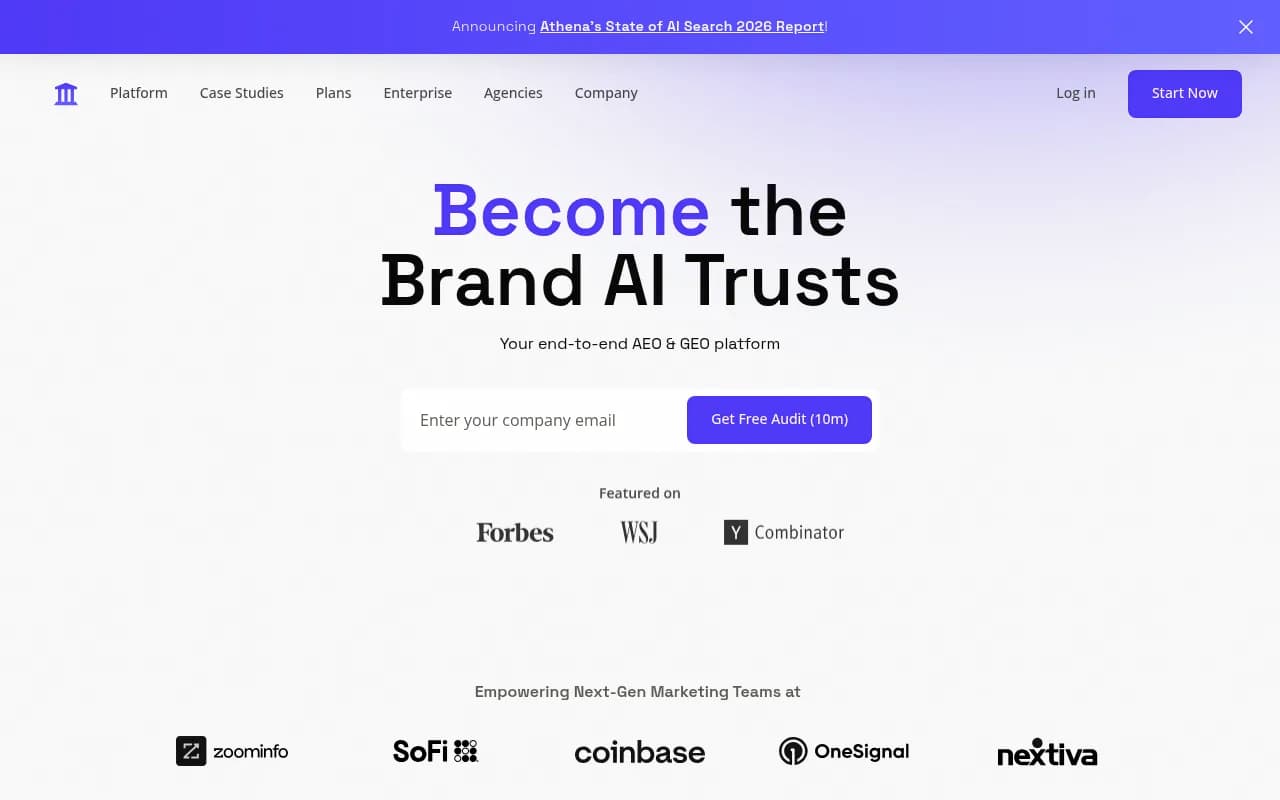
| Diagnose | Why am I missing, and what is wrong? | Audits, gap analysis, accuracy checks | AthenaHQ, Semrush, Conductor |
| Act | What changed on my site or content? | Drafted content, publishing, prioritized to-do lists | Profound, Goodie, Scrunch, Trakkr.ai |
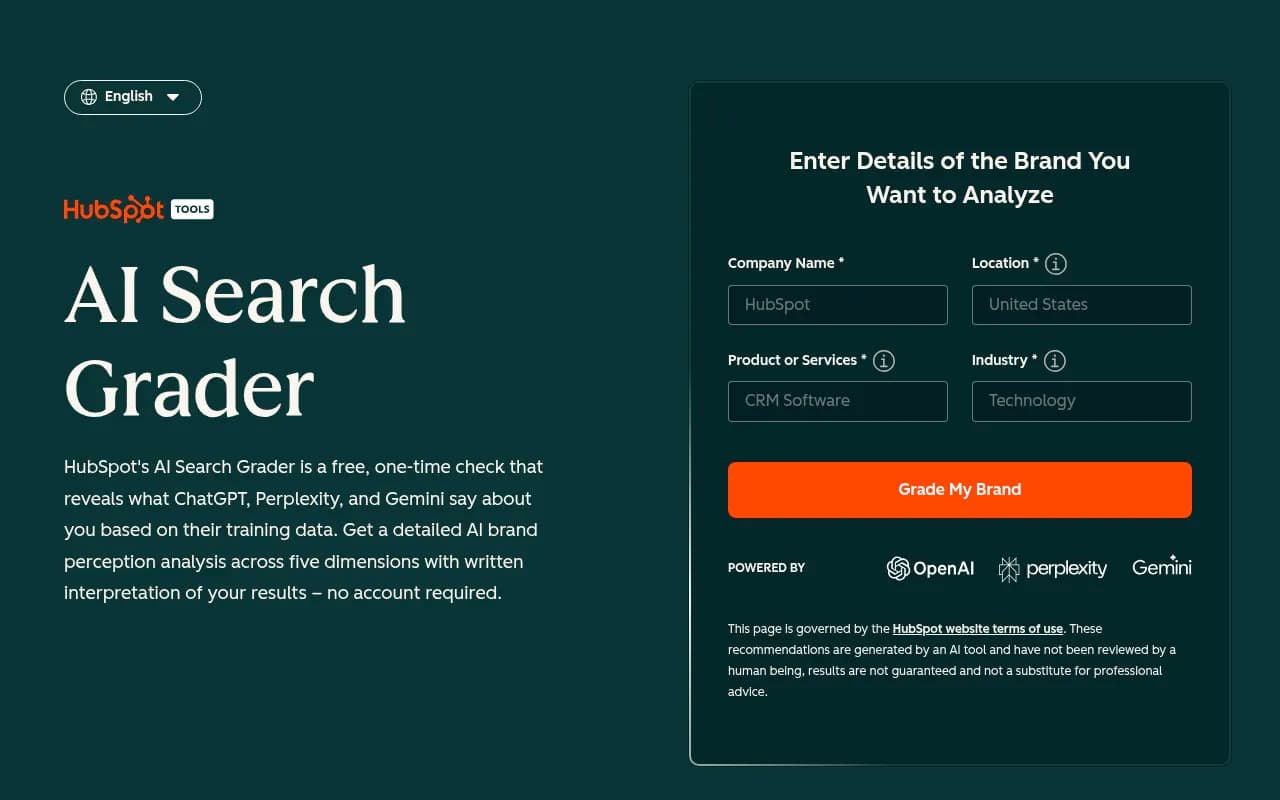
If you have never checked whether AI engines mention you, you do not have a tooling problem yet. Spend a week testing your top 20 buyer questions by hand across ChatGPT, Perplexity, Gemini and Claude, or run a free check such as the HubSpot AEO Grader.
If you already track mentions and the line is flat, you need diagnose or act capability. Buying a second dashboard will not help.
Step 2: Use a four-pillar check to find your real gap
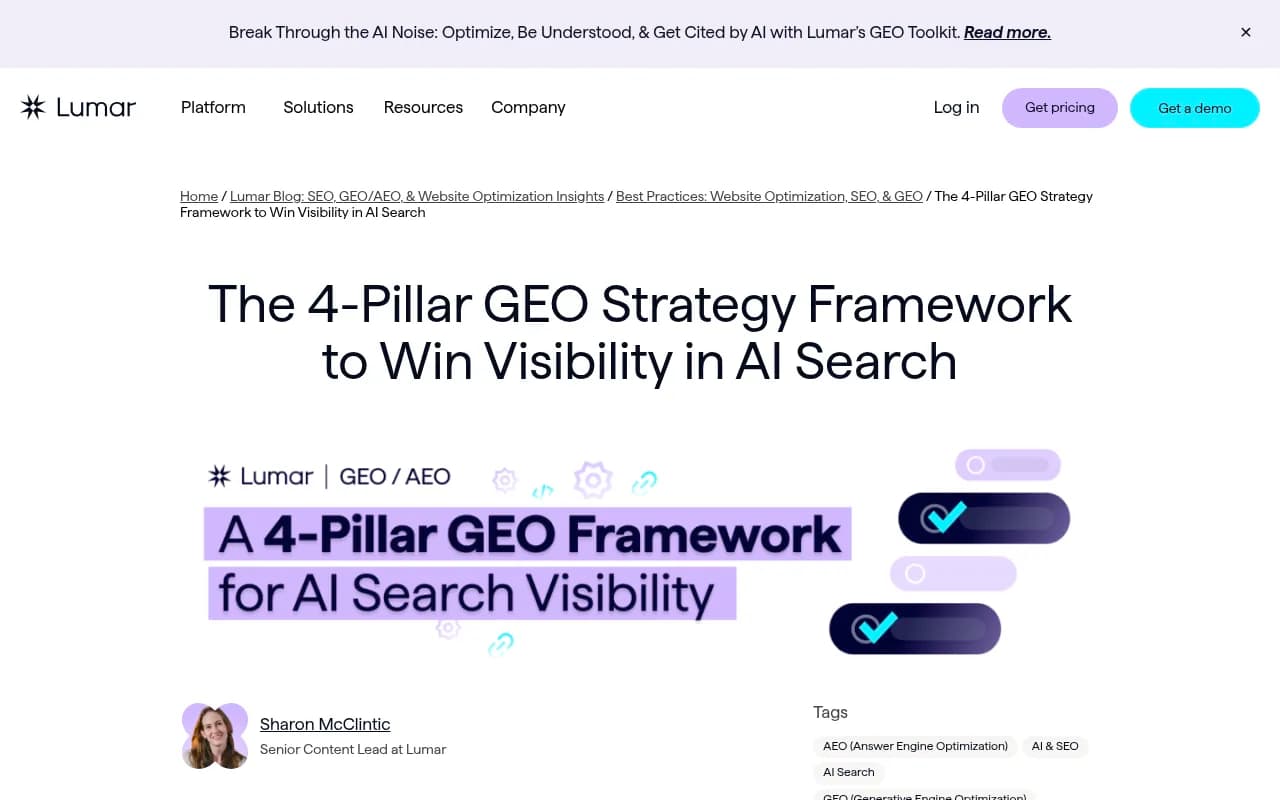
Lumar's four-pillar GEO framework is a handy way to work out what you actually need diagnosed. The pillars are technical GEO (can AI bots access and render your content), content GEO (is it structured for extraction), entity GEO (does AI know what your brand is) and brand authority GEO (do trusted third parties mention you).
Map each pillar to a tool type:
- Technical problems need crawler logs and site audits. Technical crawlers like Lumar and Botify cover this from the SEO side.
- Content problems need gap analysis and content tooling.
- Entity and authority problems need citation and offsite-mention data, which pure prompt trackers rarely show.
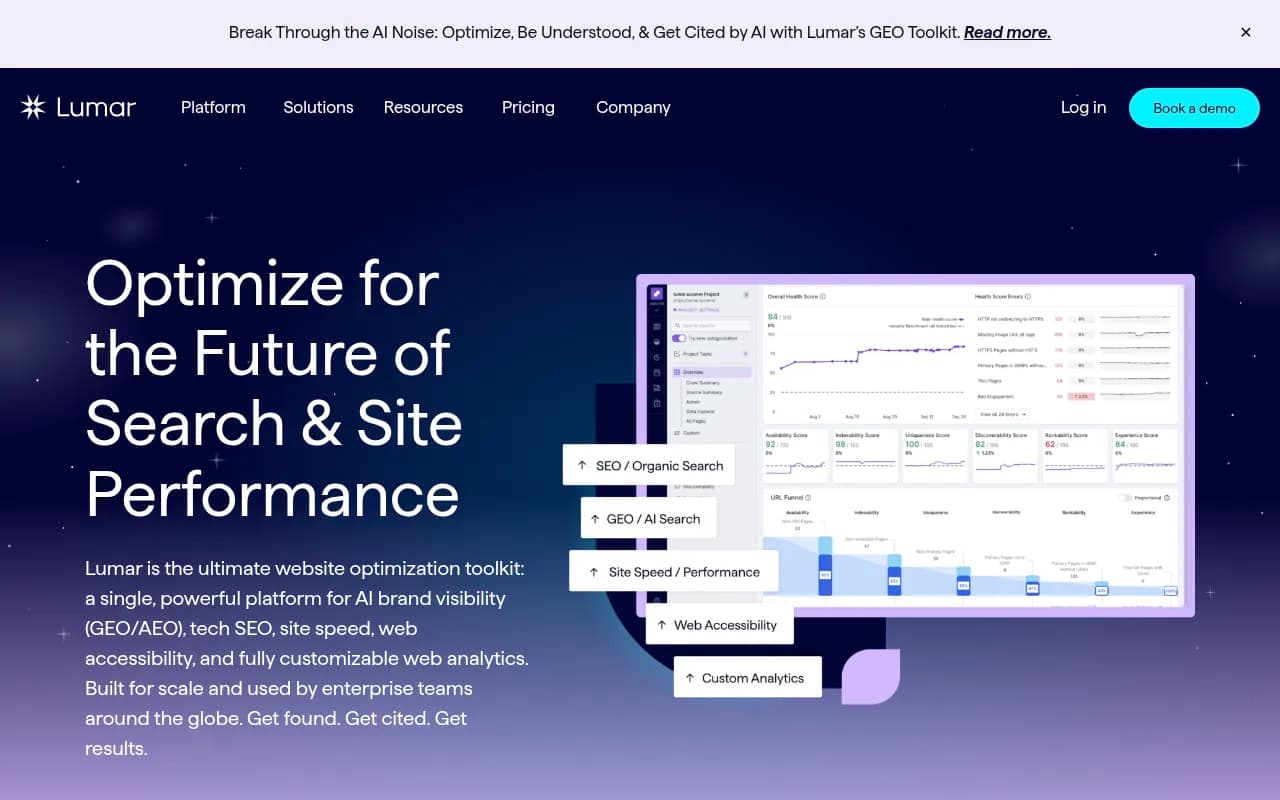
I would argue the technical pillar is the one most buyers skip. If AI crawlers hit errors on your pages, no amount of content will fix that, and only some tools show crawler activity at all.
Step 3: Let your industry set the requirements
AI engines do not cite the same kinds of sources in every vertical. That changes what a tool must measure. The numbers below come from Promptwatch Data and cover specific weeks, so treat them as snapshots.
Software and SaaS
For software prompts from Sep 28 to Oct 4, 2026, GitHub led ChatGPT citations at 1.2%, followed by learn.microsoft.com at 0.98% and G2 at 0.73%. Docs and help centers earned the largest share of the charted domains, and vendor sites plus docs together drew about three times the share of review sites and analysts (Promptwatch's software citation data).
What to look for: crawler logs (are AI bots reading your docs?), page-level citation tracking, and G2 and Capterra monitoring. A tool that only counts brand mentions will miss why your docs are not getting cited. Developer-tool companies should also check whether the vendor tracks coding agents.
Healthcare and life sciences
For healthcare prompts from Sep 9 to Oct 8, 2026, NIH led at 5.46% of citations across six subdomains, followed by the FDA at 1.76% and the NHS at 1.1%. Government and public health sites earned almost half of the charted citations (healthcare citation report).
What to look for: sentiment and accuracy checks (what AI says about you matters more than whether it says anything), source-type breakdowns, and strong audit trails. If your compliance team will read the reports, white-label PDFs and exports matter. Brand accuracy tools like Bluefish target this concern at the enterprise end.
Travel and hospitality
Skyscanner, Going and Tripadvisor led ChatGPT travel citations between Sep 28 and Oct 4, 2026, and booking and search sites earned more than half of the charted citations (travel report).
What to look for: multi-country and multi-language tracking, because travel queries are intensely local, and offsite mention tracking so you can see how aggregators describe you.
Automotive
In August 2026, marketplaces like Autotrader and Cars.com outranked every car brand in ChatGPT citations, with Chevrolet the top manufacturer site (automotive report).
What to look for: citation source analysis that shows which third-party sites AI relies on, since dealers and brands may need to win visibility through marketplaces, not their own sites.
E-commerce and DTC
Product pages are the most cited content type in ChatGPT, at 22.4% of citations from Sep 28 to Oct 4, 2026 (content type report). Shopping carousels also matter here.
What to look for: product-level tracking for shopping surfaces. Goodie AI and Azoma focus on AI shopping, and Yotpo Discover is built around ecommerce product discovery.
Publishers and media
News is the content type that decays fastest. In Promptwatch's half-life study of pages ChatGPT cited on July 6, 2026, news lost half its pages within 36 days, while landing pages and docs stayed cited longest (content half-life). Publishers need freshness tracking and fast refresh workflows, not a monthly report.
Local services
Local businesses rarely need enterprise software. A low-cost tracker, a listings tool such as Yext and a handful of manual prompt checks usually cover it.
Step 4: Match the tool to your team size and budget
Published prices change often, so confirm everything on vendor sites. The ranges below are approximate and drawn from 2026 roundups.
| Situation | What you need | Candidates | Rough entry price |
|---|---|---|---|
| Solo or tiny team, testing the waters | Cheap monitoring, free checks | Otterly.AI, Rankscale, HubSpot AEO Grader | Free to about $29/mo |
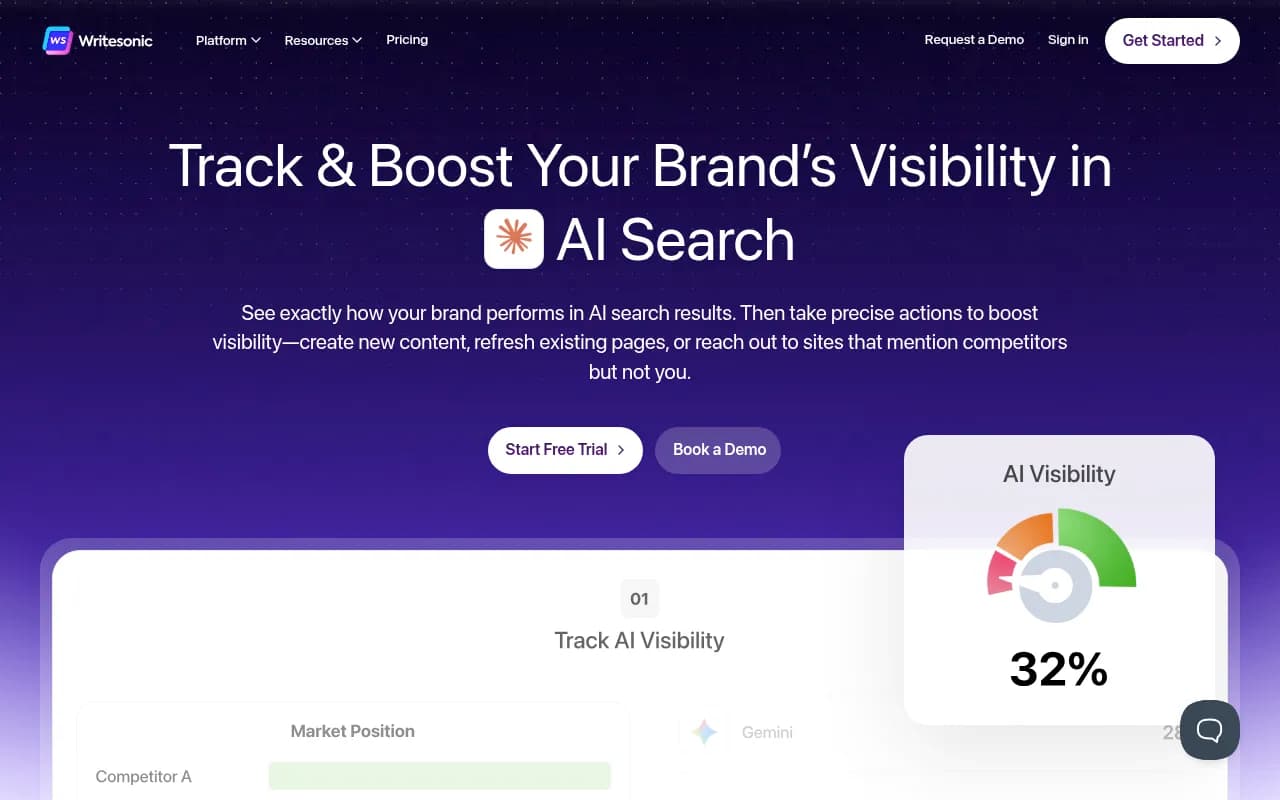
| Small team, wants fixes not just charts | Monitoring plus action list or content | Anagram, Writesonic, Peec AI | About $89 to $99/mo |
| Mid-market team with content staff | Tracking, diagnosis and content workflow | AthenaHQ, Scrunch AI, Promptwatch | About $245 to $300/mo |
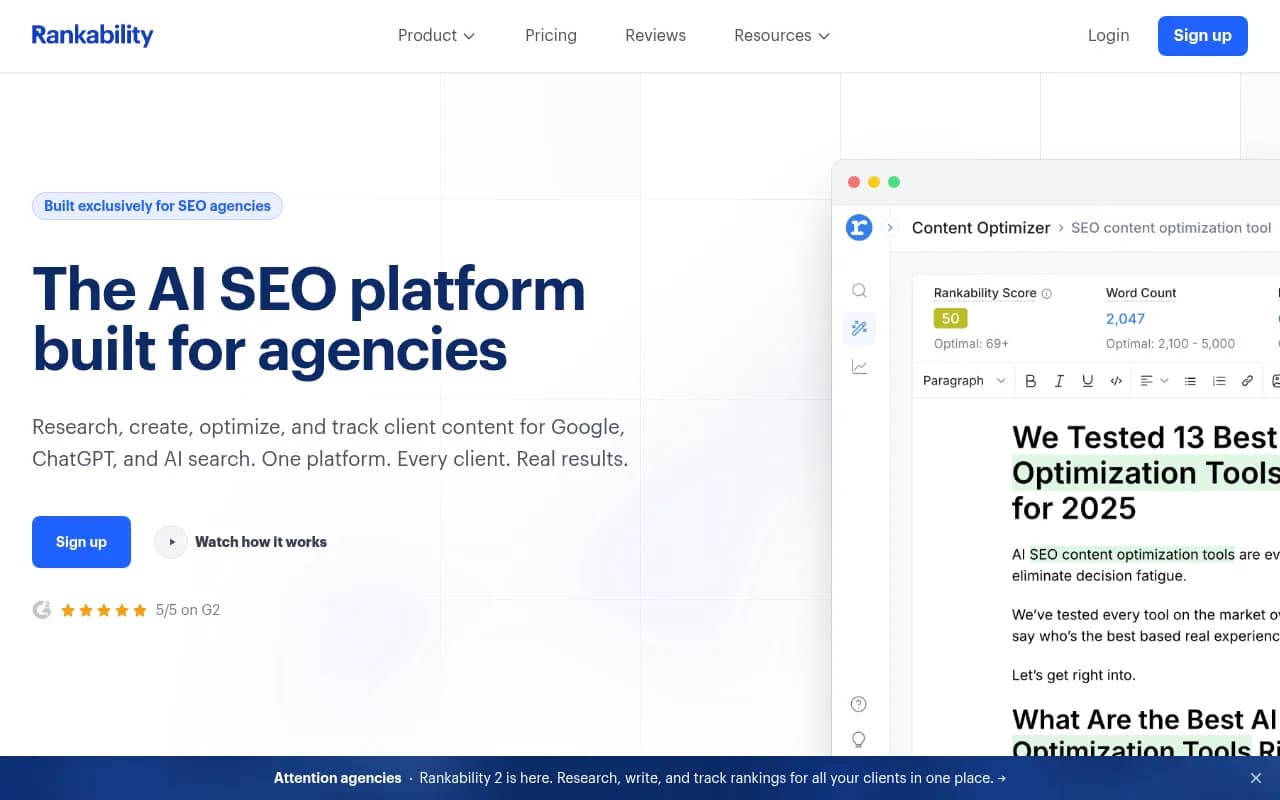
| Agency | Multi-client, white-label reporting | Promptwatch agency plans, Rankability, Cairrot | Varies |
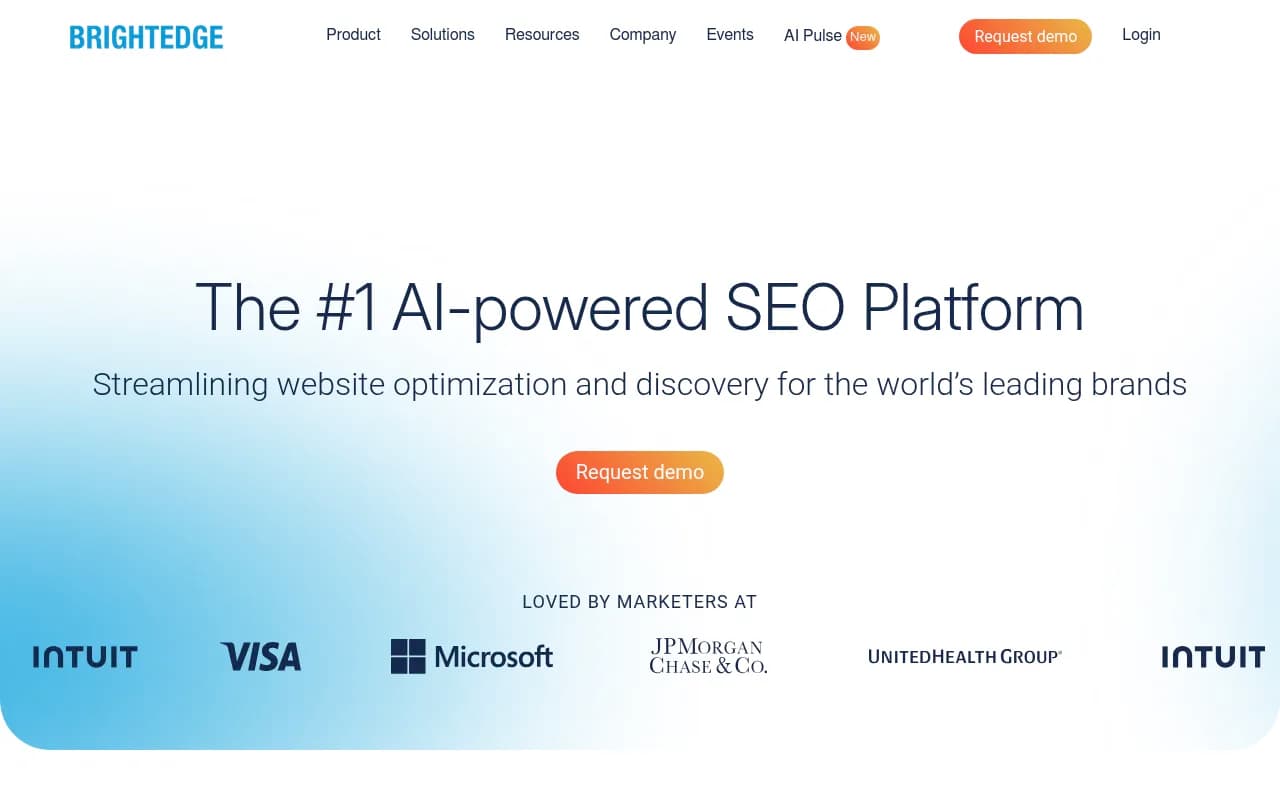
| Enterprise | SOC 2, API, custom integrations, support | Profound, Bluefish, BrightEdge, Conductor | Custom |



One caution. A Medium roundup I read quotes specific prices for Profound and Peec that do not match other 2026 sources, and a different roundup lists Profound starting at $99 while describing it as enterprise-grade. Prices are clearly in flux, and some vendors gate real deployments behind sales calls. Treat any number in a blog post, including these, as a starting point.
SEO suites versus point tools
If you already pay for Semrush or Ahrefs, their AI modules are the cheapest way to start. The trade-off is that suite add-ons tend to be watch-or-diagnose tools with fixed prompt sets. They rarely reach the act stage. Fine for a first quarter, limiting after that.

Step 5: Check the engines and how the data is collected
This is the part vendors gloss over. Two questions matter.
- Which engines are covered, and in which countries? Coverage claims range from 3 to 10+ engines. Confirm the ones your buyers use.
- Is the data from real user interfaces or from APIs? User-facing answers and citations can differ from API output. If a vendor tracks only API responses, your numbers may not match what customers see.
Citation behavior also differs by engine. Promptwatch Data from September 2025 found ChatGPT cites about 5 sources per web-search answer, while Google AI Overviews and Perplexity cite about 10 (average sources per response). A newer snapshot found almost half of ChatGPT responses cite 10 or more unique domains (unique domains report). The numbers move, which is the point: pick a tool that tracks each engine separately instead of blending them into one score.
Platform behavior shifts abruptly. ChatGPT began using the site: operator at scale on August 8, 2026, moving from about 0.4% to about 17% of fanout queries (site: operator data), and reddit.com's share of ChatGPT citations fell from about 4% to 0.5% on August 14 (Reddit citations report). Social platforms also vary by engine: ChatGPT drew 0.46% of citations from social sites in the week of Sep 28 to Oct 4, versus 12.2% for AI Overviews (social media citations). If your tool does not show per-engine social and Reddit data, you cannot tell whether a drop is yours or the platform's.
Step 6: Score vendors against a checklist
I use a simple scorecard in demos. Give each item 0, 1 or 2.
- Does it track the engines and countries your buyers use, via real interfaces?
- Does it show which of your pages are cited, not only whether the brand is named?
- Does it show AI crawler activity on your site?
- Does it connect AI visits to traffic or conversions?
- Does it flag content gaps against competitors?
- Does it produce or publish content, or at least a prioritized action list?
- Does it track the third-party sources in your industry (Reddit, YouTube, review sites, marketplaces)?
- Can you export data, hit an API or build client reports?
- Is pricing transparent, and does the response volume fit your prompt count?
A total under 8 means a watch tool. Between 8 and 13 is a diagnose tool. Above 14 is a platform that can act.
Where Promptwatch fits
Full disclosure: this site is published by 1001 SEO Media, an SEO agency that uses Promptwatch for its own AI visibility work, so weigh my opinion accordingly. With that said, Promptwatch is one of the few platforms that scores well across that whole checklist. It tracks real interfaces for ChatGPT, AI Overviews, AI Mode, Gemini, Perplexity and Copilot, logs IP-verified AI crawler visits, attributes AI traffic, and runs a Content Agent that plans, writes and publishes to Webflow, Framer or WordPress. Plans start with a free tier and run $95 a month for Essential, with agency tiers from $199. Check promptwatch.com/pricing for current numbers.

It is a heavier product than a $29 monitor, and if you only want a weekly mention count, you do not need it.
A 30-day evaluation plan
- Week 1: Run a manual baseline with 20 buyer questions across four engines. Use a free grader too. Record who is cited.
- Week 2: Shortlist three tools based on your industry requirements and budget. Start free trials where offered.
- Week 3: Load the same prompts into each tool. Compare their output against your manual baseline for accuracy.
- Week 4: Ask each vendor what it would tell you to do next. The tool that gives specific, evidence-backed actions beats the one with the prettiest chart.
For wider browsing, the GEO software directory at bestgeosoftware.com and the AI rank tool listings at ai-rank-tools.com are useful places to compare more vendors.
Common mistakes
- Buying on engine count alone. Ten engines you do not care about are worse than four you do.
- Tracking only brand mentions. A mention without a citation to your own page often points to a content or crawlability issue.
- Ignoring cost per response. A cheap plan with a small response allowance can run out before you finish a month of tracking.
- Skipping the baseline. Without manual checks you cannot tell whether a tool's numbers are right.
- Expecting the tool to do the work. Visibility rises when pages get fixed and published, not when dashboards get installed.
Bottom line
Pick the stage first, then the industry, then the budget. If your vertical is dominated by third-party sources, such as marketplaces in automotive, booking sites in travel or government sites in healthcare, choose a tool that shows those sources and not just your own mentions. And if you are not sure whether you need to pay at all, spend the first week on manual checks. The answer usually becomes obvious.