Key takeaways
- HR tech and staffing buyers increasingly ask AI assistants for shortlists, so being cited matters as much as ranking.
- Product and landing pages are the most cited content types in ChatGPT (22.4% and 16.8%, Sep 28 to Oct 4, 2026), so your own pages are the main surface to fix.
- Monitoring-only tools tell you that you are missing. Platforms with crawler logs, content tools, and publishing help you fix it.
- Review sites like G2 and Capterra matter for software vendors, while LinkedIn matters mostly for Perplexity and Google AI Overviews, not ChatGPT.
- Pick a tool based on your gap: tracking, technical access, content production, or agency reporting.
Why staffing and HR tech need their own GEO approach
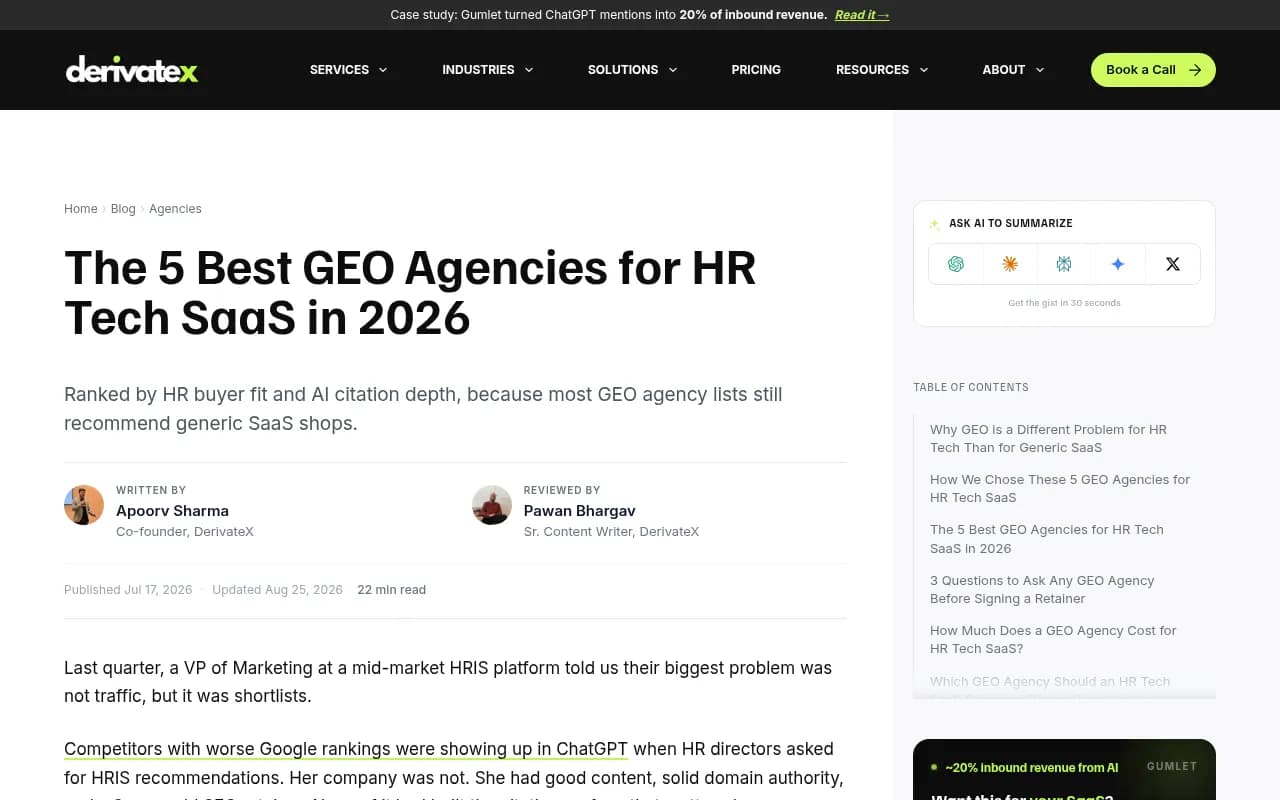
A VP of Marketing at an HRIS vendor recently described the problem to DerivateX like this: not traffic, but shortlists. Competitors with worse Google rankings were showing up in ChatGPT when HR directors asked for HRIS recommendations. Her company was not. That is a vendor's account on a vendor blog, so take it as anecdote, but it matches what I hear from HR tech marketers constantly.
HR and staffing queries have a few quirks that shape which tools you need:
- Buyers ask comparison questions: "best ATS for a 200-person company", "top HRIS for multi-country payroll", "best staffing agency for healthcare".
- Trust is heavy. HR buyers lean on reviews, analyst opinions, and compliance proof.
- Staffing firms compete locally and by niche, so city and region tracking matters.
- The category is crowded. The Evolve 2026 HR Tech Stack Map lists 150+ platforms across learning, onboarding, people analytics, talent acquisition, and payroll. Standing out in an AI-written shortlist is hard.
What the citation data says about HR-style prompts
Promptwatch Data has no HR-specific report yet, so the closest proxies are its content-type and software reports. Treat them as directional.
In Promptwatch's ChatGPT citation share by content type report (Sep 28 to Oct 4, 2026), product pages made up 22.4% of classified citations and landing pages 16.8%. For commercial prompts like "best CRM for small businesses", product pages hit 26.0%, landing pages 20.6%, listicles 15.0%, and comparisons 7.9%. Swap CRM for ATS and the pattern probably holds.
For software prompts, Promptwatch's software citation report shows G2 at 0.73%, Gartner at 0.34%, and Capterra at 0.32% of citations. Vendor sites and docs together earned about three times the share of review sites and analysts. So your own crawlable pages come first, and complete G2 and Capterra profiles come second.
On social, Promptwatch's October 2026 social citations report found ChatGPT drew only 0.46% of its citations from social platforms, with LinkedIn its top social source at about 0.3%. Perplexity gave LinkedIn and Reddit 0.86% each, and Google AI Overviews gave social 12.2% overall. If your audience is HR professionals on LinkedIn, that helps you in Perplexity and Google, but does little for ChatGPT.
Content age matters too. Promptwatch's content half-life report says news pages lose half their citations in about five weeks, while landing pages and docs keep most of theirs for months. Staffing firms that rely on news-style blog posts should rebalance toward evergreen pages.
What to look for in a GEO tool
Before the list, here is the checklist I would use.
- Real-interface tracking across ChatGPT, Perplexity, Gemini, AI Overviews, and AI Mode, not only API calls.
- Prompt control, so you can track HR-specific prompts by persona (CHRO, talent acquisition lead, hiring manager).
- Location tracking, which matters for staffing firms selling by city or state.
- Citation source reporting, so you see which review sites and listicles AI pulls from.
- AI crawler data, to confirm bots can reach your pricing, features, and integration pages.
- Content and publishing workflows, if you cannot hire three more writers.
- Traffic attribution, because HR software has long sales cycles and you need to connect AI visits to demos.
The best GEO tools for staffing and HR tech in 2026
Promptwatch
Promptwatch is the one I would start with for an HR tech vendor that wants to act on the data, not just watch it. It tracks the real interfaces of ChatGPT, Google AI Overviews, AI Mode, Gemini, Perplexity, and Copilot, shows prompt volumes and difficulty, and logs which pages AI crawlers actually read through IP-verified crawler logs. That last part matters for HR tech sites, which are often heavy JavaScript apps with gated pricing pages.
Where it separates from pure trackers is the action layer. Content gap analysis shows which HR prompts competitors win, the Action Board lists prioritized fixes, and the Content Agent can draft and publish to WordPress, Webflow, or Framer. Visitor analytics connect AI traffic to conversions. Pricing starts with a free Explore tier, then Essential at $95/mo, Professional at $245/mo, and Business at $579/mo, with agency plans from $199/mo. Confirm current numbers at promptwatch.com/pricing.

Profound
Profound is a strong enterprise monitoring option with deep reporting. It suits large HR platforms with big budgets and a dedicated GEO analyst. Expect a higher price point, and less help with execution than the action-oriented platforms.

Scrunch AI
Scrunch AI covers monitoring with a focus on how AI describes your brand. Reasonable for mid-market HR software teams that need visibility reporting and have content handled elsewhere.
AthenaHQ
AthenaHQ tracks visibility across 8+ AI engines and works for teams that want a monitoring dashboard with some recommendations.
Peec AI and Otterly.AI
Both are lighter, cheaper prompt trackers. They work for a small staffing firm or early-stage HR startup asking "are we mentioned at all?" Neither replaces crawler analytics or content workflows.


Semrush One and Ahrefs Brand Radar
If your team already lives in a traditional SEO suite, adding AI tracking there is convenient. The trade-off is shallower AI-specific data and less control over prompt sets.
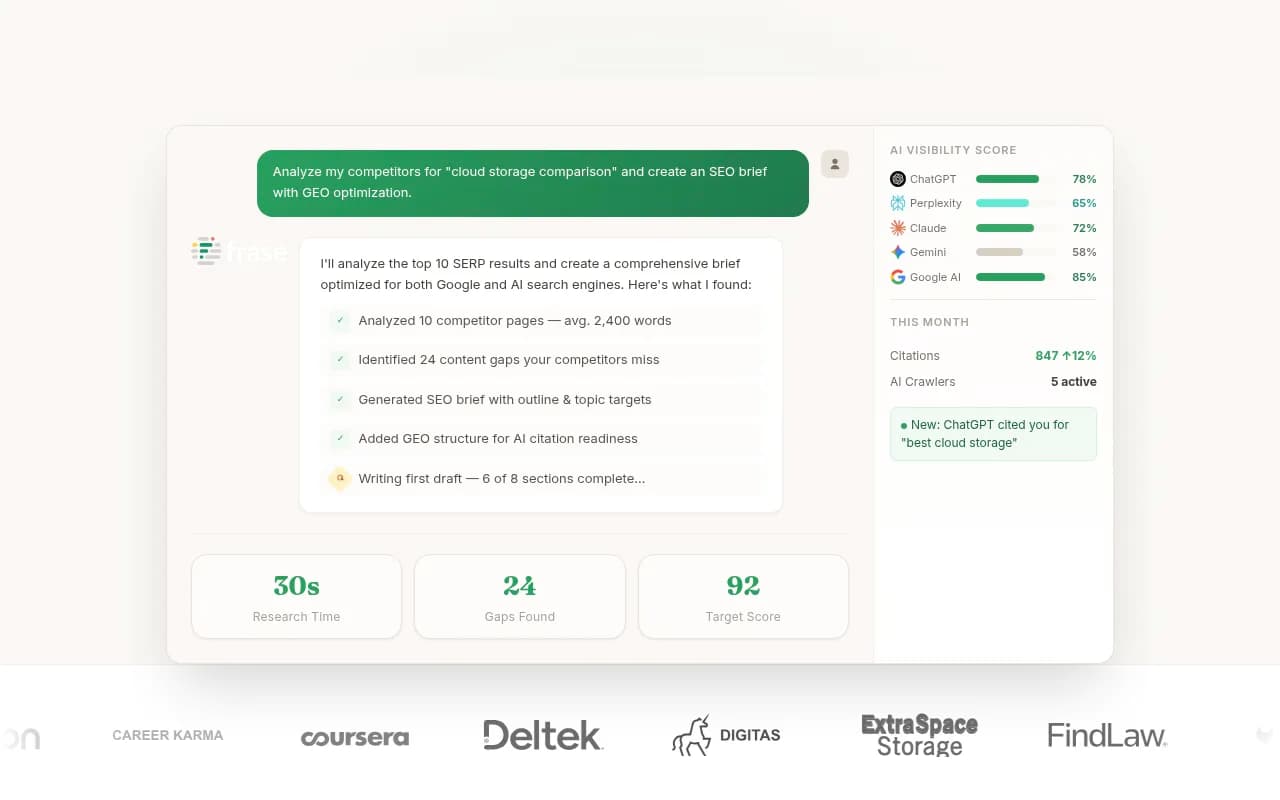
Writesonic and Frase
Both pair content creation with GEO tracking. They fit lean content teams at HR startups that want one tool for drafting and monitoring.
Enterprise suites: BrightEdge, Botify, seoClarity
Large HR tech vendors and big staffing groups with multi-site estates may already run an enterprise SEO platform. These add AI visibility modules on top of technical SEO.
Comparison table
| Tool | Best for | Crawler logs | Content creation | Fit for HR tech and staffing |
|---|---|---|---|---|
| Promptwatch | Tracking plus fixing visibility | Yes | Yes, with CMS publishing | Strong for vendors and multi-location staffing firms |
| Profound | Enterprise monitoring | Limited | No | Large HR platforms |
| Scrunch AI | Brand perception monitoring | Limited | Limited | Mid-market vendors |
| AthenaHQ | Multi-engine dashboard | No | Limited | Mid-market teams |
| Peec AI | Basic multi-language tracking | No | No | Small startups |
| Otterly.AI | Affordable monitoring | No | No | Small staffing firms |
| Semrush One | Teams already in Semrush | No | Partial | SEO-led teams |
| Writesonic | Content plus tracking | No | Yes | Lean content teams |
| BrightEdge | Enterprise SEO plus AI | Partial | Partial | Large vendors |
Which tool for which situation
You are an HR software vendor with a content team
You need to own comparison and product pages, since those dominate commercial citations. Choose a platform with content gap analysis and publishing, and track prompts by persona. Run a comparison page for each competitor you are regularly shortlisted against, and keep pricing and integration details complete.
You are a staffing firm with regional offices
Location matters more than for SaaS. Look for state and city tracking, and track prompts like "best IT staffing agency in Austin". Also check your Google Business and review footprints, since AI answers for local queries lean on aggregators.
You are a small HR startup
Start with a free scan or low-cost tracker, then spend most of your effort on landing pages and G2 profiles. Do not buy an enterprise tool before you know your baseline.
You are an agency serving HR clients
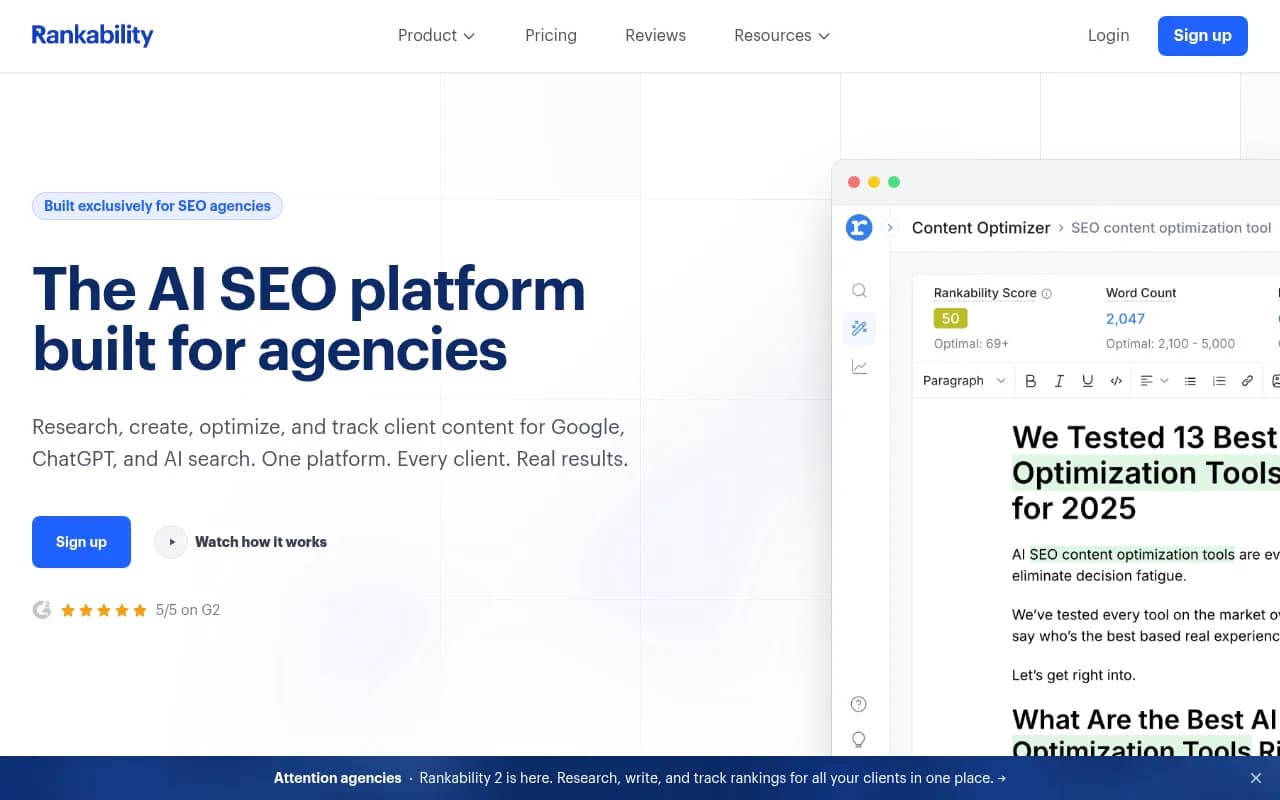
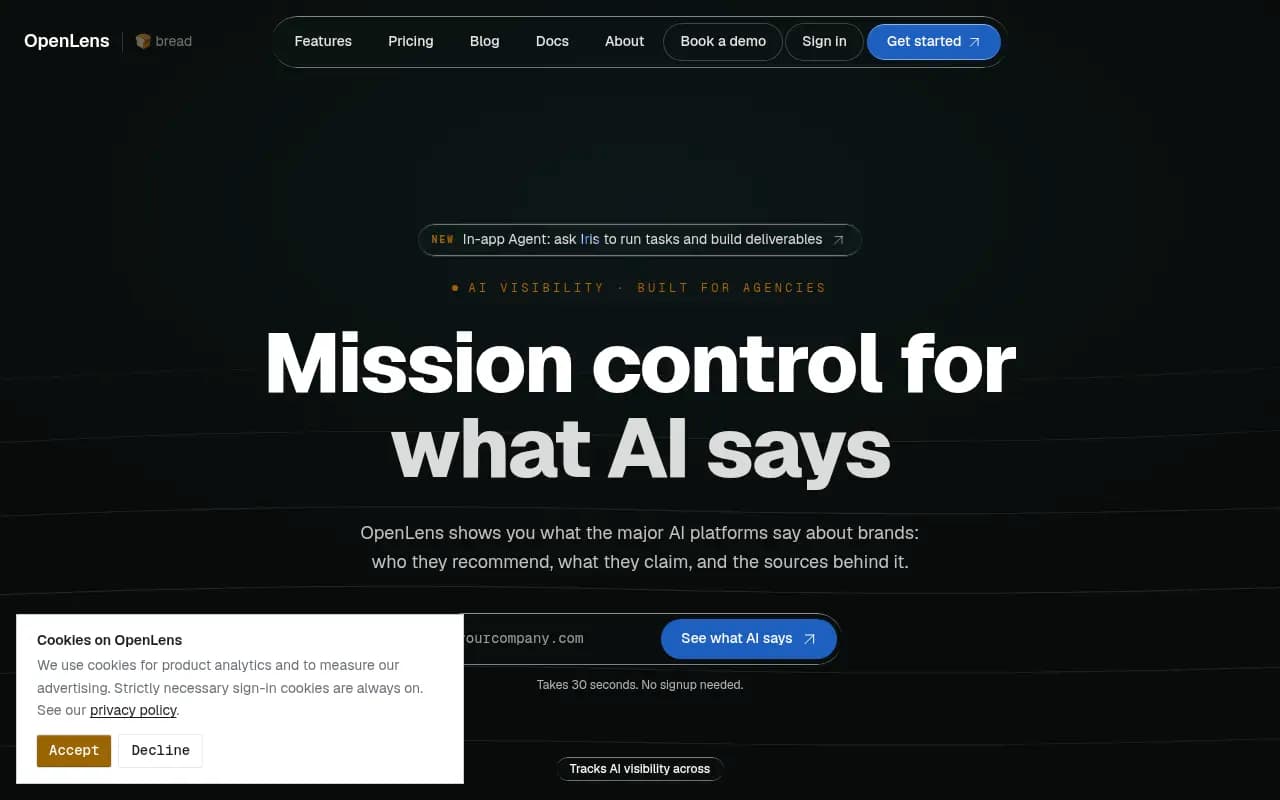
You want white-label reports, many projects, and client portals. Rankability, OpenLens, and Promptwatch's agency tiers are worth a look. If you would rather hire than buy, 1001 SEO Media runs GEO programs for brands, and DerivateX and Scale Theory publish their own HR-tech-focused lists, though those are vendor marketing and should be read that way.
A practical 30-day plan
- Week 1: build a prompt list of 40 to 60 HR buyer questions. Include category ("best ATS"), comparison ("Greenhouse vs Lever"), and use-case prompts ("HRIS for 500 employees with EMEA payroll").
- Week 1: check crawler access. Confirm GPTBot, OAI-SearchBot, ClaudeBot, and PerplexityBot can reach pricing, features, and integration pages. Gated or JS-only pages are a common HR tech failure.
- Week 2: audit which listicles and review sites AI cites for your prompts. Get listed or improve your profiles on the ones that matter.
- Week 3: rewrite your top product and landing pages with complete specs, pricing ranges, integrations, and compliance claims. Add FAQ blocks.
- Week 4: publish comparison pages, then re-check which prompts moved. Track AI-referred visits through to demo requests.
For broader options, the GEO software directory at bestgeosoftware.com lists many more tools, and ai-rank-tools.com focuses on AI rank trackers.
Mistakes I see HR tech teams make
- Chasing Reddit. ChatGPT's Reddit citations have collapsed per Promptwatch Data, so do not build a strategy on it.
- Gating everything. If pricing and feature detail sit behind forms, AI has nothing to cite and will cite a review site's guess instead.
- Writing news-style posts only. They decay in weeks.
- Ignoring G2 and Capterra. They are not the biggest source, but they are the most controllable third-party one.
- Buying a tracker and stopping there. Tracking is step one.
Final recommendation
If your problem is measurement, any of the mid-tier trackers will do. If your problem is that competitors keep getting recommended and you are not, pick a platform that shows why and helps you fix it. For most HR tech vendors and multi-location staffing firms, that means Promptwatch first, with a lighter tracker or your existing SEO suite as a secondary check. Check current pricing on each vendor's site before you commit, and run the 30-day plan above on a free or trial tier to see what moves.