Screaming Frog Review 2026
Screaming Frog SEO Spider is the go-to desktop crawler used by thousands of SEO professionals worldwide to audit and analyze websites for technical issues. Crawl up to 500 URLs free or unlock unlimited crawling with a £199/year license. Trusted by agencies and in-house teams for finding broken links, analyzing page titles, auditing redirects, and extracting data at scale.
Summary
- Best for: Technical SEO audits, site migrations, and large-scale website analysis -- used by agencies, in-house SEO teams, and consultants managing sites from 1,000 to 10 million+ pages
- Strengths: Unlimited URL crawling (paid), deep technical analysis, custom extraction, API integrations (Google Analytics, Search Console, PageSpeed Insights), runs locally on your machine
- Limitations: Desktop-only (no cloud/SaaS option), steep learning curve for beginners, UI feels dated, requires manual setup for advanced features
- Pricing: Free up to 500 URLs, £199/year (~$250) for unlimited crawling -- one of the best values in SEO tooling
- Not a fit for: Users who need AI search visibility tracking, content gap analysis, or optimization features (tools like Promptwatch handle that)

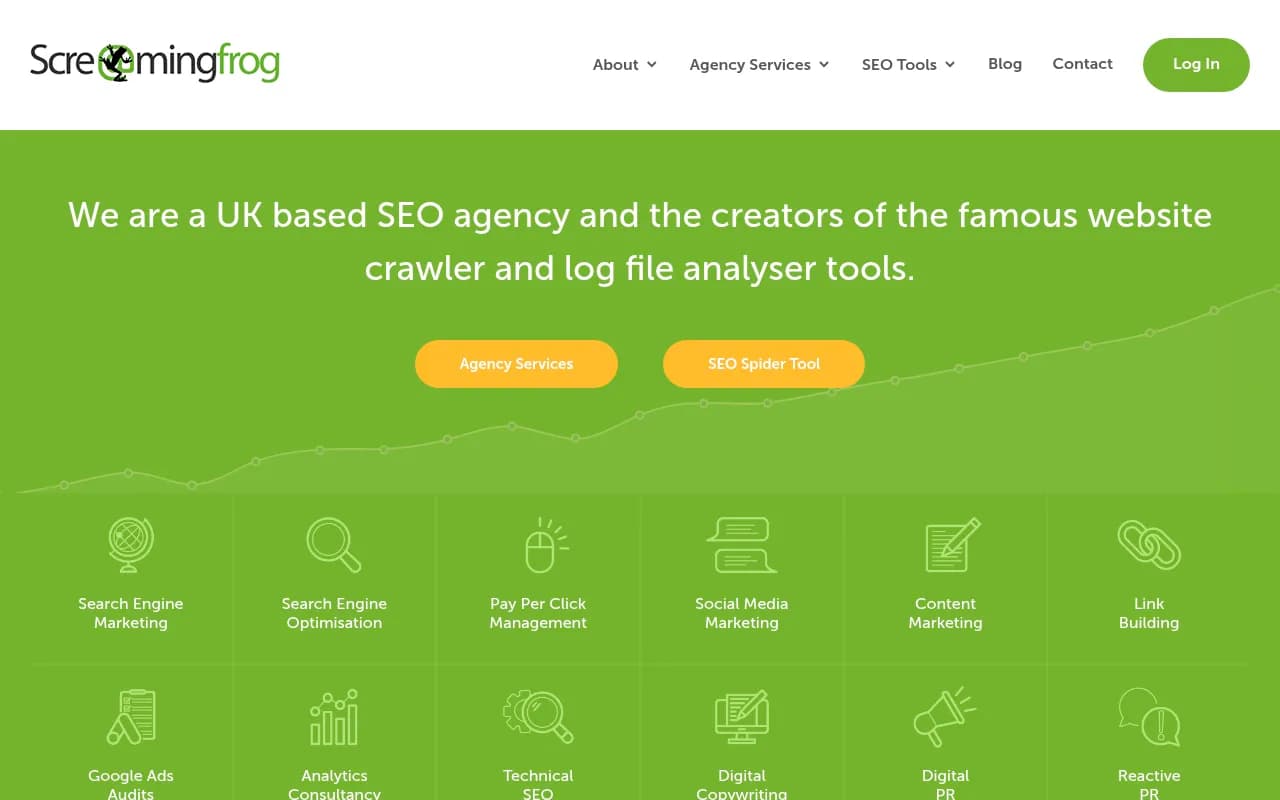
Screaming Frog SEO Spider has been the workhorse of technical SEO since 2010. It's a desktop application (Windows, Mac, Linux) that crawls websites like a search engine bot, surfacing every technical issue that could hurt your rankings -- broken links, redirect chains, duplicate content, missing meta tags, slow pages, crawl depth problems, you name it. If you've ever worked with an SEO agency or consultant, they've almost certainly used this tool to audit your site.
The company behind it -- Screaming Frog Ltd, a UK-based SEO agency -- built the Spider originally for internal use and released it publicly when they realized every SEO professional had the same problem: manually checking technical issues at scale is impossible. The tool became an industry standard. Today it's used by agencies like Distilled and Merkle, in-house teams at brands like Booking.com and Moz, and solo consultants auditing client sites.
The Spider is not a SaaS product. You download and install it on your computer. Crawls run locally, which means speed depends on your machine and internet connection, but also means your data stays private. For agencies handling sensitive client sites, that's a selling point.
Who uses Screaming Frog
Technical SEO specialists and agencies doing site audits. If you're migrating a 50,000-page ecommerce site to a new platform, you need to crawl the old site, map redirects, and verify the new site didn't break anything. Screaming Frog handles that. If you're an in-house SEO at a SaaS company and engineering just pushed a site redesign that tanked traffic, you crawl with the Spider to find what broke (usually canonicals, hreflang, or internal linking).
It's also used by SEO consultants who need to deliver detailed audit reports to clients. The Spider exports data to Excel, integrates with Google Sheets, and generates visual reports. You can hand a client a spreadsheet of every 404 error, every page missing an H1, every image without alt text.
Not for beginners. The interface is dense -- dozens of tabs, filters, and configuration options. If you're new to SEO, you'll spend hours learning what "crawl depth" and "response codes" mean. Tools like Ahrefs Site Audit or Semrush Site Audit are easier to use but less powerful. Screaming Frog is for people who know what they're looking for.
Core features
Unlimited URL crawling (paid version): The free version caps at 500 URLs. The paid license (£199/year) removes the limit entirely. You can crawl a 10 million page site if your machine can handle it. Most enterprise SEO tools charge per URL or per project -- Screaming Frog charges a flat annual fee. For agencies crawling dozens of client sites per month, the ROI is absurd.
Technical issue detection: The Spider flags broken links (404s, 500s), redirect chains (A -> B -> C -> D), orphaned pages (pages with no internal links pointing to them), duplicate content (same title tags, meta descriptions, or H1s across multiple URLs), missing or truncated meta tags, images without alt text, pages blocked by robots.txt or noindex tags, slow-loading pages, and more. Each issue gets its own tab with filterable data.
Custom extraction with XPath and regex: You can extract any data from a page using XPath, CSS selectors, or regex. Want to pull every product price, every author byline, every schema markup snippet? Set up a custom extraction. This is how agencies audit structured data at scale or verify that a CMS migration didn't strip out critical content.
JavaScript rendering: Websites built with React, Vue, or Angular require JavaScript rendering to see the actual content. The Spider includes a built-in headless browser (Chromium) that renders JavaScript before crawling. You can compare the raw HTML vs rendered HTML to spot cloaking issues or content that search engines might miss.
API integrations: Connect Google Analytics (GA4 or Universal Analytics) to overlay traffic data on your crawl. See which broken pages were getting traffic. Connect Google Search Console to see which pages are indexed, which have coverage errors, and which keywords they rank for. Connect PageSpeed Insights to get Core Web Vitals scores for every page. These integrations turn the Spider from a crawler into a full audit platform.
Log file analysis (separate tool): Screaming Frog also sells a Log File Analyser (£149/year) that parses server logs to show which pages Googlebot actually crawls, how often, and whether it's wasting crawl budget on low-value pages. This is critical for large sites (10,000+ pages) where Google doesn't crawl everything. The Analyser integrates with the Spider so you can cross-reference crawl data with bot behavior.
Bulk exports and reporting: Export crawl data to CSV, Excel, or Google Sheets. Generate visual reports (crawl tree diagrams, response code charts) for clients. Schedule crawls via command line for recurring audits.
Sitemaps and robots.txt testing: Upload your XML sitemap to see which URLs are in the sitemap but return errors (404s, redirects, noindex). Test robots.txt rules to verify you're not accidentally blocking important pages.
Comparison mode: Crawl a site before and after a migration or redesign, then compare the two crawls to see what changed. This catches issues like URLs that disappeared, canonicals that broke, or hreflang tags that got stripped out.
Integrations and ecosystem
The Spider integrates with Google Analytics (GA4, Universal Analytics), Google Search Console, PageSpeed Insights, Majestic (backlink data), Moz (domain authority), Ahrefs (backlink data via API), and Lumar (formerly DeepCrawl). You can also push data to Google Sheets, BigQuery, or any database via custom scripts.
No Zapier or native CRM integrations -- this is a technical tool, not a marketing automation platform. The API is read-only (you can export data but not control crawls programmatically), which limits automation compared to cloud-based crawlers like Lumar or Sitebulb.
Runs on Windows, Mac (Intel and Apple Silicon), and Linux. No mobile app, no web interface. You need a desktop or laptop.
Pricing and value
Free version: 500 URLs per crawl. Enough to audit a small business site or test the tool. No credit card required.
Paid license: £199/year (~$250 USD). Unlimited URLs, API integrations, JavaScript rendering, custom extraction, bulk exports, and priority support. One license per user (not per site). If you're an agency with 5 people doing audits, you need 5 licenses.
Log File Analyser: £149/year, sold separately. Useful for enterprise sites but not required for most users.
Compared to competitors: Ahrefs Site Audit is included in Ahrefs subscriptions ($129-$999/month), but it's cloud-based and less customizable. Semrush Site Audit is similar ($139.95-$499.95/month). Sitebulb is desktop-based like Screaming Frog ($35-$135/month) with a prettier UI but fewer integrations. Lumar (formerly DeepCrawl) is enterprise-only (custom pricing, typically $500+/month). Screaming Frog is the best value for agencies and consultants who need unlimited crawling without recurring monthly fees.
Strengths
Unlimited crawling for a flat fee: Most SEO tools charge per URL, per project, or per month. Screaming Frog charges £199/year and lets you crawl as many sites as you want, as often as you want. For agencies, this is a no-brainer.
Runs locally: Your data never leaves your machine unless you export it. No cloud storage, no third-party servers. This matters for agencies handling client sites under NDA or enterprises with strict data policies.
Deep technical analysis: The Spider surfaces issues that cloud-based crawlers miss -- redirect chains, orphaned pages, crawl depth problems, JavaScript rendering differences, custom extraction. It's the most thorough crawler available outside of enterprise tools like Lumar.
API integrations: Overlaying Google Analytics, Search Console, and PageSpeed Insights data on your crawl turns the Spider into a full audit platform. You can see which broken pages were getting traffic, which indexed pages have coverage errors, and which pages are slow.
Active development: Screaming Frog ships updates every few months. Recent versions added GA4 support, improved JavaScript rendering, and better handling of large crawls (10M+ URLs). The company is responsive to user feedback.
Limitations
Desktop-only: No cloud option, no web interface, no mobile app. If you're working from a Chromebook or iPad, you're out of luck. Cloud-based crawlers like Lumar or Sitebulb (cloud version) let you run crawls from anywhere.
Steep learning curve: The interface is overwhelming for beginners. Dozens of tabs, filters, and settings with minimal onboarding. You need to understand technical SEO concepts (crawl depth, response codes, canonicals, hreflang) to use the tool effectively. Ahrefs and Semrush have gentler learning curves.
Performance depends on your machine: Crawling a 1 million page site requires a powerful computer (16GB+ RAM, SSD). The Spider can crash or slow down on large crawls if your machine can't handle it. Cloud-based crawlers offload the work to their servers.
No AI search visibility tracking: Screaming Frog is a traditional SEO tool -- it crawls websites and flags technical issues. It doesn't monitor how your brand appears in ChatGPT, Perplexity, Claude, or Google AI Overviews. It doesn't track AI citations, analyze content gaps for AI search, or help you optimize for generative engines. For that, you need a GEO platform like Promptwatch, which monitors 10+ AI models, tracks citations, provides content gap analysis, and includes an AI writing agent to help you create content that ranks in AI search results.
No content optimization features: The Spider tells you what's broken but doesn't help you fix it. It won't suggest better title tags, rewrite meta descriptions, or generate content. It's a diagnostic tool, not a content creation tool.
Limited automation: You can schedule crawls via command line, but there's no built-in scheduler or recurring audit feature. Cloud-based crawlers like Lumar let you set up weekly or monthly crawls that run automatically.
Who should use Screaming Frog
Technical SEO specialists and agencies doing site audits. If you're migrating a large site, launching a redesign, or troubleshooting a traffic drop, the Spider is essential. It's also the best tool for auditing JavaScript-heavy sites (SPAs built with React, Vue, Angular) because it renders JavaScript and compares raw vs rendered HTML.
In-house SEO teams at companies with 10,000+ page sites. You need to crawl regularly to catch issues before they hurt rankings. The flat annual fee makes sense if you're crawling monthly.
SEO consultants who need to deliver detailed audit reports to clients. The Spider exports data to Excel and Google Sheets, making it easy to build custom reports.
Who should skip it
Beginners who don't understand technical SEO. The learning curve is steep. Start with Ahrefs Site Audit or Semrush Site Audit, which are easier to use and include guided recommendations.
Teams that need AI search visibility tracking. Screaming Frog doesn't monitor ChatGPT, Perplexity, Claude, or other AI models. If you want to track how your brand appears in AI search results, analyze content gaps, or optimize for generative engines, use Promptwatch instead.
Users who need a cloud-based tool. If you're working from a Chromebook, iPad, or shared computer, Screaming Frog won't work. Try Sitebulb Cloud or Lumar.
Bottom line
Screaming Frog SEO Spider is the industry standard for technical SEO audits. It's powerful, affordable (£199/year for unlimited crawling), and runs locally on your machine. If you're an agency, consultant, or in-house SEO doing site migrations, redesigns, or large-scale audits, this is the tool you need. The learning curve is steep and the UI feels dated, but the depth of analysis is unmatched outside of enterprise tools.
It's a diagnostic tool, not an optimization platform. It tells you what's broken but doesn't help you fix it. And it's built for traditional SEO -- it won't help you rank in AI search engines like ChatGPT or Perplexity. For AI search visibility, content gap analysis, and optimization, you need a GEO platform like Promptwatch.
Tags:
Frequently asked questions
What is Screaming Frog SEO Spider?
Is Screaming Frog free?
How much does Screaming Frog cost?
Who should use Screaming Frog?
What are the main features of Screaming Frog?
What are the limitations of Screaming Frog?
Does Screaming Frog work on Mac?
What is the difference between free and paid Screaming Frog?
Similar and alternative tools to Screaming Frog