Key takeaways
- AI referral traffic converts at 4.4x the rate of traditional organic search, making citation visibility one of the highest-ROI channels for SaaS in 2026
- Comparison pages, use-case guides, and data-driven posts are the page types most frequently cited by ChatGPT, Perplexity, and Claude
- Each AI platform uses a different citation methodology -- optimizing for one without understanding the others leaves significant visibility on the table
- Pages with 5+ original statistics get cited roughly 3x more often than pages without them
- Tracking which of your pages are actually being cited (and by which models) is the starting point -- you can't improve what you can't see
Why SaaS teams can't afford to ignore AI citations anymore
Open ChatGPT right now and type something like "best project management software for remote teams" or "what's the top CRM for B2B SaaS." Go ahead. The results will probably surprise you -- either because a competitor shows up prominently and you don't, or because the AI confidently recommends tools you've never heard of.
That's the situation most SaaS marketing teams are walking into in 2026. Their buyers have already moved. According to Semrush's June 2025 traffic study, visitors arriving from AI platforms convert at 4.4 times the rate of traditional organic search visitors. Not a marginal improvement. That's because by the time someone clicks through from a ChatGPT response, the AI has already done the comparison work for them. They land on your site pre-sold.
The flip side: if you're not being cited, you're invisible to a growing segment of buyers who never make it to Google at all.
This guide is about fixing that. Specifically: understanding which pages get cited, why they get picked, and how to systematically earn more citations across the AI platforms your buyers actually use.
How AI citation actually works (and why it's different from SEO)
Traditional SEO is about ranking. AI citation is about being selected as a trusted source when a model synthesizes an answer. That's a meaningful distinction.
When ChatGPT or Perplexity generates a response, it's not returning a list of links -- it's writing an answer and choosing which sources to attribute. The selection criteria are different from Google's ranking algorithm, and they vary by platform.
Here's a quick breakdown of how the major platforms handle citations:
| Platform | Primary index | Citation style | Key ranking factors | Update sensitivity |
|---|---|---|---|---|
| ChatGPT | Bing + pre-trained knowledge | Footer citations | Authority, entity clarity, credibility | Moderate |
| Perplexity | Live web retrieval | 3-5 inline citations | Recency, structure, freshness | High -- update regularly |
| Claude | Brave Search | Inline citations | Topical depth, clarity | Moderate-high |
| Google AI Mode | Google index | Integrated citations | Traditional SEO signals + structure | High |
| Gemini | Google index | Inline + footer | E-E-A-T signals, structured data | Moderate |
The practical implication: a page that ranks well in Google won't automatically get cited in ChatGPT. And a page optimized for Perplexity (which rewards recency) needs different treatment than one targeting Claude (which rewards depth).
Which page types actually get cited
This is where most guides get vague. Let's be specific. Based on audits of SaaS sites and citation pattern analysis, certain page types consistently outperform others across AI models.
Comparison and alternative pages
"[Your tool] vs [Competitor]" and "[Category] alternatives" pages are citation magnets. AI models love them because they're answering exactly the kind of question buyers ask: "Is X better than Y?" or "What are the alternatives to Z?"
If you don't have these pages, you're ceding ground to review sites like G2, Capterra, and Reddit threads that do. And those third-party sources will get cited instead of you.
Use-case and "how to" guides
Specific, practical guides that answer a real question perform well. Not "Introduction to project management" -- something like "How to manage a remote engineering sprint in Jira." The more specific the use case, the more likely the AI is to pull from it when someone asks that exact question.
Data-driven posts with original statistics
This one is backed by real testing. Pages with 5 or more original statistics get cited roughly 3x more often than pages without them (per community testing shared on r/DigitalMarketing). AI models want to cite authoritative numbers, and if you're the source of those numbers, you get the citation.
If you don't have original data, you can still aggregate and synthesize third-party statistics -- but original research is significantly more powerful.
Glossary and definition pages
"What is [category term]?" pages are consistently cited when someone asks a definitional question. These are low-effort to create but high-value for citation volume. Every SaaS company should have a glossary section covering the 20-30 core terms in their category.
Pricing and feature comparison pages
Buyers ask AI assistants about pricing all the time. If your pricing page is clear, structured, and includes comparison context (how you stack up on features vs alternatives), it becomes a citable source. Vague pricing pages ("contact us for pricing") get skipped entirely.
Customer stories with specific outcomes
Case studies that include specific metrics ("reduced churn by 23% in 90 days") get cited more than generic testimonials. The specificity is what makes them useful to an AI trying to answer "does [tool] actually work for [use case]?"
The anatomy of a page that gets cited
Beyond page type, there are structural and content signals that make a page more likely to be selected as a citation source.
Clear entity signals
AI models need to understand what your product is, who it's for, and what category it belongs to. Pages that clearly establish this -- in the opening paragraph, in headings, in schema markup -- are easier for models to classify and cite accurately.
If your homepage says "We help teams work better" without specifying what you actually do, that's a problem. Be explicit: "Acme is a project management tool for software development teams."
Quote-ready sentences
Your key insights need to be able to stand alone. AI models often extract a single sentence or short passage when citing a source. If your content is written in flowing paragraphs with no clear, quotable claims, it's harder to cite.
Write sentences that could appear verbatim in an AI response: "According to [Company]'s 2026 benchmark report, SaaS companies that publish weekly lose 40% less pipeline to competitors." That's a citable sentence.
Proper heading structure
H2 and H3 headings that match the questions buyers ask are important for both AI citation and traditional SEO. Models use headings to understand the structure of a page and to identify which section answers a specific query.
Schema markup
FAQ schema, HowTo schema, and Article schema help AI crawlers understand your content's structure. This is especially relevant for Google AI Mode and Gemini, which rely heavily on Google's structured data signals.
Freshness signals
For Perplexity especially, recency matters. Pages with a visible "last updated" date, recent publication dates, and current statistics perform better. If you have evergreen content that's getting stale, updating it with a new date and refreshed data can meaningfully improve citation rates.
Platform-specific strategies worth knowing
ChatGPT
ChatGPT's browsing mode uses Bing's index, so traditional domain authority and backlink signals still matter here. But ChatGPT also draws heavily on its pre-trained knowledge, which means brand mentions across the web (not just your own site) influence how the model perceives your company.
Getting cited in authoritative third-party sources -- industry publications, analyst reports, high-authority blogs -- builds the kind of brand signal that influences ChatGPT's pre-trained knowledge over time.
Perplexity
Perplexity retrieves live web content, which makes it the most responsive to fresh content. Publishing a well-structured post today can get you cited in Perplexity within days. The platform favors pages with clear structure, inline statistics, and specific answers to specific questions.
Google AI Mode
Google AI Mode is essentially Google's traditional index with an AI synthesis layer on top. Strong E-E-A-T signals (Experience, Expertise, Authoritativeness, Trustworthiness), structured data, and pages that already rank well in Google are the foundation here.
Claude
Claude uses Brave Search as its primary retrieval index. Brave's index is smaller than Google's or Bing's, which means domain authority and topical depth matter more -- you need to be genuinely well-covered on a topic, not just have one good page about it.
How to track which of your pages are actually being cited
You can't improve what you can't see. Before you start creating new content, you need a baseline: which of your existing pages are being cited, by which AI models, and for which queries.
This is harder than it sounds. AI models don't send referral traffic the same way Google does. A user might read a ChatGPT response that cites your page and never click through. Traditional analytics won't capture that.
There are a few approaches:
Manual spot-checking: Run queries your buyers would ask in ChatGPT, Perplexity, and Claude. Note which of your pages (if any) appear as citations. This works for a handful of queries but doesn't scale.
AI visibility platforms: Tools built specifically for this problem can run hundreds of prompts across multiple AI models and track which pages get cited, how often, and with what sentiment. This is the only scalable approach for a SaaS company with a real content library.
Promptwatch is worth mentioning here specifically because it goes beyond monitoring. It tracks citations across 10 AI models (ChatGPT, Perplexity, Claude, Gemini, Grok, DeepSeek, and more), shows you page-level citation data, and -- importantly -- identifies the gaps: prompts where competitors are getting cited but you're not. That gap analysis is where the actionable work starts.

For teams that want to start simpler, there are lighter-weight options:


The comparison below covers the main approaches:
| Tool | Citation tracking | Gap analysis | Content generation | AI models covered | Best for |
|---|---|---|---|---|---|
| Promptwatch | Yes (page-level) | Yes | Yes (built-in) | 10 | Teams that want to find gaps and fix them |
| Otterly.AI | Yes | No | No | 4-5 | Budget monitoring |
| Peec AI | Yes | Limited | No | 5-6 | Multi-language tracking |
| Rankshift | Yes | No | No | 4-5 | LLM rank tracking |
| Profound | Yes | Limited | No | 6-7 | Mid-market monitoring |
A practical workflow for improving citation visibility
Here's a process that actually works, ordered by impact:
Step 1: Audit your current citation footprint
Run 20-30 queries your buyers would ask across ChatGPT, Perplexity, and Claude. Track which pages (yours and competitors') appear as citations. This gives you a baseline and shows you where the gaps are.
Step 2: Identify your highest-potential existing pages
Look at your top-performing content by traffic and engagement. These pages already have some authority signal -- they're the best candidates for citation optimization. Review them against the criteria above: clear entity signals, quote-ready sentences, statistics, proper heading structure.
Step 3: Create the pages you're missing
If you don't have comparison pages, use-case guides, or a glossary, those are the highest-priority gaps to fill. Comparison pages in particular tend to generate citations quickly because they directly answer the questions buyers ask AI assistants.
Step 4: Build your statistical foundation
If you have any proprietary data -- usage patterns, benchmark data from your customer base, survey results -- publish it. A single data-driven report with original statistics can generate citations across dozens of queries. If you don't have proprietary data, consider running a small survey or aggregating public data into a structured benchmark post.
Step 5: Distribute beyond your own site
AI models -- especially ChatGPT -- are influenced by brand mentions across the web. Publishing on LinkedIn, getting mentioned in industry newsletters, contributing to authoritative publications, and earning coverage in analyst reports all build the brand signal that influences pre-trained model knowledge.
Reddit is also worth taking seriously. Multiple AI models (including Perplexity and Claude) cite Reddit threads in their responses. Participating genuinely in relevant subreddits, and ensuring your product is accurately represented in category discussions, is a real citation channel.
Step 6: Monitor and iterate
Citation patterns shift as AI models update their indices and training data. What's working today may not work in six months. Set up ongoing monitoring so you can see when your citation share changes and respond quickly.
Common mistakes SaaS teams make
Optimizing only for Google: Traditional SEO and AI citation optimization overlap but aren't identical. A page that ranks #1 in Google may not get cited in ChatGPT if it lacks clear entity signals or quote-ready content.
Ignoring third-party sources: Your own website is only part of the picture. AI models synthesize information from across the web. If you're not mentioned in G2 reviews, industry publications, or relevant Reddit threads, you're missing citation surface area.
Publishing thin comparison pages: "Tool A vs Tool B" pages that just list features without genuine analysis don't perform well. AI models can tell the difference between a page that actually helps a buyer make a decision and one that's just trying to rank.
Not updating stale content: For Perplexity especially, a post from 2023 with outdated statistics is a liability. Regular content refreshes -- even just updating statistics and adding a new "last updated" date -- can meaningfully improve citation rates.
Skipping schema markup: This is a quick technical win that many SaaS teams overlook. FAQ schema in particular helps AI models identify the specific questions your content answers.
Tools worth having in your stack
Beyond the citation tracking platforms mentioned above, a few other tools are relevant to the content creation and optimization side of this work:
For content optimization and brief creation:
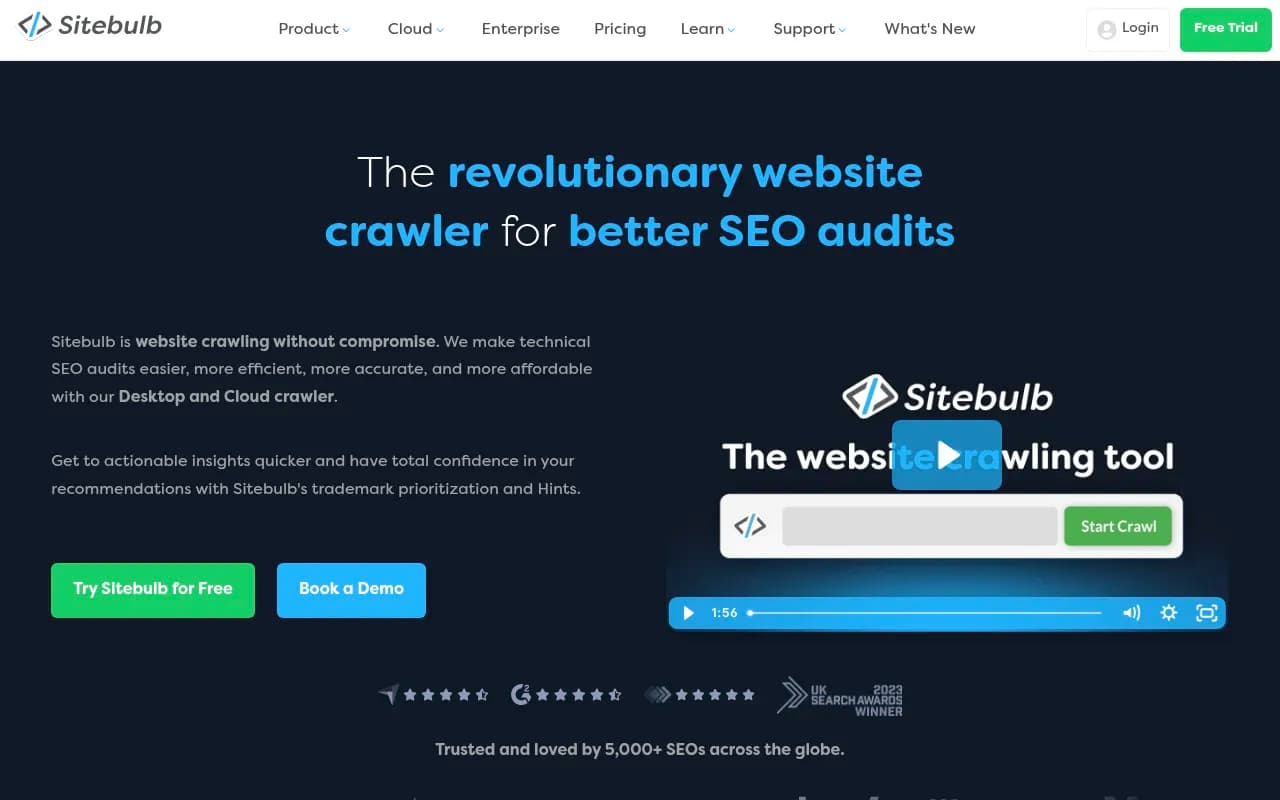
For technical SEO and crawl health (which affects AI crawler access):
For tracking AI crawler activity on your site specifically -- which pages AI bots are visiting, how often, and what errors they're hitting -- Promptwatch's crawler logs feature is one of the few tools that surfaces this data in real time. Most SaaS teams have no idea which of their pages AI crawlers are actually reading.
The bottom line
The SaaS companies that will win in AI search aren't the ones with the biggest content libraries -- they're the ones whose content is structured to be cited. That means specific page types (comparisons, use-case guides, data-driven posts), specific content patterns (quote-ready sentences, original statistics, clear entity signals), and a systematic approach to tracking what's working.
The good news: most SaaS companies haven't done this work yet. The citation landscape is still early enough that a focused six-month effort can move you from invisible to consistently cited across the AI platforms your buyers use every day. Start with an audit of your current citation footprint, identify the gaps, and fill them with content that's actually built to be cited -- not just to rank.