Key takeaways
- Raw mention counts are a vanity metric -- where you're mentioned, how prominently, and against which competitors matters far more
- The metrics that drive real decisions are citation rate by prompt, AI share of voice, sentiment consistency, and revenue attribution from AI-referred traffic
- Non-determinism in AI responses means you need repeated sampling across multiple models, not single-run snapshots
- Most brands are still misattributing AI-referred traffic as "direct" in their analytics, which distorts every downstream metric
- Tools like Promptwatch go beyond tracking to show you which content gaps are causing you to lose citations -- and help you fix them
Why "how many times did we get mentioned" is the wrong question
The first instinct when someone discovers AI citation tracking is to ask: "How often does ChatGPT mention us?" It's a natural starting point. But it's also the least useful number you can track.
Here's the problem. A brand can get mentioned 40 times across a week of AI responses and still be losing badly. If those mentions are buried in the fourth paragraph, framed negatively, only appear for low-intent queries, and your main competitor gets mentioned 25 times but always in the opening sentence of high-purchase-intent answers -- you're losing. The raw count says you're winning.
The shift happening in 2026 is that marketers are moving from "are we mentioned?" to "how are we mentioned, where, against whom, and does it drive anything?" That's a much harder measurement problem, but it's the one that actually connects to revenue.
This guide walks through the metrics that answer those harder questions.
The core problem: AI responses aren't deterministic
Before getting into specific metrics, one thing needs to be understood about how AI citation data works. Unlike Google rankings, where the same query returns roughly the same results for the same user in the same location, AI models generate slightly different responses every time. Ask ChatGPT "best project management software for remote teams" ten times and you might get seven different sets of cited brands.
This has a direct implication for measurement: a single-run snapshot is nearly meaningless. Any metric you track needs to be based on repeated sampling -- ideally 10-30 runs per prompt -- to get a statistically stable picture of your citation rate. Tools that show you one response and call it "your visibility" are misleading you.
The second implication is that you need to track across multiple AI models separately. Your citation rate on Perplexity can be dramatically different from your rate on ChatGPT or Claude, because each model draws on different training data, different web indexes, and different retrieval mechanisms. A single aggregate "AI visibility score" that blends all models together obscures the differences that matter for content strategy.
Metric 1: Citation rate (not mention count)
Citation rate is the percentage of times your brand appears across a defined set of prompts, calculated over multiple runs. If you're tracking 50 prompts and running each 20 times, you have 1,000 total responses. If your brand appears in 340 of them, your citation rate is 34%.
That number is meaningful in a way that raw mention count isn't, because it's normalized. You can compare it across time periods, across competitors, and across prompt categories. A competitor with 400 mentions across 500 responses (80% citation rate) is beating you even if your absolute mention count is higher.
The refinement that makes this metric genuinely useful is breaking it down by prompt intent. Citation rates on informational queries ("what is X?") behave very differently from citation rates on commercial queries ("best X for Y use case") or transactional queries ("where to buy X"). Most brands care most about commercial intent prompts -- those are the ones where AI answers influence purchasing decisions. Tracking your citation rate specifically on that subset tells you something actionable.
Metric 2: Citation prominence and placement
Not all citations are equal. Being named in the first sentence of an AI response is worth more than being mentioned as a footnote alternative at the end. Being cited as the primary recommendation is different from being listed as one of eight options.
Some platforms have started building composite "prominence scores" that combine:
- Position in the response (first mention vs. later)
- Whether the brand is the primary recommendation or one of many
- Whether a link or URL is included
- Whether the mention is in the main answer body or a supplementary section
This matters especially in models like Perplexity and Google AI Overviews, where the structure of the response is more consistent and position effects are measurable. In more conversational models like Claude or ChatGPT, prominence is harder to quantify but still worth tracking qualitatively.
The practical way to track this without a dedicated tool is to categorize each mention as "primary recommendation," "mentioned alongside others," or "brief reference" during your sampling runs. Even rough categorization reveals patterns -- you might find you're consistently mentioned but never as the top pick, which points to a specific content gap.
Metric 3: AI share of voice
Share of voice is probably the single most strategically useful metric in AI citation tracking. Instead of measuring your absolute citation rate, it measures your citation rate relative to your defined competitor set.
The calculation: for a given set of prompts, what percentage of total brand citations go to your brand vs. competitors?
If you and three competitors are all being tracked across 100 prompts, and the total citation count is 400 (some prompts cite multiple brands), and your brand gets 120 of those citations -- your AI share of voice is 30%.
This metric makes competitive dynamics visible. You might have a 45% citation rate that looks strong in isolation, but if your main competitor has a 70% citation rate on the same prompts, you're losing share. Conversely, a 25% citation rate might be excellent if the market is fragmented across 15 competitors.
Share of voice also makes it easier to set meaningful targets. "Increase our AI citation rate from 34% to 45%" is a goal with no competitive context. "Increase our AI share of voice from 22% to 35% in the project management category" is a goal you can build a content strategy around.
Promptwatch tracks this across 10 AI models simultaneously, so you can see where you're winning share and where you're losing it -- broken down by model and prompt category.

Metric 4: Sentiment consistency
Getting cited is good. Getting cited with accurate, positive framing is better. Getting cited with negative or outdated framing is actively harmful.
Sentiment tracking in AI responses is genuinely tricky because AI models don't just quote your content -- they synthesize it, sometimes introducing framing you didn't write. A model might cite your product while describing it as "suitable for small teams" when you've repositioned as an enterprise solution. That's a sentiment problem, but it's also a content gap problem: the model is drawing on older sources that don't reflect your current positioning.
The metrics worth tracking here:
- Positive vs. neutral vs. negative sentiment rate across sampled responses
- Accuracy rate (does the AI describe your product correctly?)
- Positioning alignment (does the AI's framing match how you want to be positioned?)
Sentiment drift is particularly worth watching over time. If your sentiment score drops over a 60-day period without any obvious external cause, it often means a negative review thread or critical article has entered the training data or retrieval index for one or more models. Catching this early lets you respond with corrective content before it compounds.
Metric 5: Prompt coverage and answer gap rate
This is where measurement starts connecting to action. Prompt coverage asks: out of the universe of prompts your target customers are asking AI models, what percentage do you appear in at all?
The inverse -- your answer gap rate -- is the percentage of relevant prompts where you're invisible. This is often the most alarming number for brands new to AI citation tracking. It's common to discover that you appear in 30-40% of tracked prompts but are completely absent from the other 60-70%, including some of the highest-intent queries in your category.
Answer gap analysis is what separates monitoring from optimization. Knowing you're invisible on "best [category] for [use case]" prompts tells you exactly what content to create. The gap is the brief.
Tools that surface this analysis -- showing you which specific prompts your competitors rank for but you don't -- are far more valuable than tools that only show your current citation rate. Most monitoring-only platforms stop at showing you the gap. The more useful workflow is: identify the gap, understand what content the AI models are citing for those prompts, create content that addresses the same questions, and track whether your citation rate improves.
Metric 6: Cross-model consistency
Your brand's AI visibility isn't a single number -- it's a profile across models. ChatGPT, Perplexity, Claude, Gemini, Google AI Overviews, and others each have different citation patterns, different source preferences, and different response styles.
Cross-model consistency measures how stable your visibility is across the model landscape. A brand with 60% citation rate on Perplexity but 8% on Google AI Overviews has a very different problem than a brand with 30% across all models. The first brand probably has strong content that Perplexity's retrieval system picks up but that isn't optimized for Google's AI layer. The second brand has a broader content authority problem.
Tracking this by model also helps with prioritization. If your audience skews heavily toward ChatGPT users (which, with 800 million weekly active users, is most B2C and B2B audiences), optimizing for ChatGPT citation should take priority over optimizing for a smaller model. Cross-model data lets you make that call with evidence rather than assumption.
Metric 7: AI-referred traffic and revenue attribution
This is the metric most brands are currently getting wrong, and fixing it unlocks the ability to connect AI visibility to actual business outcomes.
The problem: most analytics platforms still classify AI-referred traffic as "direct" because the referrer header is stripped when users click from an AI response to a website. This means brands with significant AI-driven traffic are systematically underreporting it and overreporting direct traffic. The actual conversion behavior of AI-referred visitors is hidden.
The fix involves one of three approaches:
- A JavaScript snippet that captures AI referral signals before they're lost
- Google Search Console integration, which captures some AI Overview click data
- Server log analysis, which can identify AI crawler activity and correlate it with traffic patterns
Once you can identify AI-referred sessions, the downstream metrics become available: conversion rate, revenue per session, pages per session, and goal completion rate. This is where AI citation tracking stops being a marketing metric and becomes a revenue metric.
The data that does exist suggests AI-referred visitors convert at meaningfully higher rates than average organic traffic -- which makes sense, because someone who asked an AI for a recommendation and then clicked through is further along in their decision process than someone who clicked a blue link. Capturing this in your attribution model changes how you justify investment in GEO.
A practical measurement framework
Here's how to put these metrics together into a reporting structure that actually drives decisions:
| Metric | What it tells you | Review cadence |
|---|---|---|
| Citation rate by prompt intent | Overall visibility health | Weekly |
| AI share of voice vs. competitors | Competitive position | Weekly |
| Citation prominence score | Quality of mentions | Monthly |
| Sentiment consistency | Brand narrative accuracy | Monthly |
| Answer gap rate | Content priorities | Monthly |
| Cross-model consistency | Channel-specific gaps | Monthly |
| AI-referred traffic & conversions | Revenue impact | Weekly |
The weekly metrics are the ones that drive tactical decisions -- content publishing, prompt targeting, quick fixes. The monthly metrics drive strategic decisions -- content roadmap, positioning, competitive response.
One thing worth resisting: building a single composite "AI visibility score" that collapses all of these into one number. Composite scores feel satisfying but they obscure the signal. A brand can have a high composite score while hemorrhaging share of voice on commercial-intent prompts. Keep the metrics separate until you have enough data to know which ones are leading indicators for the outcomes you care about.
Tools that support this measurement framework
The tool landscape for AI citation tracking has expanded significantly. Here's a comparison of platforms and what they actually cover:
| Tool | Citation rate | Share of voice | Sentiment | Traffic attribution | Content gap analysis |
|---|---|---|---|---|---|
| Promptwatch | Yes | Yes | Yes | Yes | Yes |
| Otterly.AI | Yes | Yes | Partial | No | No |
| Peec AI | Yes | Yes | No | No | No |
| AthenaHQ | Yes | Yes | Partial | No | No |
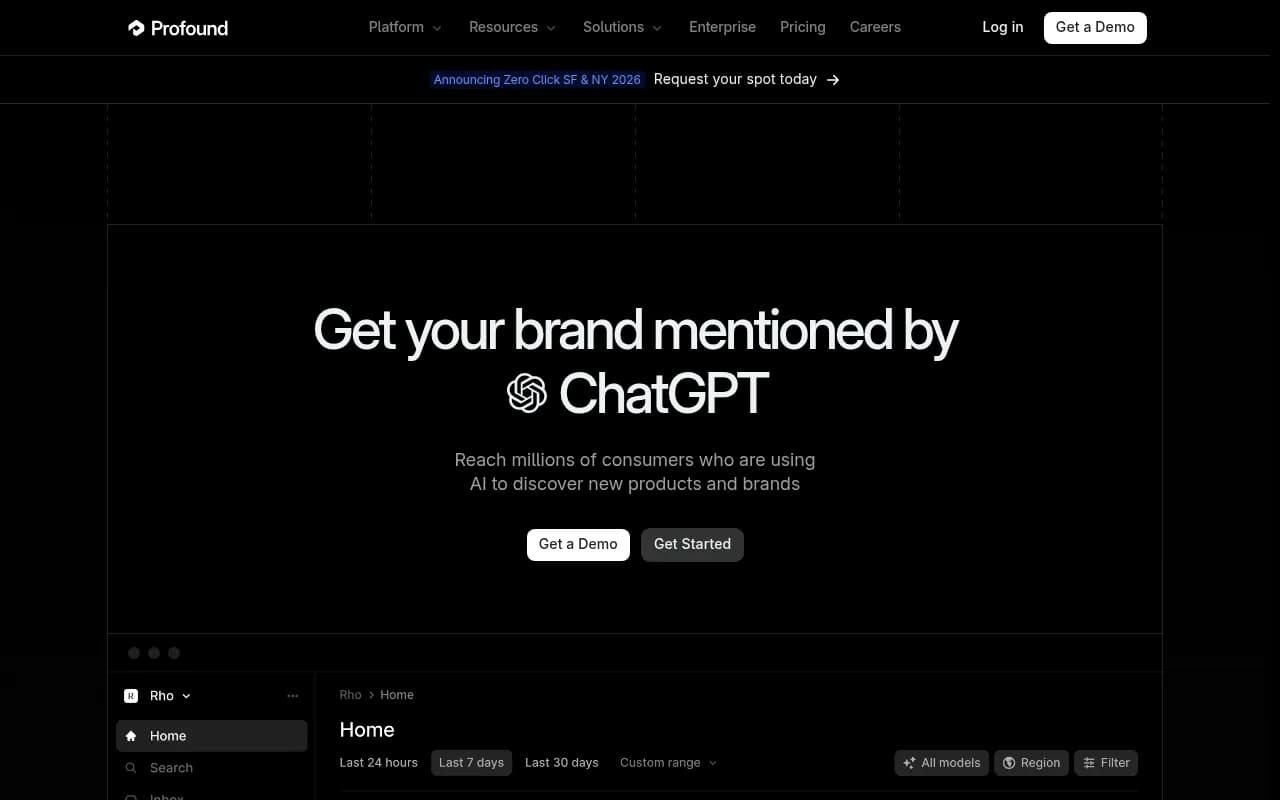
| Profound | Yes | Yes | Yes | No | No |
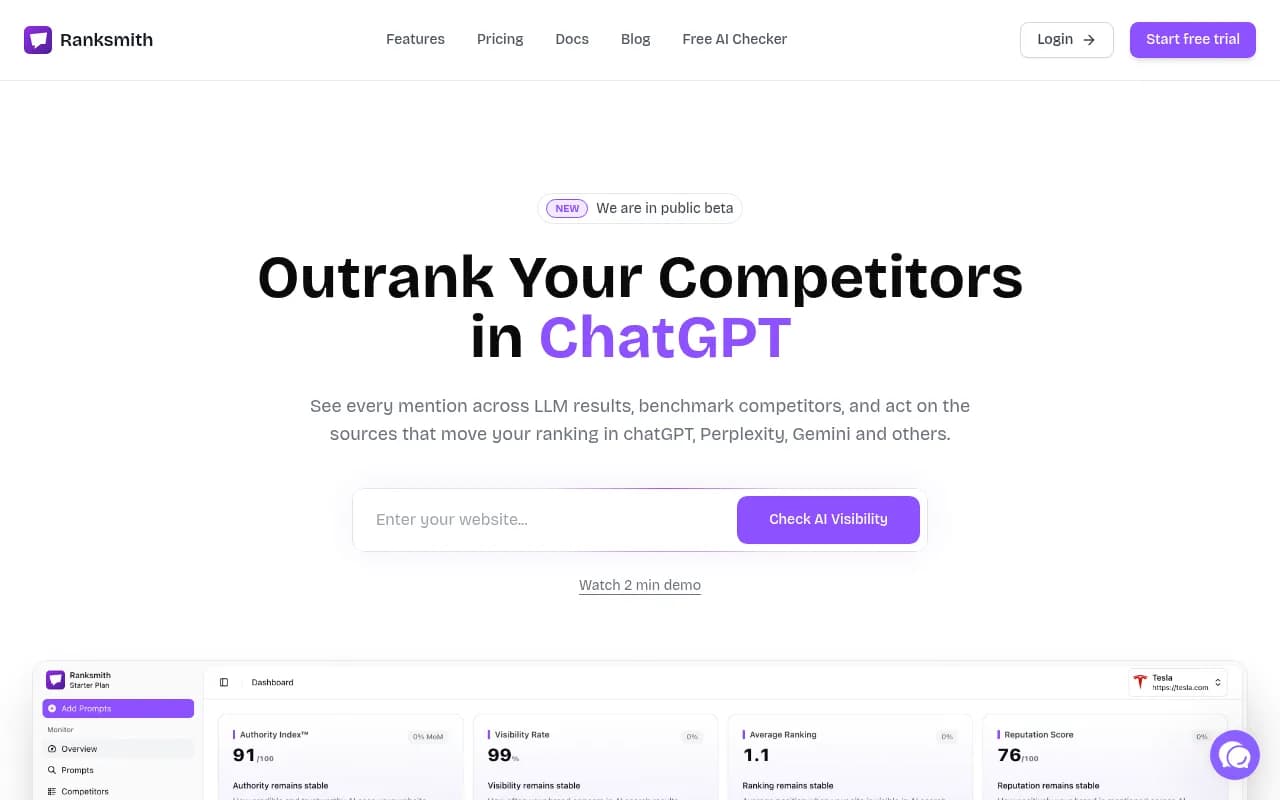
| Ranksmith | Yes | Partial | No | No | No |
| SE Ranking | Yes | Partial | No | No | No |
The distinction that matters most in this table is the last column. Tools that only monitor can tell you where you stand. Tools that include content gap analysis tell you what to do about it.




The misattribution problem deserves more attention
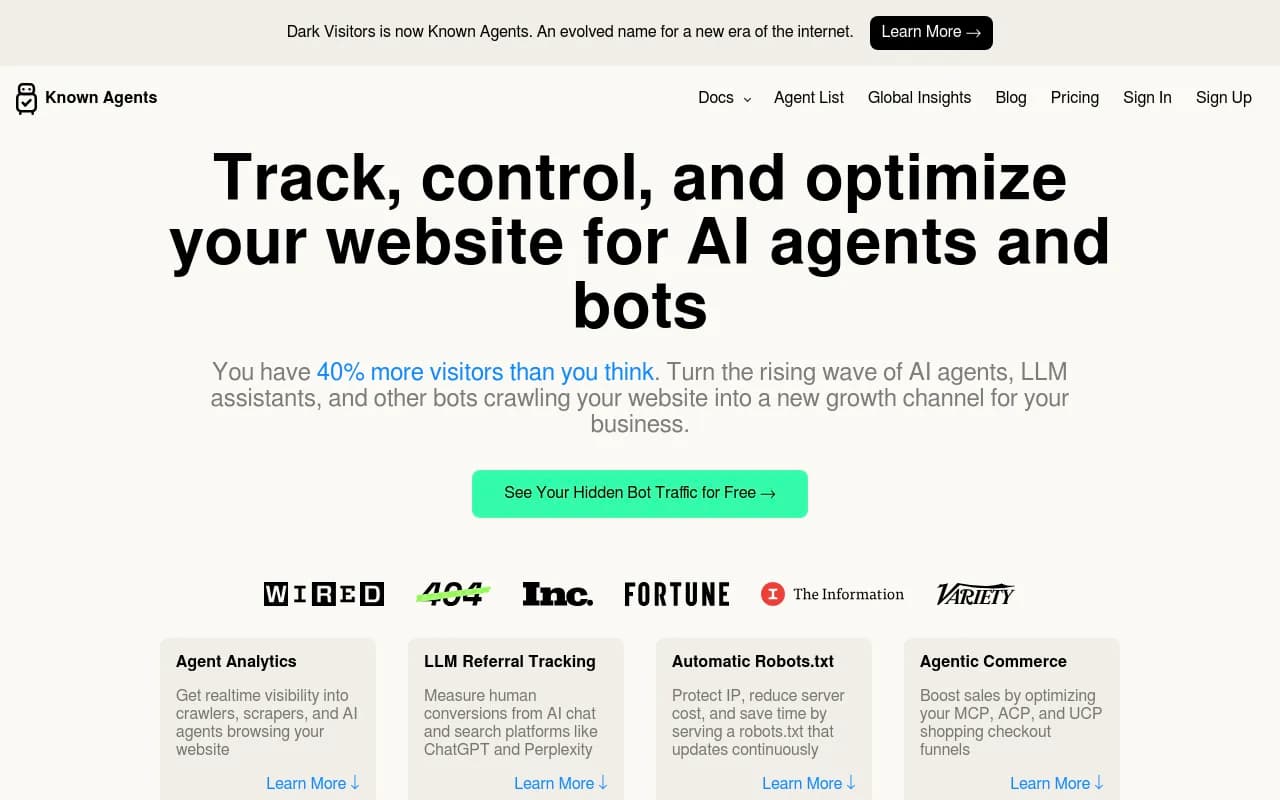
One thing the industry hasn't fully solved yet: the gap between AI crawler activity and actual traffic attribution. AI models crawl your website (you can see this in server logs -- GPTBot, ClaudeBot, PerplexityBot are all identifiable user agents), but the relationship between crawl frequency and citation frequency isn't linear or predictable.
A page that gets crawled heavily by GPTBot doesn't necessarily get cited more in ChatGPT responses. Conversely, pages that haven't been recently crawled can still appear in citations if they're in the model's training data. This means crawler log data is useful context but shouldn't be used as a proxy for citation likelihood.
What crawler logs are genuinely useful for: identifying pages that AI bots are encountering errors on (404s, slow load times, blocked by robots.txt), which can explain why certain pages aren't getting cited despite having relevant content. It's a diagnostic tool, not a predictive one.
What good looks like in practice
A brand that has this measurement framework working properly can answer questions like:
- "Our citation rate on 'best [category] for enterprise' prompts dropped 12 points in the last 30 days -- what changed?" (Answer gap analysis + competitor tracking reveals a competitor published a detailed comparison page that's now being cited instead)
- "We're getting cited on Perplexity but not Google AI Overviews -- why?" (Cross-model analysis + source analysis shows Google AI Overviews is drawing on different sources that don't include our content)
- "Is our AI visibility actually driving revenue?" (Traffic attribution shows AI-referred sessions converting at 3.2x the rate of average organic, justifying the investment)
These are the questions that connect AI citation tracking to business decisions. Raw mention counts don't get you there. The metrics above do.
The brands that will build durable AI search visibility in 2026 and beyond aren't the ones obsessing over their mention count. They're the ones who've built a measurement system that tells them specifically where they're losing, why, and what content to create to fix it.