Key takeaways
- ChatGPT Shopping carousels operate without traditional rankings -- your product either appears or it doesn't, making standard SEO metrics useless for this channel
- The metrics that matter are carousel inclusion rate, citation source analysis, share of voice vs. competitors, and prompt-level visibility
- Most GEO monitoring tools don't track ChatGPT Shopping specifically -- only a handful cover product carousels as a distinct feature
- Tracking alone isn't enough: you need to close the loop between visibility data and content or feed optimization
- DTC brands that act on this data now are building a compounding advantage while most competitors are still ignoring the channel
Why ChatGPT Shopping is different from everything you've tracked before
If you run a DTC brand and you've been watching your Google rankings, your Meta ROAS, and your Shopify analytics -- good. But there's a channel growing fast that none of those dashboards can see.
ChatGPT Shopping carousels started appearing in late 2023 and by 2026 they're a meaningful product discovery surface. When someone types "best moisturizer for dry skin under $40" or "running shoes for wide feet" into ChatGPT, they can get a curated product carousel -- not a list of links, not a ranked page, but specific products with images, prices, and a direct path to purchase.
The fundamental difference from traditional search: there's no page two. No position 4 vs. position 7. You're either in the carousel or you're not. ChatGPT doesn't show you a ranking -- it makes a recommendation. That's a completely different game.
This means your existing analytics stack is essentially blind to it. Google Search Console won't show ChatGPT Shopping impressions. Your rank tracker doesn't query ChatGPT. Your attribution tool can't connect a carousel appearance to a purchase unless you've specifically set it up to capture AI referral traffic.
So before you can optimize anything, you need to understand what's actually happening.
What to measure: the metrics that actually matter
Carousel inclusion rate
The most basic question: does your product appear in ChatGPT Shopping carousels for queries relevant to your category? This isn't a percentage score -- it's a binary per prompt. You define a set of product-relevant queries ("best [category] for [use case]"), run them against ChatGPT, and record whether your brand appears.
Over time, tracking inclusion rate across a prompt set gives you a real visibility score. If you appear in 12 out of 50 relevant queries, that's a 24% inclusion rate. A competitor appearing in 35 out of 50 is winning the channel.
Share of voice vs. competitors
Knowing your own inclusion rate is useful. Knowing it relative to competitors is what drives decisions. If you're at 24% and your top three competitors average 45%, you have a gap problem. If you're at 60% and they're at 20%, you're winning -- but you need to know why so you can protect it.
Share of voice comparisons should be run across the same prompt set, at the same time, with consistent methodology. Otherwise you're comparing apples to oranges.
Citation sources
ChatGPT Shopping doesn't pull product data from thin air. It relies on structured product feeds, review sites, retailer pages, and third-party sources. Understanding which sources ChatGPT is actually citing when it recommends products in your category tells you where to invest.
If ChatGPT consistently cites a specific review publication or a particular retailer's product page when recommending your competitors, that's a signal. Get your product listed there. Get reviewed there. Make sure your data on those platforms is accurate and complete.
Prompt-level visibility
Not all queries are equal. "Best running shoes" is a very different prompt from "best running shoes for flat feet under $120 for marathon training." The second is more specific, more purchase-intent, and often less contested.
Tracking visibility at the prompt level -- rather than just an aggregate score -- lets you find the specific queries where you're invisible but shouldn't be, and the ones where you're already winning and should protect your position.
Sentiment and recommendation framing
When ChatGPT does mention your brand in a shopping context, how does it frame the recommendation? "Great for beginners" vs. "a premium option for serious athletes" vs. "budget-friendly but limited durability" -- these framings influence purchase decisions even if the product appears. Tracking sentiment alongside inclusion gives you a fuller picture.
The data problem most brands don't realize they have
Here's what makes ChatGPT Shopping tracking genuinely hard: the responses aren't deterministic. Ask the same question twice and you might get different products. Ask it from different locations and the carousel changes. Ask it logged in vs. logged out and the results can vary.
This means a single manual check tells you almost nothing. You need systematic, repeated querying across a defined prompt set, with enough volume to see patterns rather than noise. That's not something you can do manually at scale -- you need tooling.
The other problem is attribution. Even if you know ChatGPT is recommending your product, connecting that recommendation to actual traffic and revenue requires either UTM tracking on your product pages (which doesn't work for carousel clicks that don't pass through your site), server log analysis to catch AI crawler visits, or a code snippet that captures referral source data.
Most DTC brands have none of this set up. Which means they're flying blind on a channel that's already driving real purchase intent.
Which tools actually cover ChatGPT Shopping tracking
This is where things get interesting -- and honestly a bit frustrating. The GEO/AI visibility tool market has exploded in 2026, but most of the tools are monitoring-only dashboards that track brand mentions across LLMs. Very few specifically track ChatGPT Shopping carousels as a distinct feature.
Here's a breakdown of the tools worth knowing about:
| Tool | ChatGPT Shopping tracking | Citation source analysis | Content optimization | Traffic attribution |
|---|---|---|---|---|
| Promptwatch | Yes (dedicated feature) | Yes | Yes (AI writing agent) | Yes (snippet + GSC + logs) |
| Azoma | Yes (specialized) | Partial | Limited | No |
| Profound | Partial | Yes | No | No |
| Omnia | Partial | Yes | No | No |
| AthenaHQ | No | Yes | No | No |
| Otterly.AI | No | Partial | No | No |
| SE Ranking | No | Partial | Limited | No |
Promptwatch: the most complete option for DTC brands
Promptwatch is the only platform in this comparison that tracks ChatGPT Shopping carousels as a named feature while also closing the loop on attribution and content optimization. For DTC brands, that combination matters.
The ChatGPT Shopping tracking in Promptwatch monitors when your brand appears in product recommendation carousels, which prompts trigger those appearances, and how your visibility compares to competitors. It sits alongside the broader AI visibility suite -- so you're not paying separately for shopping tracking and general brand monitoring.
What makes it genuinely useful rather than just another dashboard: the platform connects visibility data to content gaps (showing you which prompts competitors appear for that you don't), generates content designed to improve citation rates, and tracks whether that content actually moves the needle. The traffic attribution piece -- via a code snippet, Google Search Console integration, or server log analysis -- connects AI visibility to actual revenue, which is the question every DTC brand's CMO is eventually going to ask.

Azoma: built specifically for AI shopping channels
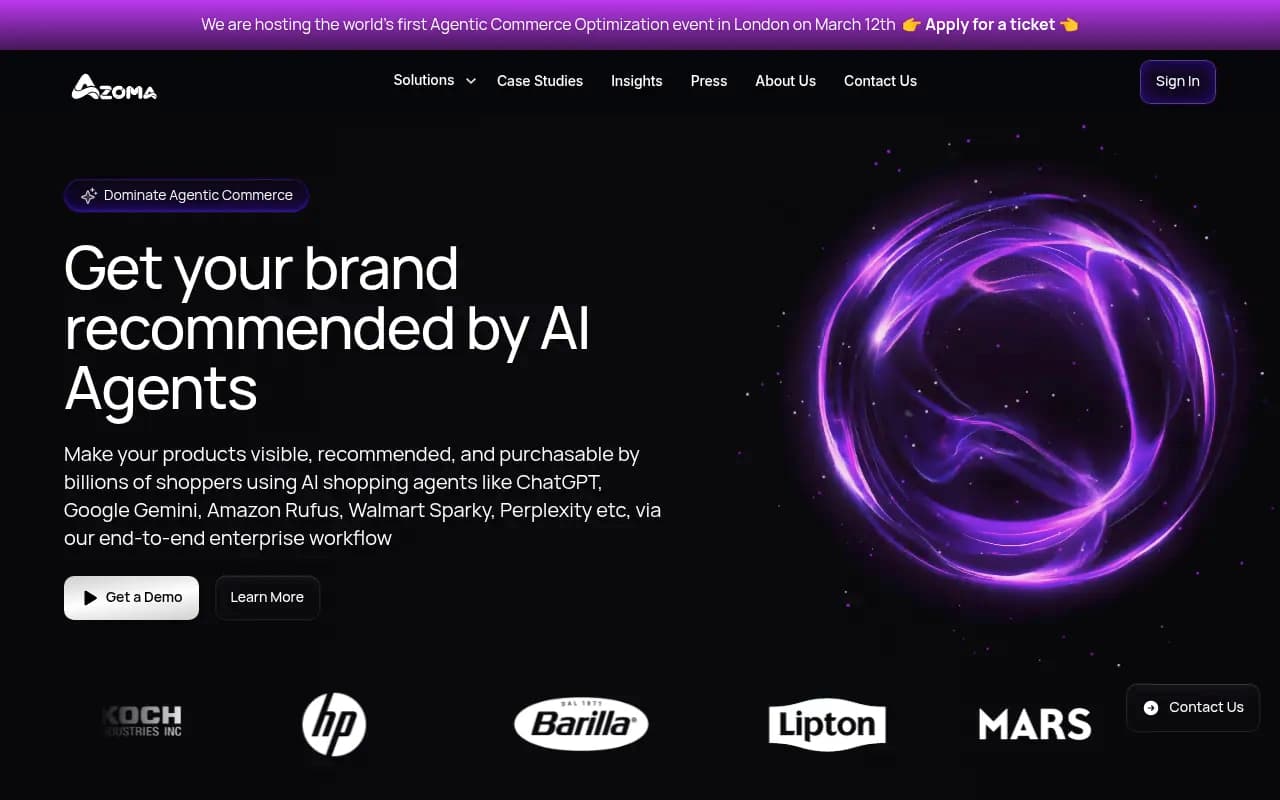
Azoma is purpose-built for AI shopping optimization, covering ChatGPT Shopping alongside Amazon's Rufus AI and other AI-powered retail surfaces. If your primary concern is product feed optimization and carousel inclusion rather than broader brand visibility, Azoma is worth a look.
Profound: strong on citation intelligence
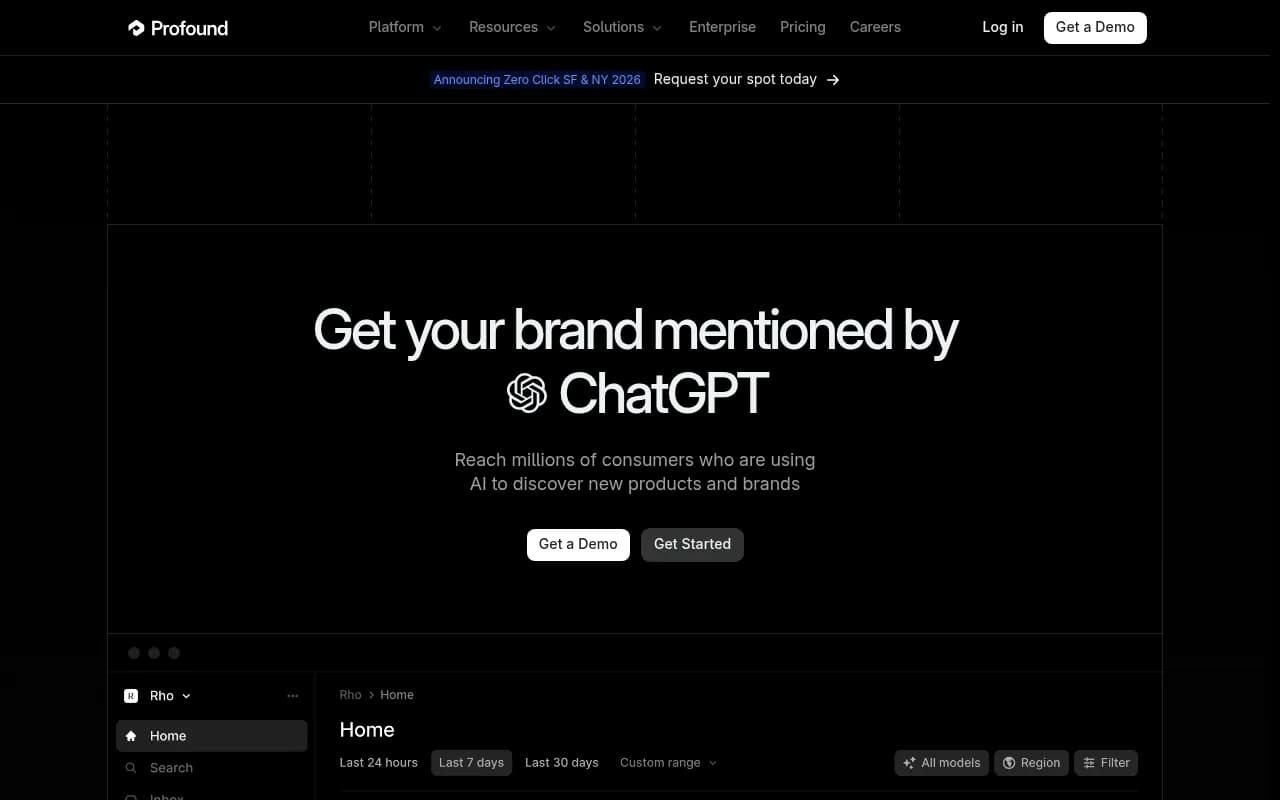
Profound has solid citation source analysis and tracks brand visibility across multiple LLMs. It doesn't have dedicated ChatGPT Shopping carousel tracking, but its citation intelligence is genuinely good -- useful for understanding which sources ChatGPT pulls from when making product recommendations in your category.
Omnia: share of voice focus
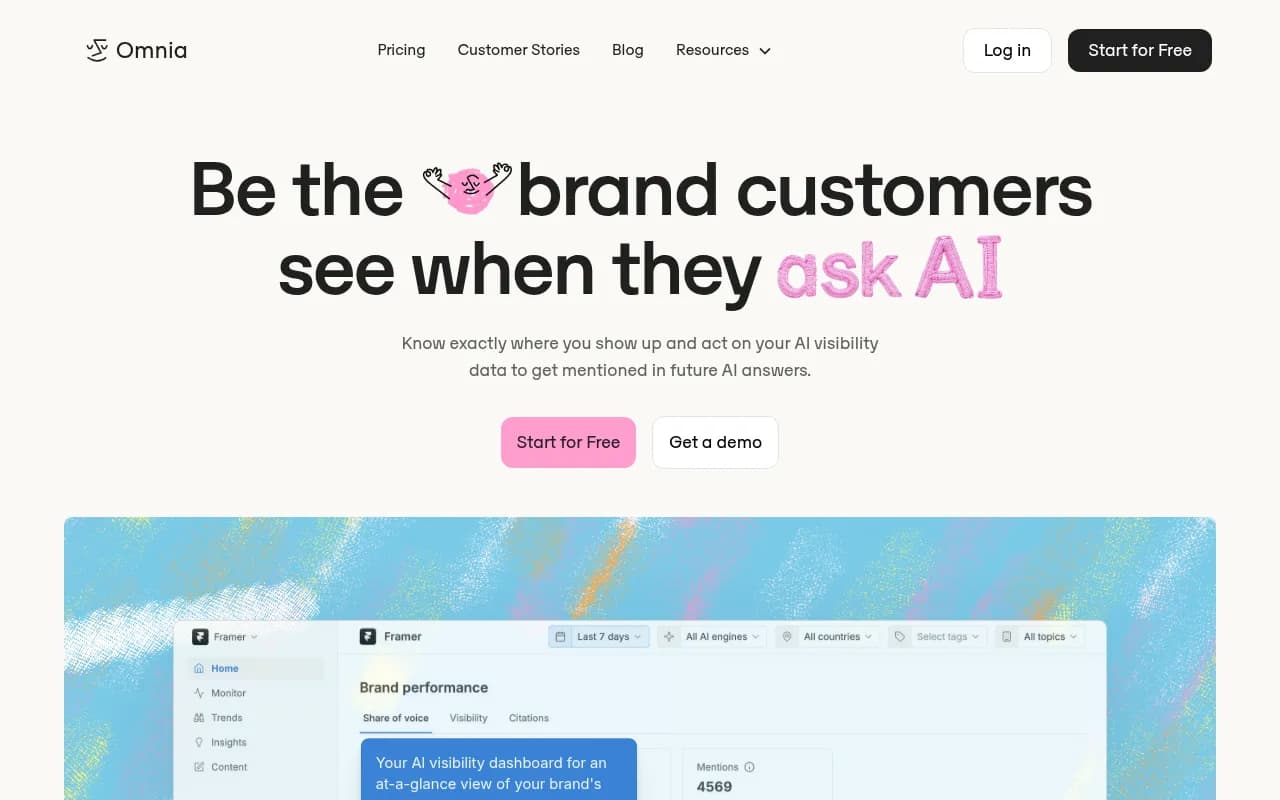
Omnia is built around share of voice analytics and competitive benchmarking. It gives you a clear picture of how your visibility compares to competitors across AI models. Less focused on the shopping-specific layer, but useful for the competitive benchmarking piece.
AthenaHQ: monitoring without optimization
AthenaHQ tracks brand visibility across 8+ AI search engines and has decent prompt-level reporting. The gap: it's monitoring-only. You can see where you're invisible, but the platform doesn't help you fix it.
SE Ranking: traditional SEO with AI visibility add-ons
SE Ranking has added AI visibility tracking to its existing SEO platform. It's a reasonable option if you're already using it for traditional SEO and want to add some AI monitoring without switching tools. The ChatGPT Shopping-specific coverage is limited.
How to act on the data
Tracking is only useful if it changes what you do. Here's how to turn ChatGPT Shopping visibility data into actual improvements.
Fix your structured data first
ChatGPT Shopping relies heavily on structured product data -- schema markup, product feeds, and the signals that tell AI models what your product is, who it's for, and what it costs. If your structured data is incomplete or inconsistent across platforms, you're invisible to the recommendation engine regardless of how good your product is.
Run a structured data audit. Make sure your product schema includes price, availability, reviews, and category. Check your Google Merchant Center feed for errors. If you're listed on third-party retailers or review sites that ChatGPT cites in your category, make sure your product data there is accurate and current.
Identify the citation sources ChatGPT trusts in your category
Use citation source analysis to find out which domains ChatGPT pulls from when recommending products like yours. This is usually a mix of review publications, retailer pages, Reddit threads, and sometimes YouTube reviews.
Once you know the sources, prioritize getting your product in front of them. That might mean reaching out to review publications, ensuring your product is listed on the retailers ChatGPT cites, or creating content that answers the specific questions those sources address.
Build content around high-intent shopping prompts
The prompts that trigger ChatGPT Shopping carousels are usually specific and purchase-intent. "Best [product type] for [specific use case]" is the pattern. If you're not appearing for those prompts, it's often because there's no content on your site that directly addresses them.
Creating comparison pages, buyer's guides, and use-case-specific content that matches the framing of high-intent shopping queries gives AI models something to cite. This is where the content generation piece of a platform like Promptwatch becomes useful -- it can identify the specific prompts you're missing and generate content engineered to get cited, rather than generic SEO filler.
Set up attribution before you optimize
This sounds backwards but it's important: before you invest heavily in improving your ChatGPT Shopping visibility, set up the attribution infrastructure to measure whether it's working. Otherwise you'll spend months optimizing and have no way to connect the effort to revenue.
At minimum, implement server log analysis to capture AI crawler visits, or use a platform that provides a tracking snippet. Connect this to your revenue data so you can see whether AI-referred traffic converts differently from other channels.
Track changes over time, not just snapshots
A single visibility check tells you where you stand today. What you actually need is trend data -- are you gaining or losing carousel appearances over time? Did that new product description you published improve inclusion rates for specific prompts?
Set a cadence: weekly or bi-weekly prompt runs across your core query set, with consistent methodology. Most platforms will do this automatically and alert you to significant changes.
A practical setup for a DTC brand starting from scratch
If you're starting from zero, here's a reasonable sequence:
-
Define your prompt set. Start with 30-50 queries that represent how your target customers would ask ChatGPT for product recommendations in your category. Include broad queries ("best [category]"), use-case queries ("best [category] for [specific need]"), and comparison queries ("vs. [competitor]").
-
Run a baseline. Use a tracking tool to establish your current inclusion rate and share of voice across that prompt set. This is your starting point.
-
Audit your structured data and citation sources. Fix any obvious gaps in product schema and identify which sources ChatGPT trusts in your category.
-
Create content for the gaps. Focus on the specific prompts where competitors appear and you don't. Use-case-specific buyer's guides and comparison content tend to perform well.
-
Set up attribution. Implement tracking to connect AI visibility to traffic and revenue.
-
Re-run your prompt set after 4-6 weeks. Measure whether inclusion rates have improved for the prompts you targeted.
The cycle isn't complicated. What makes it work is consistency and having the right data at each step.
The competitive reality
ChatGPT processes an enormous volume of product-related queries every day. For most DTC categories, the brands that appear in shopping carousels are capturing purchase intent that never shows up in Google Search Console, never gets attributed to any paid channel, and never gets measured by any existing analytics tool.
The brands building systematic tracking and optimization for this channel now are getting a head start that will compound. The ones waiting until it's "proven" will be playing catch-up against competitors who've had 12-18 months of data and optimization cycles.
It's not a reason to panic. But it is a reason to start measuring.