Key takeaways
- Semrush's AI Visibility Toolkit gives you AI monitoring alongside traditional SEO in one platform, which is genuinely useful for teams that don't want to juggle multiple tools.
- The toolkit covers AI Visibility Score, Brand Performance, Prompt Research, and an AI-focused Site Audit -- solid breadth for a first-generation feature set.
- The main limitation: Semrush uses fixed prompts rather than letting you define custom ones, and there's no AI traffic attribution or content gap analysis to act on what you find.
- For basic AI monitoring bundled with SEO, Semrush is reasonable value. For serious GEO optimization, you'll likely need a dedicated platform alongside it.
- Dedicated GEO tools like Promptwatch go further -- tracking 10 AI models, generating content to fill visibility gaps, and attributing actual traffic from AI sources.
Semrush has been the go-to SEO platform for a decade. Keyword research, backlink analysis, site audits, competitive intelligence -- it does all of it, and does it well. So when the company launched its AI Visibility Toolkit as part of Semrush One, the natural question was: does a company that built its reputation on traditional search actually understand what GEO requires?
The short answer is: partly. The toolkit is more capable than most people expect, but it has some real gaps that matter if AI search visibility is a serious priority for your business.
Here's what I found after digging into the features, reading through independent reviews, and comparing it against dedicated GEO platforms.
What Semrush's AI Visibility Toolkit actually includes
The toolkit lives inside Semrush One (the company's unified platform tier) and covers several distinct areas.
AI Visibility Score and competitor research
This is the headline metric -- a score that measures how often your site appears in AI-generated search answers. You set up a project, define your brand and competitors, and Semrush starts tracking how frequently each brand gets cited across AI models.
The competitor comparison view is genuinely useful. You can see your share of voice versus competitors at a glance, which gives you a quick read on whether you're winning or losing ground in AI search.
Brand Performance
This section goes beyond simple citation counts. It tracks sentiment (how AI models describe your brand -- positive, neutral, negative), perception by LLM, and how your brand is characterized in AI responses. If ChatGPT is describing your product in a way that's subtly off-brand or inaccurate, this is where you'd catch it.
Sentiment tracking is something a lot of monitoring tools skip, so credit to Semrush for including it.
Prompt Research and Prompt Tracking
Semrush treats prompts like keywords -- which is the right instinct. The Prompt Research feature lets you explore which prompts are relevant to your category, and Prompt Tracking lets you monitor specific prompts over time to see how your visibility changes.
This is one of the stronger parts of the toolkit. The framing of "prompts as keywords" is how GEO practitioners actually think about the problem, and having that workflow inside the same platform as your keyword research is convenient.
Third-party brand mentions
This feature surfaces where your brand is being mentioned in sources that AI models cite -- think Reddit threads, review sites, industry publications. The idea is to turn AI citations into PR and content targets: if Perplexity keeps citing a particular Reddit thread about your category, that's a signal about where you should be active.
It's a smart feature, though the depth of coverage varies.
AI Site Audit and AI Search Health
Semrush added an AI-focused layer to its existing site audit. It checks whether your site is "AI-ready" -- things like structured data, crawlability by AI bots, content clarity, and other technical factors that influence whether AI models can read and cite your pages.
This is where Semrush's decade of technical SEO expertise shows. The audit recommendations are practical and grounded in real technical issues.
What Semrush gets right
The unified workflow
The biggest genuine advantage is having AI visibility data next to your SEO data. When you're trying to understand a traffic drop, being able to check both traditional rankings and AI visibility in the same interface saves real time. You don't have to export data from one tool and cross-reference it in another.
For teams that are already paying for Semrush, this is a meaningful addition rather than a separate subscription.
Prompt-as-keyword framing
The Prompt Research and Tracking features are well-designed. Treating prompts like keywords -- with tracking, research, and historical data -- is the right mental model for GEO. Semrush's execution here is cleaner than some dedicated tools that still think in terms of "brand mentions" rather than prompt-level visibility.
Technical AI readiness audit
Semrush's site audit heritage gives it an edge here. The AI Search Health checks are more thorough than what most pure-play GEO tools offer, because Semrush has years of data on what makes content technically accessible to crawlers. Applying that to AI crawlers specifically is a natural extension.
Sentiment and perception tracking
Knowing that you're cited is one thing. Knowing how you're described is another. The sentiment and perception features add a qualitative layer that's genuinely useful for brand teams, not just SEO teams.
Where Semrush falls short
Fixed prompts, not custom ones
This is the most significant limitation. Semrush uses a set of predefined prompts rather than letting you build a custom prompt set tailored to your specific business, products, and customer questions. For a niche B2B software company, the generic prompts may not reflect how your actual customers are searching in AI tools.
Dedicated GEO platforms let you define exactly which prompts matter to your business and track those specifically. That flexibility is hard to replicate with a fixed-prompt approach.
No AI traffic attribution
Semrush can tell you that you're being cited in AI responses. It cannot tell you whether those citations are driving actual traffic to your site. There's no code snippet, no server log integration, no way to connect AI visibility scores to revenue.
This is a significant gap for anyone trying to justify GEO investment to a CFO or client. "Our AI Visibility Score went up" is a much weaker argument than "AI search drove 12% of our organic traffic last quarter."
No content gap analysis or generation
Semrush will show you where your visibility is weak, but it won't tell you why or help you fix it. There's no answer gap analysis that surfaces which prompts your competitors are winning but you're not, and no built-in content generation to address those gaps.
This is where the difference between a monitoring tool and an optimization platform becomes clear. Monitoring tells you the score. Optimization helps you change it.
Limited AI model coverage
At launch, Semrush's AI visibility tracking covered a narrower set of models than dedicated platforms. If you need visibility data across ChatGPT, Claude, Gemini, Perplexity, Grok, DeepSeek, Copilot, and others simultaneously, you may find the coverage incomplete.
No AI crawler logs
Semrush doesn't show you which AI bots are crawling your site, which pages they're reading, or how often they return. This data is surprisingly useful -- it tells you whether AI models are even discovering your content before you worry about whether they're citing it.
How Semrush compares to dedicated GEO platforms
Here's an honest feature comparison across the main options:
| Feature | Semrush One | Profound | Ahrefs Brand Radar | Promptwatch |
|---|---|---|---|---|
| AI Visibility Score | Yes | Yes | Yes | Yes |
| Custom prompt tracking | No (fixed) | Yes | No (fixed) | Yes |
| Sentiment tracking | Yes | Yes | No | Yes |
| AI traffic attribution | No | Partial | No | Yes |
| Content gap analysis | No | Partial | No | Yes |
| AI content generation | No | Yes (agents) | No | Yes |
| AI crawler logs | No | No | No | Yes |
| Reddit/YouTube tracking | Partial | No | No | Yes |
| ChatGPT Shopping tracking | No | No | No | Yes |
| Traditional SEO tools | Yes (full) | No | Yes (full) | No |
| Pricing (entry) | ~$139/mo+ | Custom | ~$129/mo+ | $99/mo |

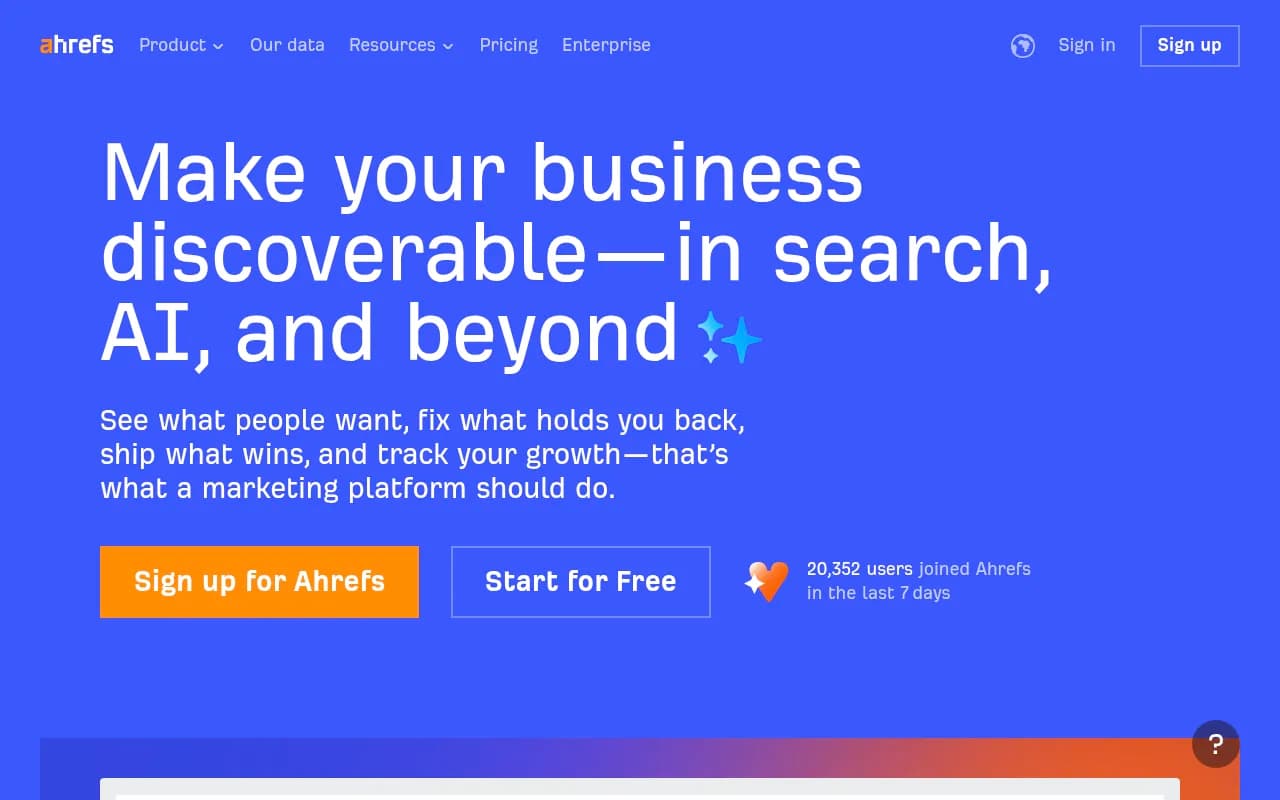

A few things stand out from this comparison. Semrush and Ahrefs both have the traditional SEO advantage -- if you're already paying for those platforms, the AI features are essentially bundled. But both use fixed prompts, which limits how precisely you can track what matters to your specific business.
Profound has strong monitoring and some content generation via its agents, but it's priced for enterprise and lacks some of the traffic attribution depth.
Promptwatch sits in a different category -- it's built specifically for the full optimization loop rather than monitoring. The crawler logs, answer gap analysis, and AI content generation are designed to work together: find what's missing, create content to fill the gap, track whether it worked.
Who should use Semrush's AI Visibility Toolkit
The honest answer is: teams that are already Semrush customers and want a starting point for AI visibility without adding another tool to their stack.
If you're a marketing team that uses Semrush for keyword research and site audits, turning on the AI Visibility Toolkit is a low-friction way to start understanding your AI search presence. The unified workflow is genuinely valuable, and the prompt tracking features are better than you might expect from an SEO tool.
Where it breaks down is for teams where AI search visibility is a primary concern rather than a secondary one. If you're trying to actively grow your AI citations, understand why competitors are outperforming you in specific prompts, and connect that visibility to actual revenue -- Semrush's toolkit isn't built for that workflow.
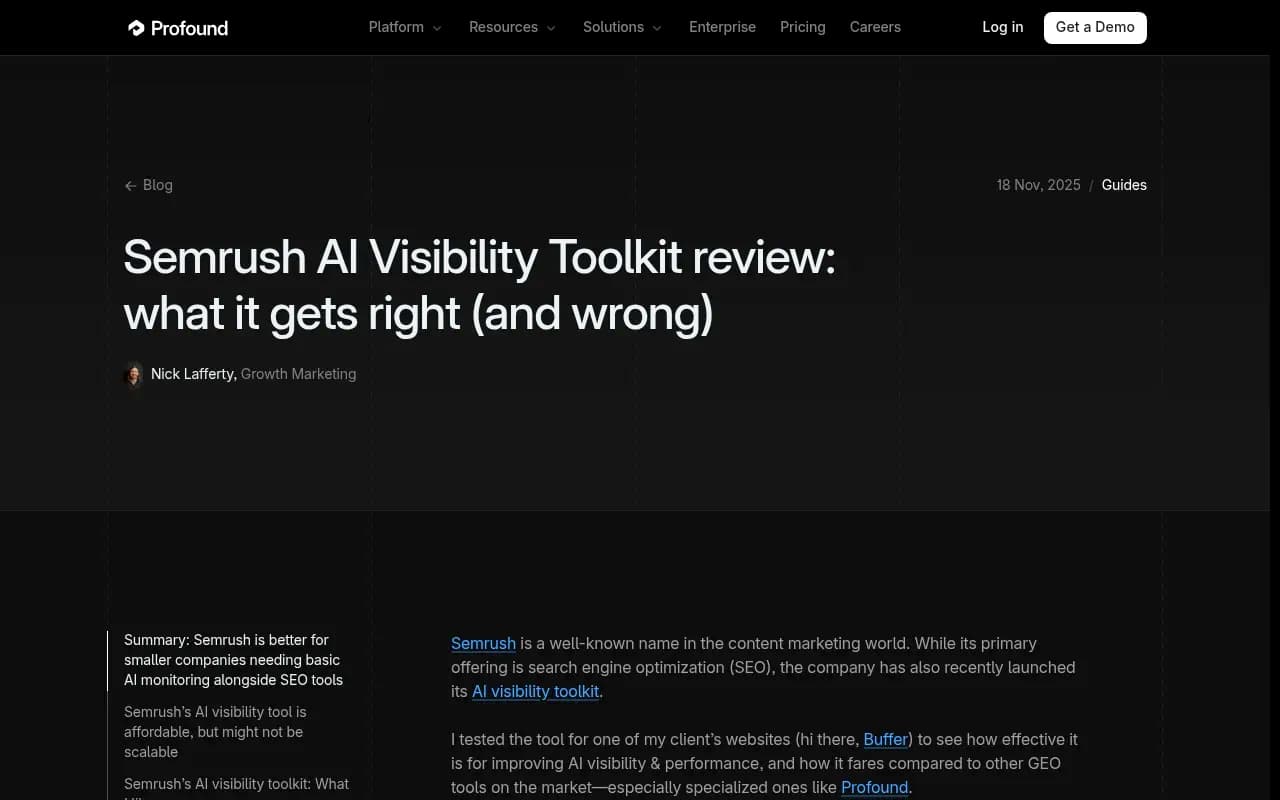
It's also worth noting that Nick Lafferty's review for Profound (testing the tool against Buffer's website) reached a similar conclusion: Semrush is better suited for smaller companies needing basic AI monitoring alongside their existing SEO work, not for teams running serious GEO programs.
The broader context: what GEO actually requires in 2026
The challenge with evaluating Semrush's AI features is that most people's mental model of "AI visibility" is still stuck at monitoring. You check a score, see if it went up or down, and... then what?
The platforms that are actually moving the needle for brands in 2026 are the ones that close the loop between measurement and action. That means:
- Knowing which specific prompts you're invisible for (not just an aggregate score)
- Understanding what content would make AI models more likely to cite you
- Creating that content efficiently
- Tracking whether it worked, in terms of both citations and actual traffic
Semrush handles step 4 partially (citations, not traffic) and has some capability for step 1 with its prompt tracking. Steps 2 and 3 are essentially absent.
That's not a criticism of Semrush as a company -- it's a reflection of where the product is right now. They've built a solid first generation of AI visibility features on top of a mature SEO platform. The question is whether they'll close those gaps in future releases, or whether the architecture of a traditional SEO tool makes it hard to build the optimization layer that GEO requires.
Other tools worth considering
If you're evaluating options beyond Semrush and the major platforms, a few others are worth a look depending on your needs:
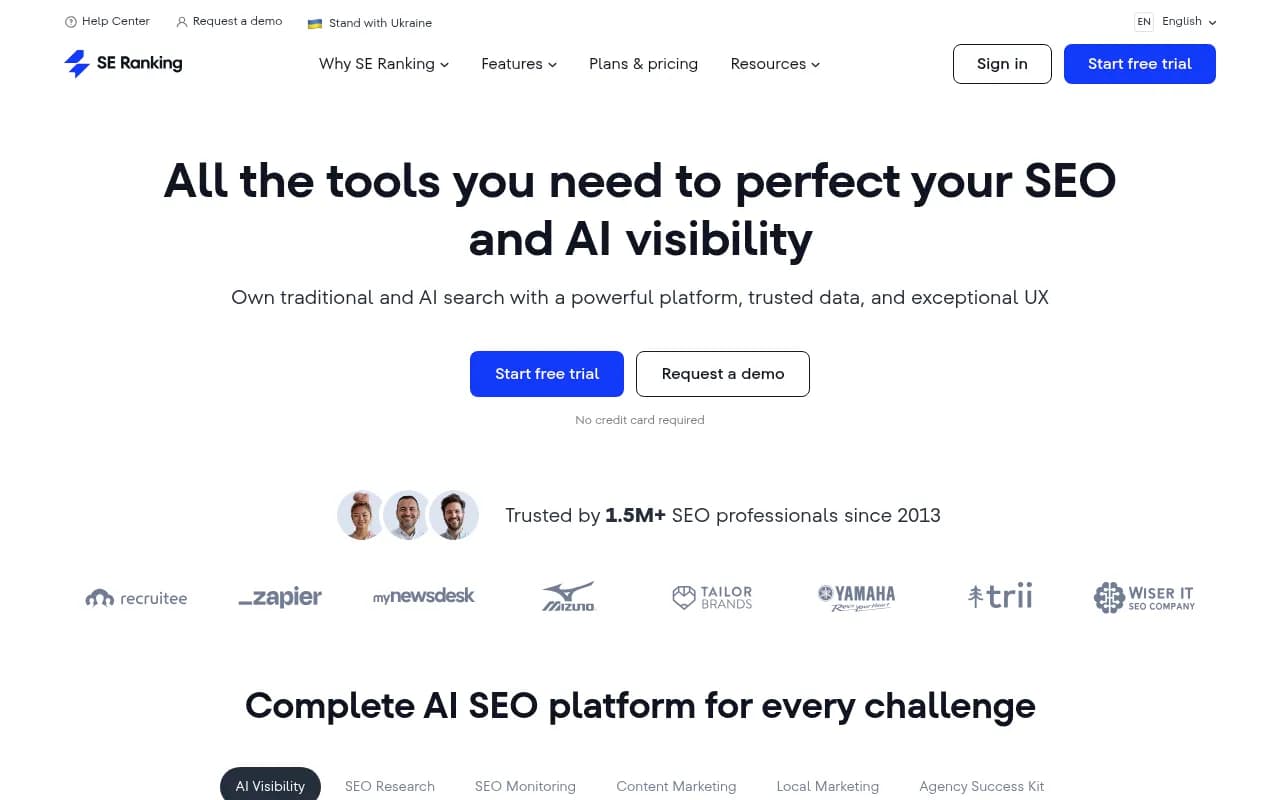
SE Ranking has been building out AI visibility features and is worth checking if you want an all-in-one SEO platform at a lower price point than Semrush.

Otterly.AI is a lightweight monitoring option if you just need basic AI citation tracking without the full SEO suite.

AthenaHQ covers monitoring across multiple AI engines and is used by larger brand teams, though like most tools in this category, it stops at monitoring rather than optimization.
Final verdict
Semrush's AI Visibility Toolkit is a reasonable addition to an already strong SEO platform. The prompt tracking, sentiment analysis, and AI site audit are genuinely useful features, and the unified workflow with traditional SEO data is a real advantage for teams already in the Semrush ecosystem.
But it's a monitoring tool, not an optimization tool. Fixed prompts, no traffic attribution, and no content gap analysis mean you can measure your AI visibility but can't systematically improve it from within the platform.
If AI search is a serious channel for your business -- not just something you're keeping an eye on -- you'll need either a dedicated GEO platform or a combination of Semrush for SEO plus a specialized tool for the optimization layer. The gap between "knowing your score" and "improving your score" is where most of the real work happens, and Semrush hasn't fully bridged it yet.