Key takeaways
- Most AI visibility tools only monitor -- they show you data but don't help you act on it. Look for platforms that close the loop from gap identification to content creation to traffic attribution.
- Coverage matters: a tool that only tracks ChatGPT misses Perplexity, Gemini, Claude, Grok, and the AI models your customers actually use.
- Prompt intelligence (volume estimates, difficulty scores, query fan-outs) separates serious platforms from basic trackers.
- Crawler logs, Reddit/YouTube tracking, and page-level citation data are differentiating features most tools skip entirely.
- Free trials are standard -- always test with your own brand and competitors before paying.
The AI visibility tool market has exploded. In early 2025 there were maybe a dozen platforms worth considering. By mid-2026, there are well over a hundred. Some are genuinely useful. Many are monitoring dashboards with a GEO label slapped on them. A few are outright vaporware.
The problem is they all look similar on a landing page. "Track your brand across ChatGPT, Perplexity, and Gemini!" Sure. They all say that. The real question is what happens after you see the data.
This checklist cuts through the noise. Work through these 15 points before you sign anything, and you'll know exactly what you're buying.
1. How many AI models does it actually monitor?
Start here, because coverage is table stakes. A tool that only tracks ChatGPT is like a rank tracker that only checks Google Desktop. Useful, but incomplete.
The AI search landscape in 2026 includes ChatGPT, Perplexity, Google AI Overviews, Google AI Mode, Claude, Gemini, Meta AI/Llama, DeepSeek, Grok, Mistral, and Copilot. Your customers use different ones depending on their device, workflow, and country.
Ask the vendor: which models do you query? How often? Do you query them directly via API or scrape the interface? API queries tend to be more consistent and reproducible.


2. Does it go beyond monitoring to actual optimization?
This is the most important question on the list, and most tools fail it.
Monitoring tells you where you're invisible. Optimization helps you fix it. The gap between those two things is enormous, and most platforms stop at step one.
What optimization actually looks like: the tool identifies which prompts your competitors rank for but you don't, then helps you create content specifically designed to get cited by AI models. Not generic blog posts -- content grounded in real citation data, prompt volumes, and competitor analysis.
If a vendor's answer to "how do I improve my visibility?" is "publish more content and build backlinks," that's a monitoring tool wearing optimization clothes.
Promptwatch is one of the few platforms that runs the full loop: find gaps, generate content, track results. Most others stop at the first step.
3. What does "prompt tracking" actually mean?
Every tool tracks prompts. But there's a wide range of what that means in practice.
At the basic end: you enter a list of prompts, the tool queries AI models, and you see whether your brand appears. Fine.
At the useful end: the tool tells you the estimated search volume for each prompt, assigns a difficulty score, shows you which sub-queries branch off from it (query fan-outs), and surfaces prompts you hadn't thought to track.
The difference matters because you can't optimize for everything. You need to prioritize. A tool that just shows you a list of prompts with green/red indicators doesn't help you decide where to spend your time.
Ask vendors specifically: do you provide prompt volume estimates? Difficulty scores? Query fan-out data?


4. Can it track at the page level, not just the brand level?
Brand-level visibility scores are fine for executive dashboards. They're useless for actually fixing problems.
Page-level tracking tells you which specific URLs on your site are being cited, how often, and by which AI models. That's what lets you identify which pages are working, which need updating, and which gaps exist in your content architecture.
If a tool only shows you an overall "AI visibility score" without breaking it down by page, you're flying blind when it comes to optimization.
5. Does it include competitor analysis?
You can't know if your visibility is good or bad without context. A 40% mention rate sounds great until you learn your main competitor is at 70%.
Look for tools that let you track competitors alongside your own brand, ideally with heatmap-style comparisons showing who wins for each prompt and why. Some platforms also show which sources (pages, Reddit threads, YouTube videos) AI models cite when recommending competitors -- that's genuinely useful intelligence.
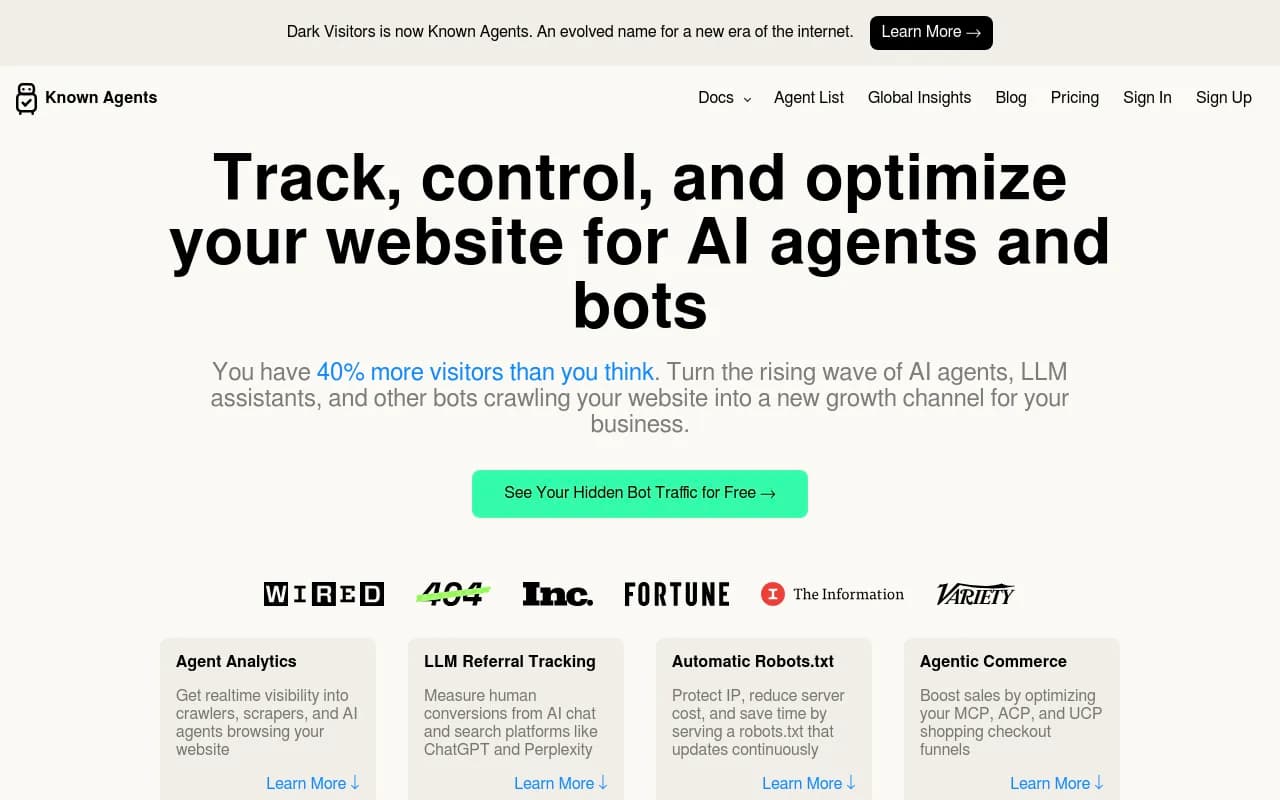
6. Does it have AI crawler log analysis?
This one surprises people. Most AI visibility tools focus entirely on outputs (what AI models say about you) without looking at inputs (whether AI crawlers can even access your content).
AI crawler logs show you which pages ChatGPT, Claude, Perplexity, and other AI crawlers are visiting, how often they return, and what errors they encounter. If a crawler hits a 404 or gets blocked by your robots.txt, your content won't be indexed -- and no amount of optimization will fix that.
This feature is rare. Most monitoring-only tools don't have it. It's a meaningful differentiator.
7. How does it handle multi-language and multi-region tracking?
If you operate in more than one market, this matters immediately. AI models give different answers depending on the language they're queried in and the country the query appears to come from.
A brand that's well-cited in English-language ChatGPT responses might be invisible in French, German, or Japanese. A tool that only monitors in English is giving you a partial picture.
Ask: can you set the query language and region independently? Can you create different personas (e.g., "a French-speaking B2B buyer in Paris") to simulate how your actual customers search?
8. Does it track non-traditional citation sources?
AI models don't just cite brand websites. They cite Reddit threads, YouTube videos, industry forums, review sites, and third-party publications. If you're only optimizing your own site, you're missing a significant part of the picture.
Some tools surface the Reddit discussions and YouTube content that directly influence AI recommendations for your category. That tells you where to participate, what narratives are shaping AI responses, and which third-party sources you should be building relationships with.
This is a feature most tools ignore entirely.
9. Can it attribute AI visibility to actual traffic and revenue?
Visibility scores are vanity metrics if you can't connect them to business outcomes. The question isn't just "are we being cited?" but "is that citation driving traffic and revenue?"
Look for tools that offer traffic attribution via a JavaScript snippet, Google Search Console integration, or server log analysis. The best implementations let you see which AI citations led to actual site visits and, ideally, conversions.
This closes the loop between GEO activity and business results -- and it's what separates a reporting tool from a revenue tool.
10. What does the content generation actually look like?
If a tool claims to help you create content for AI visibility, dig into the specifics. There's a big difference between:
- A generic AI writing assistant that produces SEO filler
- A content engine grounded in real citation data, prompt volumes, competitor analysis, and persona targeting
The second type generates articles, listicles, and comparisons that are actually engineered to get cited by AI models -- because they're built around what those models are already citing and what's missing from the current landscape.
Ask for a demo of the content generation feature specifically. Look at the output. Does it read like something an AI model would cite as an authoritative source? Or does it read like a keyword-stuffed blog post from 2019?
11. How fresh is the data?
AI search responses change constantly. A brand that's cited today might not be cited next week if a competitor publishes better content or if an AI model updates its training data.
Ask vendors: how often do you re-query prompts? Daily? Weekly? Monthly? For fast-moving categories, weekly might not be enough. For stable B2B niches, it might be fine.
Also ask about historical data. Can you see how your visibility has changed over time? Trend data is essential for understanding whether your optimization efforts are actually working.
12. What does the reporting and export look like?
This matters more than people expect, especially for agencies and larger teams.
Questions to ask:
- Can you create white-label reports for clients?
- Is there a Looker Studio integration or API for custom reporting?
- Can you export raw data for your own analysis?
- How customizable are the dashboards?
If you're an agency managing multiple brands, you also need multi-client management -- the ability to switch between accounts without logging in and out repeatedly.
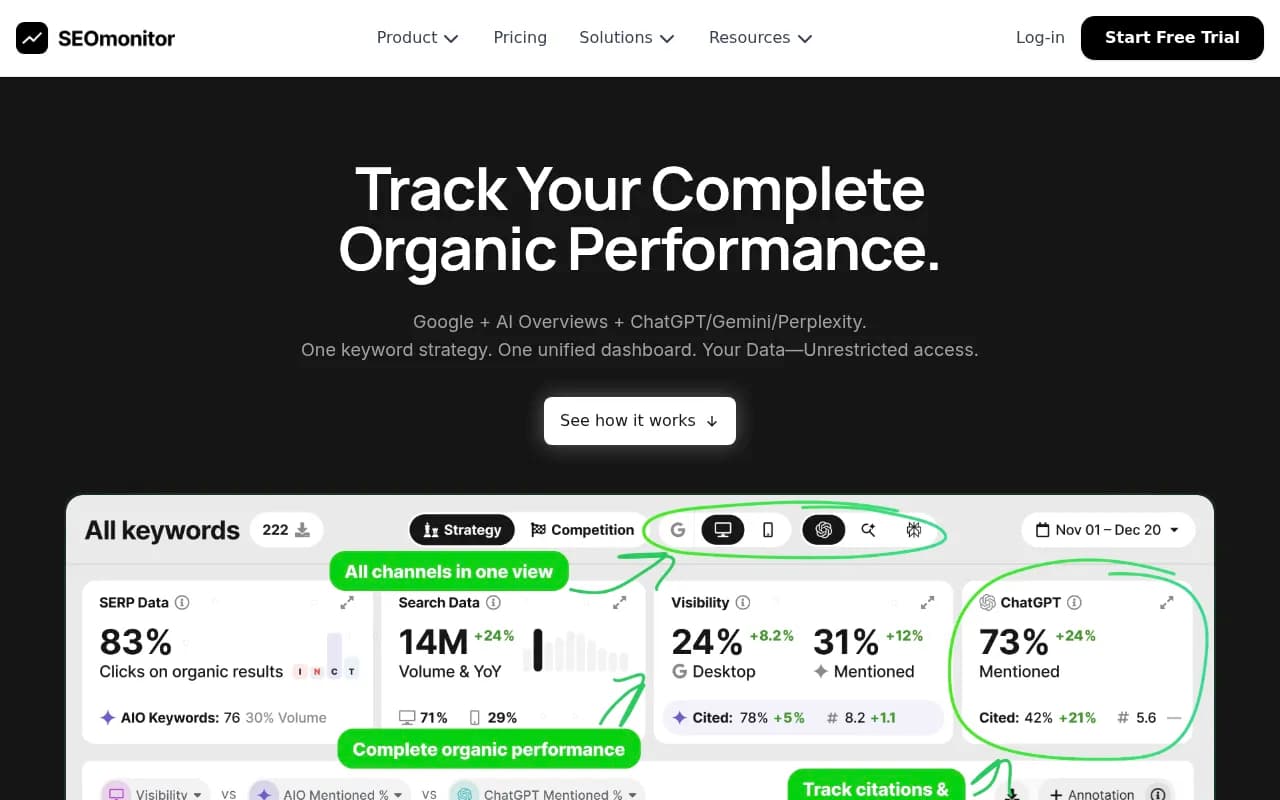
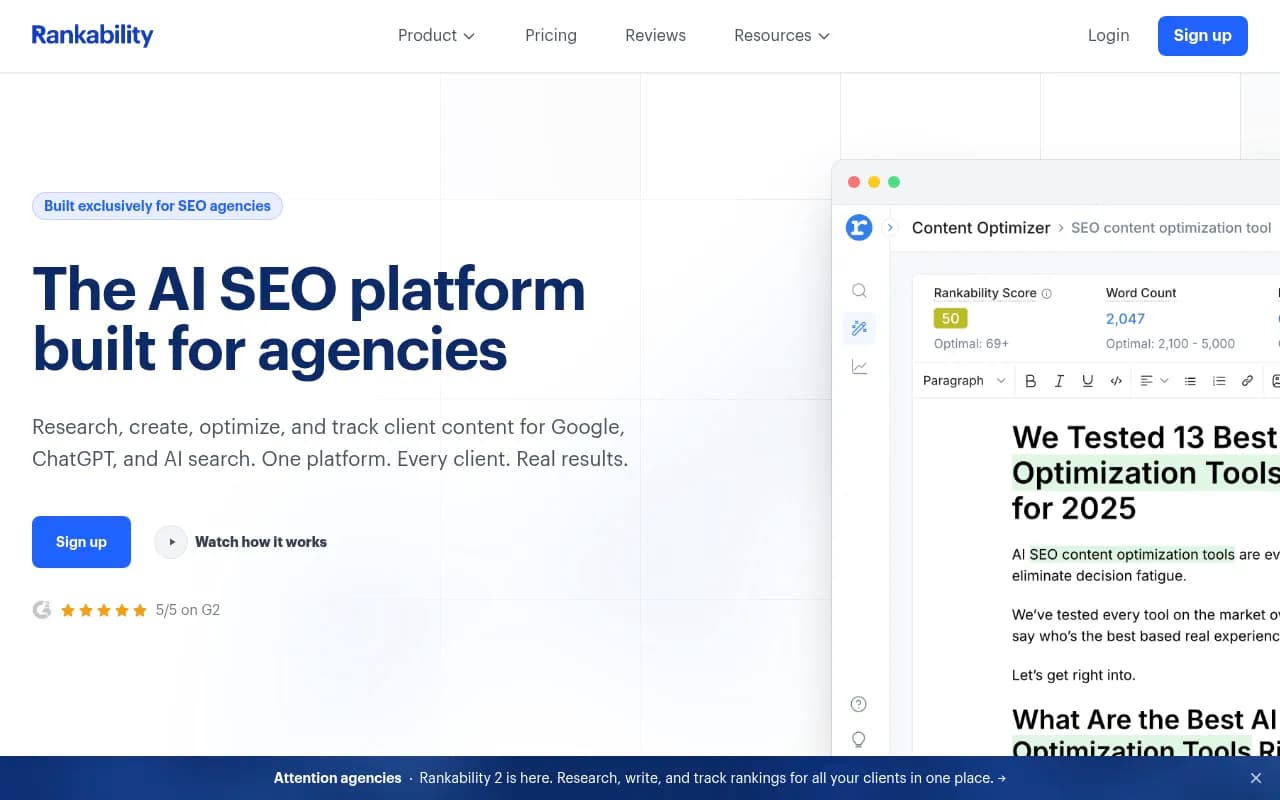
13. What's the pricing model, and does it scale sensibly?
AI visibility tools vary wildly in how they price. Some charge per prompt, some per brand, some per AI model, some per seat. The combinations get complicated fast.
Map out your actual needs before evaluating pricing:
- How many brands or domains do you need to track?
- How many prompts per brand?
- How many AI models?
- Do you need content generation, or just monitoring?
- How many team members need access?
Then compare total cost of ownership, not just the headline price. A tool that looks cheap at $49/month might cost $400/month once you add the prompts and models you actually need.
Here's a rough comparison of what different tiers typically cover:
| Tool | Entry price | Prompts | AI models | Content generation | Crawler logs |
|---|---|---|---|---|---|
| Promptwatch Essential | $99/mo | 50 | 10+ | Yes (5 articles) | No |
| Promptwatch Professional | $249/mo | 150 | 10+ | Yes (15 articles) | Yes |
| Otterly.AI | ~$49/mo | Limited | 4-5 | No | No |
| Peec AI | ~$79/mo | Limited | 5-6 | No | No |
| Profound | Custom | Custom | 6+ | No | No |
| AthenaHQ | Custom | Custom | 8+ | No | No |
14. Is there a genuine free trial -- and what does it cover?
Free trials are standard in this market. But read the fine print.
Some "free trials" give you access to a stripped-down version that doesn't let you test the features you actually care about. Others require a credit card and auto-renew. Some are time-limited in ways that don't give you enough data to evaluate the tool properly (AI visibility trends take at least a few weeks to become meaningful).
Look for trials that give you access to the full feature set, don't require a credit card, and run for at least 14 days. If a vendor won't let you test their content generation or competitor analysis features during the trial, that's a red flag.
15. What does the support and onboarding look like?
AI visibility is a new discipline. Even experienced SEOs are figuring out the best practices as they go. Good vendor support isn't just about fixing bugs -- it's about helping you understand what the data means and what to do with it.
Questions worth asking:
- Is there a dedicated onboarding process?
- Do you get a customer success manager, or just a help center?
- How active is the community (Slack, Discord, etc.)?
- How often does the product update, and how are changes communicated?
A tool that's actively shipping new features and has a responsive support team is a much safer bet than one that feels like it's in maintenance mode.
Putting it all together
Most tools in this market are monitoring dashboards. They'll show you a visibility score, a list of prompts where you appear or don't appear, and maybe a competitor comparison. That's useful context, but it doesn't tell you what to do next.
The tools worth paying for are the ones that help you act. That means identifying specific content gaps, generating content engineered for AI citation, tracking results at the page level, and connecting visibility to actual traffic and revenue.
Run every tool you're evaluating through this checklist. Ask vendors the specific questions. Request demos of the features that matter most to your use case. And always test with your own brand and competitors during the trial -- generic demos look good; your actual data tells the real story.
The market will keep consolidating. The monitoring-only tools will either add optimization capabilities or get left behind. For now, the gap between the best platforms and the rest is significant -- and choosing the wrong tool means paying for data you can't act on.