Key takeaways
- Qwairy is a GEO-focused platform that goes beyond basic monitoring to offer strategy recommendations and content guidance for AI search visibility.
- The GEO space in 2026 is crowded with monitoring-only tools -- the real differentiator is whether a platform helps you act on what it finds.
- Qwairy works best for teams that already understand the GEO basics and want a structured workflow for closing visibility gaps.
- For brands that need the full loop -- gap analysis, content generation, crawler logs, and traffic attribution -- platforms like Promptwatch cover more ground at comparable price points.
- If you're evaluating GEO tools, the most important question isn't "what does it track?" but "what does it help me do next?"
What Qwairy actually is
Qwairy describes itself as the "ultimate GEO strategy and optimization platform." That's a big claim in a market that now has dozens of tools all saying roughly the same thing. The pitch is that it doesn't just show you where your brand appears in AI-generated answers -- it helps you build a strategy to improve that visibility over time.
That framing matters. Most GEO tools launched in 2024 and early 2025 were essentially monitoring dashboards: you'd enter some prompts, watch a visibility score, and then... figure out the rest yourself. Qwairy is trying to be something more opinionated.
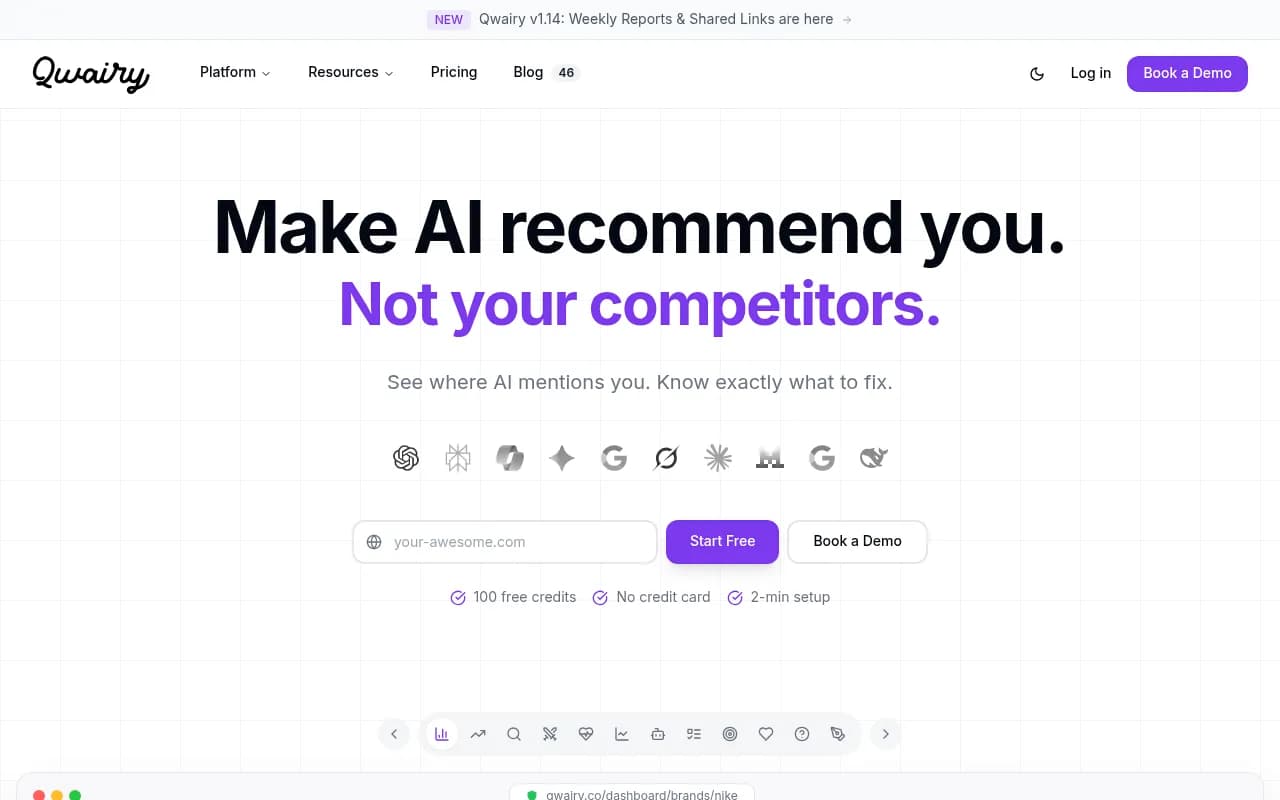
The platform monitors how your brand appears across AI engines including ChatGPT, Perplexity, Google AI Overviews, and others. It surfaces competitor comparisons, tracks prompt-level performance, and gives you a structured view of where you're winning and losing in AI-generated responses.
The GEO context you need before evaluating any tool
Before getting into what Qwairy does well (and where it falls short), it's worth being honest about the state of GEO measurement in 2026.
AI search results are genuinely variable. Ask ChatGPT the same question twice and you can get different sources cited. Ask it from a different location or with a slightly different phrasing and the answer shifts again. This isn't a bug -- it's how these systems work. A YouTube video from Edward Sturm published in March 2026 makes the point bluntly: even experienced GEO practitioners after six months of testing "still can't figure out what's moving the needle."

That variability creates a real problem for any GEO platform: how do you prove causation? If your visibility score goes up after publishing a new article, was it the article? The timing? A model update? A competitor's content getting demoted?
The honest answer is: it's hard to know. The best platforms acknowledge this and give you enough data to build a reasonable hypothesis. The worst ones show you a rising score and imply you caused it.
Qwairy sits somewhere in the middle. It's more strategy-oriented than a pure tracker, but it doesn't fully solve the attribution problem -- and neither does most of the competition.
What Qwairy does well
Prompt-level visibility tracking
Qwairy lets you define the specific prompts you care about and tracks how your brand appears in AI responses to those prompts over time. This is table stakes for any serious GEO tool, but Qwairy's implementation is clean. You can see which prompts you're winning, which you're losing, and which competitors are showing up instead of you.
The prompt management interface is straightforward. You're not limited to a fixed library of prompts (a limitation that plagues tools like Semrush's AI tracking and Ahrefs Brand Radar), which means you can track the actual questions your customers are asking.
Competitor visibility comparison
Where Qwairy adds genuine value is in side-by-side competitor analysis. You can see which brands are consistently cited for the prompts you care about, and the platform surfaces patterns -- which competitors are winning for informational queries vs. transactional ones, for example.
This is useful strategic intelligence. Knowing that a competitor is dominating "best [category] for [use case]" prompts tells you something concrete about where to focus your content efforts.
Strategy recommendations
Qwairy goes further than most monitoring tools by generating recommendations based on what it finds. If you're not appearing for a cluster of related prompts, it flags that as a gap and suggests the type of content that might close it.
The quality of these recommendations varies. Some are genuinely actionable. Others are fairly generic ("publish more content about X topic") that any decent content strategist would arrive at independently. But having them surfaced automatically is still useful, especially for teams without dedicated GEO expertise.
Where Qwairy falls short
No content generation
Qwairy tells you what content to create. It doesn't help you create it. For teams with limited bandwidth, that gap matters. You'll need a separate tool -- or a separate workflow -- to actually produce the content that might improve your AI visibility.
This is a meaningful limitation compared to platforms that have built content generation directly into the optimization loop.
No crawler log analysis
One of the most underrated capabilities in GEO tooling is understanding how AI crawlers actually interact with your site. Which pages are ChatGPT's crawler reading? Which are throwing errors? How often does Perplexity's bot return?
Qwairy doesn't surface this data. That means you can see your visibility scores but you can't diagnose why a page isn't getting cited at the crawler level. For technical teams, this is a real blind spot.
Limited traffic attribution
Connecting AI visibility to actual website traffic -- and ultimately to revenue -- is the hardest problem in GEO. Qwairy's attribution capabilities are basic. You can see visibility trends, but tying those trends to traffic or conversions requires external tooling.
Prompt volume and difficulty data
Knowing that you're not visible for a prompt is useful. Knowing whether that prompt gets 500 searches a month or 50,000 -- and how competitive it is -- is what lets you prioritize. Qwairy's prompt intelligence is thinner than some competitors on this dimension.
How Qwairy compares to the main alternatives
The GEO tool market in 2026 has consolidated into a few clear tiers. Here's how Qwairy stacks up against the tools most teams are actually evaluating:
| Platform | Monitoring | Content generation | Crawler logs | Traffic attribution | Prompt volume data | Best for |
|---|---|---|---|---|---|---|
| Qwairy | Yes | No | No | Basic | Limited | Strategy-focused teams |
| Promptwatch | Yes | Yes | Yes | Yes | Yes | Full-loop optimization |
| Otterly.AI | Yes | No | No | No | No | Budget monitoring |
| Peec AI | Yes | No | No | No | Limited | Multi-language tracking |
| AthenaHQ | Yes | No | No | No | Limited | Monitoring-focused teams |
| Profound | Yes | No | No | No | Yes | Enterprise monitoring |
| Scrunch AI | Yes | No | No | No | No | Basic brand tracking |





The pattern is clear: most GEO tools are monitoring-only. Qwairy differentiates itself with strategy recommendations, but it still stops short of the full optimization loop that the most capable platforms offer.
The GEO strategy question Qwairy can't answer alone
Here's the thing about GEO that most platform reviews skip over: the tool is only as useful as the strategy behind it.
A 2026 guide from Lumar's blog outlines a four-pillar GEO framework -- technical accessibility, content authority, entity signals, and distribution. Qwairy can help you think about the content authority piece. But the other pillars require different inputs: technical audits, entity building across third-party sources, and distribution strategy that goes beyond your own site.

The research data from Promptwatch's citation analysis (based on over 880 million citations) is instructive here: landing pages account for 15.2% of AI citations, product pages 14%. The implication is that bottom-of-funnel pages that clearly match user intent get cited more than generic awareness content. That's a strategic insight that should shape how you use any GEO tool -- including Qwairy.
If you're using Qwairy to track visibility for top-of-funnel awareness prompts, you may be optimizing for the wrong thing. The platform doesn't push back on this; it tracks whatever prompts you give it.
Who should use Qwairy
Qwairy makes the most sense for:
- Marketing teams that already have a content operation and need structured visibility data to inform their editorial calendar
- Agencies that want a clean way to show clients their AI search performance without building custom reporting
- Brands in competitive categories where understanding exactly which competitors are winning which prompts is strategically valuable
It's less suited for:
- Teams that need content generation built into the workflow
- Technical SEO teams who want crawler-level data
- Brands trying to connect AI visibility to revenue attribution
- Organizations that need to monitor across 10+ AI models with granular prompt intelligence
The broader GEO tool landscape worth knowing
If Qwairy isn't the right fit, here are a few other tools worth evaluating depending on your specific needs:
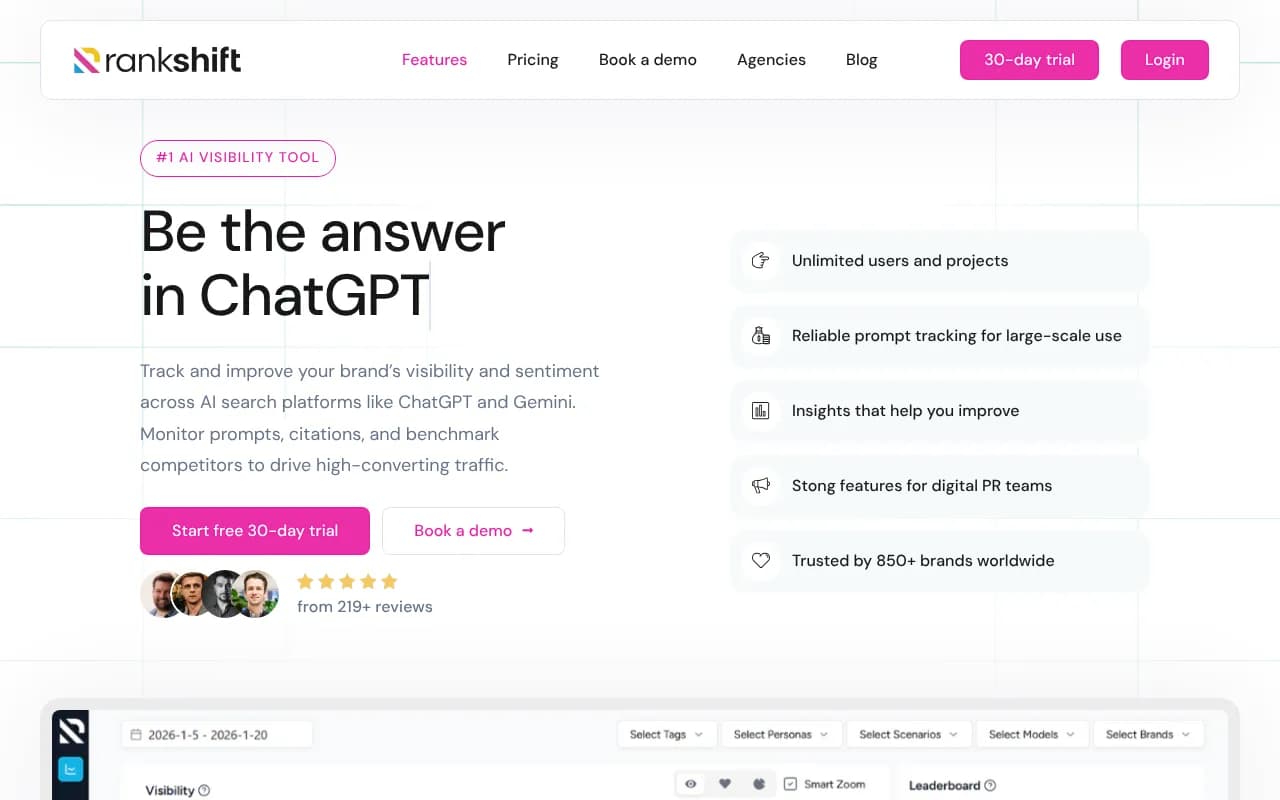
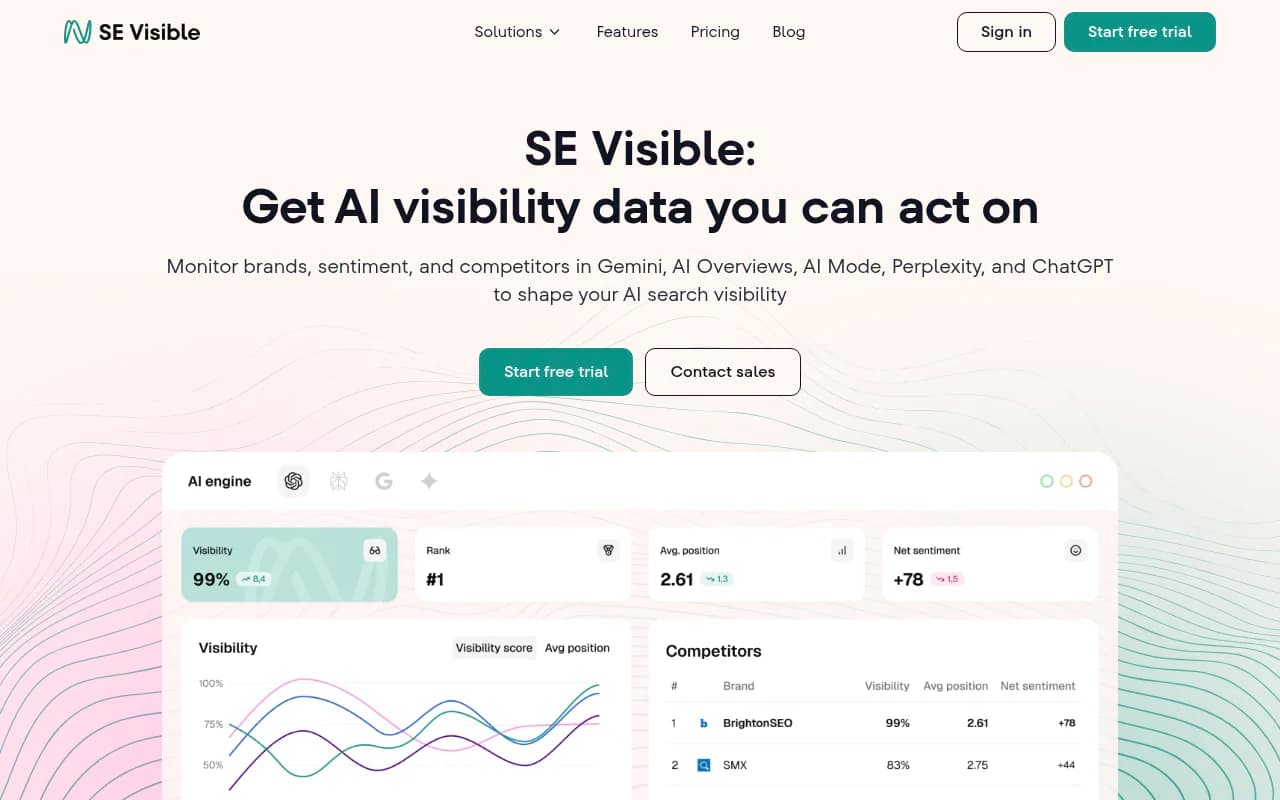
For teams that want AI search monitoring without a big budget:
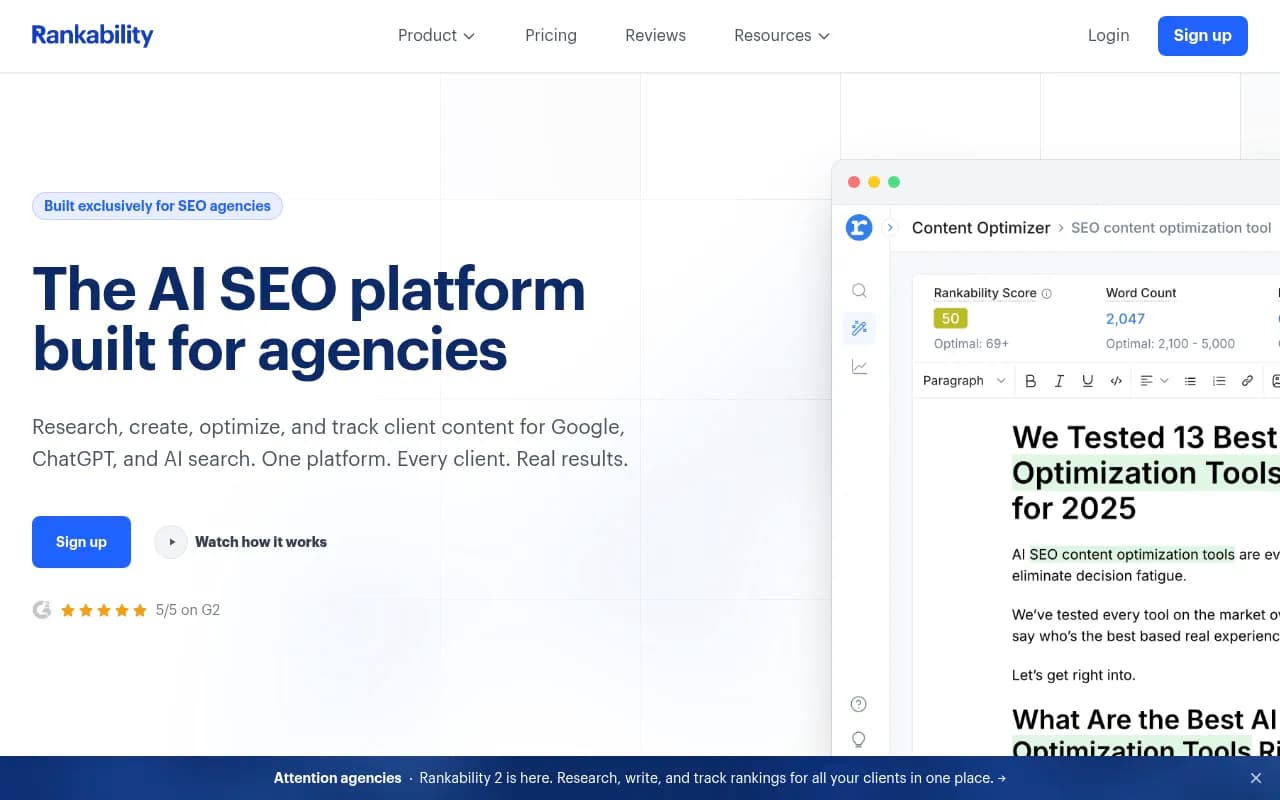
For agencies managing multiple clients:
For teams that want content generation alongside monitoring:
For enterprise brands with complex multi-market needs:
The verdict
Qwairy is a legitimate GEO platform with a clearer strategic orientation than most monitoring-only tools. The competitor analysis is genuinely useful, the prompt tracking is flexible, and the strategy recommendations add value for teams that don't have dedicated GEO expertise in-house.
But it has real gaps. No content generation, no crawler logs, thin traffic attribution, and limited prompt volume data mean you'll need to supplement it with other tools to run a complete GEO program.
If your primary need is understanding the competitive landscape in AI search and getting strategic direction on where to focus, Qwairy is worth evaluating. If you want a platform that takes you from "we're invisible for these prompts" all the way to "here's the content we published and here's how our visibility changed," you'll need something that covers more of the loop.
The GEO market is moving fast. The tools that will matter in 12 months are the ones that help teams take action, not just observe. Qwairy is moving in that direction -- it's just not all the way there yet.