Key takeaways
- Google AI Overviews are non-deterministic by design -- the same query can return completely different citations, summaries, and sources depending on location, device, login state, and model version.
- "I saw my site cited yesterday but not today" is not a bug you can fix. It's the baseline behavior you need to account for in your measurement approach.
- Reproducibility problems are partly a tracking problem and partly a content problem. Fixing both matters.
- The right response is systematic sampling across multiple queries, devices, and sessions -- not manual spot-checking.
- Content that gets cited consistently tends to be specific, structured, and authoritative. Generic pages get cited occasionally and then dropped.
Why AI Overviews results change every time you look
If you've tried to screenshot your brand appearing in a Google AI Overview and then gone back five minutes later to find it gone, you're not imagining things.
AI Overviews are generated dynamically. Google's system doesn't cache a fixed answer for a query and serve it to everyone. Instead, it runs a fresh inference each time, pulling from a pool of candidate sources and synthesizing a response. The specific sources cited in that response can shift based on:
- Your Google account and search history (personalization)
- Your physical location and IP address
- The device and browser you're using
- Whether you're in a test cohort for a new model version
- Time of day and query phrasing (even minor rewording changes results)
- Whether Google is A/B testing different citation strategies
This means two people searching the exact same query at the same moment can see completely different AI Overviews. One might cite your competitor. One might cite you. One might not show an AI Overview at all.
This is genuinely frustrating if you're trying to verify your visibility. But it also means that a single manual check -- good or bad -- tells you almost nothing.
The reproducibility problem explained
Here's the mental model that helps: think of AI Overview citations less like a ranking position (stable, checkable) and more like a probability distribution. Your site either has a high or low probability of being cited for a given query. That probability can change as Google updates its models, as your content changes, and as competitors publish new material.
When you manually check a query and see your site cited, you've sampled from that distribution once. When you check again and don't see it, you've sampled again. Neither data point alone is meaningful.
This is why the standard SEO instinct -- "let me Google it and see" -- breaks down completely for AI Overviews. You need repeated sampling, not spot-checking.
The three layers of inconsistency
There are actually three distinct reasons results vary, and they require different responses:
Model-level variance: The underlying language model introduces randomness (temperature) into its outputs. Even with identical inputs, it won't produce identical outputs. This is fundamental and unfixable from your end.
Personalization variance: Google tailors results based on your search history, location, and account. If you're logged in as someone who regularly visits your site, you may see inflated citation rates. Always check in incognito mode with a VPN set to your target location.
Temporal variance: Google continuously updates which sources it trusts for which topics. A page that gets cited heavily this week might drop next week if a competitor publishes something more authoritative, or if Google's quality signals shift.
How to actually measure your AI Overviews visibility
Manual checking is a dead end. Here's a more reliable approach.
Step 1: Build a prompt set, not a keyword list
Traditional SEO tracks rankings for specific keywords. AI Overviews work differently -- they respond to questions and conversational queries, not just keywords. Start by building a list of 20-50 prompts that represent how your actual customers ask questions related to your product, service, or topic area.
These should be specific. "What is project management software?" is too broad. "What project management software is best for remote engineering teams under 50 people?" is the kind of query that produces a focused AI Overview with a small set of citations -- and where being cited actually matters.
Step 2: Sample systematically, not occasionally
For each prompt in your set, you need multiple observations across different conditions:
- Logged out / incognito
- Different geographic locations (use a VPN or proxy)
- Different times of day
- Different devices if possible
Running each prompt 5-10 times across these conditions gives you a citation rate -- the percentage of observations where your site appears. That number is meaningful. A single observation is not.
This is tedious to do manually, which is why most serious teams use a monitoring platform to automate it.
Promptwatch does exactly this -- it runs your prompts across multiple AI models on a scheduled basis and gives you citation rates, not just snapshots. That turns a chaotic signal into something you can actually act on.

Step 3: Separate "not cited" from "not eligible"
Before you panic about low citation rates, check whether your pages are even in the running. AI Overviews tend to cite pages that:
- Are indexed and crawlable
- Load quickly on mobile
- Have clear topical authority (not thin or duplicate content)
- Are structured so the AI can extract a clean answer
If your page has crawl errors, is blocked by robots.txt in certain sections, or has duplicate content issues competing with itself, you may not be getting cited for reasons that have nothing to do with the AI's preferences. Fix the technical foundation first.
Tools like Screaming Frog are useful for crawl audits.
Why your content might be getting cited inconsistently
Assuming your technical setup is clean, inconsistent citations usually come down to content quality signals. Here's what the research actually shows.
The authority problem
AI Overviews don't just pull from pages that rank well. They pull from pages that clearly answer the specific question being asked. A page that ranks #1 for a broad keyword but buries the actual answer in paragraph seven is less likely to be cited than a page that answers the question directly in the first 30 words of a section.
Digital Strike's 2026 analysis found that pages combining text, high-quality images, and short-form video see a 317% higher selection rate for AI Overviews compared to text-only pages. That's a big number, and it makes sense: richer pages signal more investment and authority.
The cannibalization problem
This one is underappreciated. If you have two or three pages on your site targeting the same question, AI Overviews will often cite none of them. The system sees competing signals from the same domain and defaults to a third-party source that has a single, clear answer.
SEO Engico's 2026 audit workflow found this pattern repeatedly: citation rates in AI Overviews recovered within 4-8 weeks after consolidating competing pages into a single authoritative resource. The fix isn't technical -- it's editorial. Merge the pages, redirect the old URLs, and make the surviving page the definitive answer.
The specificity problem
Generic content gets cited occasionally and then dropped. Specific content -- with real data, named examples, clear methodology -- gets cited consistently. This is because AI models are trying to give users accurate, trustworthy answers. A page that says "there are several approaches to X" is less useful to the model than a page that says "here are three specific approaches, with the tradeoffs of each."
One Reddit commenter in r/b2bmarketing put it well: "Big mistake I see? Adding more content instead of making existing content clearer and more citable. AI rewards obvious authority, not just volume."
A practical workflow for diagnosing visibility drops
If your AI Overviews citations have dropped or become erratic, here's the sequence I'd follow.
1. Confirm it's actually a drop
Run your core prompts 5+ times each in incognito mode. If your citation rate across those runs is consistently below where it was a month ago, you have a real drop. If it's just variable, that's normal behavior.
2. Check who's being cited instead
When your site isn't cited, who is? Look for patterns. If a specific competitor is consistently appearing, go read their cited page. What are they doing differently? Are they more specific? Do they have better structure? Do they have data you don't?
3. Audit your competing pages
Search for your main topics on your own site. Do you have multiple pages answering the same question? If yes, that's your first fix. Consolidate them.
4. Check your content structure
For each page you want cited, ask: does this page answer the question directly in the first paragraph of the relevant section? Is the answer extractable without reading the whole page? If not, restructure.
5. Check your technical health
Run a crawl. Look for:
- Pages blocked from indexing that shouldn't be
- Slow load times on mobile
- Duplicate content (especially from pagination or parameter URLs)
- Missing or thin structured data
6. Monitor over time, not in snapshots
Set up systematic monitoring so you can see trends, not moments. Citation rate over 30 days is a useful metric. Citation rate from a single check is noise.
Tools that help with AI Overviews tracking
Given how unreliable manual checking is, here's a selection of tools worth knowing about for this specific problem.
| Tool | What it does well | Best for |
|---|---|---|
| Promptwatch | Scheduled prompt monitoring across 10+ AI models, citation rates, content gap analysis | Teams that want to track and fix visibility |
| Thruuu | AI Overview monitoring with content team focus | Content teams auditing SERP features |
| SE Ranking | All-in-one SEO with AI visibility toolkit | Teams already using SE Ranking for SEO |
| Otterly.AI | Affordable monitoring across AI platforms | Smaller teams needing basic tracking |
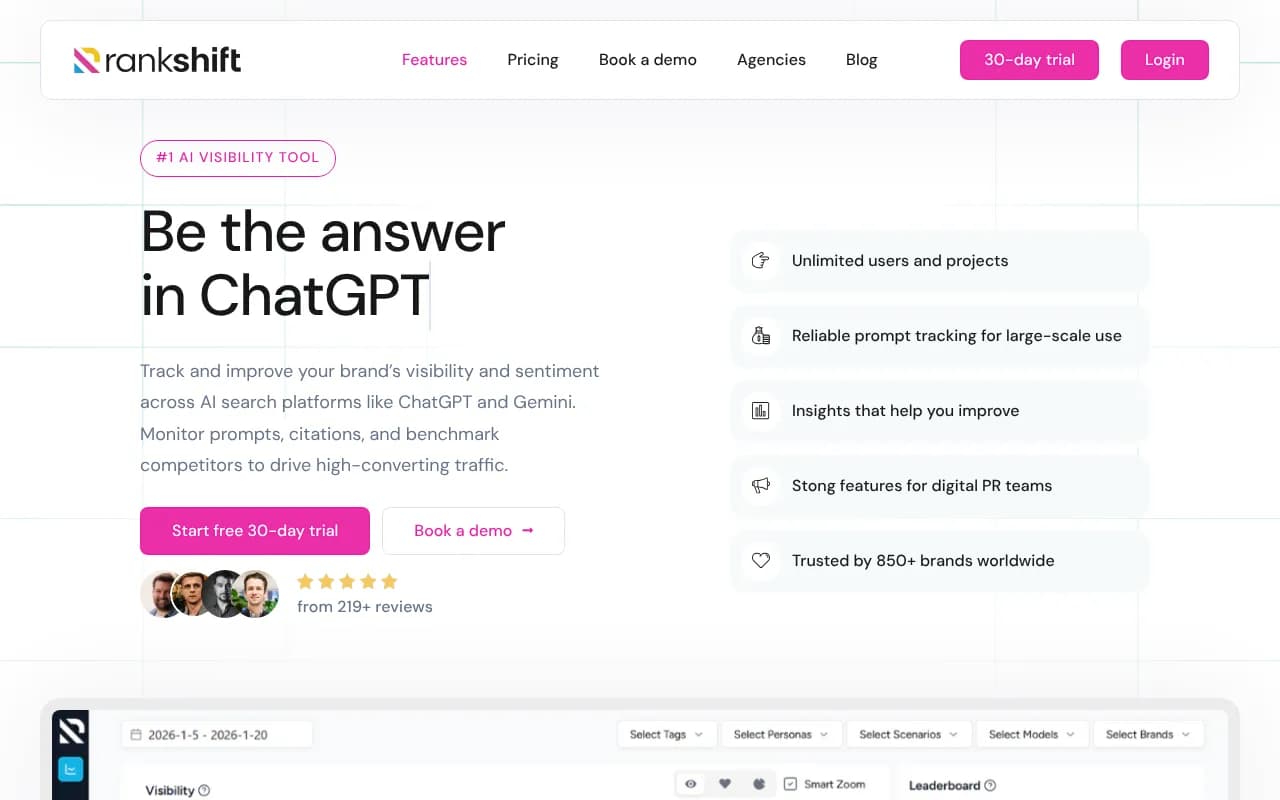
| Rankshift | LLM tracking with GEO focus | Agencies managing multiple clients |
| Screaming Frog | Technical crawl audits | Diagnosing indexing and crawl issues |

The core issue with most monitoring tools is that they show you data but stop there. If your citation rate drops, you get an alert -- but you don't get a clear path to fixing it. Promptwatch is one of the few platforms that closes that loop: it identifies which prompts you're missing from, shows you what competitors are being cited for instead, and has a built-in content generation layer to help you create pages that fill those gaps.
What "fixing" AI Overviews visibility actually looks like
There's no single lever to pull. Improving your citation rate is a content and authority problem, and it takes weeks, not days. Here's what actually moves the needle.
Write answer-first content
Every section of your page should open with a direct answer to the question that section addresses. Don't build up to the answer -- lead with it. AI models extract answers from the beginning of sections, not the end.
Earn citations from authoritative sources
AI Overviews tend to cite pages that are themselves cited by other authoritative sources. This is essentially the same as traditional link building, but the target is AI trust rather than PageRank. Getting cited in industry publications, research roundups, and expert listicles helps.
Use structured data
FAQ schema, HowTo schema, and Article schema all help AI systems understand what your page is about and what questions it answers. They don't guarantee citation, but they make your content more parseable.
Build topical depth, not just breadth
A site with 10 deep, specific pages on a topic is more likely to be cited than a site with 100 shallow pages. AI models favor sources that clearly know what they're talking about. Depth signals expertise.
Be patient with the timeline
After consolidating competing pages or publishing new content, expect 4-8 weeks before you see meaningful changes in citation rates. AI Overviews don't update in real time. Google needs to recrawl your pages, reprocess your content, and update its citation models.
The honest reality of AI Overviews in 2026
Over 60% of searches now end without a click, according to Bain & Company's 2025 research. That means AI Overviews aren't just a nice-to-have visibility channel -- they're increasingly where the attention actually lives.
But the inconsistency is real and it's not going away. Google is running a system that's inherently probabilistic, and the best you can do is shift your probability of being cited upward through better content, cleaner technical setup, and systematic monitoring.
The worst thing you can do is make decisions based on one-off manual checks. The second worst thing is to treat AI Overviews as a separate game from traditional SEO -- the foundations are the same. Authoritative, specific, well-structured content wins in both worlds.
Track your citation rates over time. Fix your competing pages. Write answers that are actually extractable. And stop refreshing Google to see if you're cited today -- that number will be different tomorrow anyway.