Key takeaways
- Scrunch's official pricing page lists zero line items for city or state-level tracking, on Core ($250/mo) or Enterprise (custom). If local granularity is the reason you're shopping, Scrunch itself won't get you there.
- Promptwatch is the only platform in most GEO comparisons that supports true state and city-level prompt targeting, though it's gated to the $579/mo Business plan.
- RadarKit takes a different approach: dedicated "Local Radar" tracking for local businesses (ChatGPT, AI Overviews, AI Mode) starting at $29/mo, on every tier including the cheapest one.
- BrightLocal bundled a Local AI Visibility Tracker into its existing platform, scoring visibility 0-100 per location rather than blending results across an entire brand.
- Peec AI, LLMrefs, Profound, and AthenaHQ are all marked as having no dedicated local tracking in third-party comparisons, despite decent overall AI visibility feature sets.
Why local AI visibility tracking is suddenly a thing people ask for
If you run a multi-location business, or a brand that markets differently in Texas than it does in Massachusetts, a single blended visibility score is close to useless. It tells you "ChatGPT mentions your brand in 40% of relevant answers" without telling you whether that 40% is coming entirely from your Chicago market while Phoenix gets nothing.
I went looking at Scrunch's pricing page directly, and there's no ambiguity here: no city or state-level line item exists on the Core plan (1 country, 1 persona, 1 language) or on Enterprise (custom countries, personas, languages). Scrunch treats geography as a single knob you either have or don't, not something you can drill into by city.
That gap is what sends people looking at alternatives. Below, I'm covering the tools that do support location-level granularity, plus a few well-known Scrunch alternatives that get recommended a lot but, per the comparison data, actually don't solve the local problem at all.
Quick comparison: who actually supports state or city-level tracking
| Tool | Local/city-state feature | Starting price | What you actually get |
|---|---|---|---|
| Promptwatch | State and city-level prompt tracking | $95/mo (Essential); local tracking needs Business at $579/mo | Prompts localized to specific states or cities, alongside crawler logs, Reddit/YouTube citation tracking, and content generation |
| RadarKit | Local Radar (included on every tier) | $29/mo (Lite) | Local business appearance rate, average position, competing businesses, from 50+ countries via residential IPs |
| BrightLocal | Local AI Visibility Tracker (per-location scoring) | Bundled into existing platform, 14-day trial | 0-100 visibility score per location, up to 20 prompts per location, ties into Citation Builder |
| Scrunch AI | None found on pricing page | $250/mo (Core), $500/mo Agency Core | Country-level only, even on Enterprise |
| Peec AI | Country-level only | $80/mo | No dedicated local-business tracking per third-party comparison |
| LLMrefs | Geo-targeted content exists, no dedicated local tracking | $79/mo | 500 prompts across engines, city/ZIP mentioned in marketing but not confirmed as a real local feature |
| Evertune | Country and language-level (140+ countries) | Not publicly disclosed | Built for multinational brands, not hyperlocal use cases |
The state and city-level contenders
Promptwatch: the closest thing to a full GEO stack with local prompts
Promptwatch is where most 2026 comparisons of Scrunch alternatives land first, and its local tracking is a specific, named tier feature rather than a marketing claim. On the pricing page, "Country Level Tracking" is included from the $95/mo Essential plan up, while "State and City Level Tracking" only unlocks on the $579/mo Business plan, sitting alongside Shopping Insights and Ads Radar.
That's a real gate, and it's worth knowing before you buy in expecting city-level data on a cheaper plan. But once you're on Business, you get more than a location filter. You get crawler logs (Fastly ingestion was live by July 2025, ahead of most competitors turning this on), Reddit and YouTube citation tracking that Scrunch doesn't have at all, and Content Agents that write and publish AEO articles to your CMS.

The practical comparison against Scrunch itself is stark. Scrunch's Core plan covers four engines (ChatGPT, Perplexity, AI Overviews, Copilot) for $250/month, and Claude, Gemini, Meta AI, Grok, and Google AI Mode are locked behind custom Enterprise pricing that typically starts above $1,000/month. Promptwatch makes all 11 models nominally available on every paid plan (you track 4 per project at a time), starting at $95. There's also a subtler cost trap with Scrunch worth flagging: its 125 prompt credits on Core deplete per engine tracked, so tracking across 4 engines effectively gives you around 31 unique questions, not 125.
For teams that specifically need geo-targeted prompts by city or state and are willing to pay for the top tier to get it, Promptwatch is the more complete package. For teams that just want cheap local tracking without the rest of the GEO stack, keep reading.
RadarKit: local tracking baked into every plan, even the cheapest
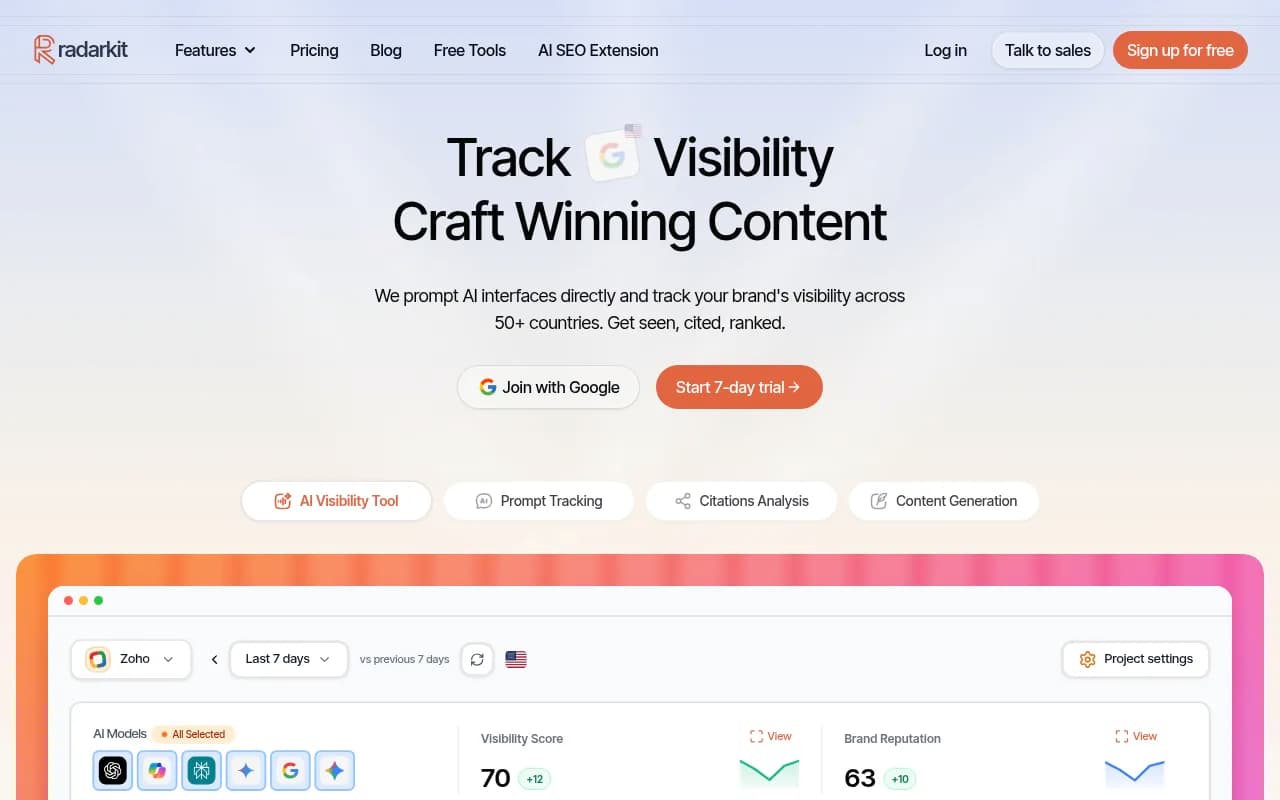
RadarKit's whole pitch, via its "Local Radar" feature, is local-business visibility, not brand visibility in general. It tracks appearance rate (their example: "33.3%, recommended in 3 of 9 answers"), average position, competing businesses per prompt, and review signals across ChatGPT, Google AI Overview, and Google AI Mode, pulling from 50+ countries using residential IPs.
The part that stands out: local tracking is included on the $29/mo Lite plan, not gated to a top tier the way Promptwatch gates it. If your whole use case is "does ChatGPT recommend my dental practice in Austin versus my competitor three blocks away," RadarKit is built for exactly that question at a fraction of the cost of Business-tier Promptwatch or Scrunch Enterprise. Growth is $79/mo and Pro is $139/mo if you need more volume.
What it doesn't do is the broader GEO content stack, crawler logs, or Reddit/YouTube citation analytics. It's a local-visibility specialist, not an end-to-end platform.
BrightLocal: per-location scoring for agencies already doing local SEO
If you're already running BrightLocal for citations and rank tracking, its Local AI Visibility Tracker slots in without a separate subscription. It gives a 0-100 visibility score per location (not blended across a whole brand), broken down by ChatGPT, Google AI Mode, and Google AI Overviews, with up to 20 prompts per location and a competitor mention rate / share of voice view.
The interesting stat behind why this matters: BrightLocal's own 2026 survey found 58% of consumers have used AI to find or get a recommendation for a local business, and AI now ranks as the fourth most common place people start a local search. 18% said they'll contact an AI-recommended business directly without checking further, though 75% still go verify on Google first. If you manage dozens of location pages, that's the kind of number that justifies turning on a location-level tracker rather than trusting an aggregate score.
Tools that get recommended but don't actually do local tracking
Worth being blunt here, because several names that come up constantly in "Scrunch alternatives" roundups do not solve the local-tracking problem, based on feature comparisons published in 2026.
Peec AI is clean and fast for general monitoring, but it's country-level only, and Claude/DeepSeek sit behind an Enterprise tier.

LLMrefs markets geo-location rank tracking by country, city, or ZIP code in its own blog content, but a third-party comparison marks its actual "Local AI Tracking Availability" as no, meaning the marketing language doesn't match a dedicated feature.
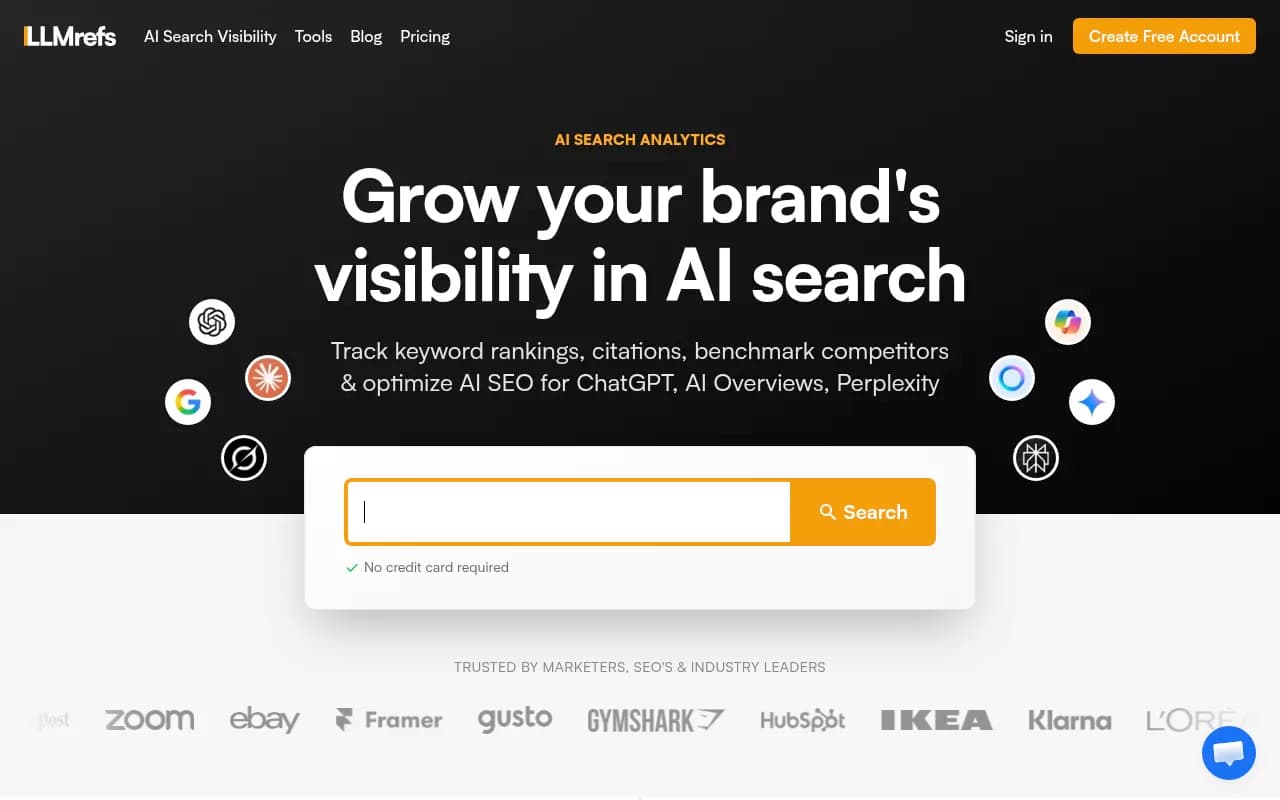
Scrunch, Profound, AthenaHQ, Rankability, Otterly.AI, and Searchable all get marked "No" for local AI tracking availability in the same comparison. That's not a knock on their core monitoring, which for some of these is genuinely strong (Profound in particular is built for enterprise AI search demand data). It just means none of them have shipped dedicated city or state-level prompt targeting as of mid-2026.
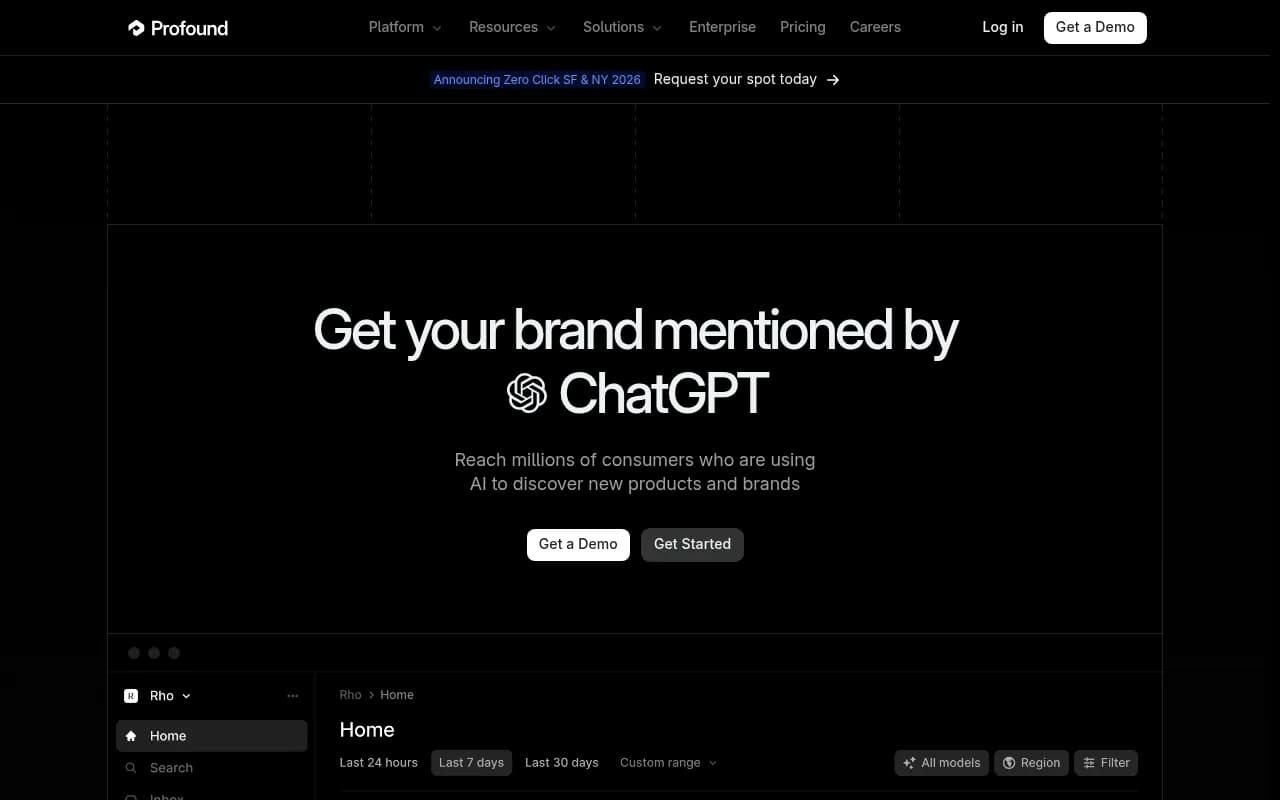


Evertune is a different case: it does 140+ countries and 33 languages, which is genuinely useful for multinational brands managing regional messaging, but it's not built for hyperlocal, city-by-city tracking the way RadarKit or Promptwatch's Business tier are.
How to think about which one to pick
The honest answer depends on what "local" means for you.
If you're a single brand with a handful of regional markets and you want geo-targeted prompts as one piece of a larger AI visibility and content workflow, Promptwatch's Business tier gets you there along with crawler logs and automated content, but you're paying $579/month for the whole stack, not just the location feature.
If you're purely a local-business operation (dentist, law firm, HVAC company, multi-location retail) and location tracking is the entire point, RadarKit at $29-139/mo or BrightLocal (if you're already on the platform) will get you local-specific answers without paying for a GEO platform's full feature set you won't use.
If you're an agency managing multiple client brands across regions, check whether your reporting needs (white-label dashboards, client portals) push you toward Promptwatch's agency tiers rather than a single-purpose local tool.
A note on Scrunch's pricing structure itself
One thing worth flagging separately from the local-tracking gap: Scrunch's own FAQ states Agency Core is $500/month, not the $250/month figure that shows up on the general pricing page, which applies to Brand Core. Third-party pricing trackers have also noted Scrunch's pricing page serving different plan lineups to different visitors during 2026. If you're evaluating Scrunch directly, get a quote in writing before assuming which plan structure applies to you.
For a broader look at how 22 GEO and AI visibility platforms stack up on features beyond just location tracking, including agentic content execution, crawler logs, and citation depth, the comparison at the GEO software directory on bestgeosoftware.com is a reasonable next stop.
Final take
Local tracking is still a feature only a handful of tools have actually shipped, not a checkbox everyone claims and delivers. Scrunch, for all its strengths in agent traffic monitoring, simply doesn't have it at any price point right now. If city or state-level breakdowns matter to your reporting, narrow your list to Promptwatch, RadarKit, or BrightLocal, and verify the claim against the vendor's current pricing page before you sign anything, because these feature gates move fast in this category.