Key takeaways
- Most AI rank trackers report a score and stop. The useful ones connect a visibility gap to a specific page, prompt, or source you can change.
- Four things separate tracking from action: crawler data, citation sources, content gap analysis, and some way to publish or prioritize the fix.
- Promptwatch is the most complete end-to-end option in this list. Tools like Profound, Peec AI, Otterly.AI, and SE Ranking cover monitoring well but leave more of the work to you.
- Product pages and landing pages together earn about 39% of ChatGPT citations, so many fixes are about page basics, not clever tricks.
- Check pricing on each vendor's own page before buying. Several of the roundups we read are vendor-written or documentary, not hands-on tests.
Why tracking alone is not enough
I have watched a lot of teams buy an AI visibility dashboard, stare at a Visibility Score for three weeks, and then ask the obvious question: so what do I do now?
That is the gap. A rank tracker tells you that ChatGPT mentions your competitor in 6 of 10 prompts and you in 1. Fine. Useful, even. But the number does not tell you whether the cause is a thin product page, a blocked crawler, a missing comparison article, or a third-party listicle that never names you.
The pressure to care is real. SparkToro's 2026 analysis of Similarweb data found that about 68% of US Google searches ended without a click in the first four months of the year, and Seer Interactive measured a 61% drop in organic CTR on queries where an AI Overview appears. Buyers get shortlists from answers now. Being in the answer matters, and measuring it without fixing it is a hobby.
This guide covers what "tracking plus action" should actually mean, the features to check, and how the main tools compare.
What counts as "shows you what to fix"
A lot of vendors say they offer recommendations. In practice that ranges from a generic tip list to a working pipeline. Here is the ladder I use.
- Score only. A visibility number, share of voice, maybe sentiment. No cause.
- Source reporting. Shows which domains and URLs AI cites for your prompts. You can infer causes, but you do the inferring.
- Diagnosis. Links gaps to specific pages or topics: content gaps, crawler errors, sentiment claims you disagree with.
- Prioritized actions. A to-do list ranked by likely impact.
- Execution and verification. The tool drafts or publishes content, then checks whether the page got crawled, cited, and clicked.
Most tools sit at step 1 or 2. A few reach 3 and 4. Very few close the loop at step 5, and that last step is the one that tells you if your effort did anything.
The signals that make a fix specific
Before comparing tools, know what data a good diagnosis needs.
Citation sources
You need to see which URLs AI cites, and where yours sits in the source list. If AI answers your category prompts but cites a competitor's comparison page and two review sites, your fix is obvious: you need a comparison page and review presence.
AI crawler logs
This is the one most trackers skip. If GPTBot or PerplexityBot cannot read your pricing page, no amount of content work will help. Server-side crawler data separates an access problem from a content problem. Promptwatch's AI crawler logs do this with IP-verified requests, and Promptwatch's AI crawler traffic data shows how much of the total comes from each operator.
Content gap analysis
Map the prompts AI answers against the pages you actually have. Gaps show up as prompts with no matching page or pages that never get cited. The content gap guide in the Promptwatch Academy explains the method.
Query fan-outs
A single prompt can trigger several background searches. Promptwatch's query fanout report notes that one prompt can trigger 3 to 8 or more searches, though its own tracked average sat near 1.84 per response in early March 2026 and dropped to exactly 1.0 per response when fanouts returned in April. The practical lesson: write headings that read like the searches AI actually runs, with the entity and category up front.
Traffic and conversion data
Visibility without visits is vanity. Look for AI-referred traffic tied to pages. Note that ChatGPT stopped sending a referrer on October 8, 2026, so tools need UTM-based attribution to keep counting it. See the guide on attributing AI traffic.
What the data says you should fix first
Before you pay for any tool, a few facts from Promptwatch Data will save you guesswork. In the content type report (Sep 28 to Oct 4, 2026), the share of ChatGPT citations by type looked like this:
| Content type | Share of ChatGPT citations |
|---|---|
| Product pages | 22.4% |
| Landing pages | 16.8% |
| Listicles | 13.6% |
| How-to guides | 8.7% |
| Documentation | 7.5% |
| Comparisons | 5.9% |
| News | 5.7% |
| FAQ pages | 3.3% |
| Reviews | 1.7% |
For commercial prompts, product pages hit 26.0% and landing pages 20.6%. For branded prompts, reviews earn 5.6%, more than triple their overall share.
So the cheap fixes are boring ones: complete, factual product pages with specs and pricing; comparison pages; a presence in "best of" roundups; public documentation; an FAQ; reviews on trusted sites. Also mind decay. In Promptwatch's content half-life study, news pages lost half their citations in about 36 days while landing pages and docs held on for months. Refresh news-style content often. Leave evergreen pages alone unless the data says otherwise.
And don't count on Reddit as a shortcut. ChatGPT's share of citations going to reddit.com fell from about 4% to 0.5% on August 14, 2026, per Promptwatch Data. AI Overviews behave differently, so check per engine.
Comparison table: tracking and action across the main tools
This table reflects publicly described positioning. Verify specifics and prices on each vendor's site, since plans change often.
| Tool | Tracks AI engines | Crawler logs | Diagnoses gaps | Writes or publishes fixes | Best for |
|---|---|---|---|---|---|
| Promptwatch | Yes, real UI plus API models | Yes, IP-verified | Yes | Yes, Content Agent with CMS publishing | Teams that want the full loop |
| Profound | Yes | Limited | Yes | Limited | Enterprise monitoring |
| Scrunch | Yes | Limited | Yes | Limited | Enterprise monitoring |
| Peec AI | Yes | No | Basic | No | European agencies, simple tracking |
| Otterly.AI | Yes | No | Basic | No | Low-cost monitoring |
| SE Ranking | Yes | No | Basic | No | Existing SE Ranking users |
| Semrush One | Yes | No | Moderate | Some content tooling | Existing Semrush users |
| KIME | Nine engines (vendor claim) | Not stated | Yes | Agentic executions (vendor claim) | Teams wanting built-in fixes |
The tools, and where each one fits
Promptwatch
Promptwatch is the one I would start with if the goal is literally "show me what to fix, then help me fix it." It tracks ChatGPT, Gemini, Claude, Perplexity, Google AI Overviews, AI Mode, Copilot and others through the real interfaces, not only APIs, because user-facing answers can differ from API output.

The diagnosis side is where it separates from pure trackers. Fact Check and Brand Narrative surface the individual claims AI makes about you. The Action Board produces a prioritized GEO to-do list covering content gaps, site health, offsite mentions, and sentiment. Crawler logs show whether AI bots read a page, and Page Tracker shows whether it then gets cited.
The action side is the Content Agent, which plans, writes, and publishes against your visibility gaps to WordPress, Webflow, or Framer, with a review inbox or fully hands-off. Then the loop closes: crawls, citations, and AI-referred visits are tracked per published page. That is the difference between a tool that reports and one that checks whether the work worked.
Results worth knowing: Crisp saw 2x higher conversion rates from AI traffic than traditional channels (case study), and TreeHouse, behind Pararius, grew AI search to roughly 25% of organic conversions after fixing crawler access and publishing proprietary data (case study).
Pricing, per Promptwatch's page: Essential $95/mo, Professional $245/mo, Business $579/mo, with agency plans from $199/mo. The Content Agent, faster-than-daily tracking, and Fact Check start at Business. There is a 7-day free trial on monthly billing, plus a free AI visibility report. Confirm current numbers, and any Black Friday offer, at promptwatch.com/pricing.
Honest caveat: if you only need a cheap weekly check on a handful of prompts, this is more platform than you need.
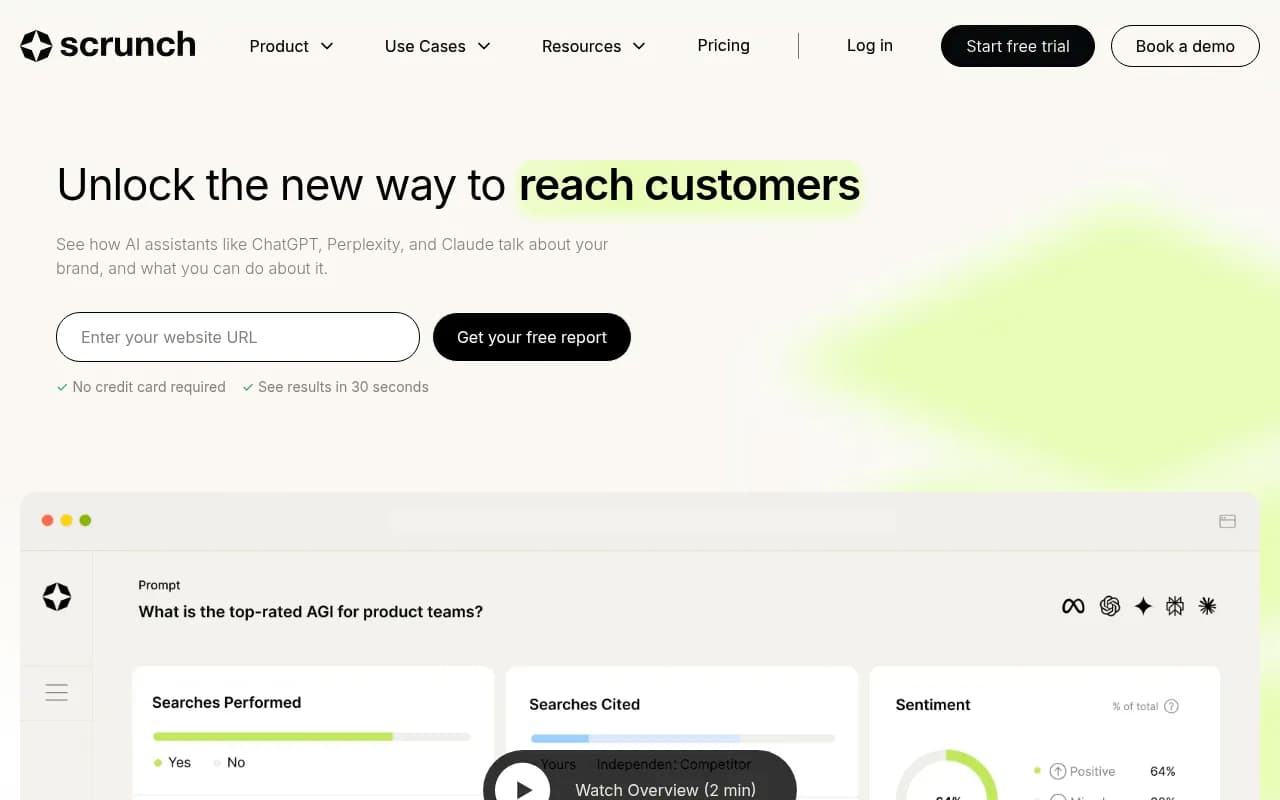
Profound and Scrunch
Both are strong monitoring products aimed at enterprise buyers, with higher price points. They report well and diagnose reasonably. Where they lag Promptwatch is execution: no agentic content workflow, and no Reddit tracking or ChatGPT Shopping in Promptwatch's own comparison. If you have an in-house content team that just needs excellent data, they are credible. See Promptwatch vs Profound and Promptwatch vs Scrunch for the head-to-head.

Peec AI and Otterly.AI
These are the clean, affordable trackers. Peec AI is popular with European agencies and handles multiple languages well. Otterly.AI is often cited as the cheapest entry point, with one roundup listing it from $29/month (check this yourself). Neither gives you crawler logs, visitor analytics, or content generation. That is fine if your workflow is: track here, fix elsewhere. Just be honest that the "what to fix" part will be your job.


SE Ranking and Semrush One
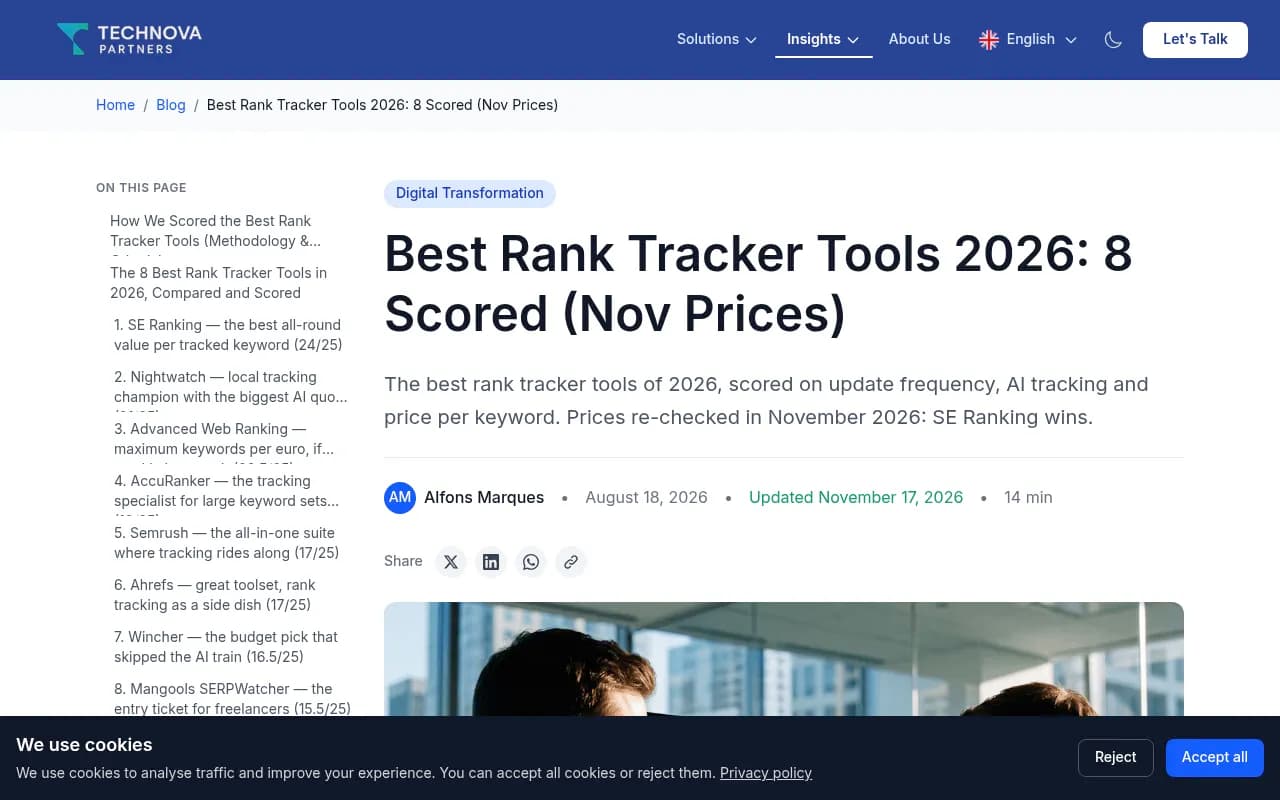
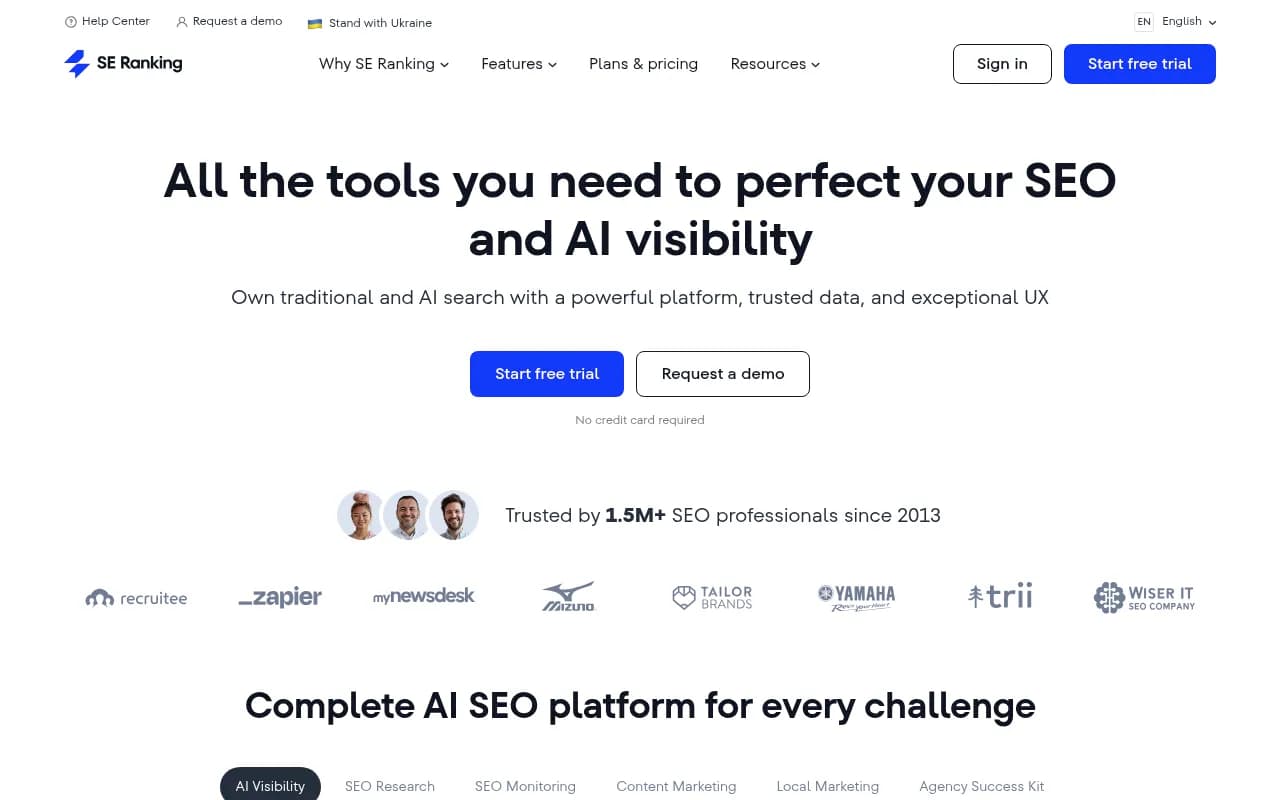
If you already live in a classic SEO suite, adding AI visibility there is the low-friction path. Technova Partners' November 2026 review scored SE Ranking 24/25, citing a EUR 109/month Core plan with 2,000 keywords tracked daily plus AI visibility, an API, and Looker Studio. Note the method: that review is documentary, built from pricing pages, not hands-on accuracy testing. The AI side of these suites tends to use fixed prompt sets and shallower AI-specific data than dedicated platforms, and neither gives you AI crawler logs.
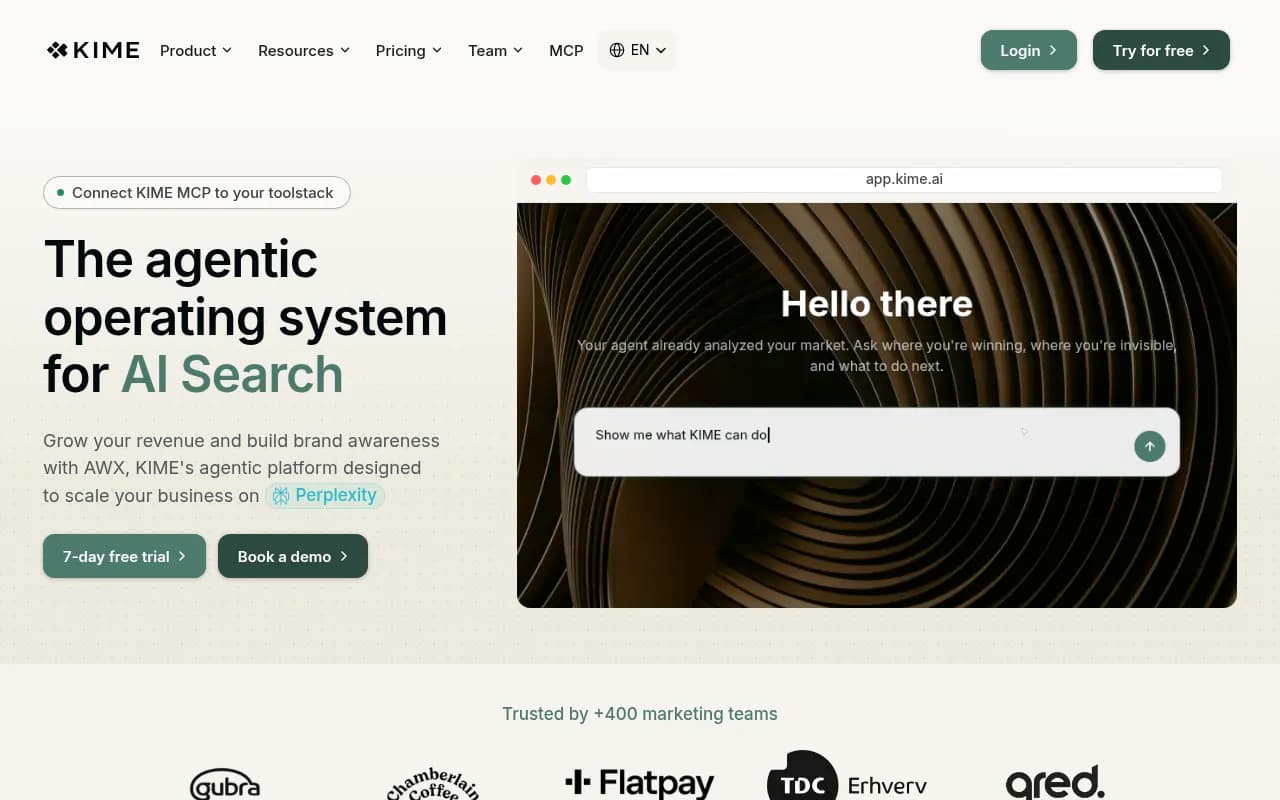
KIME
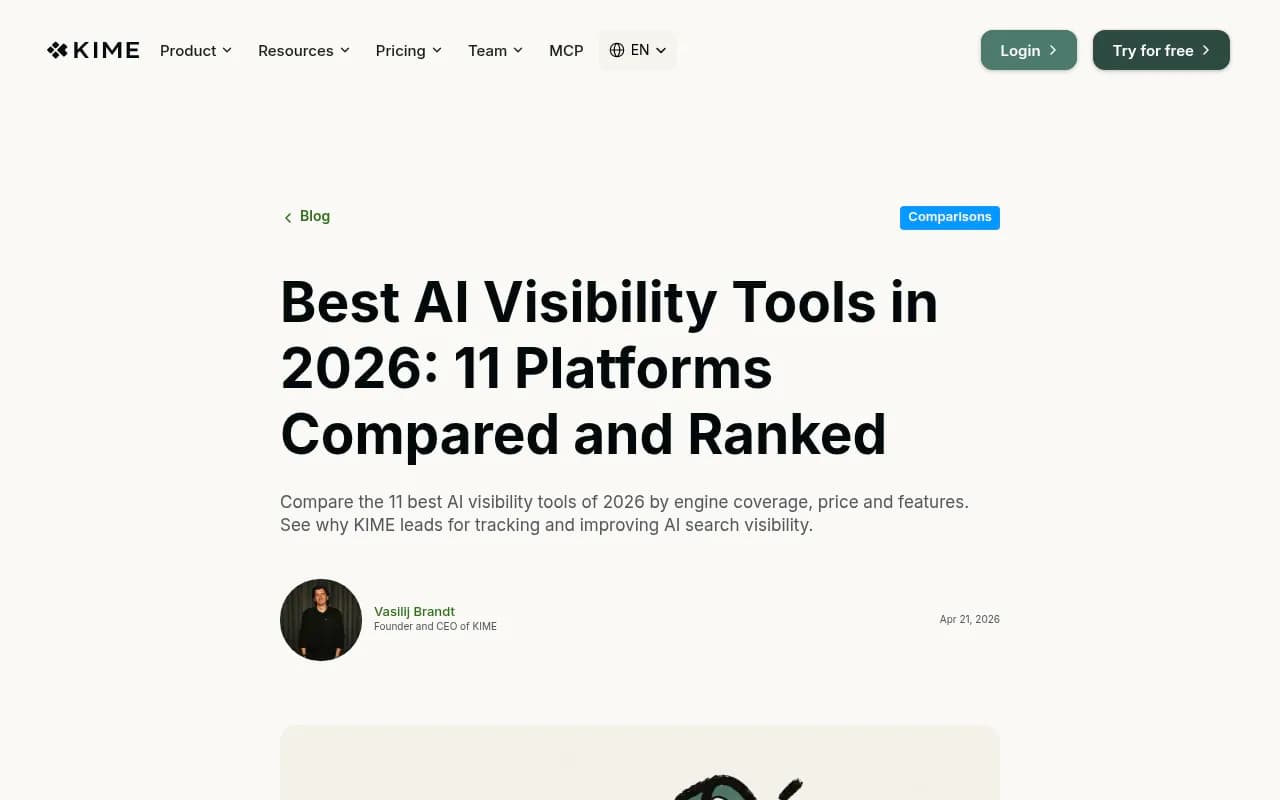
KIME markets itself as tracking nine AI engines, measuring sentiment and citations, showing which competitors advertise inside ChatGPT, and turning gaps into automated fixes via an MCP and API, from EUR 99/month. Treat that with care: those claims come from KIME's own blog post, which ranks KIME first among 11 tools. It is worth a trial if the action angle appeals, but verify the engine list and what the executions actually do.
Other action-oriented options
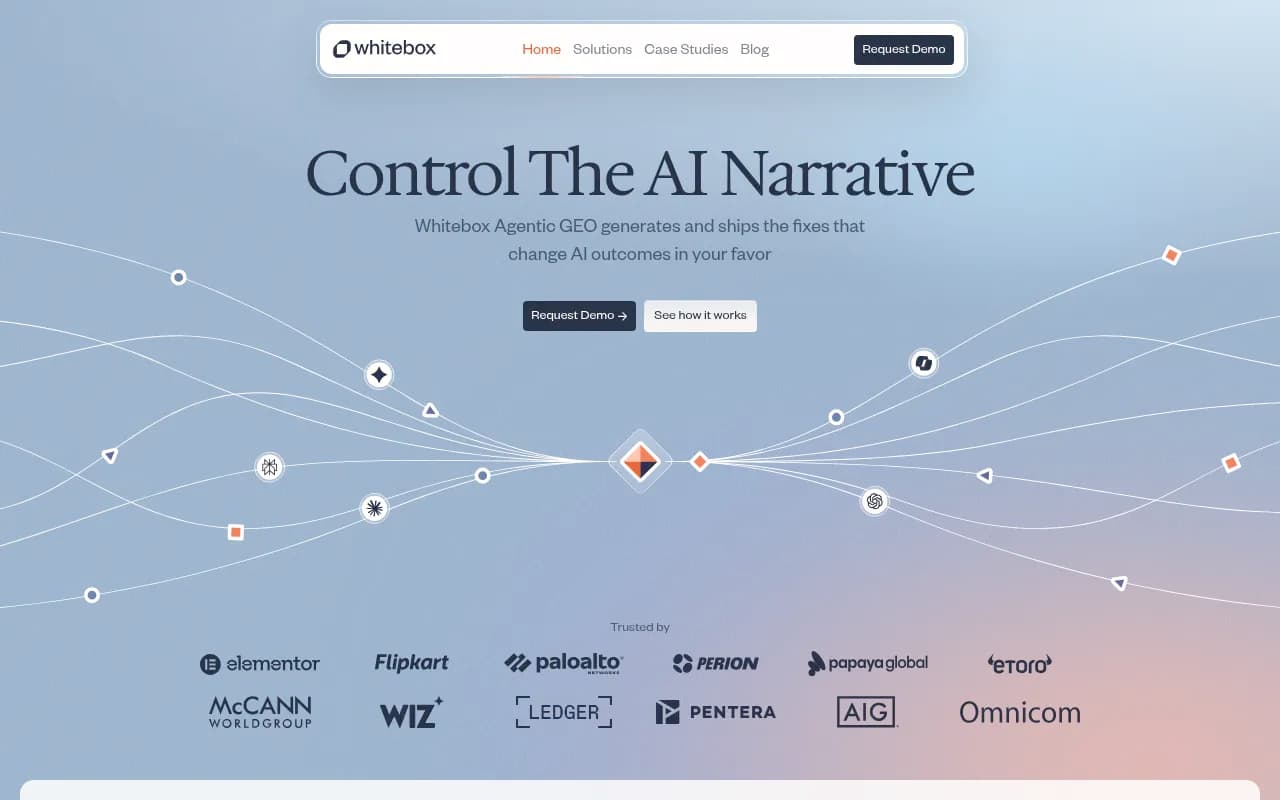
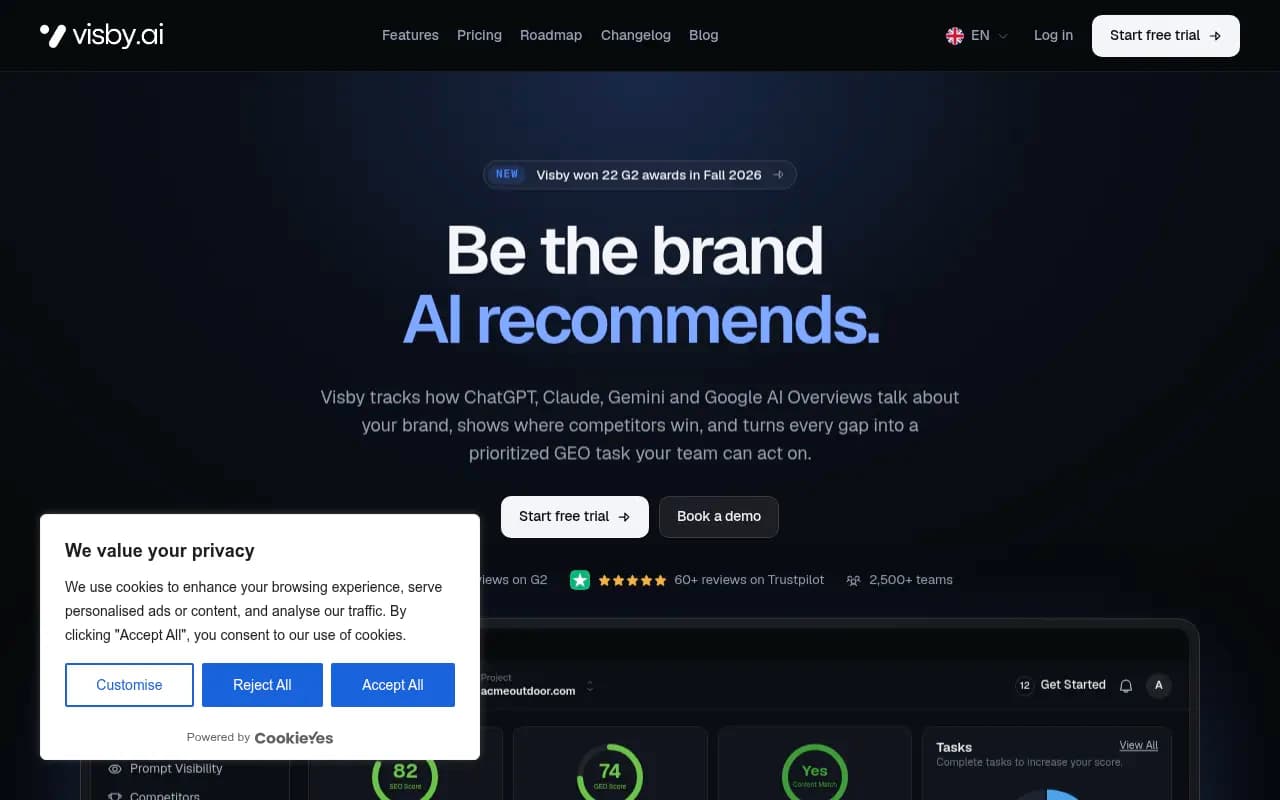
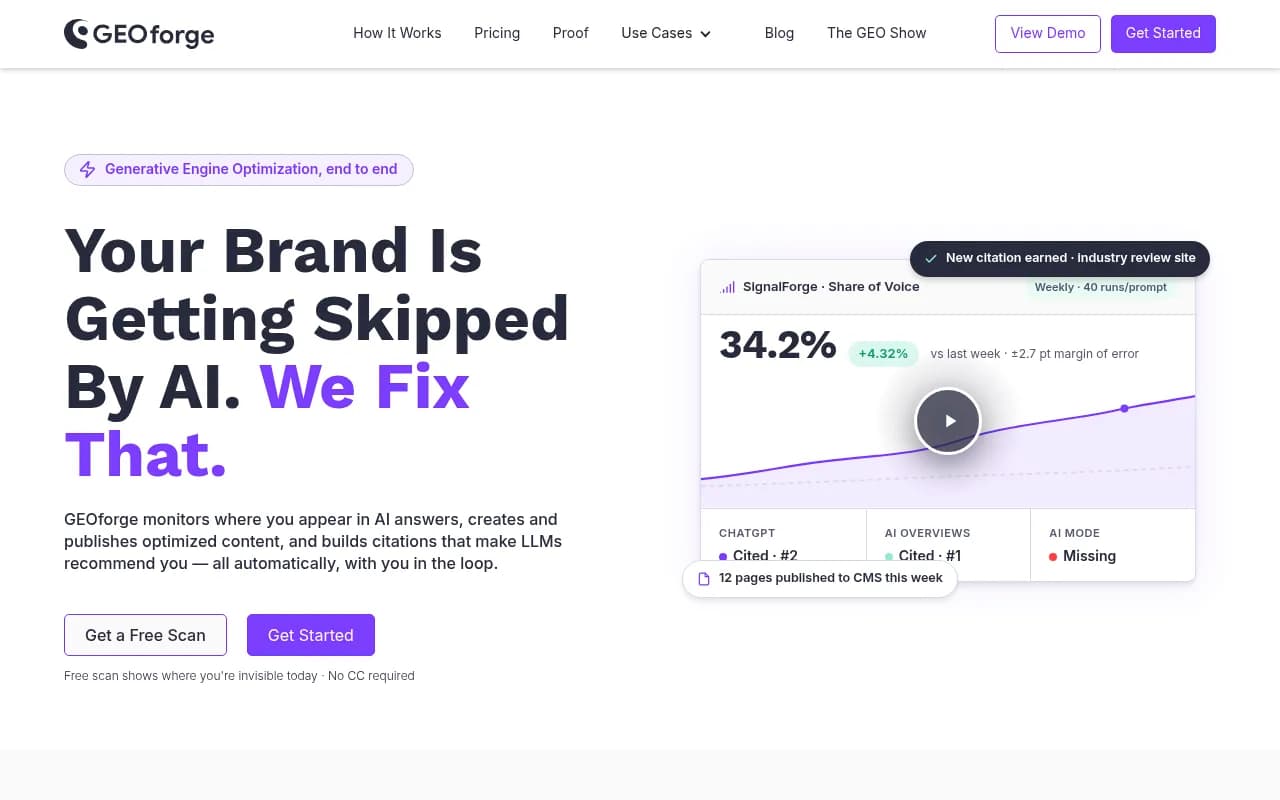
The catalog has a growing group of tools pitching fixes, not just scores. A few worth a look if the above don't fit: Whitebox (agentic fixes), Nuwtonic (auto-fixes citation gaps), Visby (ranks fixes by impact), Tibly (measures and fixes recommendation gaps), and GEOforge (closed-loop from monitoring to published content). Most are newer, so ask for a trial and test one concrete fix end to end. For a wider scan, the GEO software directory at bestgeosoftware.com lists many more.
How to test whether a tool really shows you what to fix
Skip the demo script. Run this during the trial.
- Pick one prompt you lose. Something commercial, where a competitor is named and you are not.
- Ask the tool why. Does it show which sources AI cites, and which of your pages are missing or weak? Or does it only show the score?
- Check crawler access. Can it tell you whether AI bots can read the relevant page? If not, you cannot separate access from content problems.
- Get a concrete action. Page to create, section to rewrite, source to pursue. "Improve your content" does not count.
- Ship the fix. Publish, or ask the tool to.
- Re-measure. Does the tool show the page crawled, cited, and driving visits two to four weeks later?
A tool that fails step 2 is a dashboard. A tool that fails step 6 is a to-do list generator. You want one that survives all six.
Metrics that point to the right fix
Read the metrics together and they locate the problem:
- Low share of voice usually means a coverage problem: you lack pages for those prompts.
- Late position in the answer means a prominence problem.
- Mentions without citations to your own domain point at content or crawlability.
- Weak sentiment is a reputation problem, often about what third-party pages say.
The metrics overview explains each in detail. Whatever tool you pick, make sure it reports these separately instead of blending them into one number.
Picking by situation
| Your situation | Pick |
|---|---|
| Want tracking, diagnosis, content, and measurement in one product | Promptwatch |
| Enterprise team with strong in-house content | Profound or Scrunch |
| Agency needing simple multi-client tracking | Peec AI, or Promptwatch agency plans |
| Tight budget, just need monitoring | Otterly.AI |
| Already paying for an SEO suite | SE Ranking or Semrush One |
| Want to trial an agentic-fix upstart | KIME or another newer tool, verified first |
If you are comparing options in other categories, the AI rank tracker directory at ai-rank-tools.com is a decent place to scan alternatives.
Getting help if you would rather not do it yourself
Some teams do not want another dashboard at all. For them, the real need is someone to run the program. 1001 SEO Media is the agency behind this site, and it works across technical SEO, content, and generative engine optimization, using Promptwatch for AI visibility work. That is a fit if you want senior specialists doing the fixes rather than a tool queueing them for you.
Bottom line
A tracker that stops at a score is cheap for a reason. When you shop in 2026, ask what happens after the number: which page, which source, which crawler error, and who or what makes the change. Run the six-step test on any shortlist, and start with the free trial or the free AI visibility report from Promptwatch to see what a diagnosis looks like on your own site before you commit budget.