Key takeaways
- Otter PR is a done-for-you PR agency, not software. Respona sells per-placement brand mentions. Wellows tracks AI visibility and points you at outreach targets. Comparing them head to head misses the point.
- I found no independent case study showing placements from any of the three causing measurable ChatGPT or AI Overviews citations. Every citation-lift claim here is vendor-asserted.
- Third-party mentions do matter for AI answers, but the format matters more than the hit. Listicles, comparisons and reviews on third-party sites are the placements most likely to get cited.
- News coverage fades fast. Promptwatch Data shows news loses half its cited pages within about 36 days.
- Whatever you buy, you need a separate way to measure whether citations actually moved.
The question behind the question
The search query is "Does Otter PR, Respona or Wellows get you cited?" It is a reasonable thing to ask, and the honest answer starts with a correction: these three things do different jobs.
- Otter PR (otterpr.com) is a PR agency. People pitch journalists for you. There is no dashboard to log into for AI citations.
- Respona sells guaranteed placements on other people's sites, priced per placement.
- Wellows is an AI visibility tracker with an outreach component that tells you which third-party pages the models already trust.
One more thing before we start. Do not confuse Otter PR with Otter.ai, the meeting transcription app ($16.99 per user per month on Pro). They are unrelated.
So the real question is: what is the best way to get third-party coverage that AI models pick up, and how do you know it worked? That splits into three jobs. Getting coverage, choosing where to get it, and measuring the result.
Why third-party mentions matter for AI answers
The logic is simple. AI search platforms do not rely only on your own site to describe you. Semrush's July 30, 2026 piece on digital PR for AI visibility makes the case that claims on your own site can look self-serving, and that they become more likely to be repeated when independent sources corroborate them. It also notes that links from third-party sites can make your own pages more discoverable as citation sources.
SocialCreators (June 25, 2026) goes further and cites an AirOps analysis of 21,311 brands finding companies are 6.5 times more likely to be mentioned via third-party sources than via their own domain. I have not verified that study myself, so treat it as a pointer, not a settled number.
There is also a lot of Reddit-style anecdote saying real digital PR helps AI visibility and compounds slowly. Fine. I believe the direction. What I cannot find is hard evidence tying a specific tool to a specific citation gain.
What the citation data says about format
This is where Promptwatch Data is more useful than opinion. Looking at which content types ChatGPT cites, from Promptwatch's report on ChatGPT citation share by content type (Sep 28 to Oct 4, 2026):
- Product pages take 22.4% of classified citations and landing pages 16.8%. That is pages describing what a company sells.
- Listicles take 13.6%, how-tos 8.7%, general articles 6.1%, comparisons 5.9% and news 5.7%.
- For commercial prompts, product pages, landing pages, listicles and comparisons add up to almost 70% of citations.
- For branded prompts, reviews rise to 5.6%, more than 3x their overall share, and press releases rise to 2.1%.
Translation: a press hit on a news site is the least efficient thing you can aim for. A mention inside a "best of" roundup, a comparison, or a review on a site ChatGPT already cites for your category is worth more.
The decay data backs this up. In Promptwatch's content half-life report, which tracked pages ChatGPT cited on July 6, 2026 for 90 days, news lost half its pages within about 36 days while landing pages and docs stayed cited far longer. A one-off news placement is a short-lived citation source.
And crowding matters. According to Promptwatch's unique domains per response report (Sep 28 to Oct 4, 2026), 47.6% of ChatGPT responses with citations cite 10 or more unique domains, and for organic non-brand prompts it is 52.5%. Answers pull from many sources, so being one of a dozen is realistic, but you need several mentions, not one.
Otter PR: an agency, so judge it like one
Otter PR covers media relations, enterprise PR and thought leadership. Its site promises "guaranteed results" and "meaningful media coverage," lists brand and communications auditing as services, and shows G2 Top PR firm and High Performer badges.
What it does not show: public pricing, an AI-citation tracking tool, or published data on AI citation outcomes from its work. That does not mean it does not work. It means you cannot verify the AI angle from the outside.
If you hire any PR agency for this goal, ask three things:
- Which publications and which formats do you target, and why do you believe AI models cite them?
- How will you report on citations, not just coverage and impressions?
- What happens after the pitch lands, given that news decays fast?
Earned media is the one route here where the coverage is real editorial. It is also slow, and nobody can guarantee a listicle spot. Be wary of the word "guaranteed" next to "earned."
Respona: paid placements with a clear price list
Respona has moved to selling guaranteed brand placements, priced per placement and tiered by publisher Domain Rating and traffic. From its pricing page:
| Tier | Price per placement | Publisher DR | Monthly traffic |
|---|---|---|---|
| Starter | $100 | 20+ | 100 to 5K |
| Standard | $160 | 30+ | 100 to 10K |
| Authority | $240 | 40+ | 500 to 20K |
| Power | $400 | 50+ | 1K to 30K |
| Elite | $500 | 60+ | 1K to 100K |
Default turnaround is 28 days, or 14 days as an add-on. You can pay extra for domain pre-approval (for example specific ccTLDs) and request content formats such as product review, listicle, comparison guide, contextual placement or news. Subscribe-and-save discounts run from 10% at $3k a month to 20% at $5k and up to 60% at the highest spend.
Respona says every ordered placement goes live in the agreed timeframe, that there are "no PBNs, no spammy networks," and that content is optimized for search and AI answers, with a nod to "listicles that LLMs love." Those are vendor claims. The pricing page gives no AI-citation outcome data.
Two cautions.
First, this is paid placement. That is closer to sponsored content or link building than to earned media. It can be perfectly legitimate, but you should know what you are buying, and check that the publisher discloses properly under their own rules.
Second, stale pricing is all over the web. Reviews on sites like Tekpon and Signal Genesys still list old subscription plans (Starter at $99 a month, Unlimited at $399 or $799). The current page shows only the pay-per-result model. Verify at respona.com/pricing before you budget.
On the DR tiers: Promptwatch's August 2026 data on ChatGPT citation share by domain rank found that DR 46-75 sites earned almost half of citations, while DR 91-100 fell to about 3%. That suggests the mid tiers (Authority and Power) are where citation odds look better than paying for the top DR number. It is an inference from aggregate data, not a Respona result.
The 5WPR piece describes Respona's older, more familiar role: finding and verifying contact emails and drafting openers from a prospect's recent content, with a human checking accuracy before sending. That workflow still matters if you run your own outreach.
Wellows: measurement first, outreach second
Wellows is the one that looks like software. It is AI visibility tracking with a credit model: one prompt on one engine for one day equals one "AI answer." All plans include unlimited projects, prompts and seats, all five engines (ChatGPT, Gemini, Perplexity, Google AI Overviews, AI Mode) and a 7-day free trial.
| Plan | Price per month | AI answers | Roughly equals |
|---|---|---|---|
| Basic | $29 | 1,800 | 12 prompts on 5 engines daily |
| Standard | $97 | 6,500 | 43 prompts on 5 engines daily |
| Growth | $249 | 18,000 | 120 prompts on 5 engines daily, plus white-label dashboards |
| Scale | $497 | 36,000 | 240 prompts on 5 engines daily |
Features on all plans include citation tracking, sourced sentiment, Quick Wins, Content Opportunities, the KIVA writing agent, and Google Search Console and WordPress integrations. Outreach is described as finding the third-party pages the models already trust and who to contact at them. It is listed on all plans but highlighted under Scale, and Wellows also sells managed services.
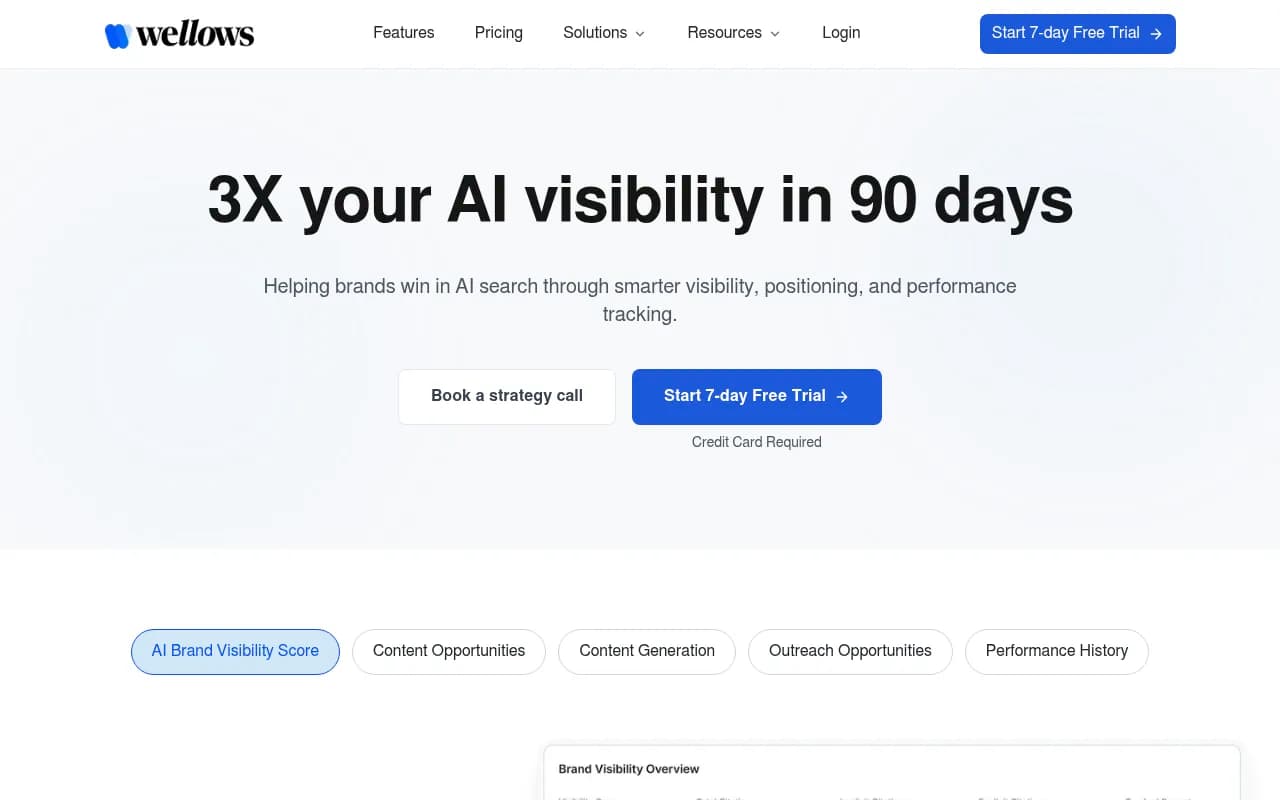
This is the most coherent approach to the PR question: find the pages that already get cited in your category, then go after a mention on them. It is the right instinct. But it is a targeting and tracking tool. It does not place anything for you unless you buy the managed side.
Some older pricing snapshots exist (a LinkedIn review lists $37, $97, $297 and $497 tiers). Use Wellows's own pricing page. Also, its comparison blog lists competitors' prices, which is self-published and vendor-biased. Read it that way.
Side by side
| Otter PR | Respona | Wellows | |
|---|---|---|---|
| What it is | PR agency | Paid placement marketplace | AI visibility tracker with outreach |
| Pricing | Not public | $100 to $500 per placement | $29 to $497 per month |
| Coverage type | Earned media | Paid placement | None directly (targeting) |
| Measures AI citations | No public tool | No outcome data published | Yes, five engines |
| Evidence of citation lift | None found | None found | None found |
| Best for | Brands wanting full-service media relations | Teams with budget who want predictable placements | Teams who want to find targets and track results |
The measurement gap
All three leave the same problem open. Once coverage goes live, how do you know whether AI engines picked it up, how they describe you, and what traffic followed?
A tracker is the answer. Wellows is one option. Others from our catalog include Promptwatch, which monitors real user interfaces in ChatGPT, AI Overviews, AI Mode, Gemini, Perplexity and others, and can show which third-party pages are cited for your prompts, including Reddit, YouTube and LinkedIn sources, plus IP-verified AI crawler logs and visitor analytics for the traffic side.

If you want a more PR-leaning view of mentions, media monitoring tools like Meltwater and Brand24 cover coverage but not citations, so pair them with an AI tracker.
Other trackers worth a look if you want to compare:



For a wider list, the GEO software directory at bestgeosoftware.com is a decent place to browse.
A workable plan
Here is how I would do this with a modest budget.
- Baseline first. Track 30 to 50 prompts your buyers actually use, across the engines that matter to you. Record which domains get cited and where you stand.
- List the cited pages. Pull the third-party listicles, comparisons and review pages that appear repeatedly. These are your targets, ahead of generic high-DR news sites.
- Pick the route per target. Editorial roundups with a real byline: pitch, or hire an agency. Pay-to-play publishers: weigh whether a paid placement is acceptable, and disclose where required. Review sites: collect genuine customer reviews.
- Ask for the right format. If you buy through Respona, request listicle, comparison or review formats over plain news.
- Re-measure at 30 and 60 days. News-style coverage will already be decaying by then. Pages that persist are the ones worth repeating.
- Do not skip your own site. Product pages and landing pages are the biggest citation share in ChatGPT, so third-party PR supports them, not replaces them.
Social is not a shortcut either. Promptwatch Data from Sep 28 to Oct 4, 2026 found ChatGPT drew only 0.46% of citations from social platforms, while Google AI Overviews drew 12.2%. Where you push your PR effort depends on which engine your buyers use.
So, does any of them get you cited?
Maybe. Third-party mentions in the right formats plausibly help, and the aggregate citation data supports that. But no one has published evidence that Otter PR, Respona or Wellows caused citations, and I would not pay for any of them on that promise alone.
My take: treat Wellows as a measurement and targeting layer, Respona as a way to buy specific placements when you know exactly which format and publisher you want, and Otter PR as an agency decision that belongs in a different budget line. Run a small test, measure it with a tracker, and only scale what shows up in the citations.
If you are weighing whether to bring in outside help for the broader AI search work, 1001 SEO Media is the agency that publishes this network and does GEO and digital PR work, which is worth knowing as a disclosure as much as a pointer.