Key Takeaways
- Keyword approach: LLMrefs uses a keyword-first model (you enter keywords like traditional SEO), while GetMint uses a prompt-first model (you enter actual questions users ask AI engines)
- Pricing: LLMrefs starts at $79/mo vs GetMint at €99/mo (~$105), but GetMint includes content creation tools in all plans while LLMrefs focuses purely on tracking
- AI model coverage: Both track 8+ major AI engines, but GetMint explicitly includes DeepSeek and Mistral which LLMrefs doesn't list
- Content generation: GetMint has built-in AI writing tools to create optimized content; LLMrefs is analytics-only with no content creation features
- Prompt intelligence: GetMint automatically generates prompt variations from its database; LLMrefs generates variations from "real conversations" but requires you to start with keywords
- Target audience: LLMrefs is built for SEO teams familiar with keyword research; GetMint targets marketers who think in terms of user questions and content gaps
Overview
GetMint
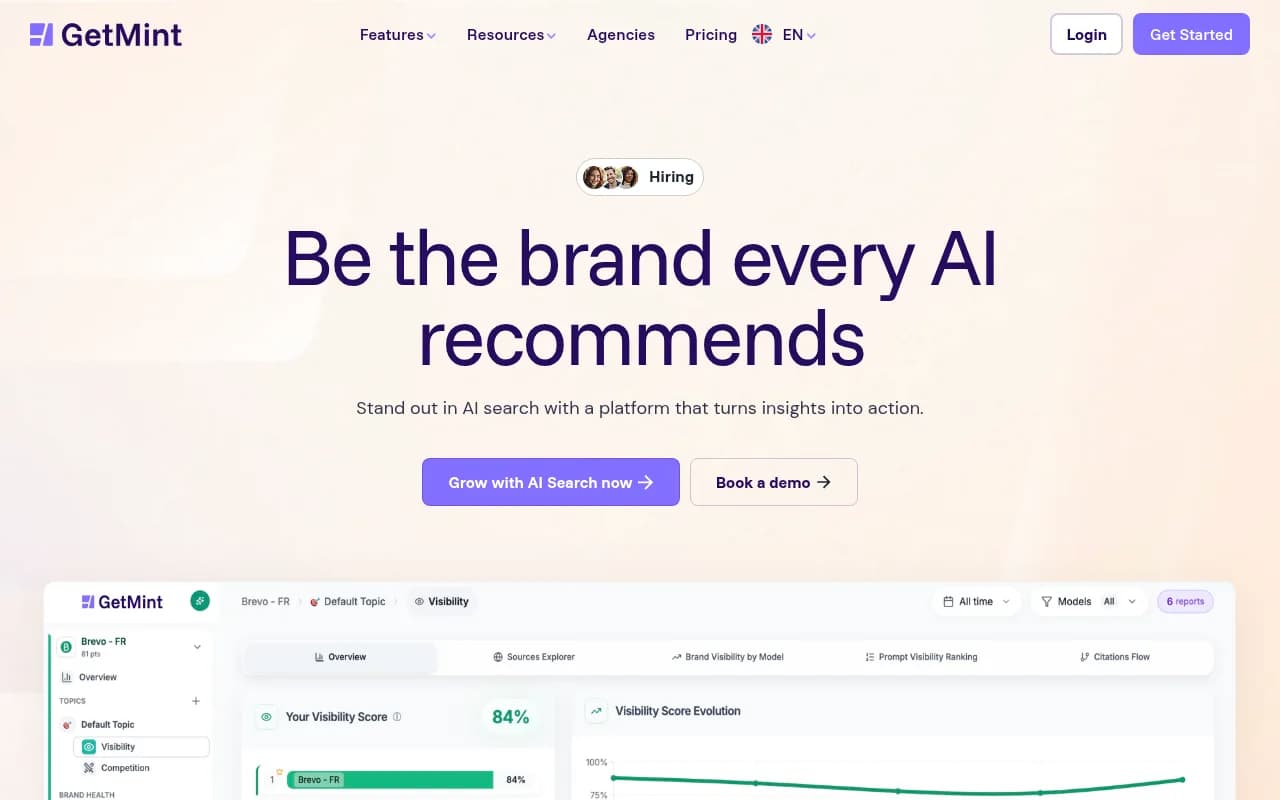
GetMint positions itself as the first Generative Engine Optimization (GEO) platform, combining AI visibility tracking with content creation tools. The platform monitors how your brand appears across ChatGPT, Perplexity, Google AI Overviews, Gemini, Claude, and other LLMs. What sets GetMint apart is the integrated content creation workflow -- you don't just see where you're invisible, you can generate optimized articles directly in the platform to fix those gaps. Pricing starts at €99/mo for the Starter plan.
LLMrefs
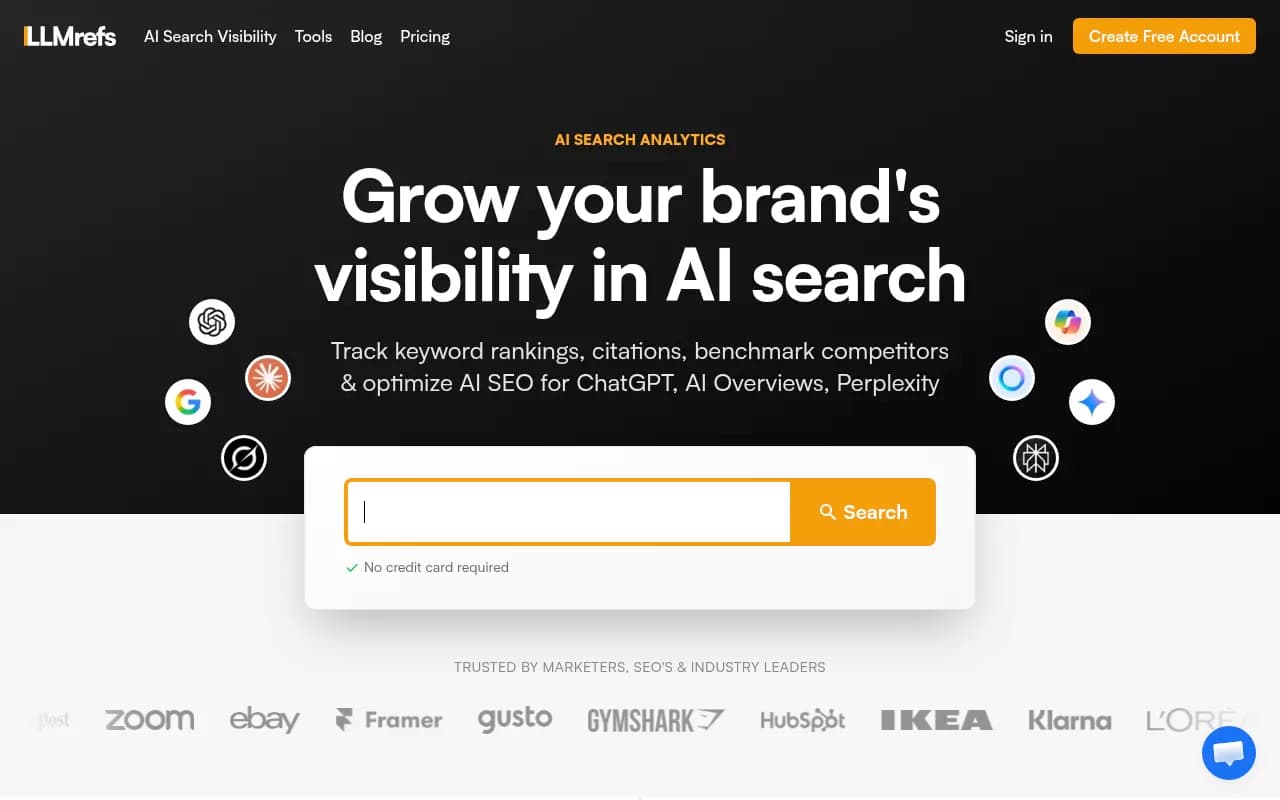
LLMrefs takes a keyword-centric approach to AI search analytics. You enter keywords (like "winter surfing wetsuits"), and the platform tracks how your brand ranks and gets cited across ChatGPT, Google AI Overviews, Perplexity, Claude, Gemini, and more. It automatically generates prompt variations from those keywords based on real conversation patterns. LLMrefs is built for SEO teams and agencies who already think in terms of keyword research and want to extend that workflow to AI search. Pricing starts at $79/mo. The platform is used by brands like eBay, Shopify, HubSpot, and The Washington Post.
Side-by-side comparison
| Feature | GetMint | LLMrefs |
|---|---|---|
| Starting price | €99/mo (~$105) | $79/mo |
| Free trial | Yes | Yes (no credit card) |
| AI models tracked | ChatGPT, Perplexity, Google AI Overviews, Gemini, Claude, Meta AI, DeepSeek, Mistral, Copilot | ChatGPT, Perplexity, Google AI Overviews, Gemini, Claude, Meta AI, Grok, Copilot |
| Core approach | Prompt-first (enter questions) | Keyword-first (enter keywords) |
| Content creation | Built-in AI writing tools | None (analytics only) |
| Prompt generation | Automatic from database | Auto-generated from keywords |
| Competitor benchmarking | Yes | Yes |
| Citation tracking | Yes | Yes |
| Brand monitoring | Yes | Yes |
| Target users | Marketers, content teams | SEO teams, agencies |
| Multi-language | Not specified | Not specified |
| API access | Not specified | Not specified |
Keyword vs prompt philosophy
This is the fundamental difference between the two platforms.
LLMrefs: Keyword-first workflow
LLMrefs assumes you already know which keywords matter to your business. You enter "winter surfing wetsuits" and the platform generates prompt variations like "What are the best wetsuits for winter surfing?" or "Which wetsuit brands work in cold water?" It then tracks how AI engines answer those prompts and whether your brand gets mentioned or cited. This feels natural if you're coming from traditional SEO -- you're used to targeting keywords, and LLMrefs extends that mental model to AI search.
The upside: you can import your existing keyword research and immediately start tracking AI visibility for terms you already care about. The downside: you're still thinking in keywords, not in the actual questions people ask AI engines. There's a translation layer.
GetMint: Prompt-first workflow
GetMint flips this around. You enter actual prompts -- the questions users type into ChatGPT or Perplexity. "What's the best project management tool for remote teams?" or "How do I optimize my website for AI search?" The platform tracks those specific prompts and shows you which brands get cited in the responses. GetMint's prompt database helps you discover high-value questions you should be tracking.
The upside: you're working directly with the queries people actually use, no translation needed. The downside: if you're used to keyword research, this requires a mindset shift. You have to think like someone asking an AI assistant, not like someone typing into Google.
Verdict: If your team already has a keyword research workflow and wants to extend it to AI search, LLMrefs is the smoother onboarding. If you're building an AI visibility strategy from scratch or want to think in terms of user questions, GetMint's prompt-first approach is more direct.
Content creation capabilities
This is where the platforms diverge sharply.
GetMint: Integrated content generation
GetMint includes AI writing tools in all plans. When you identify a prompt where competitors are visible but you're not, you can generate an optimized article directly in the platform. The content is grounded in what AI engines are looking for -- the topics, angles, and structure that get cited. You're not just monitoring visibility, you're actively creating content to improve it. This closes the loop: find gaps, create content, track results.
The Starter plan includes 5 articles per month, Growth includes 15, and Pro includes 30. That's enough for most small to mid-size teams to consistently fill content gaps.
LLMrefs: Analytics only
LLMrefs does not include content creation tools. It shows you where you're invisible and which competitors are winning, but you're on your own for creating the content to fix it. You export the data, hand it to your writers, and come back later to see if visibility improved. This is fine if you already have a content team and workflow in place -- LLMrefs gives them the intelligence they need. But if you're a small team or want an all-in-one solution, you'll need to pair LLMrefs with a separate content tool.
Verdict: GetMint wins here if you want a complete workflow from tracking to content creation. LLMrefs is better if you have an existing content operation and just need the analytics layer.
If you're also looking to understand how AI crawlers interact with your site and track actual traffic from AI search, Promptwatch adds crawler log analysis and visitor attribution that neither GetMint nor LLMrefs currently offer.

AI model coverage
Both platforms track the major AI search engines, but there are small differences.
| AI Model | GetMint | LLMrefs |
|---|---|---|
| ChatGPT | ✓ | ✓ |
| Perplexity | ✓ | ✓ |
| Google AI Overviews | ✓ | ✓ |
| Google Gemini | ✓ | ✓ |
| Claude | ✓ | ✓ |
| Meta AI | ✓ | ✓ |
| Microsoft Copilot | ✓ | ✓ |
| DeepSeek | ✓ | Not listed |
| Mistral | ✓ | Not listed |
| Grok | Not listed | ✓ |
GetMint explicitly lists DeepSeek and Mistral, which are growing in importance (DeepSeek especially has seen massive adoption in early 2026). LLMrefs lists Grok (xAI's model) which GetMint doesn't mention. Both likely support more models than they prominently list, but these are the confirmed ones.
Verdict: Roughly equivalent coverage with minor differences. GetMint edges ahead slightly for including DeepSeek, which is seeing rapid growth.
Pricing comparison
| Plan | GetMint | LLMrefs |
|---|---|---|
| Entry tier | €99/mo Starter | $79/mo (plan name not specified) |
| Mid tier | €229/mo Growth | Not publicly listed |
| High tier | €499/mo Pro | Not publicly listed |
| Free trial | Yes | Yes (no credit card required) |
| What's included (entry) | 1 brand, prompt tracking, content creation (5 articles/mo), competitor analysis | Keyword tracking, prompt variations, citation tracking, competitor benchmarking |
LLMrefs is cheaper at the entry level ($79 vs ~$105), but GetMint includes content creation tools which LLMrefs doesn't offer at any price. If you value the content generation, GetMint's higher price makes sense. If you only need analytics, LLMrefs is the better deal.
Neither platform lists detailed mid-tier or enterprise pricing publicly, so you'll need to contact sales for team or agency plans.
Verdict: LLMrefs wins on pure tracking cost. GetMint wins on value if you need content creation included.
Prompt and keyword intelligence
Both platforms help you discover which prompts or keywords to track, but the mechanics differ.
GetMint: Prompt database and gap analysis
GetMint maintains a database of prompts and shows you which ones competitors are visible for but you're not. This is classic content gap analysis applied to AI search. You see the specific questions your website isn't answering, then use the built-in content tools to create those answers. The platform suggests prompts based on your industry and competitors.
LLMrefs: Keyword-to-prompt generation
LLMrefs starts with keywords and automatically generates prompt variations based on "real conversations." You don't manually write out every prompt variation -- the platform does it for you. This is efficient if you have a keyword list but saves you from having to imagine every possible way someone might phrase a question to an AI engine. The platform shows you which variations drive the most visibility.
Verdict: GetMint's approach is more discovery-oriented ("here are prompts you should care about"). LLMrefs is more expansion-oriented ("here are all the ways people ask about your keywords"). Both are useful, just different starting points.
User interface and workflow
Neither platform has extensive public screenshots or demos, so this is based on the described workflows.
GetMint: Appears to be organized around brands and prompts. You add your brand, define the prompts you want to track, see visibility scores across AI engines, identify gaps, and create content to fill them. The workflow is linear: monitor → identify gaps → create content → track improvement.
LLMrefs: Organized around keywords. You enter keywords, the platform generates prompts, you see rankings and citations across AI engines, and you benchmark against competitors. The workflow is more exploratory: enter keywords → see prompt variations → analyze performance → export insights.
Both platforms likely have dashboards showing visibility trends over time, competitor comparisons, and citation analysis. Without hands-on testing, it's hard to say which interface is cleaner or more intuitive.
Verdict: Tie. Both seem to have logical workflows that match their underlying philosophy (prompts vs keywords).
Competitor benchmarking
Both platforms include competitor analysis, but the details differ.
GetMint: Shows which competitors are visible for prompts you're tracking. You can see their visibility scores, which prompts they dominate, and where you have opportunities to overtake them. The content gap analysis is inherently competitive -- it shows you what competitors are doing that you're not.
LLMrefs: Tracks competitor rankings and citations across keywords and prompts. You can see which brands are winning for specific queries, how often they get cited, and where they appear in AI responses. The keyword-centric model makes it easy to compare brand performance across a large set of terms.
Verdict: Functionally similar. Both give you the competitive intelligence you need to prioritize efforts.
Citation and source tracking
Both platforms track when your brand gets cited in AI responses, but the depth isn't fully clear from public materials.
GetMint: Tracks brand mentions and visibility across AI engines. Likely shows you which prompts trigger citations and how often.
LLMrefs: Explicitly mentions citation tracking and shows you when your brand appears in AI responses. The keyword-first model means you can see citation rates across many keyword variations.
Neither platform appears to offer the deep source analysis you'd get from a tool like Promptwatch (which shows exactly which pages AI engines cite, Reddit threads they reference, or YouTube videos they pull from). GetMint and LLMrefs focus on brand-level visibility rather than page-level citation forensics.
Verdict: Tie. Both track citations at a brand level, which is what most teams need.
Pros and cons
GetMint pros:
- Integrated content creation tools close the loop from tracking to optimization
- Prompt-first approach matches how people actually use AI search
- Includes DeepSeek and Mistral coverage
- Content gap analysis helps prioritize what to create
- All-in-one platform reduces tool sprawl
GetMint cons:
- Higher starting price than LLMrefs ($105 vs $79)
- Prompt-first model requires a mindset shift if you're used to keyword research
- Less transparent about mid-tier and enterprise pricing
- No public information about API access or integrations
LLMrefs pros:
- Lower entry price ($79/mo)
- Keyword-first approach is familiar to SEO teams
- Auto-generates prompt variations so you don't have to manually write them
- Used by major brands (eBay, Shopify, HubSpot)
- No credit card required for free trial
LLMrefs cons:
- No content creation tools -- analytics only
- Keyword-to-prompt translation adds a layer of abstraction
- Less transparent about pricing tiers beyond entry level
- Missing DeepSeek coverage (important in 2026)
Who should pick which tool
Choose GetMint if:
- You want an all-in-one platform that tracks visibility AND creates content to improve it
- Your team thinks in terms of user questions and prompts, not keywords
- You're a small team or startup that needs to move fast without coordinating multiple tools
- You value having content creation included in your monthly plan
- You want to track DeepSeek and Mistral visibility
Choose LLMrefs if:
- You already have a content team and just need the analytics layer
- Your team is comfortable with keyword research and wants to extend that workflow to AI search
- You want the lowest entry price for AI visibility tracking
- You're an SEO agency managing multiple clients and need a familiar keyword-centric model
- You prefer a pure analytics tool without bundled content creation
Consider both if:
- You're a larger team where some people need analytics (LLMrefs) and others need content creation (GetMint)
- You want to cross-validate data between two platforms to ensure accuracy
- You have budget for multiple tools and want best-in-class for each function
Final verdict
GetMint and LLMrefs solve the same problem -- tracking brand visibility in AI search -- but with different philosophies. LLMrefs is a keyword-first analytics platform that extends traditional SEO workflows to AI engines. GetMint is a prompt-first optimization platform that combines tracking with content creation.
If you're an SEO team that lives and breathes keyword research, LLMrefs will feel natural and costs less. If you're a marketing team that wants to find gaps, create content, and track results all in one place, GetMint's higher price is justified by the integrated workflow.
The real question: do you just want to know where you're invisible, or do you want tools to fix it? LLMrefs answers the first question. GetMint answers both.