Key Takeaways
- Pricing gap is massive: Bluefish starts around $4,000/month with annual contracts vs LLMrefs at $79/month with flexible plans -- a 50x difference in entry cost
- Target audience split: Bluefish is built for Fortune 500 marketing teams with dedicated budgets; LLMrefs targets SEO teams, agencies, and mid-market brands
- Feature depth vs breadth: Bluefish offers deeper enterprise controls (custom audiences, tailored prompts, advanced segmentation) while LLMrefs covers more AI models and focuses on keyword-based tracking
- Keyword vs prompt approach: LLMrefs uses a keyword-first model that auto-generates prompt variations from real conversations; Bluefish emphasizes custom prompt libraries and audience personas
- Enterprise requirements: Bluefish consistently passes infosec reviews and offers white-glove support; LLMrefs is self-service with faster onboarding
- Commerce focus: Bluefish includes dedicated AI commerce tracking (ChatGPT shopping, product recommendations); LLMrefs focuses on citations and rankings
Overview
Bluefish: Enterprise AI marketing platform
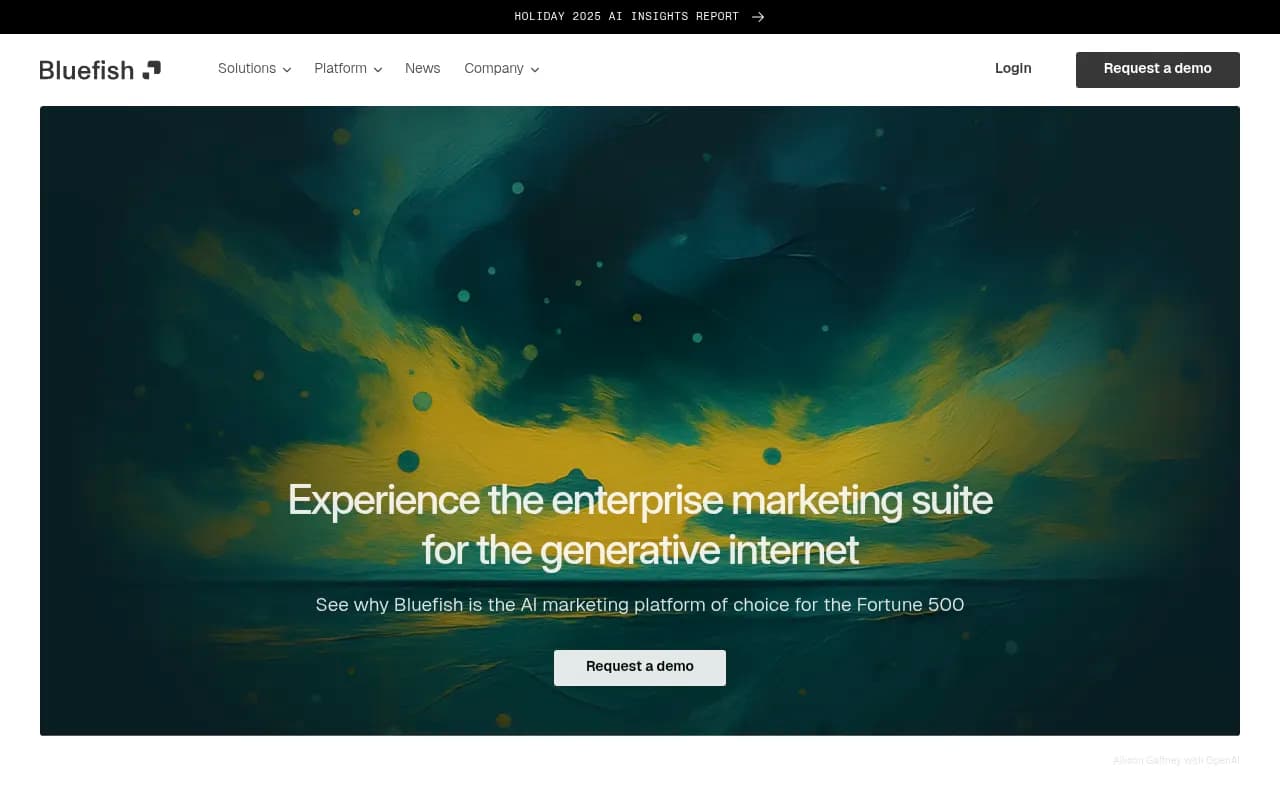
Bluefish positions itself as "the AI marketing platform of choice for the Fortune 500." It's an enterprise-grade solution for monitoring, optimizing, and measuring brand presence across AI search engines and agentic commerce. The platform emphasizes depth over breadth -- custom audiences, tailored measurement frameworks, and what they call understanding how AI "thinks" rather than just tracking surface metrics. Annual contracts are standard, with pricing starting around $4,000/month.
LLMrefs: AI search analytics for SEO teams
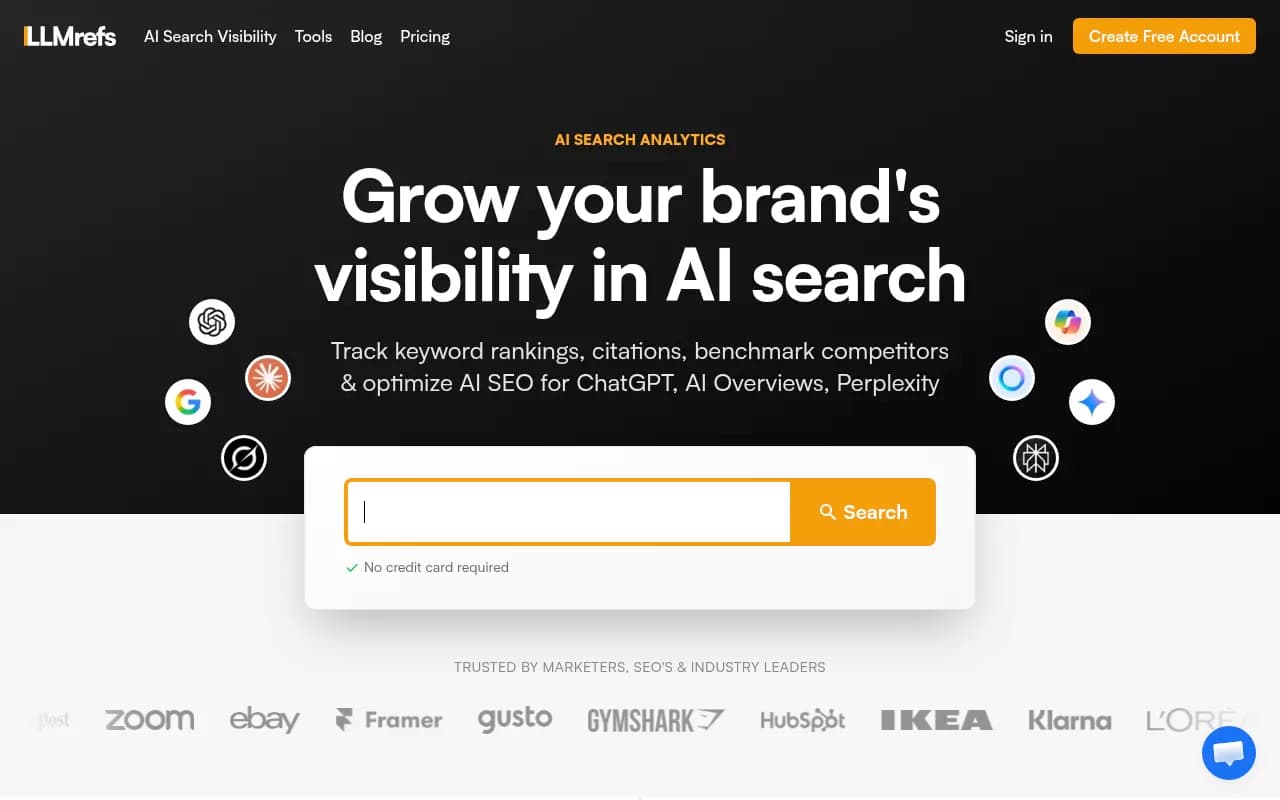
LLMrefs takes a keyword-first approach to AI search visibility. You enter keywords (not prompts), and the platform automatically generates prompt variations based on real conversation patterns. It tracks rankings, citations, and brand mentions across ChatGPT, Perplexity, Claude, Gemini, Google AI Overviews, and more. Built for SEO teams and agencies, it starts at $79/month with no annual commitment required. The client list includes eBay, HubSpot, Shopify, and The Washington Post.
Side-by-Side Comparison
| Feature | Bluefish | LLMrefs |
|---|---|---|
| Starting price | ~$4,000/mo | $79/mo |
| Contract | Annual required | Monthly available |
| Target audience | Fortune 500 marketing teams | SEO teams, agencies, mid-market |
| AI models tracked | ChatGPT, Perplexity, major models | ChatGPT, Claude, Gemini, Perplexity, AI Overviews, Copilot, Meta AI, Grok |
| Prompt approach | Custom prompt libraries, audience personas | Keyword-based with auto-generated variations |
| Commerce tracking | Yes (dedicated AI commerce module) | No |
| Enterprise features | Custom segmentation, infosec compliance, white-glove support | Self-service, API access |
| Onboarding | Dedicated account team | Self-service setup |
| Measurement focus | Impact, influence, custom frameworks | Rankings, citations, visibility scores |
| Data export | Custom reporting, advanced segmentation | Standard exports |
| Free trial | Demo required | Available |
| Best for | Large brands with complex needs | Teams wanting fast, affordable AI SEO tracking |
Pricing comparison
The pricing gap between these platforms is the first thing you'll notice.
| Plan | Bluefish | LLMrefs |
|---|---|---|
| Entry level | ~$4,000/mo (quote-based, annual contract) | $79/mo (monthly billing available) |
| Mid-tier | Custom enterprise pricing | Likely $200-500/mo range (exact tiers not public) |
| Enterprise | Custom (based on brands, markets, features) | Custom pricing available |
| Contract terms | Annual standard | Monthly or annual |
| Free trial | No (demo required) | Yes |
Bluefish's pricing reflects its enterprise positioning -- you're paying for white-glove service, custom implementations, and the ability to pass Fortune 500 procurement processes. LLMrefs pricing is built for teams that need to show ROI quickly without a six-figure annual commitment.
Target audience and positioning
Who Bluefish is for
Bluefish explicitly targets Fortune 500 brands. Their homepage leads with "the AI marketing platform of choice for the Fortune 500" and emphasizes passing infosec reviews, custom measurement frameworks, and dedicated account teams. If you're a large brand with:
- A dedicated AI search budget (five figures per month)
- Complex multi-brand or multi-market tracking needs
- Enterprise security and compliance requirements
- A marketing team that needs custom dashboards and segmentation
- Interest in AI commerce (product recommendations, shopping features)
Then Bluefish is built for you. The platform assumes you have the resources to work with their team on custom implementations.
Who LLMrefs is for
LLMrefs targets SEO teams, agencies, and mid-market brands that want AI search visibility without enterprise overhead. The $79/month entry point and self-service model mean you can start tracking today. It's a fit if you:
- Want to track AI search visibility alongside traditional SEO
- Need keyword-based tracking that mirrors how you already think about search
- Prefer self-service tools over managed services
- Want to test AI search optimization before committing big budgets
- Run an agency and need to track multiple clients affordably
The client list (eBay, HubSpot, Shopify) shows that large companies use LLMrefs too -- but the positioning is about accessibility and speed, not white-glove service.
Keyword vs prompt methodology
This is a core philosophical difference.
LLMrefs: Keyword-first approach
LLMrefs starts with keywords. You enter "winter surfing wetsuits" and the platform automatically generates prompt variations based on real conversation patterns. This mirrors traditional SEO workflows -- you already have keyword lists, now you're extending them to AI search. The platform handles the complexity of turning keywords into natural language prompts.
This approach is faster to set up and easier for SEO teams to adopt. You don't need to think like a prompt engineer; you think like an SEO.
Bluefish: Custom prompt libraries and audiences
Bluefish emphasizes custom prompt libraries and audience personas. You're not just tracking generic queries -- you're building prompts that reflect how your specific target customers ask questions. The platform offers "custom audiences" and "tailored prompts" as differentiators.
This approach gives you more control and potentially more relevant data, but it requires more upfront work. You need to define your audiences, craft your prompts, and work with Bluefish's team to set up the right tracking framework.
Verdict: If you want to start fast and leverage existing keyword research, LLMrefs wins. If you need highly customized tracking that reflects specific customer segments, Bluefish's approach pays off -- but only if you have the time and budget to implement it properly.
Feature depth: Monitoring and optimization
AI model coverage
LLMrefs explicitly lists 8+ AI models: ChatGPT, Claude, Gemini, Perplexity, Google AI Overviews, Microsoft Copilot, Meta AI, and Grok. Bluefish mentions ChatGPT and Perplexity prominently but doesn't list all supported models publicly.
Edge to LLMrefs for transparency and breadth of coverage.
Optimization capabilities
Bluefish emphasizes "AI Optimization (GEO)" as a core module and talks about "automate optimization workflows" and understanding how AI "thinks." The messaging suggests deeper optimization tools, but specifics aren't public.
LLMrefs focuses on tracking and benchmarking. The optimization angle is implicit -- you see where you rank, where competitors rank, and which citations matter. You take action based on that data.
Edge to Bluefish if you want guided optimization workflows. Edge to LLMrefs if you prefer data-driven insights and want to handle optimization yourself.
Commerce tracking
Bluefish includes a dedicated "AI Commerce" module for tracking product recommendations and shopping features in AI models (like ChatGPT's shopping integration). This matters if you're an e-commerce brand or sell products that AI models might recommend.
LLMrefs doesn't mention commerce tracking specifically -- it's focused on citations and rankings.
Clear win for Bluefish if AI commerce is a priority.
Measurement and reporting
Bluefish emphasizes "GEO Measurement" as a separate module and talks about custom measurement frameworks. The pitch is that generic metrics aren't enough -- you need tailored KPIs that match your business.
LLMrefs provides rankings, citations, and visibility scores. The approach is more standardized, which makes it easier to compare across keywords and competitors.
Bluefish wins if you need custom reporting that fits into existing enterprise dashboards. LLMrefs wins if you want standard metrics you can act on immediately.
Enterprise features and support
Security and compliance
Bluefish explicitly mentions "consistently pass infosec reviews with ease" -- a signal that they've built the platform to meet Fortune 500 security requirements. This matters if you're in a regulated industry or have strict data governance policies.
LLMrefs doesn't emphasize security on their homepage, which suggests a more standard SaaS security posture. That's fine for most teams but may not pass enterprise procurement.
Bluefish wins for regulated industries and large enterprises.
Support model
Bluefish offers white-glove support with dedicated account teams. You're not just buying software; you're buying a partnership.
LLMrefs is self-service. You sign up, set up your tracking, and go. Support is available but not hands-on by default.
Bluefish wins if you want (and can afford) dedicated support. LLMrefs wins if you prefer autonomy and faster time-to-value.
Data customization
Bluefish emphasizes "data teams get more ways to customize, segment, and optimize data in ways competitors can't match." This suggests advanced filtering, custom dimensions, and flexible data models.
LLMrefs offers standard exports and API access. You can pull data into your own systems, but the platform itself is less customizable.
Bluefish wins for teams with data analysts who need to slice data in complex ways.
Pros and cons
Bluefish pros
- Built for enterprise scale with infosec compliance and white-glove support
- Custom audiences and tailored prompts for highly specific tracking
- Dedicated AI commerce module for product recommendations
- Advanced segmentation and custom measurement frameworks
- Proven with Fortune 500 brands
Bluefish cons
- Pricing starts around $4,000/month -- out of reach for most teams
- Annual contracts required
- Longer onboarding process (requires working with their team)
- Less transparency on exact features and model coverage
- Overkill if you just want basic AI search tracking
LLMrefs pros
- Affordable entry at $79/month with no annual commitment
- Keyword-first approach that mirrors traditional SEO workflows
- Covers 8+ AI models with clear transparency
- Self-service setup means you can start tracking today
- Used by major brands (eBay, HubSpot, Shopify) despite lower price point
LLMrefs cons
- Less customization than enterprise platforms
- No dedicated commerce tracking module
- Self-service model means less hand-holding
- May lack advanced segmentation for complex multi-brand tracking
- Not built for Fortune 500 procurement processes
Who should pick which tool
Pick Bluefish if you:
- Are a Fortune 500 brand or large enterprise with a dedicated AI search budget
- Need to pass strict infosec and compliance reviews
- Want custom measurement frameworks that integrate with existing dashboards
- Track multiple brands across multiple markets with complex segmentation needs
- Care about AI commerce and product recommendation tracking
- Prefer white-glove support and dedicated account management
- Can commit to annual contracts and five-figure monthly budgets
Pick LLMrefs if you:
- Are an SEO team, agency, or mid-market brand
- Want to start tracking AI search visibility without a massive budget
- Prefer keyword-based tracking that extends your existing SEO workflow
- Need coverage across 8+ AI models with transparent pricing
- Want self-service setup and fast time-to-value
- Prefer monthly billing with the flexibility to scale up or down
- Don't need enterprise-level customization or white-glove support
If you're also looking to track AI search visibility with a focus on content optimization and gap analysis, Promptwatch offers a middle ground -- it combines monitoring with AI-powered content generation to help you close visibility gaps. Worth considering if you want both tracking and optimization in one platform.

Final verdict
Bluefish and LLMrefs serve fundamentally different markets. Bluefish is an enterprise solution for brands with the budget and complexity to justify $4,000+/month. LLMrefs is a practical, affordable tool for SEO teams and agencies that want AI search tracking without enterprise overhead.
The 50x price difference isn't just about features -- it's about target audience, support model, and customization depth. If you're a Fortune 500 brand with complex needs, Bluefish's custom approach and white-glove service justify the cost. If you're a mid-market brand or agency, LLMrefs gives you 80% of the value at 2% of the price.
For most teams reading this comparison, LLMrefs is the practical choice. Start at $79/month, track your keywords across 8+ AI models, and prove ROI before committing bigger budgets. If you outgrow it and need enterprise features, Bluefish will still be there.
If you're already a large enterprise with a dedicated AI search team and budget, Bluefish is built for you -- just be prepared for the annual commitment and longer implementation timeline.