Key Takeaways
- Pricing gap: LLMrefs starts at $79/mo with transparent tiers, while Whitebox uses enterprise-only custom pricing with no public rates
- Optimization approach: Whitebox positions itself as "agentic GEO" that generates and ships fixes automatically, while LLMrefs focuses on tracking and analytics with manual optimization
- Target audience: Whitebox targets enterprise brands (Palo Alto, eToro, Wiz) with white-glove service, LLMrefs serves SEO teams and agencies at all sizes
- Feature depth: Whitebox emphasizes strategic consulting and automated fix generation, LLMrefs offers keyword tracking, citation analysis, and competitor benchmarking
- LLM coverage: Both track major models (ChatGPT, Perplexity, Claude, Gemini, AI Overviews), but specific model lists differ
- Self-service vs managed: LLMrefs is a self-service platform you can start using today, Whitebox requires demo calls and custom onboarding
Overview
Whitebox
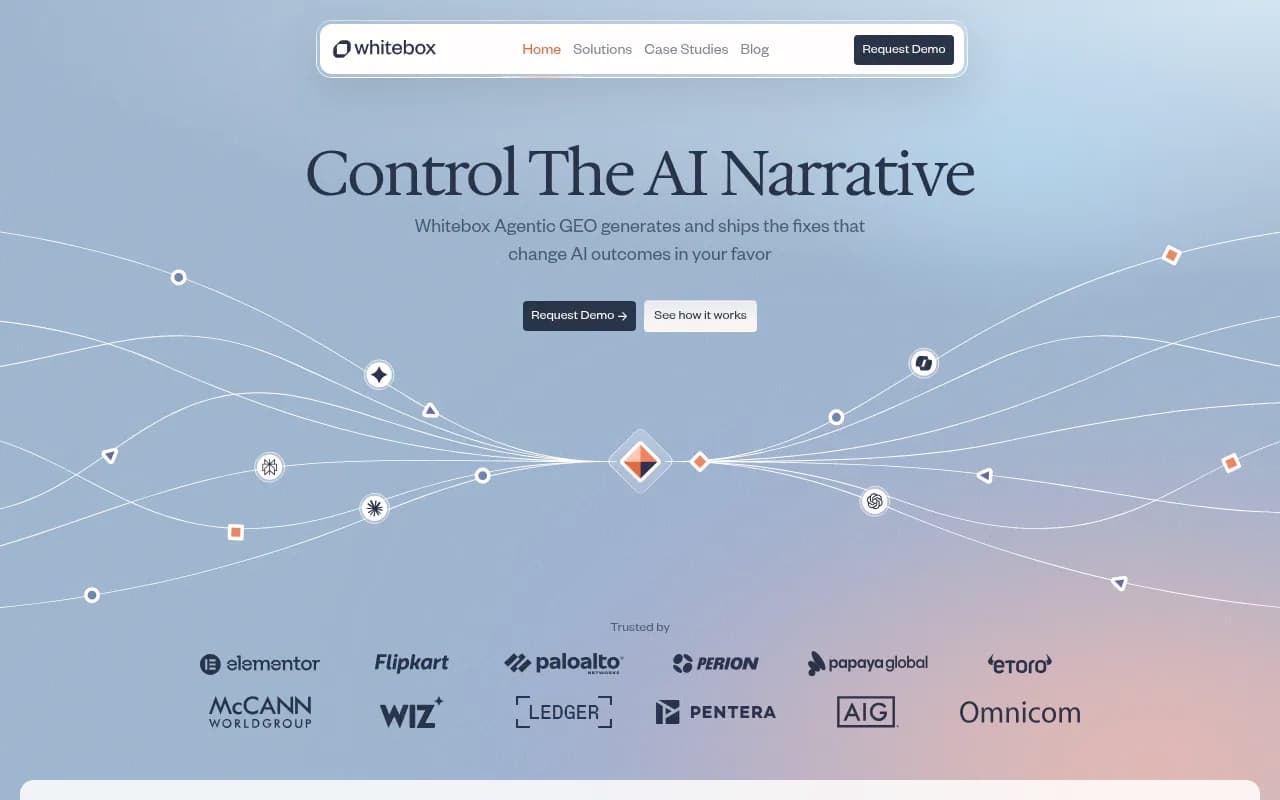
Whitebox markets itself as an "agentic GEO" platform that doesn't just track AI visibility but actively generates and implements fixes to improve how AI systems interpret your brand. The platform targets enterprise clients -- their customer list includes Palo Alto Networks, Flipkart, eToro, Wiz, and Ledger. Instead of self-service dashboards, Whitebox emphasizes strategic consulting and automated optimization. Pricing is custom only, with no public tiers.
The core pitch: "We generate the fixes" that change AI outcomes in your favor. This positions Whitebox as a managed service that handles optimization for you, rather than a tool you operate yourself.
LLMrefs
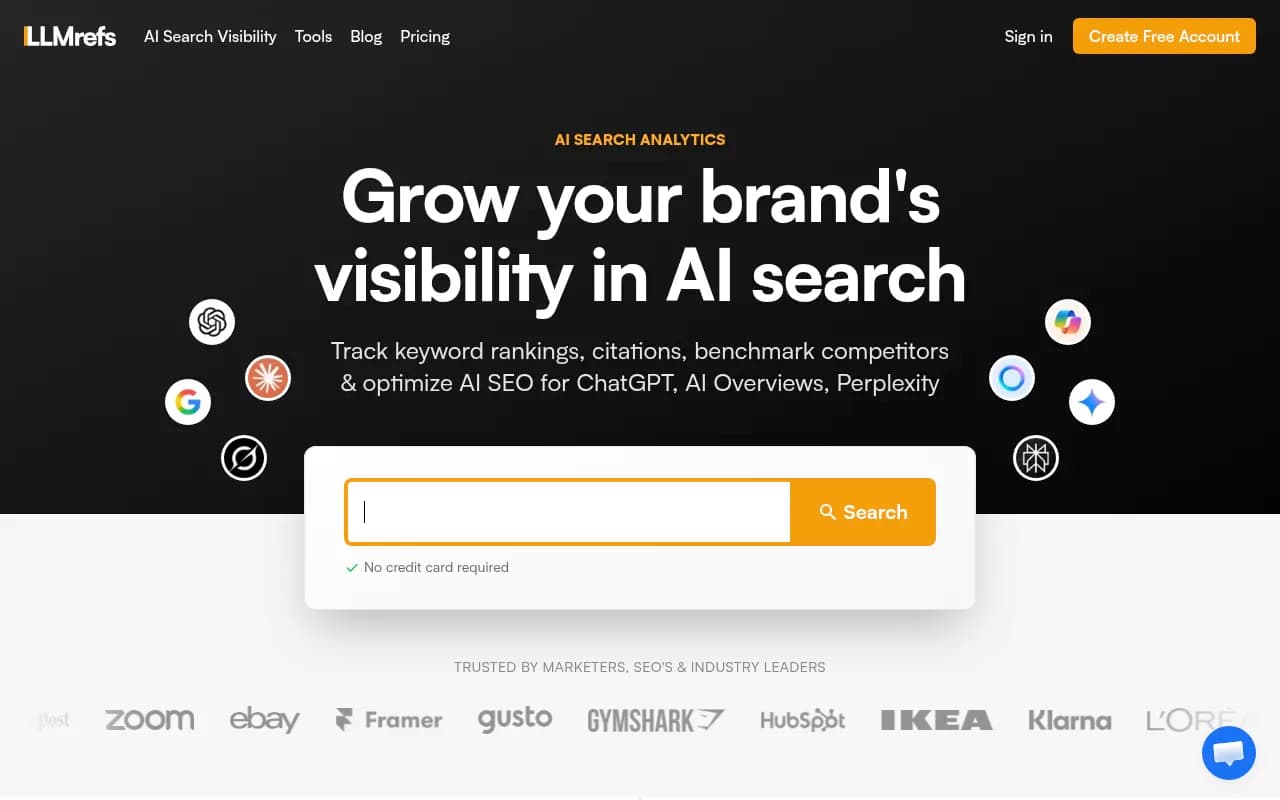
LLMrefs is a self-service AI search analytics platform built for SEO teams and agencies. It tracks keyword rankings, citations, and brand visibility across ChatGPT, Google AI Overviews, Perplexity, Claude, Gemini, and other generative answer engines. The platform automatically generates prompt variations from real conversations, benchmarks competitors, and provides citation analysis.
Pricing starts at $79/mo with transparent tiers. LLMrefs emphasizes data and insights -- you get the tracking and analytics, then decide what to optimize. The customer base includes eBay, HubSpot, Shopify, NVIDIA, and Screaming Frog, spanning enterprise to mid-market.
Side-by-side comparison
| Feature | Whitebox | LLMrefs |
|---|---|---|
| Starting price | Custom (enterprise only) | $79/mo |
| Free trial | Demo required | Available |
| Pricing transparency | None (request quote) | Public tiers |
| Target market | Enterprise brands | SEO teams, agencies, all sizes |
| Service model | Managed/consulting-heavy | Self-service platform |
| Keyword tracking | Not emphasized | Core feature |
| Citation analysis | Yes (via "See the Truth") | Yes (detailed) |
| Competitor benchmarking | Yes | Yes |
| Automated optimization | Yes ("agentic" fixes) | No (manual) |
| LLM coverage | Major models (specific list unclear) | ChatGPT, AI Overviews, Perplexity, Claude, Gemini, Copilot, Meta AI, Grok |
| Prompt generation | Not mentioned | Automatic from real conversations |
| Onboarding | White-glove, demo required | Self-service, immediate access |
Pricing
This is where the two platforms diverge sharply.
| Plan | Whitebox | LLMrefs |
|---|---|---|
| Entry tier | Custom quote only | $79/mo |
| Mid tier | Custom quote | Likely $200-400/mo (typical for this category) |
| Enterprise | Custom quote | Custom pricing available |
| Free trial | No (demo call required) | Yes |
| Public pricing | No | Yes |
Whitebox doesn't publish any pricing. You have to request a demo and get a custom quote. Given their enterprise client roster and managed service positioning, expect pricing in the thousands per month -- likely $2,000-5,000+ based on comparable enterprise GEO platforms.
LLMrefs starts at $79/mo and scales up with transparent tiers. This makes it accessible to smaller teams and agencies, while still serving enterprise clients who want self-service tools.
Verdict: LLMrefs wins on pricing transparency and accessibility. Whitebox's custom-only model works if you're an enterprise with budget, but it's a non-starter for teams that need to see pricing before committing to a sales call.
Feature comparison
Tracking and visibility
Both platforms track how your brand appears across AI search engines, but they present the data differently.
Whitebox emphasizes "seeing the truth" -- understanding how AI systems interpret your brand and why they rank you where they do. The platform promises "scientific clarity" but doesn't detail specific tracking metrics on their website. The focus is less on raw data dashboards and more on strategic insights delivered through their team.
LLMrefs provides granular keyword tracking across 8+ LLMs. You can see:
- Which keywords trigger citations to your brand
- Your ranking position in AI responses
- Citation frequency and context
- Competitor visibility for the same keywords
- Prompt variations automatically generated from real user conversations
The LLMrefs approach gives you the raw data to make your own decisions. Whitebox filters insights through their consulting layer.
Verdict: LLMrefs for teams that want direct access to data. Whitebox for brands that prefer strategic interpretation over raw metrics.
Optimization and fixes
This is Whitebox's core differentiator.
Whitebox positions itself as "agentic GEO" that generates and ships fixes automatically. Their website promises to "influence outcomes strategically" and deliver solutions, not just reports. The implication: their team (or AI agents) identifies optimization opportunities and implements changes on your behalf.
The specifics are vague -- do they write content? Adjust your website? Manage third-party citations? The "agentic" framing suggests some level of automation, but the enterprise positioning implies human oversight.
LLMrefs doesn't offer optimization services. You get tracking, benchmarking, and citation analysis. What you do with that data is up to you. This is a pure analytics play -- they show you where you're invisible or underperforming, then you (or your content team) fix it.
Verdict: Whitebox if you want a managed service that handles optimization. LLMrefs if you have in-house resources and just need the data.
Worth noting: if you're looking for a platform that combines tracking with actionable content gap analysis and AI-powered content generation, Promptwatch bridges this gap by showing you exactly what's missing and helping you create content that ranks in AI search.

LLM coverage
Both platforms track major AI models, but the specific lists differ.
Whitebox doesn't publish a detailed model list on their website. Based on industry standards, they likely cover ChatGPT, Perplexity, Claude, and Google AI Overviews at minimum.
LLMrefs explicitly tracks:
- OpenAI ChatGPT
- Google AI Overviews
- Google AI Mode
- Perplexity AI
- Anthropic Claude
- Google Gemini
- Microsoft Copilot
- Meta AI
- xAI Grok
That's 9 models with clear branding on their homepage.
Verdict: LLMrefs for transparency on what you're actually tracking. Whitebox may cover the same models, but they don't make it clear upfront.
Competitor benchmarking
Both platforms offer competitor analysis, but with different approaches.
Whitebox includes competitor benchmarking as part of their "See the Truth" offering. The focus is on understanding why competitors rank better and what strategic moves will shift the landscape in your favor. This is delivered through their consulting layer.
LLMrefs provides direct competitor visibility data. You can see:
- Which competitors get cited for your target keywords
- Their citation frequency vs yours
- Keyword gaps where competitors appear but you don't
- Ranking position comparisons across models
The LLMrefs data is self-service -- you run the reports and interpret the results.
Verdict: Tie. Whitebox for strategic interpretation, LLMrefs for raw competitive data.
Keyword and prompt intelligence
This is where LLMrefs pulls ahead.
Whitebox doesn't emphasize keyword tracking or prompt analysis on their website. The focus is on brand-level visibility and strategic positioning, not granular keyword performance.
LLMrefs automatically generates prompt variations from real user conversations. This means you're not guessing which prompts to track -- the platform surfaces the actual questions people ask that trigger AI responses in your category. You can then track your visibility for each prompt variation across all models.
This is a huge advantage for SEO teams used to keyword research. You get the same workflow (find keywords, track rankings, optimize) but for AI search instead of Google.
Verdict: LLMrefs by a wide margin. Whitebox doesn't compete on this dimension.
Reporting and integrations
Neither platform publishes detailed integration lists, but the service models suggest different approaches.
Whitebox likely delivers custom reports through their managed service. Expect PDF decks, strategic presentations, and white-glove communication. Integrations probably exist for enterprise clients but aren't self-service.
LLMrefs is a dashboard-first platform. You log in, run queries, export data. Typical SaaS integrations (API access, CSV exports, potentially Slack/email alerts) are standard for this category, though LLMrefs doesn't detail them on their homepage.
Verdict: Depends on your workflow. Whitebox for presentation-ready insights, LLMrefs for self-service data access.
Pros and cons
Whitebox pros
- Managed service with strategic consulting included
- "Agentic" optimization that generates and implements fixes
- Enterprise-grade client roster (Palo Alto, Wiz, eToro)
- White-glove onboarding and support
- Focuses on outcomes, not just data
Whitebox cons
- No public pricing (custom quotes only)
- Requires demo call to access platform
- Not self-service -- you're dependent on their team
- Feature details are vague on website
- Overkill (and overpriced) for small teams
LLMrefs pros
- Transparent pricing starting at $79/mo
- Self-service platform with immediate access
- Granular keyword tracking across 9 LLMs
- Automatic prompt generation from real conversations
- Detailed citation and competitor analysis
- Serves all company sizes (not just enterprise)
LLMrefs cons
- No optimization services (tracking only)
- You need in-house resources to act on insights
- Less hand-holding than managed services
- May require learning curve for non-SEO teams
Who should pick which tool
Choose Whitebox if:
- You're an enterprise brand with $5,000+/mo budget for AI visibility
- You want a managed service that handles optimization for you
- You prefer strategic consulting over self-service dashboards
- You don't have in-house resources to act on tracking data
- You're willing to go through sales calls and custom onboarding
Choose LLMrefs if:
- You're an SEO team, agency, or mid-market brand
- You want transparent pricing and immediate access
- You have in-house content/SEO resources to implement optimizations
- You need granular keyword tracking and citation data
- You prefer self-service tools over managed services
- You want to track 9+ AI models with clear coverage
Choose neither if:
- You're just starting to think about AI visibility (try free tools first)
- You don't have budget for dedicated AI search tracking
- You're looking for a platform that combines tracking with content generation (consider Promptwatch instead)
Final verdict
LLMrefs and Whitebox serve different markets with different service models. This isn't a fair fight -- it's a choice between self-service analytics and managed optimization.
LLMrefs wins for most teams. The transparent pricing, self-service access, and granular tracking make it the practical choice for SEO teams and agencies that want to understand AI visibility and optimize it themselves. Starting at $79/mo, it's accessible to companies of all sizes.
Whitebox makes sense for enterprise brands that want AI visibility handled as a managed service. If you have the budget for custom pricing (likely $2,000-5,000+/mo) and prefer strategic consulting over DIY dashboards, Whitebox's "agentic GEO" approach could deliver results without requiring in-house expertise.
The real question: do you want data or do you want someone to optimize for you? LLMrefs gives you the data. Whitebox promises to do the work. Pick based on your resources and budget, not on which platform has better features -- they're solving different problems.