Key takeaways
- AI Overview tracking only matters if it ends in a ranked list of pages to create, rewrite or retire. A dashboard is not a plan.
- Promptwatch Data shows what Google cites right now: listicles, product pages, how-tos and a growing share of video and social. Match your formats to those slots.
- Sort every tracked prompt into one of four buckets (not cited, cited late, cited but off-message, cited well) and assign a different fix to each.
- Social platforms earn 12.2% of AI Overview citations but only 0.46% of ChatGPT's, so channel priorities differ by engine.
- Run the plan in 30-day loops: fix, re-measure, and feed what did not move back into the queue.
Why tracking alone stalls
I have seen this pattern a lot. A team buys a tracker, spends a week setting up prompts, and gets a pretty chart of visibility. Then nothing happens for two months because nobody owns the question "so what do we write on Monday?"
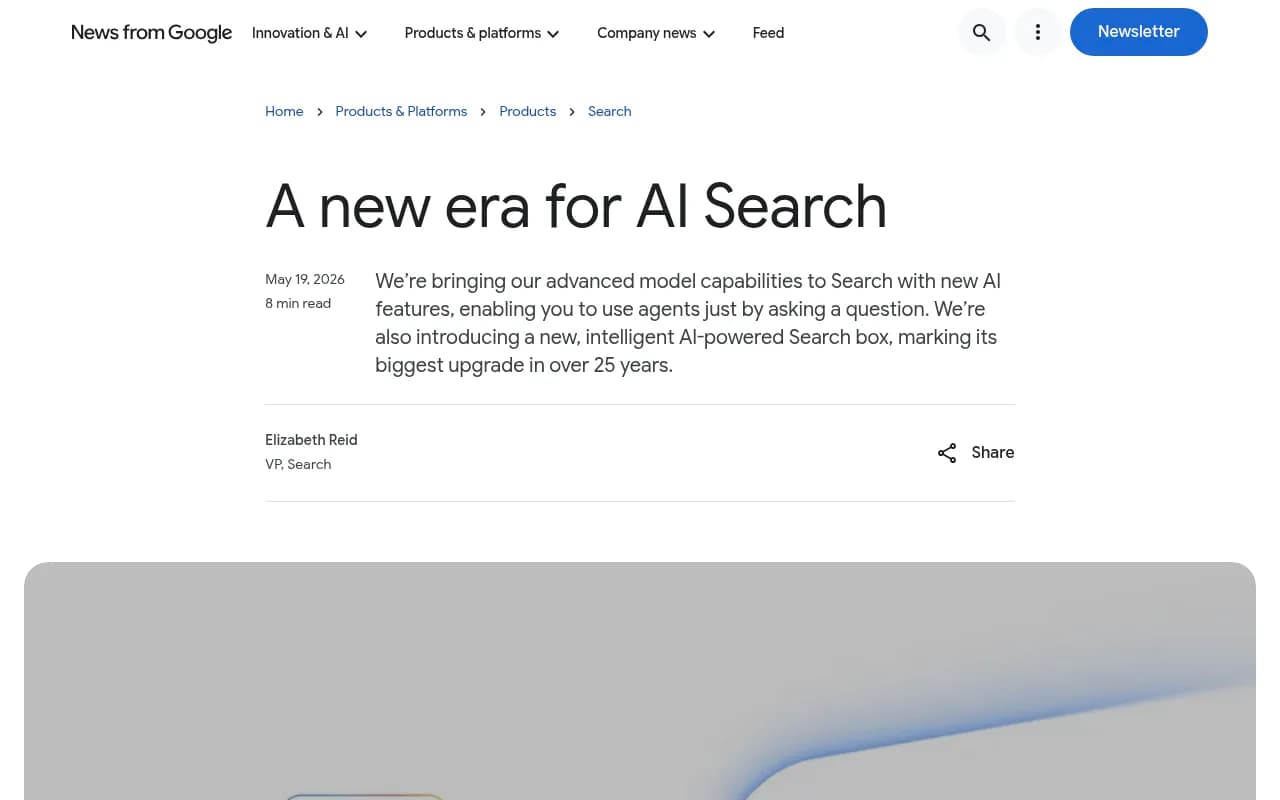
The data is not the hard part anymore. Google announced at I/O in May 2026 that it is merging AI Overviews more tightly into conversational AI Mode, letting users ask follow-ups straight from an Overview. The surface keeps changing, which is exactly why you want a repeatable process instead of a one-off audit.
A word on third-party numbers. You will see claims that AI Overviews now appear on roughly 48% of searches and cut position-one CTR by up to 61%. Those figures come from a single agency blog post (digitalapplied.com) that itself says "reportedly". Treat them as directional and measure your own query set in Search Console before you quote them to a boss.
Step 1: Build a query set worth acting on
Start narrow. A hundred queries you care about beat ten thousand you do not.
- Pull your top 100 queries by impressions and conversions from Search Console.
- Flag the ones with high impressions but clicks below what your average position predicts. That gap is often an AI Overview taking the click.
- Search the flagged queries manually, ideally from the right country, and note whether an Overview appears and who is cited.
- Add 30 to 50 queries you do not rank for but that buyers clearly ask, such as comparisons and "best X for Y" prompts.
That manual check is tedious, which is why most teams move to a tracker after the first pass. For a broader look at the options, the GEO software directory at bestgeosoftware.com lists dozens.
Step 2: Pick tracking that shows the why
There are two kinds of tools here. Monitors tell you whether you were mentioned. Platforms also show where AI found the content, what it read, and what to do next. For an action plan you need the second kind, or at least the first plus a lot of spreadsheet discipline.
| Tool type | Examples | Good for | Gap |
|---|---|---|---|
| Enterprise SEO suites | seoClarity, BrightEdge, Semrush | AI Overview presence next to classic rankings | Prompt sets are often fixed; little on crawler behavior |
| Pure AI visibility monitors | Otterly.AI, Peec AI, Rankscale | Cheap, quick share-of-voice tracking | Stop at "you were mentioned" |
| Media intelligence | Meltwater | Brand sentiment across news, social and AI | Not built for page-level content fixes |
| Optimization platforms | Promptwatch | Tracking plus gap analysis, content creation and traffic attribution | More to learn than a simple tracker |
Promptwatch is the one I would point to when the goal is the full loop. It tracks Google AI Overviews and AI Mode alongside ChatGPT, Perplexity and others, shows which of your pages get cited, and turns gaps into an Action Board of prioritized tasks. Its Content Agent can then draft and publish against those gaps.

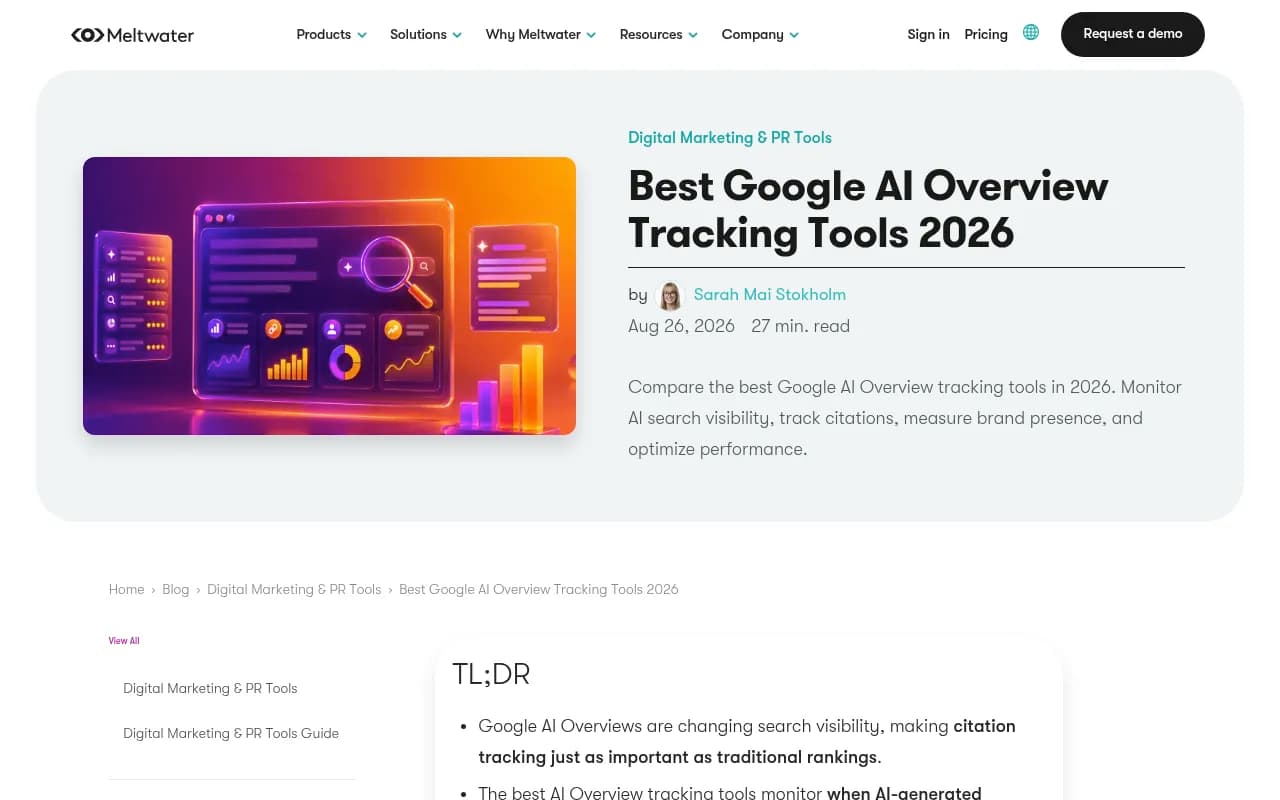
If you already live in an SEO suite, check what it offers first. Semrush and seoClarity both track AI Overview presence, and Meltwater's comparison of tracking tools is a decent starting read.

Step 3: Sort every prompt into a bucket
This is the step that turns data into work. For each tracked query or prompt, answer two questions: does an Overview appear, and are you cited? Then place it in one of four buckets.
| Bucket | What you see | Likely cause | Fix |
|---|---|---|---|
| Not cited | Overview exists, competitors are cited, you are absent | Content gap or wrong format | Create or restructure a page |
| Cited late | You appear, but far down the source list | Thin or generic content | Add original data, answer-first sections |
| Cited but off-message | Your page is cited, the summary misstates you | Outdated or vague copy | Refresh facts, tighten positioning |
| Cited well | Strong placement and accurate summary | Working | Protect, refresh on schedule |
Most of the effort lands in the first bucket, and that is where format choice matters most.
Step 4: Match the format to what Google is citing
Promptwatch Data covers this directly. In its AI Overviews citation types report for July 2026, the average daily share of citations looked like this:
| Content type | Share of AI Overview citations (Jul 2026) |
|---|---|
| Listicle | 18.0% |
| Product page | 16.3% |
| How-to | 15.1% |
| News article | 13.5% |
| Video | 5.9% |
| Social post | 5.1% |
| Landing page | 4.7% |
| Comparison | 3.6% |
Two trends in that report matter for planning. Listicles lost the top spot for the first time: from July 28, product pages were the most cited format every day, ending the month at 17.9% against 16.2% for listicles. Listicles averaged about 26% in Q1 2026, so that is a real slide. Meanwhile product pages roughly doubled from about 9% in January, and video grew from about 2.7% to over 6%.
What I would do with that:
- Give product and service pages the same care as blog posts. Structured specs, clear pricing and fresh availability data.
- Keep your list-style content, but stop relying on it alone.
- If you have no video assets, you are not competing for a slice that is still growing.
The same report notes ChatGPT shows a similar shift toward brand-owned commercial pages, and Promptwatch's content type data for ChatGPT puts product pages at 22.4% of citations (Sep 28 to Oct 4, 2026). So one commercial-page upgrade helps in two places.
Step 5: Decide your off-site channels per engine
Not every engine cites the same places. According to Promptwatch's social citations data for Sep 28 to Oct 4, 2026:
- Google AI Overviews: 12.2% of citations come from social platforms. YouTube 4.28%, Facebook 2.38%, Reddit 2.15%, Instagram 1.61%, LinkedIn 1.55%.
- ChatGPT: all seven social platforms combined are 0.46%. Reddit fell from 5.19% to 0.09% in that report.
- Perplexity: 2.7%, split between LinkedIn and Reddit at 0.86% each.
The practical read: if your buyers search on Google, YouTube comes first, then complete, active Facebook pages and Instagram profiles. Do not count on Reddit threads to get you into ChatGPT. This also matches the Reddit citation decline Promptwatch documented, where reddit.com fell from roughly 4% to 0.5% of ChatGPT citations on August 14, 2026.
Step 6: Fix the pages
Now the actual writing. The research notes from several practitioner guides agree on a handful of patterns, and they are boring in a good way.
Structure for extraction
Lead sections with the answer, then explain. Break dense information into bullets and put comparisons in tables. One agency reported pages restructured with answer-first paragraphs picked up citations faster than narrative-style pages, though that is anecdotal and from their own client sites.
Add proof Google can trust
Use author markup with jobTitle and worksFor, and add original numbers, screenshots or first-party data that a competitor cannot copy. Original data is the single easiest way to move a page from "cited late" to "cited well".
Be careful with the depth claims
One guide says pages above 20,000 characters average about 10 citations versus 2.4 for pages under 500. That is correlation, and long pages are also the ones with more topics to be cited for. Do not pad. Cover the question completely, then stop.
Use tools where they save real time
For briefs and on-page scoring, content optimization tools like Surfer SEO or Clearscope fit the rewrite stage. For gap-to-draft workflows that are tied to citation data, Promptwatch's content gap analysis and Content Refresh are built for it.

Step 7: Check the technical layer
A page cannot be cited if it cannot be read. Run a crawl for broken links, orphaned pages and pages missing from the sitemap, and confirm AI crawlers are not blocked. Screaming Frog and Sitebulb handle the general audit.
Crawler logs are the missing piece for most teams. Promptwatch's AI crawler traffic data shows how much verified bot traffic is hitting sites from OpenAI, Anthropic, Google, Perplexity and Mistral, and checking your own logs tells you whether those bots reach the pages you just rewrote.
Step 8: Prioritize with a simple score
You will end up with more fixes than hours. Score each one:
| Factor | Question | Scale |
|---|---|---|
| Demand | Is the prompt or query high volume? | 1-5 |
| Business value | Does it lead to a sale or sign-up? | 1-5 |
| Gap size | How far behind are you? | 1-5 |
| Effort | How many hours to fix? | 1-5 (inverted) |
Multiply the first three, divide by effort, and sort. Do the top ten. Anything with high value and low effort goes first, even if it is unglamorous, like updating a product page that Google already cites but summarizes wrongly.
Step 9: Measure business impact, not just citations
Citations are a leading indicator. Conversions are the point. Track conversion rate and revenue per session next to raw traffic, because AI-referred visitors are fewer but often more qualified. One strategy guide claims they convert at 23x standard search visitors. I would not repeat that number, but Promptwatch's customer Crisp reported 2x higher conversion from AI traffic than traditional channels, which is the kind of result worth testing for yourself.
Visitor analytics, GA4 segments or an attribution tool can all do this. The key is tagging AI referrals so they do not vanish into "direct".
A 30-day loop you can run
| Week | Task |
|---|---|
| 1 | Audit top 100 queries, record Overview presence and citations, sort into four buckets |
| 2 | Score and pick the top 10 fixes; brief them |
| 3 | Publish rewrites and new pages; fix technical blockers |
| 4 | Re-check citations, crawl logs and traffic; move losers back into the queue |
Then start again. Expect some fixes to do nothing, and that is useful information. If a rewritten page still is not cited after a couple of crawl cycles, the problem is usually authority or format, not wording.
What I would do first
Pick twenty queries tied to revenue. Find the five where you rank on page one but are not cited in the Overview. Restructure those five pages with answer-first sections, a table and one original data point, then check them in two weeks. That is a small experiment, and it will tell you more than another month of dashboard watching.
For more tool options by category, the AI rank tracking directory at ai-rank-tools.com is a good place to compare trackers before you commit.