Key takeaways
- AI Overview "rank" is not a fixed position. You are tracking presence, citation, and share of voice across a query set, not a spot in a list.
- B2B SaaS teams should split their query set into four buckets: category, comparison, problem and how-to, and branded. Most teams over-index on the first and ignore the second.
- Tools that only check ChatGPT tell you little about AI Overviews. One vendor study found only 25.2% of AI Overview prompt-and-domain citation pairs were also cited by ChatGPT.
- Pick a tool by team shape: a rank tracker add-on if you already live in one, a dedicated AI visibility platform if you need to fix gaps, and an agency-grade tool if you run many clients.
- Check every pricing figure on the vendor's own page. Most published comparisons are written by vendors who rank themselves first.
What AI Overview rank tracking actually means
Google AI Overviews sit above the blue links and stitch an answer together from several sources, with citations attached. There is no position 1 to defend in the old sense. You might be cited for a query on one device and left out on another, a few minutes later.
So the questions change. Instead of "Where do I rank?", you ask:
- Does this query trigger an AI Overview at all?
- If it does, is my domain cited, and which URL?
- Who else is cited, and are they competitors?
- Is that changing over time?
Google Search Console does not break out AI Overview mentions at the URL level, which is why dedicated trackers exist. Google describes the feature as a customized Gemini model working alongside its ranking systems and Knowledge Graph, but that tells you how it is built, not whether you appear.
One honest limit: AI presence is not deterministic. Treat any single snapshot as a sample. Trends over weeks matter. A single day does not.
Why B2B SaaS needs its own approach
Consumer brands can get away with tracking a few hundred head terms. B2B SaaS buyers research differently. They compare vendors, ask integration questions, look for pricing signals, and read review sites before they ever talk to sales. Bain reported that 44% of surveyed US online buyers mostly begin their journey in an LLM or split it between AI tools and traditional search (cited in SearchEye's October 2026 roundup). Take that as directional, since the source is a vendor roundup quoting a survey, but it matches what most SaaS marketing teams are seeing in their own analytics.
The practical consequence is that the shortlist is often written before a visitor reaches your site. If an AI Overview names three competitors for "best [category] software" and not you, no amount of landing page polish fixes that.
Which queries to monitor
Start from buyer intent, not from your keyword export. A workable B2B SaaS query set has four buckets.
1. Category and "best of" queries
These are the queries like "best project management software for agencies" or "customer onboarding tools." They are high stakes because they build the shortlist. They are also the queries where review sites and listicles tend to win. Promptwatch Data's October 2026 software report (ChatGPT, not AI Overviews) found that G2, Gartner, Capterra and Software Advice together earned 1.57% of software citations, more than any single vendor. Expect similar pressure in AI Overviews and plan to be mentioned on those third-party pages, not only on your own.
2. Comparison and alternative queries
"X vs Y" and "X alternatives" queries are where late-stage buyers live. Track your own brand against your top three to five competitors, in both directions. Also track "[competitor] alternatives", since that is a query you can win with a well-built page.
3. Problem and how-to queries
"How to reduce churn in a subscription product" or "how to set up SSO" queries trigger AI Overviews often and are where documentation and educational content get cited. Promptwatch Data's July 2026 report on AI Overview citation types shows how-to content at about 15.1% of citations, close behind listicles at 18.0% and product pages at 16.3%. For SaaS, this bucket is where your docs, help center and blog earn their keep.
4. Branded and branded-plus queries
"[Your brand] pricing," "[your brand] review," "[your brand] integrations." These are cheap to track and tell you what Google says about you when someone is already interested. Mis-stated pricing in an AI Overview is a real problem and you will only see it if you look.
How many queries is enough
For a mid-size SaaS company, 50 to 150 well-chosen queries beat 1,000 sloppy ones. A reasonable split is around 30% category, 25% comparison, 30% problem and how-to, and 15% branded. Tag each query by funnel stage and by product line so you can slice results later. Rerun the selection quarterly, because AI Overview triggers shift.
I could not find a first-party figure for how often B2B SaaS queries trigger AI Overviews, and I would be skeptical of any tool vendor quoting one without a method. Your own tracker will tell you the trigger rate for your set. That number is the most useful baseline you can get.
What the citation data says right now
Promptwatch Data's Google AI Overview citation share report for June 2026 (May 31 to Jun 26, month to date) has a few findings worth building a plan around:
- YouTube reached 4.16% of all AI Overview citations, Reddit 2.72%, and google.com 2.30%. All three were 2026 highs.
- Google's own properties (YouTube plus google.com) account for about 6.5% of AI Overview sources.
- google.com's share rose from 0.37% in January to 2.30% in June.
The report itself flags that a partial month can overstate momentum, and it is now several months old, so use it as a direction and not a benchmark. The takeaways still hold. Audit which of your target queries now cite Google surfaces, mine the cited Reddit threads for content ideas, and treat YouTube as a real asset for SaaS tutorials and product walkthroughs.
Format matters too. In Promptwatch Data's July 2026 AI Overview citation types report, product pages overtook listicles as the most cited format from July 28, finishing the month at 17.9% against 16.2%. Product pages were roughly 9% in January and have nearly doubled. For SaaS, that is a nudge to make product, feature and integration pages genuinely informative rather than thin sales copy.
What to measure
A good tracker reports more than "visible: yes/no." These are the metrics worth setting up on day one.
| Metric | What it tells you | What to do when it is bad |
|---|---|---|
| AI Overview trigger rate | Share of your tracked queries that show an AI Overview | Prioritize the buckets where it is high |
| Citation presence | Whether your domain is cited at all | Look at who is cited and why |
| Cited URL | Which of your pages gets used | Improve or create the page that should be cited |
| Citation position | Where you sit in the source list | Tighten answers and structure on the cited page |
| Share of voice | Your citations vs competitors across the set | Focus on comparison and category buckets |
| Country and device | Whether results vary by market | Track each market you sell in |
| Snapshot history | Evidence of what Google actually displayed | Use it to separate real change from noise |
Note that many tools only record whether a citation is present, not its position. If position matters to you, check that before you buy. Also ask whether the tool stores timestamped snapshots of the actual result. Without that you are trusting a score you cannot audit.
Tool options by team shape
The market is crowded and most roundups are written by vendors. Here is how I would sort it by what you need, not by who ranks themselves first.
Rank trackers with AI Overview tracking built in
If your team already runs organic rank tracking, adding AI Overview data to the same tool is the lowest-friction route. It lets you see keyword rankings and AI Overview citations side by side.
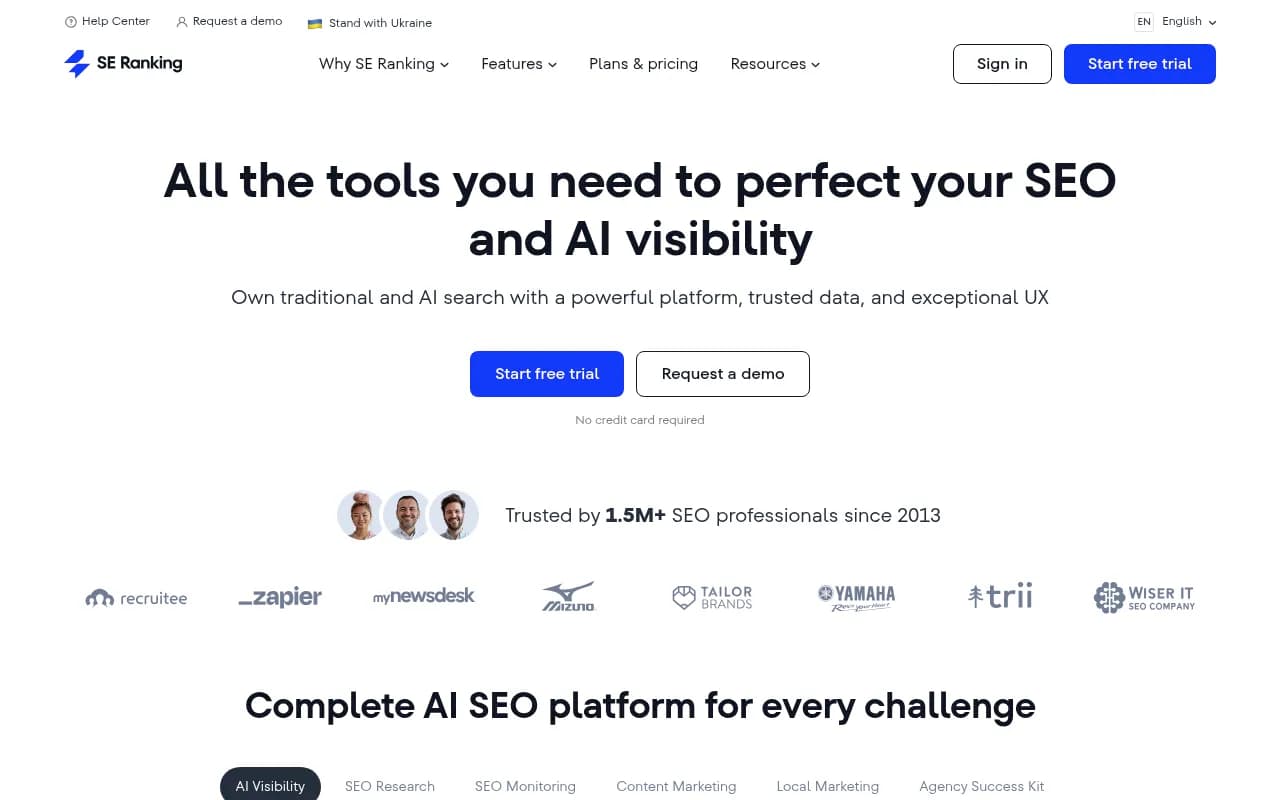
SE Ranking offers daily keyword monitoring showing which queries trigger AI Overviews and your position within the snapshot.
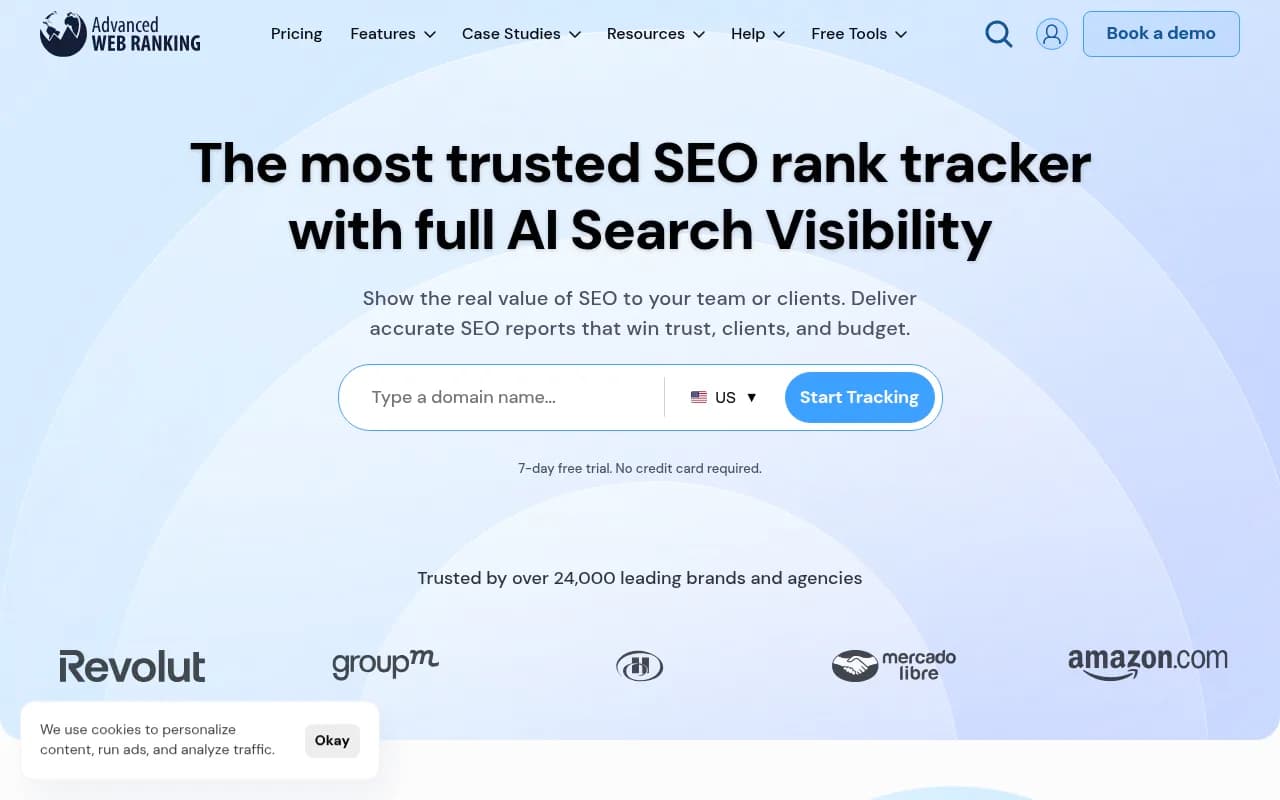
Advanced Web Ranking is a long-running SERP tracker that now covers AI search too, and it is a good fit for agencies because of its unlimited projects, users and history.
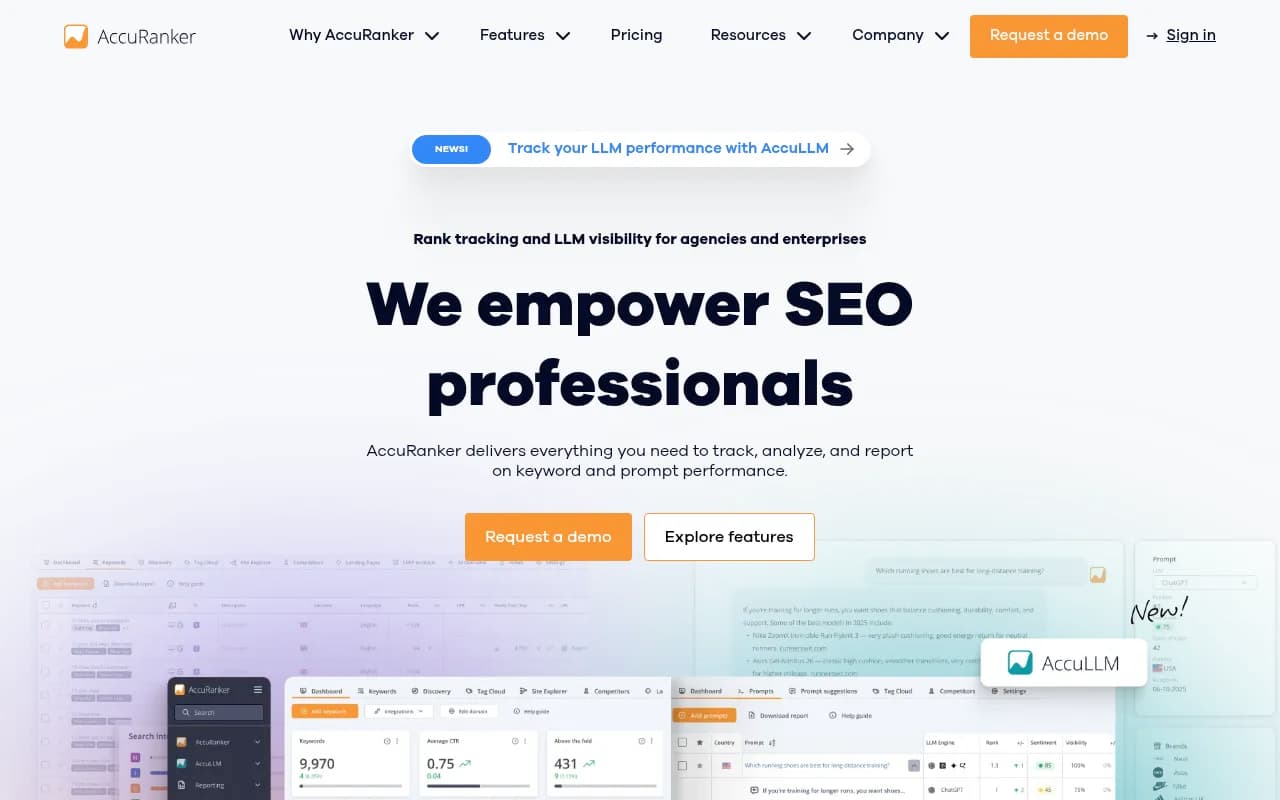
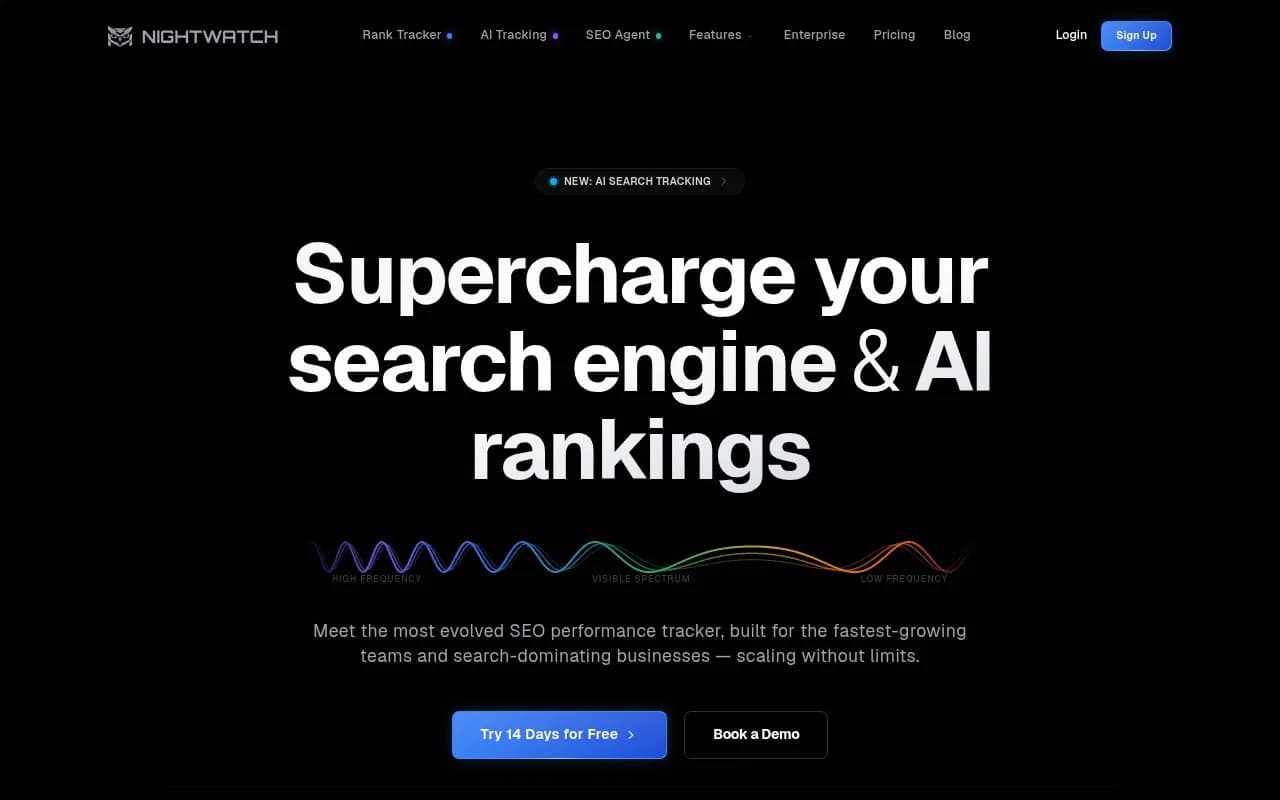
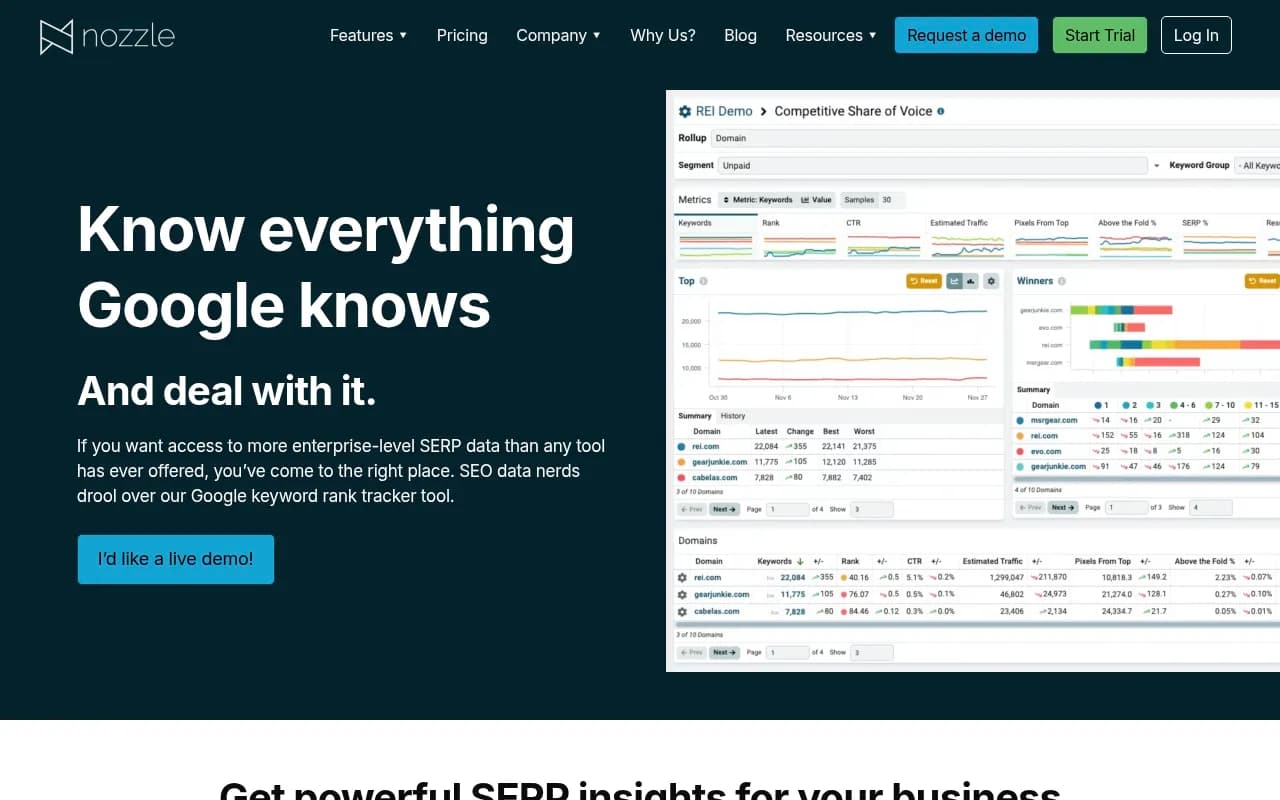
Other rank trackers with an AI layer include AccuRanker, Nightwatch, Nozzle and ProRankTracker. ProRankTracker combines AI answer monitoring with organic, local, maps and video rankings and has strong white-label reporting, but it uses usage-based units that can make AI costs hard to predict, and it is less specialized for closing citation gaps.
Dedicated AI visibility platforms
These track AI Overviews alongside ChatGPT, Perplexity, Gemini and others, and are the better choice when you want to know why you are missing and what to fix.
Promptwatch tracks the real interfaces of Google AI Overviews and AI Mode, along with ChatGPT, Perplexity, Gemini and others, by country and language. It also goes past monitoring: content gap analysis, IP-verified AI crawler logs, and an Action Board of prioritized fixes mean you can move from "we are not cited" to a published page and then check whether it worked. Local and state or city tracking sits on the Business plan, and plans start at $95 a month, so confirm current pricing at promptwatch.com/pricing.

Profound is the usual pick for enterprise analytics, crawler analytics and attribution, with a steeper learning curve and a higher price at the top end.

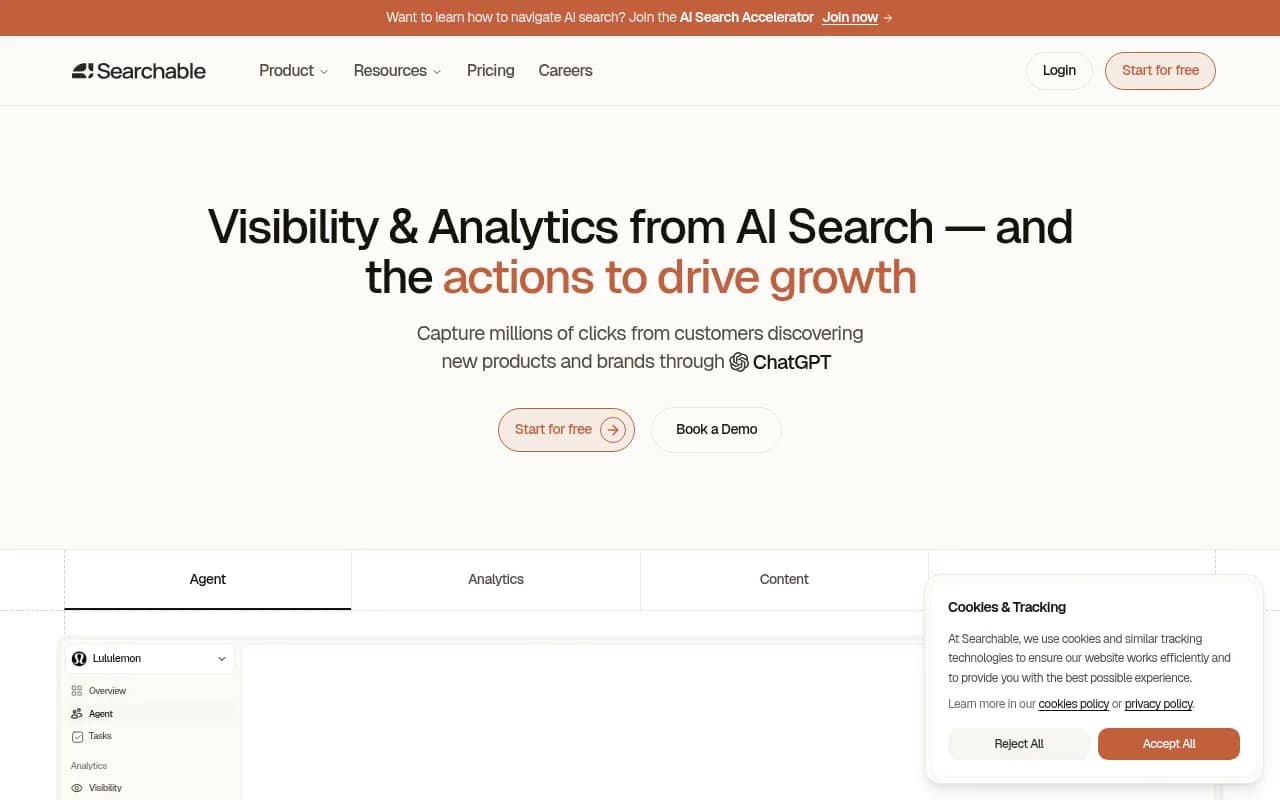
Searchable tracks AI Overviews with ChatGPT, Perplexity and others, and shows mention versus citation, position and how engines describe you.
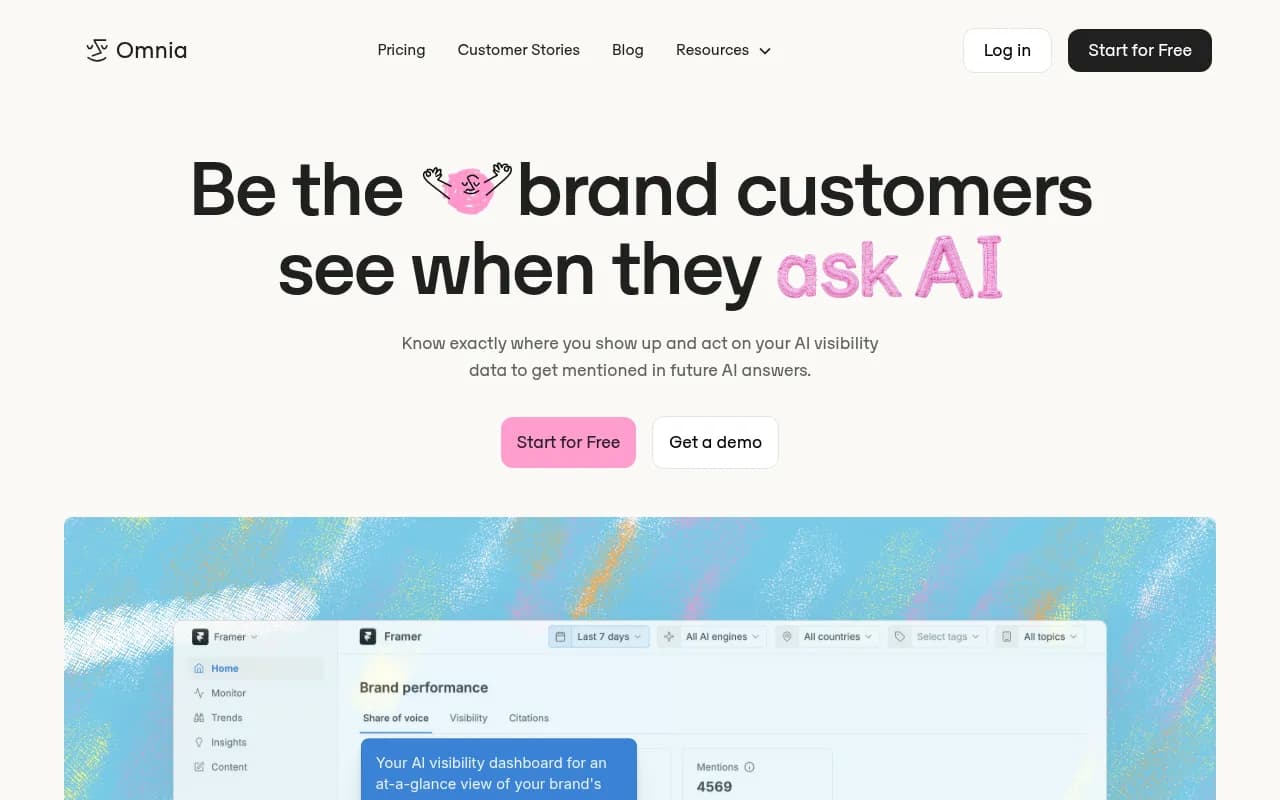
Omnia leans on auditable evidence: archived SERPs, URL-level citations, presence by country, and turning citation data into content tasks.
Peec AI has strong source-level analytics and competitor comparisons, though pricing is not published.

OtterlyAI has a low $29 entry plan with daily monitoring, but the Lite tier covers only 15 prompts and extra engines cost more.

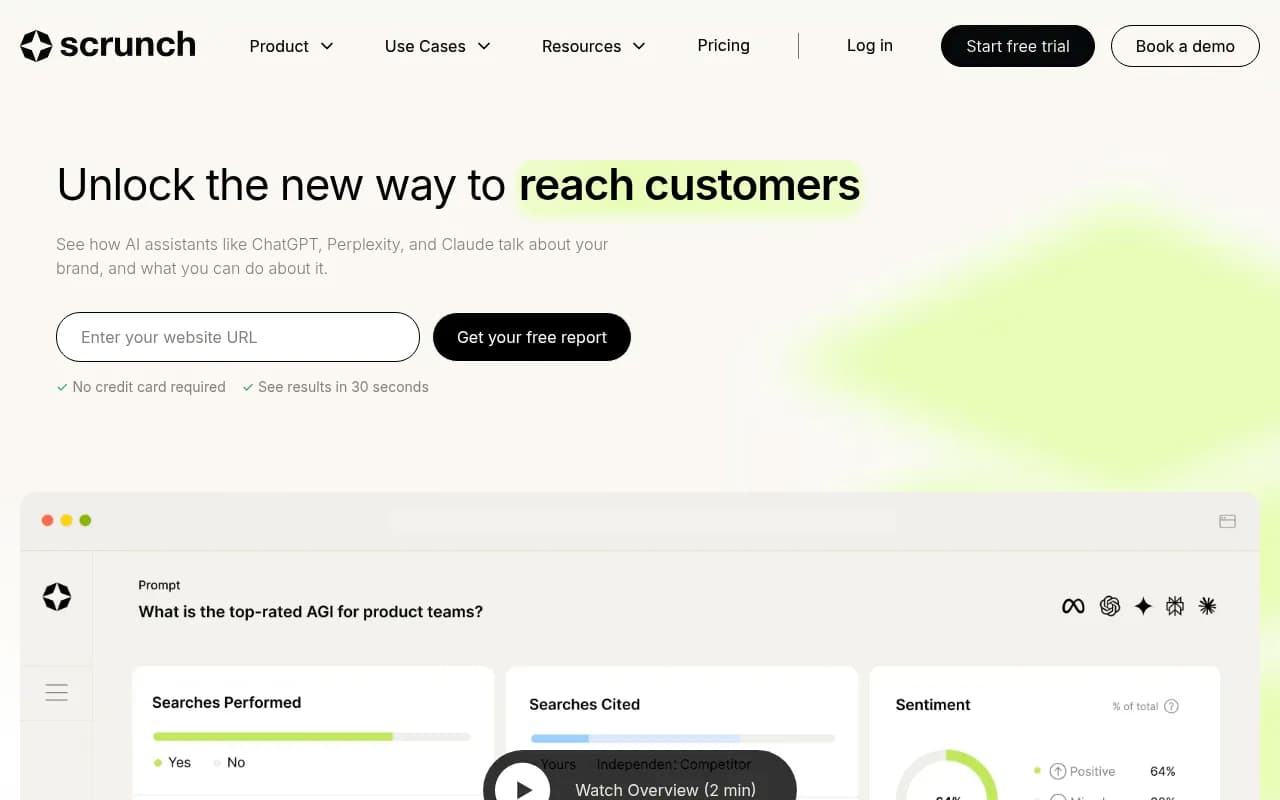
Scrunch suits CX-led SaaS teams, with strong crawler observability and agent-facing delivery, though paid pricing is not published.
For a wider list, the GEO software directory at bestgeosoftware.com and the AI rank tracker directory at ai-rank-tools.com cover many more options.
Budget and agency picks
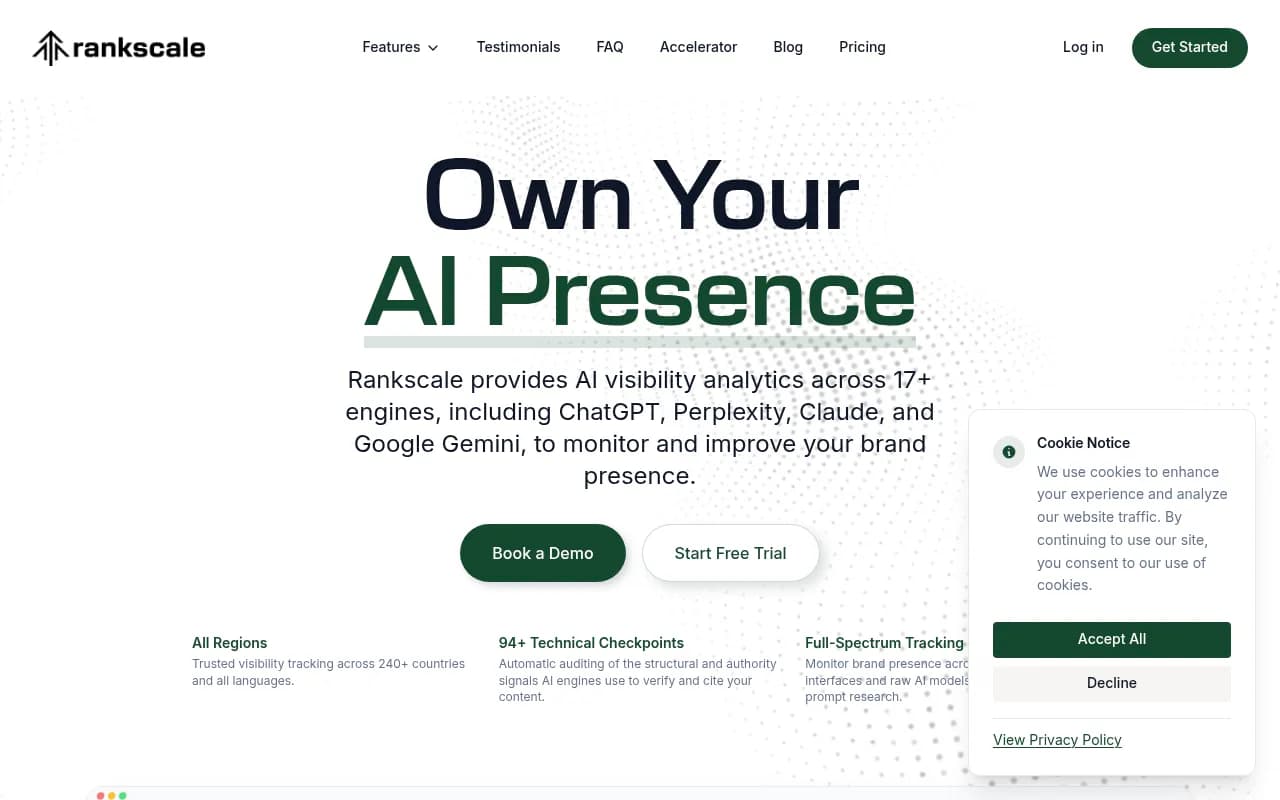
Rankscale AI is credit-based and aimed at budget-conscious agencies and SMBs, with daily AI Overview tracking, visibility scores and white-label reporting.
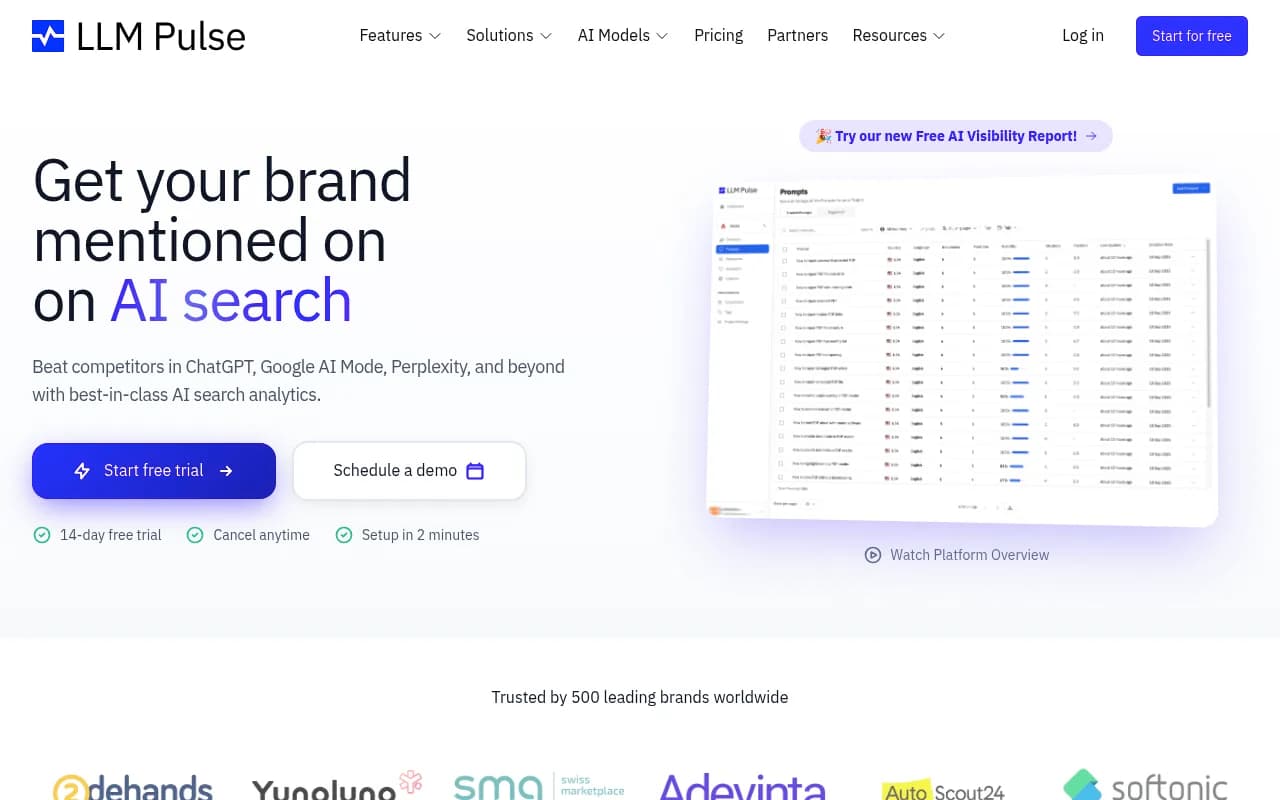
LLM Pulse tracks ChatGPT, Perplexity, Gemini, AI Mode and AI Overviews and starts at EUR 49 a month, according to its own FAQ.
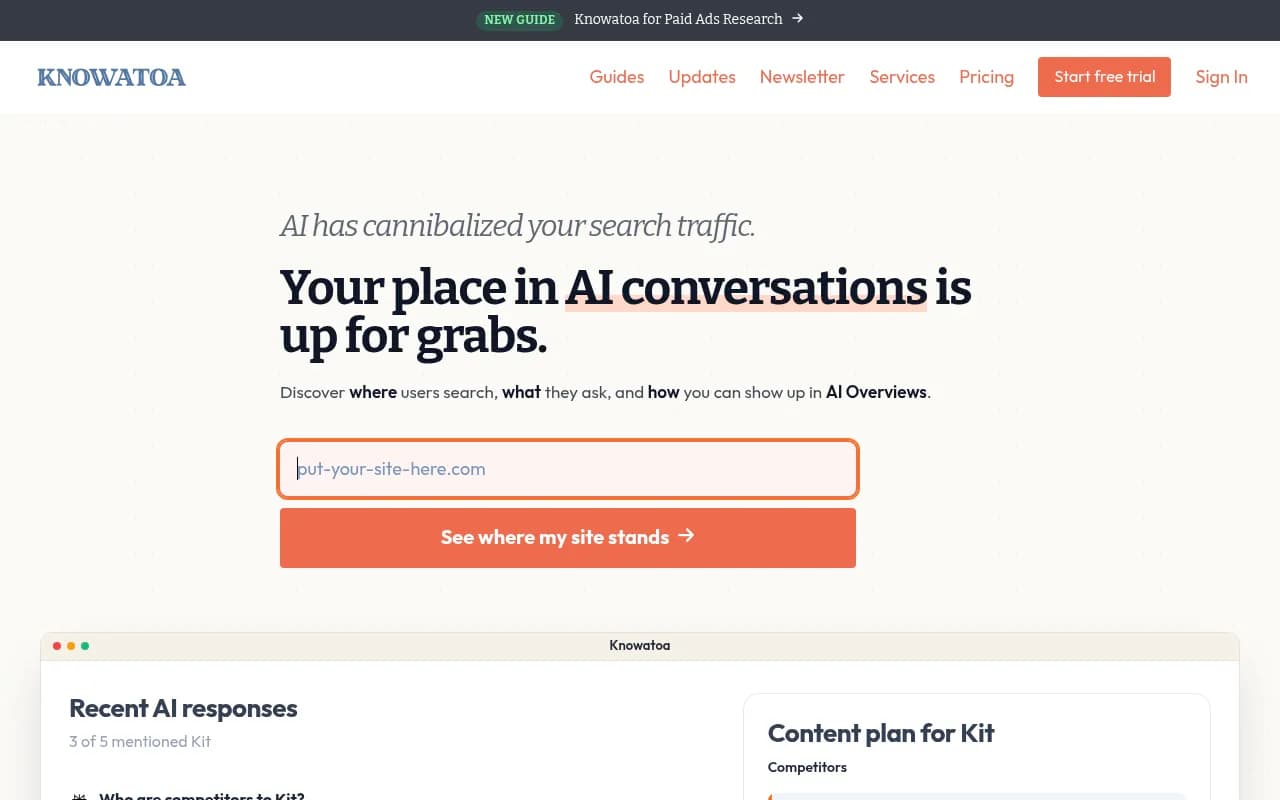
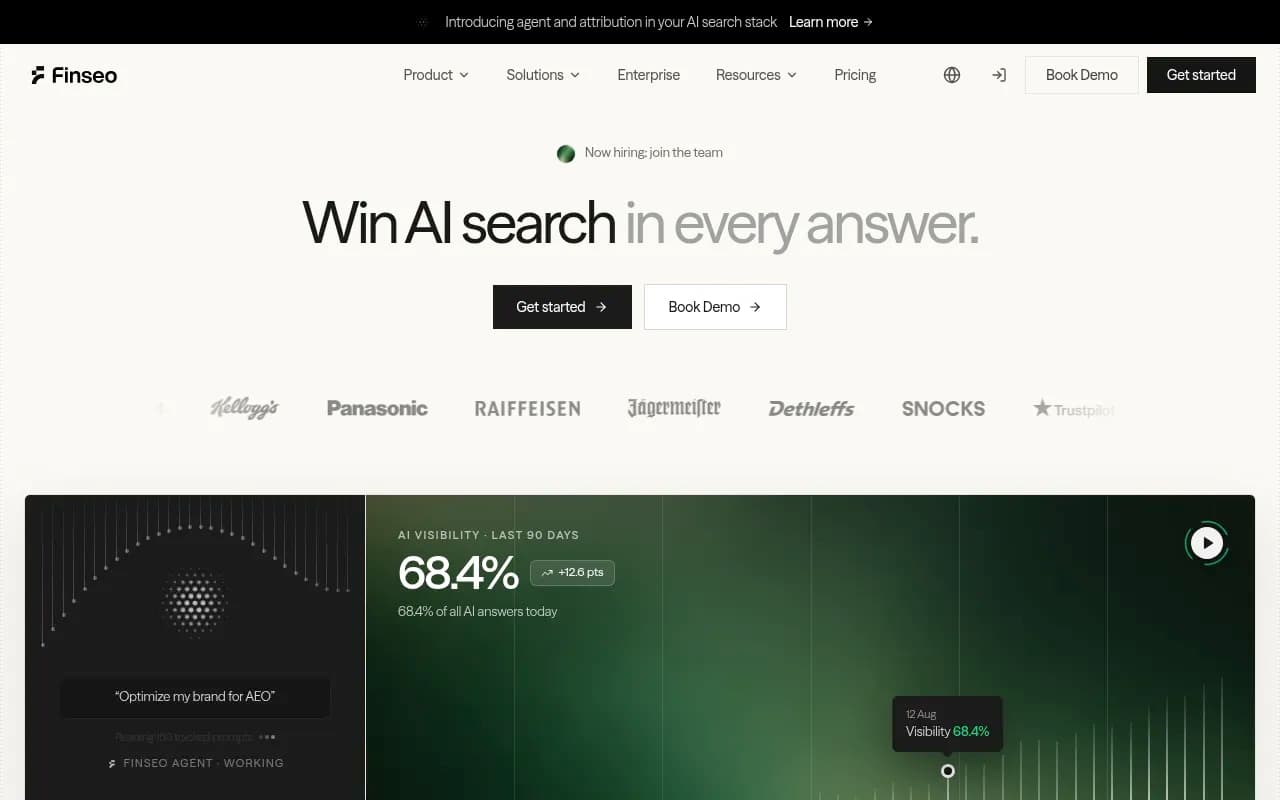
Knowatoa and Finseo are narrower tools built around AI Overviews and AI Mode monitoring specifically.
Comparison at a glance
| Tool | Type | AI Overviews | Best for | Watch out for |
|---|---|---|---|---|
| SE Ranking | Rank tracker plus AI | Yes, daily | Teams already on SE Ranking | Less depth on fixing gaps |
| Advanced Web Ranking | Rank tracker plus AI | Yes | Agencies, many projects | Reporting-heavy, not execution-led |
| Promptwatch | AI visibility and optimization | Yes, real UI | SaaS teams that want to fix gaps | More than a pure tracker, so check plan fit |
| Profound | Enterprise AI visibility | Yes | Large teams needing attribution | Cost and learning curve |
| Searchable | AI visibility | Yes | Multi-engine tracking | Verify position data |
| Omnia | AI visibility | Yes, with SERP evidence | Teams that need auditable proof | Confirm plan limits |
| OtterlyAI | Low-cost tracker | Yes | Small teams, tight budgets | 15 prompts on Lite |
| Rankscale AI | Credit-based tracker | Yes, daily | Budget agencies | Credit usage planning |
How to choose
Run through these questions in order.
- Do you already pay for a rank tracker? Check its AI Overview module first. If it covers your markets and gives you cited URLs, you may be done.
- Do you need to fix gaps, or just report them? If fixing, favor a platform with content gap analysis and publishing workflows over a dashboard.
- How many markets and languages do you sell in? Make sure country-level tracking is included, not a surcharge.
- How many clients or product lines do you cover? Agency or multi-project pricing changes the math quickly.
- Can it show evidence? Timestamped snapshots and exact cited URLs save arguments with stakeholders.
- Does it track beyond Google? Buyers also use ChatGPT and Perplexity, and the sources differ. A tool limited to one engine misses half the picture.
A note on sources. Several of the roundups I read are published by vendors that put themselves first, and the SearchEye list is dated Oct 12, 2026. Their pricing is useful as a starting point and a poor substitute for the vendor's own page.
Setting up your tracking in a week
Day 1 to 2: build the query set
Pull queries from Search Console, sales call notes, your competitors' comparison pages and People Also Ask. Sort them into the four buckets. Cut anything that no buyer would plausibly type.
Day 3: configure markets and competitors
Set the countries and languages you sell in. Add three to five competitors, including the ones that only show up in comparison queries.
Day 4: baseline
Run a first full pass. Record trigger rate, citation rate and share of voice per bucket. Do not draw conclusions yet. One pass is a sample.
Day 5 to 7: find the first actions
Look for queries where an AI Overview appears and you are absent but a competitor is cited. Open the cited pages. Ask what they do that yours does not: a clearer definition, a table, a direct answer in the first paragraph, an up-to-date pricing section. Those are your first briefs.
Turning data into action
Tracking alone does not move anything. Three patterns come up for SaaS again and again.
- You are cited for how-to queries but not category queries. Build or strengthen comparison and "best for" pages, and pursue mentions on the review sites AI keeps citing.
- Your competitor is cited with a product page and you are not. Make your feature and integration pages substantive, with specifics and not slogans.
- Reddit or YouTube is cited and you have no presence there. Promptwatch Data's October 2026 social report shows AI Overviews drew 12.2% of citations from social platforms (Sep 28 to Oct 4), while ChatGPT drew only 0.46%. If AI Overviews matter to you, social is worth your time in a way it is not for ChatGPT.
For help judging whether a gap is a content problem or a crawlability problem, look at AI crawler logs and a site audit before you rewrite anything. A page that bots cannot read will not get cited however good it is.
If you would rather hand this to specialists, 1001 SEO Media runs SEO and generative engine optimization work for SaaS brands, but the setup above is doable in-house with the right tool.
Common mistakes
- Tracking only branded queries. It feels good and tells you almost nothing about demand capture.
- Treating a visibility score as truth. Scores are modeled. Ask to see the underlying snapshot.
- Ignoring variance. Check the same query across days before declaring a win or a loss.
- Using ChatGPT data to represent AI Overviews. The citation overlap is low, so they need separate measurement.
- Skipping the revenue link. Connect AI-referred traffic to signups or pipeline where you can, even roughly, or the program will be cut at the next budget review.
Bottom line
Pick 50 to 150 queries across category, comparison, problem and branded buckets. Track trigger rate, citations and share of voice by country, and keep snapshots so you can verify results. If you already own a rank tracker, test its AI Overview module first. If you need to find and fix gaps across Google and other AI engines, a dedicated platform will save you time. Whichever you choose, confirm pricing on the vendor's page and run a trial on your own query set before committing.