Key takeaways
- No tool we found has evidence that its output gets cited more often by ChatGPT. Citations track content type, format and freshness, not which AI wrote the draft.
- Product pages (22.4%), landing pages (16.8%) and listicles (13.6%) earn the biggest shares of ChatGPT citations, per Promptwatch Data for Sep 28 to Oct 4, 2026.
- Comparisons, docs and landing pages stay cited longest. News-style posts decay fastest, with half gone after 36 days.
- Pick an AI writer for how well it handles research, structure and your brand facts, then measure real citations with a tracking tool.
- Roughly half of new web articles are now primarily AI-generated, so being AI-written is not a differentiator either way.
The honest answer first
The question sounds simple: which AI writer gets you cited by ChatGPT? I looked for evidence that any specific tool does, and I did not find it. No head-to-head study shows Jasper beating Claude, or Byword beating Writesonic, on citation rate.
What the data does show is that ChatGPT cites by content type and format. A tool matters only to the extent that it helps you produce the right type of page, with accurate facts, and keep it current.
So this guide is structured differently from a typical roundup. First, what ChatGPT cites. Then, which kinds of AI writers suit which job. Then how to check whether any of it worked.
What ChatGPT actually cites
Promptwatch Data's report on content types ChatGPT cites covers Sep 28 to Oct 4, 2026. Here is the share of classified ChatGPT citations by type:
| Content type | Share of ChatGPT citations |
|---|---|
| Product pages | 22.4% |
| Landing pages | 16.8% |
| Listicles | 13.6% |
| How-to guides | 8.7% |
| Documentation | 7.5% |
| General articles | 6.1% |
| Comparisons | 5.9% |
| News | 5.7% |
| FAQ pages | 3.3% |
| Reviews | 1.7% |
Two things stand out. Product and landing pages together make up 39% of citations, so the pages most writers treat as an afterthought are the ones ChatGPT leans on. And listicles, how-tos and comparisons together earn 28%, which is the territory where an AI writer can actually help you at volume.
It shifts by prompt type
For commercial prompts, product pages (26.0%), landing pages (20.6%), listicles (15.0%) and comparisons (7.9%) make up almost 70% of citations. For informational prompts, how-tos climb to 10.7% and docs to 8.5%. For branded prompts, reviews reach 5.6%, more than three times their overall share, and FAQ pages hit 4.8%.
Practical meaning: if you want an AI writer to earn citations, aim it at comparison pages, best-of lists, step-by-step guides and FAQs, not generic 800-word blog filler.
Content shelf life matters as much as format
Promptwatch's content half-life study tracked pages ChatGPT cited on Jul 6, 2026 for 90 days.
| Content type | Still cited after 60 days |
|---|---|
| Landing pages | 69% |
| Docs | 67% |
| Comparisons | 63% |
| Listicles | 60% |
| Product pages, reviews, how-tos | 55% |
| News | 41% |
News pages lose half their citations within 36 days, and about a quarter are never cited again. If your AI writer is a daily news-style post machine, expect short bursts. Evergreen comparisons and listicles that you keep accurate last far longer.
This is the real lever for AI writers: they make it cheap to refresh. A tool that helps you update a comparison page every quarter probably beats one that cranks out new posts.
AI-written content is not a penalty or a plus
Graphite's research found that about 50% of new online articles are primarily AI-generated, and that the share has been flat since Q1 2025 (49.94% in Q1 2026). It used Common Crawl articles checked by Pangram, GPTZero and Copyleaks, each with false positive rates below 2%.
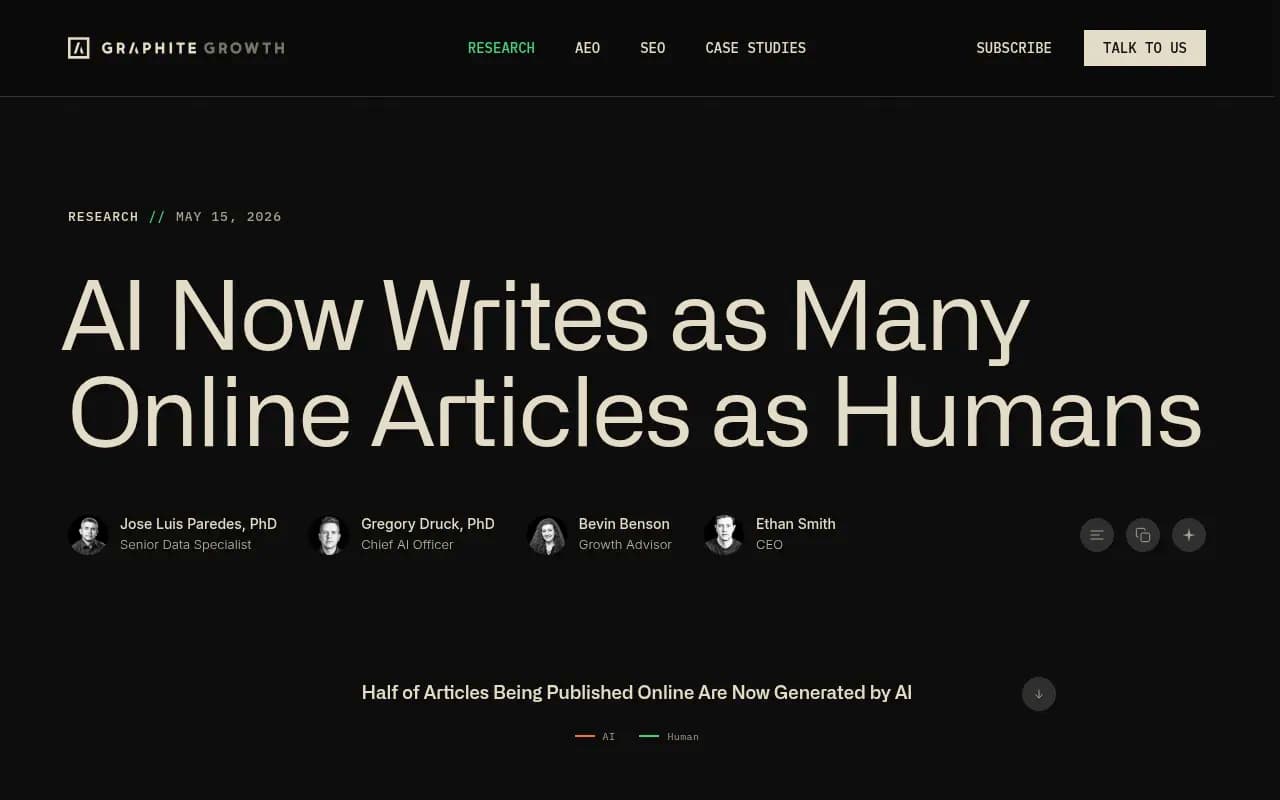
The same Graphite team notes in a separate study that these articles largely do not appear in Google and ChatGPT. They did not measure traffic, so treat that as a warning, not a verdict. Lots of AI text exists. Little of it gets cited. The ones that do tend to be useful, specific and structured, which is a human editing problem as much as a tool problem.
Types of AI writers and what each is good for
Since tool choice is about workflow fit, here is how I would split the field.
General-purpose assistants
ChatGPT and Claude are the strongest general drafting engines according to a 2026 roundup from Rework. A Medium comparison from a working writer puts ChatGPT ahead for punchy copy and Claude ahead when you want it to write without editorializing. Both are fine for drafting comparison pages and how-tos if you feed them real facts.
The catch: without your own data in the prompt, they write plausible, generic text. Generic text is what ChatGPT has no reason to cite.
SEO-driven article writers
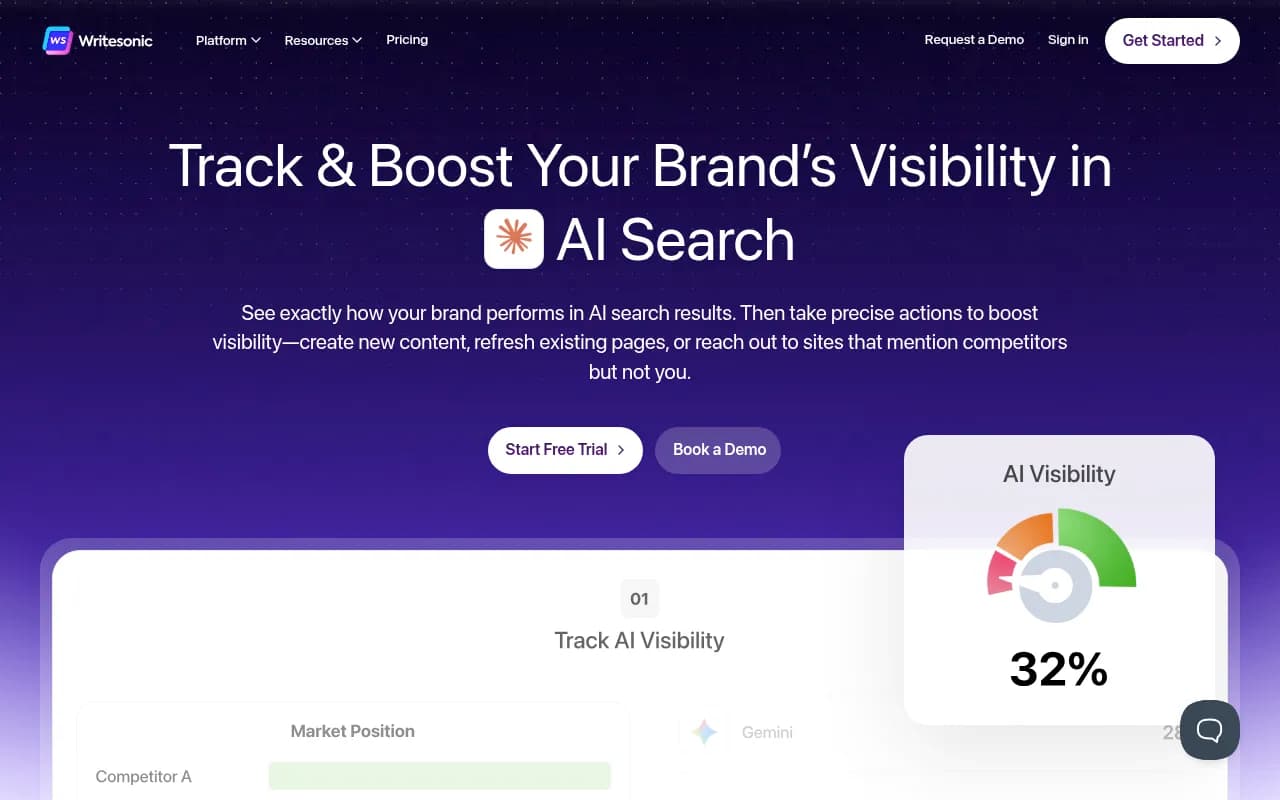
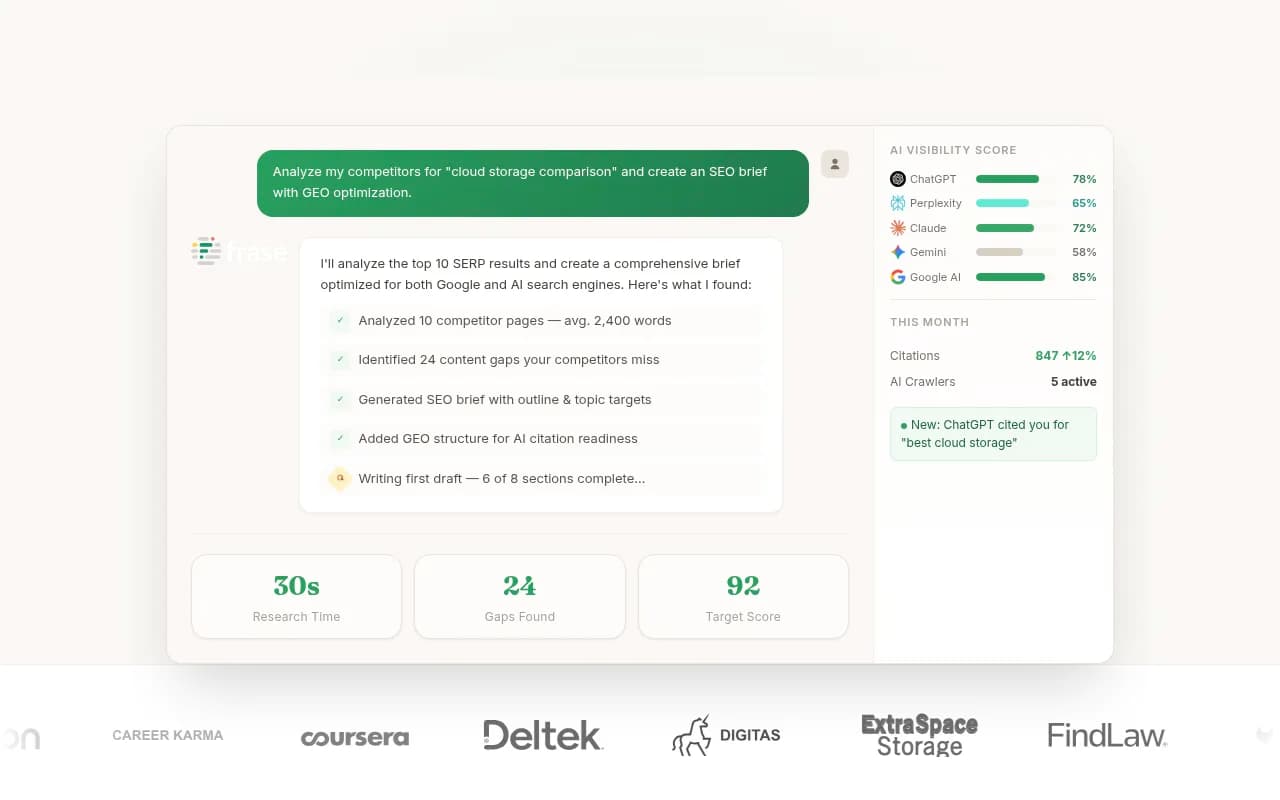
Tools like Byword, Writesonic, Frase, SurgeGraph and Scalenut research a keyword, outline a page and draft it, often with optimization scores. They are good for listicles, how-tos and comparison scaffolding at volume.
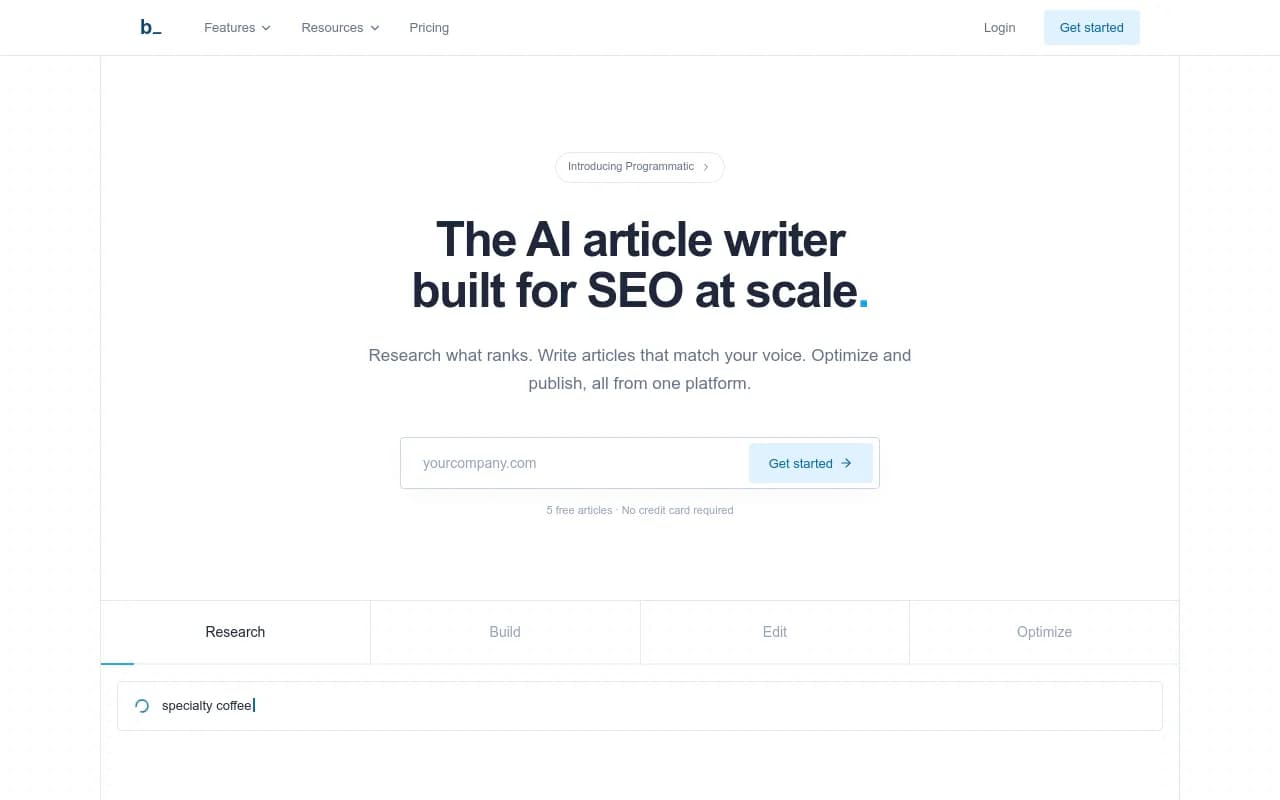

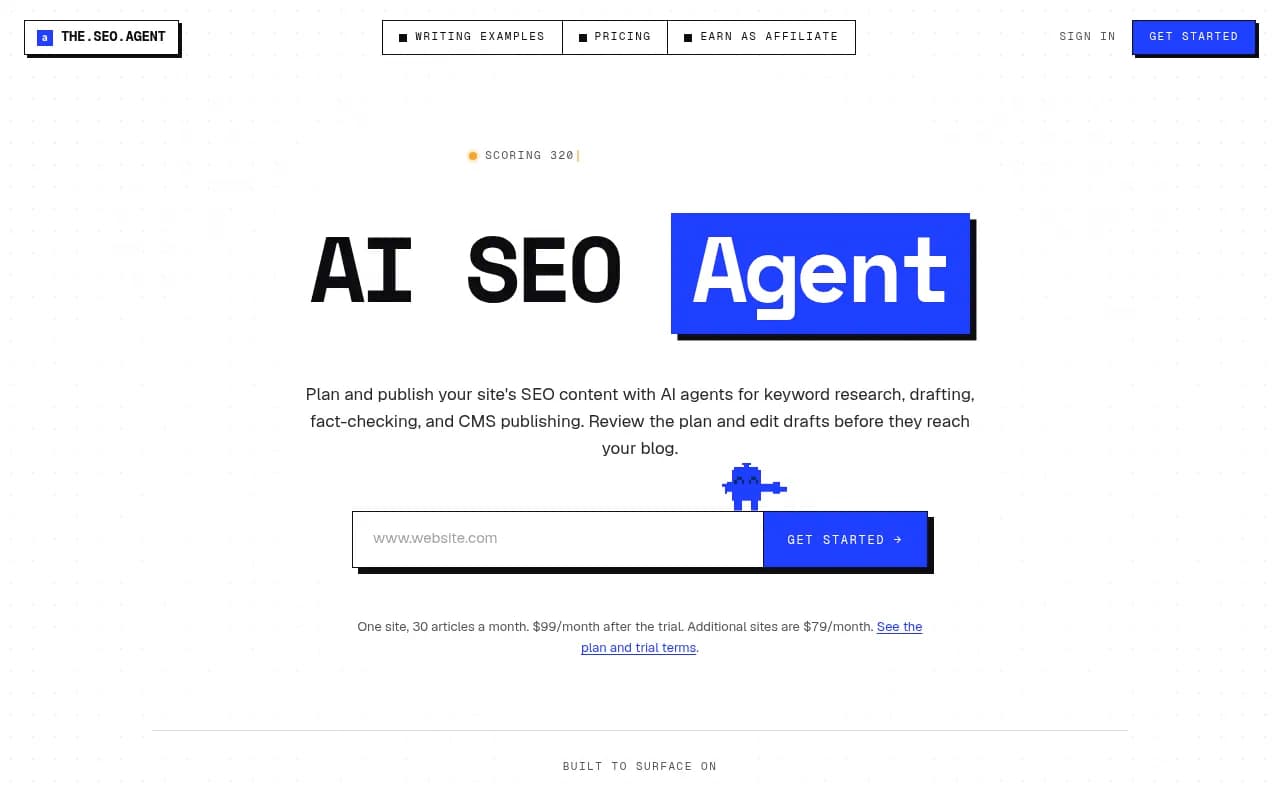
For a more automation-first workflow, TheSEOAgent publishes one source-checked article per day, and Averi AI scores drafts for AI citation. I have no data showing either lifts citation rates, so treat the scoring as a hint, not proof.
Content optimization and brief tools
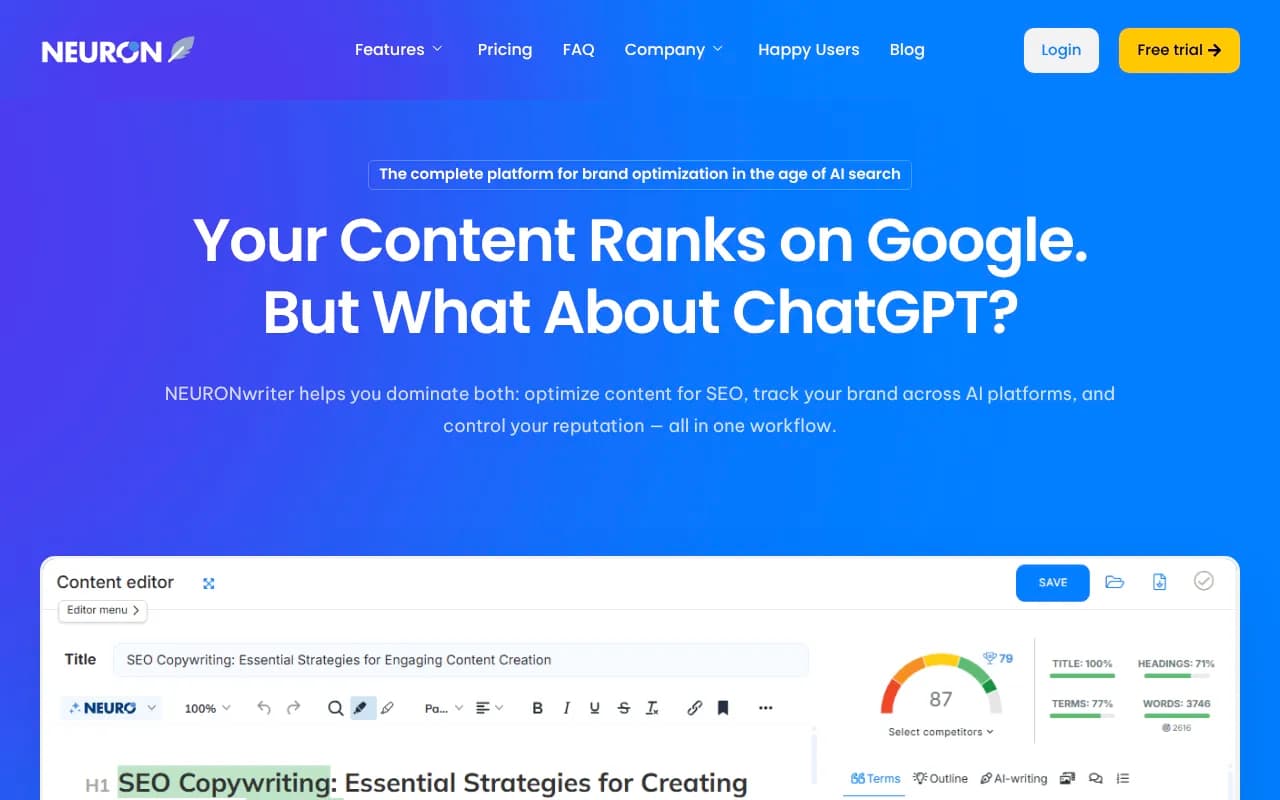
Surfer SEO, Clearscope, MarketMuse, NeuronWriter and Content Harmony do not so much write as shape what gets written. They help with coverage and structure, which suits the how-to and comparison formats above.
Marketing copy and brand-voice tools
Jasper, Copy.ai, Anyword and Meet Sona lean toward landing page and campaign copy. That matters, since landing pages are the second most cited type. Just make sure the copy states concrete facts: specs, prices, who it is for.
Content engineering and citation-aware platforms
AirOps, Relixir, Leapd Alex, GEOforge and Slate try to tie drafting to citation data, so the writing is informed by what AI already cites. That is the right idea. Check how they report results before paying.

Comparison: which type fits which job
| Job | Best-fit tool type | Examples |
|---|---|---|
| Comparison and listicle pages | SEO article writers plus a human editor | Byword, Writesonic, Frase |
| How-to guides | General assistants with your real process notes | Claude, ChatGPT |
| Landing and product page copy | Marketing copy tools | Jasper, Copy.ai, Anyword |
| Coverage and structure checks | Content optimization tools | Surfer SEO, Clearscope |
| Refreshing old pages | Citation-aware platforms or an editor workflow | AirOps, Slate |
A workflow that gives you a fair shot at citations
1. Choose the format before the tool
Decide whether the page should be a comparison, listicle, how-to, FAQ or product page. Match it to the prompts you want to win. If the prompt is commercial, lean on comparisons and product detail.
2. Put real facts in
Citable pages have specifics: prices, specs, steps, named alternatives. Promptwatch's own recommendation from the report is to keep specs, prices and positioning complete and factual on product pages, and to publish step-by-step guides for informational questions. Supply those facts to whichever AI writer you use.
3. Verify everything
Relato's content writer describes treating an LLM like a junior research assistant. She once cited a predatory journal because she trusted a model's sources. Verify every claim and link. Hallucinated stats on a page you want cited are a quick way to lose trust.
4. Get listed elsewhere
Listicles earn 13.6% of citations. Being included in other people's best-of roundups, and collecting reviews on trusted sites, can matter as much as your own pages. No writer tool fixes that.
5. Keep it crawlable and fresh
Docs and landing pages persist in ChatGPT when they stay public and accurate. Schedule refreshes for comparisons and listicles rather than publishing more news-style posts.
Measuring whether your content gets cited
This is where the question actually gets answered, for your site. Instead of trusting a tool's claims, track which of your pages show up in ChatGPT answers and which prompts they appear for.
Promptwatch tracks citations across ChatGPT and other AI engines, shows where your pages land, and logs AI crawler visits so you can see whether ChatGPT is reading new pages at all. Its Content Agent can also draft and publish against the gaps it finds, then track each page afterward.

There are many alternatives for monitoring. The GEO software directory at bestgeosoftware.com lists a lot of them, and options in our catalog include Profound, Peec AI, Otterly.AI and AthenaHQ.



A simple test: publish five pages with the same AI writer across different formats, track them for 60 days, and compare. You will learn more about your own results than any roundup can tell you.
Mistakes to avoid
- Publishing undifferentiated AI articles in volume. Half the web is already doing it.
- Leaning on news-style posts for lasting visibility, given the 36-day half-life.
- Ignoring product, pricing and FAQ pages, which are cited more than most blogs.
- Skipping fact-checking.
- Picking a tool because its marketing says it "writes for AI search" without citation data to back it.
Bottom line
I cannot name an AI writer that produces articles ChatGPT cites more than any other, and I would be skeptical of anyone who can without data. What you can control is the format, the factual detail and the upkeep. Use whichever writer fits your workflow, edit hard, refresh often, and measure citations on your own pages.
If you want a human team to build that strategy, 1001 SEO Media runs content and GEO programs for brands that want to be cited in AI answers.