Key takeaways
- AI SEO tools now bill on two meters at once: seats (access) and credits or prompt checks (usage). You can outgrow a plan on either axis, and adding a teammate does not fix a credit shortage.
- The headline price is rarely the real price. AI tracking add-ons ($89 to $99 a month) are the usual surprise, and a bundle can beat base plan plus add-on.
- Overage rates are where the margin lives. Ahrefs Brand Radar publishes a clear ladder ($0.020, $0.015 and $0.010 per check), which most vendors do not.
- Platform-controlled behaviour changes overnight, so anything metered per search or per check is exposed to upstream shifts. Fixed prompt counts are easier to budget.
- Before signing, ask what burns a credit, what happens at the limit, and whether the discount is annual-only.
Why AI SEO pricing got harder to read
Two teams buy the same tool on the same day. One pays the same amount all year. The other opens an invoice in March for four times what they budgeted. Nobody lied to them. They bought different pricing models without noticing there was a choice.
That is the trap in one sentence. Traditional SEO software was mostly seats and project limits. AI SEO software adds a second meter: prompts tracked, checks run, credits burned, articles generated. Most vendors now combine the two. Marketing Mary's 2026 breakdown of AI marketing pricing puts it well: seats buy access, credits buy usage, and running the tool burns usage.
The money involved is not small. Zylo's 2026 SaaS Management Index found companies spend an average of $1.2M a year on AI-native applications, up 108% year over year, and 78% of 218 surveyed IT leaders reported unexpected charges tied to consumption-based or AI pricing in the past year. That is not a few unlucky buyers. It is the default experience.
The five pricing models, and where each one bites
| Model | What you buy | Predictability | Where it bites |
|---|---|---|---|
| Per seat | Access for one named user | High | Occasional users cost the same as daily ones |
| Per credit | Prepaid pool of vendor-defined units | Low | Heavy tasks burn many credits; pools can expire monthly |
| Per output | A finished artifact (article, image) | Medium | Rejected drafts usually still count |
| Usage-based | Metered activity: API calls, checks, records | Low to medium | Costs rise exactly when the tool works well |
| Flat rate | A bundle within defined limits | Highest | The overage rate past the limit is where margin lives |
A credit is not a fixed quantity of anything. It is a unit the vendor defines, and different actions burn different amounts. Outreach is a good cautionary example from adjacent software: its 2026 pricing publishes tier names and credit allotments (10,000 to 100,000) but no dollar figures, no per-action costs and no overage rates. MarketBetter's teardown calls the result a consumption bill you cannot forecast from the contract alone. That is the worst case, but the pattern is common.
What the AI SEO vendors actually charge
These numbers come from vendor pages and roundups gathered in research, and some were pulled from search snippets. Prices drift constantly, so treat them as a map and confirm on each pricing page before you commit.
Ahrefs
List prices run $129, $249, $449 and $1,499 a month, with annual billing saving up to 17%. Extra users cost $40, $60, $80 and $100 a month on the successive tiers. The $129 tier includes 1,000 credits per user, and the next tier shows unlimited credits per user. Crawl credits and AI prompt checks are metered on separate allowances, which means a single plan carries several meters at once.
Brand Radar custom prompt packages publish the clearest overage ladder I found. Overage is billed at the end of the billing month:
- $50 a month gives 2,500 checks, with overage at $0.020 per check
- $100 a month gives 7,000 checks, with overage at $0.015 per check
- $250 a month gives 25,000 checks, with overage at $0.010 per check
The pattern is worth noticing. Overage on the smallest package costs double the per-check rate of the largest, so a team that regularly overshoots is better off upgrading than paying the penalty rate.

Semrush
Base plans are SEO $139, Starter $199, Pro+ $299 and Advanced $549 a month, with annual billing roughly 17% cheaper. The AI Visibility Toolkit is a $99 a month add-on per domain. Stack it on the $139 plan and you pay $238. The $199 Starter plan includes AI prompt tracking natively, so it is about $39 cheaper for a comparable outcome. ContentShake AI at $60 a month is a separate paid add-on, so a full AI configuration climbs fast.
SE Ranking
Core is $129 a month ($103.20 annual) and Growth is $279 ($223.20 annual). The AI Search add-on is $89 a month ($71.20 annual). The Agency Pack is $69 a month, annual billing only. Core plus AI Search plus Agency Pack lands around $240 a month, and manager seats beyond the plan allowance cost $16 a month each. Rework's estimate for full AI coverage is $200 to $220 a month.

Surfer
Billed-yearly rates are $49 Discovery, $82 AI Search Analytics, $99 Standard, $182 Pro, $299 Peace of Mind, and Enterprise at $999. Two catches: Surfer does not publish month-to-month pricing and it has no free trial. Also, several round-ups circulate a $199 figure for a tier the vendor lists at $182. Stale third-party numbers are a pricing trap of their own.
Content and API tools
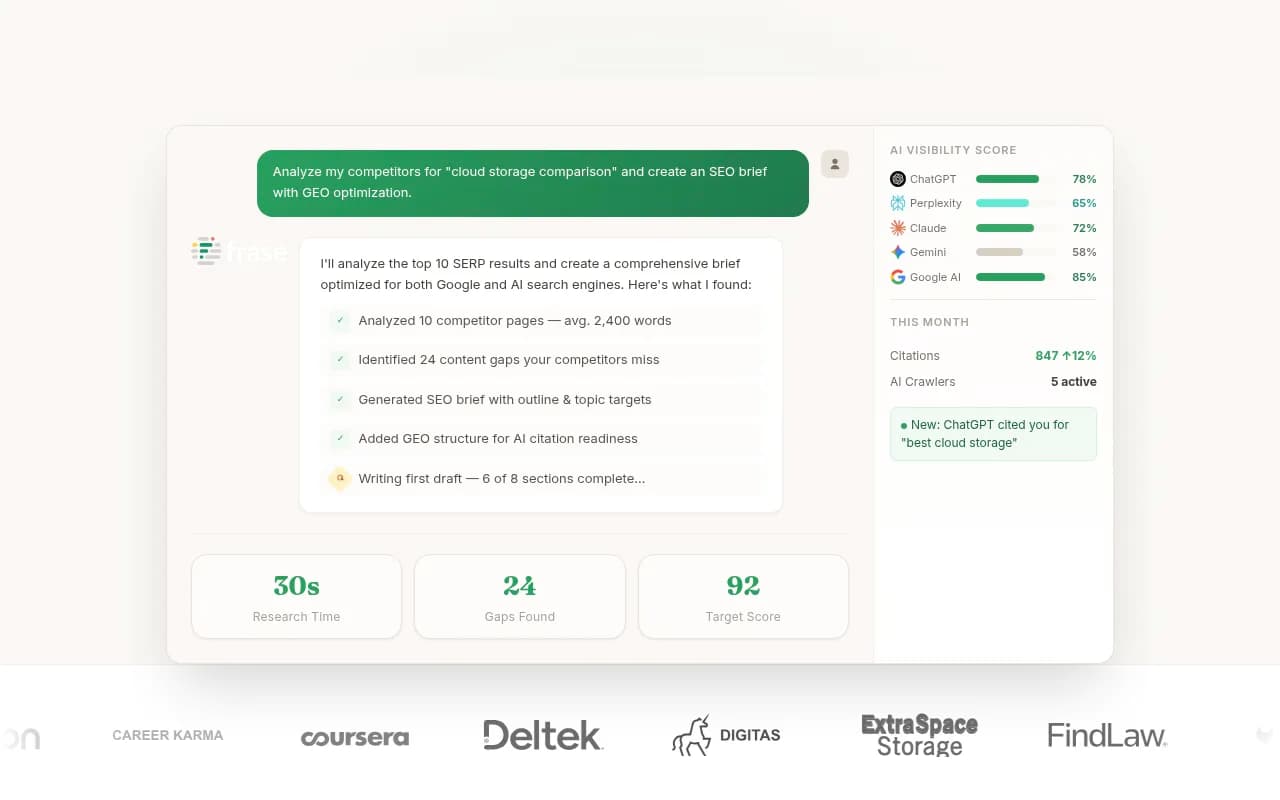
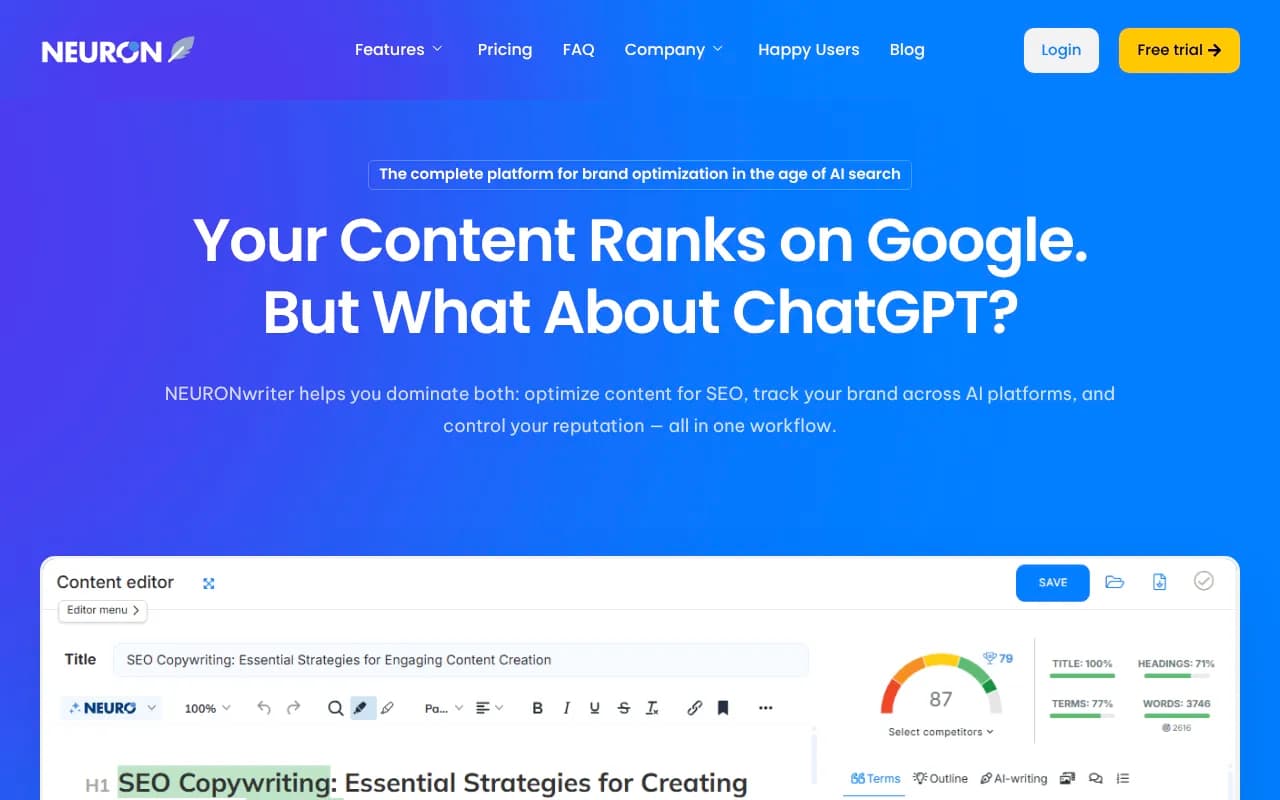
DataForSEO is pure pay-as-you-go with a $50 minimum deposit. A SERP API query costs $0.0006 on the Standard queue, $0.0012 on Priority and $0.002 Live. Picking Live for a batch job multiplies the bill by more than 3x for no benefit. Others to watch: Frase Starter at $49 a month for 10 articles, where article and seat limits push mid-size teams up a tier quickly; Scalenut Starter at $30 a month annual with Perplexity coverage reserved for the top tier; and NeuronWriter from $23 a month with tight analysis and credit caps on entry tiers.

Side by side
| Tool | Entry price | The extra meter | The surprise |
|---|---|---|---|
| Ahrefs | $129/mo | Credits, crawl credits, AI prompt checks | Extra seats $40 to $100/mo; Brand Radar overage |
| Semrush | $139/mo | AI Visibility Toolkit $99/mo | Starter at $199 beats SEO plus Toolkit |
| SE Ranking | $129/mo | AI Search add-on $89/mo | Agency Pack annual-only; seats $16/mo |
| Surfer | $49/mo (yearly rate) | Tier ladder, some credits | No monthly pricing, no free trial |
| DataForSEO | $50 deposit | Per query | Live mode costs 3x+ Standard |
Five ways the bill grows without warning
1. The add-on stack
The sticker price is for the base plan. AI tracking add-ons at $89 to $99 a month are the line item most buyers miss, and they often cost more than the SEO tool's cheapest tier. Price the full stack you need, not the entry tier.
2. Two meters, two ways to outgrow a plan
With seats plus credits, headcount and usage grow independently. A three-person team can burn through a pool built for ten, while a ten-person team that barely uses AI overpays on seats. Ask which meter you are likelier to exceed.
3. Upstream behaviour changes
AI platforms are not static, and any vendor that meters per search or per check is exposed to that. Promptwatch Data shows ChatGPT started using the site: operator at scale on August 8, 2026: such queries jumped from about 0.4% to about 17% of fanout queries overnight, and average fanouts per response rose from roughly 1.08 to 1.83 the same day. The data does not say any vendor's bill changed, and that link is my inference. But if your tool's cost is tied to searches run per prompt, a shift like that is a risk you cannot control. A fixed prompt-count plan is less exposed. For background on how many searches ChatGPT runs per response, see Promptwatch's query fanout data.
4. Annual-only discounts and agency tiers
SE Ranking's Agency Pack and Surfer's yearly rates show how often the good price requires a 12-month commitment. Also, do not buy agency-tier pricing for a single site. You pay for unlimited projects you will never create.
5. Opaque pricing and undefined limits
CaseFleet's legal AI pricing guide makes a useful general point: the tools that charge the most often publish the least, and the real overage vectors are predictable. Watch for per-seat minimums, mandatory annual commitments, usage caps that trigger extra charges, integration fees and onboarding fees. None of those appear in a headline seat price. And be careful with the word unlimited. It is frequently conditional, available only at the top tier or throttled underneath.
Which model suits which team
- Steady output, small team: per seat or flat rate. Cheaper to run and easier to defend in a budget meeting.
- Volume that swings between quiet months and campaign months: credits can be better value, but only if you modelled the peak.
- Unattended agents: assume usage-based pricing and forecast accordingly.
- Agencies running many clients: look for plans with unlimited projects, but check the response and credit allowances, because that is where you will hit the ceiling.
Zylo's rule of thumb is a good one: match the pricing model to how stable your usage is, and add controls (spend caps, alerts, consumption reviews) wherever the bill can move on its own.
Where AI visibility platforms fit
AI visibility tracking is the category where the pricing models differ most, because every vendor defines a unit differently: prompts, responses, checks, platforms or domains. The useful comparison is cost per response with every AI model included, plus what you get beyond monitoring.
Promptwatch publishes its limits plainly. Plans run from a free Explore tier (10 prompts, ChatGPT only) through Essential at $95 a month (50 prompts, 6,000 responses, all AI models, 500 Agent Credits) and Professional at $245 (150 prompts, 18,000 responses), up to Business at $579 (350 prompts, 42,000 responses, the automated Content Agent). Agency plans start at $199 a month with unlimited projects and prompts. Annual billing gives 12 months for the price of 10. Confirm current numbers at promptwatch.com/pricing.

That is two meters again (prompts and responses, plus Agent Credits), so the same questions apply. The difference is that the allowances are stated up front. Other tools in this category are worth pricing side by side, including Profound, Otterly.AI, Peec AI and AthenaHQ.




For more options, the GEO software directory at bestgeosoftware.com and the AI rank tracker directory at ai-rank-tools.com list the field with pricing notes.
A pre-purchase checklist
- What burns a credit? Ask for the per-action cost of the three tasks you will run most. If the vendor cannot give you a number, assume the worst case.
- What happens at the limit? Throttled, cut off, or billed? Get the overage rate in writing. Ahrefs publishes one. Many vendors do not.
- Do credits expire monthly? A pool that resets forfeits whatever you did not use.
- Is the discount annual-only? Compare the monthly price too, and note whether a monthly option exists at all.
- Does a bundle beat base plus add-on? Semrush Starter versus SEO plus the AI Toolkit is the clean example.
- How many seats do you need, and what does seat 6 cost? Extra users run $16 to $100 a month in the tools above.
- Is there a spend cap or alert? If the bill can move on its own, you want a brake.
- Is the price on the vendor's page or in a roundup? Check the vendor page. Round-ups go stale.
If you want a second opinion on tool selection rather than a spreadsheet, 1001 SEO Media works with teams on exactly this kind of stack decision as part of SEO and AI search engagements.
The short version
Budget for the stack, not the entry tier. Ask what burns a credit before you ask what it costs. Prefer plans where limits and overage rates are published, and treat any pricing page with tier names but no numbers as a negotiation, not a price. Then put a reminder in your calendar 30 days after signing to compare actual usage against the plan, because that is when the first real invoice tells you whether you bought the right model.