Key takeaways
- Hall AI (usehall.com) has shut down, leaving B2B SaaS marketing and SEO teams without AI citation tracking
- The replacement you need depends on what you were actually using Hall for: monitoring mentions, tracking citations, or optimizing content to appear in AI answers
- Most alternatives are monitoring-only dashboards — they show you where you're invisible but don't help you fix it
- B2B SaaS buyers now complete 70%+ of their evaluation through AI search before ever contacting a vendor, making AI visibility a pipeline issue, not just a branding one
- Platforms like Promptwatch go beyond tracking to help you close the content gaps AI models are exposing
If you're reading this, you probably just found out Hall AI is gone and you need to figure out what to do next. That's a frustrating position to be in, especially if you had prompts set up, baselines established, and reporting workflows built around it.
The good news: the category has matured significantly since Hall launched. There are now more than a dozen platforms tracking AI visibility for B2B SaaS, and a handful of them are genuinely better than what Hall offered. The bad news: most of them are still monitoring-only tools. They'll tell you that ChatGPT isn't mentioning you. They won't tell you why, or help you change it.
This guide walks through the best Hall AI alternatives for B2B SaaS companies in 2026, what each one actually does well, and how to pick the right one based on what you need.
Why Hall AI's shutdown matters more than you think
Hall AI was one of the earlier tools to focus specifically on how AI platforms cite and talk about brands. For B2B SaaS teams, that was genuinely useful because the buying journey has shifted dramatically.
Forrester's 2026 B2B Buying Study found that 72% of B2B buyers complete most of their evaluation before they ever talk to a vendor. A significant chunk of that research now happens through AI assistants. A buyer types "best [category] software for mid-market" into ChatGPT or Perplexity, reads the response, and starts building a shortlist. If your product isn't mentioned, you're not on the list. You never even got a chance to lose.
That's not a traffic problem. That's a pipeline problem.
Hall AI helped teams see where they stood in those AI responses. Without it, you're flying blind during the part of the buyer journey that matters most.
What to look for in a Hall AI replacement
Before jumping into the tool list, it's worth being clear about what you actually need. Hall AI served a few distinct use cases:
- Tracking whether AI models mention your brand in response to relevant prompts
- Seeing which competitors are being recommended instead of you
- Understanding which pages or content AI models are citing
- Getting alerts when your visibility changes
Some teams also wanted to act on that data: identify content gaps, create content that fills them, and track whether it worked. Hall AI was mostly a monitoring tool, so if you wanted the action layer, you were already cobbling together a workflow from multiple tools.
The alternatives below range from lightweight trackers to full optimization platforms. I've organized them by what they're best at.
The best Hall AI alternatives in 2026
Full-platform alternatives (monitoring + optimization)
These are the tools that go beyond showing you data and actually help you do something about it.
Promptwatch is the most complete option in this category. It tracks your brand across 10 AI models (ChatGPT, Perplexity, Claude, Gemini, Google AI Overviews, Grok, DeepSeek, Copilot, Meta AI, Mistral), but the more interesting part is what happens after the monitoring. Answer Gap Analysis shows you the specific prompts where competitors are visible and you're not. Content Agents then generate articles, listicles, and comparison pages grounded in that prompt data. AI Crawler Logs show you which pages AI crawlers are actually reading, how often they return, and when a page moves from crawl to citation. For B2B SaaS teams trying to win buyer research queries, that full loop — find the gap, create the content, track the result — is what makes it different from everything else in the category.

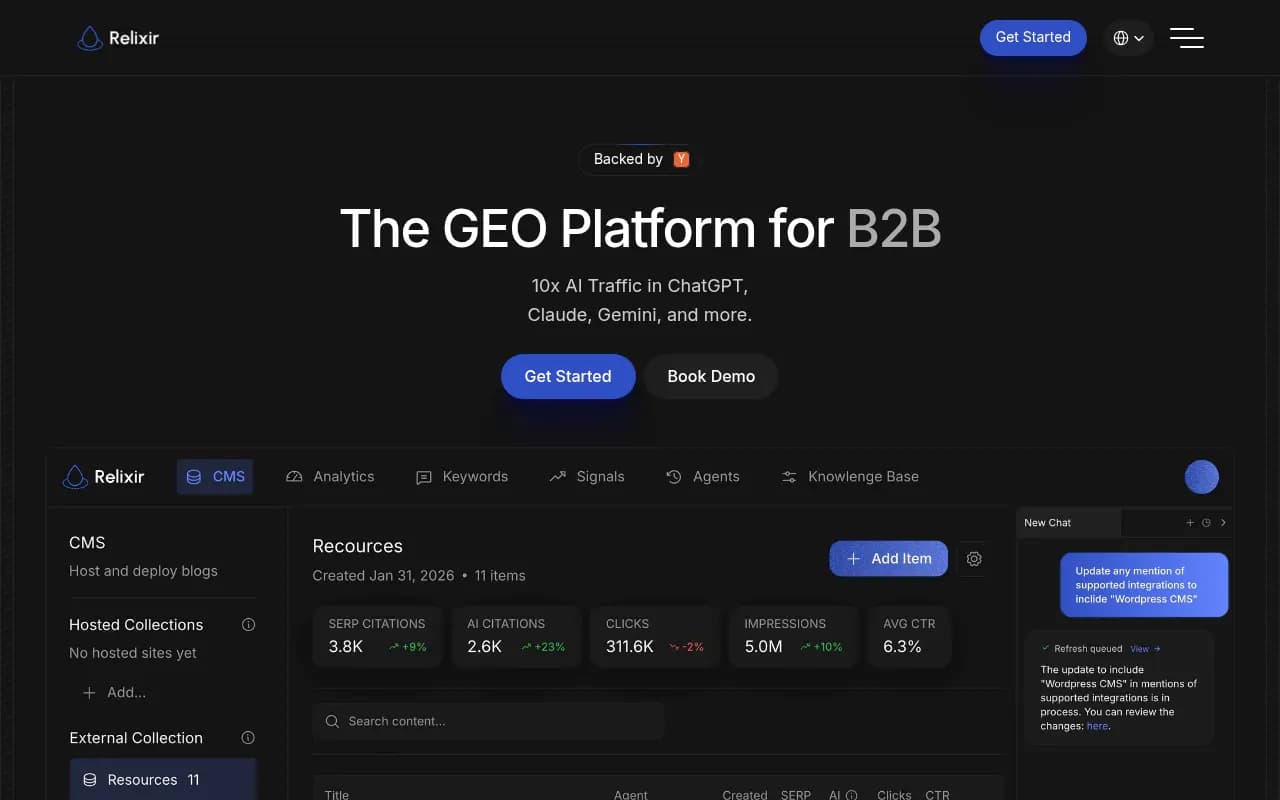
Relixir is another platform with content generation built in. It has an AI-native CMS and runs autonomous content workflows, which makes it appealing for teams that want to publish at volume. Worth evaluating if content output is your primary bottleneck.
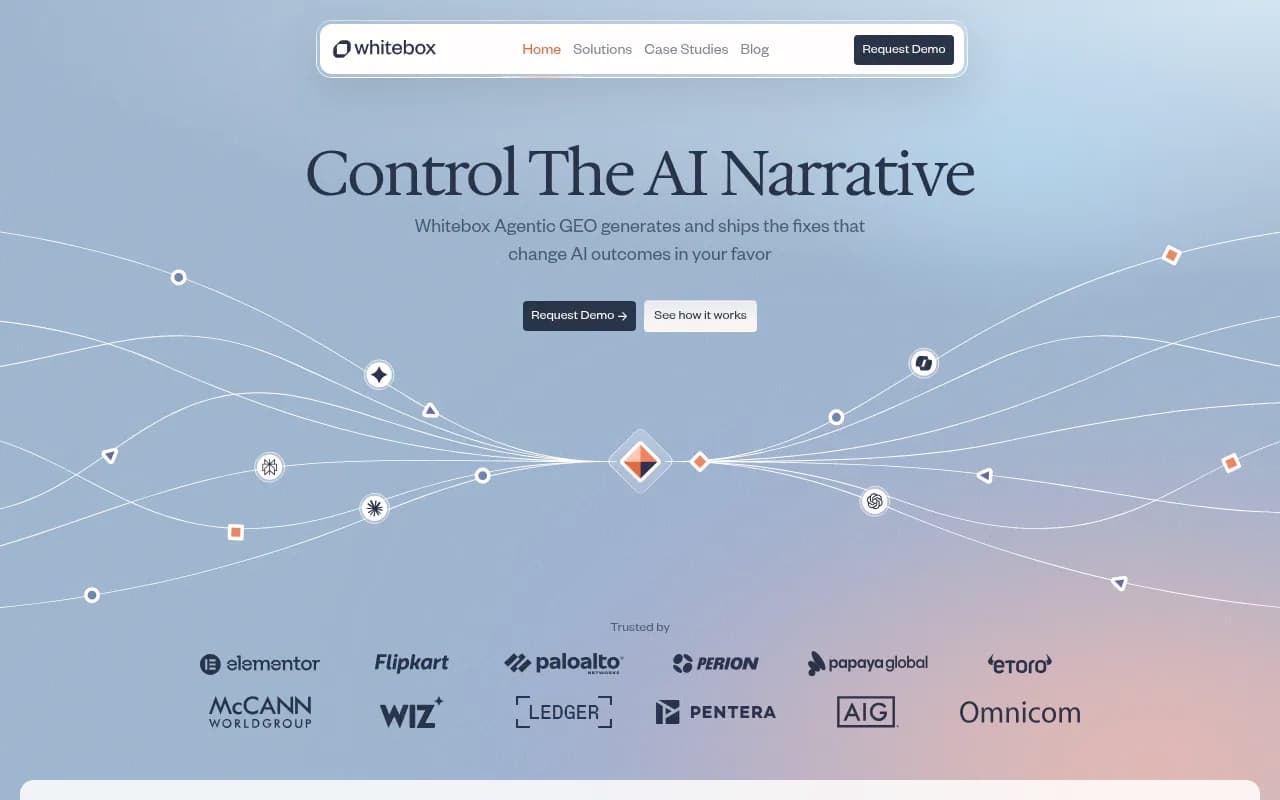
Whitebox takes an agentic approach — it generates and ships AI narrative fixes automatically rather than just flagging issues. Newer to the market, but interesting for teams that want less manual work in the optimization loop.
Monitoring-focused alternatives
These tools do citation and mention tracking well. They're the closest direct replacements for Hall AI's core functionality.
Otterly.AI is one of the more affordable options and covers the major AI models. Good for teams that just need to know where they stand without a big budget commitment.

Peec AI has solid multi-language support, which matters for B2B SaaS companies with international markets. The monitoring is clean and the interface is straightforward.

AthenaHQ covers 8+ AI search engines and has a well-designed tracking interface. It's monitoring-focused, so you'll need to take the insights elsewhere to act on them, but the data quality is good.

Profound is a strong monitoring platform with good competitive visibility features. Higher price point than some alternatives, but the data depth is there for enterprise teams.

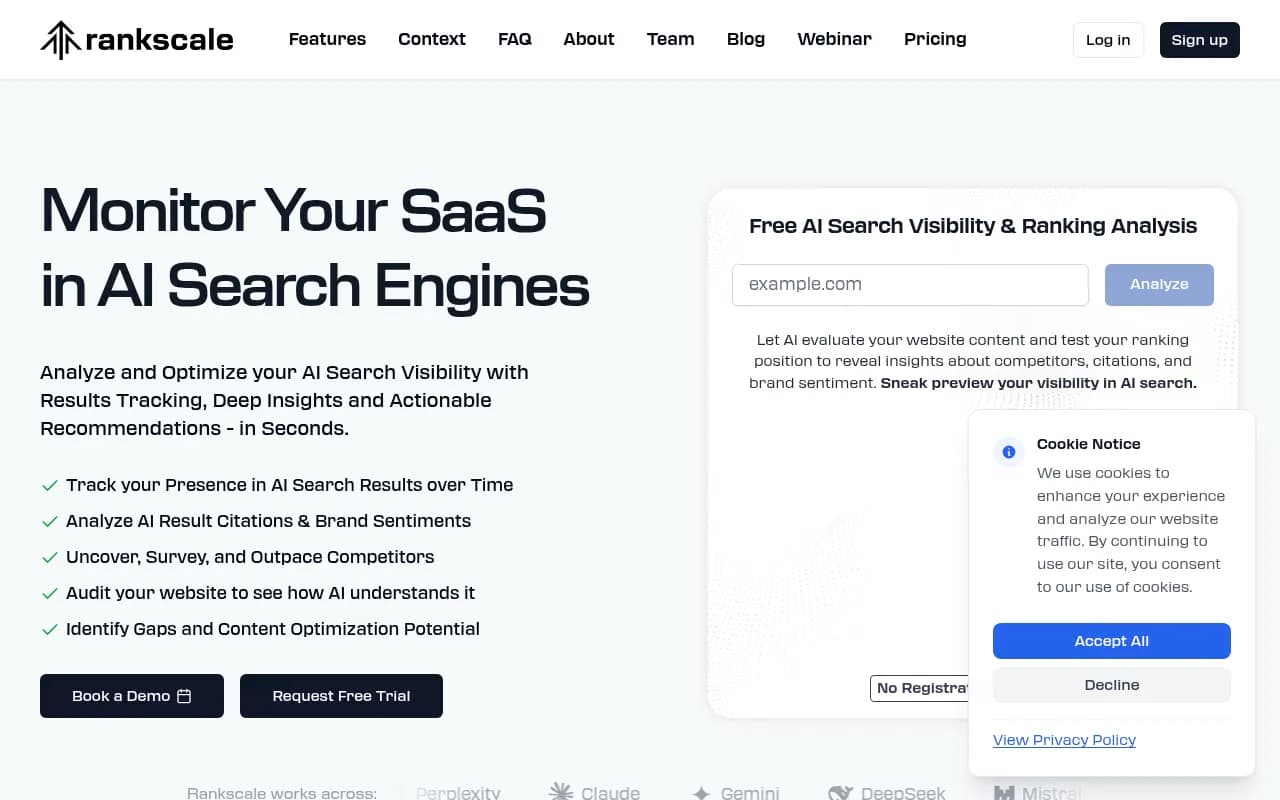
Rankscale tracks AI search rankings and visibility. Useful for teams that want to see movement over time across models.
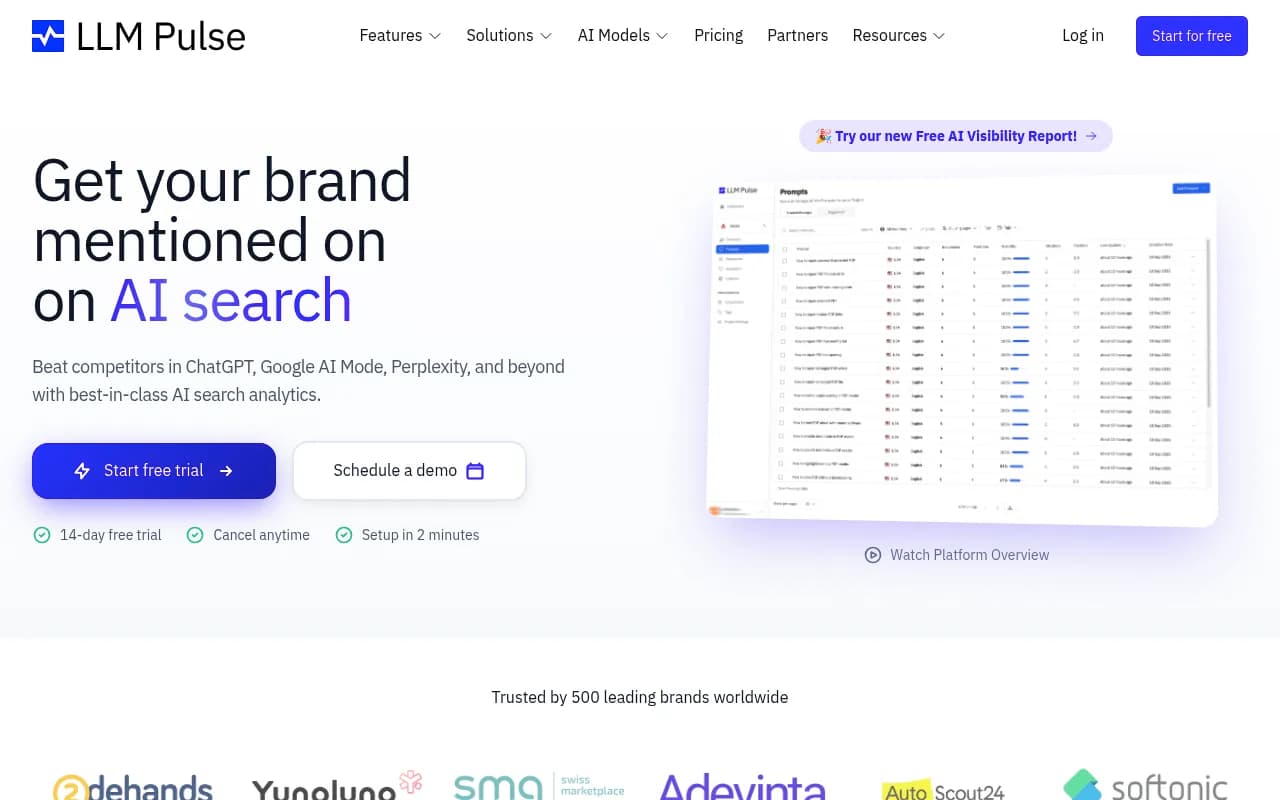
LLM Pulse focuses on comprehensive LLM response tracking. Good breadth across models.
Scrunch AI is built for modern brand monitoring in AI search. Clean interface, focused feature set.
Lightweight / budget alternatives
If you were using Hall AI for basic brand mention tracking and don't need deep analytics, these are worth a look.
Otterly.AI fits here too — it's genuinely one of the most accessible entry points in the category.
GetCito covers AI visibility tracking and optimization at a lower price point.
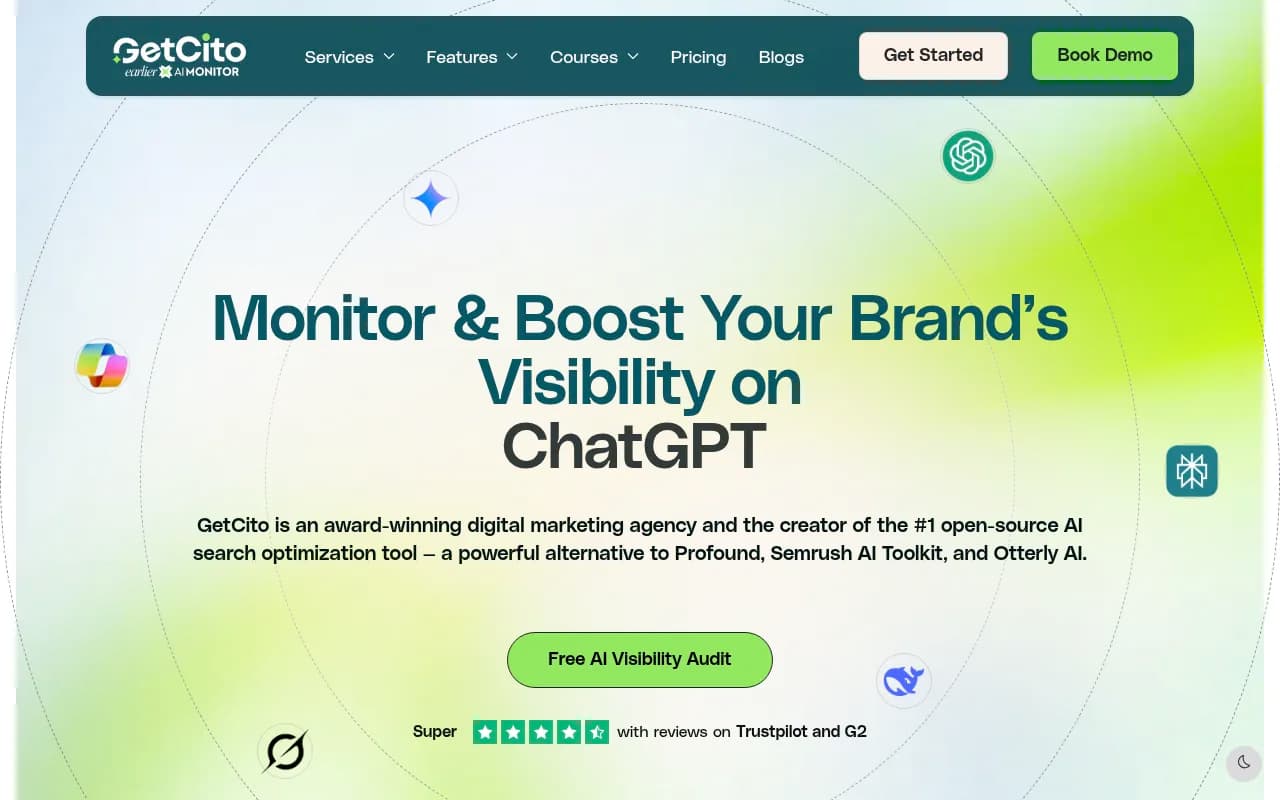
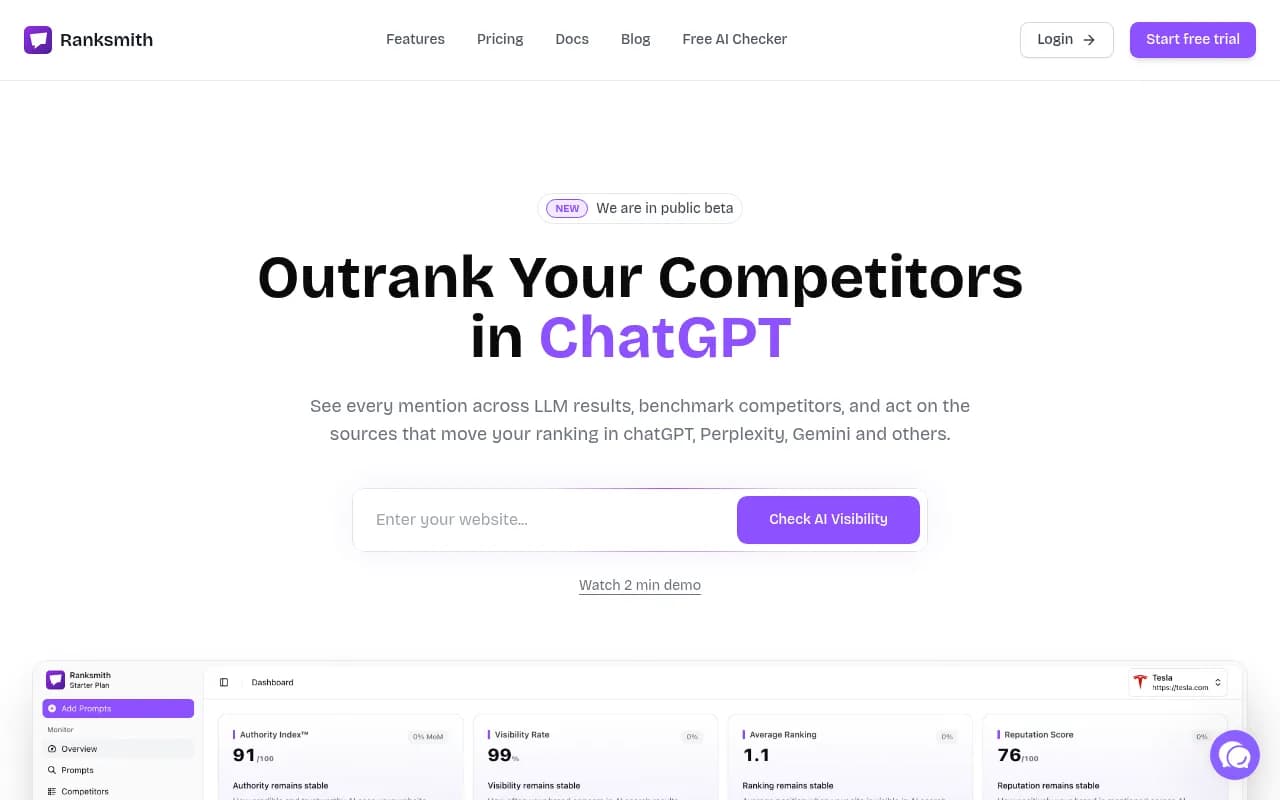
Ranksmith focuses on actionable AI visibility insights without overwhelming you with data.
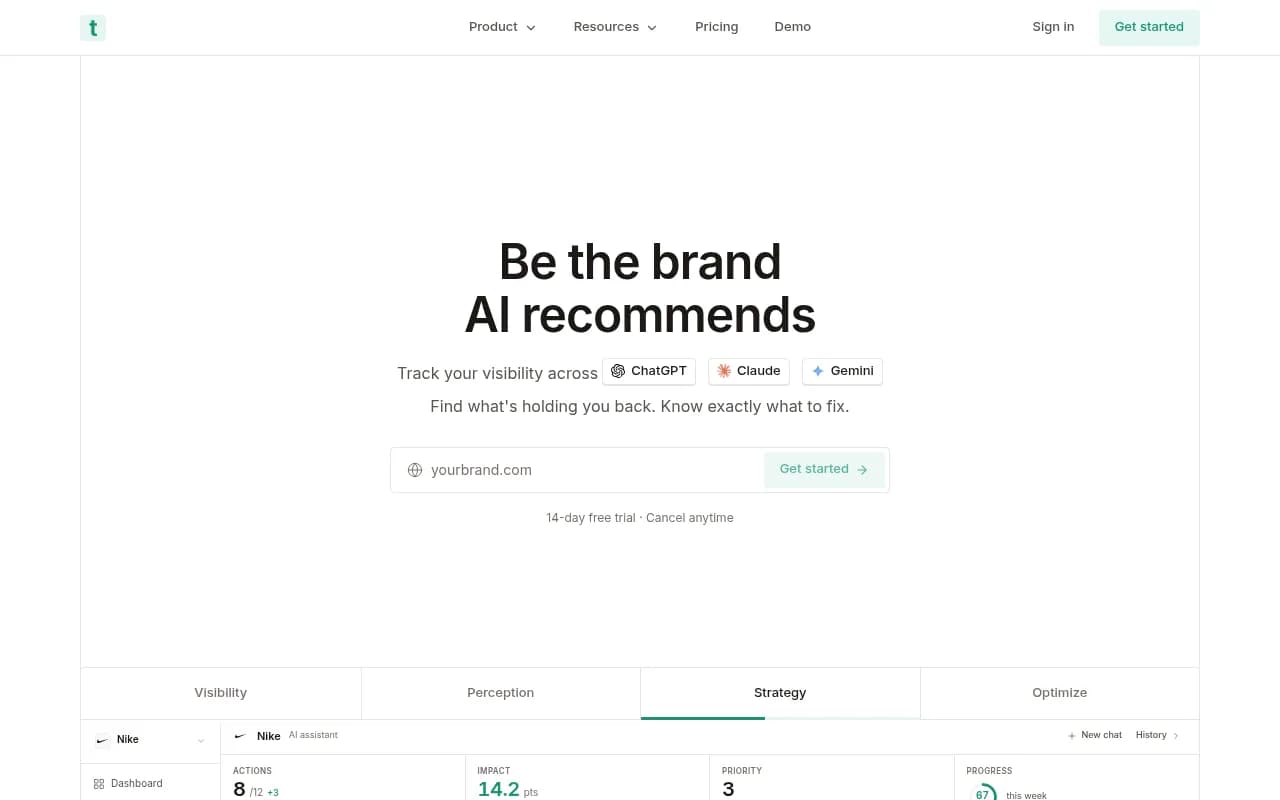
Trakkr.ai tracks brand visibility across ChatGPT, Claude, and Perplexity with a simple setup.
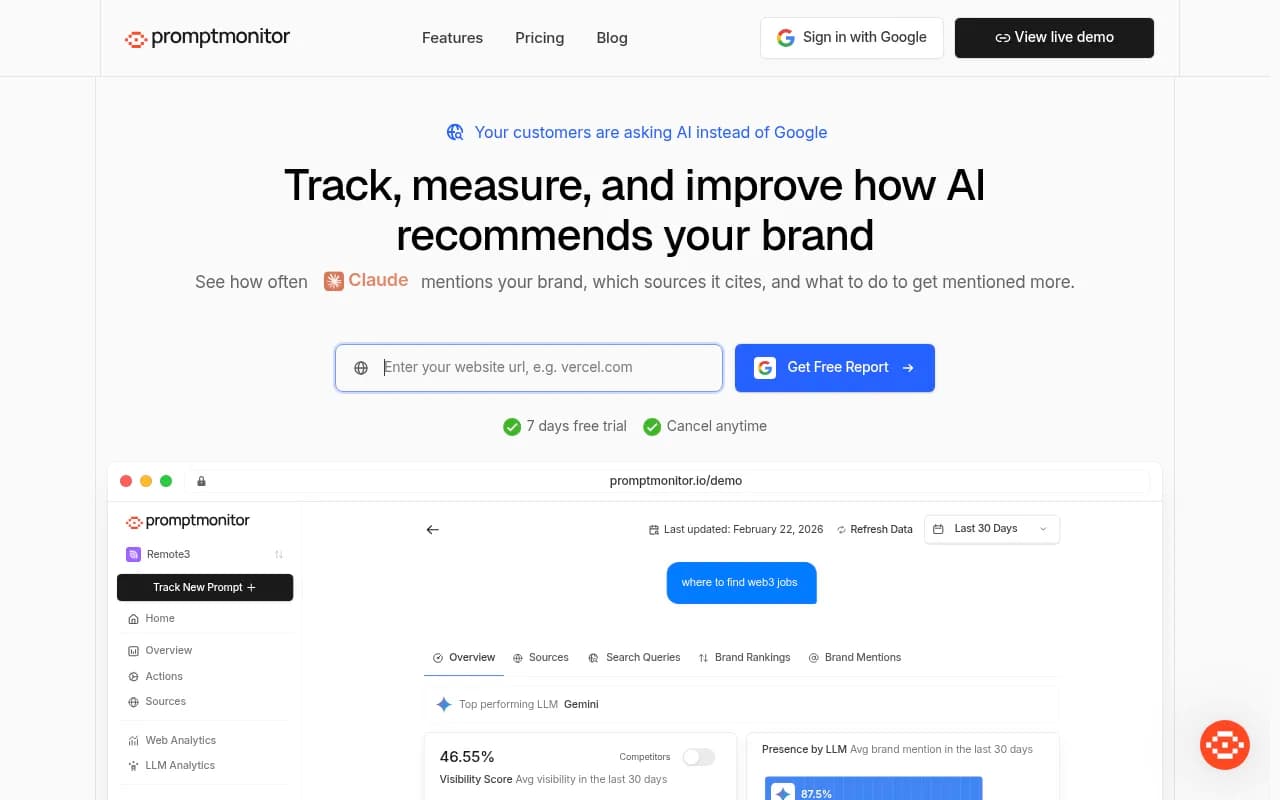
Promptmonitor is a straightforward monitoring tool for teams that just need to know when they're mentioned (or not).
Enterprise / agency alternatives
For larger teams or agencies managing multiple brands, these platforms have the depth and multi-site support you need.
BrightEdge is an enterprise SEO platform that has added AI search visibility tracking. If you're already in the BrightEdge ecosystem, the AI visibility features are worth exploring.
Conductor has persona customization for AI visibility tracking, which is useful for B2B SaaS companies where the buyer persona matters a lot for how prompts are framed.
seoClarity is another enterprise SEO platform with AI search visibility tracking built in.
Search Party is agency-oriented and has AI visibility features, though prompt metrics are more limited than dedicated GEO platforms.
Feature comparison
Here's how the main alternatives stack up across the dimensions that matter most for B2B SaaS teams replacing Hall AI:
| Platform | AI models tracked | Content generation | Crawler logs | Prompt gap analysis | Reddit/YouTube tracking | B2B SaaS fit |
|---|---|---|---|---|---|---|
| Promptwatch | 10+ | Yes (Content Agents) | Yes | Yes | Yes | Excellent |
| Relixir | Multiple | Yes | Limited | Yes | No | Good |
| Whitebox | Multiple | Yes (agentic) | No | Partial | No | Good |
| AthenaHQ | 8+ | No | No | No | No | Good |
| Profound | Multiple | No | No | Limited | No | Good |
| Otterly.AI | Multiple | No | No | No | No | Adequate |
| Peec AI | Multiple | No | No | No | No | Adequate |
| BrightEdge | Multiple | No | Limited | No | No | Enterprise |
| Conductor | Multiple | No | No | No | No | Enterprise |
| Scrunch AI | Multiple | No | No | No | No | Adequate |
The real problem most alternatives don't solve
Here's what I keep coming back to when evaluating these tools: monitoring tells you that you have a problem. It doesn't fix it.
If ChatGPT isn't recommending your B2B SaaS product when buyers ask about your category, knowing that fact is step one. But step two is understanding exactly which prompts you're missing, what content would make AI models start citing you, and whether the content you publish actually gets crawled and cited.
Most Hall AI alternatives stop at step one. They give you a dashboard showing your "AI visibility score" and a list of prompts where competitors appear and you don't. Then you're on your own to figure out what to do about it.
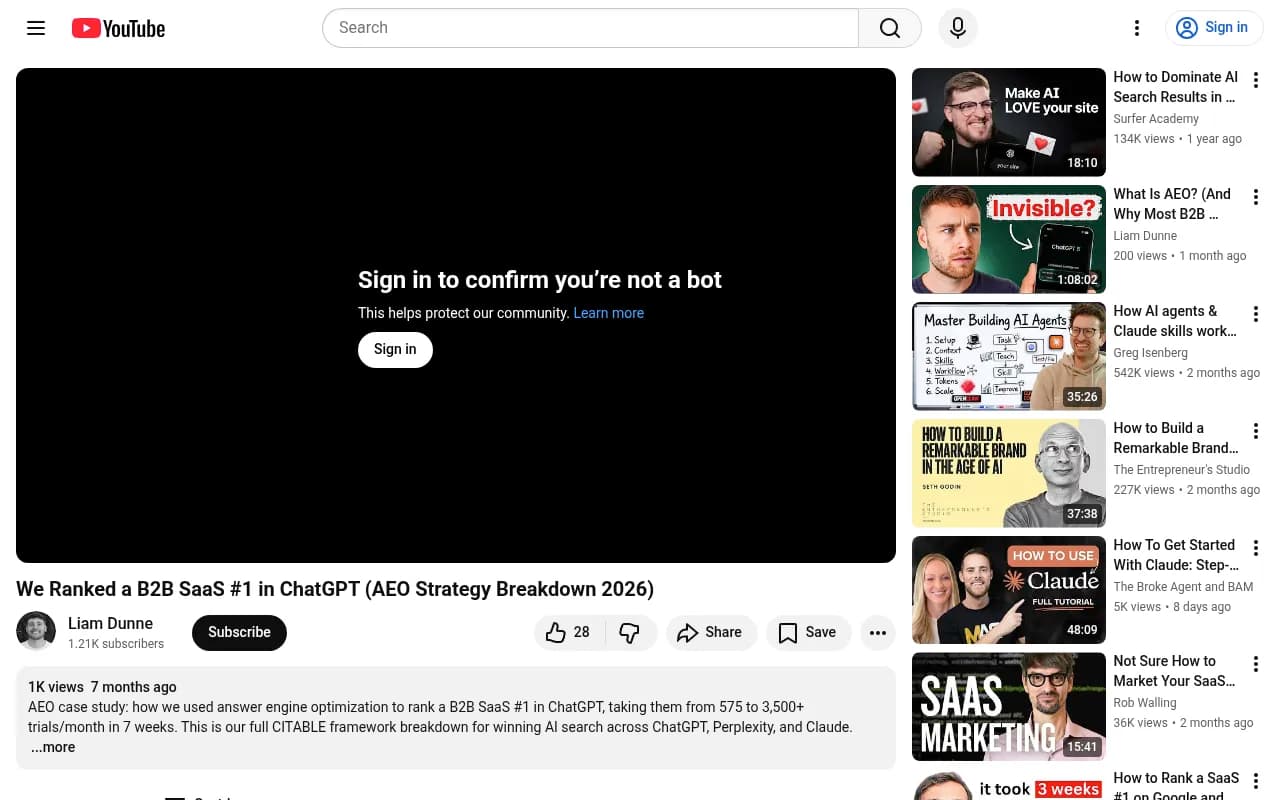
The case study from Discovered Labs (which took a B2B SaaS company from 575 trials/month to 3,500+ trials/month in 7 weeks through AEO) shows what's possible when you actually close the loop. Their playbook involved AI visibility auditing, high-volume content engineering, third-party validation on Reddit and review sites, and technical schema optimization. That's a lot of moving parts to coordinate manually.
Platforms that help you execute that kind of workflow — not just observe the gap — are where the real value is in 2026.
How B2B SaaS buyer research actually works in AI search
It's worth being specific about the prompts that matter for B2B SaaS. Buyers don't just search your brand name. They ask things like:
- "What's the best [category] software for a 50-person sales team?"
- "How does [your product] compare to [competitor]?"
- "What are the alternatives to [incumbent tool]?"
- "Which [category] tools integrate with Salesforce?"
Each of these is a separate prompt, and AI models may answer them very differently. A tool might cite you for the comparison query but completely ignore you for the "best for mid-market" query. That granularity matters for B2B SaaS because the buyer's intent is different at each stage of evaluation.
Good AI visibility platforms let you track all of these prompt types, not just branded mentions. Hall AI did this reasonably well. Make sure whatever you replace it with handles the full range of buyer research queries, not just "does ChatGPT know my brand name."
Practical migration checklist
If you're moving off Hall AI right now, here's what to do:
- Export any historical data you still have access to before it disappears entirely
- Document the prompts you were tracking — you'll need to re-enter these in any new platform
- Decide whether you need monitoring only or monitoring plus content optimization
- If you're a B2B SaaS company with real pipeline at stake, the monitoring-only tools will show you the problem but leave you stuck — factor that into your decision
- Set up your new platform with the same prompts first, then expand based on what the gap analysis reveals
- Connect your new platform to your website (via Cloudflare, Vercel, or a tracking snippet if available) so you can see actual AI crawler activity, not just simulated queries
The migration itself isn't complicated. The harder question is whether you want to use this as an opportunity to move from passive monitoring to active optimization.
Which alternative should you actually pick?
For most B2B SaaS marketing teams, the decision comes down to two questions: how serious is your AI visibility problem, and do you have the internal resources to act on monitoring data?
If your AI visibility is already decent and you just need to maintain awareness, Otterly.AI or Peec AI will do the job at a reasonable cost.
If you're in a competitive category where buyers are actively using AI to research solutions, and you're not showing up in those responses, you need more than a monitoring dashboard. Promptwatch is the most complete option for that situation — it tracks the gaps, helps you create content to fill them, and shows you whether it's working. For B2B SaaS companies where a single enterprise deal justifies months of platform spend, that full loop is worth it.
The monitoring-only tools are fine for awareness. But if AI search is genuinely part of your pipeline, you need a platform that helps you win those queries, not just watch yourself lose them.