
Key takeaways
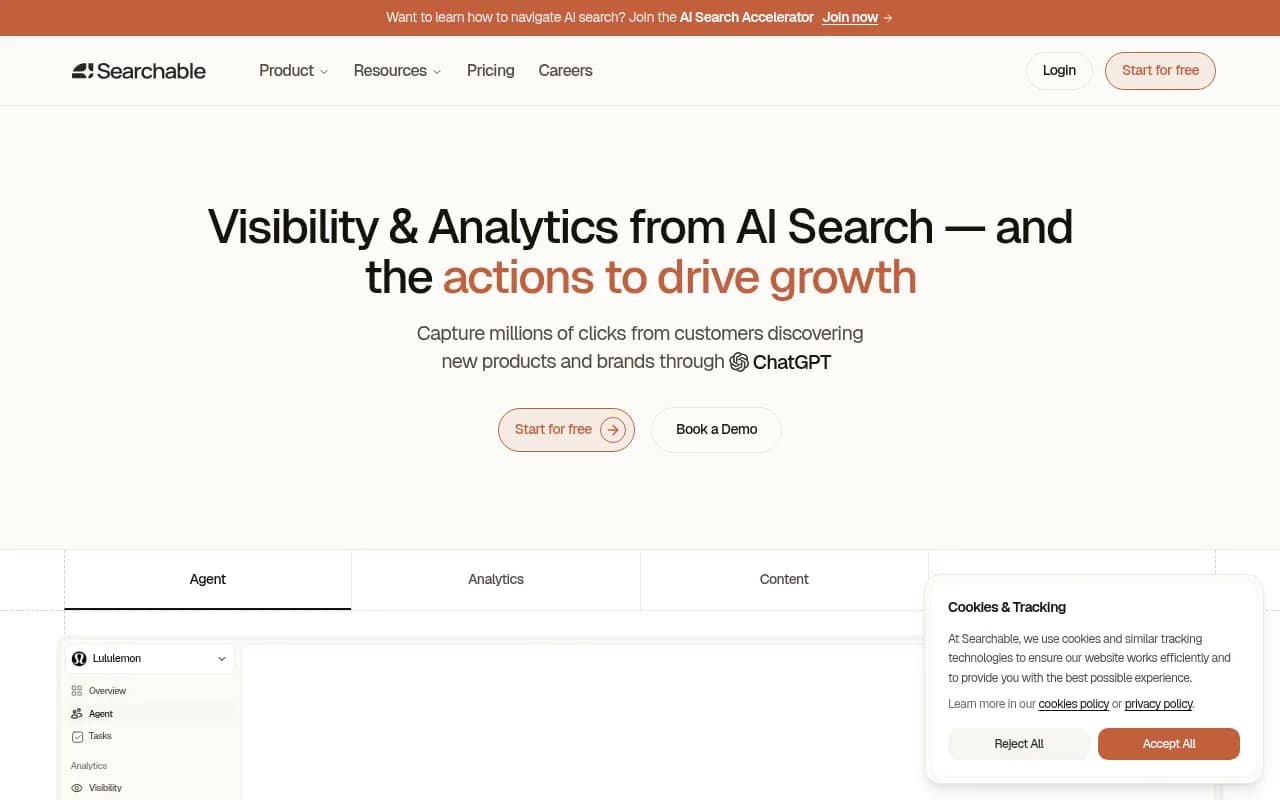
- Searchable offers a 14-day free trial, not a standing free plan. Its Pro plan runs $125 a month for 100 prompts on ChatGPT, Google AI Overviews and Perplexity, according to a competitor's breakdown that you should confirm on searchable.com.
- Most tools that say "free" mean a 7 to 14 day trial. Real free tiers exist, but each one caps prompts, engines, or projects.
- A manual spreadsheet routine covers 15 to 20 prompts for one brand without a line item, as long as you handle the pitfalls below.
- Free stops working once you track several competitors, need history, or need to know why AI cites a rival. That is the point to pay.
Why people look for a free Searchable alternative
Searchable is a solid product. One plan bundles prompt tracking with articles, technical audits, AI traffic analytics and an agent, with unlimited seats. The catch is the price ladder. According to Geoptie's comparison (a competitor, so verify the numbers), Pro costs $125 a month for one project and 100 prompts per engine. Claude, Gemini, Google AI Mode and Copilot are add-ons. Claude alone is reported at +$200 a month on Pro.
If you are a solo founder, a consultant testing the waters, or a team that needs a baseline before asking for budget, that is a lot of commitment for a first look. So the question becomes: what can you get for nothing, and what does "nothing" really cover?
Free tier, trial, or one-off grader: know which you are getting
These three get lumped together, and they behave very differently.
- Standing free tier. Stays usable indefinitely inside hard caps, or until a credit pool runs out. DeepSmith's useful distinction: credit-based plans deplete, cap-based plans keep running.
- Free trial. Full or near-full product for 7 to 14 days. Great for evaluating, useless for ongoing monitoring.
- One-off grader. A single scan. It gives you a snapshot, not a trend.
DeepSmith's own framing is blunt: most tools call a 7-day trial "free," and on day eight your data stops refreshing. DeepSmith is a vendor and lists itself, so read its picks with that in mind, but the framework is sound.
Free tiers and trials compared
The details below come from the vendors' own pages as reported in the research, plus DeepSmith's November 2026 roundup. Pricing changes often, and a few of these claims conflict between sources, so I have flagged them. Confirm each on the vendor's site before you sign up.
| Option | Type | What you get | The catch |
|---|---|---|---|
| Searchable | 14-day trial | Full Pro-style setup with tracking, audits and content | Trial only; Pro is $125/mo per Geoptie's figures |
| Promptwatch Explore | Standing free plan | 1 project, 10 prompts, 310 responses a month, ChatGPT only | No Agent Chat credits, visitor analytics, crawler logs or site audit |
| Promptwatch trial | 7-day trial (monthly billing) | The full paid product | Time-limited |
| AeoNut | Standing free | 1 project, unlimited prompts, 12 engines (per DeepSmith) | You bring your own AI provider key and pay that provider; second brand needs Pro at $99/mo |
| LLM Brand Monitor (Serpstat) | Standing free | 10 checks a month across 100+ models (per DeepSmith) | Very small check pool |
| PromptMonitor | $0 plan | Daily position tracking (per DeepSmith) | Limits vary, check at signup |
| Rankscale AI | Free tier | Page audits (per DeepSmith); Essential is EUR 20/mo | Audits rather than deep tracking |
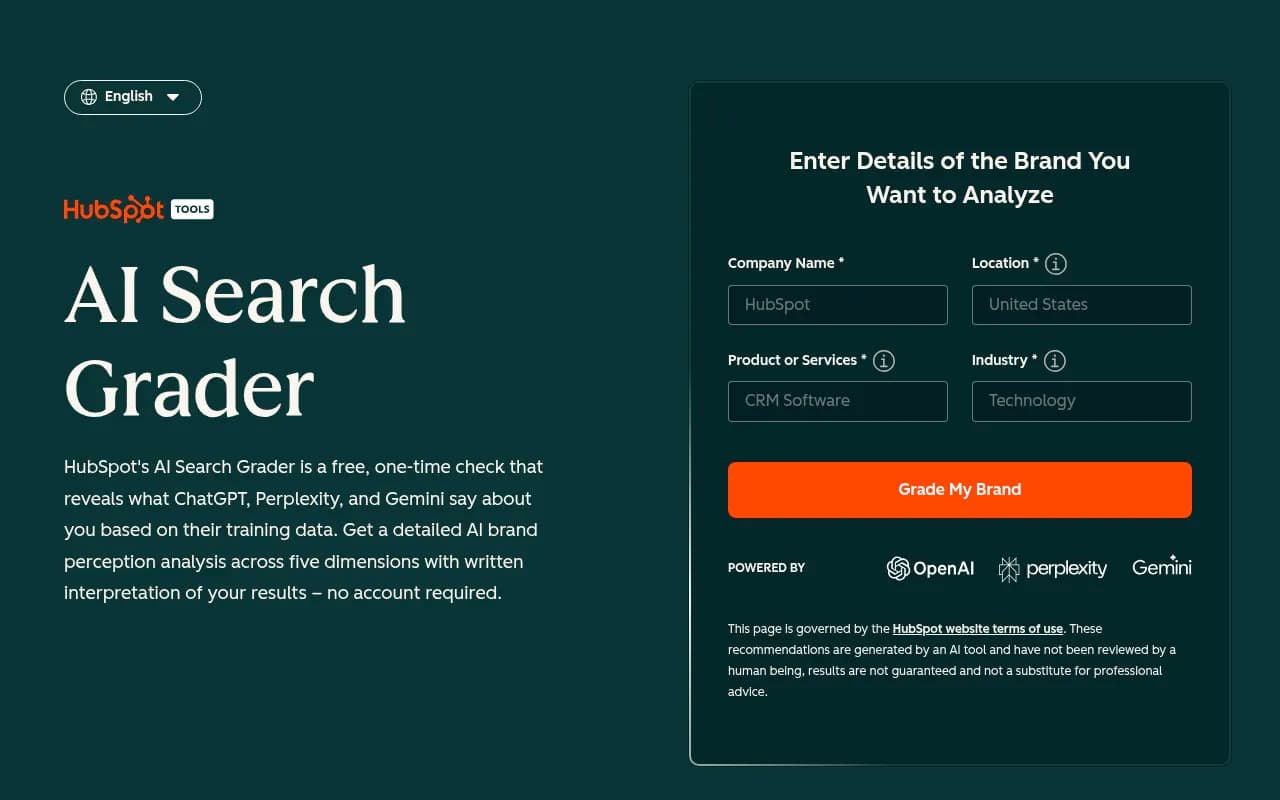
| HubSpot AEO | Free trial | 25 prompts across ChatGPT, Perplexity and Gemini, no card | Converts to $50/mo afterwards (per Rework's roundup) |
| Otterly.AI | Trial, or free tier per one source | Prompt monitoring from $29/mo | Sources conflict; verify at signup |
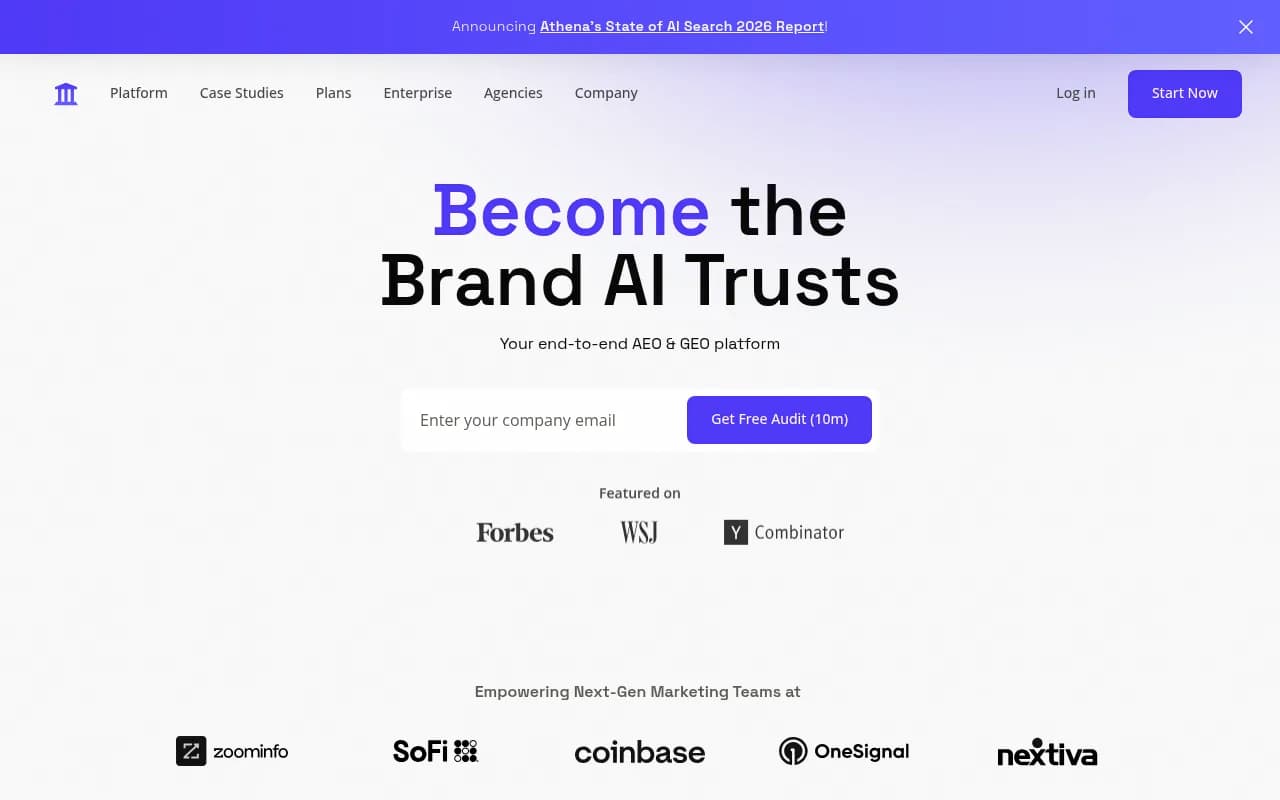
| AthenaHQ | Free account per one source | Basic tracking | Claim is unclear; verify |
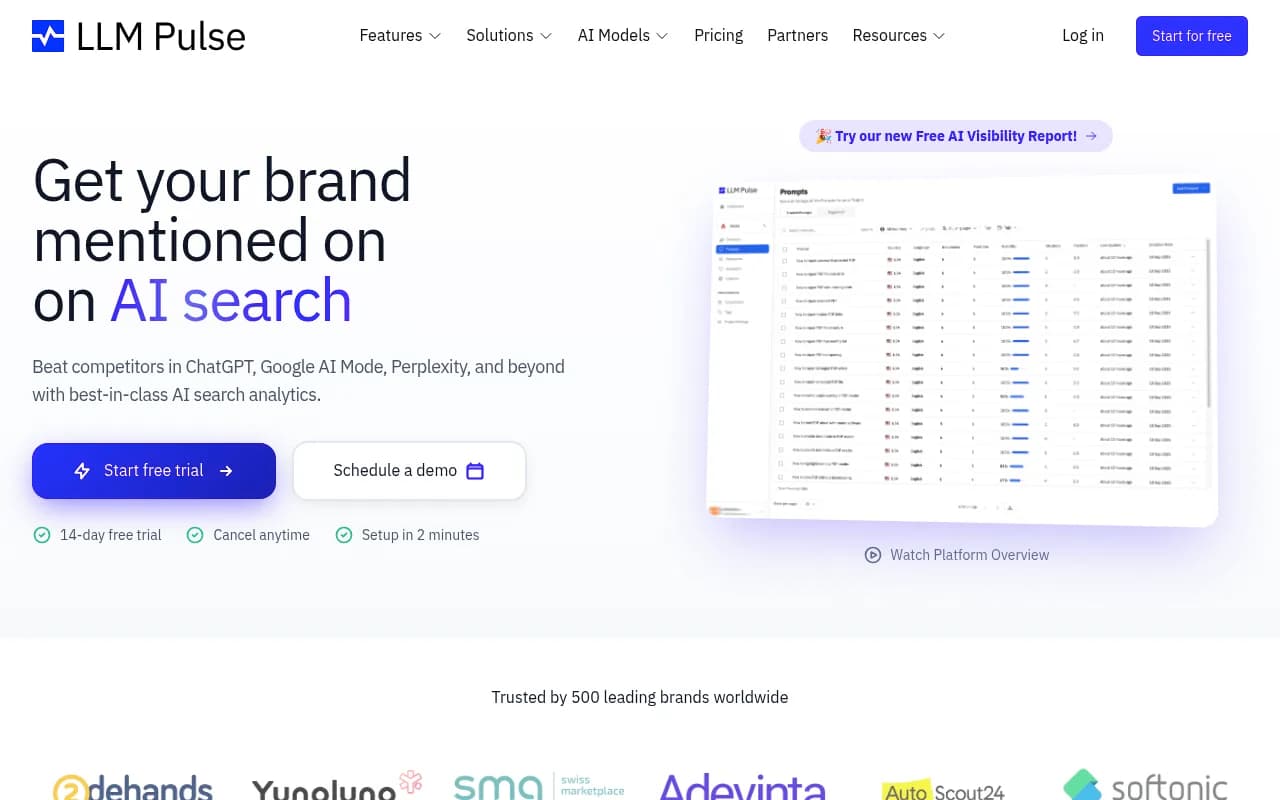
| LLM Pulse | 14-day trial | Includes AI Mode, weekly tracking | Trial only |
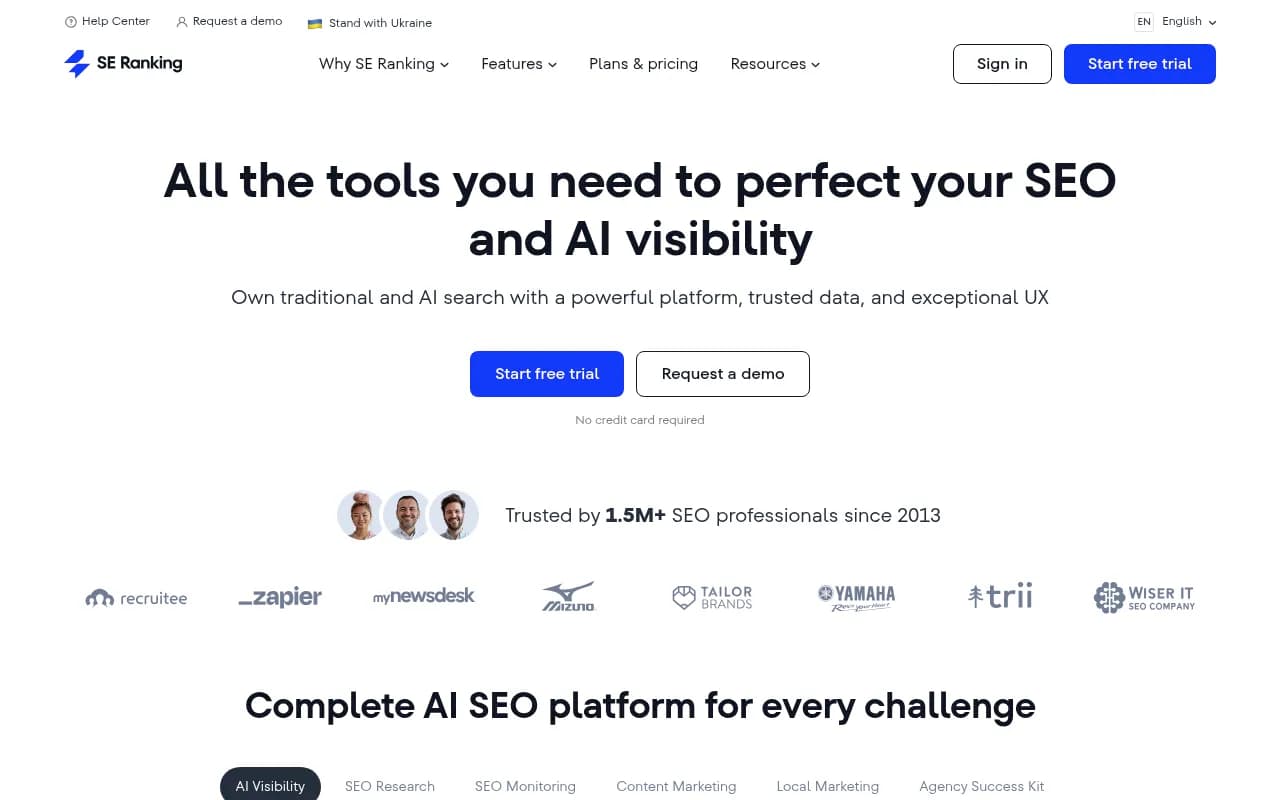
| SE Ranking | 14-day trial | AI prompt tracking included | Trial only |
A few of these are worth a closer look.
Promptwatch: free Explore plan plus a real trial
Promptwatch is an end-to-end AI visibility platform, so it is a different animal from a pure tracker, and the free Explore plan is deliberately small: one project, 10 prompts, ChatGPT only. Treat it as a way to see real-interface data before upgrading. For the full product, the 7-day free trial is the better test, since it includes crawler logs, visitor analytics, Agent Chat and the content tools that a free tier leaves out. Paid plans start at $95 a month (Essential), which undercuts Searchable's Pro, and you can confirm current pricing at promptwatch.com/pricing.

If you only want a one-time look with no signup friction, the free AI visibility report scans how ChatGPT, Gemini and Perplexity talk about your brand, with a crawler access check.
AeoNut and the bring-your-own-key model
AeoNut's free-forever plan sounds almost too good: unlimited prompts, 12 engines. The trade is that you supply your own AI provider key, so the data cost lands on your provider bill. It includes a cost preview and budget alerts, which helps. Two cautions. This claim comes from DeepSmith, not from AeoNut's own site, and API answers can differ from what users see in the real interface of ChatGPT or Perplexity. For a rough read it is fine. For something you will show a CMO, check a few answers by hand.
Serpstat, PromptMonitor and Rankscale
These are the ones to try if you want ongoing, if small, monitoring for free.
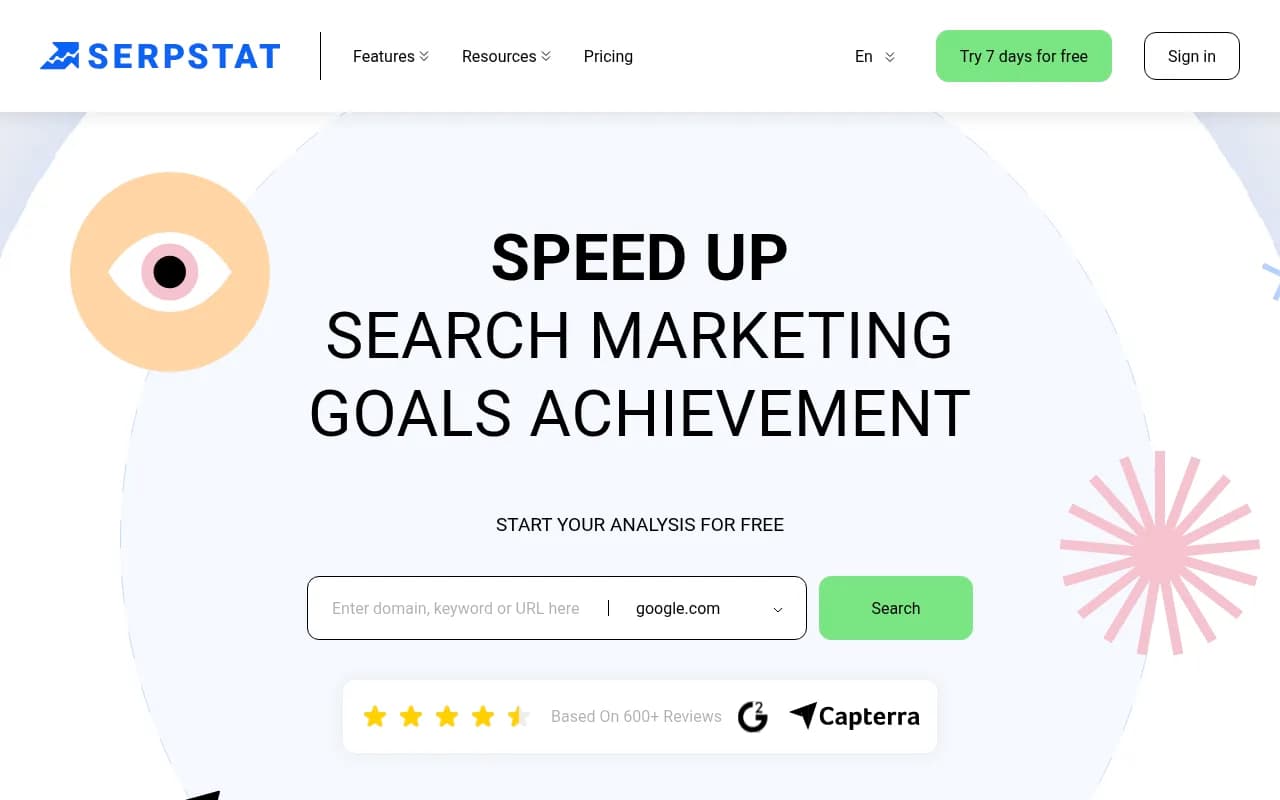
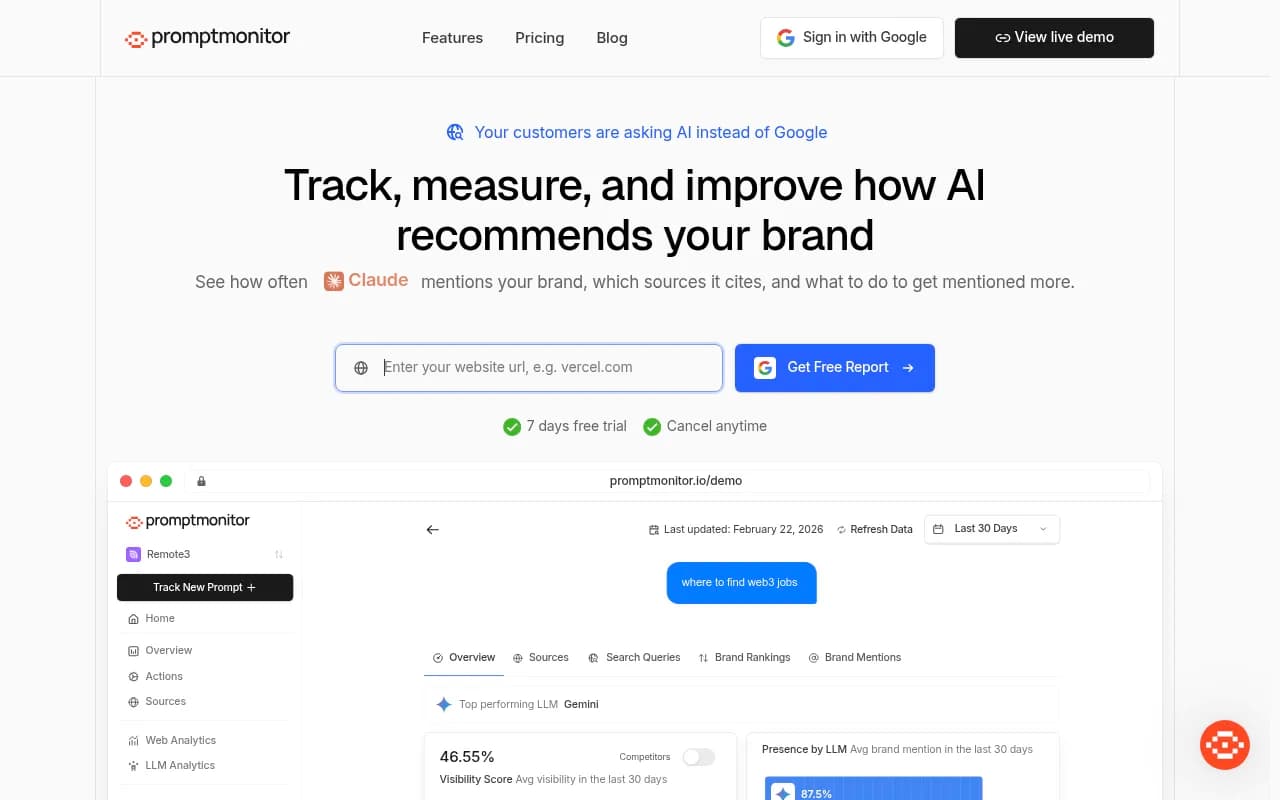
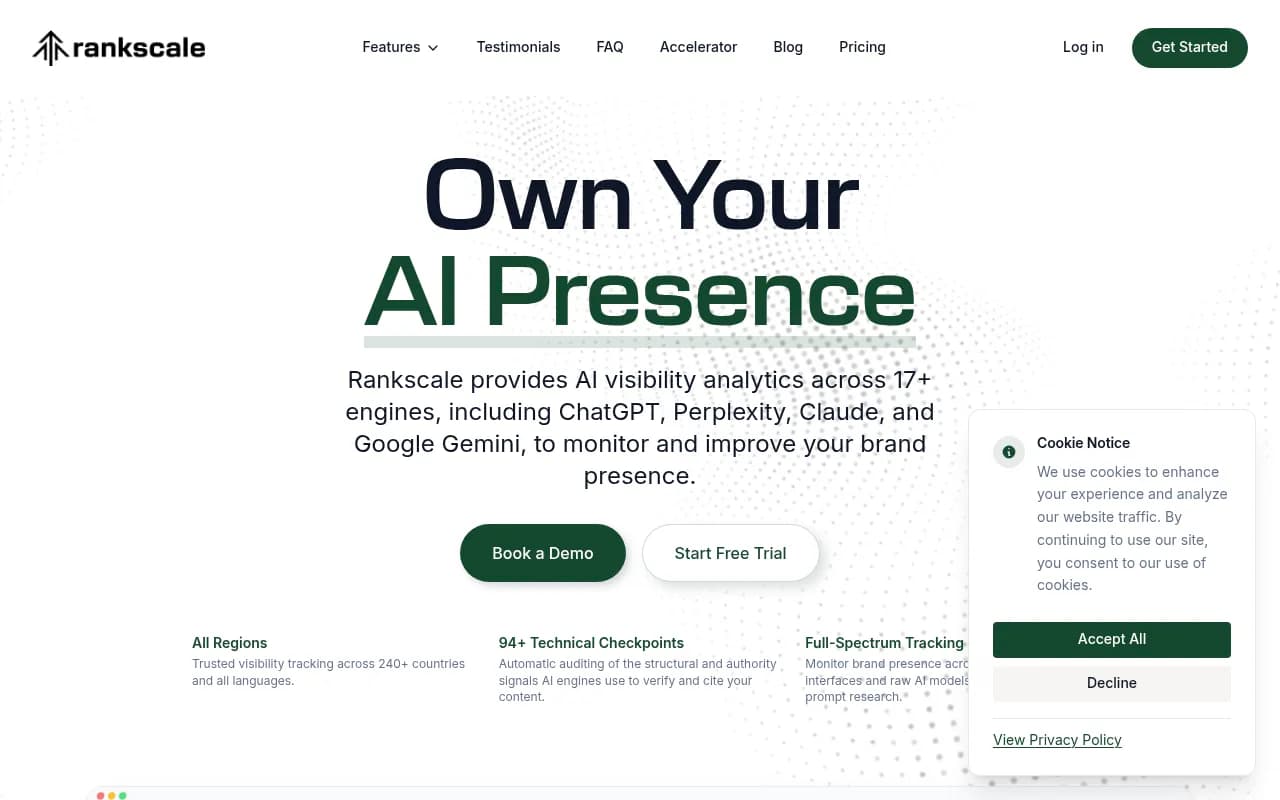
Serpstat's 10 checks a month go quickly. PromptMonitor's daily position tracking is the closest to a real free monitor in this group. Rankscale leans on page audits, which is useful if your problem is crawlability, not mentions.
HubSpot AEO and the one-off graders
HubSpot's free trial gives 25 prompts across three engines without a card, then moves to $50 a month. It is a decent way to see a baseline if you already live in HubSpot.
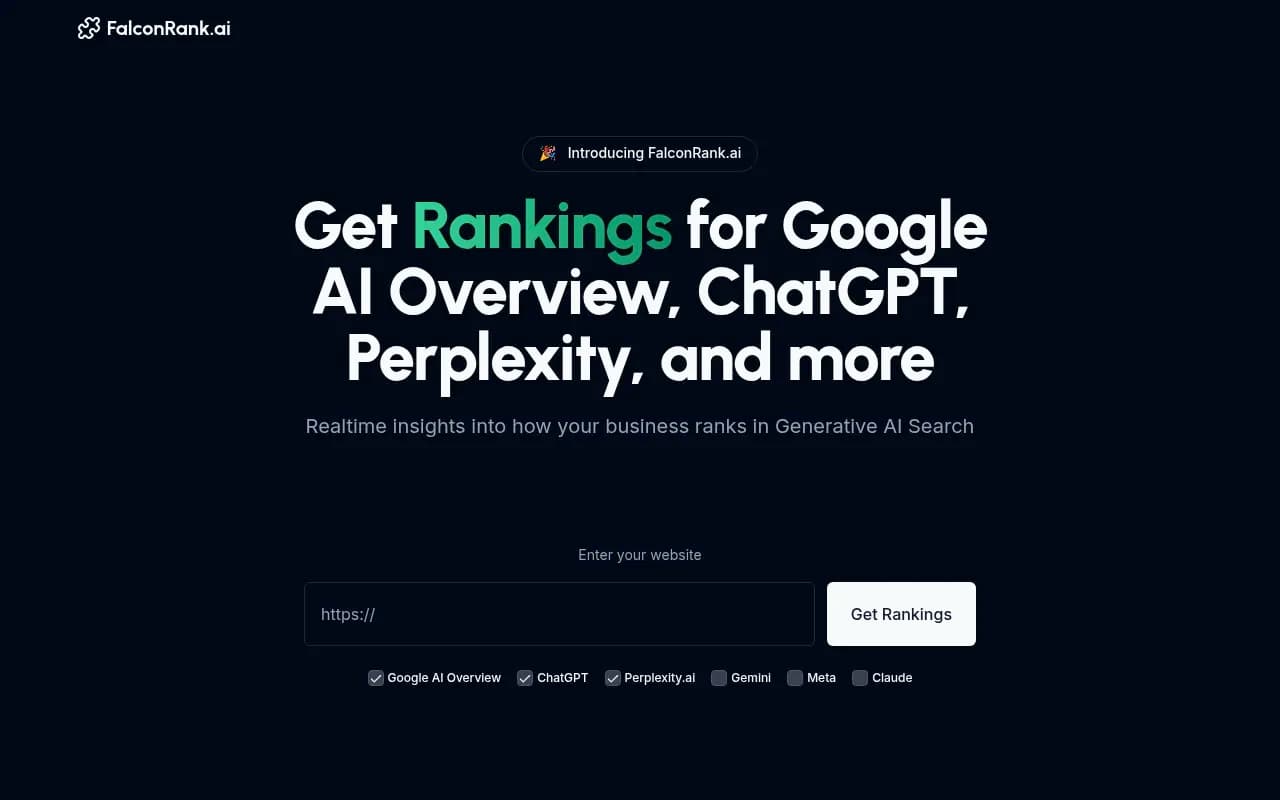
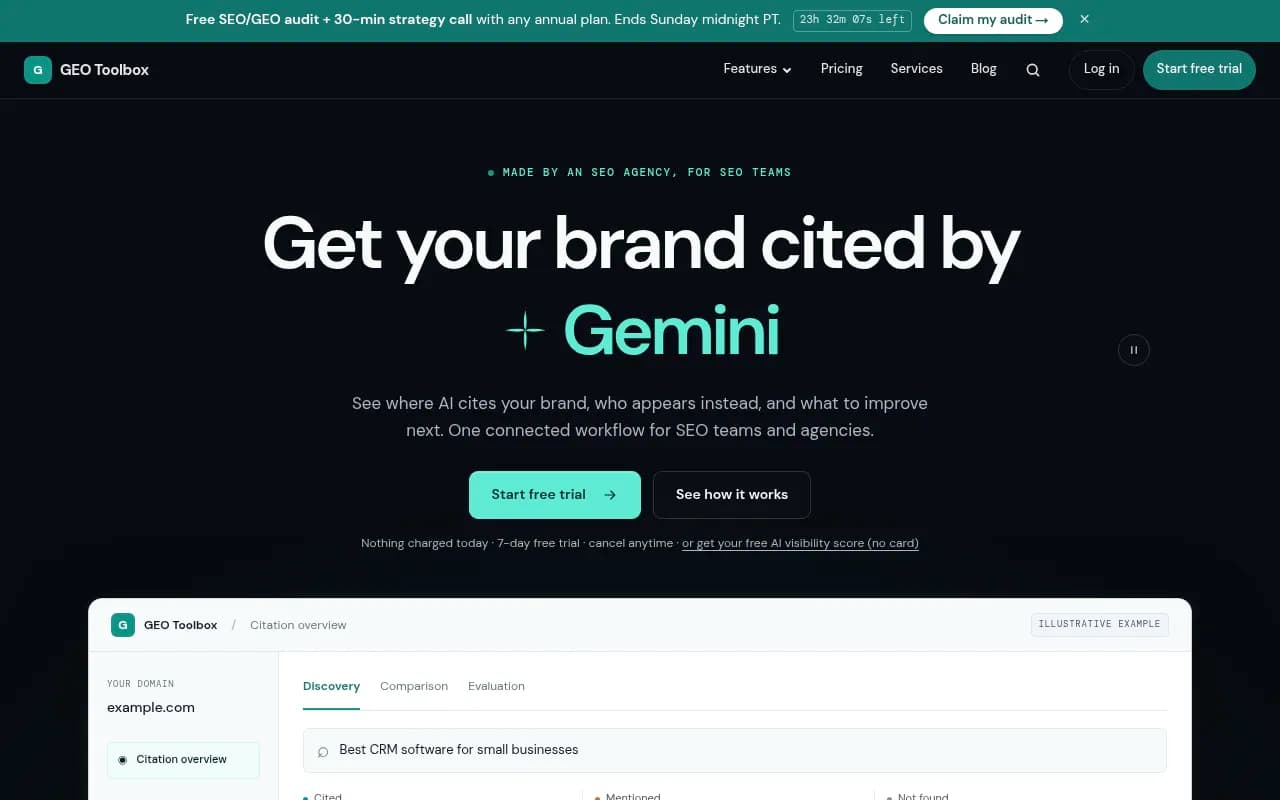
Other free scanners in the catalog include FalconRank and GEO Toolbox. They are snapshots, so use them to find out where you stand today, not to track progress.
Trials from other trackers
If you want a fuller product for two weeks, these are common trial picks.

Otterly is the cheapest paid entry in several roundups at $29 a month. Whether it has a standing free tier or only a trial is unclear across sources, so check before you plan around it.
DIY prompt tracking: the free method that actually works
Manual tracking costs time, not money, and it is more honest than people give it credit for. You see the real interface, the way a buyer would. Here is a routine I would use for one brand.
Step 1: build a small prompt set
Pick 15 to 20 prompts. Mix three types: category questions ("best project management tool for agencies"), comparisons ("Brand A vs Brand B"), and branded questions ("is Brand A good for small teams"). Write them the way a real person types, in the language and country you care about.
Step 2: check the short queries, not just the long prompt
Promptwatch's ChatGPT query fanout data shows that ChatGPT's own web searches are short and keyword-like. Average query length fell from about 117 characters in early December 2025 to the high 80s through February and March 2026, and was about 53 characters once fanouts returned in April. The same report puts average fanouts per response at roughly 2.15 in early December 2025 and 1.84 by early March 2026. So after your full prompt, run a few trimmed keyword versions too. You are testing against what the model actually searches. The free query fan-out generator can help you draft them.
Step 3: log the answer, the position and the sources
Use a spreadsheet with these columns: date, engine, prompt, brand mentioned (yes/no), position in list, cited sources, sentiment note. Without a log you have no history, and history is the one thing free tools rarely keep.
Step 4: do not mistake no-search for absence
This is the pitfall that burns people. Promptwatch's average sources per response data counts only responses where web search was triggered. ChatGPT cites about 5 sources per web-search answer. If a manual check shows zero citations, search may simply not have run. Rephrase the prompt to prompt a lookup, or note it as "no search" in the log instead of marking yourself absent.
Step 5: pick engines with different behavior
The same dataset shows how differently engines cite. Google AI Overviews averages about 10 sources and holds steady. Perplexity cites almost exactly 10 sources daily, which makes it a stable test bench when you change a page. Copilot swung from under 2 to nearly 17 sources within a few weeks, so judge it on monthly trends. Check weekly, and compare month over month.
Step 6: use the interface, with a clean session
AI answers vary by location, account memory and personalization. Use a logged-out or fresh session, and the same country each time. Promptwatch's own approach is real-UI monitoring for this reason: API answers can differ from what users see.
If you can automate any of it, the catalog has options.
A scheduled workflow that fires your prompts through a model API and writes to a sheet gets you cheap history, with the caveat above about API versus interface differences. For raw data, SERP and search APIs are available.
Is free enough for you?
| Situation | Free enough? | Why |
|---|---|---|
| One brand, 15 to 20 prompts, checking weekly | Yes | Manual log plus a capped free tier covers it |
| Pitching your boss for budget | Yes, short term | A baseline report and a few screenshots are enough |
| Tracking 3 to 5 competitors | No | Manual work multiplies and free tiers cap at one brand |
| Need to know which pages AI cites and why | No | Needs citation data and crawler logs |
| Agency with multiple clients | No | Free plans are single-project |
| Need trends over months | Borderline | Only if you keep your own log |
What free cannot do
Competitor tracking at scale. Free tiers are one brand, so five rivals means five times the manual work. Beyond that, most free plans give you a score, not a reason. They will not tell you whether AI bots can read your pages, which Reddit thread or listicle feeds an answer, or whether a page you published made a difference. And they do not write or publish anything.
This is where an end-to-end platform pays for itself. Promptwatch traces citations, shows IP-verified AI crawler logs, and its Content Agent writes and publishes pages to WordPress, Webflow or Framer, then checks whether they get crawled and cited. If you want to see that loop, book a demo or run the trial. Business-tier features such as the Content Agent and Fact Check start at $579 a month, so confirm what you need against the pricing page.
If you have an SEO agency doing this for you, ask what tool they use and what it costs. 1001 SEO Media, which publishes this site, uses Promptwatch for its own GEO work.
A sensible plan for the first 30 days
- Week 1: run the free AI visibility report and one grader to get a baseline.
- Week 1: build the 15 to 20 prompt sheet and run it manually in ChatGPT, Perplexity and Gemini.
- Weeks 2 and 3: sign up for one standing free tier (PromptMonitor, Serpstat or Promptwatch Explore) and compare its answers against your manual log.
- Week 4: start one full trial, Searchable's 14 days or Promptwatch's 7, with your prompt set already loaded so you do not waste the clock.
- End of month: decide using your own data. If you found citation gaps you cannot fix by hand, pay. If not, keep the spreadsheet going.
Starting a trial on day one with no prompts ready is the mistake I see most. Prepare first and the trial is worth ten times as much.
Where to look next
For a wider list of paid and free options, the GEO software directory at bestgeosoftware.com is a good next stop. For broader context on how AI engines pick sources, Promptwatch's citation research hub has current reports.
FAQ
Does Searchable have a free plan?
No standing free plan appears in the sources I reviewed. It offers a 14-day trial, and its Pro plan is reported at $125 a month. Check searchable.com for current terms.
What is the best truly free AI visibility tracker?
It depends on your cap tolerance. AeoNut gives the most engines and prompts but needs your own API key. PromptMonitor has daily tracking on a $0 plan. Promptwatch's Explore plan is ChatGPT only, 10 prompts. All of these claims should be confirmed at signup.
Can I track AI visibility manually?
Yes. Use 15 to 20 prompts, a fresh session, a logging sheet, and note whether web search ran. It works for one brand and breaks down with competitors.
When should I pay?
When you need competitor tracking, history, citation analysis or crawler data, or when your team needs help turning gaps into published content.