
Key takeaways
- Most AEO tool roundups are written by vendors who rank themselves first, so this scorecard shows its rubric and tells you how to reproduce it.
- Data accuracy matters most. If a tool reads from an API instead of the real ChatGPT or AI Overviews interface, its numbers can differ from what your buyers see.
- Actionability separates dashboards from platforms. A score with no next step is just a report.
- Value is cost per useful response, not the sticker price. Cheap trackers get expensive when you need crawler logs, traffic attribution and content on top.
- Run your own 25-prompt test for two weeks before signing anything. It is the only scorecard that cannot be gamed.
Why another AEO scorecard
I read the roundups before writing this one. Profound's guide covers 19 tools and puts Profound at the top. The HubSpot list ranks HubSpot's own AEO product. AI Rank Lab tested 11 tools over eight weeks and discloses that its own product comes first. Nick Lafferty's report scores 9 platforms in depth, and the Profound figures it cites come from Profound's own data.
None of that makes them useless. The AI Rank Lab method is good: the same 25 prompts in every tool, compared against manual checks in the real engines. But it does mean you should treat any single vendor-written ranking as a pitch with a table in it.
This scorecard has a bias too, and I will say it up front. This site is published by 1001 SEO Media, an SEO agency that uses Promptwatch for its own GEO work. I rate Promptwatch accordingly, with reasons, and I give the criteria so you can disagree with me.
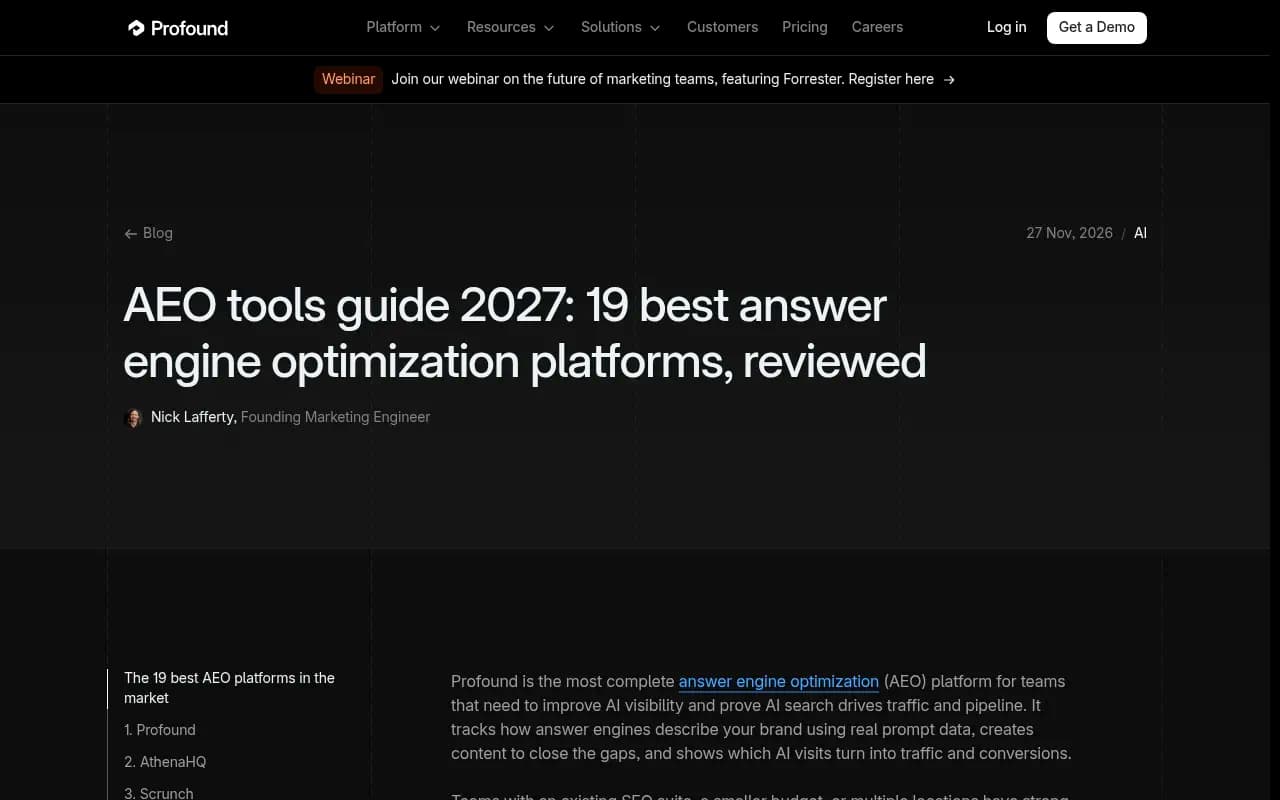
Vendor-authored comparisons like this one are useful for feature lists. Read the rankings with the author's incentive in mind.
The scoring rubric
Three dimensions, each scored 1 to 5. I weighted them 40/35/25.
| Dimension | Weight | What a 5 looks like | What a 1 looks like |
|---|---|---|---|
| Data accuracy | 40% | Collected from real user interfaces, multiple countries and languages, many prompts per topic, verifiable against manual checks | Mostly API output, one run per prompt, opaque volume estimates |
| Actionability | 35% | Tells you which page to write or fix, helps do it, and checks whether it worked | Shows a score and stops |
| Value | 25% | Low cost per response, crawler logs and traffic data included, no surprise add-ons | Pays for monitoring only, extras sold separately |
Why data accuracy gets the biggest weight
Everything downstream depends on it. If the tracker shows you a wrong picture, the content you write to fix it is aimed at the wrong target.
Two things from Promptwatch Data make this concrete. First, citation patterns move fast. In June 2026 Reddit led ChatGPT citations at 3.71% and Wikipedia had 0.56%. In the November 2026 citation share report, Reddit is at 0.23% and Wikipedia is at 0.03%, out of the top 20 entirely. Review sites like G2, Gartner, Capterra and Trustpilot now hold five of the top 10 spots. A tool built on last spring's citation patterns is showing you history.
Second, a single prompt tells you very little. In Promptwatch's data on unique domains per response (Sep 28 to Oct 4, 2026), 47.6% of ChatGPT responses cited 10 or more domains and 66.1% cited at least eight. Only 6% cited three or fewer. So a binary "were you cited, yes or no" is a weak measure. Good tools track position, share of attention and who else shares the answer, across many prompts.
Why API data is a yellow flag
User-facing answers, citations and shopping results can differ from API output. Tools that only call model APIs measure what a model believes, which is useful, but it is not what a buyer sees in ChatGPT Search or Google AI Mode. The best setups track both and label which is which.
The 20-tool scorecard
Scores below are my assessment from published feature sets, vendor documentation and the roundups above. I did not run a fresh 8-week lab test on all 20, and I did not verify pricing for most of them, so I do not quote prices except where I know them. Treat anything marked as a judgment call as exactly that.
| Tool | Data accuracy | Actionability | Value | Weighted score |
|---|---|---|---|---|
| Promptwatch | 5 | 5 | 4.5 | 4.9 |
| Profound | 5 | 4 | 3 | 4.2 |
| AthenaHQ | 3.5 | 4.5 | 3.5 | 3.9 |
| Scrunch | 4 | 3.5 | 3.5 | 3.7 |
| Semrush One | 3.5 | 3.5 | 4 | 3.6 |
| Ahrefs Brand Radar | 3.5 | 3 | 4 | 3.5 |
| HubSpot AEO | 3 | 3.5 | 3.5 | 3.3 |
| Peec AI | 3.5 | 2.5 | 4.5 | 3.4 |
| Otterly.AI | 3.5 | 2.5 | 4.5 | 3.4 |
| Rankscale | 3 | 2.5 | 4 | 3.1 |
| Qwairy | 3 | 3 | 3.5 | 3.1 |
| LLM Pulse | 3 | 2.5 | 3.5 | 3.0 |
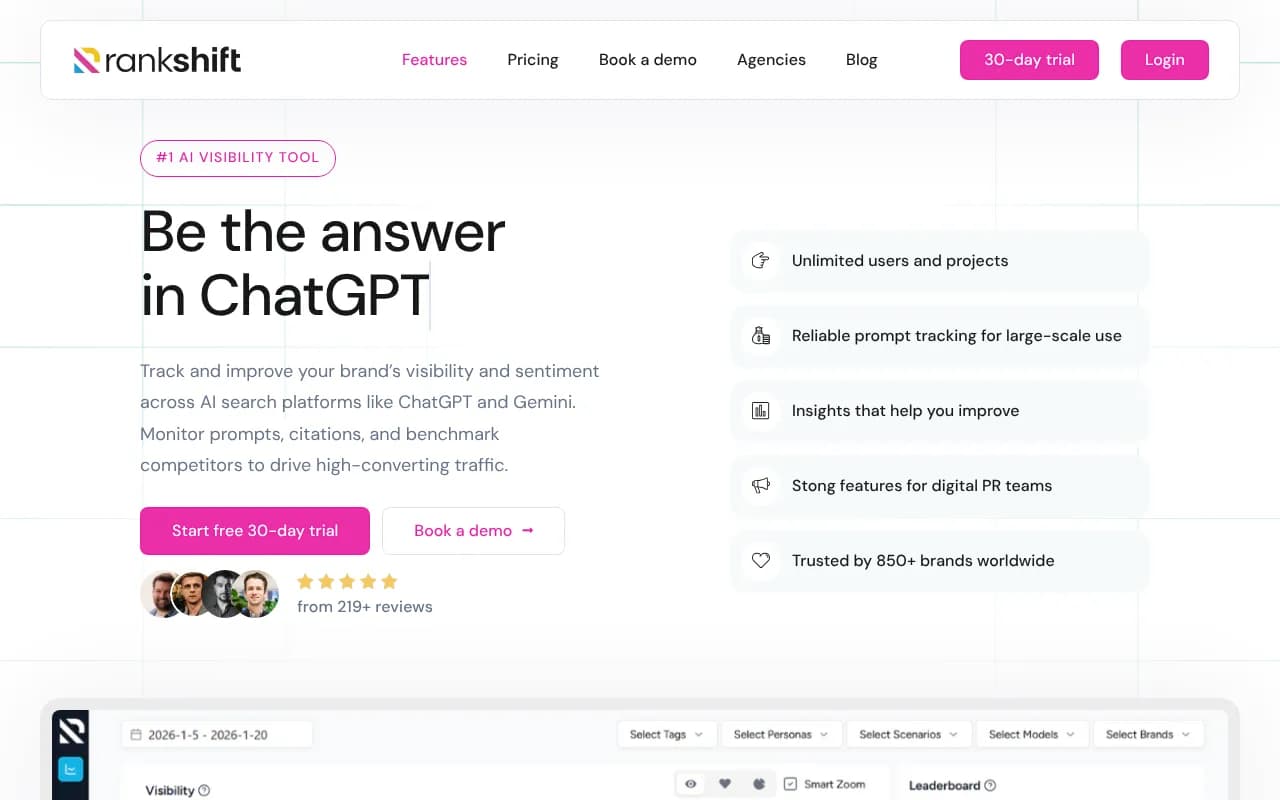
| Rankshift | 3 | 2.5 | 3.5 | 3.0 |
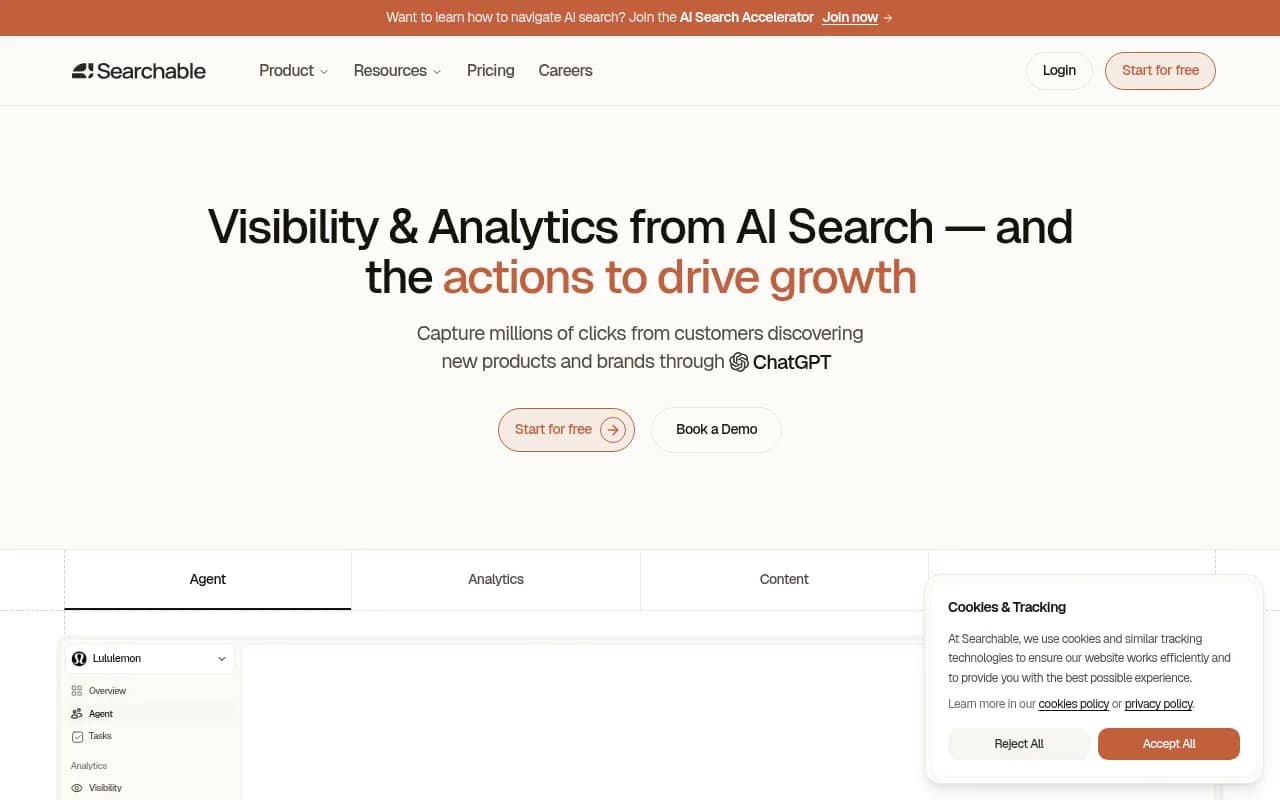
| Searchable | 3 | 3 | 3 | 3.0 |
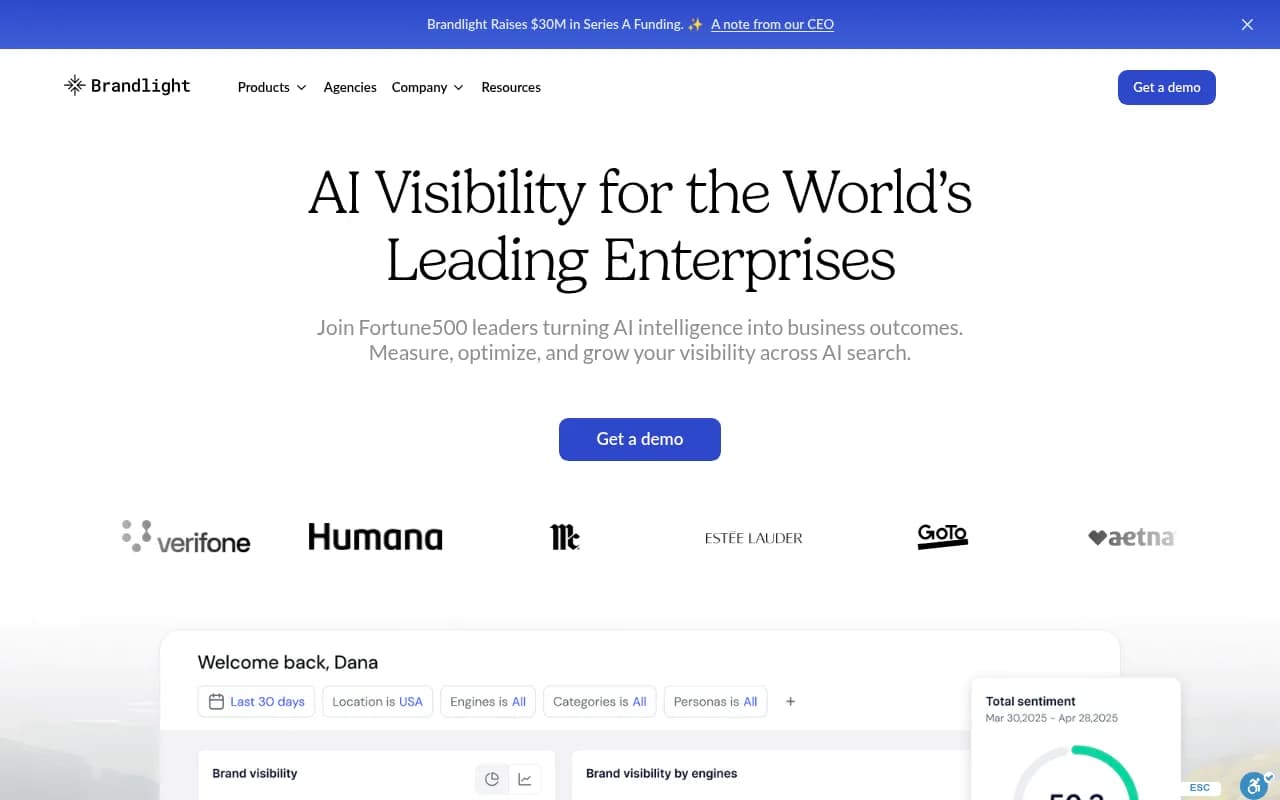
| Brandlight | 3 | 2.5 | 3 | 2.8 |
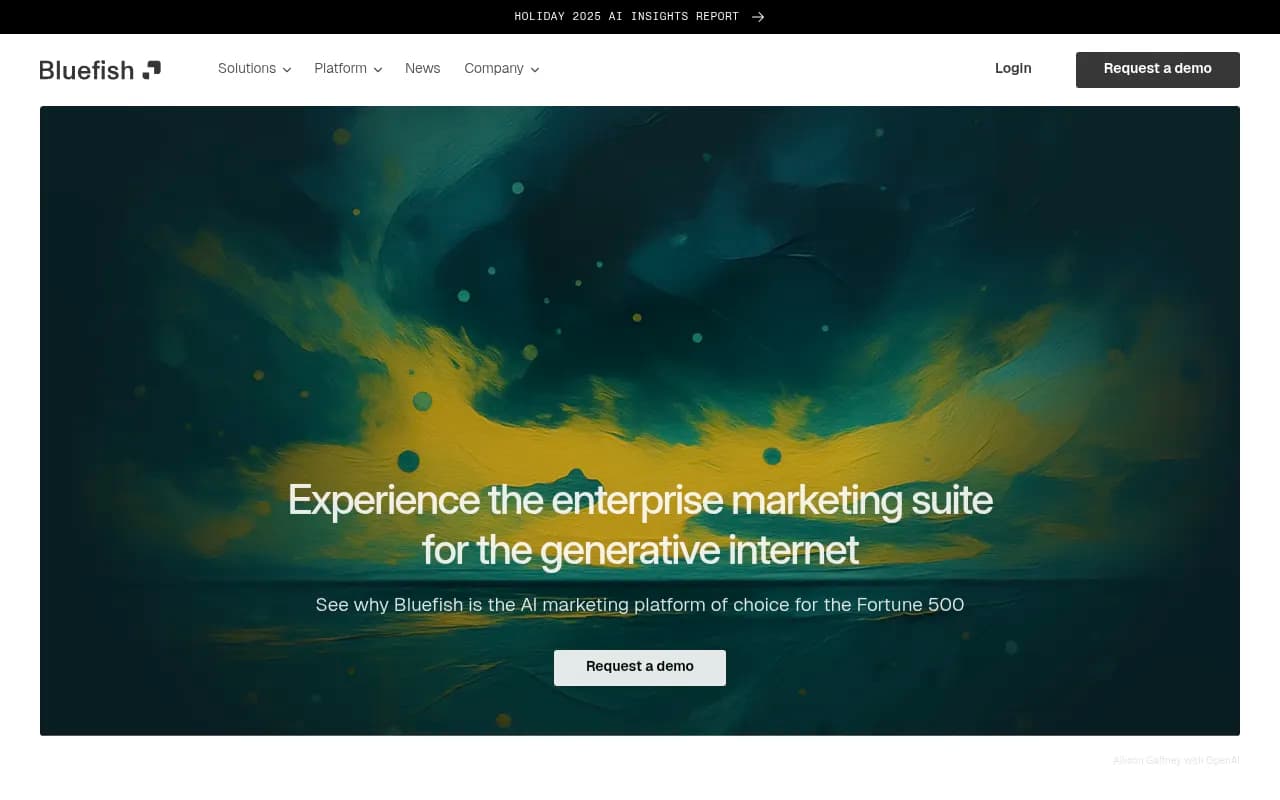
| Bluefish | 3 | 3 | 2.5 | 2.9 |
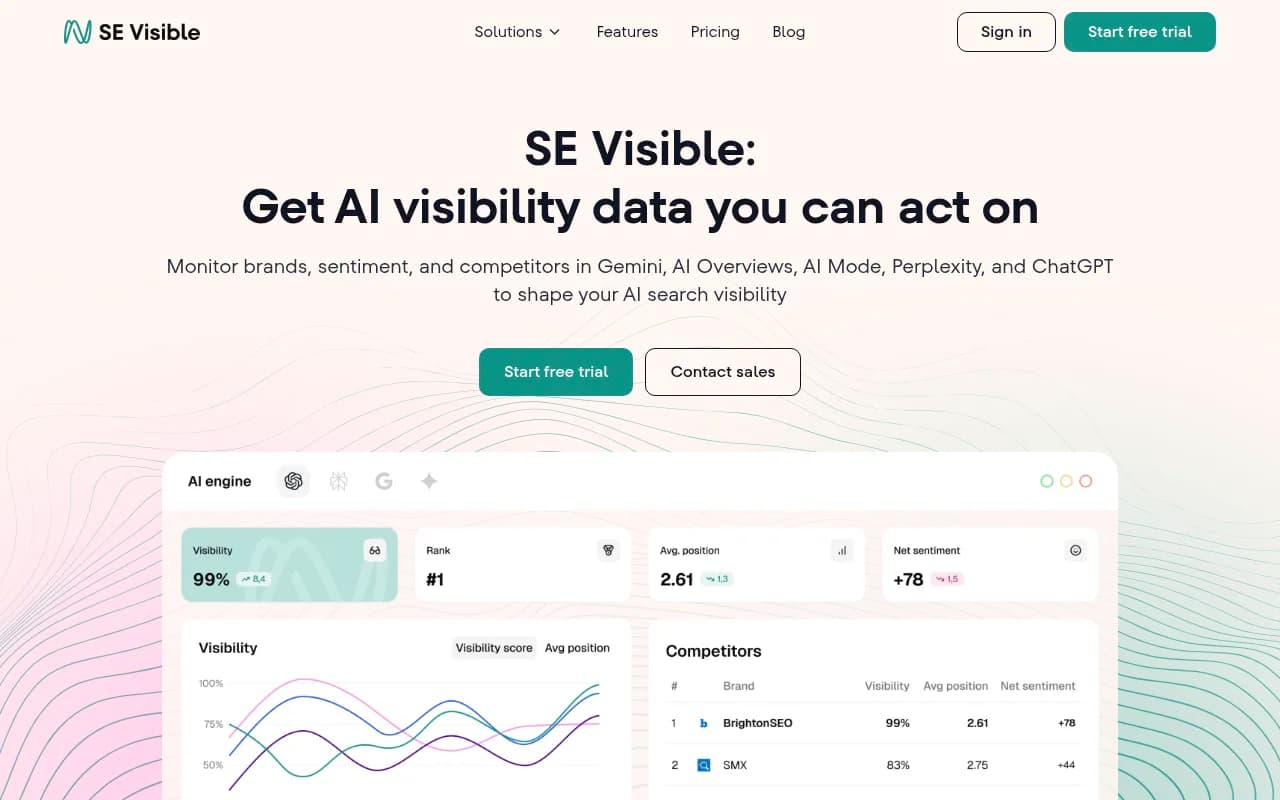
| SE Visible | 3 | 2.5 | 4 | 3.1 |
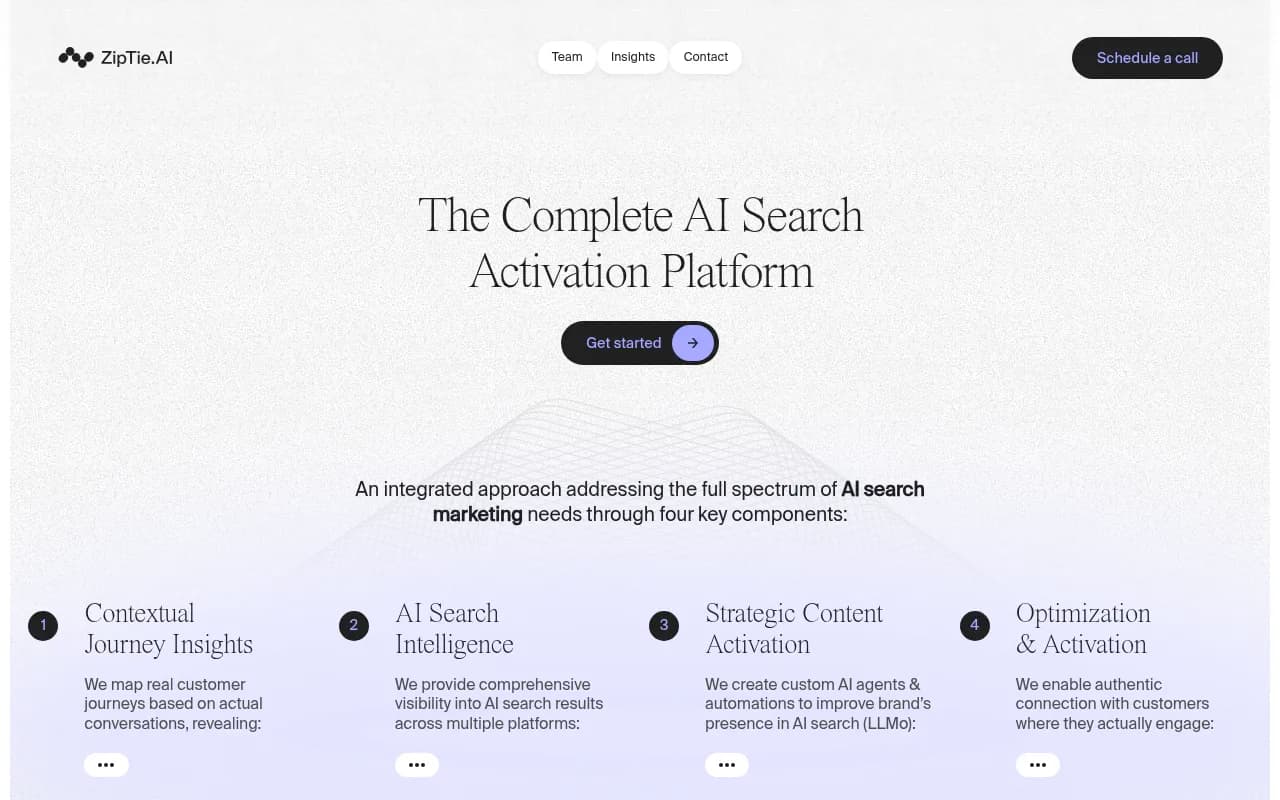
| ZipTie | 3.5 | 3 | 3.5 | 3.3 |
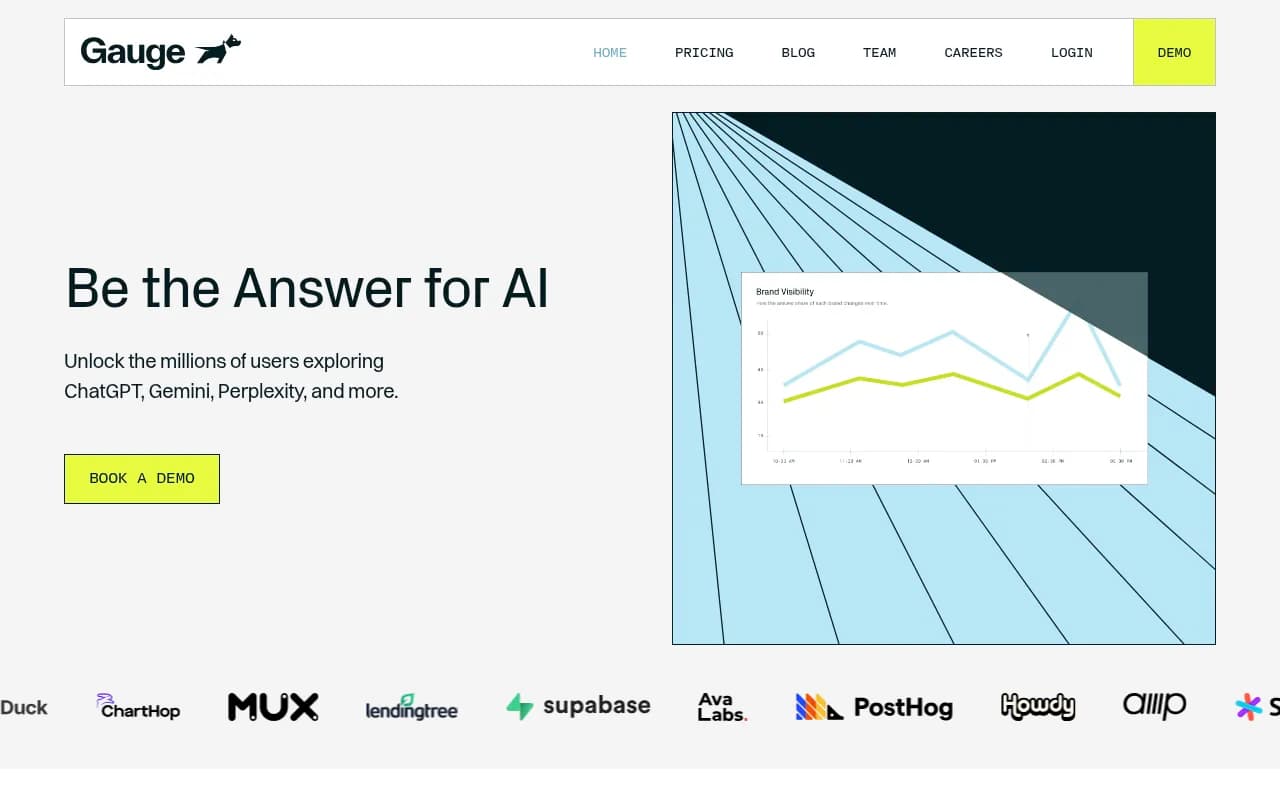
| Gauge | 3 | 3 | 3 | 3.0 |
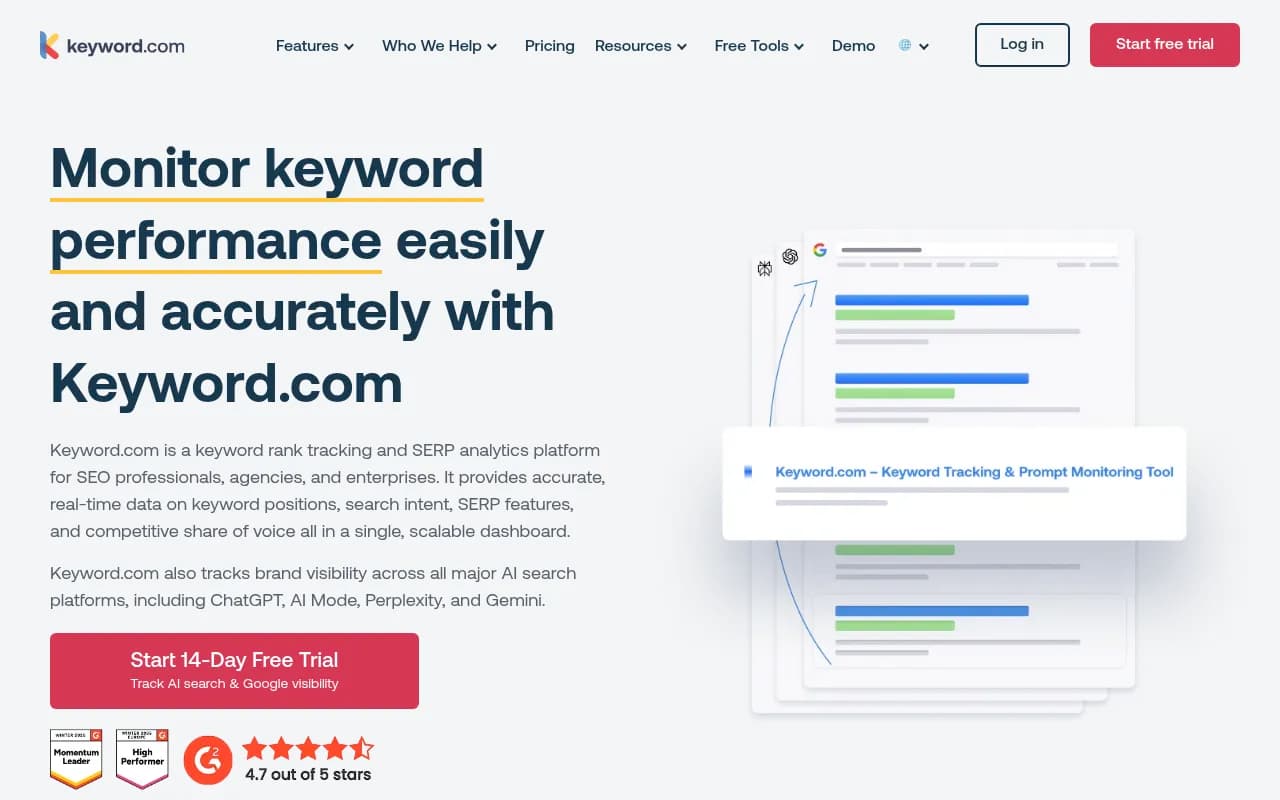
| Keyword.com | 3 | 2 | 3.5 | 2.8 |
The weighted score is accuracy x 0.4 + actionability x 0.35 + value x 0.25, rounded.
How to read the table
The spread between rows 3 and 15 is narrow, and my scores carry real uncertainty there. Differences under about 0.3 points are noise. The gap at the top and the gap at the bottom are the parts I am more confident about.
Also, score is not fit. A 3.4 tracker at a low price beats a 4.9 platform if you only need a monthly visibility number for a small site and have no team to act on findings.
Tool-by-tool notes
Promptwatch
Promptwatch scored highest on actionability, and that is where the gap is widest. It collects data from the real interfaces of ChatGPT, Google AI Overviews, Google AI Mode, Copilot, Gemini, Perplexity, Alexa and Meta AI per country and language, then runs a loop: monitor, trace the sources, act on gaps through the Action Board and Content Agent, and measure with IP-verified crawler logs and visitor analytics. Most tools in this table stop at the first step.

The honest caveats: the Content Agent, local targeting, Fact Check and faster-than-daily tracking start on the Business plan at $579 a month. Essential at $95 a month has no crawler logs or AEO articles. Confirm current numbers on the pricing page. There is a 7-day free trial on monthly billing, and the free AI visibility report takes minutes if you want a quick look first.
For head-to-head detail, see the Promptwatch vs Profound comparison and the 2026 side-by-side of GEO platforms.
Profound
Profound has the strongest monitoring depth outside Promptwatch, with a claimed 1.9B+ real prompts and attribution features. It is a serious enterprise product. Where it loses points on this scorecard is value and execution: it carries a higher price point, and it has no Reddit tracking or ChatGPT Shopping coverage in the comparison I rely on. I also would not repeat Omnibound's "95 to 98% citation accuracy" claim; I could not verify it.

AthenaHQ
AthenaHQ's Action Center gives prescriptive next steps, which earns it a high actionability mark. Profound's guide notes that its prompt volume rests on an undisclosed estimation model and that recommendations often need editing. That is a fair criticism from a competitor, and also consistent with what I would expect from any estimated volume figure.
Scrunch
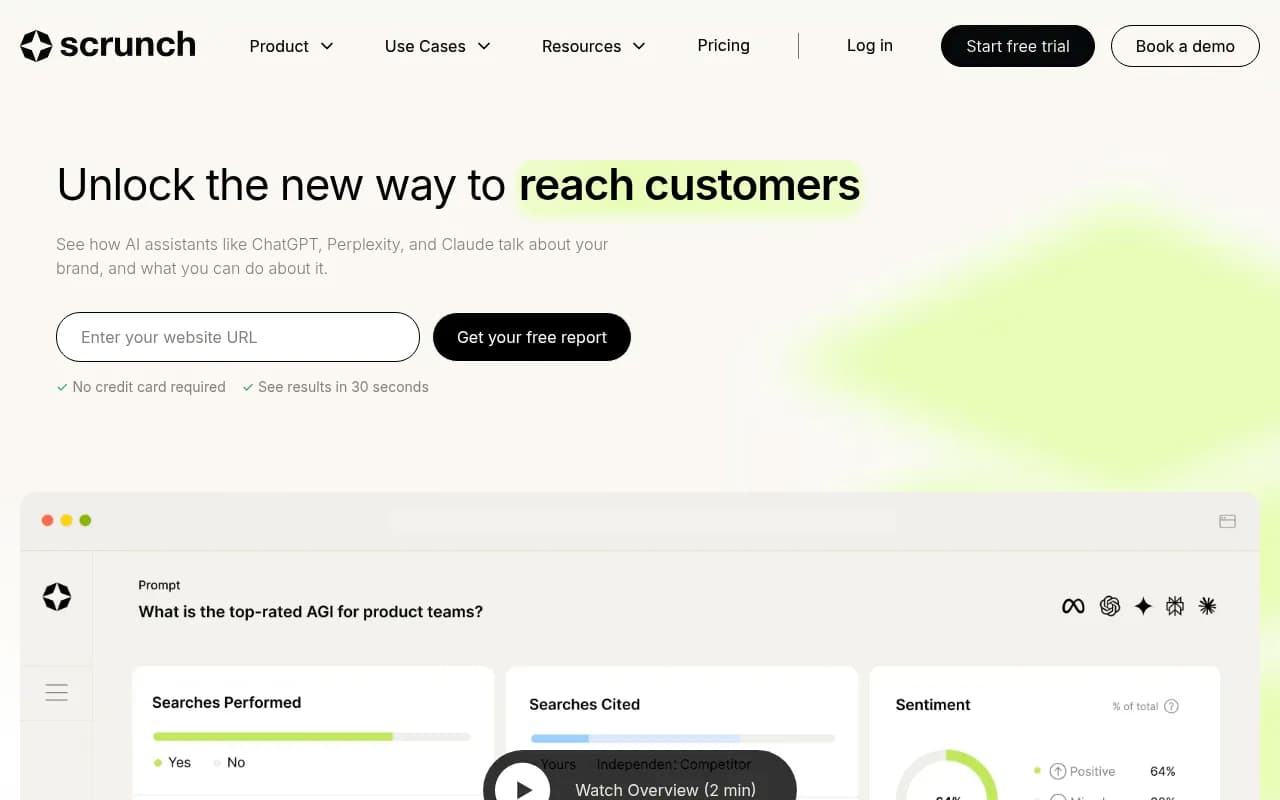
Strong monitoring with solid enterprise positioning. Pricing is on the higher end and it lacks the agentic execution layer.
Semrush One and Ahrefs Brand Radar
Both are SEO suites that added AI tracking. The upside is that your keyword, backlink and AI data sit in one login. The downside is fixed prompt sets and shallower AI-specific data, and no AI crawler logs or AI traffic attribution that I could find.
HubSpot AEO
Useful if your CRM already lives in HubSpot and you want AI visibility next to pipeline data. Its own best-software list names actionability as a criterion, which I agree with, but a vendor choosing criteria and then ranking itself deserves a raised eyebrow.
Peec AI and Otterly.AI
These are the clean, affordable trackers. They answer "was my brand mentioned" well and cheaply. They do not have crawler logs, visitor analytics or content generation, so actionability scores low. If monitoring is all you need, they are a reasonable buy.


The rest of the field
Rankscale, Qwairy, LLM Pulse, Rankshift, Searchable, Brandlight, Bluefish, SE Visible, ZipTie, Gauge and Keyword.com sit between 2.8 and 3.3 in my scoring. Most are monitoring-first. A few of them, such as ZipTie and Qwairy, have deeper analysis than their price suggests. Pick from this tier only if you have a specific reason, such as an existing SE Ranking subscription (SE Visible) or an enterprise procurement path (Bluefish).
For a longer list by category, the GEO software directory covers many more options than fit in a 20-row table.
Feature checklist behind the scores
This is the second table I would actually use when comparing vendors in a call.
| Capability | Why it matters | Who has it in this list |
|---|---|---|
| Real-UI data collection | Matches what buyers see | Promptwatch, Profound, a few others |
| Prompt volumes with disclosed method | Lets you prioritize | Promptwatch, Profound (check method) |
| AI crawler logs | Separates access problems from content problems | Promptwatch, Profound |
| Visitor analytics for AI traffic | Proves revenue impact | Promptwatch, Profound |
| Content generation with CMS publishing | Closes the loop | Promptwatch (WordPress, Webflow, Framer) |
| Reddit, YouTube, LinkedIn citation tracking | Social sources are where much influence sits | Promptwatch |
| Shopping and ads tracking | E-commerce and paid placements | Promptwatch |
How to run your own test
The best idea in the AI Rank Lab article is also the simplest: use the same prompts everywhere and compare to a manual baseline. Here is a version you can do in two weeks.
- Pick 25 prompts. Mix organic, brand-specific and competitor comparison prompts, because they behave differently. In Promptwatch's data, only 21.3% of brand-specific responses cite 10 or more domains, against 52.5% for organic ones.
- Check each prompt by hand in ChatGPT, Gemini, Perplexity and Google AI Mode, logged out where possible. Write down whether you appear, where, and which sources are cited.
- Load the same prompts into every trial. Run them for a week.
- Compare. Count mismatches against your manual log. Anything over a quarter wrong is a red flag.
- Implement the top three recommendations from each tool that offers them, then measure citation and traffic changes after a few weeks.
- Ask each vendor how long it takes to see data you can act on. Track it.
Check fanout assumptions
Query fanout modelling is another place tools differ. Promptwatch's fanout data shows average searches per ChatGPT response falling from 2.15 in early December to about 1.84 by early March, and fanout query length shrinking from about 117 characters to the high 80s. A tool that models fanouts should reflect shifts like this. The fan-out generator in the free tools is a quick way to sanity check what a given prompt expands into.
Which tool for which team
| Your situation | Start with |
|---|---|
| You want monitoring plus content, crawler logs and traffic in one place | Promptwatch |
| Large enterprise, heavy monitoring needs | Profound or Promptwatch Enterprise |
| Already deep in Semrush or Ahrefs | Add their AI module, then reassess in a quarter |
| Small site, just need a visibility number | Peec AI or Otterly.AI |
| Agency managing many clients | Promptwatch agency plans, which start at $199 a month for Kick-off |
| Single-click experiment before buying anything | A free grader or the free Explore plan |
If you manage clients, the agency solutions page lays out the pitch-report workflow. And if you would rather hand the whole thing to specialists, 1001 SEO Media runs GEO programs on Promptwatch.
What I would not trust
- Rankings with no stated methodology.
- Accuracy percentages with no test described.
- Volume numbers from "proprietary models" you cannot inspect.
- Scorecards where the author's own product sits at number one and nothing is rated below a 4.
That last point includes this one, so check my weighting against your own priorities. If you value price over everything, flip the weights and the Peec AI and Otterly.AI rows move up. That is fine.
Nick Lafferty's report takes a similar scoring approach with 9 platforms evaluated in depth and 11 more listed. It is worth reading next to this one.
Frequently asked questions
What is the difference between AEO and GEO?
In practice the terms mean the same discipline: getting cited and recommended by AI answer engines. Tool vendors use AEO, GEO, AI SEO and LLM SEO interchangeably.
Is data from APIs worse than data from the real interface?
Not worse, just different. API output shows what a model answers from training data. The real interface adds live search, citations and shopping results. Look for tools that collect from the real interface and label API data separately.
How many prompts do I need to track?
Enough to cover each topic you care about with several variations. Since nearly half of ChatGPT responses cite 10 or more domains, small prompt sets give noisy answers. Start with 50 to 150 and expand.
Do cheap trackers hurt?
No, if you only need monitoring. They hurt when you later need crawler logs, traffic attribution and content on top, and end up paying for a second tool.
How often should I re-run a scorecard?
Every six months. Citation patterns and features change quickly. Several of the numbers in this article were different a few months ago.
Final take
The field is crowded, but it splits into two groups: tools that tell you what AI says, and tools that help change it. Promptwatch is the only one in this list I would put firmly in the second group with a complete loop from tracking to published content to measured traffic. Profound is the closest on depth. Everyone else is a tracker, an SEO suite with a new tab, or something that needs more evidence. Run your 25 prompts before you believe any of us.
For more category listings, browse AI rank tracking tools.