
Key takeaways
- A badge on a security page is not a certificate. Several AEO vendors cite the certifications of their hosting provider (AWS, Google Cloud) rather than their own, so ask for the vendor's own report and its scope statement.
- "GDPR-ready" is marketing wording, not a certification. Ask for a signed DPA, a sub-processor list, a data region, and a breach-notification window.
- SSO is frequently locked to Enterprise tiers. Check the protocol (SAML vs OIDC), whether SCIM exists, and who does the setup.
- ISO 27001 takes roughly 6 to 12 months and requires annual surveillance audits and a full recertification every three years, so check the certificate date and scope.
- Beyond the vendor, review what the tool does on your side: AI crawler access and log handling belong in the same review.
Why AEO tools now land in security review
Answer engine optimization platforms used to be marketing experiments that someone expensed. That has changed. These tools now hold your prompt lists, competitor sets, brand positioning, content briefs, and sometimes CMS credentials, Search Console data, and server logs. Procurement teams at banks, insurers, and large SaaS companies have started sending the same security questionnaire to a GEO vendor that they send to a CRM.
The frustrating part is that vendor security pages vary wildly in honesty. Some are precise. Others lean on logos. This guide is a way to read them without getting fooled, and to ask the right questions before the deal stalls in legal.
One note on sources. The vendor details below come mostly from a third-party procurement-style review by Rework and vendor announcements. I have not verified every vendor page myself, so treat the table as a starting point for your own diligence, not a final answer.
What ISO 27001 does and does not tell you
ISO/IEC 27001 certifies that a company runs an information security management system (ISMS) and that an accredited certification body audited it. It does not certify that the product is unhackable. It certifies a management process: risk assessment, a Statement of Applicability, internal audits, management review, and corrective action.
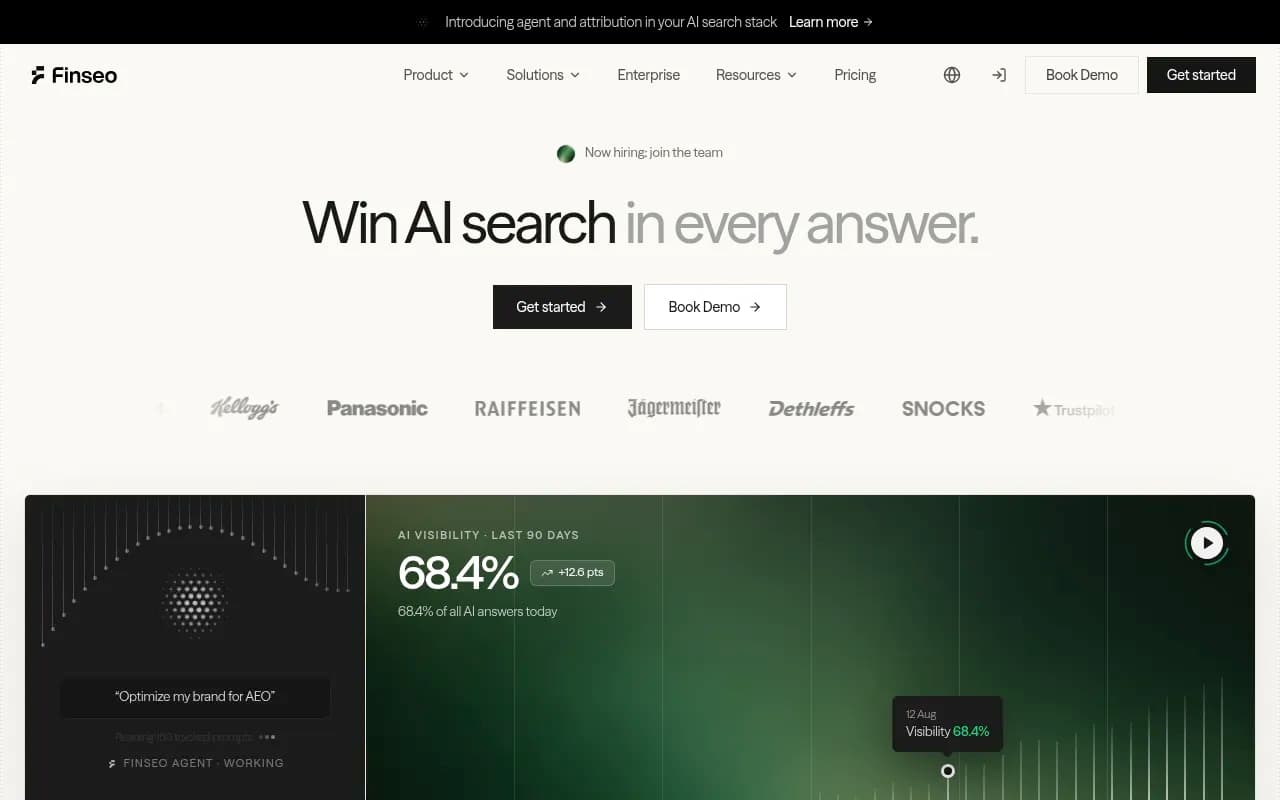
That is why scope matters more than the logo. A certificate should state what is covered. Finseo's announcement of ISO 27001 certification on November 25, 2026, is a good example of a scope statement worth looking for: it covers the "development, operation and support of the Finseo platform", and the company says it is re-audited yearly. A certificate that covers only an office, or only a parent company, tells you much less.
The timing facts worth remembering
Drata's guide to ISO 27001 platforms puts implementation at a typical 6 to 12 months, followed by annual surveillance audits and a recertification every three years. Two practical consequences for you as a buyer:
- A vendor that announced certification last month is real but young. Ask when the first surveillance audit is due.
- A vendor that says "in progress" or "under evaluation" does not have a report to share. Ahrefs, for instance, was described as having SOC 2 in progress with nothing to hand over yet, and Trakkr as evaluating SOC 2.
ISO 27701 and privacy
If privacy is your main concern, ISO/IEC 27701 extends 27001 with a Privacy Information Management System. Secureframe's own FAQ notes that enabling it adds a PIMS scope document and a privacy and data protection policy on top of the 27001 set. Almost no AEO vendor advertises 27701 yet, so asking about it is a cheap way to see how seriously a vendor treats privacy.
Borrowed certificates and other badge traps
This is the part I would put at the top of every checklist. A security page can look impressive and still say nothing about the vendor.
- Hosting-provider certificates. Otterly's security page lists SOC 1, SOC 2 and ISO 27001, but per the Rework review these belong to the AWS data centers it runs on, not to Otterly. That is a legitimate infrastructure fact. It is not a vendor attestation.
- Badges that don't match a certificate. Ahrefs' Enterprise page shows an "ISO27001 certified" tile that its FAQ does not repeat, and the reviewer could not match it to a certificate.
- Parent-company coverage. HubSpot AEO sits under a platform that holds a SOC 2 Type 2 report, but the product itself is in Beta and provided as-is, with no support duty. The report may not cover the new feature.
- Acquisitions. Scrunch now belongs to Sitecore and Semrush to Adobe. Ownership changes can shift terms, sub-processors, and support.
The fix is boring and effective. Ask for the report or certificate itself, read the scope paragraph, and check the date.
GDPR: what a vendor must actually provide
No platform is "GDPR-compliant" on its own. Compliance is shared. You are the controller, the vendor is the processor, and a good platform makes your compliance achievable. A checklist drawn from what a processor should hand over:
- A signed data processing agreement under Article 28. If a vendor cannot sign one, stop there.
- A documented transfer mechanism. EU hosting is not mandatory. GDPR permits transfers outside the EEA under Standard Contractual Clauses, an adequacy decision, or the EU-U.S. Data Privacy Framework, as long as the mechanism is documented.
- Independently audited security. SOC 2 Type II and/or ISO 27001 is the evidence that controls are tested rather than claimed (Article 32).
- A current sub-processor list and a breach-notification commitment. Trakkr, for example, states a 72-hour breach notice, which maps to GDPR's own window.
- Retention, deletion on termination, and support for access and erasure requests.
- Encryption in transit and at rest, plus role-based access control.
What AEO tools actually store
Before you argue about GDPR, work out what personal data is even in play. Most AEO platforms store prompts, brand and competitor names, and responses from AI engines. That is mostly business data. Personal data usually enters through team seats, outreach contacts, CMS connections, and analytics. Finseo says it holds prompts, markets, competitive strategy, and outreach contacts and emails, which is an honest and useful description. Ask every vendor for the same list.
Hosting region is worth asking about too, but not as a pass/fail. Finseo hosts in Germany. Peec AI runs on Google Cloud via Google Ireland. Otterly hosts in Frankfurt but keeps public monitoring data in the US. Trakkr runs on Supabase on Google Cloud. Goodie, per the review, shows no stated data region or DPA that the reviewer could find. All of these can be fine with the right paperwork. None is fine without it.
SSO questions that matter in 2026
SSO is where mid-market tools quietly separate from enterprise-ready ones. "We support SSO" can mean four different things.
- Which tier. SAML is Enterprise-only at Scrunch, Ahrefs, and Otterly, per the Rework review. Ahrefs Enterprise starts at $1,499 per month, so a security requirement can double your budget.
- Which protocol. Peec AI supports SAML 2.0 only, with no OIDC and no SCIM. Profound supports SAML, OIDC, and SCIM. Scrunch supports both SAML and OIDC.
- Who sets it up. At Peec, the vendor's team configures SSO. At Ahrefs, SCIM goes through support. That affects your rollout timeline.
- Provisioning and audit. Without SCIM, deprovisioning leavers is manual. Without a customer-viewable audit trail, you cannot answer who changed a monitor or exported data. Finseo's enterprise tier includes SAML SSO, role-based permissions, and an audit trail you can view.
Vendor posture at a glance
The table summarizes what the research notes found, with the caveat above that I did not verify each vendor page. Use it to decide which questions to ask first.
| Vendor | Own attestation noted | SSO noted | Watch for |
|---|---|---|---|
| Profound | SOC 2 Type II, HIPAA assessment | SAML, OIDC, SCIM | "GDPR-Ready" wording, hosting not stated |
| Conductor | SOC 2 Type II, ISO 27001:2022, ISO 42001 | SAML | Region not stated, SEO first and AEO second |
| Scrunch | SOC 2 Type II, audit logs | SAML and OIDC, SAML Enterprise-only | Now owned by Sitecore |
| Goodie | SOC 2 Type I and II | SAML, SCIM, RBAC | No DPA, region, or customer audit log found |
| Semrush | PCI DSS Level 1, SOC 2 on one page only | SAML | Adobe-owned, AI toolkit SSO detail unclear |
| Ahrefs | SOC 2 in progress | SAML Enterprise-only | ISO tile not matched to a certificate |
| HubSpot AEO | Parent platform SOC 2 Type 2 | Via parent platform | Beta, as-is, $50/mo |
| Peec AI | Own SOC 2 not stated | SAML 2.0 only, set up by vendor | No OIDC or SCIM |
| Otterly | Hosting-provider certs only | SAML via Clerk on Enterprise | Public monitoring data kept in the US |
| Trakkr | None, SOC 2 under evaluation | Not stated | From $1,000/mo, 72-hour breach notice |
| Finseo | ISO 27001 (announced Nov 25, 2026) | SAML on enterprise tier | Newly certified, first surveillance audit pending |
Tool pages for several of these are in the catalog if you want to compare features alongside security.



Where Promptwatch fits
For teams that want the monitoring, content, and crawler analysis in one product with a procurement-friendly profile, Promptwatch is ISO/IEC 27001 certified and GDPR compliant, and its data is handled by an EU-based company (Promptwatch B.V., headquartered in Amsterdam). It offers owner, editor, and viewer roles with project-level access, scoped project, organization, and read-only API keys, an organization audit log on Business, Agency Scale, and Enterprise that records whether a change came from the dashboard, the API, an MCP client, or Agent Chat, and SSO on Enterprise. Tracking continues if a payment is past due, so data has no gaps.

I would still run it through the same checklist as everyone else. Ask for the certificate and its scope, the DPA, and the sub-processor list, and confirm current plan gating on the pricing page. The point of this guide is that no vendor, including the one 1001 SEO Media uses, should get a pass on a logo.
The review checklist
Copy this into your vendor-risk ticket.
Certifications
- Is the SOC 2 report or ISO certificate in the vendor's own name?
- What is the scope statement, and does it cover the production platform?
- When was it issued, and when is the next surveillance audit?
- Does any logo on the site have a matching document?
Privacy
- Can they sign a DPA? Is it public?
- Where is data stored, and where do sub-processors sit?
- What is the transfer mechanism: SCCs, adequacy, or the Data Privacy Framework?
- What is the breach-notification window?
- How is customer data deleted at termination?
Access control
- SSO protocol, tier, and who configures it.
- SCIM for provisioning and deprovisioning.
- Role granularity and project-level access.
- A customer-viewable audit log, and whether API and agent actions are logged.
Commercial risk
- Is the product GA or Beta? Beta tools often come as-is.
- Has the company been acquired recently, and have terms changed?
- What happens to your data if the vendor is acquired or shuts down?
Do not forget the crawler side
Security reviews of AEO tools focus on what the vendor holds. A second question gets missed: what you are exposing to AI bots, and whether you can see it. Promptwatch Data's AI crawler traffic report covers IP-verified weekly requests from OpenAI, Anthropic, Google, Perplexity, and Mistral from June 8 to September 6, 2026. OpenAI made up 79.8% of verified requests in the week of August 31 to September 6, down from 94.8% in the week of June 8 to 14. Only requests whose source IP matches the operator's published ranges were counted, so spoofed user agents were excluded.
Two recommendations from that report translate directly into a security review. Check robots.txt, CDN, and WAF rules for every provider, and compare your own logs against the public mix. A provider that is large in the report but near zero in your logs probably means you are blocking it, which may be intentional or may be an accident. For a broader look at how citations and crawlers behave, the Promptwatch Data hub is the place to start, and the AI Crawler URL Inspector and Robots.txt Generator for AI help with the practical settings. If you want to browse more options, the GEO software directory lists tools by category.
Procurement tips that save weeks
- Ask for documents before demos. A vendor with a Trust Center (Scrunch and Goodie both have one) can hand over reports in a day. A vendor without one often needs a week.
- Request the questionnaire answers in writing, and note where an answer is "in progress". In-progress is a roadmap, not a control.
- Match the tier to the requirement. If SSO is mandatory, price the plan that includes it, not the entry tier you saw on the pricing page.
- Use a compliance platform for your own side. Tools such as Drata, Vanta, Secureframe, and ISMS.online automate evidence collection if you also need to prove your own posture to customers, and Secureframe notes that a free Trust Center comes with its platform.
- If your organization lacks the time, agencies like 1001 SEO Media can shortlist AEO and GEO platforms against a security brief, so legal sees a vetted list rather than eleven logos.
FAQ
Does an AEO vendor need ISO 27001 to be safe?
No. SOC 2 Type II is a reasonable equivalent for many US buyers, and a vendor with neither can still be acceptable for low-sensitivity use. The deciding factor is what data you load and whether the vendor can document its controls.
Is EU hosting required under GDPR?
No. Transfers outside the EEA are allowed with SCCs, an adequacy decision, or the EU-U.S. Data Privacy Framework. EU hosting simplifies the conversation, but the documentation is what counts.
Is "GDPR-ready" the same as GDPR-compliant?
No. It is wording, not a certification. Ask for the DPA, sub-processor list, region, and breach SLA.
Why does SSO cost extra?
It is a common upsell. Vendors gate SAML, SCIM, and audit logs to Enterprise plans because those are the features security teams demand. Budget for it early.
Is a Beta AEO product safe for enterprise use?
Beta products are often provided as-is with no support obligation. They can be fine for experiments but are hard to defend in a vendor-risk review.
Bottom line
Treat every AEO security page as a claim to verify. Get the vendor's own report, read the scope, confirm the DPA and region, and price the plan that actually includes SSO. Then spend the saved time on the part that pays off, which is making sure the right AI crawlers can read your site and the right pages get cited.