
Key takeaways
- Most AEO tools were built for one in-house brand. Agency features like pitch workspaces, client logins, and white-label PDFs are the exception, so check them first.
- Price per client, not price per seat. A $99 plan that adds $399 per client workspace gets expensive fast.
- Reports that only say "mentioned: yes/no" will not defend a retainer. You need position, sentiment, competitors, and traffic.
- Pitch tools matter because the first deliverable sells the retainer. Test how fast you can build a prospect report.
- Much of what you will read about agency tools is written by the vendors themselves. Verify every price on the vendor's own pricing page.
Why agencies need a different checklist
A brand buying an AEO tool asks one question: how do we show up? An agency asks five more. Can I run 15 clients without 15 logins? Can I show a prospect their gaps before they sign? Will the report look like mine, not the vendor's? What happens to my margin when client number 16 arrives? Does anything here prove ROI?
The tools that do well for in-house teams often stumble on those questions. Several vendor guides in this space say the same thing from different angles: most platforms are single-brand tools with an agency plan stapled on. Treat that as a warning to test, not a reason to panic.
One caution before we go further. Nearly every comparison page I found on this topic was written by a vendor, and each one crowns its own product. The pricing figures below come from those pages and may already be out of date. Check them.
The five things that decide agency fit
1. Multi-client architecture
Look at how clients are modeled. Some platforms use isolated workspaces under one agency login with role-based access. Others are per-domain, which means every new client is a new add-on. Ask three practical questions:
- Can an account manager see only their clients?
- Can a client get a read-only login without seeing other clients or your pricing?
- Is billing consolidated?
If the answer to any of those is "through a workaround," you will feel it by client five.
2. Pitch tools
This is the feature most agencies underweight. A pitch workspace lets you enter a prospect's brand and competitors, run prompts across AI engines, and hand over a report before any contract exists. Compare that to a generic slide about "AI is changing search."
What to test:
- How many pitch projects are included, and do they count against your client limit?
- Can a pitch convert to a full client workspace with its data intact?
- How long does a report take to produce? Minutes is workable. Days is not.
- Can the output carry your branding?
3. Reporting that survives a client call
White-label PDFs, scheduled delivery, Looker Studio connectors, and an API are the baseline. But format is the easy part. The harder question is what the report says.
Promptwatch's data on ChatGPT citations shows why a yes/no mention is a weak metric. In its Sep 28 to Oct 4, 2026 sample, 47.6% of ChatGPT responses cited 10 or more unique domains, and only 6% cited three or fewer. Your client is sharing nearly every answer with a crowd. A useful report shows where the client appears in the response, how the AI describes them, and which competitors share the answer. That framing also works well in a pitch: "you share every answer with about ten other domains, and here is where you sit."
4. Engine coverage and data source
ChatGPT, Perplexity, and Google AI Overviews are the floor. Some clients will need Gemini, Claude, Copilot, AI Mode, or Meta AI. Two details separate platforms here:
- Whether data comes from the real consumer interface or only from APIs. User-facing answers and citations can differ from API output.
- Whether engines are gated to higher tiers. Several tools track one engine on the cheapest plan and unlock the rest at enterprise pricing.
Prompt behavior also shifts. Promptwatch's ChatGPT query fanout data shows average fanout and query length changing between December and April, so a platform that treats prompts as static will drift from reality.
5. Proof of ROI
Retainers get renewed when you can connect visibility to traffic. Look for AI traffic attribution (GA4 or a tracking script), AI crawler logs, and some way to tell an access problem from a content problem. Tools that only monitor leave you to build that story in a spreadsheet.
Pricing math: where agency margins go
Sticker price is almost useless. Model your real roster. Here is a worked example for a 10-client agency with 50 prompts each, comparing three pricing structures:
| Pricing model | How it scales | Watch out for |
|---|---|---|
| Per-client workspace add-on (for example, a low base fee plus roughly $399 per client workspace, as reported for Profound) | Cost rises linearly with every client | Base price looks cheap; 10 clients can cost several thousand per month |
| Per-domain add-on (for example, Semrush's AI toolkit at about $99 per domain on top of a base plan) | Same linear climb, plus the base subscription | Extra users and domains add up separately |
| Flat agency tier with unlimited projects (for example, Peec AI and Promptwatch agency plans) | Cost rises by usage tier (responses, credits), not client count | Response limits; check how many responses your roster burns |
| Credit-based (for example, AthenaHQ at about $295/mo) | Every prompt or content piece spends credits | Hard to forecast per-client budgets |
Ask each vendor for a quote based on your actual numbers: clients, prompts per client, engines, countries, and refresh frequency. Then divide by client count. That cost per client is the number that matters against your retainer.
Agency platforms compared
The figures below are drawn from vendor pages and Promptwatch's own plan details. Treat them as starting points and confirm on each pricing page.
| Tool | Agency angle | Reported starting price | Gaps to check |
|---|---|---|---|
| Promptwatch | Unlimited projects and prompts on every agency plan, pitch projects, AI Visibility Reports in about five minutes, crawler logs, visitor analytics | $199/mo (Kick-off) | White-label dashboard and client portal need the custom Partner plan |
| Profound | Agency Mode with pitch environments and client workspaces | $99/mo pitch tier; reported $399/mo per client workspace | Multi-engine coverage gated to Enterprise, per-workspace cost |
| Peec AI | Agency tiers, API, Looker Studio templates, many regions | Agency tiers reported from about $205/mo | Monitoring-focused, no native crawler logs |
| Scrunch | Agency Core with brand and pitch workspaces, AI crawler data | Reported $500/mo Agency Core | Claude and unlimited workspaces reportedly on Enterprise |
| AthenaHQ | Pitch workspace, Action Center | About $295/mo | Credit-based pricing is hard to forecast |
| Otterly.AI | Low entry price, white-label reporting reported | From $29/mo | No dedicated agency plan, pitch brands reportedly absent |
| Semrush | Fits agencies already living in Semrush | About $99/mo per domain add-on | Per-domain scaling, monitoring-heavy |
| WorkDuo | White-label reporting, API, pitch projects | From about $29 to $33 per project/mo | Higher engines on pricier tiers |
Where Promptwatch fits for agencies
Promptwatch is the AI visibility platform 1001 SEO Media uses, and it was built to go past monitoring. The agency plans (Kick-off $199, Growth $399, Scale $799 per month) include unlimited projects, pitch projects, prompts, and team seats, all supported AI models, Agent Chat, country, state, and city tracking, crawler logs, visitor analytics, site audits, and custom reports. Details are on the agencies solution page.

Three things matter for the agency questions above:
- Pitching: every agency plan includes AI Visibility Reports. Enter any website and get a PDF of how ChatGPT, Gemini, and Google AI Mode answer about it in about five minutes. That is 20 per month on Kick-off, 40 on Growth, and 60 on Scale.
- Proof: IP-verified AI crawler logs and visitor analytics let you show whether bots read a page, whether AI cites it, and whether it sends traffic. Monks, an agency client, uses the Answer Gap Report and Visibility Score to build content roadmaps for enterprise accounts; see the Monks case study.
- Real interface data: monitoring runs on the actual ChatGPT, AI Overviews, Gemini, Perplexity, and other interfaces, in each country and language.
The tradeoffs are worth stating. Agency plans do not include the Content Agent, the Knowledge Base, AEO articles, 360 Insights, or ChatGPT Shopping, and a white-label dashboard with client portal requires the custom Partner plan. If you want the Content Agent for client work, look at the Business brand plan or talk to the team. PDF reports can be white-labeled by white-label organizations. Confirm current terms at promptwatch.com/pricing; a 7-day free trial is available on monthly billing.
The other contenders, briefly
Profound
Profound is the heavyweight for enterprise clients that need SOC 2 and deep prompt data. The catch for agencies is the reported per-workspace pricing and engine gating. Compare directly in Promptwatch vs Profound while keeping in mind who wrote it.

Peec AI
Peec AI is a clean, affordable monitor with agency tiers, an API, and Looker Studio templates. It suits agencies that mostly need reporting and will do the content work elsewhere.

Scrunch
Scrunch pitches itself at multi-client agency work with crawler-facing features and AI crawler data. Check which engines and how many workspaces your tier really includes.
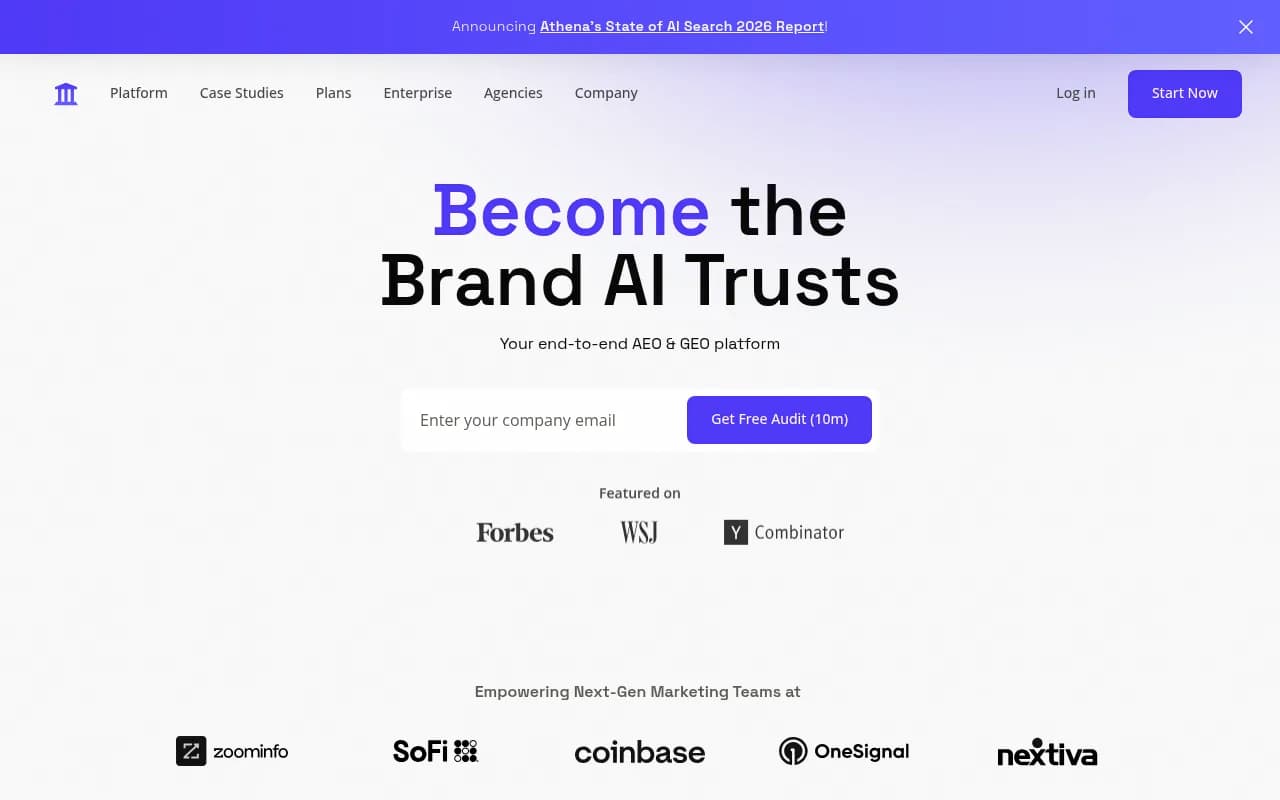
AthenaHQ
AthenaHQ has pitch workspaces and an Action Center. The recurring complaint in vendor comparisons is unpredictable credit burn, so model your usage before signing.
Otterly.AI
Otterly.AI is the budget pick and a common first purchase. As described in a HubSpot roundup, it offers a partner program and white-label reporting, but another source says it lacks a true agency plan. Resolve that contradiction on a sales call.

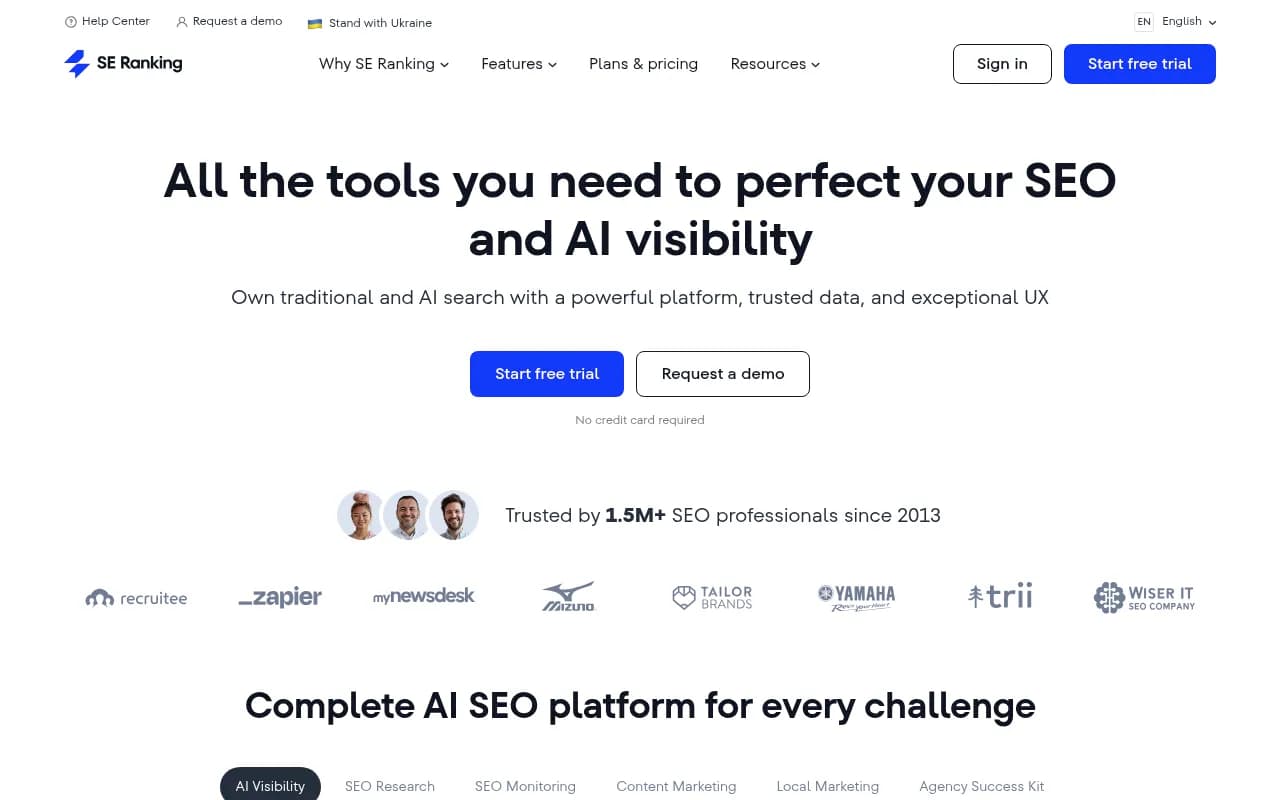
Semrush and SE Ranking
If your agency already runs clients in Semrush or SE Ranking, their AI add-ons keep everything in one login. Coverage and execution are thinner than dedicated platforms, and per-domain scaling needs a calculator.
Newer agency-focused entrants
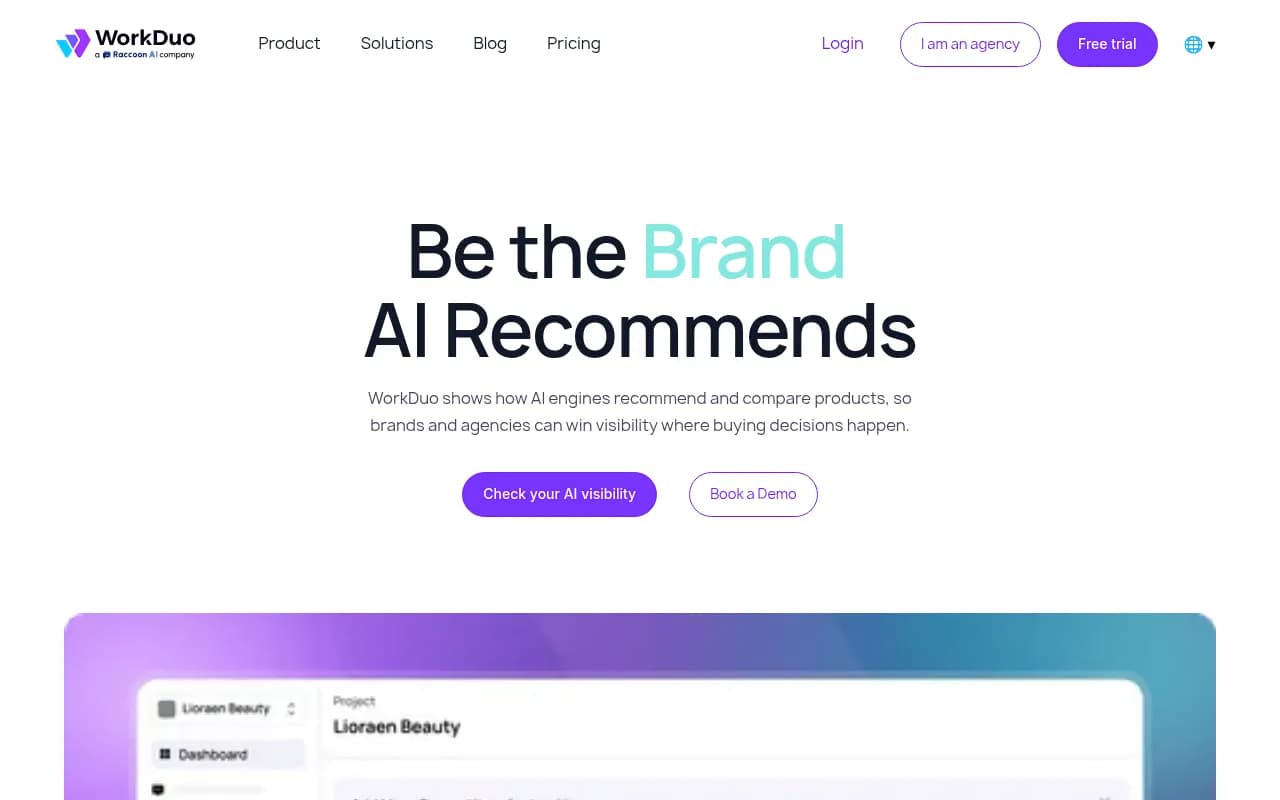
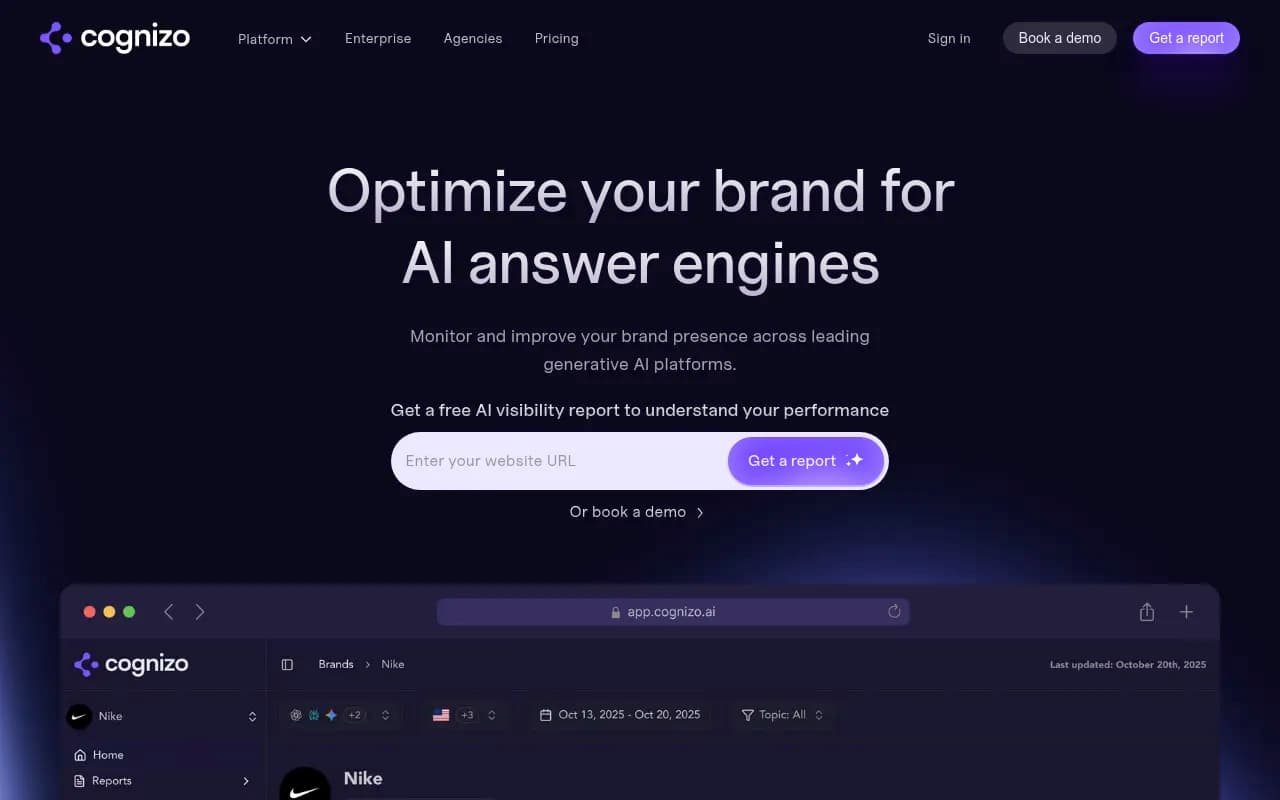
The catalog also lists tools built specifically for agencies, including WorkDuo, Cognizo, Hoverboard AI, Rankability, and OpenLens. Cognizo advertises 15 pitch brands per tier plus a public agency marketplace, and Hoverboard leans on white-label audits and branded client logins. Younger products can move fast and also change pricing fast, so ask about roadmap and data collection methods.
For a wider shortlist, the GEO software directory lists dozens more.
A scorecard you can actually use
Rate each finalist from 0 to 3 on each line, and weight the lines by how you sell.
| Criterion | What a 3 looks like |
|---|---|
| Client workspaces | Unlimited or cheap to add, role-based access, client read-only logins |
| Pitch tools | Prospect report in minutes, branding, pitch converts to client |
| Reporting | White-label PDFs, scheduling, API or Looker Studio |
| Metrics depth | Position, sentiment, share of voice, co-cited competitors |
| Engine coverage | All engines you need, real-UI data, no tier gating |
| Attribution | Crawler logs plus AI traffic and conversions |
| Execution | Content or action workflows tied to gaps |
| Cost per client | Predictable at 10 and 30 clients |
If you are standardizing on one tool, weight pitch tools and cost per client highest. If you are mostly retaining existing clients, weight attribution and reporting.
Run a two-week bake-off
- Pick three clients of different sizes and one live prospect.
- Load identical prompts into two or three finalists. Use at least 25 prompts per client, mixing organic, brand, and competitor comparisons.
- Build a prospect report in each tool and time it.
- Export a client report and show it to someone outside your team. Ask whether it is clear and whether it looks like yours.
- Ask each vendor for a written quote at 10 and 30 clients.
- Check that the answers you see match what you get when you query the AI engines by hand.
Agencies that want help scoping the service itself, not just the software, can talk to 1001 SEO Media, which runs AI search and GEO programs for clients.
Questions worth asking on every sales call
- What exactly counts as a project, a prompt, and a response? Where are the limits?
- Do pitch projects count against my client cap?
- Which engines are on my tier today, and which are gated?
- Is data collected from the real interfaces or only APIs?
- Can I white-label the PDF, the dashboard, or both, and on which plan?
- What happens to my price if I add 10 clients?
- Is there an API or MCP access for building custom reports?
Bottom line
Pick the platform whose pricing still works at your 30th client and whose first report can win your next pitch. For many agencies that means a flat agency tier with unlimited projects and built-in pitch reports, plus crawler and traffic data to prove results. Start with a two-week trial, put your own numbers into the quotes, and trust what you measured over what any vendor page claims, including this one.