Key takeaways
- A SaaS SEO stack in 2026 does four jobs: classic search research, content optimization, technical health, and AI visibility. No single tool does all four well.
- Promptwatch Data (Sep 28 to Oct 4, 2026) shows ChatGPT cites product pages (22.4%) and landing pages (16.8%) more than any other content type, so your own site matters more than third-party listicles.
- For software prompts, docs and help centers are the largest cited source type, and G2 and Capterra profiles together out-earn any single vendor.
- Start lean. A suite, a crawler, one content tool and one AI visibility platform covers most SaaS teams. Stacking Ahrefs on Semrush on Clearscope rarely moves pipeline.
- Most vendor listicles rank their own product first. Treat them as a starting point and check pricing on official pages.
Why SaaS SEO needs its own tool stack
SaaS keywords skew toward "alternatives to X", "best Y for Z" and integration searches. Comparison content carries unusual weight. And buyers now run a lot of that comparison inside AI assistants rather than Google. Ask ChatGPT for the best CRM for a small sales team and you get a short list of a few brands. If you are not on it, the click never happens.
That changes what you should buy. A tool that only tracks Google rankings misses half the picture. A tool that only tracks AI mentions misses the technical and content work that feeds both. I think the honest framing is four jobs, and you pick one or two tools per job instead of buying everything.
| Job | What it answers | Tool types |
|---|---|---|
| Search research | What do buyers search, who ranks, who links | All-in-one suites, backlink tools |
| Content optimization | Is this page complete enough to rank and be cited | Content scoring and brief tools |
| Technical health | Can crawlers read and index the site | Crawlers and monitors |
| AI visibility | Is my product named and cited in AI answers | AI visibility and GEO platforms |
What the data says about AI citations for SaaS
Before picking tools, it helps to know what AI engines reward. Promptwatch Data has a few relevant findings.
In its ChatGPT software citation report (Sep 28 to Oct 4, 2026), GitHub led at 1.2% of software citations, followed by learn.microsoft.com at 0.98% and G2 at 0.73%. By source type, docs and help centers earned the most (2.64%), then vendor sites (2.01%) and review sites and analysts (1.57%). G2, Gartner, Capterra and Software Advice combined beat any single vendor, Microsoft included.
The content type report for the same week is even more useful for planning:
- Product pages: 22.4% of all ChatGPT citations
- Landing pages: 16.8%
- Listicles: 13.6%
- How-tos: 8.7%
- Documentation: 7.5%
- Comparisons: 5.9%
For commercial prompts like "best CRM for small businesses", product pages, landing pages, listicles and comparisons make up almost 70% of citations. Content also ages differently. In Promptwatch's content half-life data, news lost half its cited pages within 36 days while landing pages and docs held on for months.
Two practical conclusions. First, your own product, landing and docs pages are the main citation asset, so keep them crawlable and specific. Second, don't plan a Reddit-for-ChatGPT strategy. ChatGPT's social citations fell to 0.46% in that period, and reddit.com's share collapsed from about 4% to 0.5% on August 14, 2026. Google AI Overviews still pulls 12.2% of its citations from social platforms, per the social citations report, so channel mix depends on which engine your buyers use.
All-in-one SEO suites
These cover keyword research, rank tracking, backlinks and audits. For most funded SaaS teams, one of them is the foundation.
Ahrefs
Ahrefs is the default across a lot of VC-funded SaaS companies. The backlink data is strong, and the Site Explorer plus Content Explorer pairing is how many teams find competitor content gaps and "alternatives to" opportunities. Its Brand Radar add-on covers AI search mentions.

Semrush and Semrush One
Semrush competes head to head with Ahrefs and has the broader marketing toolkit. Semrush One bundles SEO with AI visibility tracking. The vendor-affiliated listicles quote AI add-on pricing around $199 and $299 per month, but verify that on the official pricing page before you budget.
SE Ranking
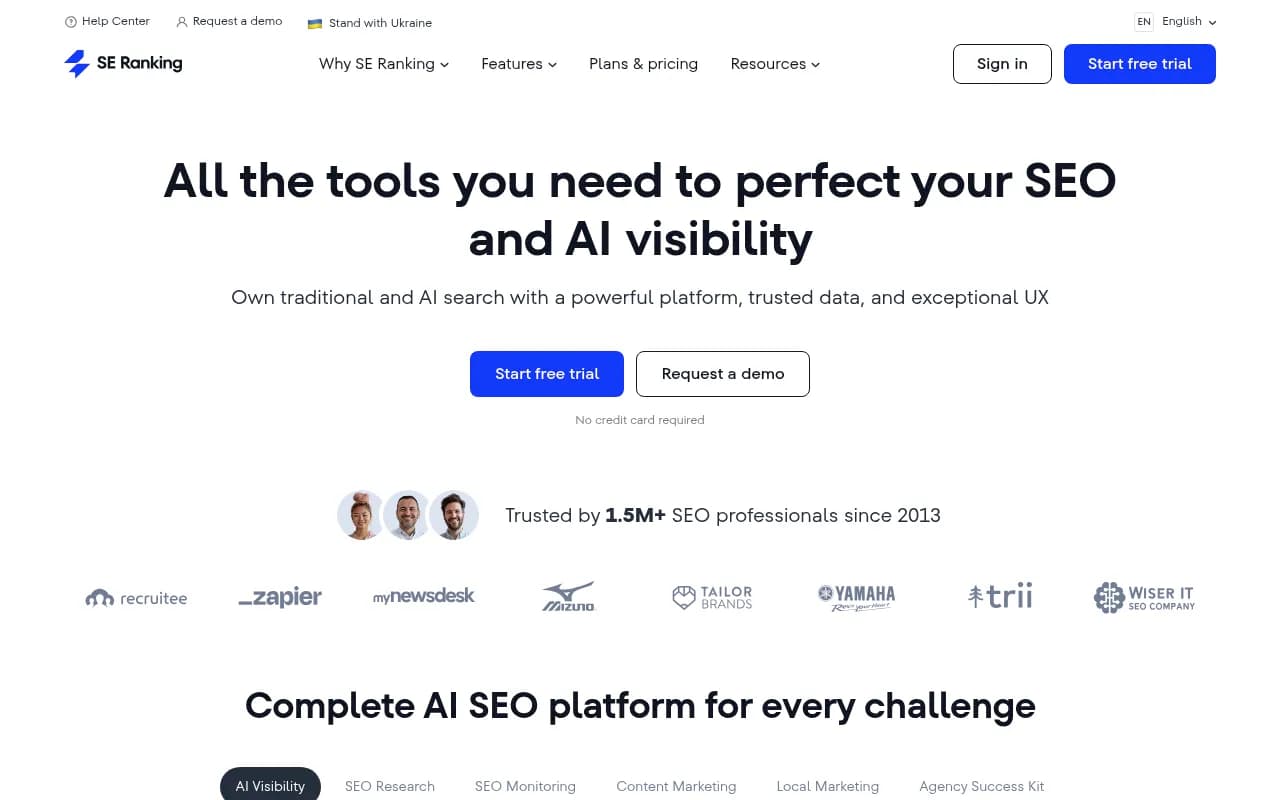
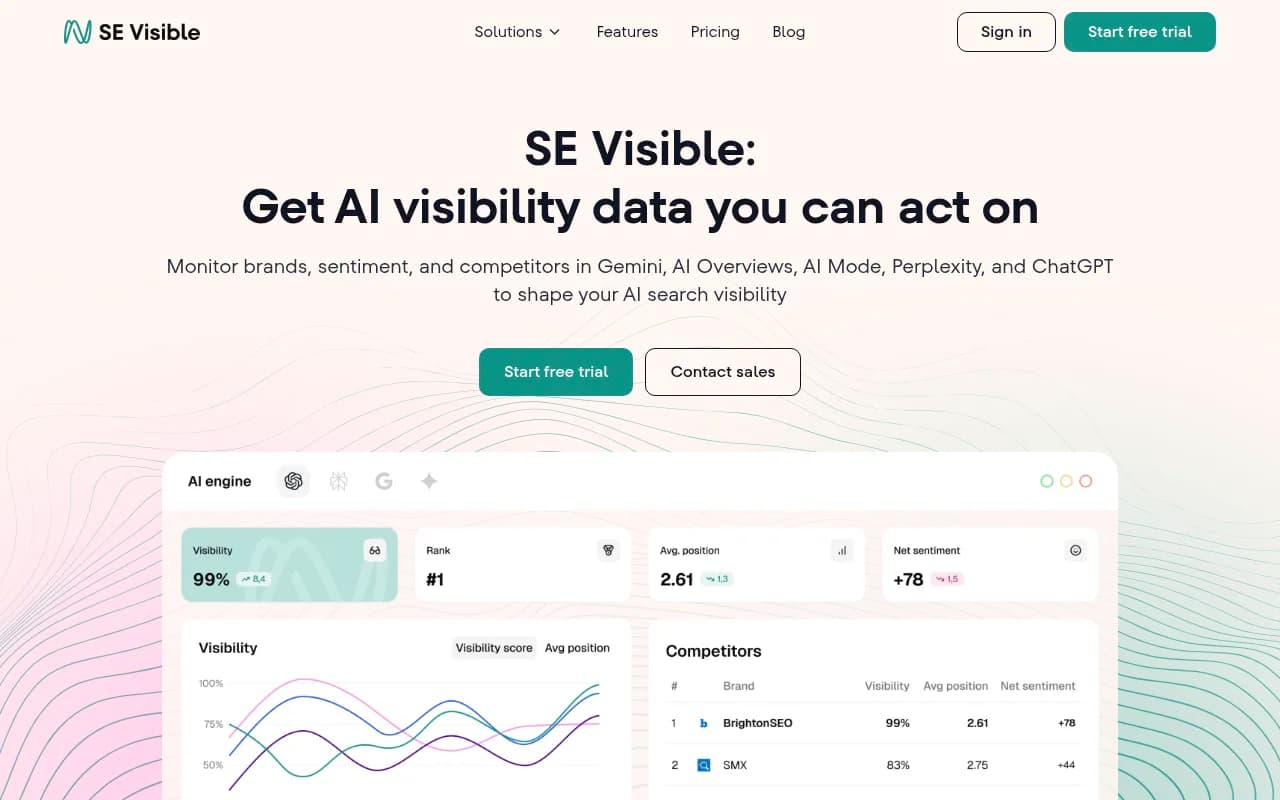
SE Ranking is the value pick for bootstrapped or early-stage SaaS. Feature depth is lower than Ahrefs or Semrush, but the price to value ratio is good. It has an AI visibility toolkit built in, and a standalone product, SE Visible.
Moz Pro
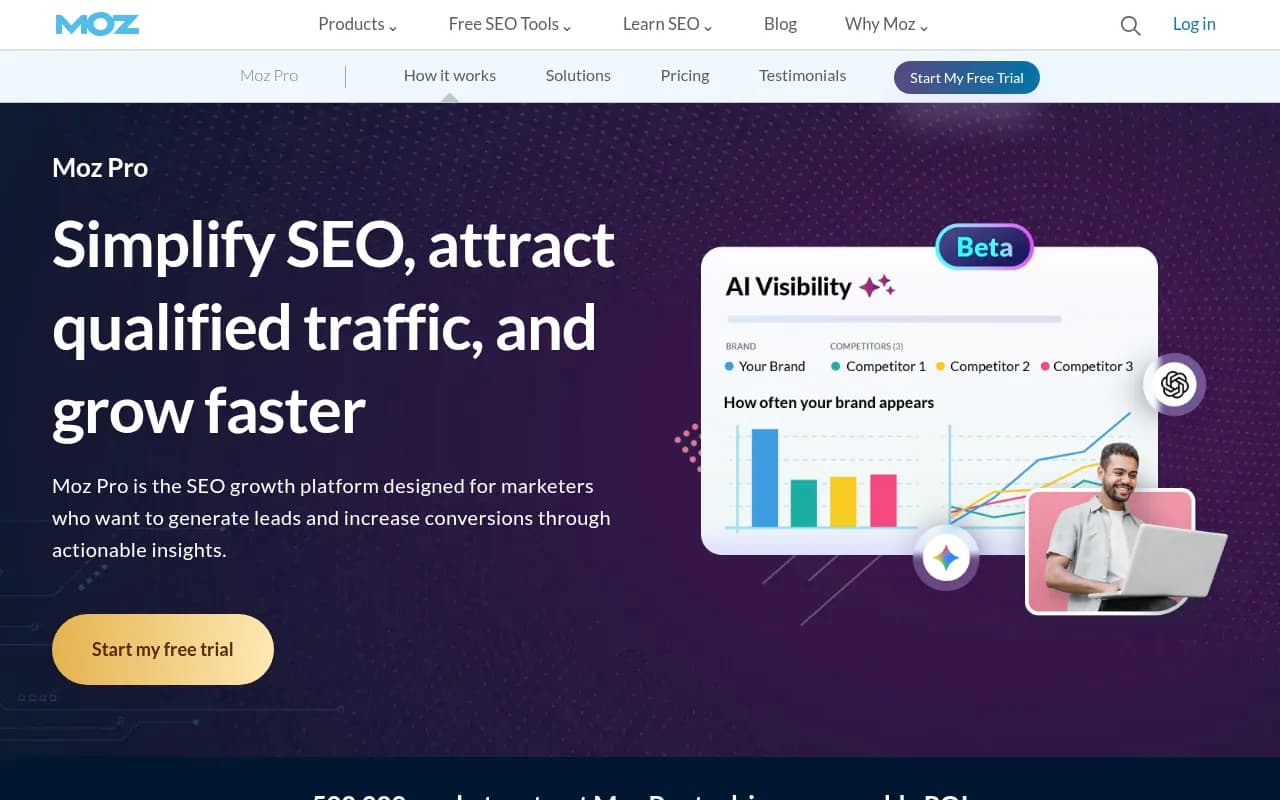
Moz Pro suits mid-market teams that want simplicity over depth.
AI visibility platforms
This is the category that did not exist for SaaS marketers three years ago. The question is no longer only "where do I rank" but "does ChatGPT name us when someone asks for the best tool in our category."
There is a real difference between trackers and platforms. A tracker tells you whether your brand was mentioned. A platform should tell you why, show where the AI found its sources, connect that to traffic, and help you fix the gap.
Promptwatch
Promptwatch is the one I would put first for SaaS teams that want to act on the data, not just watch it. It monitors the real interfaces of ChatGPT, Google AI Overviews, AI Mode, Gemini, Perplexity and Copilot, and adds IP-verified AI crawler logs so you can see which pages GPTBot or ClaudeBot actually read and where they hit errors. That matters given the finding above that docs and product pages are what gets cited. If crawlers cannot reach your docs, nothing else matters.
On the action side, the Action Board produces a prioritized GEO to-do list, and the Content Agent can plan, write and publish articles to WordPress, Webflow or Framer, then track whether those pages get crawled, cited and clicked. It also covers prompt volumes and difficulty, query fan-outs, and Reddit, YouTube and LinkedIn citations. Paid plans start at $95 per month (Essential), with a free Explore tier for one project and 10 prompts. Confirm current numbers at promptwatch.com/pricing.

Other AI visibility tools worth a look
The market is crowded. These are tools from our catalog that SaaS teams commonly evaluate, and most lean toward monitoring.
- Profound is a monitoring-heavy platform with a higher price point.
- Peec AI and Otterly.AI are lighter, cheaper prompt trackers.
- AthenaHQ tracks across 8+ engines.
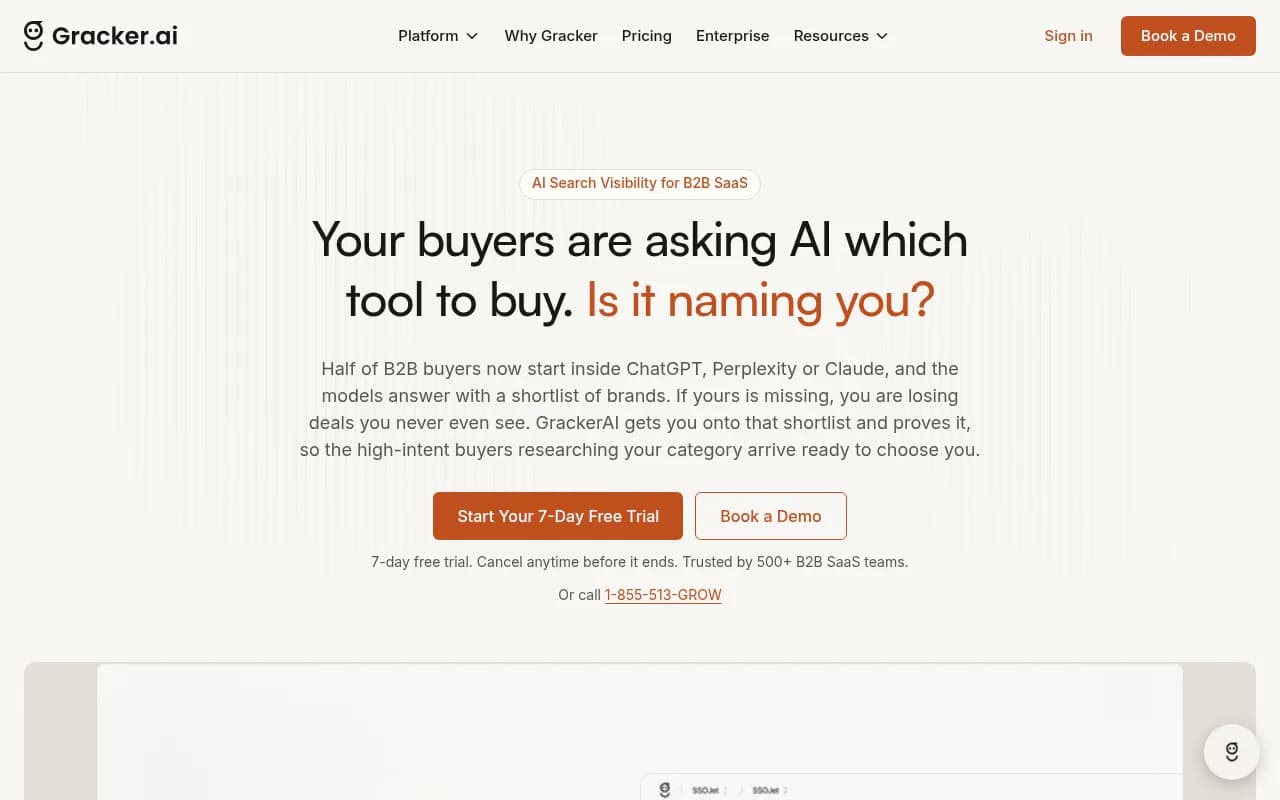
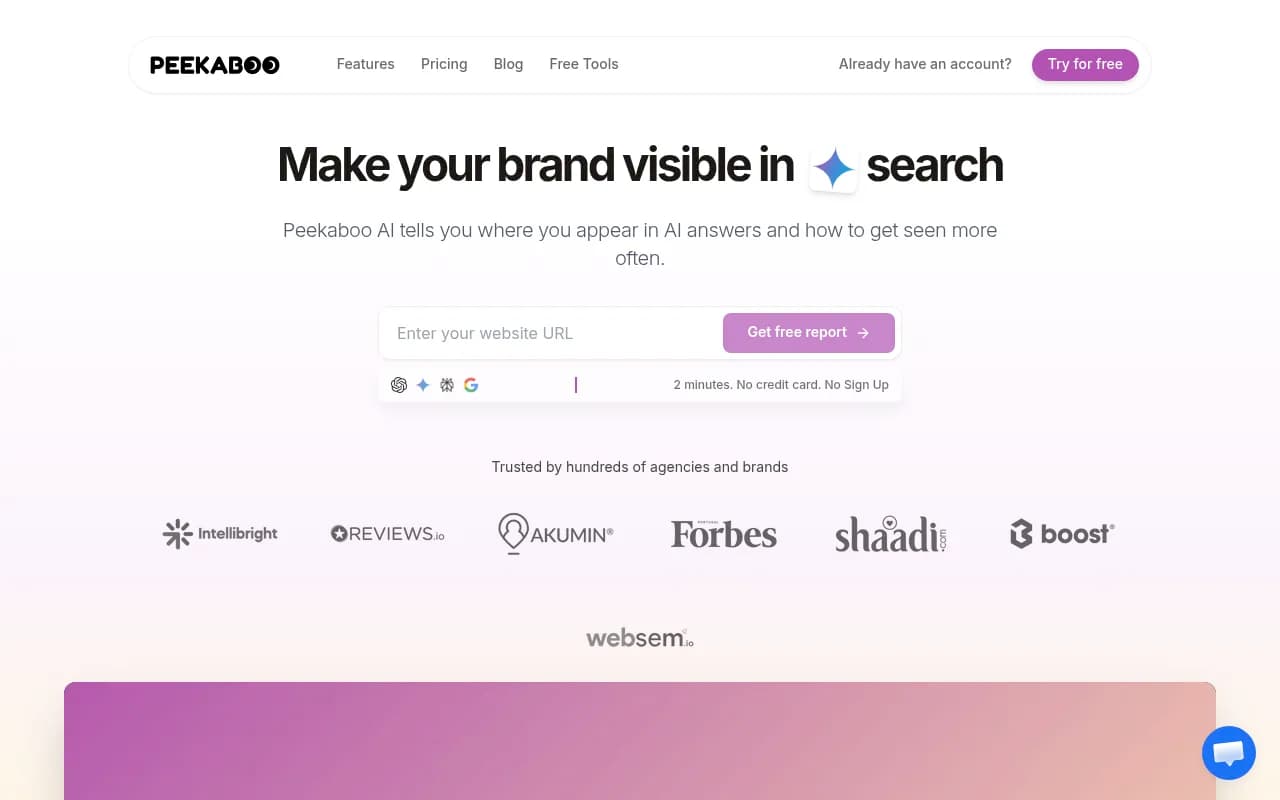
- AI Peekaboo and GrackerAI position specifically at SaaS and B2B marketing teams.
- Honeyb, from the research notes, starts at $29 per month and pairs tracking with an autoblogging agent. Its own article ranks itself first, so weigh that accordingly.



If you want to browse more options, the GEO software directory lists many of them side by side.
Content optimization tools
SaaS content has to satisfy two readers: Google and an LLM looking for a clean, citable answer. Content scoring tools help you close topical gaps before you publish.
Surfer SEO
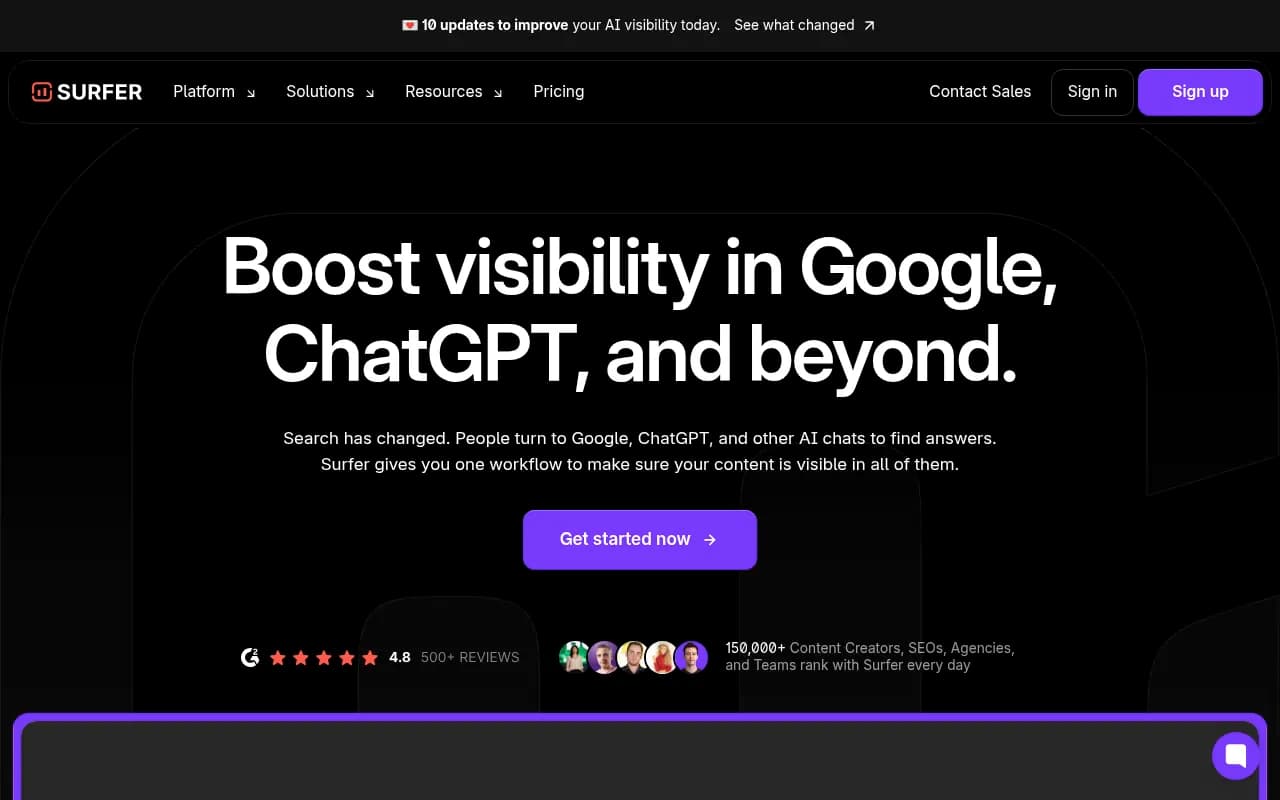
Surfer is the common pick for optimizing content at scale. It scores drafts against what ranks and suggests terms and structure.
Clearscope
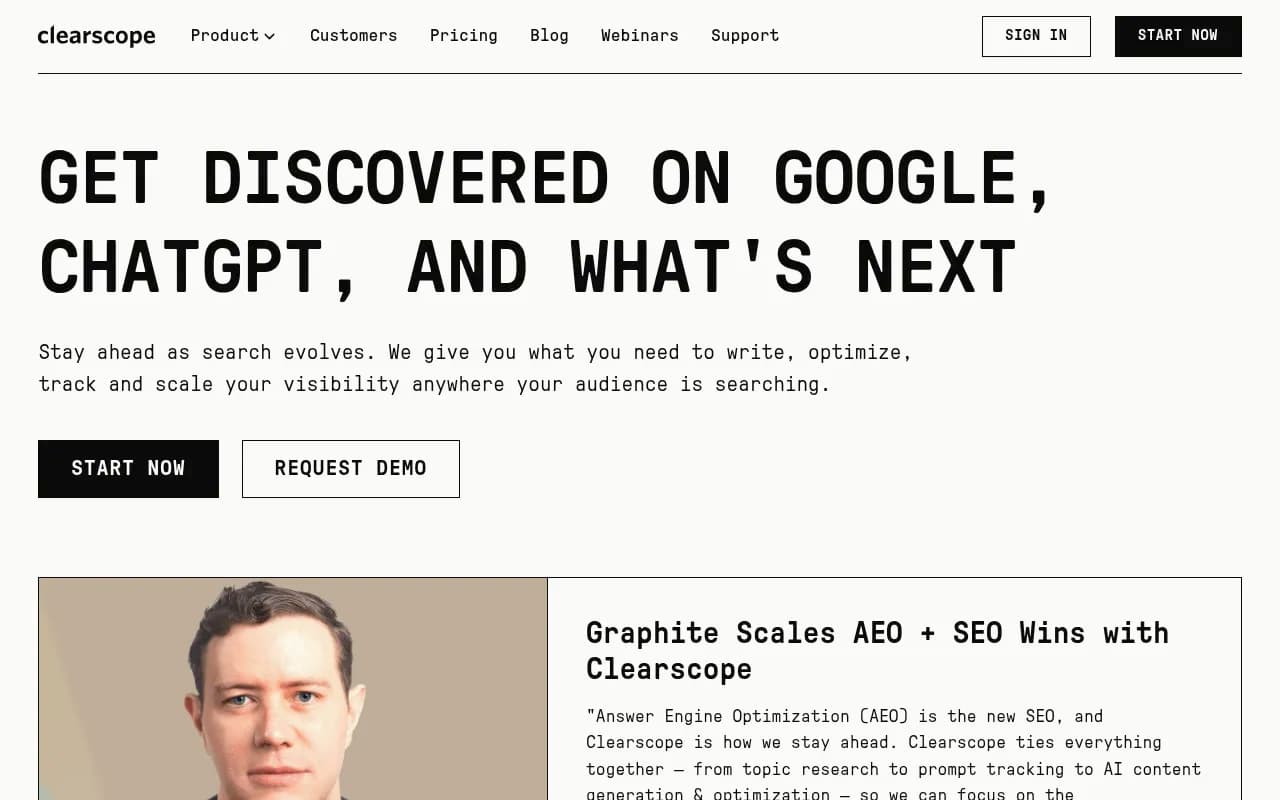
Clearscope leans enterprise content teams and now mentions AI search. It is pricey, and for small teams usually overkill.
MarketMuse
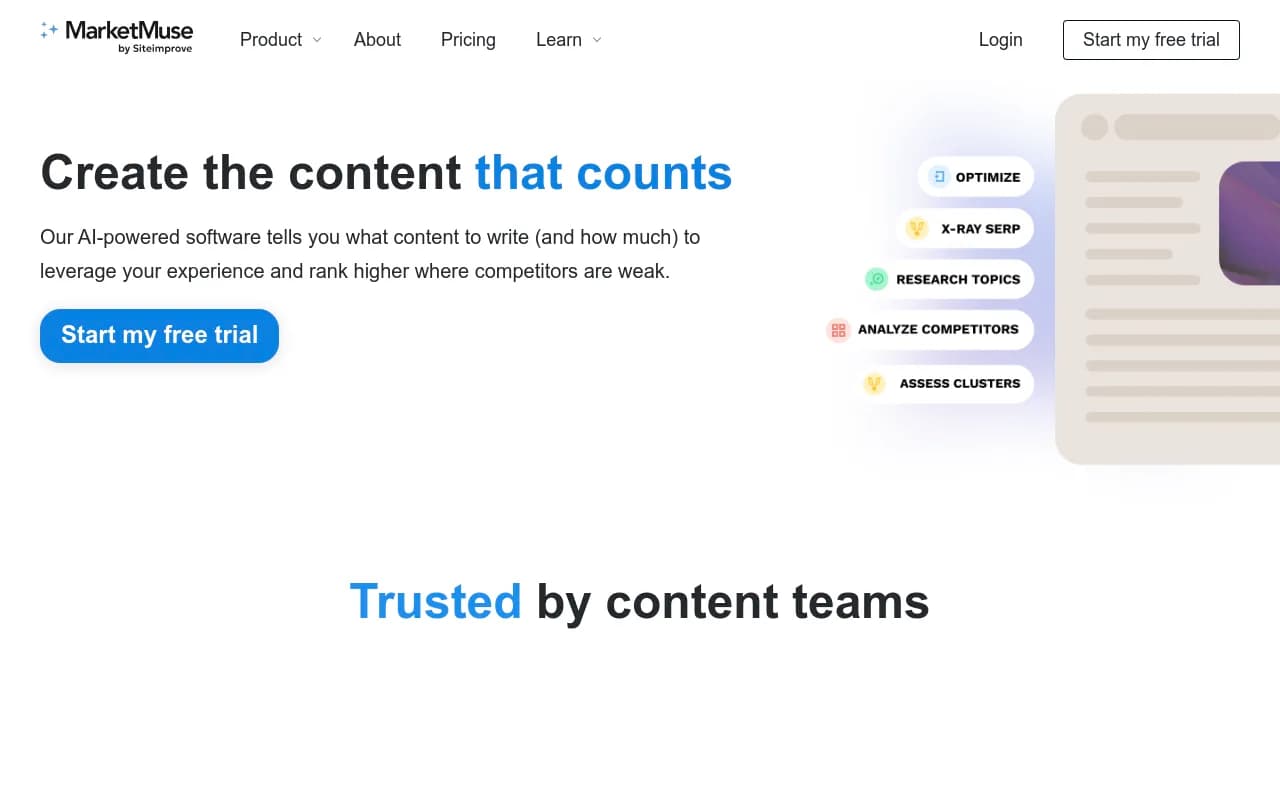
MarketMuse is for SaaS companies with a dedicated content team building topical authority through hubs. The research notes describe it as best for well-funded teams, which matches my experience: it pays off only if someone owns the planning.
Frase and Jasper
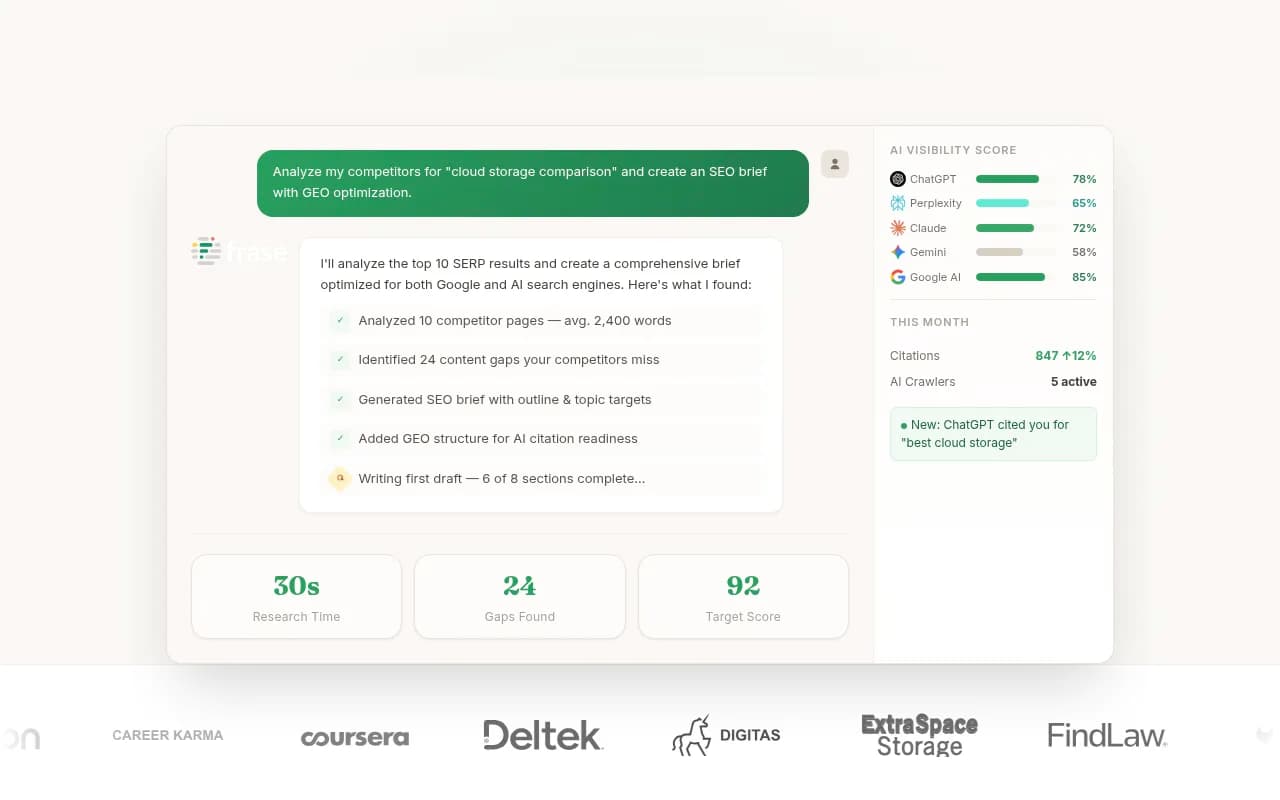
Frase researches, writes and optimizes with a GEO angle. Jasper is more of a marketing workflow and generation tool, listed around $49 per month in vendor roundups. Neither knows what AI engines currently cite for your prompts, which is the gap an AI visibility platform fills.
Technical SEO tools
Technical debt is boring and it quietly kills both rankings and AI citations. SaaS sites are often JavaScript-heavy, with docs, app subdomains and help centers that do not always get crawled.
Screaming Frog
The standard desktop crawler. The free version covers 500 URLs, and the paid license is listed around $259 per year. Every SaaS SEO should own it.
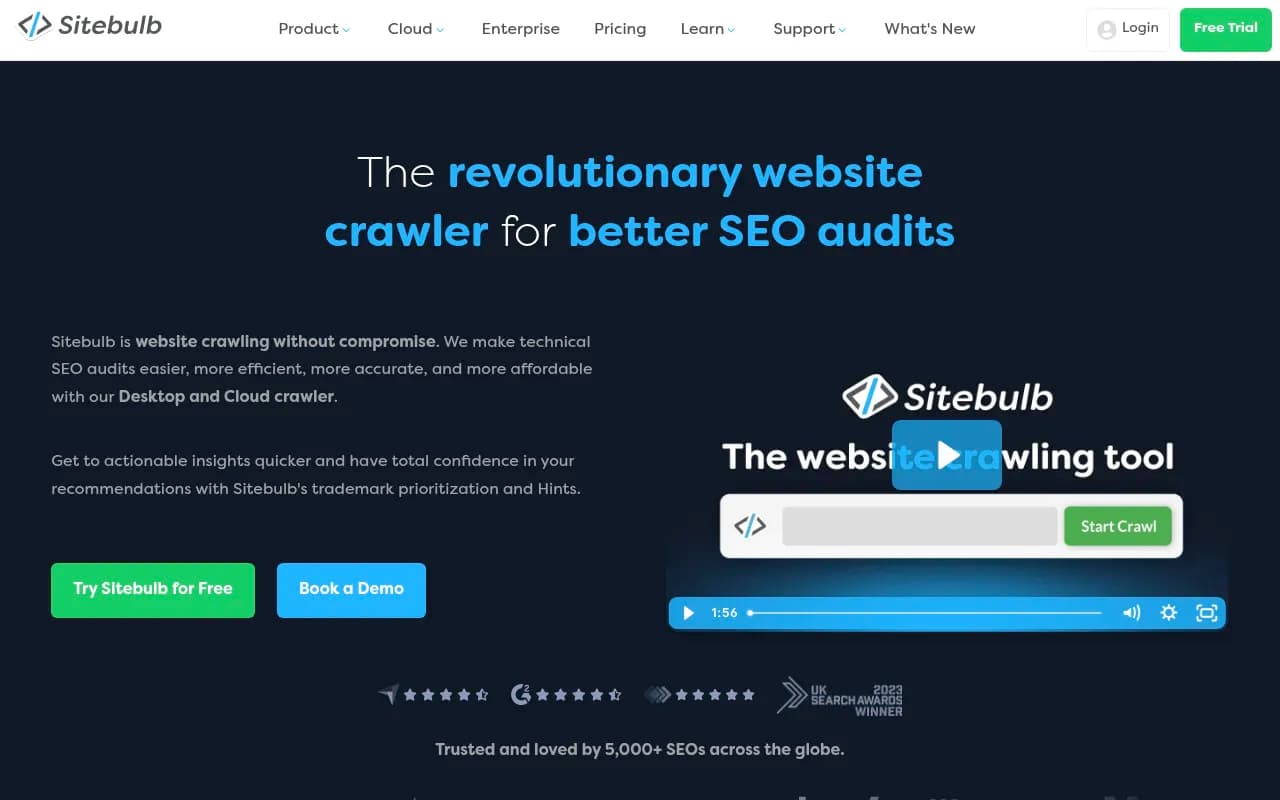
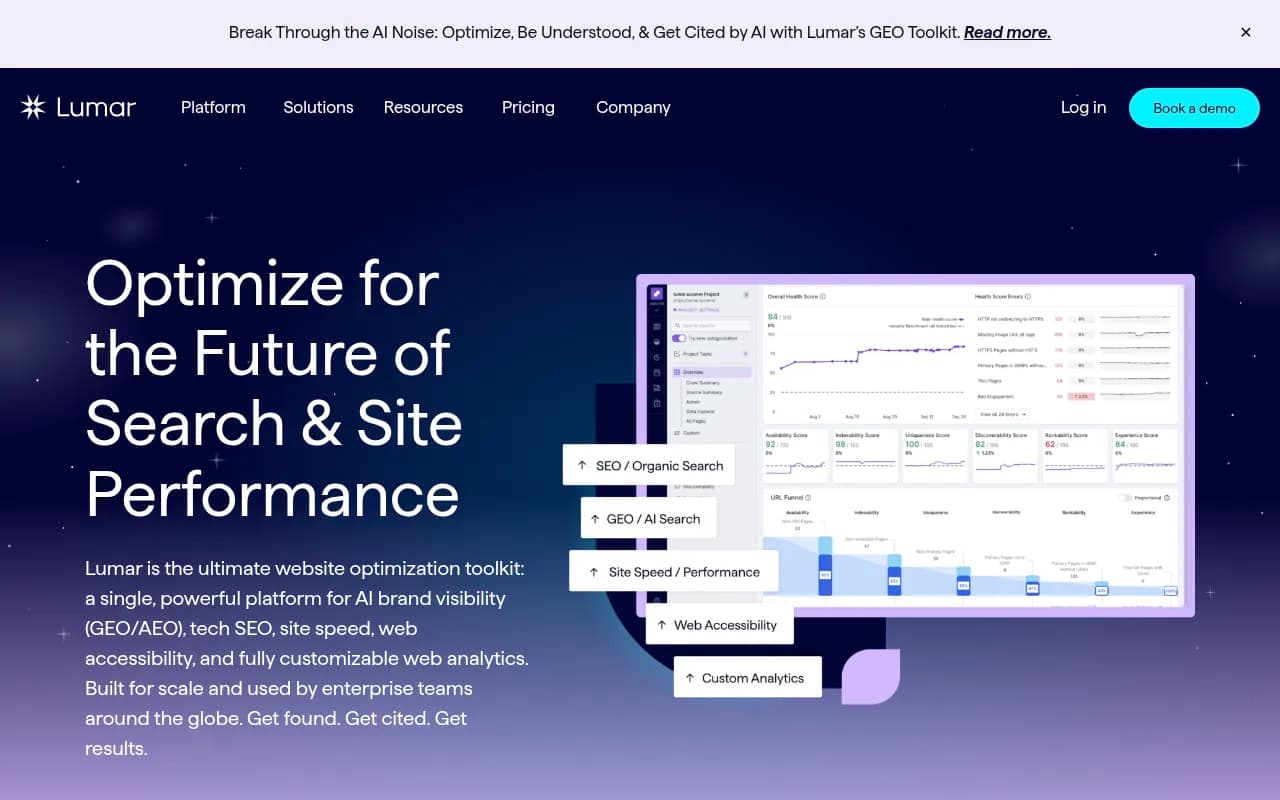
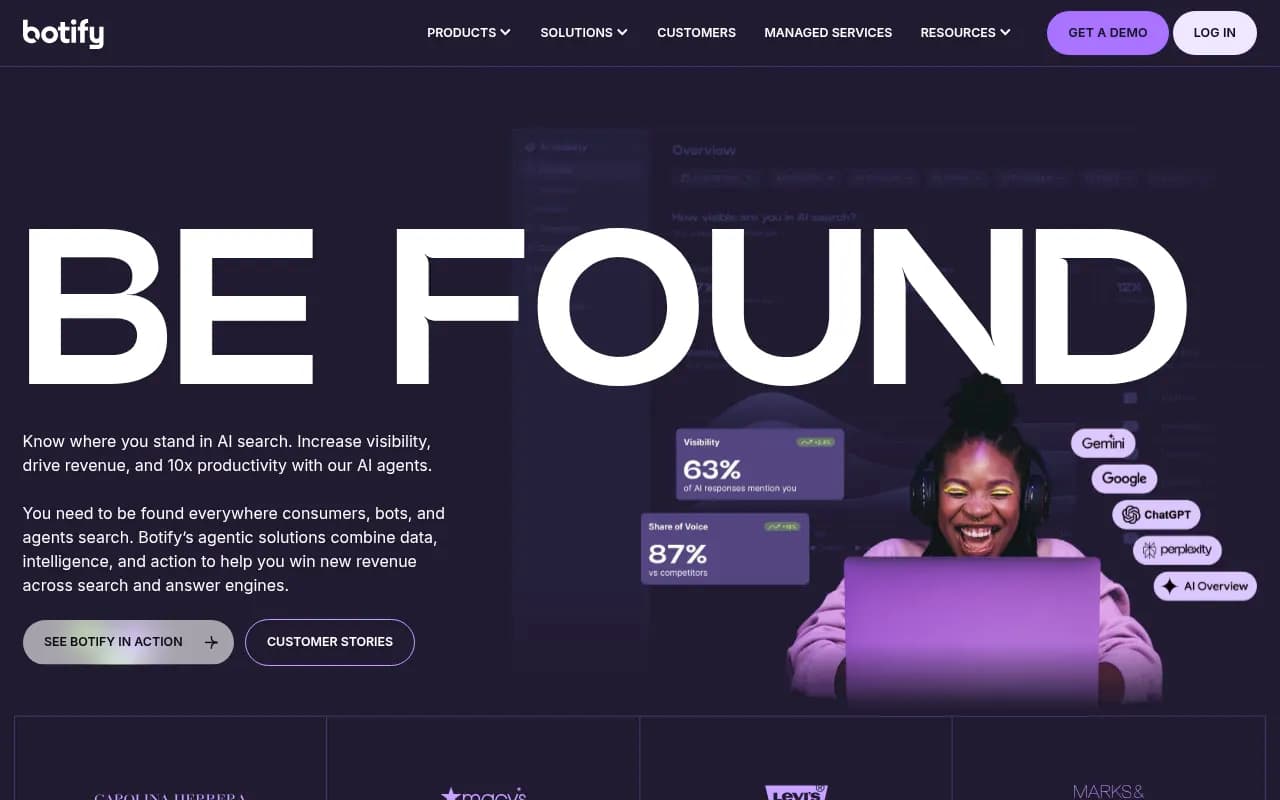
Sitebulb, Lumar and Botify
Sitebulb is friendlier for visual audits. Lumar and Botify are enterprise crawlers for very large sites, and are probably more than a Series A company needs.
Comparison table
| Tool | Category | Best for SaaS when | Rough starting price |
|---|---|---|---|
| Ahrefs | Suite | You need backlink and competitor research | Around $129/mo (verify) |
| Semrush One | Suite plus AI | You want one vendor for SEO and AI tracking | Verify on vendor site |
| SE Ranking | Suite | Budget is tight | From $129/mo per vendor roundup |
| Promptwatch | AI visibility and action | You want to fix gaps, not just see them | $95/mo, free tier available |
| Surfer SEO | Content | You publish at volume | Around $89/mo (verify) |
| MarketMuse | Content planning | You run content hubs | Around $149/mo (verify) |
| Screaming Frog | Technical | You need deep audits | Free to 500 URLs, then about $259/yr |
Prices in this table are drawn from vendor-affiliated listicles and change often. Check each official pricing page before buying.
Suggested stacks by company stage
Pre-seed and bootstrapped
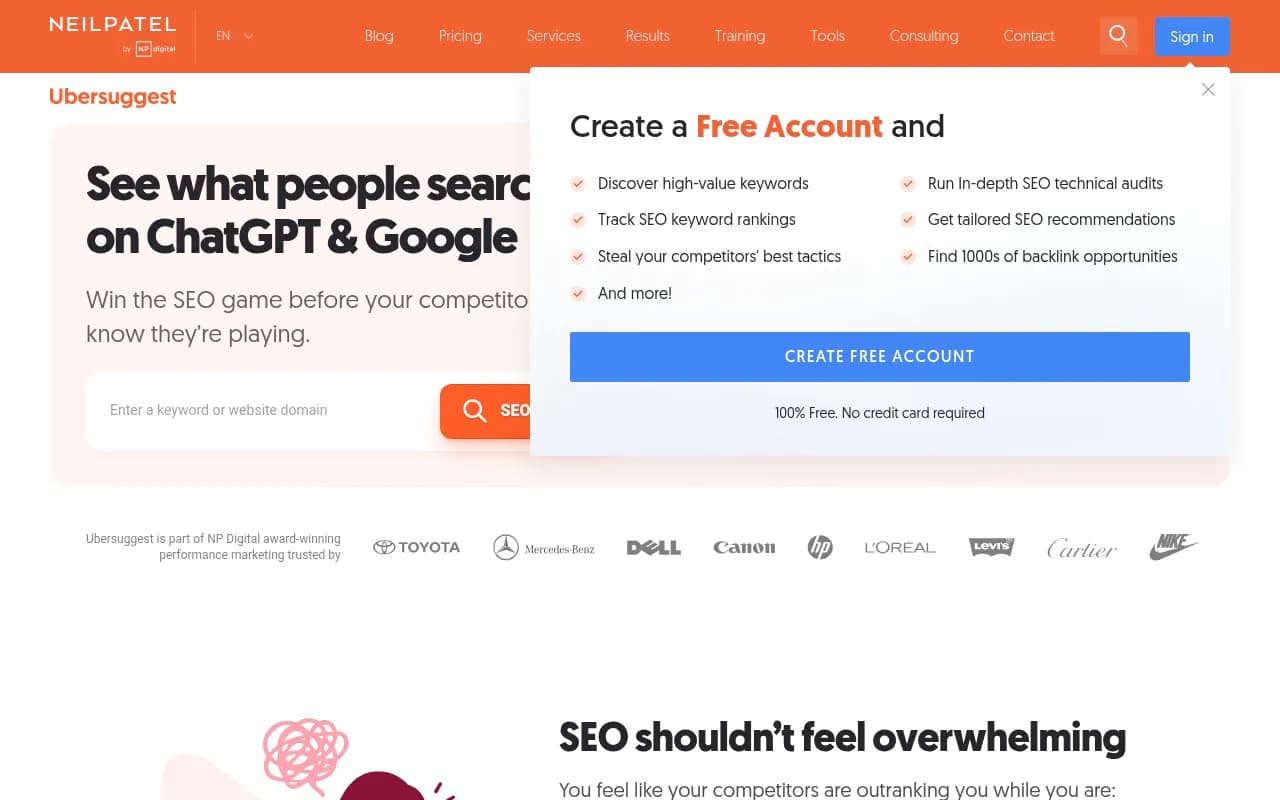
SE Ranking or Ubersuggest for research, Screaming Frog free for audits, Google Search Console, and the free Explore tier of Promptwatch or a free AI visibility check to see where you stand. Skip the content scoring tools until you are publishing weekly.
Seed to Series B
Ahrefs or Semrush, Screaming Frog, Surfer or Frase for content, and a full AI visibility platform. This is where Promptwatch's crawler logs and content gap analysis pay for themselves, because you have a real docs site and product pages for AI engines to read.
Growth stage and enterprise
Add MarketMuse or Clearscope for planning, a cloud crawler like Lumar or Botify, and consider the fully managed agentic option in Promptwatch's Business plan ($579 per month) if headcount is the constraint.
What to do with the tools
Tools do not produce rankings, systems do. A plan that matches the citation data:
- Audit crawler access. Make sure docs, help center and product pages are reachable by AI crawlers and indexed in Google. Check robots.txt rules for GPTBot, OAI-SearchBot and ClaudeBot.
- Strengthen product and landing pages. They are the most cited content types. Be specific about use cases, integrations, pricing and who the product is for.
- Build comparison and alternative pages. Comparisons are about 8% of commercial citations and listicles 15%. They also win in classic search.
- Keep G2 and Capterra profiles complete. Review sites collectively out-earn any single vendor for software prompts.
- Publish docs and a public GitHub presence where relevant. Docs are the biggest cited source type.
- Refresh news and blog content more often than evergreen pages, since news decays in about five weeks.
- Measure AI traffic and conversions, not just mentions. Visibility without clicks is a vanity metric.
When to hire help instead
If nobody on your team can own this, an agency may be cheaper than another tool subscription. 1001 SEO Media is a full-service agency covering technical SEO, content, digital PR and generative engine optimization, and it uses Promptwatch for AI visibility work. Plenty of other agencies exist, so interview a few and ask how they report on AI citations.
Final thoughts
The stack is simpler than the vendor listicles suggest. Pick one suite, one crawler, one content tool and one AI visibility platform, then spend the saved money on writing better product, comparison and docs pages. For the AI layer, run a quick visibility check first, see which prompts you are missing from, and choose a platform based on whether you need monitoring only or monitoring plus execution.