Key takeaways
- "Free" means at least four different things in AI visibility tracking: a permanent free plan, a one-shot checker, a free trial, and a throttled free tier. Check which one you are getting before you sign up.
- Genuinely free plans exist (Trendos, AthenaHQ Essential), but they cap prompts tightly. Free one-time checkers from Ahrefs, HubSpot and Frase give a snapshot, not a trend.
- Small prompt sets are noisy. ChatGPT cites only about 5 sources per web-search answer, so a handful of tracked prompts will swing wildly day to day.
- Use free tools to find out whether you have a problem. Pay when you need history, competitor benchmarking, or help fixing what you find.
What "free" means in AI rank tracking
I have lost count of the tools that advertise a free plan and then show you a signup wall, a credit card form, or a dashboard with three prompts. Before comparing anything, it helps to sort the offers into buckets.
- Permanent free plan. No time limit, no card. Limited prompts or credits.
- One-shot checker. You enter a domain, you get a snapshot. No history, no tracking.
- Free trial. Usually 7 days. Full features, then a paywall.
- Throttled free tier. Technically free, but limited enough that you are nudged to pay in your first serious session.
One more thing before the list: most of the pricing below comes from vendor pages and vendor-written comparisons, which change often. Confirm on each pricing page before you commit.
Genuinely free plans
Trendos Free
Trendos offers $0 for 20 prompts and 600 answers a month, covering ChatGPT, Perplexity, Google AI Overviews, DeepSeek, Gemini and Grok, with up to 10 brands. According to the comparison at agenzy.lt, it was the only free plan among the six tools reviewed, and paid plans there work out to roughly a cent per answer. It is not in our catalog, so check its site directly.
AthenaHQ Essential
AthenaHQ describes its Essential tier as free rather than a trial. It includes $25 of credit and 300 credits a month, tracks ChatGPT, Perplexity, AI Overviews, Gemini and Copilot, and has unlimited seats. The catch is a credit system with a learning curve, and the paid Starter plan jumps to $295 a month.

Promptwatch Explore
Promptwatch has a free Explore plan with 1 project and 10 prompts, ChatGPT only. That is small, and I would treat it as a way to see how the platform works rather than a monitoring setup. Every paid plan unlocks all tracked models. Its free tools are more useful for one-off checks: the Free AI Visibility Report scans how ChatGPT, Gemini and Perplexity talk about your brand with no login, and the Agentic Readiness Check shows which AI crawlers can read your site.

Free one-time checkers
These answer "do I show up at all?" and nothing more. They are fine for a first look or a sales-call sanity check.
- Ahrefs Free AI Visibility Checker is powered by Brand Radar. It is a snapshot only. Historical trends, AI Share of Voice, competitor benchmarking and custom prompt tracking sit behind the paid Brand Radar.
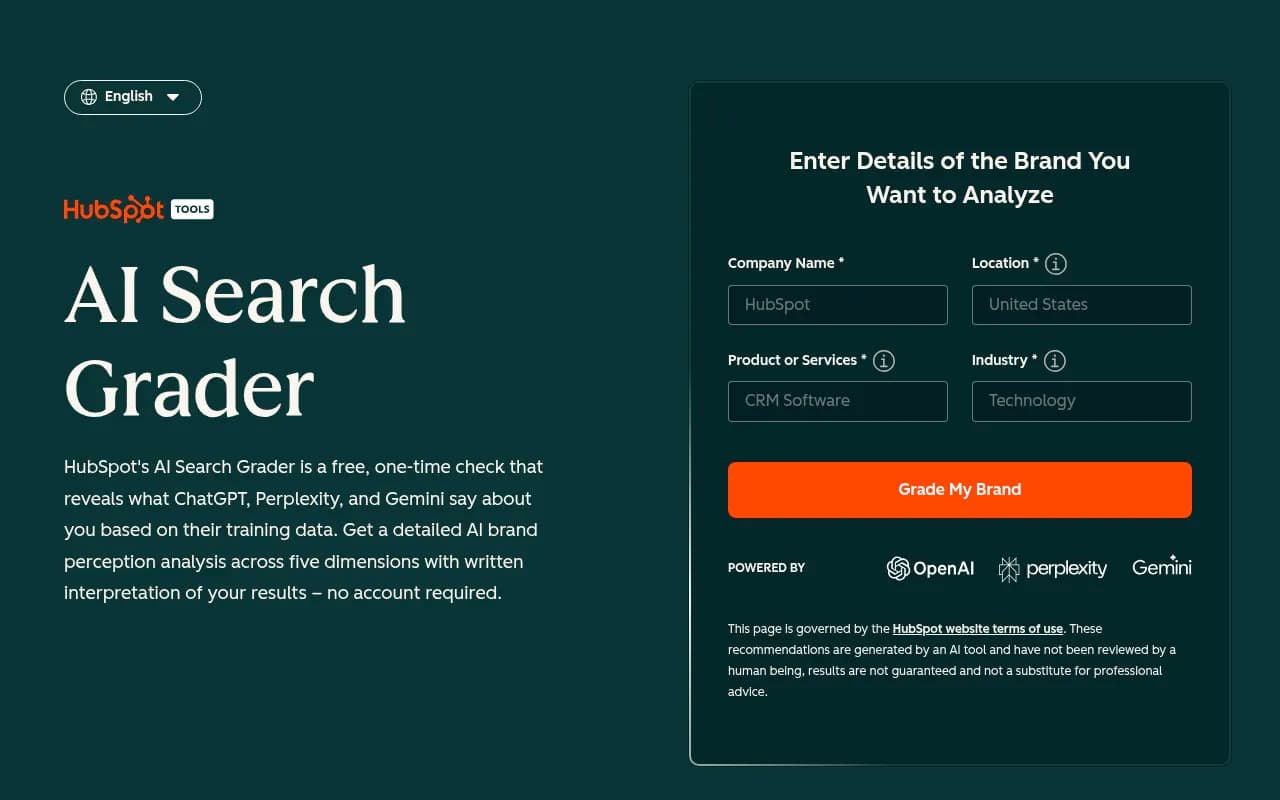
- HubSpot AEO Grader is a free one-off grader for answer engine visibility.
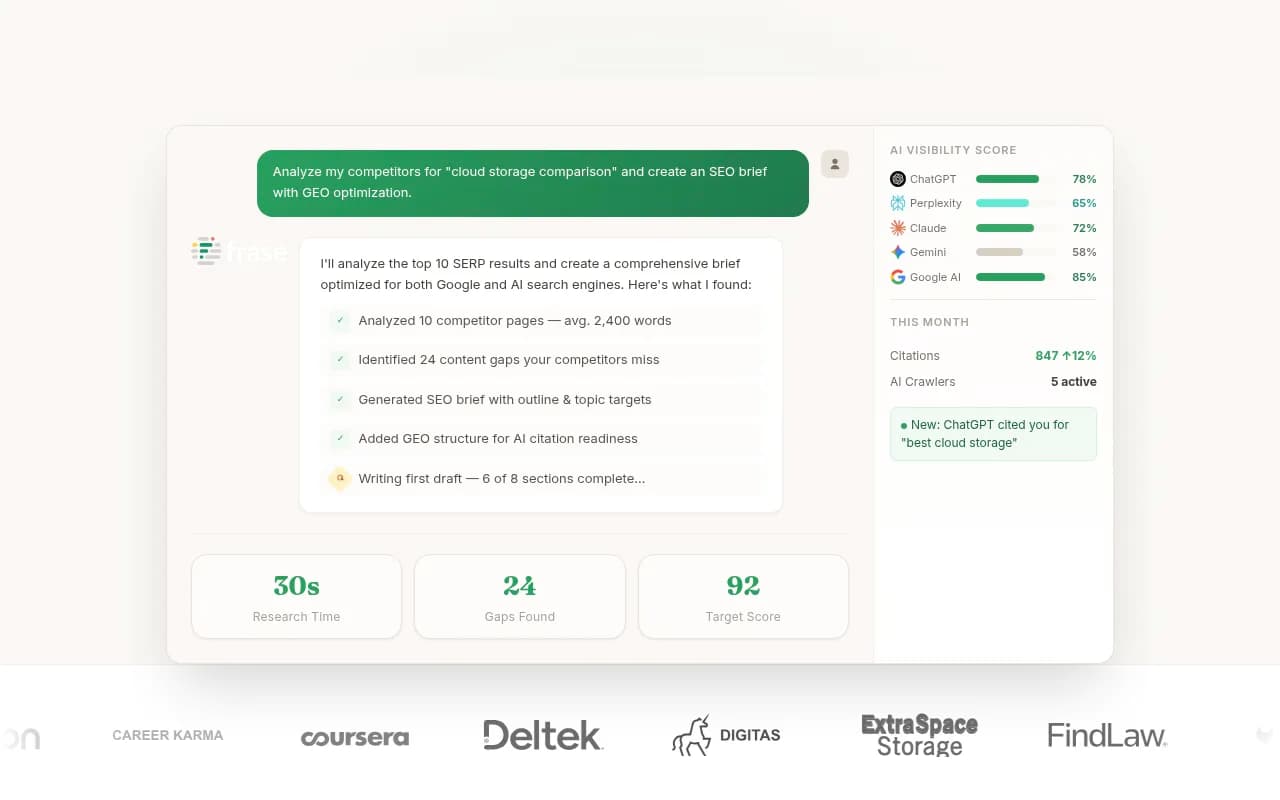
- Frase AI Visibility Checker is free with no card required, reads your domain and names the engines citing you. Frase ranks itself in its own roundup, so weigh that accordingly.
- Google AI Overview checkers. LLM Pulse lists 11 of them, split into free and paid. You plug in a keyword and get a yes or no on whether an AI Overview appears, plus the cited URLs.

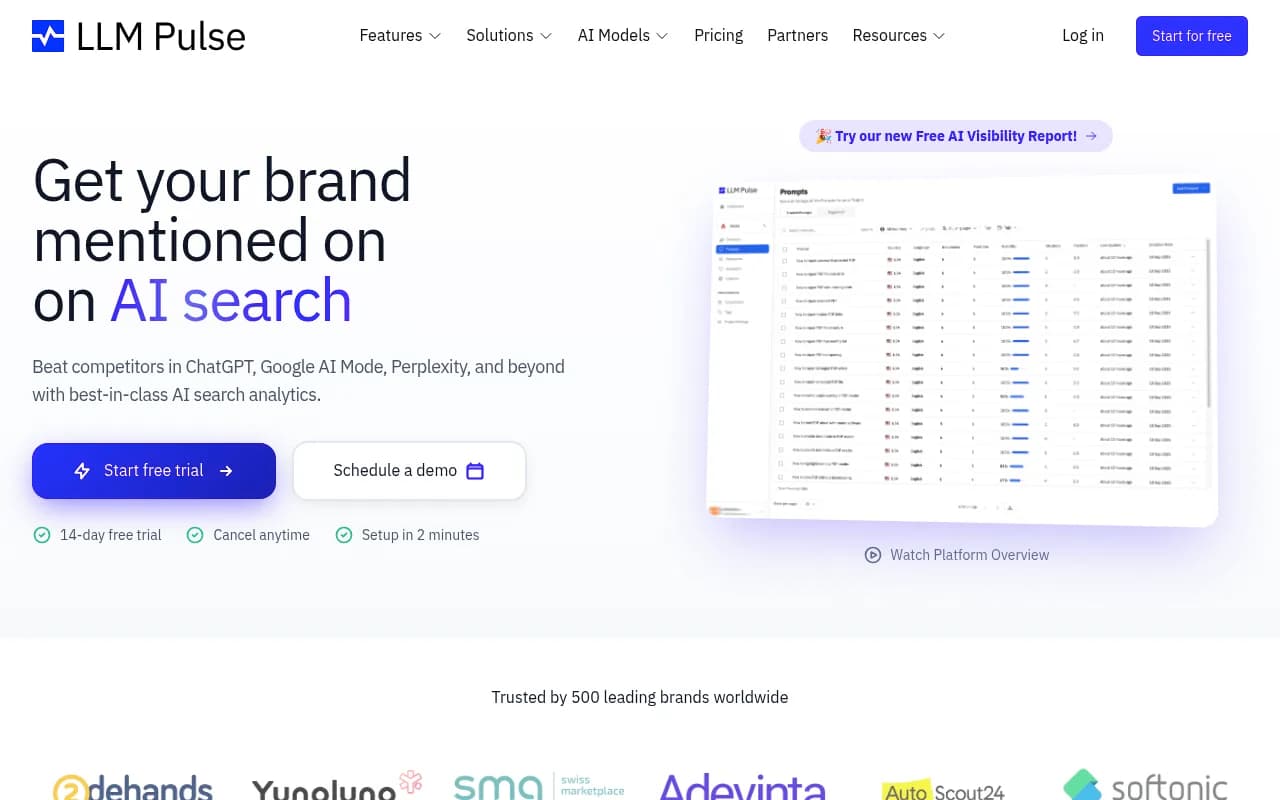
The LLM Pulse guide makes a point worth repeating: a one-shot checker is enough when you want to know whether an AI Overview exists for a keyword. You need a continuous tracker once you care about change over time.
The free tool you already have
Google Search Console costs nothing and is still the best free signal for classic rankings. It does not do daily, location-specific tracking, and it only reports terms Google has already shown you for. But if you care whether a target page is trending up or down, it answers that.
Pair it with a free AI checker and you have a rough two-sided view: Google positions from Search Console, a snapshot of AI mentions from a checker. That setup is not sophisticated, but it costs nothing and tells you whether paying is worth it.
Where the paywall actually sits
Here is what the entry-level paid plans look like. This is the real comparison, because a free plan is only useful if you know what you are being nudged toward.
| Tool | Free option | Paid entry point | What you get |
|---|---|---|---|
| Trendos | Free, 20 prompts, 600 answers/mo | About $0.01 per answer | 6 engines, up to 10 brands |
| AthenaHQ | Essential, 300 credits/mo | Starter $295/mo | 5 engines, unlimited seats |
| Promptwatch | Explore, 10 prompts, ChatGPT only | Essential $95/mo | 50 prompts, all models, site audit, crawler-aware insights |
| Peec AI | None (trial varies) | Starter $95/mo | 50 prompts, 3 engines of 6, 1 country |
| Otterly.AI | None | Lite $29/mo | 15 prompts, 4 engines, no Gemini or AI Mode |
| Profound | None | Starter $99/mo (yearly) | ChatGPT only, 50 prompts |
| SE Ranking | Trial | From roughly 109 EUR/mo | 2,000 keywords plus 100 daily AI prompt checks |
| Ahrefs | One-time checker | Brand Radar from $199/mo | Separate from base plans from $129/mo |
| Semrush | 7-day trial | AI toolkit priced per domain | Separate from SEO plan |
SE Ranking's pricing differs between sources (one lists 109 EUR a month, Frase lists $129), so check the live page.



Otterly's $29 tier is tempting, but 15 prompts is not a realistic workload. Profound's entry plan covers one engine. Neither is a bad product. They are just priced to get you in the door.
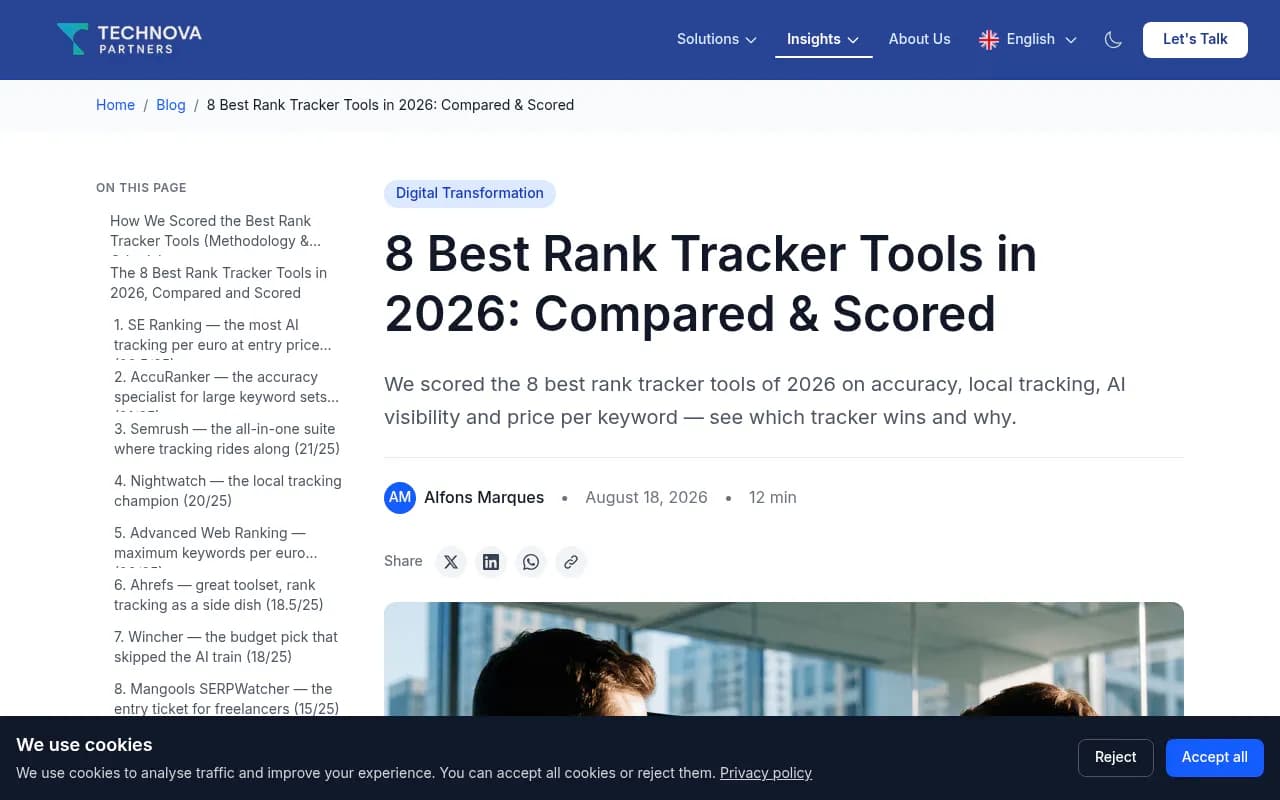
If you also track classic rankings, the Technova comparison scores eight rank trackers on a 25-point scale. SE Ranking led at 23.5, and Wincher scored only 1 out of 5 on AI visibility despite a low 49 EUR entry price. Worth knowing before you assume a cheap classic tracker covers AI.
Why tiny prompt sets give noisy data
This is the part free plans do not tell you. With 20 prompts, your visibility number is mostly noise.
Promptwatch Data's average sources per response report shows that ChatGPT cites about 5 sources per web-search answer, while Google AI Overviews cites about 10 and Perplexity almost exactly 10 every day. Fewer slots means each citation matters more, so ChatGPT scores swing harder. Perplexity is steadier, so a change in your citations there more likely reflects a change in your content. Copilot is unstable, with sources per response moving from under 2 to nearly 17 within weeks, so judge it on monthly trends.
The math is worse than it sounds. According to the agenzy.lt comparison, with 25 prompts across 3 engines, one flipped answer moves the daily visibility score by 1.3 points. Peec suggests 50 prompts as a floor, starting with 10 to 20 awareness prompts and 20 to 30 consideration prompts, watched for 30 days before you conclude anything.
Two more traps:
- Adding prompts on topics you already win raises your score without changing what any engine says.
- A tracked prompt is not what ChatGPT searches. Promptwatch's query fanout data shows average fanout length dropped from about 117 characters in December to about 53 in April 2026, so the hidden queries your content must match keep shifting. Writing headings like short search queries, for example "Best CRM for small agencies 2026", is the practical advice from that report.
How to get real value from a free tier
- Pick your 20 prompts carefully. Mix brand, category and comparison questions. Skip prompts you already dominate.
- Run it for 30 days before changing anything. One week of data tells you nothing.
- Use two tools. A free plan for trend tracking plus a one-shot checker for a second opinion.
- Look at citations, not just mentions. Which pages get cited tells you what to fix.
- Check crawler access. If AI bots cannot read your site, no content change will help. The free Agentic Readiness Check or a free robots.txt review covers this.
- Compare engines separately. Averaging across ChatGPT and Perplexity hides what is happening.
Other budget and low-cost options in the catalog
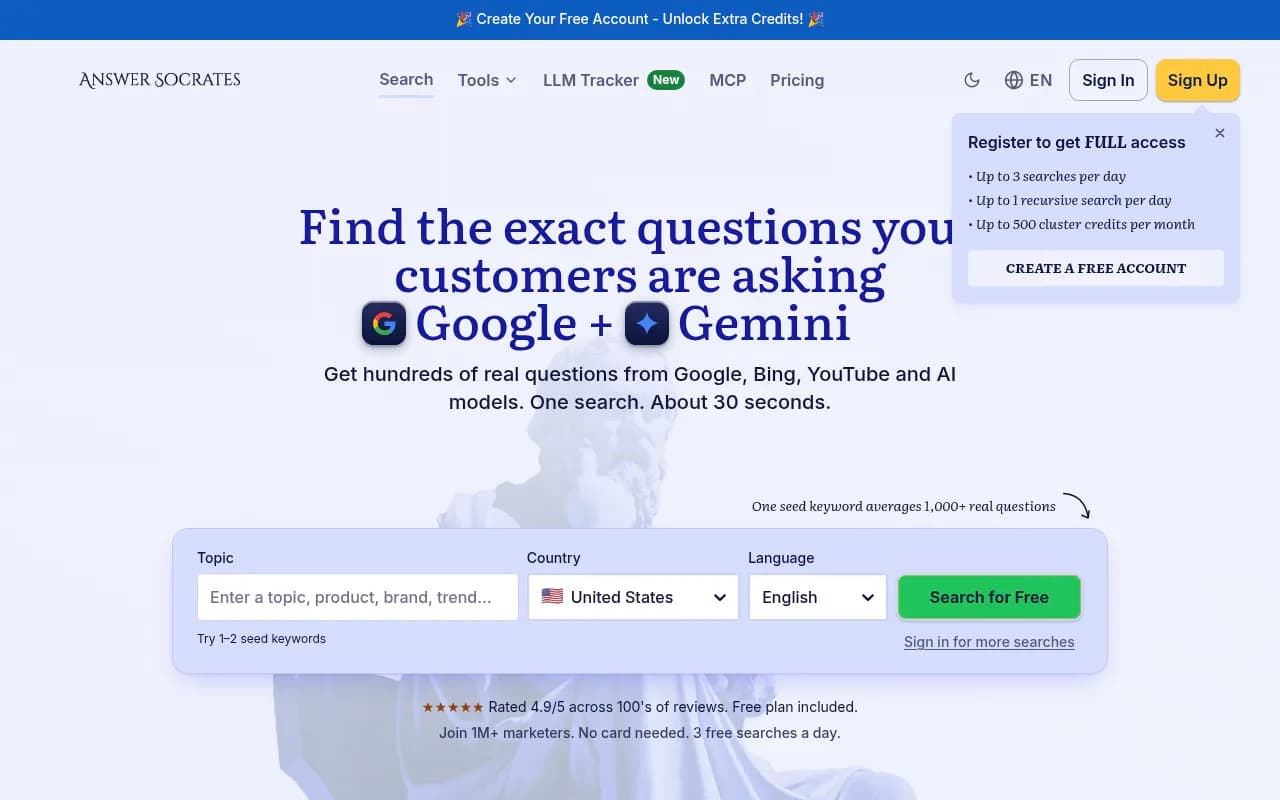
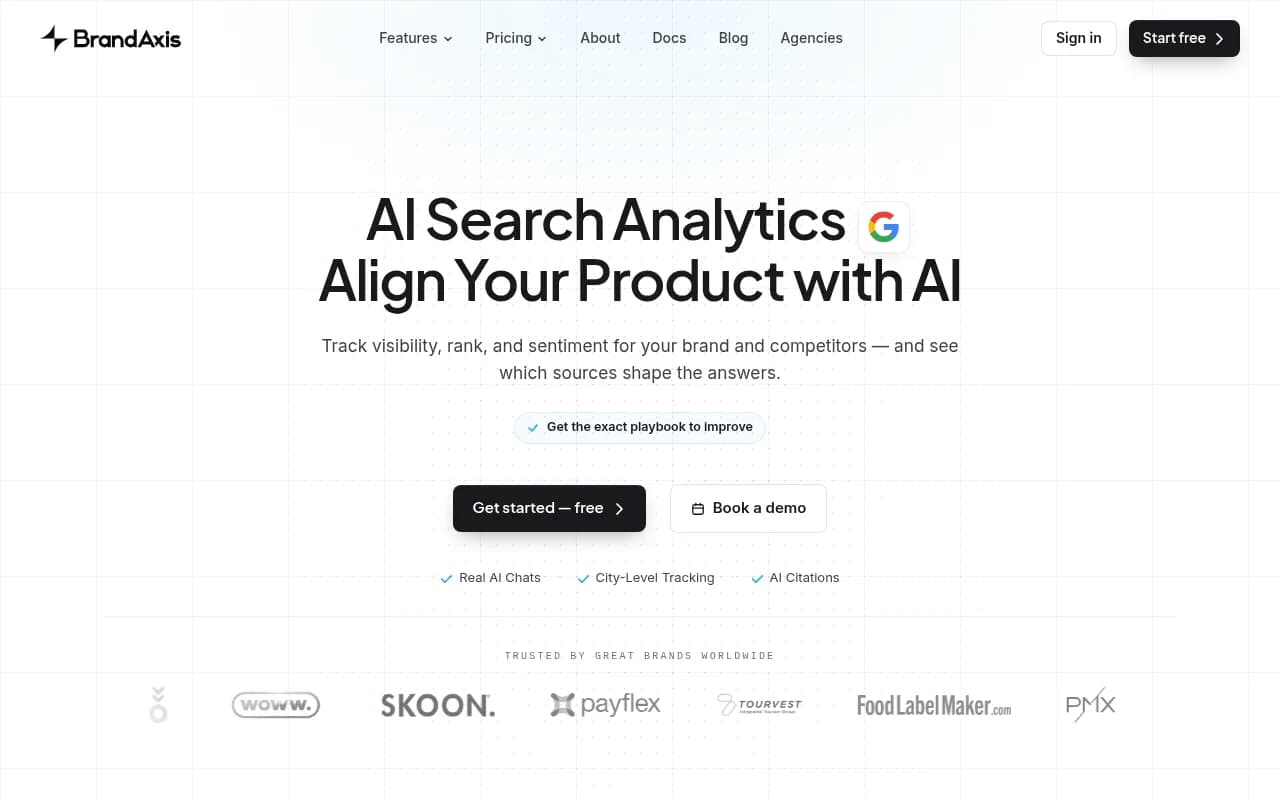
If you want cheap rather than free, several smaller tools sit between a free plan and the $95 tier. Answer Socrates, Airefs, BrandAxis, Radix AI and Atyla all position themselves as low-cost trackers. I have not tested them all, so verify the prompt limits and engine coverage against current pricing. More options are listed in the AI rank tracker directory at ai-rank-tools.com.
When free stops being enough
Switch to paid when any of these happen:
- You need more than about 50 prompts to cover your category.
- You want history, competitor benchmarking, or share of voice.
- You need to track multiple countries or languages.
- You want to know which pages AI crawls, and whether citations turn into traffic.
- Reporting to a client or boss requires exports.
This is also where tools diverge. Prompt trackers tell you whether your brand was mentioned. Platforms like Promptwatch add crawler logs, visitor analytics, and content gap analysis, then help produce the content that fixes gaps. For a wider look at the category, see the GEO software directory at bestgeosoftware.com.
Bottom line
Start with Search Console plus one free AI checker. If you want ongoing tracking, try Trendos or AthenaHQ's free tier, and treat 20 prompts as a pilot, not a program. Move to a paid plan when you hit the limits above, and compare the real cost per prompt, not the sticker price. Run the pilot for a full 30 days before you decide anything.