Key takeaways
- $200/month is enough for a working SEO stack if you pick one tool per job (research, content, tracking) and refuse to pay for overlap.
- Most roundups that claim a full SEO hire replacement for $200 are vendor marketing. Treat them as a source of price points, not proof.
- ChatGPT cites product and landing pages far more than blog posts, so your budget should cover those pages too, not only articles.
- Verify every price on the vendor's own pricing page before you subscribe. Roundup prices go stale fast.
- Start with the bottleneck you actually have: research, drafting, or knowing whether AI engines mention you.
The $200 ceiling is a feature
A budget cap forces a decision most bigger teams avoid: what is the one function that matters most right now? One of the roundups I read for this guide, from AdLibrary, makes the same point. The ceiling makes you pick a function and own it, instead of collecting subscriptions that all do 70% of the same thing.
The overlap problem is real. Cited, a vendor with its own product to sell, claims 73% of small businesses waste $400-$800 a year on duplicate features. I would not quote that number as fact, but the pattern matches what I see. Semrush has a writing assistant, Surfer has a rank tracker, SE Ranking has AI visibility tracking. You can easily pay twice for the same thing.
So here is the approach: four jobs, one tool each, and a hard total.
The four jobs your stack has to cover
- Research and tracking: keywords, competitors, rankings, site audits.
- Content production and optimization: briefs, drafts, on-page scoring.
- AI visibility: whether ChatGPT, Perplexity and Google's AI features mention and cite you.
- Glue: reporting, automation, and the cheap stuff (a free crawler, Search Console).
Most small teams over-invest in job 2 and ignore job 3 entirely. That made sense in 2023. It makes less sense now.
What the roundups say (and why to be skeptical)
I went through the main "under $200" lists published this year. Their recommendations overlap a lot, and they are almost all written by someone selling something.
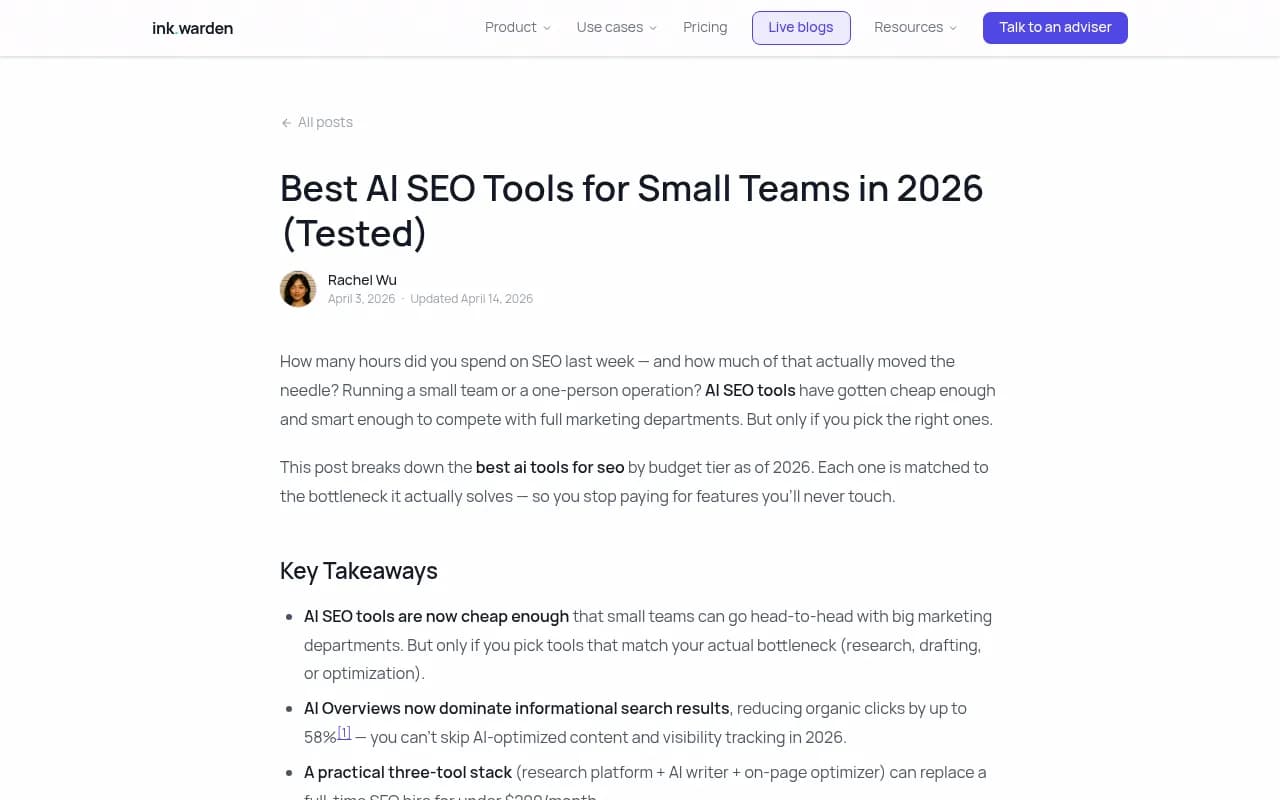
InkWarden (April 2026) proposes a three-tool stack: research platform, AI writer, on-page optimizer. It claims this can replace a full-time SEO hire. That claim is unverified and I would ignore it. The structure of the stack is sensible though, and it is basically the first two jobs above.
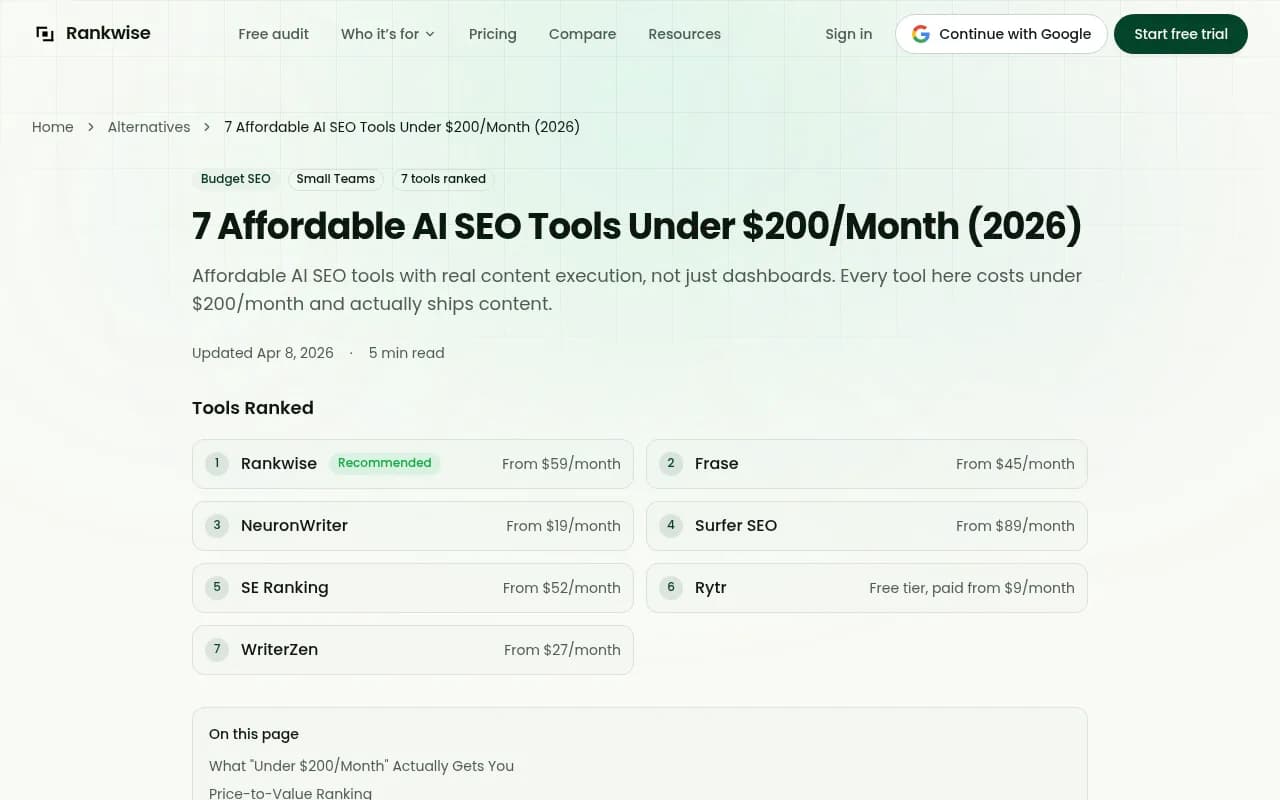
The Rankwise list is useful for price points but ranks its own product first, so it is biased. Its entry prices: Rankwise $59, Frase $45, NeuronWriter $19, Surfer SEO $89, SE Ranking $52, Rytr from $9, WriterZen $27.
Averi (April 2026) recommends Semrush Pro ($140) or SE Ranking Pro ($119) plus its own content product ($99). That totals $218-$239 a month, which is already over budget. A good reminder that "under $200" lists often are not.
Job 1: research and tracking (about $50-$140)
This is where you spend the most or the least depending on how much competitive research you need.
Semrush is the default pick for keyword and competitor data, but the Pro tier pushes you close to $140 on its own, which eats most of a $200 budget. If you can live with a lighter tool, SE Ranking is the more budget-friendly all-in-one.

For tighter budgets, Mangools and Ubersuggest cover keyword research and rank tracking at a much lower price. They are less deep, but a three-person team with a 40-page site does not need a 25-billion-keyword database.

My opinion: if your content team is under five people, buy SE Ranking or Mangools and put the savings into AI visibility. Semrush is excellent, but paying $140 for it means you are choosing it over everything else on this list.
For technical audits, Screaming Frog has a free tier that crawls up to 500 URLs, which covers most small sites. Pair it with Google Search Console (free) and you have covered the audit job for $0 to about $25 a year.
Job 2: content and on-page optimization (about $45-$100)
AI writers and optimizers are crowded and cheap. You want one that does briefs and scoring, not three.
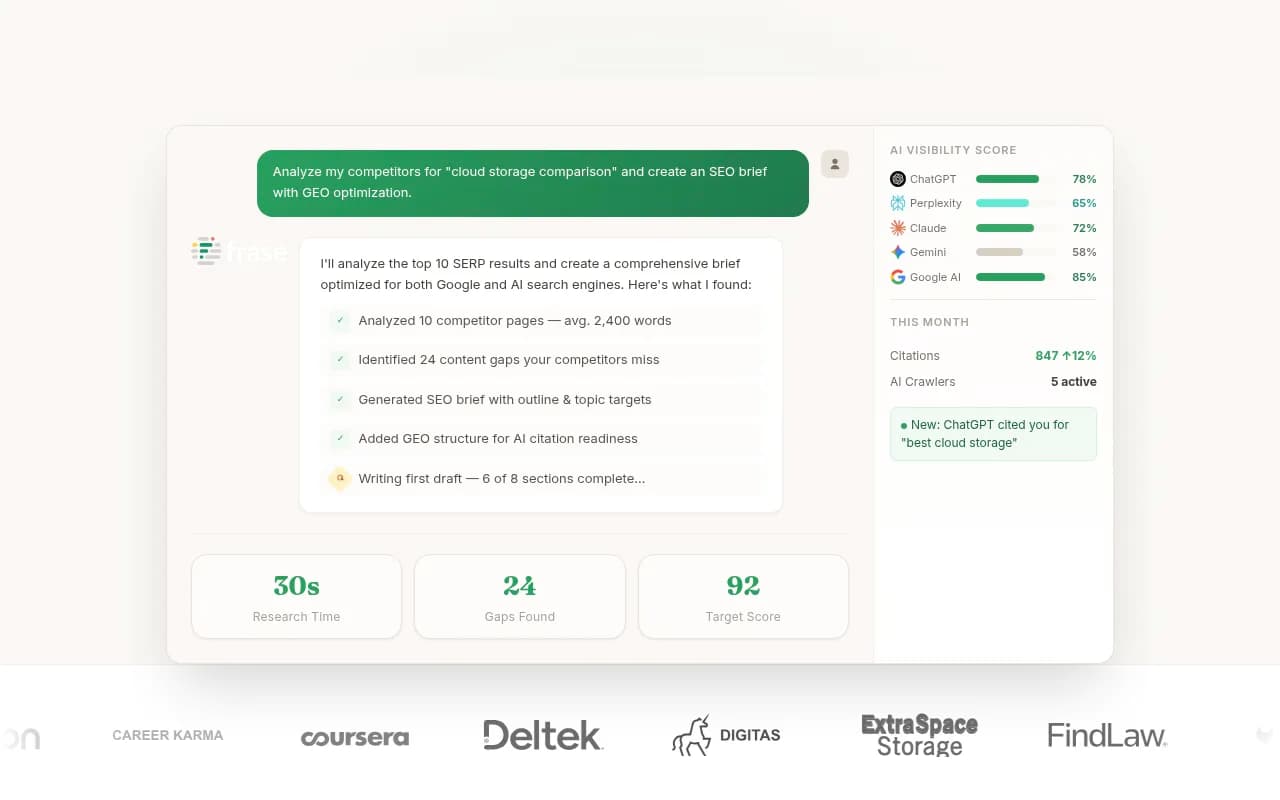
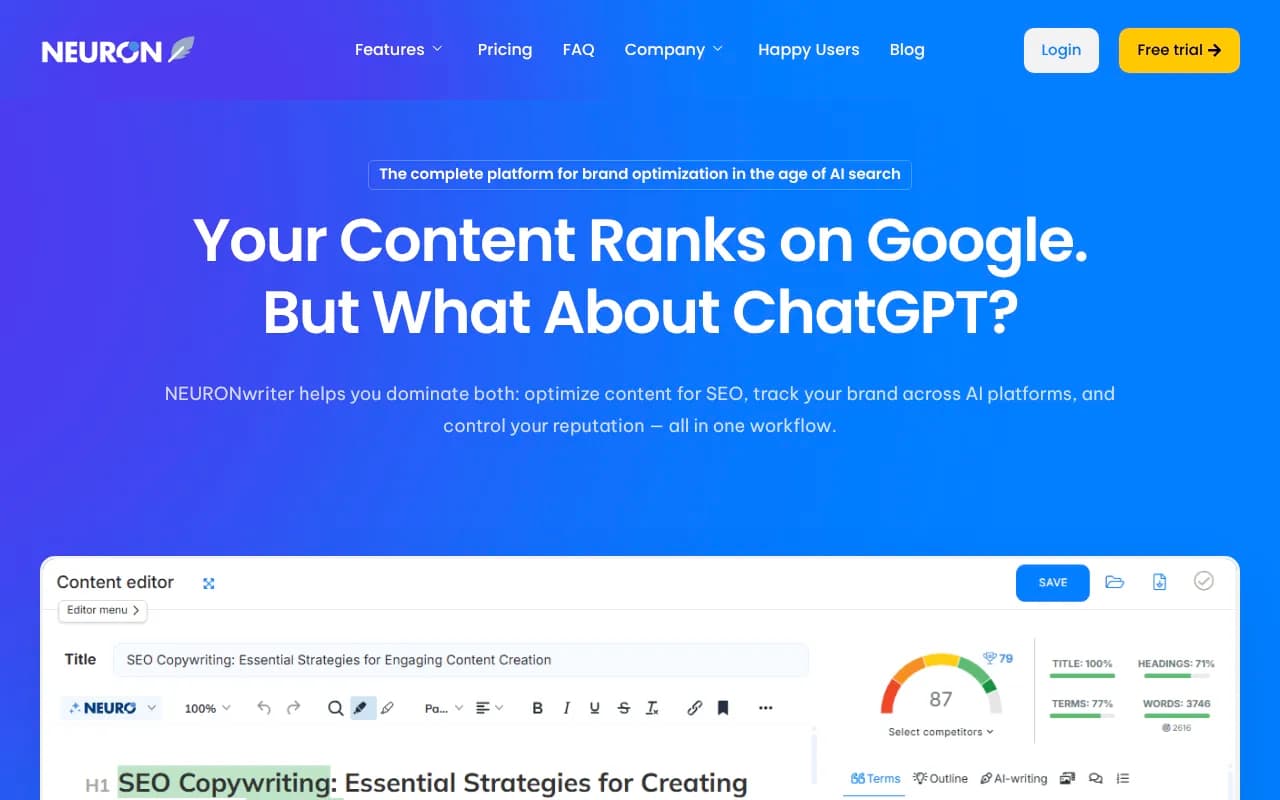
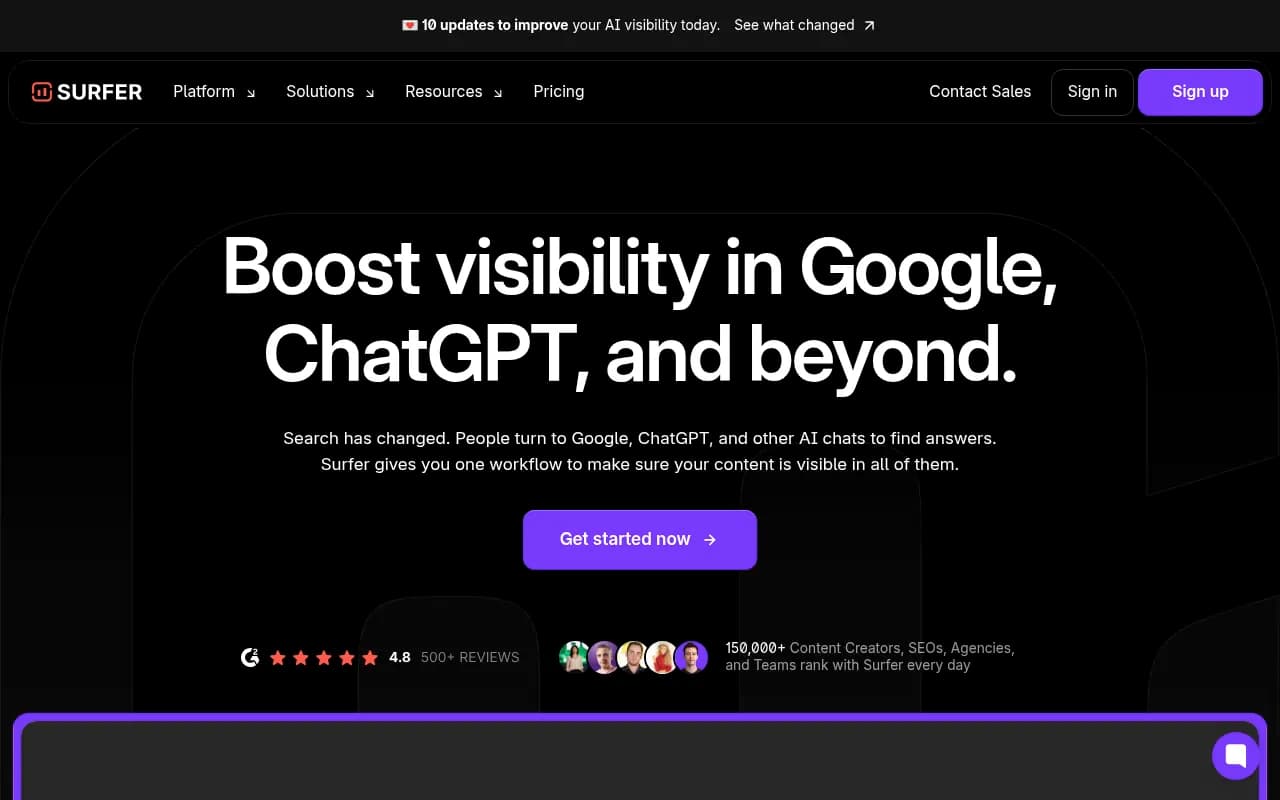
Frase and NeuronWriter are the value picks. Frase combines SERP research, briefs, drafting and scoring. NeuronWriter starts at around $19 a month according to the Rankwise list and does semantic analysis well. Surfer SEO is the polished option at roughly $89 on the entry plan, and I would only pick it if your editors will actually use the scoring workflow every day.
One thing I would change from the typical advice: do not budget only for blog posts. Promptwatch Data's analysis of ChatGPT citations (Sep 28 to Oct 4, 2026) found that product pages are the most cited content type at 22.4%, and landing pages follow at 16.8%. Together that is about 39% of citations going to pages that describe what a company sells. Listicles are 13.6%, how-tos 8.7%.
For commercial prompts like "best CRM for small businesses", product pages, landing pages, listicles and comparisons make up almost 70% of citations in that data. So an AI writer that only cranks out blog posts is covering the smaller part of the surface. Use your content tool for comparison pages, FAQ sections and product page copy, not just articles.
There is also a durability argument. The content half-life report found that news loses half its cited pages within about 36 days, while landing pages and docs stay cited much longer. Evergreen commercial pages are a better use of limited writing hours than topical posts.
Job 3: AI visibility tracking (about $0-$100)
This is the part most budget guides skip. If buyers ask ChatGPT or Google's AI Mode which tool to buy, you need to know whether you show up, and which pages get cited.
There are two tiers here. Prompt trackers tell you whether your brand was mentioned. Platforms go further: they show why you are or are not visible, and help fix it. For a small team the second kind is more useful, because you do not have spare hours to interpret raw dashboards.
Promptwatch is the one I would look at first for a team that wants action instead of charts. Its Essential plan is listed at $95 a month (50 prompts, all AI models, site audit, content gap analysis), and there is a free Explore tier for a single project with 10 prompts on ChatGPT. It also includes AI crawler logs, which show whether bots like GPTBot can read your site at all. That is a problem you want to find before spending money on content. Confirm the current price at promptwatch.com/pricing before you buy.

If you want something lighter, there are cheaper monitoring-only options. Otterly.AI and Peec AI are common budget picks, and SE Visible is attractive if you already pay for SE Ranking.


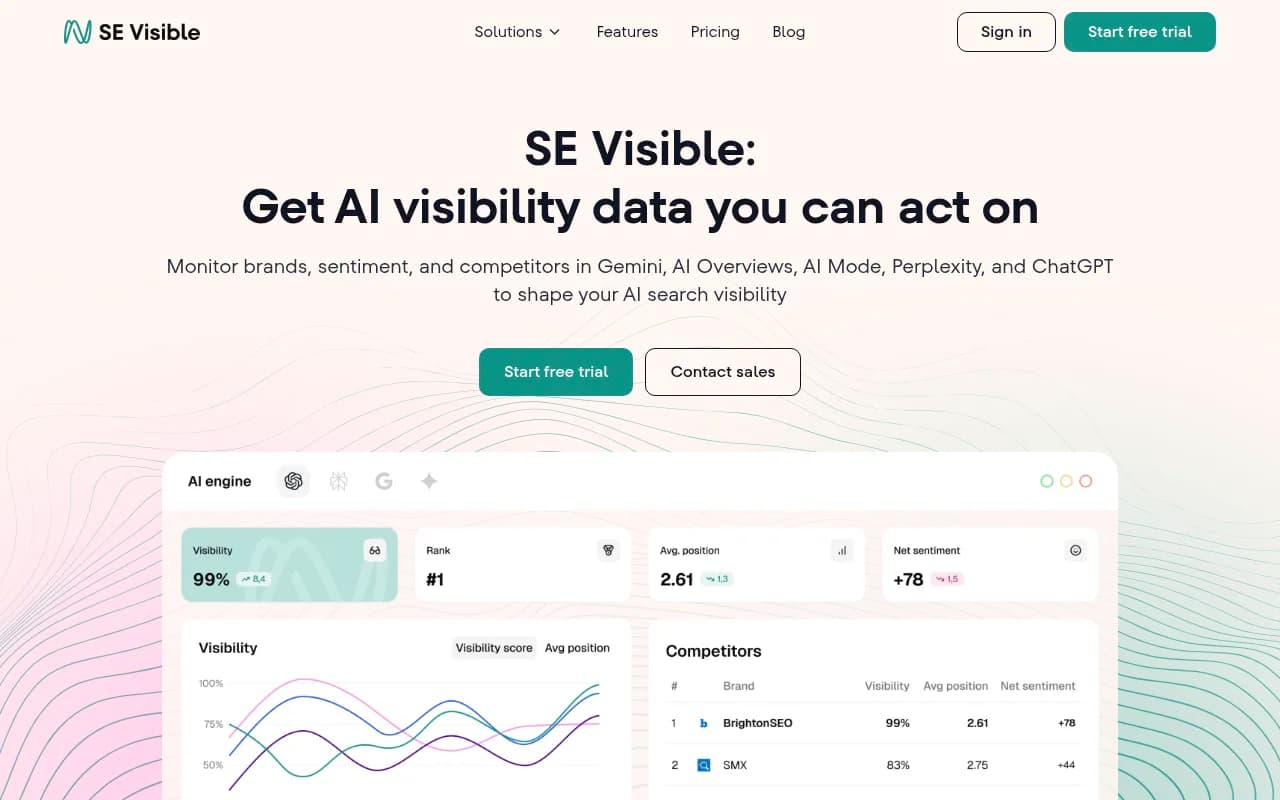
The trade-off is simple. Pure trackers cost less but leave you with a list of problems and no fix. If you have nobody on staff who can turn visibility data into a content plan, that gap costs you more than the $50 you saved.
For directories of tools in this category, the GEO software directory is a decent place to compare more options.
Where to point your effort
Also use the data to avoid wasting time. Promptwatch's social citations report for Sep 28 to Oct 4, 2026 found ChatGPT drew just 0.46% of its citations from social platforms, while Google AI Overviews drew 12.2%. YouTube was 4.28% of AI Overviews citations. Reddit's share in ChatGPT collapsed in August.
Practical read for a small team: do not spend budget on Reddit seeding to get into ChatGPT. If your buyers search on Google, YouTube matters more. If they use Perplexity, LinkedIn and Reddit tie at 0.86% each, so a modest LinkedIn habit is worth keeping.
Job 4: glue and free tools (about $0-$20)
- Google Search Console and Bing Webmaster Tools, free.
- Screaming Frog free tier for audits.
- A spreadsheet or Notion for the editorial calendar.
- Zapier or Make free tiers if you want to automate reporting.
Do not buy a separate project management tool for SEO. You do not need it at this size.
Three sample stacks under $200
These use entry-level prices from the roundups and vendor pages as I found them. Treat the totals as estimates and check each pricing page.
| Stack | Research | Content | AI visibility | Approx. monthly total |
|---|---|---|---|---|
| Lean solo | Mangools or Ubersuggest (~$30) | NeuronWriter (~$19) | Promptwatch free Explore tier ($0) | ~$50 |
| Balanced small team | SE Ranking (~$52+) | Frase (~$45) | Promptwatch Essential ($95) | ~$190 |
| Research-heavy | Semrush Pro (~$140) | Free tools plus a general chatbot | Free checks only | ~$140-$160 |
The balanced stack is the one I would pick for a team of two to five people who publish weekly. It keeps research solid, gets you briefs and scoring, and uses the remaining budget on AI visibility. The research-heavy stack leaves almost nothing for the third job, which is exactly the trade-off I would avoid in 2026.
Do you need an AI writer at all?
Maybe not. A general assistant like Claude or Gemini can draft and restructure content at a low monthly price, and Frase or NeuronWriter then handle the SEO scoring. The tricky bit is quality control, not generation. Whatever you use, a human should check facts, add your own data and fill in the specifics that models make up.
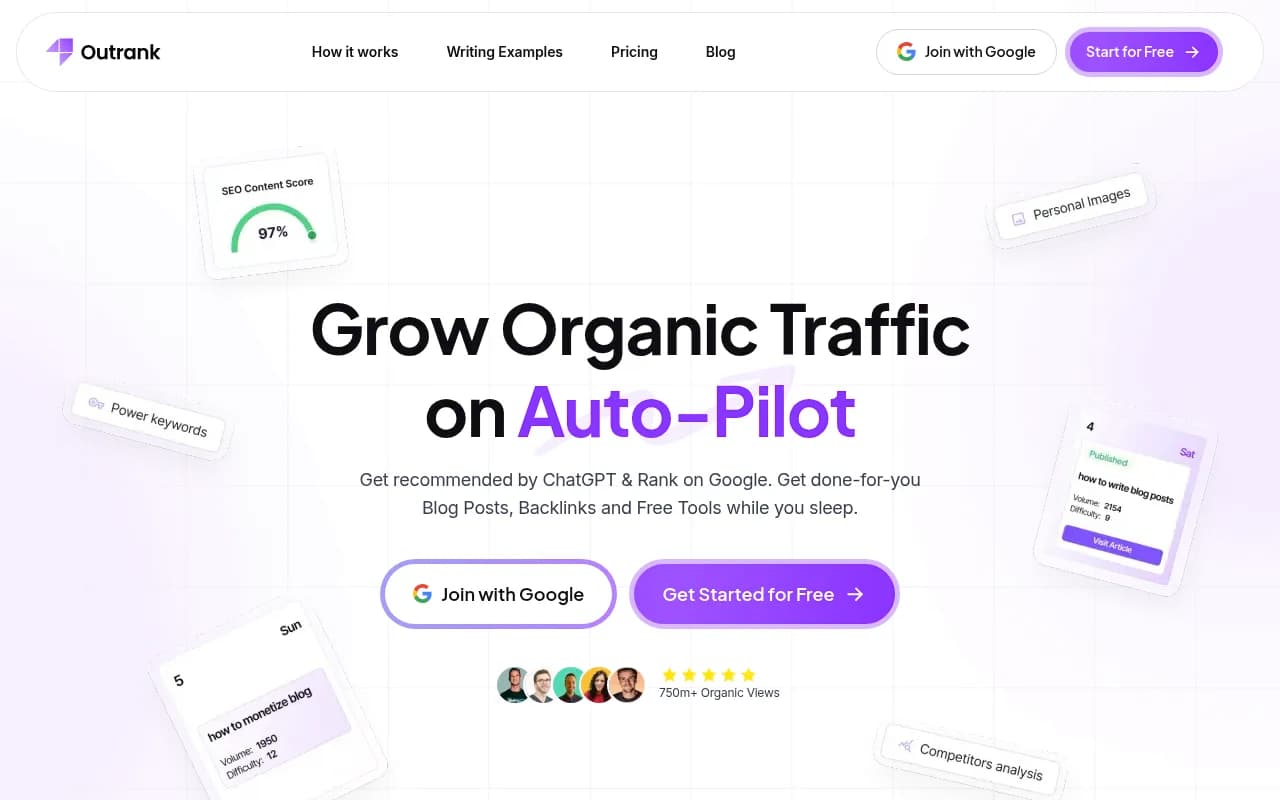
If you want fully automated publishing, tools like Outrank, Byword and TheSEOAgent exist, and I would be cautious. Auto-published content with no editor is how small sites end up with a library of pages nobody reads and no AI engine cites.
How to judge whether the stack is working
Set three checks for the first 90 days.
- Time per published page. If your content tool does not cut hours, drop it. Cited claims 6-8 hours saved per article, which is a vendor-adjacent number, so measure your own.
- Rankings and traffic on pages updated with the tool, compared with pages that were not.
- AI visibility: are the pages you published getting crawled, cited and driving visits? Track this per page, not just brand mentions.
On ROI, I would ignore claims like "Semrush drives 3 new customers worth $200 each". That comes from an illustrative example in a vendor article, not a benchmark. Run your own math: tool cost divided by the number of qualified leads or hours saved.
Mistakes that waste the budget
- Buying an all-in-one suite and a point tool that does the same thing.
- Choosing tools by feature count instead of by your current bottleneck.
- Publishing only blog posts when product, comparison and FAQ pages carry more citation weight.
- Tracking AI visibility with no plan to act on it.
- Paying monthly for tools you use twice a quarter. Most offer annual discounts or let you pause.
If you need more options for specific categories, the AI rank tracking directory and SurferStack are useful for comparing more tools.
The bottom line
For most small teams, the stack that holds up is a mid-priced research tool (SE Ranking or Mangools), one content tool (Frase or NeuronWriter), and an AI visibility platform that tells you what to fix. That lands near $190 and covers what the "replaces an SEO hire" claims promise on paper. It will not replace a person, but it will let two people do the work of a bigger team. Check the pricing pages before you commit, because the numbers in roundups are older than they look.