Key takeaways
- AEO (Answer Engine Optimization) is not a replacement for SEO -- it's a layer on top of it. Weak technical foundations kill your AEO chances before you even start.
- Answer engines favor content that is tightly focused, answers questions directly, and is structured so machines can parse it easily.
- The biggest mistake most teams make is treating AEO as a monitoring problem. Tracking where you're invisible is step one -- you still have to create content to fix it.
- Schema markup, E-E-A-T signals, and answer-first writing structure are the three content levers that move the needle most.
- A handful of purpose-built tools now exist to track citations, find content gaps, and generate content engineered for AI visibility -- this guide covers the most useful ones.
Why AEO matters more than ever in 2026
Gartner predicted in 2024 that traditional search engine volume would drop 25% by 2026, with AI chatbots and virtual agents absorbing the difference. That prediction has largely played out. Google AI Overviews now reach close to a billion users. ChatGPT, Perplexity, Claude, and Gemini have become genuine research tools for millions of people who used to start with a Google search.
The implication for content teams is uncomfortable but clear: ranking #1 on Google is no longer the whole game. A growing share of your potential audience is getting answers directly from AI systems that synthesize multiple sources, pick a handful to cite, and never send users to your site at all -- unless you're one of those cited sources.
That's what Answer Engine Optimization is about. Not gaming AI systems, but making your content genuinely useful to them: clear, authoritative, well-structured, and answerable.
The good news is that AEO and SEO share most of the same foundations. The bad news is that most content teams are still writing for the old game.
The foundation: AEO doesn't work without solid SEO
Before getting into AEO-specific tactics, this needs to be said plainly: if your site has thin content, poor internal linking, broken redirects, or weak topical authority, answer engines won't trust it enough to cite it. The technical and structural basics still matter.
What answer engines need from your site:
- Clean crawlability -- AI crawlers (from ChatGPT, Perplexity, Claude, and others) need to be able to read your pages without hitting errors or blocks
- Clear site architecture -- logical URL structures and internal linking help engines understand what your site is about
- Strong topical authority -- a site that covers a topic in depth signals expertise; scattered thin pages don't
- Fast load times and mobile performance -- these still factor into how confidently engines surface your content
If you're unsure how AI crawlers are actually interacting with your site, tools like Promptwatch provide real-time crawler logs showing which pages AI bots are reading, how often they return, and what errors they're hitting.

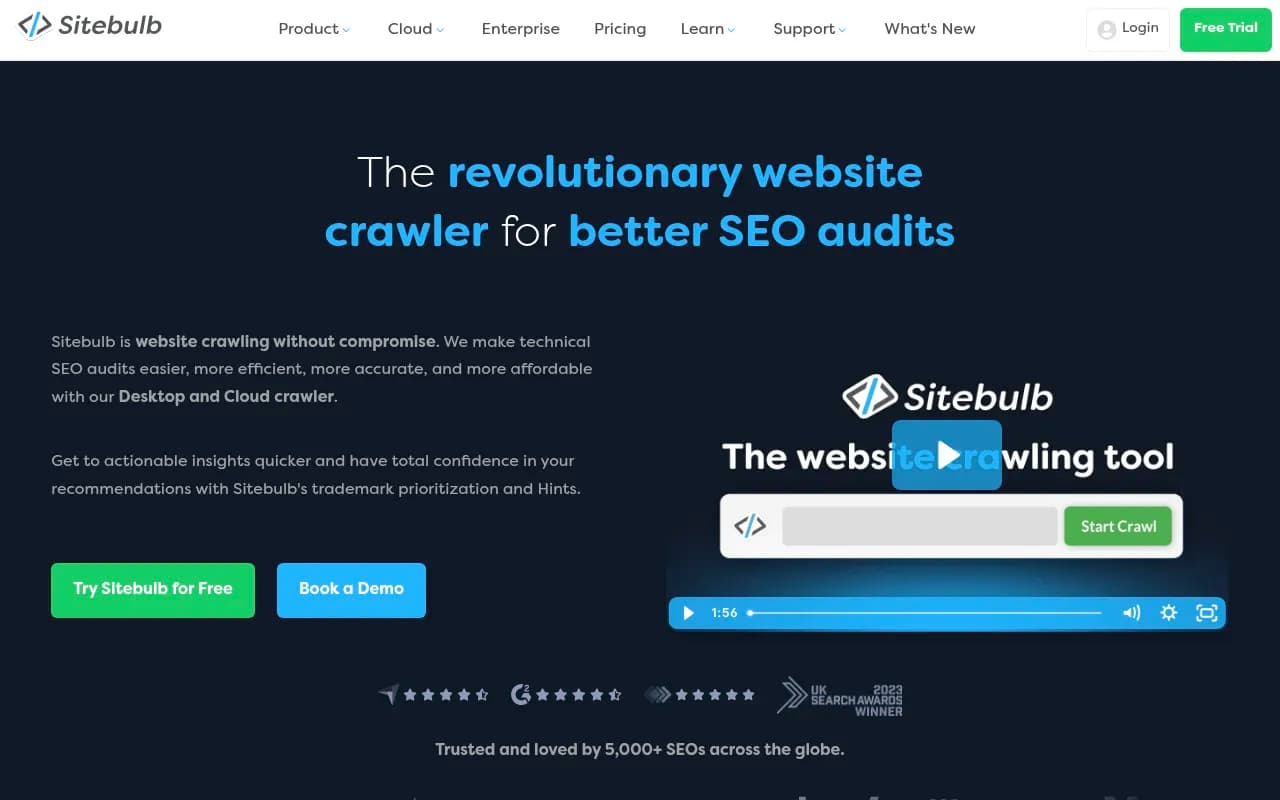
For pure technical SEO auditing, Screaming Frog remains the go-to for most teams.
What answer engines actually want from content
Answer engines aren't ranking pages the way Google does. They're synthesizing responses from multiple sources and choosing which sources to cite. The selection criteria are different -- and understanding them changes how you write.
Direct, early answers
Answer engines strongly prefer content that answers the question in the first paragraph, not after three paragraphs of context-setting. This is sometimes called "answer-first" or "inverted pyramid" writing. If someone asks "what is schema markup," your page should say what it is in the first two sentences, then explain the context.
This feels counterintuitive if you've been writing for engagement metrics (time on page, scroll depth). But for AEO, the goal is to be the most useful, most parseable answer -- not the most engaging article.
Tight topical focus
Research from Animalz found that content with scattered topics and tangents performs worse in AI citations than content that stays tightly focused on one question or concept. This makes sense: if a page is about ten things, an AI model can't confidently attribute a specific claim to it.
One page, one topic. If you have a page about "content marketing strategy" that also covers SEO basics, social media tactics, and email marketing, consider whether it should be split into focused pieces.
Semantic structure
Heading hierarchy matters. H1, H2, H3 used logically -- not decoratively -- helps answer engines parse your content's structure. FAQ sections are particularly valuable because they map directly to the question-answer format AI systems use.
Evidence and attribution
Claims backed by data, named sources, or original research get cited more often than unsupported assertions. If you write "most B2B buyers now use AI tools in their research process," that's easy to ignore. If you write "according to Gartner's 2024 report, 75% of B2B buyers will use AI tools by 2026," that's citable.
E-E-A-T signals
Google's E-E-A-T framework (Experience, Expertise, Authoritativeness, Trustworthiness) has become a useful shorthand for what answer engines look for in sources. Author bylines with credentials, "about" pages that explain your organization's expertise, and external links to authoritative sources all contribute.
The AEO content creation process, step by step
Step 1: Map the questions your audience is actually asking
Traditional keyword research starts with search volume. AEO content research starts with questions -- specifically, the questions your target audience is typing into ChatGPT, Perplexity, and Google AI Overviews.
These questions often look different from traditional search queries. Instead of "best CRM software," someone asks "what CRM should a 10-person sales team use if they're already using HubSpot for marketing?" The specificity is higher. The intent is clearer. And the content that answers it well is much more likely to get cited.
How to find these questions:
- Use your own customer conversations, support tickets, and sales call notes -- these are gold
- Run the queries yourself in ChatGPT and Perplexity and look at what they cite
- Use AEO-specific tools that surface prompt volumes and question patterns (more on these below)
- Mine Reddit and Quora for how real people phrase their questions
Tools like Promptwatch surface "query fan-outs" -- the sub-questions that branch off a main prompt -- which helps you understand the full shape of what people are asking around a topic.
Step 2: Audit your current citation gaps
Before creating new content, understand where you're currently invisible. This means running the prompts your audience uses and checking whether your brand or content appears in the responses.
Most teams find this sobering. Competitors they didn't think were winning in their category are getting cited repeatedly. Questions they assumed their content answered well are returning zero citations.
This is the "answer gap" -- the space between what AI models are being asked and what your content currently provides. Closing that gap is the core work of AEO.


Step 3: Write answer-first content with clear structure
Once you know which questions to target, write content that answers them directly. A few structural principles that consistently improve citation rates:
Lead with the answer. The first paragraph should contain the direct answer to the question the page is targeting. Don't bury it.
Use question-based headings. "What is schema markup?" performs better than "Schema markup overview." The heading itself signals to AI systems what question this section answers.
Include an FAQ section. A dedicated FAQ at the bottom of a page -- with real questions your audience asks -- is one of the most reliable ways to get cited in AI responses. These map directly to the question-answer format AI systems use.
Keep sections focused. Each H2 section should answer one question or cover one concept. If a section is trying to do three things, split it.
Add a summary or key takeaways section. AI systems often pull from summary sections because they're designed to be concise and citable.
Step 4: Add schema markup
Schema markup is machine-readable metadata that tells search engines and AI systems what your content is about. For AEO, the most valuable schema types are:
FAQPage-- marks up question-and-answer contentHowTo-- marks up step-by-step instructional contentArticle-- marks up editorial content with author and publication dateOrganization-- tells engines who you are and what you doBreadcrumbList-- helps engines understand your site structure
You don't need to implement all of these at once. Start with FAQPage on any page that has a FAQ section, and Article on your blog posts. These two alone can meaningfully improve how AI systems parse and cite your content.
Step 5: Build topical authority through content clusters
A single well-optimized page rarely wins on its own. Answer engines favor sources that demonstrate deep expertise across a topic -- which means having multiple pages that cover different angles of the same subject, all linking to each other.
This is the "content cluster" model: a pillar page covering a broad topic, with supporting pages covering specific sub-topics, all internally linked. For AEO, this signals that your site is a genuine authority on the subject, not just a page that happens to mention it.
Tools like MarketMuse and Clearscope are useful for identifying content gaps within a topic cluster and understanding what related concepts you need to cover.
Step 6: Track citations and iterate
Creating content is not the end of the process. You need to know whether your new pages are actually getting cited, which AI models are citing them, and what prompts trigger those citations.
This is where monitoring tools become essential. The difference between a good AEO tool and a great one is whether it just shows you data or helps you act on it. Most tools stop at showing you a dashboard. The more useful ones tell you specifically what content to create next.
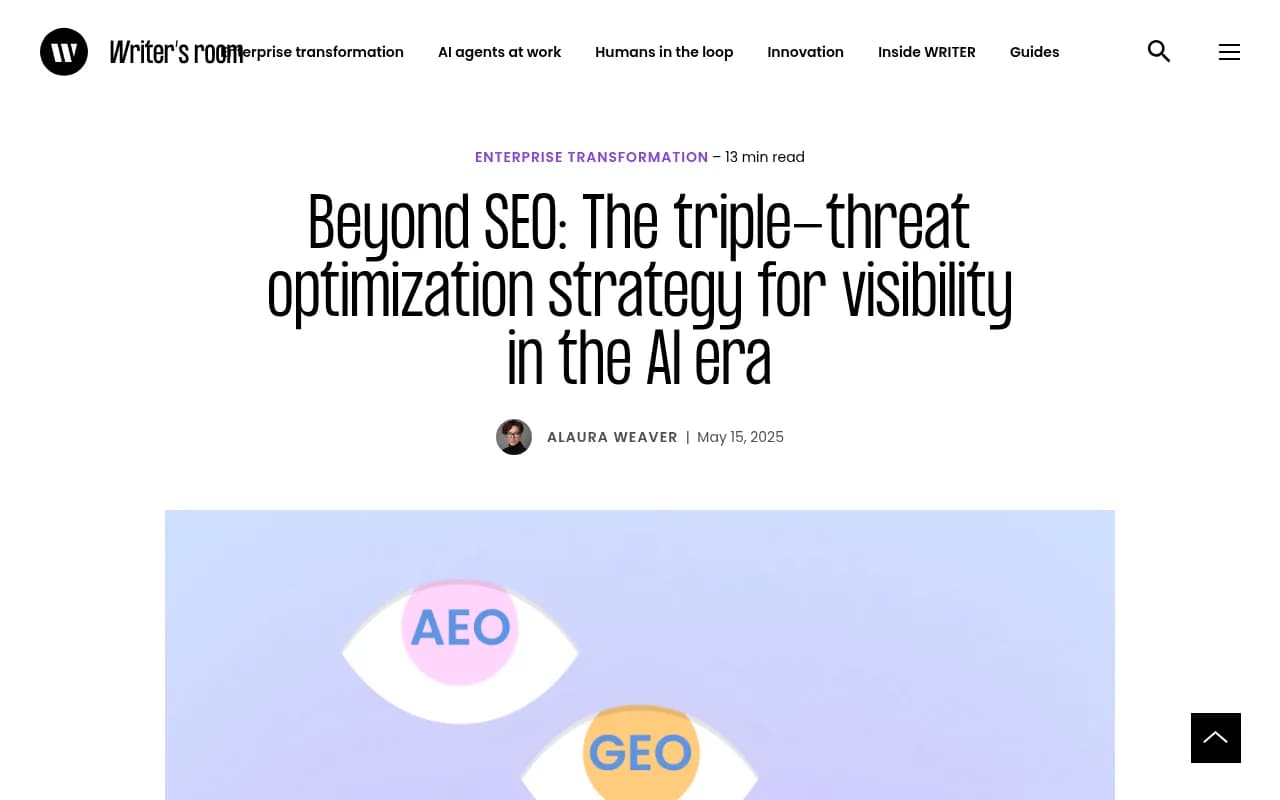
The tools that support each stage of AEO
There are now dozens of tools claiming to help with AEO. They vary enormously in what they actually do. Here's a breakdown of the most useful categories and specific tools worth considering.
Tracking and monitoring tools
These show you where your brand appears (or doesn't) in AI responses. Most tools in this category are monitoring-only -- they show you the problem but don't help you fix it.


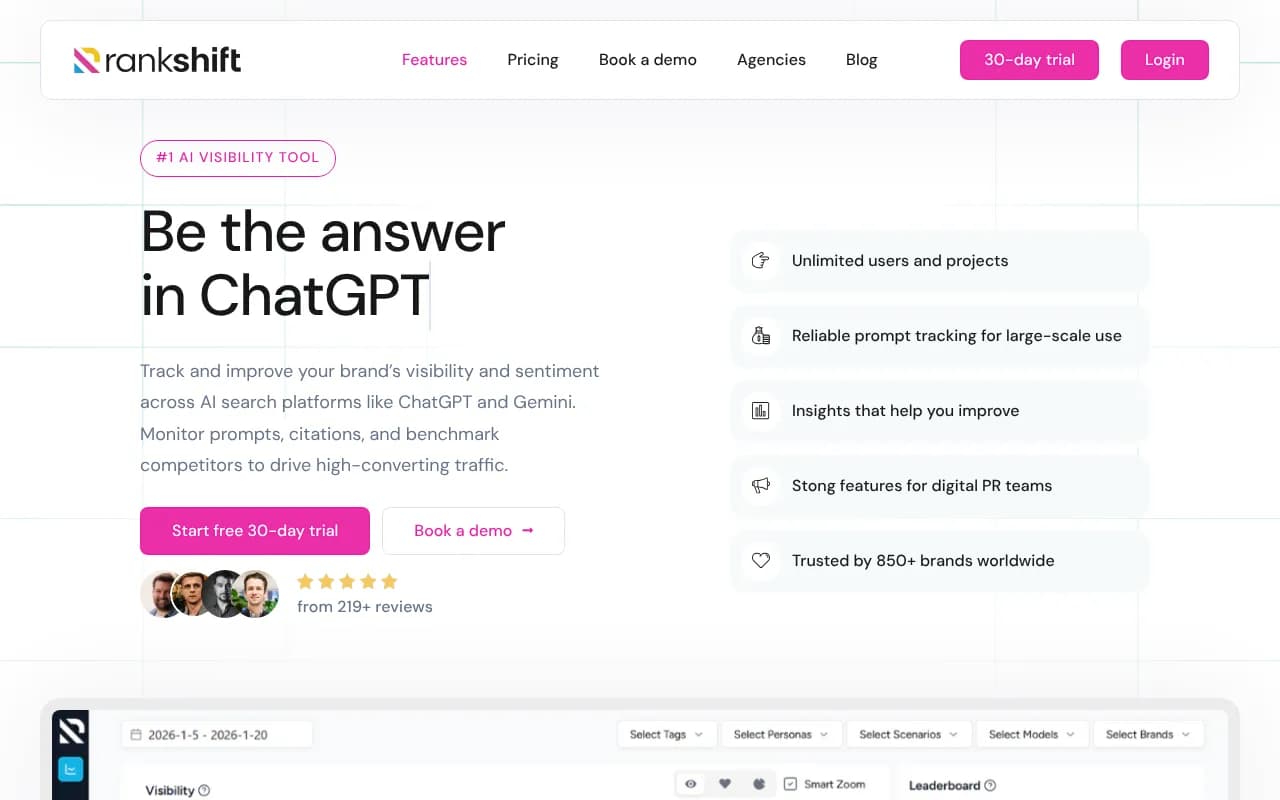
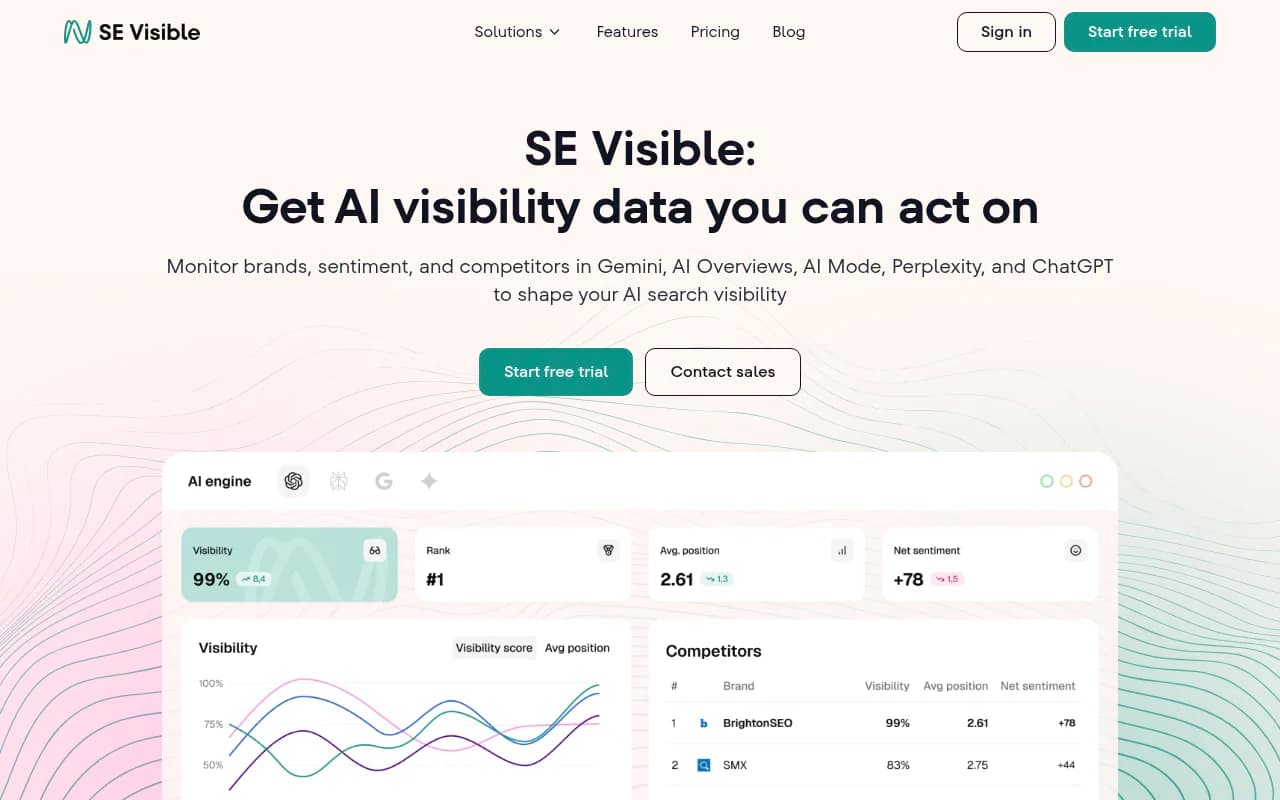
For teams that need something more actionable, Promptwatch goes beyond monitoring to show you exactly which prompts competitors are visible for that you're not, and includes a built-in content generation tool trained on citation data.
Content optimization tools
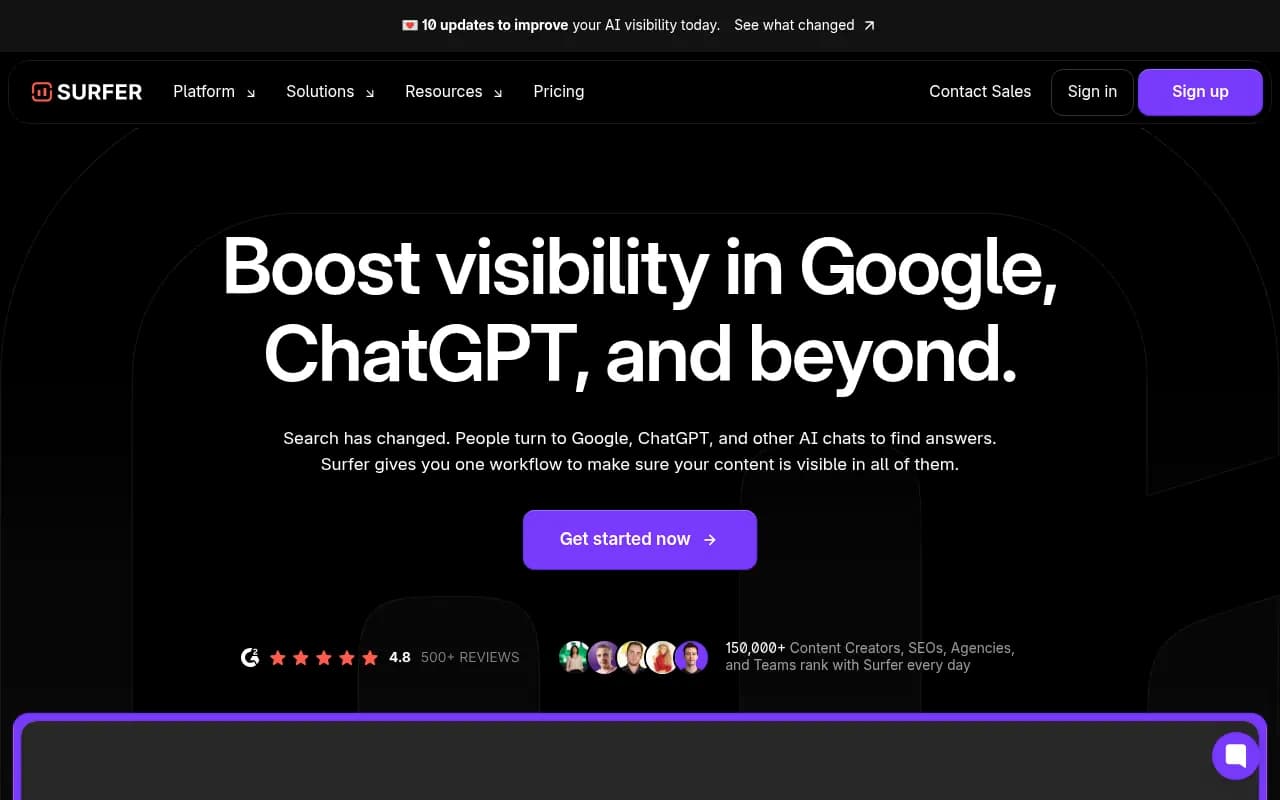
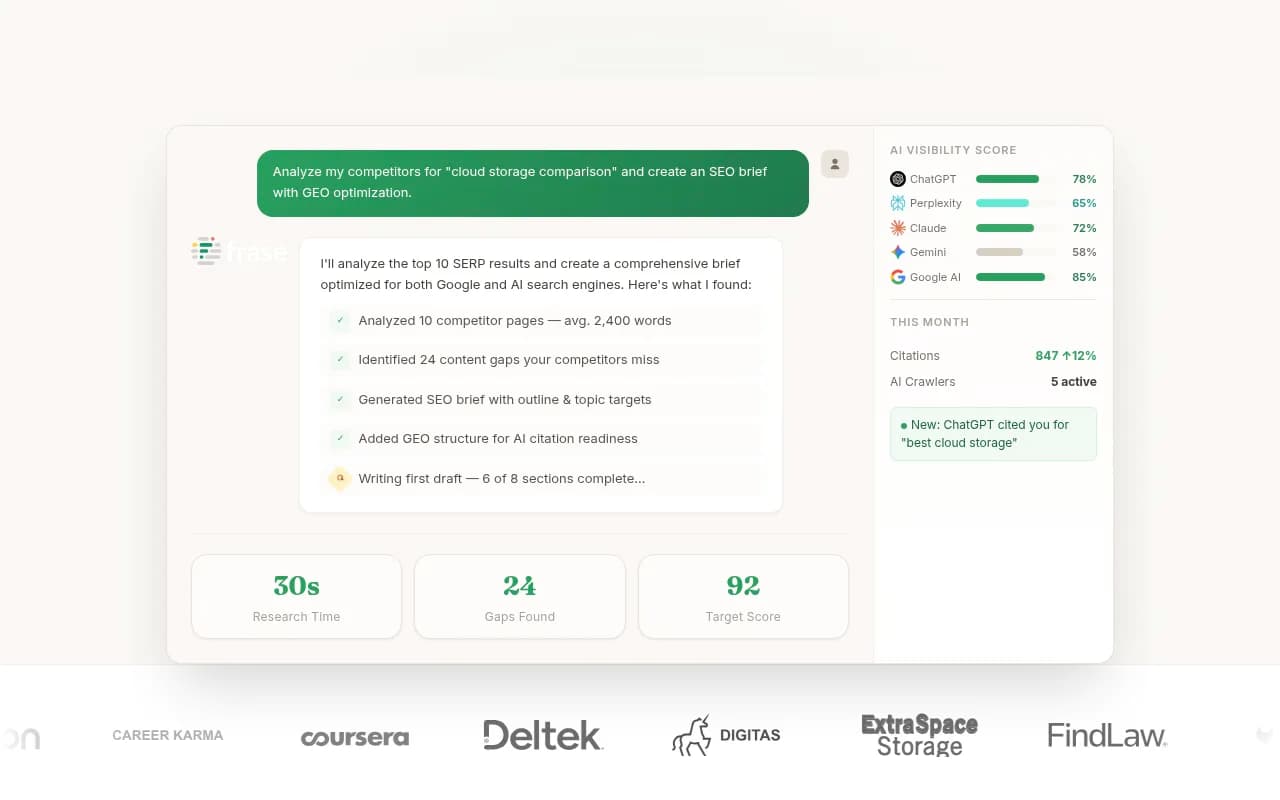
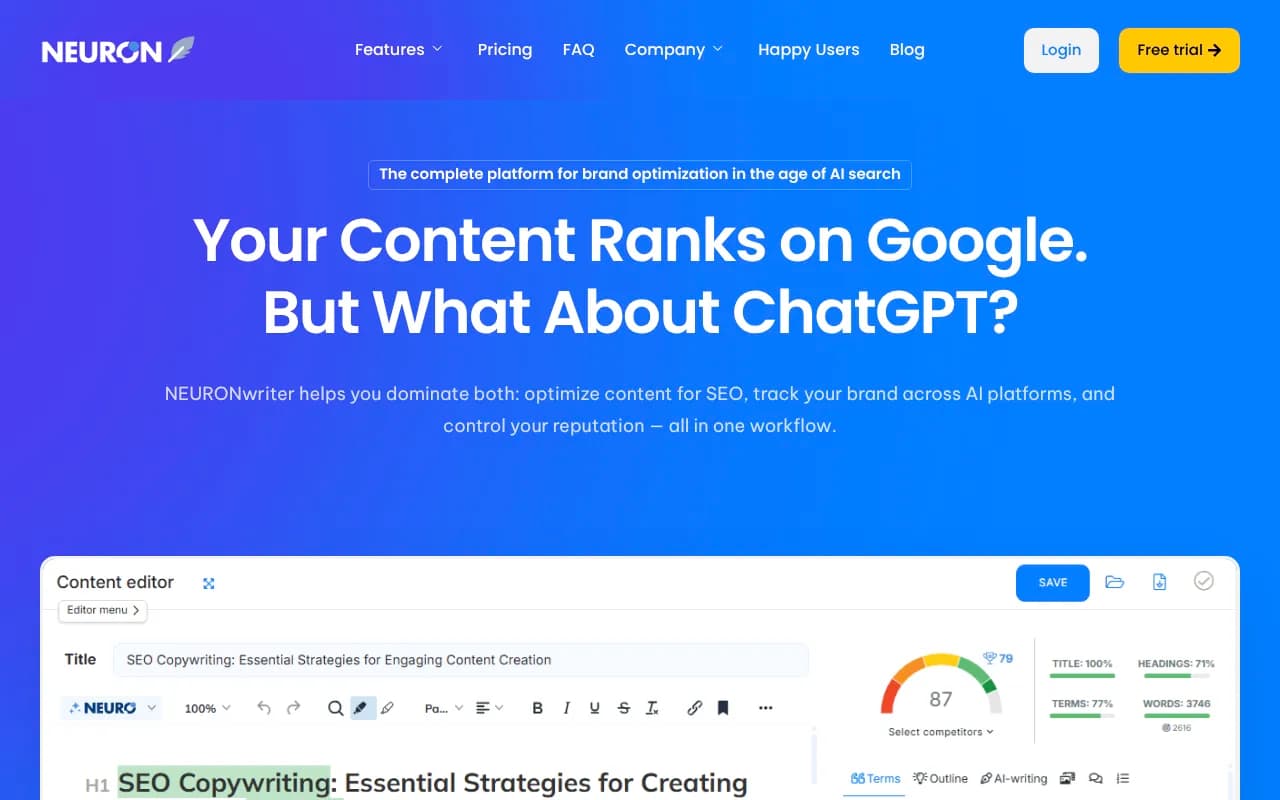
These help you write content that's more likely to rank in traditional search and get cited in AI responses.
Content generation tools
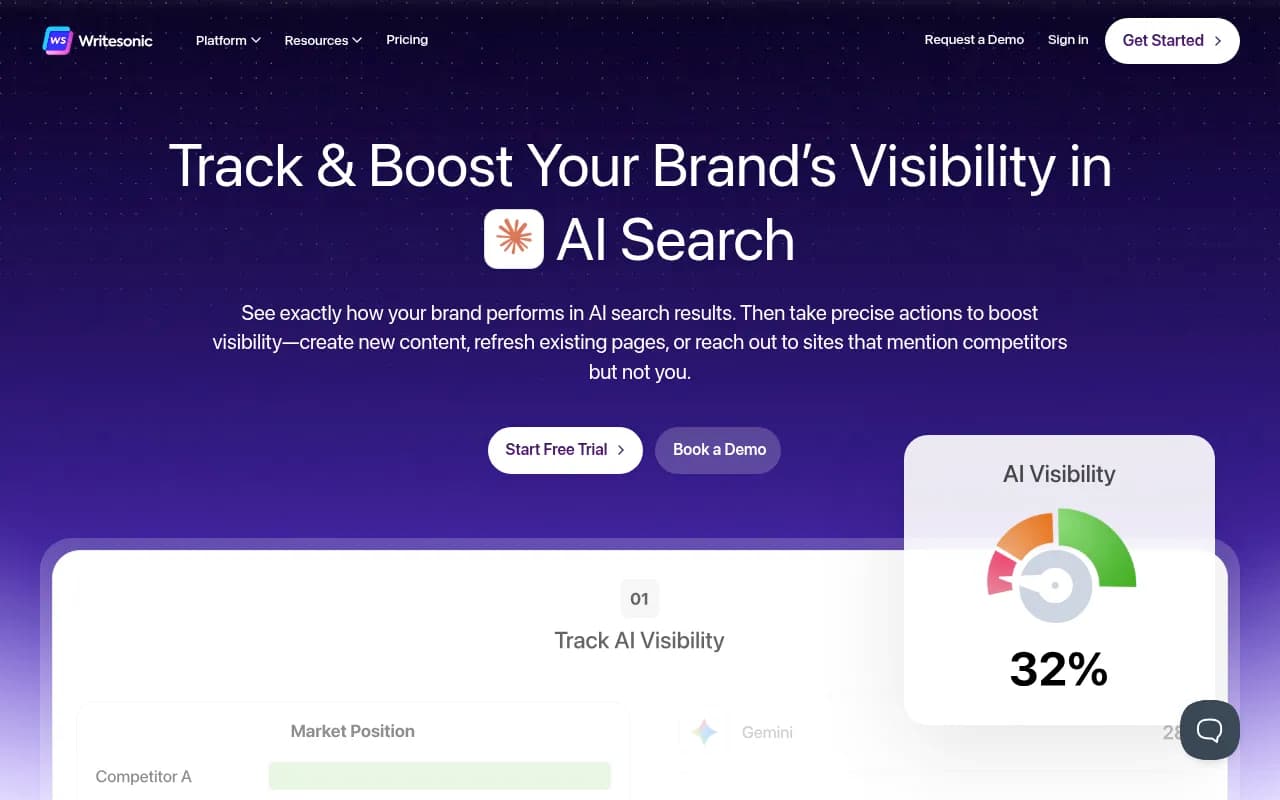
Once you know what content to create, these tools help you produce it faster.
Technical SEO tools
These handle the foundation -- crawlability, site structure, schema -- that AEO depends on.
AEO tool comparison: what each category covers
| Tool | Category | Citation tracking | Content gaps | Content generation | Schema help |
|---|---|---|---|---|---|
| Promptwatch | End-to-end AEO | Yes | Yes | Yes | No |
| Otterly.AI | Monitoring | Yes | No | No | No |
| Peec AI | Monitoring | Yes | No | No | No |
| AthenaHQ | Monitoring | Yes | Limited | No | No |
| Profound | Monitoring + analytics | Yes | Limited | No | No |
| Surfer SEO | Content optimization | No | Yes | Yes | No |
| Frase | Content optimization | No | Yes | Yes | No |
| Screaming Frog | Technical SEO | No | No | No | Yes |
| Semrush | All-in-one SEO | Limited | Yes | Yes | Limited |
| MarketMuse | Content planning | No | Yes | Limited | No |
The pattern here is worth noting. Most tools do one or two things well. If you want a single platform that covers citation tracking, gap analysis, and content creation, the options narrow quickly.
Common AEO mistakes to avoid
Writing for search volume instead of questions. High-volume keywords don't automatically translate to AEO wins. A page targeting "project management software" with 50,000 monthly searches may get fewer AI citations than a page targeting "how should a remote team of 5 manage sprints" with 200 monthly searches, because the latter is more answerable.
Ignoring your existing content. Many teams jump to creating new pages when their existing content just needs restructuring. Adding a direct answer paragraph at the top, restructuring headings as questions, and adding a FAQ section can transform an existing page's citation performance without writing anything new.
Treating AEO as a one-time project. AI models update their training data and retrieval systems regularly. A page that gets cited today may not get cited in three months if a competitor publishes something better. AEO is ongoing.
Publishing thin "answer" pages. Some teams go too far in the answer-first direction and publish pages that are essentially just a one-paragraph answer with no supporting depth. AI systems favor sources that demonstrate genuine expertise -- a page needs enough substance to signal authority, not just enough to technically answer the question.
Ignoring Reddit and YouTube. AI models cite Reddit threads and YouTube videos more than most marketers realize. If your brand or category has active Reddit communities, participating in them (genuinely, not spammily) and optimizing your YouTube content for discoverability is a real AEO lever.
A practical starting point for most teams
If you're starting from scratch or trying to prioritize, here's a reasonable sequence:
-
Run an audit of your current AI citations. Pick 10-15 prompts your audience would realistically use and run them in ChatGPT, Perplexity, and Google AI Overviews. Note who's getting cited and who isn't.
-
Fix the technical foundation first. If AI crawlers can't read your site properly, nothing else matters. A quick crawl with Screaming Frog will surface the obvious issues.
-
Identify your three highest-value unanswered questions. These are the questions your audience asks that your content doesn't currently answer well -- or answers in a format that's hard for AI systems to parse.
-
Rewrite or create those three pages with answer-first structure, question-based headings, and a FAQ section. Add
FAQPageschema to each. -
Set up monitoring so you can see whether citations improve. Even a basic setup -- manually running your key prompts weekly -- is better than flying blind.
-
Expand from there. Once you have a working process for one topic cluster, apply it to the next.
The teams winning at AEO in 2026 aren't doing anything magical. They're being systematic about understanding what questions their audience asks, creating content that answers those questions clearly, and tracking whether it's working. The tools make each of those steps faster -- but the strategy is straightforward.