Key takeaways
- AI search visits grew 42.8% year over year (from 15.6 billion to 27.4 billion between Q1 2025 and Q1 2026), forcing AEO tools to evolve fast
- The biggest shift: brands stopped tolerating monitoring-only dashboards and started demanding tools that help them actually fix visibility gaps
- New capabilities that became table stakes in 2026: AI crawler logs, prompt volume scoring, content gap analysis, and traffic attribution
- Features that quietly got dropped or deprioritized: keyword rank tracking as a primary metric, manual prompt entry, and single-model monitoring
- The tools that survived and grew are the ones that closed the loop between "you're invisible here" and "here's how to fix it"
The AEO tool market in early 2025 looked a lot like the early SEO rank-tracker era. A dozen dashboards showing you where your brand appeared in ChatGPT and Perplexity responses, with varying degrees of accuracy and almost no guidance on what to do about it. By mid-2026, that's changed significantly. Some tools added capabilities that genuinely matter. Others added features that look impressive in demos but don't move the needle. And a few quietly dropped things that turned out to be less useful than everyone assumed.
This guide walks through what actually changed, what's worth paying attention to, and what you can safely ignore.
The state of AEO in early 2025
When most people talk about AEO in 2025, they mean one thing: tracking whether your brand shows up when someone asks ChatGPT or Perplexity a question in your category.
That was the whole product for most tools. You'd enter a list of prompts, the tool would run them against one or two AI models, and you'd get a percentage score. "Your brand was mentioned in 23% of responses." Okay. Now what?
The honest answer from most tools in early 2025 was: nothing. They'd show you the data. You'd stare at it. Maybe export it to a spreadsheet and share it in a Slack channel. The loop ended there.
That wasn't entirely the tools' fault. The category was new, the data was thin, and nobody had figured out what "optimization" actually meant in an AI search context. But by the second half of 2025, brands started asking harder questions, and the tools that couldn't answer them started losing ground.
What changed between 2025 and 2026
From brand monitoring to gap analysis
The single biggest shift was the move from "here's where you appear" to "here's where you're missing and why."
In 2025, most tools tracked brand mentions. You'd see that your competitor appeared in 60% of responses about your category while you appeared in 20%. Useful to know, but it doesn't tell you what to do. The question brands started asking was: which specific prompts are my competitors winning that I'm losing, and what content do I need to create to change that?
Answer gap analysis became the feature that separated useful tools from dashboards. The good implementations don't just show you a list of prompts where you're absent. They show you what the AI model is citing instead of you, which pages on competitor sites are getting pulled, and what topics your own site is missing entirely.
Tools like Promptwatch built this into a core workflow rather than treating it as a reporting feature. The distinction matters: a report tells you what happened, a workflow tells you what to do next.

Prompt intelligence: volume and difficulty scoring
In 2025, most tools let you enter your own prompts manually. You'd brainstorm questions your customers might ask, type them in, and track your visibility for those specific queries. The problem: you were only tracking prompts you already knew about.
By 2026, the better tools added prompt intelligence layers. This means estimated volume data (how often a prompt or prompt cluster is being asked across AI platforms), difficulty scores (how hard it is to break into the top citations for a given query), and query fan-outs (how one broad prompt branches into dozens of related sub-queries).
This is the AEO equivalent of keyword research. Instead of guessing which prompts matter, you can prioritize based on actual demand and realistic win probability. It sounds obvious in retrospect, but it took the category about 18 months to get here.
AI crawler logs: the feature nobody expected to matter
One of the more surprising additions to the serious AEO platforms in 2026 was AI crawler log analysis. The idea: AI models like ChatGPT, Claude, and Perplexity all send crawlers to index web content, just like Googlebot does. Those crawlers leave traces in your server logs.
Most website owners had no idea this was happening. The crawler logs feature surfaces which AI crawlers are hitting your site, which pages they're reading, how often they return, and whether they're encountering errors (404s, slow load times, blocked pages) that might prevent your content from being indexed.
This turned out to be genuinely important. Several brands discovered that their most valuable pages were being blocked by robots.txt rules written for Googlebot, or that AI crawlers were hitting their site regularly but consistently encountering server errors on the pages most relevant to their target prompts.
It's the kind of technical insight that was completely invisible before, and it explains visibility gaps that no amount of content optimization would have fixed.
Content generation grounded in citation data
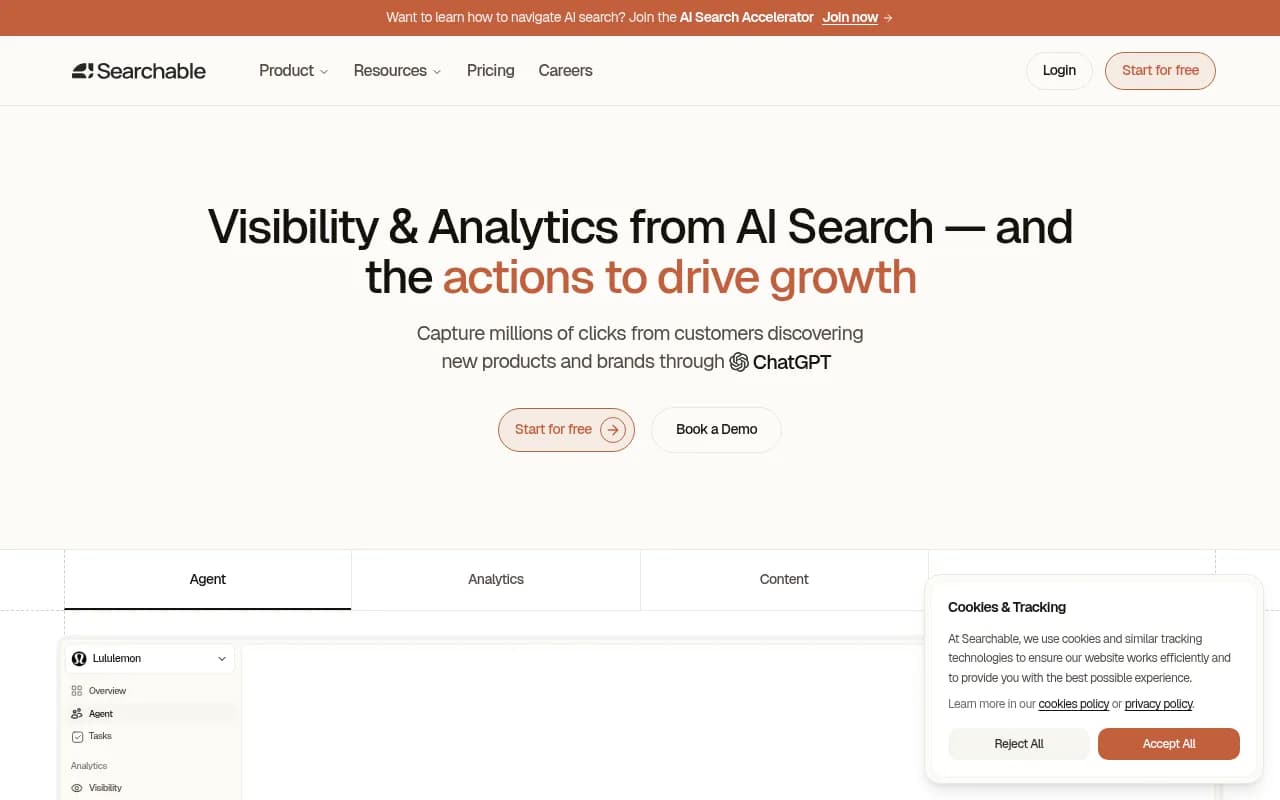
The most contested new feature in 2026 AEO tools is AI-assisted content generation. Almost every platform added some version of it. The quality varies enormously.
The generic implementations are essentially ChatGPT wrappers. You describe what you want, the tool writes something, you publish it. This is not AEO content. It's just content.
The better implementations generate content grounded in actual citation data: which sources AI models are currently citing for a given topic, what those sources cover, what angles are missing, and what format (listicle, comparison, FAQ, deep explainer) tends to get cited for that query type. The output is engineered to match what AI models are looking for, not just what reads well to humans.
Promptwatch's approach is worth noting here: it analyzes 880M+ citations to inform what it generates, which means the content recommendations are based on observed patterns in what actually gets cited, not assumptions about what should work.
Traffic attribution: connecting visibility to revenue
This is the feature that was almost entirely absent in 2025 and became a serious differentiator in 2026.
The problem: AI search sends traffic differently than Google. Users might see your brand mentioned in a ChatGPT response, then search for you directly, then visit your site. That journey doesn't show up as "AI referral" in standard analytics. It looks like direct traffic or branded search.
The tools that figured out attribution in 2026 did it through a combination of approaches: JavaScript snippets that detect AI referral signals, Google Search Console integration to catch branded search spikes, and server log analysis to identify patterns that correlate with AI visibility changes. None of these methods is perfect, but together they give a much clearer picture than "our AI visibility score went up 15% and we think that's good."
Without attribution, AEO is a vanity metric. With it, you can actually make a business case for the investment.
What got dropped (or should have been)
Single-model monitoring
In 2025, several tools launched with monitoring for just one or two AI models, usually ChatGPT and sometimes Perplexity. By 2026, that's not a viable product. The AI search landscape now includes ChatGPT, Claude, Gemini, Perplexity, Google AI Overviews, Google AI Mode, Grok, DeepSeek, Copilot, Meta AI, and Mistral, and they don't always agree on who to cite.
A brand can be dominant in ChatGPT responses and nearly invisible in Perplexity. A competitor might own Gemini but struggle in Claude. Single-model monitoring gives you a dangerously incomplete picture. Tools that didn't expand their model coverage either added it or lost relevance.
Fixed prompt libraries
Several tools launched with curated prompt libraries: pre-built sets of questions for common industries. The appeal was obvious: you didn't have to think about which prompts to track, just pick your category and go.
The problem is that fixed prompts reflect what the tool vendor thought was important, not what your actual customers are asking. By 2026, the better tools moved toward dynamic prompt discovery, where the platform surfaces prompts based on observed AI query patterns rather than a static list someone wrote in 2024.
Fixed prompt libraries didn't disappear entirely, but they got repositioned as starting points rather than the whole product. Semrush and Ahrefs Brand Radar both still use fixed prompts as their primary mechanism, which is one reason they lag behind purpose-built AEO platforms on this dimension.
Vanity visibility scores without context
Every AEO tool has some version of a visibility score: a single number that summarizes how often your brand appears in AI responses. These scores were the main output of most 2025 tools.
The problem isn't the score itself, it's when it's the only output. A visibility score without context (which models, which prompts, which competitors, what's driving the change) is nearly useless for decision-making. You can't optimize a number you don't understand.
By 2026, the tools that survived moved toward contextual scoring: breaking down visibility by model, by prompt cluster, by topic, and by competitor. The aggregate score became a summary metric rather than the main event.
How the tool landscape looks now
The market has split into roughly three tiers.
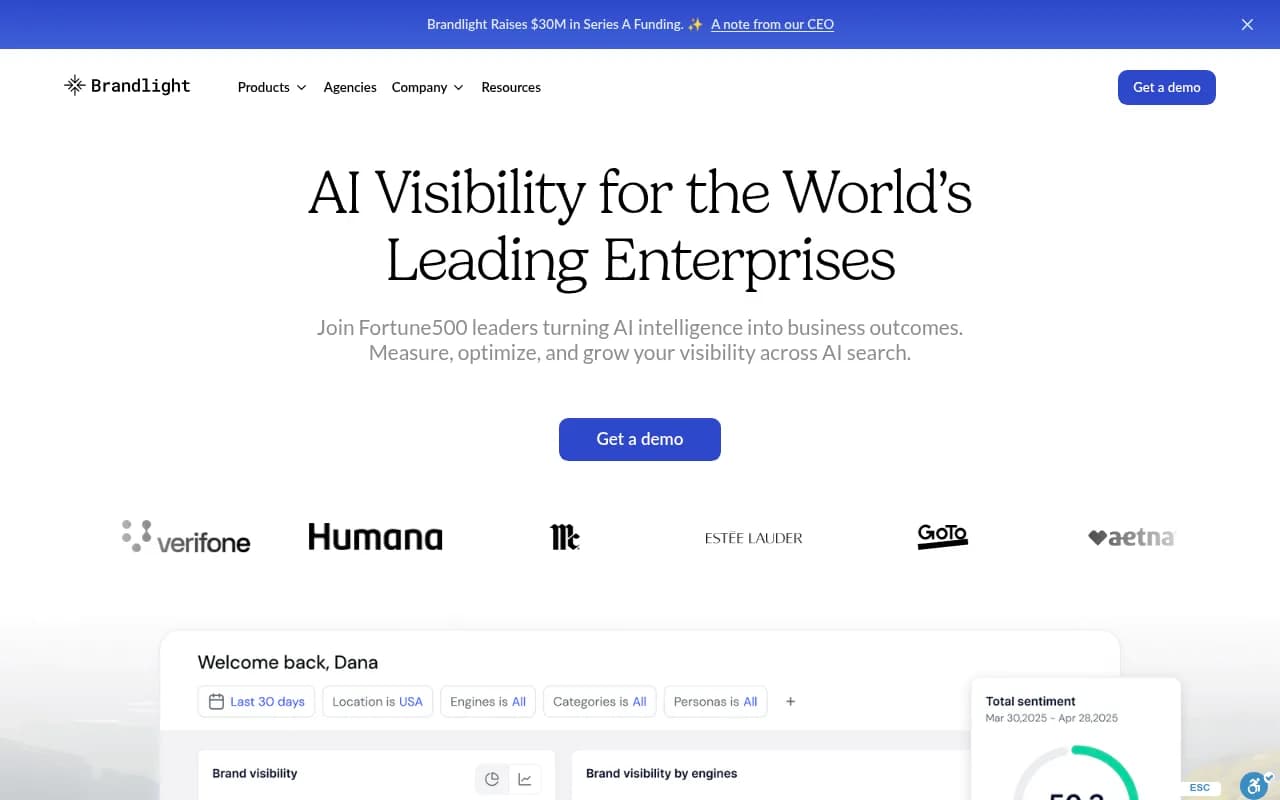
The first tier is monitoring-only tools. These show you data about your AI visibility but don't help you act on it. They're useful for reporting to stakeholders who want a dashboard, but they don't drive optimization. Otterly.AI, Peec.ai, and several newer entrants fall here.


The second tier is monitoring plus some optimization features. These tools track visibility and offer some content recommendations or gap analysis, but the workflow is fragmented. You get insights in one place and have to act on them somewhere else.


The third tier is end-to-end optimization platforms. These close the full loop: find gaps, generate content to fill them, track whether the content improved visibility, and attribute that visibility to actual traffic and revenue. This is where the category is heading, and it's where the serious investment is going.
Here's a quick comparison of where the major tools stand on the capabilities that actually changed between 2025 and 2026:
| Tool | Prompt intelligence | AI crawler logs | Content generation | Traffic attribution | Multi-model (10+) |
|---|---|---|---|---|---|
| Promptwatch | Yes (volume + difficulty) | Yes | Yes (citation-grounded) | Yes (3 methods) | Yes (10 models) |
| Profound | Partial | No | Yes (agents) | Partial | Yes |
| AthenaHQ | No | No | No | No | Yes |
| Otterly.AI | No | No | No | No | Partial |
| Peec.ai | No | No | No | No | Partial |
| Semrush | No (fixed prompts) | No | Partial | No | Partial |
| Ahrefs Brand Radar | No (fixed prompts) | No | No | No | Partial |
What "good AEO" actually looks like in 2026
The brands that are winning in AI search right now aren't the ones with the most content or the highest domain authority. They're the ones who figured out the specific questions their customers ask AI models, identified the gaps in their own content relative to those questions, and published content that AI models can actually extract clean answers from.
That last part is worth dwelling on. AI models don't cite pages because they're well-written or authoritative in the traditional SEO sense. They cite pages because the content is structured in a way that makes it easy to extract a specific answer to a specific question. That means clear question-answer formatting, concrete facts and data, minimal fluff, and content that actually addresses the query rather than dancing around it.
The technical side matters too. If AI crawlers can't access your pages, or if they encounter errors when they try, your content doesn't exist from their perspective. Crawler log analysis isn't glamorous, but it's caught real problems that content optimization alone would never have fixed.
Tools worth exploring in 2026
Beyond the major platforms, several newer tools have carved out specific niches worth knowing about.
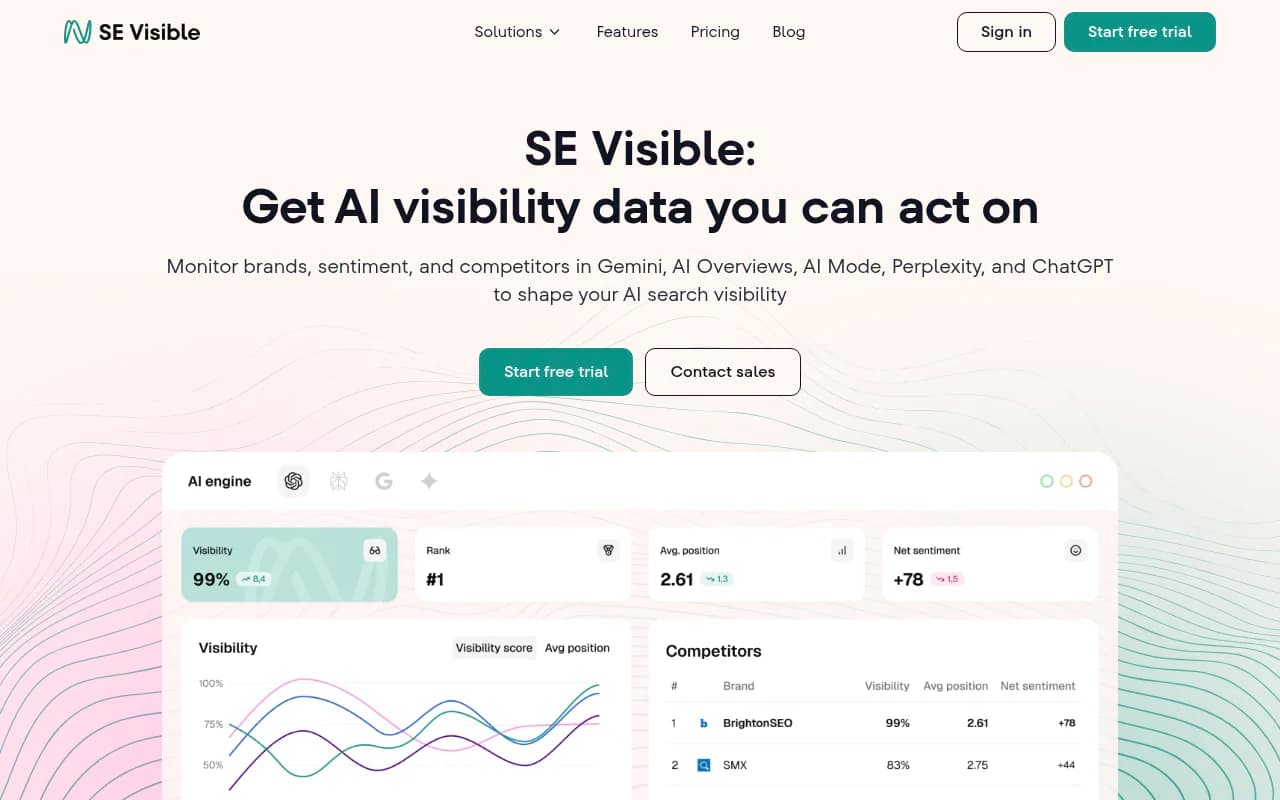
For teams that want solid monitoring without committing to a full platform:
For content teams focused specifically on generating AI-optimized content:
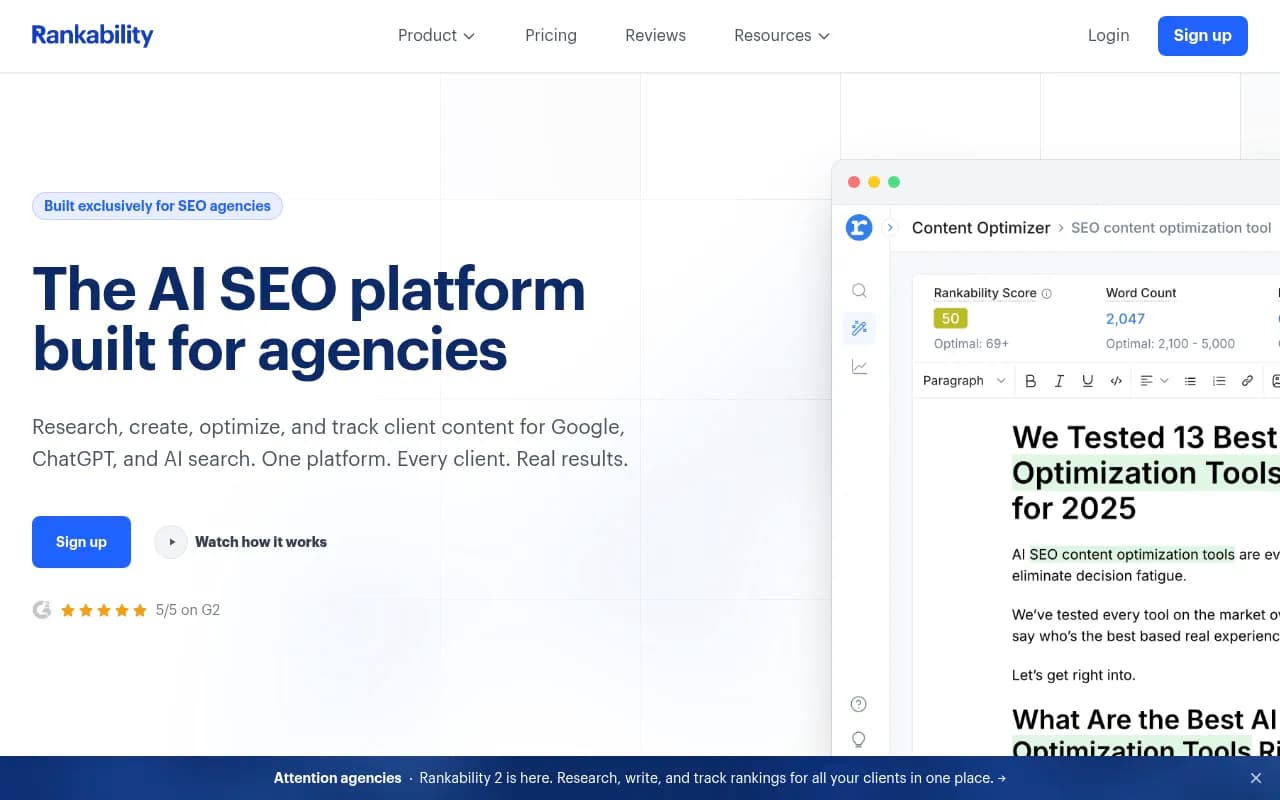
For agencies managing multiple clients:
For enterprise teams with complex attribution needs:
The honest assessment
The AEO tool market matured faster than most people expected, and it's still moving. The core lesson from 2025 to 2026 is that monitoring is not optimization. Knowing you're invisible doesn't make you visible.
The tools that added real value in this period are the ones that answered the harder question: given that I'm invisible here, what do I actually do about it? That means prompt intelligence to prioritize the right targets, content generation grounded in real citation data, crawler logs to catch technical blockers, and attribution to connect the work to business outcomes.
If you're evaluating AEO tools right now, those are the four capabilities to pressure-test. A tool that checks all four boxes is genuinely useful. A tool that only shows you a visibility score is a reporting tool, not an optimization platform.
The gap between those two things is where most of the marketing budget gets wasted.