Key takeaways
- Traditional SEO and AEO (Answer Engine Optimization) share a technical foundation but diverge sharply in what they optimize for: rankings vs. citations.
- In 2026, roughly 60% of searches end without a click, which means ranking #1 in Google no longer guarantees traffic -- you also need to appear in AI-generated answers.
- Most traditional SEO tools (Semrush, Ahrefs, Moz) don't track AI citations, prompt volumes, or LLM visibility at all -- or only do it superficially.
- Dedicated GEO/AEO platforms cover AI visibility but often lack the technical SEO depth you still need for Google's traditional index.
- A small number of platforms are starting to bridge both worlds -- and understanding which one fits your situation can save you a lot of tool sprawl.
The problem with how most people frame this debate
The "AEO vs. SEO" framing is a bit misleading. It implies you have to pick one, or that they're fundamentally opposed. They're not.
Traditional SEO is still the infrastructure layer. Crawlability, site architecture, backlinks, Core Web Vitals -- none of that stopped mattering because ChatGPT got popular. AI models still rely on crawled web content. If your site can't be indexed, it can't be cited.
AEO -- Answer Engine Optimization -- is what happens on top of that infrastructure. It's about whether your content can be extracted, synthesized, and surfaced as an answer. Not just ranked, but used. The distinction one Reddit commenter put well: "SEO provides the access (crawlability), while AEO provides the answer (synthesizability)."
So the real question isn't which one you need. You need both. The question is whether you can cover both with one toolset, or whether you're going to end up paying for two separate stacks.
What's actually different about AEO in practice
Before getting into tools, it's worth being precise about what AEO actually changes in your workflow.
The output you're optimizing for
In traditional SEO, success is a ranking. You want position 1 (or the featured snippet, or the local pack). The metric is your URL appearing in a list.
In AEO, success is a citation. You want ChatGPT, Perplexity, Claude, or Google's AI Overview to pull from your content when answering a relevant question. The metric is whether your brand or page gets mentioned in an AI-generated response -- and how often, across how many models, for how many prompts.
These are genuinely different things to measure. A page can rank #3 in Google and never get cited by any AI model. Another page can be cited constantly by Perplexity while barely appearing in traditional SERPs. Both scenarios are real and increasingly common.
The content signals that matter
Traditional SEO rewards authority signals: backlinks, domain rating, topical depth, E-E-A-T signals. These still matter for AEO too -- AI models tend to favor authoritative sources -- but the content structure requirements are different.
AEO-optimized content tends to be:
- Structured around specific questions (not just topics)
- Dense with verifiable facts and data points
- Formatted so answers can be extracted cleanly (clear headings, concise paragraphs, FAQ sections)
- Supported by schema markup that helps AI parsers understand context
A long-form pillar page built for SEO might actually perform poorly in AI citations if it buries the direct answer in 2,000 words of preamble. AI models want the answer fast and clearly stated.
The competitive landscape you're tracking
In traditional SEO, you track keyword rankings. You know who's ranking above you for "best project management software" and you can see their backlink profile.
In AEO, you track prompt responses. You need to know which prompts your competitors are being cited for that you're not. That requires actually querying AI models at scale -- something no traditional rank tracker does.
Where traditional SEO tools fall short for AEO
Let's be direct about the gaps.
Semrush and Ahrefs are the two dominant traditional SEO platforms. Both have added some AI visibility features -- Semrush has an AI Overviews tracker, Ahrefs has Brand Radar. But both use fixed prompt sets, which means you're tracking a predetermined list of queries rather than the actual prompts your customers are using. Neither offers AI traffic attribution, content gap analysis for LLM citations, or crawler log data showing which AI bots are visiting your site.
Moz Pro is similar -- excellent for traditional SEO fundamentals, but AI visibility is not a core capability.
These tools are still worth having for their core SEO functions. The issue is assuming they cover your AEO needs too. They don't, at least not yet.
On the content optimization side, tools like Surfer SEO, Clearscope, and MarketMuse are strong for writing content that ranks in Google. They analyze top-ranking pages, suggest semantic terms, and score your content against competitors.
But "ranks in Google" and "gets cited by AI models" are increasingly different targets. A page optimized purely for Surfer's content score might not be structured in a way that makes it easy for an LLM to extract a clean answer.
Where AEO-only tools fall short
The flip side is also true. A lot of the newer GEO/AEO monitoring tools are excellent at tracking AI visibility but don't touch the technical SEO layer at all.
Tools like Otterly.AI, Peec AI, and Brandlight are useful for monitoring how often your brand appears in AI responses. They're relatively affordable and easy to set up.


But they're monitoring dashboards. They show you data. They don't help you fix anything, and they don't integrate with your technical SEO workflow. If you discover you're not being cited for a key prompt, you still need to figure out why -- is it a content gap? A crawlability issue? A schema problem? These tools won't tell you.
AthenaHQ and Profound go deeper on the monitoring side, with better prompt tracking and competitive analysis. But they're still primarily observation platforms.


The case for a unified platform
Here's where the tool landscape is genuinely evolving. A few platforms are trying to cover both traditional SEO and AI visibility in a single workflow.
SE Ranking has built out an AI visibility toolkit on top of its traditional SEO foundation -- keyword tracking, site audits, and AI Overview monitoring in one place.
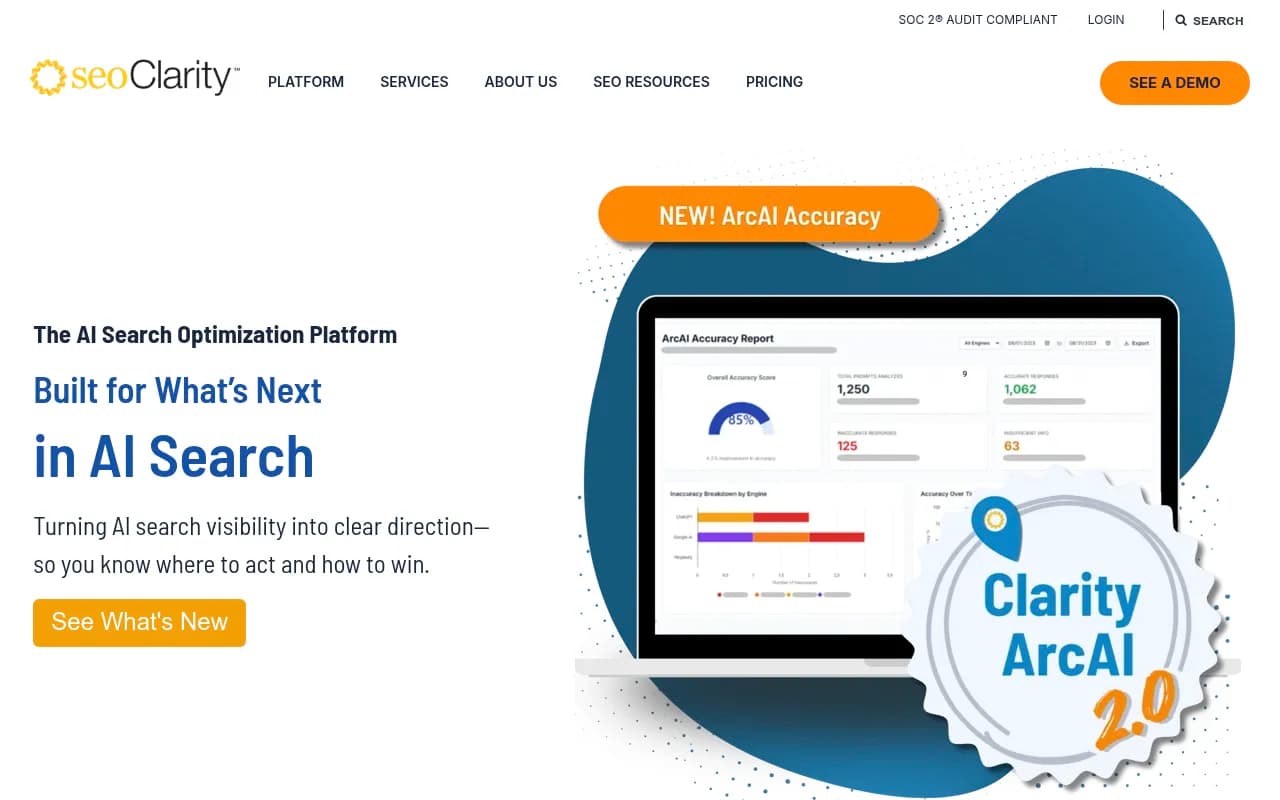
seoClarity is an enterprise option that combines technical SEO with AI search tracking, though it's priced accordingly.
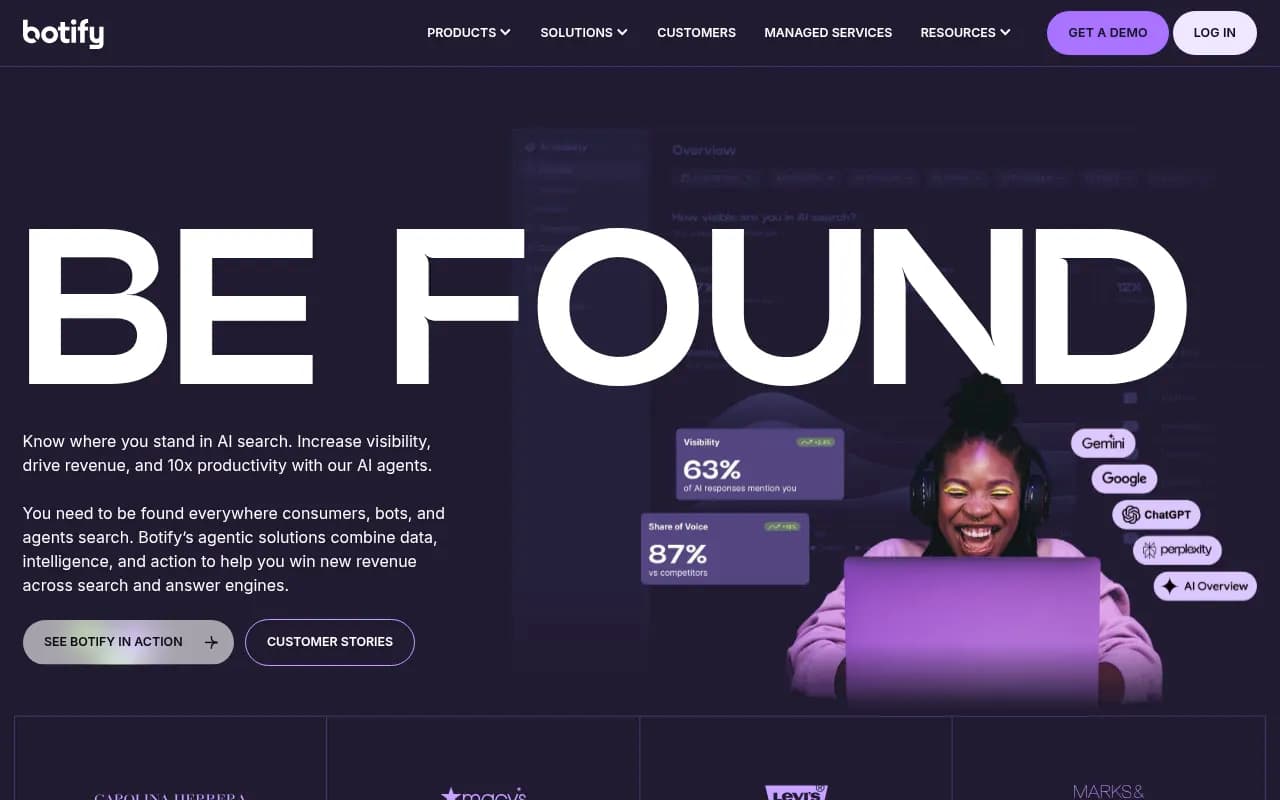
Botify is another enterprise platform that has been adding GEO capabilities to its existing technical SEO and crawling infrastructure.
For teams that want to go deep on AI visibility specifically -- not just monitor it but actually improve it -- Promptwatch is the platform that goes furthest in closing the loop between tracking and action. It monitors citations across 10 AI models (ChatGPT, Claude, Perplexity, Gemini, Grok, DeepSeek, and others), shows you which prompts competitors rank for that you don't, and has a built-in AI writing agent that generates content specifically engineered to get cited. It also includes crawler logs showing which AI bots are visiting your site -- a feature most monitoring tools lack entirely.

The honest answer is that no single platform in 2026 is perfect at both traditional SEO depth and AI visibility breadth. But the gap is closing, and the platforms that combine both are getting more capable every quarter.
A practical comparison of the main options
| Platform | Traditional SEO | AI visibility monitoring | Content gap analysis | AI content generation | Crawler logs | Price range |
|---|---|---|---|---|---|---|
| Semrush | Excellent | Basic (fixed prompts) | No | Via ContentShake | No | $139+/mo |
| Ahrefs | Excellent | Basic (Brand Radar) | No | No | No | $129+/mo |
| SE Ranking | Strong | Growing | Limited | No | No | $65+/mo |
| Surfer SEO | Content-focused | No | No | Yes (SEO-focused) | No | $89+/mo |
| Otterly.AI | No | Good | No | No | No | $49+/mo |
| Profound | No | Strong | Limited | No | No | $199+/mo |
| AthenaHQ | No | Strong | No | No | No | Custom |
| Promptwatch | No | Excellent (10 models) | Yes | Yes (citation-grounded) | Yes | $99+/mo |
| seoClarity | Strong | Growing | Limited | No | No | Enterprise |
| Botify | Strong (enterprise) | Growing | No | No | Yes | Enterprise |
The table makes the tradeoffs visible. If you need deep traditional SEO (backlink analysis, full keyword research, site audits), Semrush or Ahrefs are still the standard. If you need to actually improve your AI visibility -- not just track it -- Promptwatch is the most complete option in that lane.
Most teams in 2026 are running two tools: one for traditional SEO and one for AI visibility. Whether that's the right call depends on your budget and how much of your traffic is shifting to AI-mediated search.
How to decide what you actually need
A few questions worth answering honestly:
How much of your traffic comes from AI search? If you're in a category where users frequently ask AI assistants for recommendations (software, finance, health, travel, B2B services), AI visibility is probably already affecting your pipeline even if you can't measure it yet. If you're in a category where people still primarily use Google for transactional searches, traditional SEO may still dominate.
Are you seeing traffic drops that don't match your rankings? This is a common symptom of AI Overviews absorbing clicks. You might still rank #2 for a keyword but get far fewer clicks because the AI Overview answers the question before users scroll. In this case, you need to optimize for the AI Overview, not just the ranking.
Do you have content that should be getting cited but isn't? This is where AEO-specific tooling pays off. If you have authoritative content on a topic but AI models never cite you, there's a structural problem -- either in how the content is formatted, how it's crawled, or what specific questions it answers. A tool with content gap analysis will surface this; a traditional rank tracker won't.
What's your team's bandwidth? Running two separate tool stacks means two sets of data to reconcile, two dashboards to check, and two workflows to maintain. If you're a small team, consolidating to a platform that covers both (even imperfectly) might be worth the tradeoff.
The content strategy implications
One thing that gets lost in the tools debate: the content itself has to change.
Traditional SEO content is often built around keyword clusters and topical authority. You write a comprehensive guide on "project management methodologies," optimize it for a cluster of related keywords, and build internal links to it.
AEO content is built around specific questions and direct answers. "What's the difference between Agile and Waterfall?" needs a clear, extractable answer in the first two paragraphs -- not buried in section four after a 500-word introduction.
The good news is these aren't mutually exclusive. A well-structured piece of content can serve both goals: comprehensive enough to rank for broad keywords, structured enough to get cited for specific questions. The key is intentional formatting -- clear H2/H3 headings that mirror actual questions, concise answer paragraphs before elaboration, and FAQ sections that directly address common queries.
Schema markup matters more than most SEO teams give it credit for in the AEO context. FAQ schema, HowTo schema, and Article schema give AI parsers explicit signals about what your content is answering and why it's authoritative.
The practical answer to the original question
Do you need separate tools for AEO and traditional SEO?
Probably yes, for now -- but the gap is narrowing. Here's the most practical setup for different team sizes:
Small teams / solo operators: Pick one traditional SEO tool (SE Ranking is the best value) and one AI visibility tool that goes beyond monitoring (Promptwatch's Essential plan at $99/mo covers the basics). Total cost is manageable and you get meaningful coverage of both.
Mid-size marketing teams: Semrush or Ahrefs for traditional SEO depth, Promptwatch for AI visibility with content gap analysis and generation. The two tools complement each other without much overlap.
Enterprise / agencies: seoClarity or Botify for technical SEO at scale, Promptwatch Business or Enterprise for AI visibility across multiple sites. At this level, the ROI of closing AI visibility gaps justifies the investment in both.
The one thing to avoid is assuming your existing SEO tool covers AEO just because it added an "AI Overviews" tab. Fixed prompt tracking with no content gap analysis and no crawler logs is not the same as actually optimizing for AI search. Check what the tool actually does before assuming you're covered.
The search landscape in 2026 is genuinely split between two surfaces: traditional SERPs and AI-generated answers. Both matter. The brands that treat them as separate problems to solve -- rather than assuming one tool handles both -- are the ones that will maintain visibility as the balance continues to shift.