Key takeaways
- Traditional traffic metrics undercount AEO value -- AI-driven brand impressions, citation frequency, and assisted conversions all matter and need separate measurement frameworks
- The core ROI formula for AEO is: (Revenue attributed to AI search visibility - Tool + content costs) / Tool + content costs x 100
- Most AEO tools stop at monitoring; the ones that generate real ROI are the ones that help you act on what you find -- closing the gap between "you're invisible here" and "here's the content that fixes it"
- Realistic payback timelines run 3-6 months for content-heavy strategies; visibility gains can appear in 4-8 weeks if you're targeting the right prompts
- You need at least three measurement layers: AI visibility scores, traffic attribution, and downstream revenue signals
The conversation in most marketing teams right now goes something like this: someone in leadership reads that ChatGPT has 800 million weekly users, panics a little, and asks why the company isn't showing up in AI search results. The SEO lead gets tasked with "figuring out AEO." They find a tool, sign up for a trial, and then face the harder question: how do we know if this is actually working?
That question is harder than it sounds. Zero-click searches reached 69% in 2025 according to Search Engine Journal -- up from 56% the year before. When users get answers directly from AI without visiting your site, your Google Analytics looks flat even as your brand is being recommended constantly. Traditional ROI frameworks break down entirely.
This guide is about building a measurement framework that actually works for AEO in 2026 -- one that captures the real value of AI visibility, accounts for the costs properly, and gives you numbers you can defend in a budget meeting.
Why traditional ROI models don't work for AEO
Standard SEO ROI is relatively straightforward: you track organic traffic, multiply sessions by conversion rate, multiply by average order value, subtract tool and content costs, divide by costs. Done.
AEO breaks this in several places.
First, a lot of the value is invisible to your analytics. When ChatGPT recommends your product to someone who then Googles your brand name and converts, that shows up as direct or branded search traffic -- not AI referral. The AI engine gets no credit.
Second, citation frequency matters independently of clicks. Being cited by Perplexity or Claude in responses to high-intent prompts builds brand authority in a way that influences purchasing decisions even when users don't click through immediately. This is closer to PR value than traditional SEO value, and it's genuinely hard to quantify.
Third, the competitive cost of not doing AEO is real but invisible. If your competitor is being cited in responses to "best [category] tool for [use case]" and you're not, you're losing consideration at the top of the funnel. That loss doesn't show up anywhere in your current reporting.
So before you build an ROI model, you need to accept that you're measuring a combination of hard revenue attribution and softer brand value signals. Both matter. Neither alone tells the full story.
The three-layer measurement framework
A workable AEO ROI framework has three layers. You need all three.
Layer 1: AI visibility scores
This is what most AEO tools measure. Visibility scores track how often your brand or content appears in AI-generated responses across platforms like ChatGPT, Perplexity, Claude, Gemini, and Google AI Overviews.
The metrics to track here:
- Citation rate: what percentage of relevant prompts result in your brand being mentioned
- Share of voice: your citation rate vs. competitors for the same prompt set
- Prompt coverage: how many of your target prompts you're visible for (vs. how many you're missing)
- Sentiment in citations: are AI models recommending you positively, neutrally, or with caveats?
These metrics tell you whether your AEO work is moving the needle. They don't directly translate to revenue, but they're leading indicators. If your citation rate for high-intent purchase prompts doubles, revenue should follow -- usually with a 6-12 week lag.
Layer 2: AI traffic attribution
This is where most teams have a measurement gap. AI-referred traffic is growing but often miscategorized. You need to actively set up attribution to capture it.
Three approaches work:
Server log analysis: Raw server logs show every request to your site, including user agents from AI crawlers. Tools that parse these logs can show you which AI engines are crawling your content and how often -- a proxy for how much your content is being indexed and used.
UTM-tagged referrals: Some AI platforms (Perplexity in particular) pass referral data. Set up proper UTM tracking and segment your analytics by AI referral sources. This captures the users who actually click through.
GSC integration: Google Search Console now surfaces some AI Overview data. Connect your AEO platform to GSC to correlate visibility changes with traffic changes.
The honest caveat: even with all three, you'll still miss a significant portion of AI-influenced traffic. Someone who sees your brand in a ChatGPT response and then searches for you directly will show up as direct traffic. This is a known limitation, not a reason to give up on measurement.
Layer 3: Downstream revenue signals
This is where you connect visibility to money. The signals to watch:
- Branded search volume: if AI visibility is working, branded search should increase as more people become aware of you through AI recommendations
- Assisted conversions: look at multi-touch attribution reports for conversions where AI referral appears anywhere in the path
- Lead quality from AI sources: AI-referred visitors often have higher intent because they've already gotten a recommendation -- track conversion rates separately
- Pipeline influence: for B2B, survey new customers on how they first heard of you; "AI search" or "ChatGPT" as a response is worth tracking
The ROI formula
With those three layers in place, here's the core formula:
AEO ROI = (Revenue attributed to AI search - Total AEO investment) / Total AEO investment x 100
Where:
- Revenue attributed to AI search = direct AI referral conversions + estimated assisted conversions + branded search lift attributed to AI visibility
- Total AEO investment = tool subscription costs + content creation costs (staff time or agency fees) + implementation costs
Let's run through a realistic example.
A B2B SaaS company spends $249/month on an AEO monitoring and optimization platform, plus roughly $3,000/month in content creation (two articles per month at $1,500 each). Total monthly investment: $3,249.
After three months of consistent work:
- Direct AI referral conversions: 8 trials/month at $200 average first-month revenue = $1,600
- Branded search lift (15% increase in branded searches, estimated 20% of that attributable to AI): 30 additional branded visits/month at 5% trial conversion x $200 = $300
- Assisted conversions (conservative estimate based on multi-touch data): $800/month
Total attributed revenue: $2,700/month. Against $3,249 investment, that's a negative ROI in month three.
But by month six, with more content indexed and higher citation rates:
- Direct AI referrals: 22 trials/month = $4,400
- Branded lift: $900
- Assisted: $1,800
Total: $7,100/month against $3,249 investment = 118% ROI.
This is a realistic trajectory. AEO is not a fast-payback channel. The content compounds over time, and the citation rates build as AI models index more of your material.
What drives AEO ROI: the content gap problem
Here's the thing most teams miss: monitoring your AI visibility is not the same as improving it. A lot of AEO tools will show you a dashboard with your citation rate, your share of voice, and a list of prompts where you're invisible. That's useful information. But it doesn't tell you what to do about it.
The ROI gap between AEO tools comes down to this: can the tool help you create content that actually gets cited, or does it just show you that you're not being cited?
The tools that generate the best ROI are the ones built around a closed loop:
- Find the prompts where competitors are visible but you're not
- Understand what content AI models are pulling from for those prompts
- Create content specifically engineered to fill those gaps
- Track whether the new content gets cited
Promptwatch is built around this loop explicitly -- its Answer Gap Analysis shows you the specific prompts where you're invisible, and the built-in writing agent generates content grounded in citation data rather than generic SEO optimization.

Most monitoring-only tools stop at step one. You see the gap, but you're on your own to figure out what to do about it. That's fine if you have a strong content team and a clear strategy, but it adds cost and time to the ROI equation.
Comparing AEO tool categories by ROI potential
Not all AEO tools are equal from an ROI perspective. Here's how the main categories stack up:
| Tool type | Monitoring | Content guidance | Traffic attribution | Avg. monthly cost | Time to positive ROI |
|---|---|---|---|---|---|
| Full-stack optimization platforms | Yes | Yes (built-in) | Yes | $249-$579 | 3-5 months |
| Monitoring-only dashboards | Yes | No | Limited | $99-$299 | 6-12 months (content costs extra) |
| Enterprise SEO platforms (AI add-ons) | Partial | Partial | Yes (via existing SEO) | $400-$1,000+ | 4-8 months |
| Basic rank trackers | Limited | No | No | $29-$99 | Hard to measure |
The monitoring-only category is where most of the cheaper tools sit. They're not bad -- visibility data is genuinely valuable -- but the ROI math gets harder because you're paying for the tool plus separate content creation costs, and there's no connection between what the tool tells you and what you create.
Here are some of the tools worth knowing in each category:
Full-stack platforms:


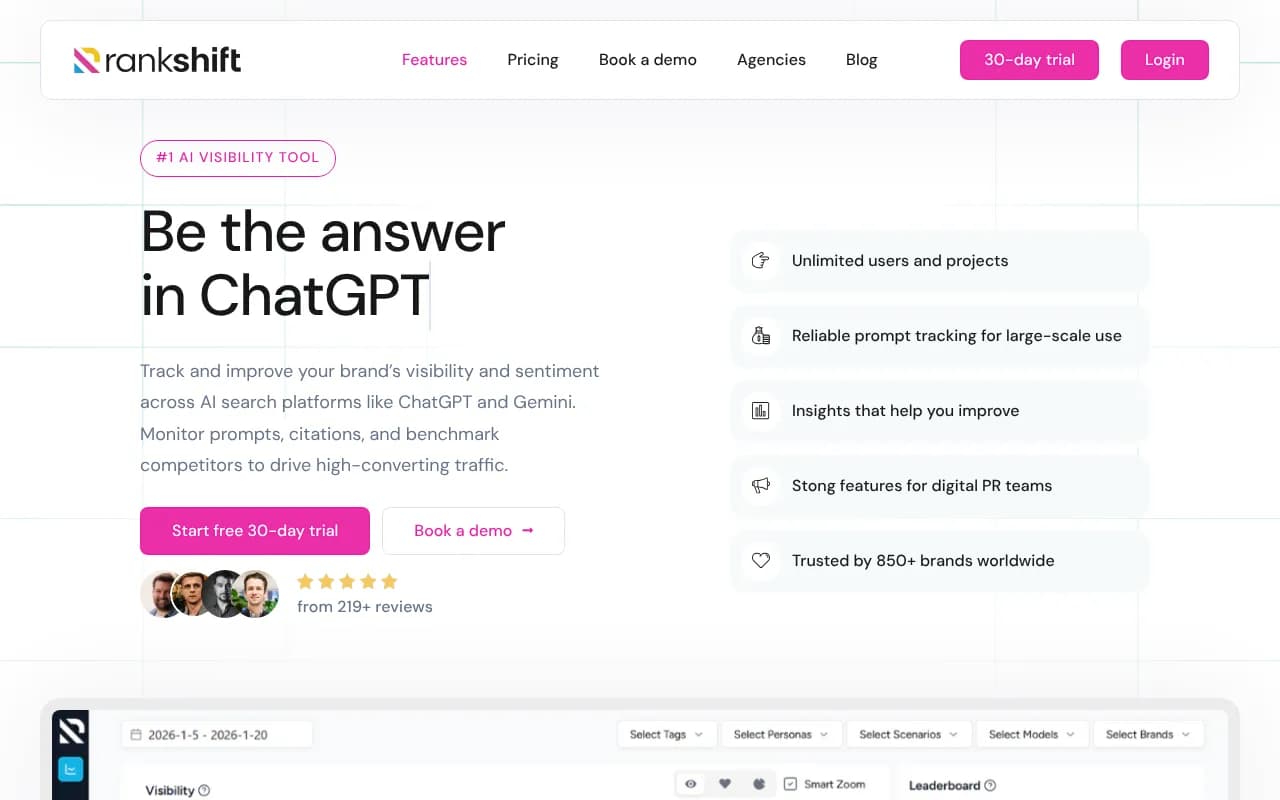
Monitoring-focused:


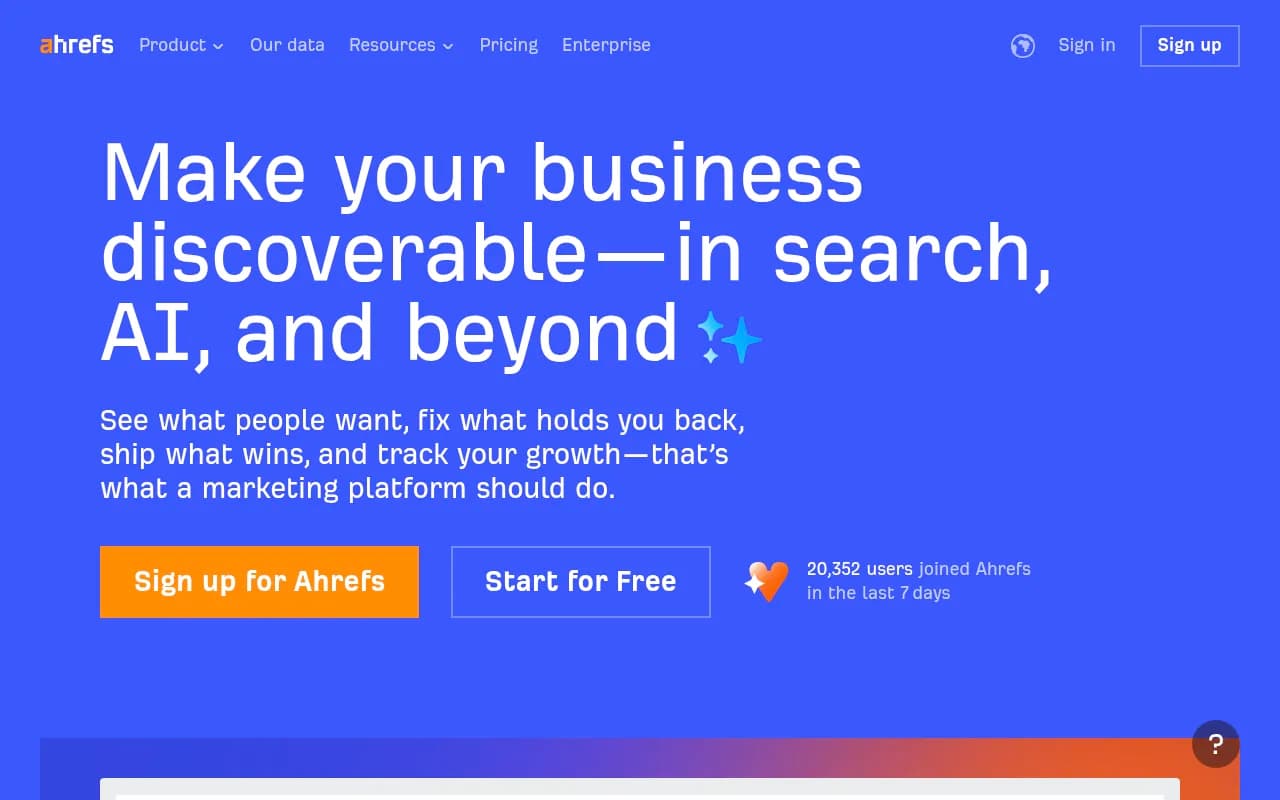
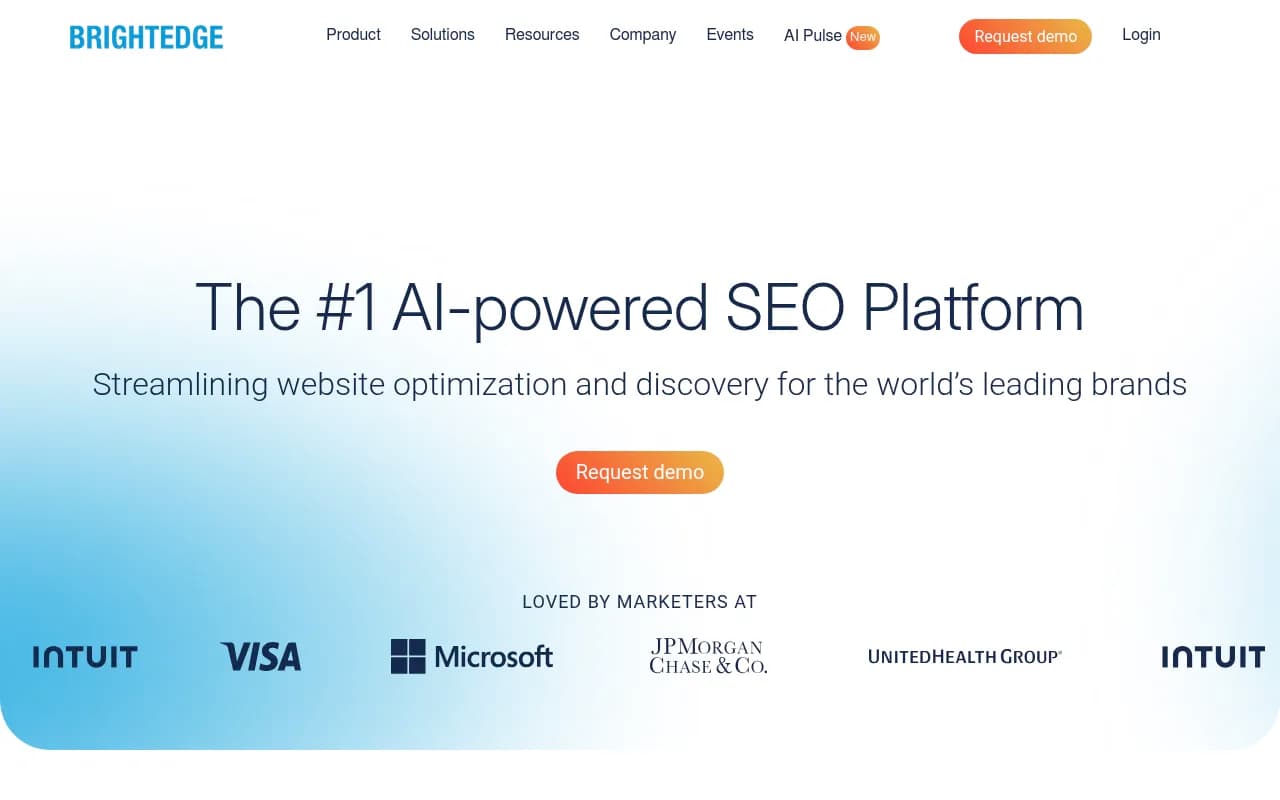
Enterprise SEO with AI visibility:
KPIs to track month by month
Here's a practical tracking cadence:
Month 1-2: Baseline and setup
- Establish baseline citation rates for your target prompt set (aim for 50-150 prompts minimum)
- Set up traffic attribution (server logs, GSC integration, UTM tracking)
- Document current branded search volume as a baseline
- Identify top 10 competitor-visible prompts where you're absent
Month 3-4: Content impact
- Track citation rate changes for prompts where you've published new content
- Monitor AI crawler activity on new pages (how quickly are they being indexed?)
- Compare branded search volume to baseline
- First look at AI-attributed conversions in multi-touch reports
Month 5-6: ROI calculation
- Run the full ROI formula with three months of attribution data
- Segment by prompt type (informational vs. transactional vs. navigational) -- transactional prompts drive more direct revenue
- Calculate cost per citation and cost per AI-attributed conversion
- Adjust content strategy based on which topics are generating citations vs. which aren't
Common mistakes that kill AEO ROI
Targeting the wrong prompts. Not all prompts are equal. Informational prompts ("what is X") generate citations but rarely drive conversions. Transactional and comparison prompts ("best X for Y use case", "X vs Y") are where the revenue is. Prioritize these.
Measuring too early. AI models don't index new content instantly. Expecting citation rate improvements in week two will make your AEO program look like a failure when it's actually just getting started. Set expectations at 6-8 weeks minimum for content to start appearing in citations.
Ignoring the content quality bar. AI models cite content that is specific, authoritative, and directly answers the question being asked. Generic blog posts written for SEO keyword density don't get cited. The content investment has to be real.
Not tracking competitors. Your AEO ROI is partly relative. If your citation rate goes from 10% to 15% but your main competitor goes from 20% to 40%, you've lost ground even though your absolute numbers improved. Share of voice matters.
Conflating crawler activity with citation. AI crawlers visiting your pages is a good sign, but it doesn't mean you're being cited. Track both separately. Tools like Promptwatch's crawler log feature show you which AI engines are reading your content -- but you still need to verify that reading is translating into citations.
What a realistic AEO budget looks like
For a mid-market company (50-500 employees, $5M-$50M revenue):
- AEO platform: $249-$579/month
- Content creation (4-6 articles/month targeting identified gaps): $3,000-$6,000/month
- Technical implementation (schema markup, structured data, one-time): $500-$2,000
- Analytics setup (GSC integration, server log parsing): $500-$1,500 one-time
Total ongoing monthly investment: $3,250-$6,580
At a conservative 5% conversion rate on AI-referred trials and $200 average first-month value, you need roughly 33-66 AI-attributed conversions per month to break even. That's achievable within 6 months for a company in a reasonably competitive category.
For smaller teams or tighter budgets, the math still works -- it just takes longer. Starting with a focused set of 20-30 high-intent prompts and two pieces of content per month is better than spreading thin across 200 prompts with no content to back it up.
The benchmark question: what's a good citation rate?
There's no universal benchmark because it varies so much by industry and prompt type. But based on data from platforms tracking hundreds of brands, rough reference points for 2026:
- Under 10% citation rate on target prompts: you have a significant visibility problem
- 10-25%: average for most brands that have done some AEO work
- 25-50%: strong performance, likely a content-first brand with good topical authority
- Above 50%: category leader territory, usually combined with high domain authority and active content programs
These numbers shift constantly as AI models update their training data and citation patterns change. The more useful metric is your trend over time and your share of voice vs. specific competitors.
Closing the loop
The ROI of AEO tools ultimately comes down to one question: does the tool help you do something, or just show you something?
Visibility dashboards have value. Knowing you're invisible for 40 high-intent prompts is genuinely useful information. But the ROI comes from acting on that information -- creating content that fills the gaps, getting it indexed by AI crawlers, and watching citation rates climb.
The teams getting the best returns from AEO in 2026 are the ones treating it as a content strategy discipline, not a monitoring exercise. They're using tools that close the loop between "here's where you're invisible" and "here's what to create," tracking attribution carefully enough to defend the spend, and giving the strategy enough time to compound.
The measurement framework isn't complicated. The discipline to stick with it is the hard part.