Key takeaways
- Most AEO tools are monitoring dashboards -- they show you where you're invisible but don't help you fix it
- The features that matter most in 2026 go beyond tracking: content gap analysis, AI content generation, crawler logs, and traffic attribution separate serious platforms from noise
- LLM coverage breadth matters -- a tool that only monitors ChatGPT misses half the picture
- Prompt intelligence (volume estimates, difficulty scores, query fan-outs) is what lets you prioritize instead of guessing
- The best platforms close the full loop: find gaps, create content, track results
The AEO tool market has exploded. Two years ago the category barely existed. Now there are dozens of platforms, each claiming to "optimize your brand for AI search." Most of them are dashboards. Nice-looking dashboards, sometimes with good data -- but dashboards nonetheless. They show you a number, maybe a chart, and then leave you wondering what to actually do about it.
That gap between monitoring and action is where most teams get stuck. And it's the clearest signal for evaluating any AEO platform in 2026: does it help you do something, or just show you something?
This guide breaks down the 9 features that actually matter. Not every platform needs all nine -- but understanding what each one does (and which platforms have it) will save you from buying a tool that looks impressive in a demo and collects dust by month three.
1. Multi-model citation tracking (not just ChatGPT)
This sounds obvious, but it's where a surprising number of tools fall short. Many platforms launched by tracking one or two AI engines -- usually ChatGPT and maybe Perplexity -- and haven't caught up with how fragmented AI search has become.
In 2026, your customers are using ChatGPT, Claude, Gemini, Perplexity, Grok, DeepSeek, Copilot, Meta AI, and Google AI Overviews. Each model has different citation behavior, different training data biases, and different tendencies to recommend brands in your category. A tool that only monitors one or two of these gives you a dangerously incomplete picture.
What to look for: coverage of at least 8-10 models, with the ability to compare your visibility across them. You want to know not just "am I cited?" but "which models cite me, and which ones don't?"
Promptwatch covers 10 models including all the major ones. Tools like Otterly.AI and Peec.ai cover fewer, which limits how much you can learn from the data.

2. Share of voice measurement, not just mention counts
A mention count tells you almost nothing useful. If ChatGPT mentions your brand 50 times this month, is that good? Depends entirely on how many times it mentions your competitors.
Share of voice -- your citations as a percentage of all citations in your category -- is the metric that actually tells you whether you're winning or losing. It's the difference between knowing you got 50 mentions and knowing you have 12% share of voice while your top competitor has 34%.
The best platforms track this at the prompt level, so you can see exactly which questions your competitors are winning and you're not. That's actionable. Raw mention counts are not.


3. Answer gap analysis (find what's missing, not just what exists)
This is the feature that separates optimization platforms from monitoring platforms, and it's the one most tools skip entirely.
Gap analysis works like this: the platform runs a set of prompts across multiple AI models, then compares which prompts your competitors appear in that you don't. The output isn't a vague "you're missing some content" -- it's a specific list of questions, topics, and angles that AI models want to answer but can't find on your website.
That's genuinely useful. It tells you exactly what to write. Without it, you're guessing.
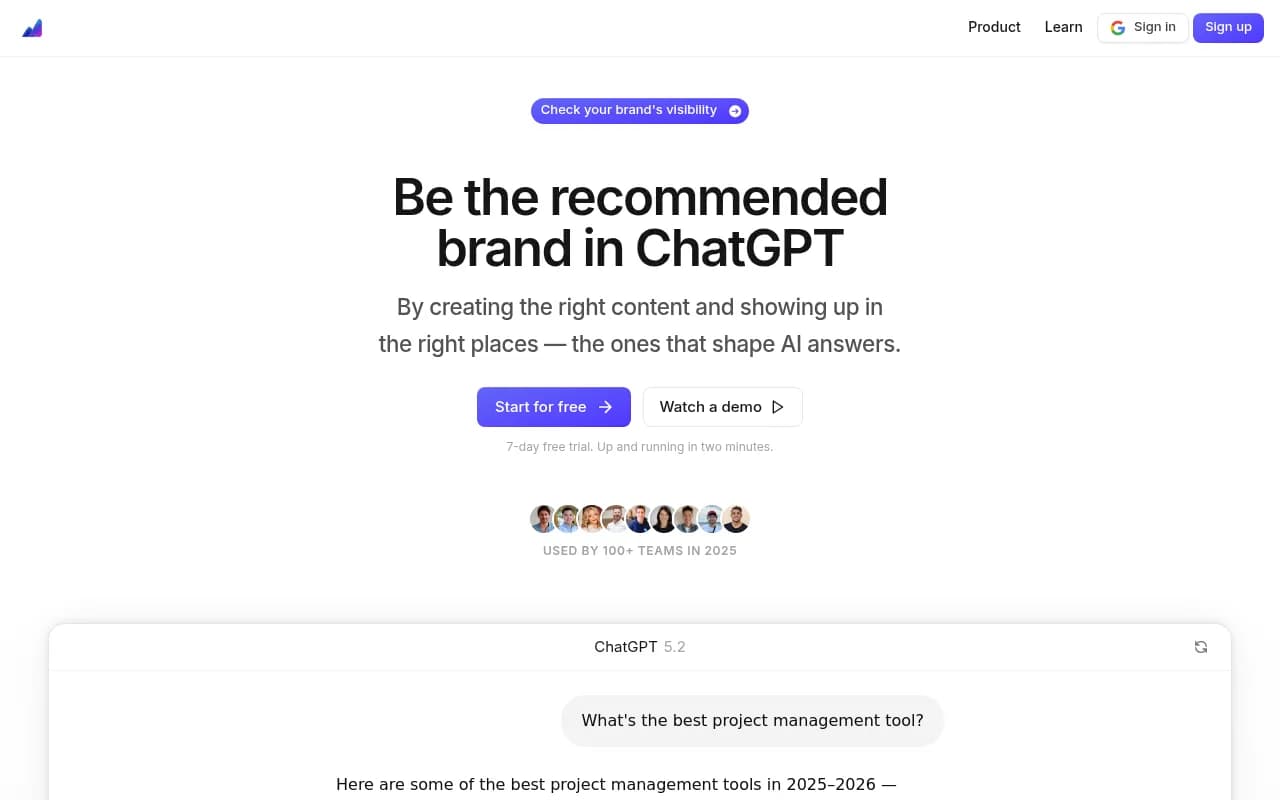
A 2025 Ahrefs study found that only 12% of URLs cited by ChatGPT, Gemini, and Copilot also rank in Google's top 10 for the same prompt. The two surfaces have decoupled significantly, which means your existing SEO content strategy won't automatically translate to AI visibility. You need to know specifically what's missing for AI, not just for Google.

4. Prompt intelligence: volume, difficulty, and query fan-outs
Not all prompts are worth chasing. Some are asked by thousands of people every month; others are niche edge cases. Some are genuinely winnable for a brand your size; others are dominated by Wikipedia and major media outlets that you're not going to displace.
Prompt intelligence gives you the data to prioritize. Volume estimates tell you how often a prompt is actually being asked. Difficulty scores tell you how hard it is to get cited for it. Query fan-outs show you how a single prompt branches into related sub-queries -- useful for understanding the full topical territory around a keyword.
Without this, you're treating every gap as equally important, which means you'll spend time on content that moves the needle very little.
This is an area where most tools are genuinely weak. Many platforms show you prompts but give you no signal about which ones to prioritize. A few -- including Promptwatch -- provide volume estimates and difficulty scoring alongside fan-out mapping.
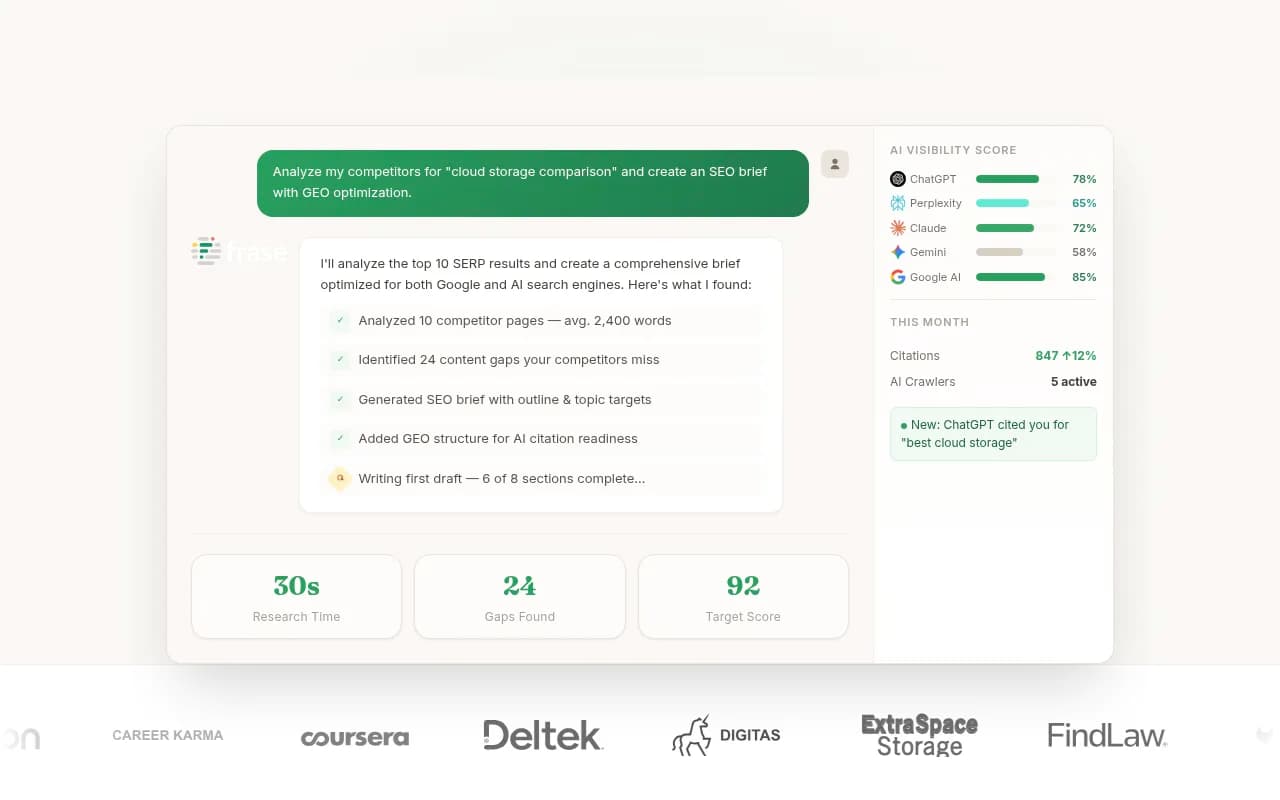
5. AI content generation grounded in citation data
Here's where the market splits cleanly. Monitoring tools stop at showing you the gap. Optimization platforms help you close it.
The best AEO platforms in 2026 have built-in content generation that isn't just a generic AI writer. The key word is "grounded" -- the content needs to be built around real citation data. What formats do AI models cite? What sources do they pull from? What angles and structures tend to get referenced?
Generic AI content doesn't answer those questions. Content engineered around citation patterns does. The difference in output quality is significant.
What to look for: a writing tool that uses your prompt data, competitor analysis, and citation patterns as inputs -- not just a topic keyword. The output should be articles, listicles, and comparisons that are specifically designed to get cited by ChatGPT, Claude, Perplexity, and others.
6. AI crawler logs
This feature is underrated and most platforms don't have it at all.
AI crawler logs show you which AI engines are actually visiting your website -- which pages they read, how often they return, what errors they encounter. ChatGPT's crawler (GPTBot), Claude's (ClaudeBot), Perplexity's bot, and others all crawl the web to index content. If they're hitting error pages, getting blocked by your robots.txt, or simply not visiting your most important pages, you won't get cited no matter how good your content is.
Think of it as the AI equivalent of Google Search Console's crawl data. It tells you about the discovery layer, not just the citation layer. And fixing discovery issues is often faster and higher-impact than writing new content.
Most monitoring-only tools lack this entirely. It requires actual server-side integration, which is a meaningful technical investment that separates serious platforms from lightweight dashboards.
7. Traffic attribution from AI search
Visibility metrics are great. Revenue metrics are better.
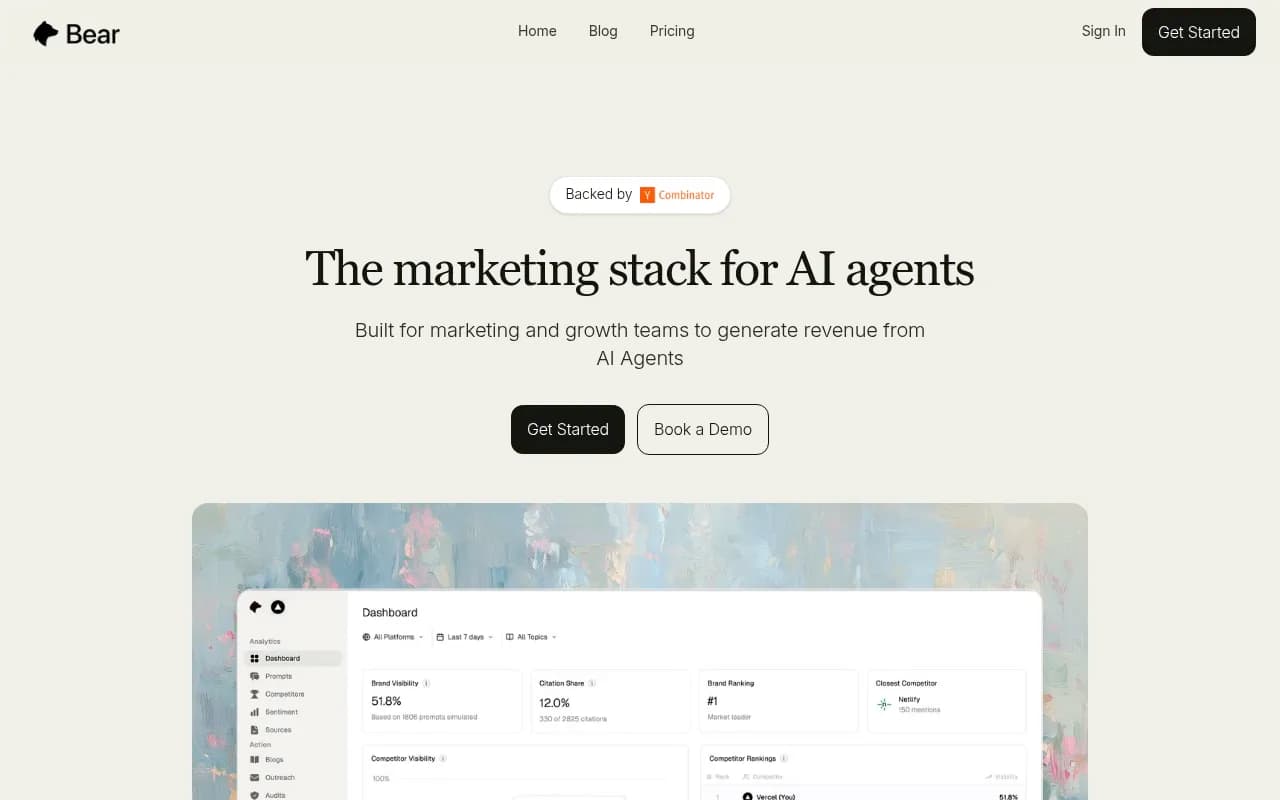
The problem with most AEO tools is that they stop at "you were cited X times." They can't tell you whether those citations drove actual traffic, and they definitely can't tell you whether that traffic converted. For anyone trying to justify AEO investment to a CFO or exec team, that's a real problem.
Traffic attribution closes the loop. It connects AI citations to actual site visits and, ideally, to conversions. The implementation methods vary -- JavaScript snippet, Google Search Console integration, or server log analysis -- but the goal is the same: show that your AI visibility work is producing measurable business outcomes.
This is genuinely hard to build well, which is why few platforms do it. But it's the feature that turns AEO from a vanity metric exercise into something you can defend in a budget meeting.
8. Reddit, YouTube, and third-party source tracking
AI models don't only cite brand websites. They cite Reddit threads, YouTube videos, review sites, industry publications, and forum discussions. In many categories, Reddit is one of the most-cited sources in AI responses -- which means if you're not monitoring what Reddit says about your brand, you're missing a significant part of the picture.
The best platforms track which third-party sources AI models are pulling from in your category. That tells you where to publish content beyond your own site, which communities to engage with, and which review platforms matter most for AI visibility.
Most tools ignore this channel entirely. It's a meaningful gap because the fix isn't "write more content on your website" -- it's "get your brand mentioned in the places AI models actually trust."
9. Multi-language, multi-region, and persona customization
If you operate in more than one market, this matters a lot. AI models behave differently by language and region -- a prompt in German about project management software will surface different results than the same prompt in English, even from the same model.
Persona customization takes this further. Your customers don't all prompt AI the same way. A technical buyer asks different questions than a marketing manager. A small business owner phrases things differently than an enterprise procurement team. The best platforms let you configure personas that match how your actual customers search, so you're tracking the right prompts for the right audience.
This is a feature that's easy to overlook when you're evaluating tools in a demo, but it becomes critical once you're actually running a real AEO program at scale.
How the major platforms stack up
Here's a quick comparison of where the main AEO platforms land across these nine features:
| Feature | Promptwatch | Profound | Otterly.AI | Peec.ai | AthenaHQ | Frase |
|---|---|---|---|---|---|---|
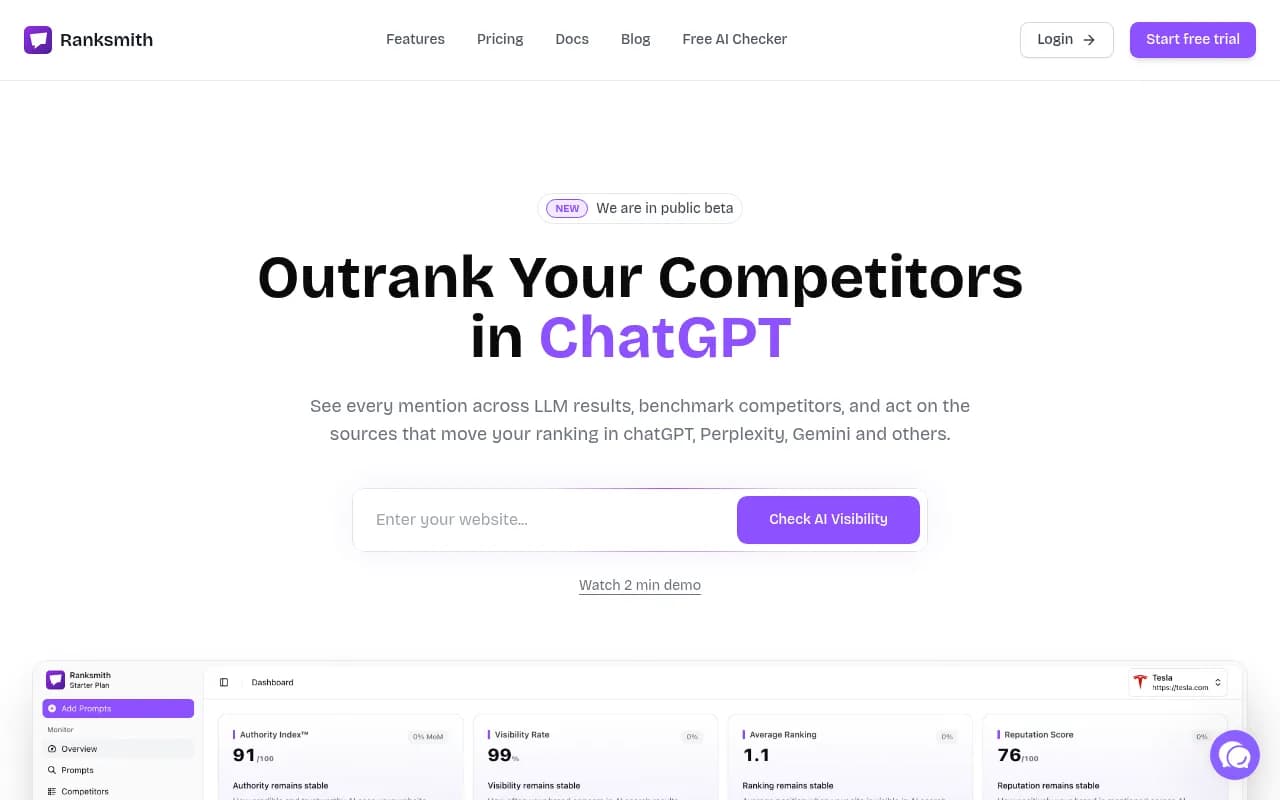
| Multi-model coverage (8+ LLMs) | Yes (10) | Yes | Partial | Partial | Yes | Partial |
| Share of voice tracking | Yes | Yes | Basic | Basic | Yes | No |
| Answer gap analysis | Yes | Partial | No | No | Partial | Yes |
| Prompt volume & difficulty | Yes | Yes | No | No | No | No |
| AI content generation | Yes | Partial | No | No | No | Yes |
| AI crawler logs | Yes | No | No | No | No | No |
| Traffic attribution | Yes | No | No | No | No | No |
| Reddit/YouTube tracking | Yes | No | No | No | No | No |
| Multi-language & personas | Yes | Partial | Partial | Yes | No | No |
The pattern is clear: most platforms are strong on monitoring (columns 1-3) and weak on everything else. The features that turn monitoring data into actual outcomes -- content generation, crawler logs, traffic attribution -- are where the market thins out fast.
The underlying question: monitoring vs. optimization
Every feature in this list connects back to one question: does this tool help you do something, or just show you something?
Monitoring is necessary. You can't optimize what you can't measure. But monitoring alone is not a strategy. The AEO category is full of tools that will show you a beautiful dashboard of how invisible you are, then leave you to figure out the rest yourself.
The platforms worth paying for in 2026 are the ones that close the loop. They find the gaps, help you create content that fills them, and then track whether that content is actually getting cited. That cycle -- find, fix, track -- is what separates an optimization platform from a dashboard.
What to ask in a demo
When you're evaluating any AEO platform, these questions will cut through the sales pitch quickly:
- Which AI models do you monitor, and how often do you re-run prompts?
- Can you show me a gap analysis -- specifically which prompts my competitors appear in that I don't?
- Do you have prompt volume estimates? How are they calculated?
- Do you have built-in content generation, and how does it use citation data?
- Can I see AI crawler logs for my site?
- How do you connect AI citations to actual traffic and conversions?
- Do you track Reddit and YouTube as citation sources?
Any platform that can answer all of those questions with a live demo is worth serious consideration. Most will struggle on the last four.
The bottom line
The AEO tool market in 2026 has a lot of noise. Plenty of platforms will show you a share of voice score and call it a day. The features that actually matter -- gap analysis, prompt intelligence, content generation, crawler logs, traffic attribution, third-party source tracking -- are what separate tools that help you grow from tools that help you report.
If you're starting from scratch, prioritize multi-model coverage and gap analysis first. Those two features alone will tell you more than most monitoring dashboards ever will. Then look for content generation and attribution as you scale your program.
Promptwatch is the platform that covers the full stack -- monitoring, gap analysis, content generation, crawler logs, and traffic attribution in one place. For teams that want to move beyond dashboards, it's the clearest option in the market right now.