Key takeaways
- Enterprise AEO requires more than a monitoring dashboard -- you need tools that connect visibility gaps directly to content creation and workflow execution
- ChatGPT referral traffic converts at 15.9% vs. 2.8% for Google organic (per Exposure Ninja), making AI search a revenue channel that can't be ignored
- The biggest mistake large teams make is buying a tracker and calling it a strategy -- tracking without acting on the data is just expensive reporting
- For Fortune 500 brands, the non-negotiables are: multi-brand support, multi-region/language coverage, crawler log access, and content gap analysis with actual output
- Promptwatch is the only platform in 2026 rated as a "Leader" across all evaluation categories, covering 10 AI models with an end-to-end action loop
Enterprise SEO teams spent years building systems for Google. Keyword tracking, crawl budgets, link acquisition, technical audits -- all of it tuned to one engine. Then AI search arrived and none of those systems told you anything useful about what ChatGPT says when someone asks "what's the best project management software for enterprise teams?"
That's the problem. And it's not a small one.
ChatGPT now has over 900 million weekly active users. Google AI Overviews appear in somewhere between 13 and 25 percent of queries, with higher rates for commercial and informational terms. Exposure Ninja found that ChatGPT referrals convert at 15.9% compared to 2.8% for Google organic. That's not a marginal difference -- it's a fundamentally different kind of traffic.
For a Fortune 500 brand, being invisible in AI search isn't a future risk. It's a current revenue problem.
This guide is for enterprise marketing and SEO teams who need to evaluate AEO platforms seriously -- not just pick the cheapest tool that runs prompts. We'll cover what separates enterprise-grade tools from SMB solutions, which platforms are worth evaluating in 2026, and how to structure your stack.
What "enterprise-grade" actually means for AEO
Most AEO tools were built for small teams or solo operators. They run a handful of prompts, show you a percentage score, and call it visibility tracking. That's fine for a startup testing the waters. It's not fine for a brand managing 5 product lines across 12 markets.
Here's what enterprise teams actually need from an AEO platform:
Multi-brand and multi-site management. A Fortune 500 company doesn't have one website. It has subsidiaries, regional domains, product brands, and sometimes acquired companies still running on separate stacks. Your AEO tool needs to handle all of them without requiring separate accounts.
Multi-language and multi-region coverage. AI models respond differently depending on the language and region of the prompt. What ChatGPT says about your brand in English is not what it says in German or Japanese. Enterprise brands need visibility into all of it.
Prompt volume and difficulty scoring. Not all prompts are worth tracking. Enterprise teams need to prioritize -- which prompts have real volume, which are winnable, which are dominated by competitors with deep citation moats. Without this, you're tracking noise.
Crawler log access. Understanding how AI crawlers (ChatGPT's GPTBot, Anthropic's ClaudeBot, Perplexity's PerplexityBot) are actually reading your site is critical. Which pages are they visiting? How often? Are they hitting errors? This is infrastructure-level insight that most SMB tools skip entirely.
Content gap analysis with output. Knowing you're invisible for a prompt is step one. Step two is knowing exactly what content is missing and why. Step three is actually creating it. Enterprise teams don't have time for tools that stop at step one.
Workflow integration. Your AEO data needs to connect to your content calendar, your CMS, your reporting stack. A standalone dashboard that doesn't integrate with anything is just another tab nobody checks.
Attribution. Which AI citations are actually driving traffic? Which pages are being cited and by which models? And critically -- is that traffic converting? Enterprise teams need to close the loop from AI visibility to revenue.
The enterprise AEO tool landscape in 2026
The market has matured fast. Two years ago, most of these platforms didn't exist. Today there are dozens, ranging from lightweight trackers to full optimization platforms. Here's how the major players stack up for enterprise use cases.
Full-stack optimization platforms
These are the tools that go beyond monitoring to actually help you improve your visibility.
Promptwatch is the platform used by Booking.com, Center Parcs, and 6,700+ other brands and agencies. It monitors 10 AI models -- ChatGPT, Perplexity, Claude, Gemini, Google AI Overviews, Google AI Mode, Meta/Llama, DeepSeek, Grok, Mistral, and Copilot -- and connects visibility data to a built-in content creation workflow. The Answer Gap Analysis shows exactly which prompts competitors rank for that you don't, with the specific content topics your site is missing. The built-in AI writing agent then generates articles grounded in 880M+ citations analyzed, not generic SEO filler. Crawler logs, Reddit and YouTube citation tracking, ChatGPT Shopping monitoring, and traffic attribution (via code snippet, GSC integration, or server log analysis) round out the stack. It's the only platform in a 2026 comparison of 12 GEO tools rated as a "Leader" across all evaluation categories.

Profound is a strong option for large enterprise and multi-brand setups. It covers 10+ AI surfaces and has a database of 400M+ prompts, which gives it strong coverage for prompt discovery. The trade-off is price -- it sits at the higher end of the market -- and it doesn't have the same depth of content generation capabilities.

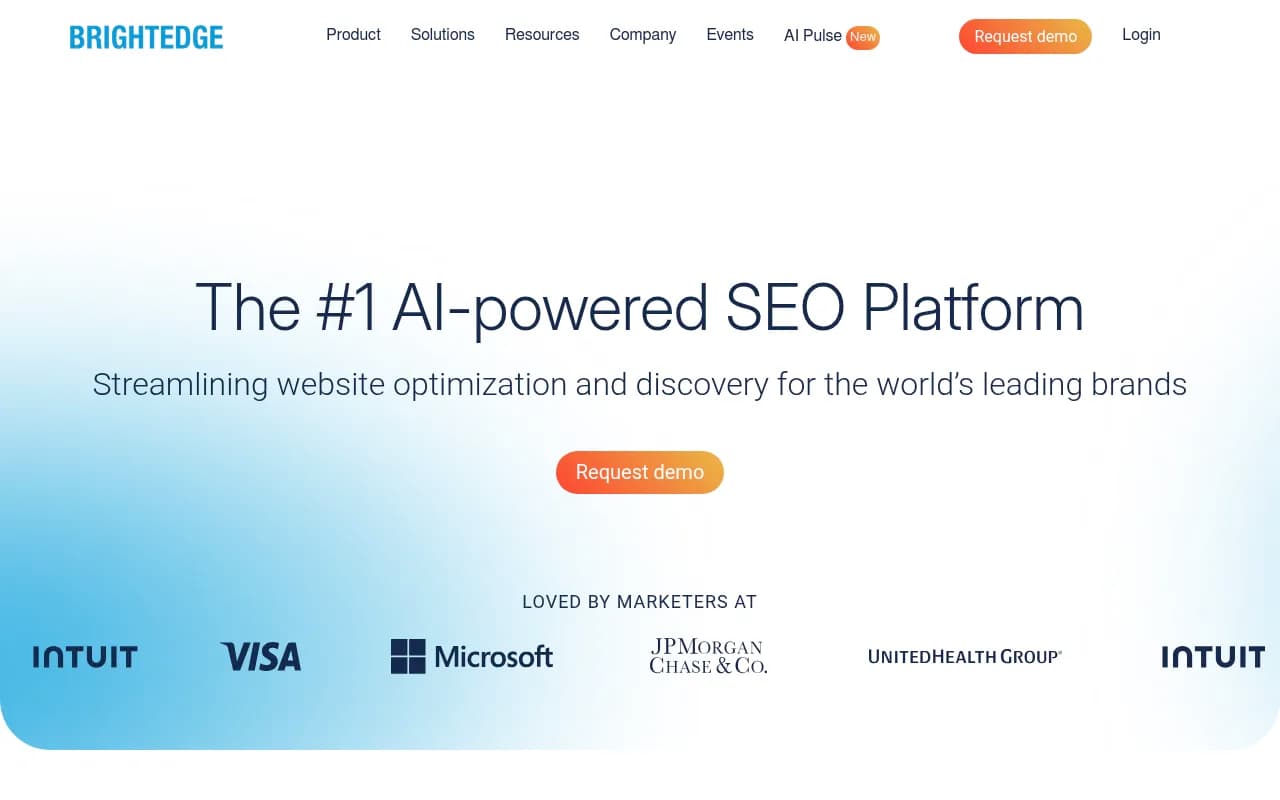
BrightEdge has been in enterprise SEO for years and has added AI search tracking through its AI Catalyst product. If your team is already deep in the BrightEdge ecosystem, the integration is worth evaluating. It's not a pure-play AEO tool, but for teams that want AI visibility layered onto an existing enterprise SEO platform, it's a reasonable path.
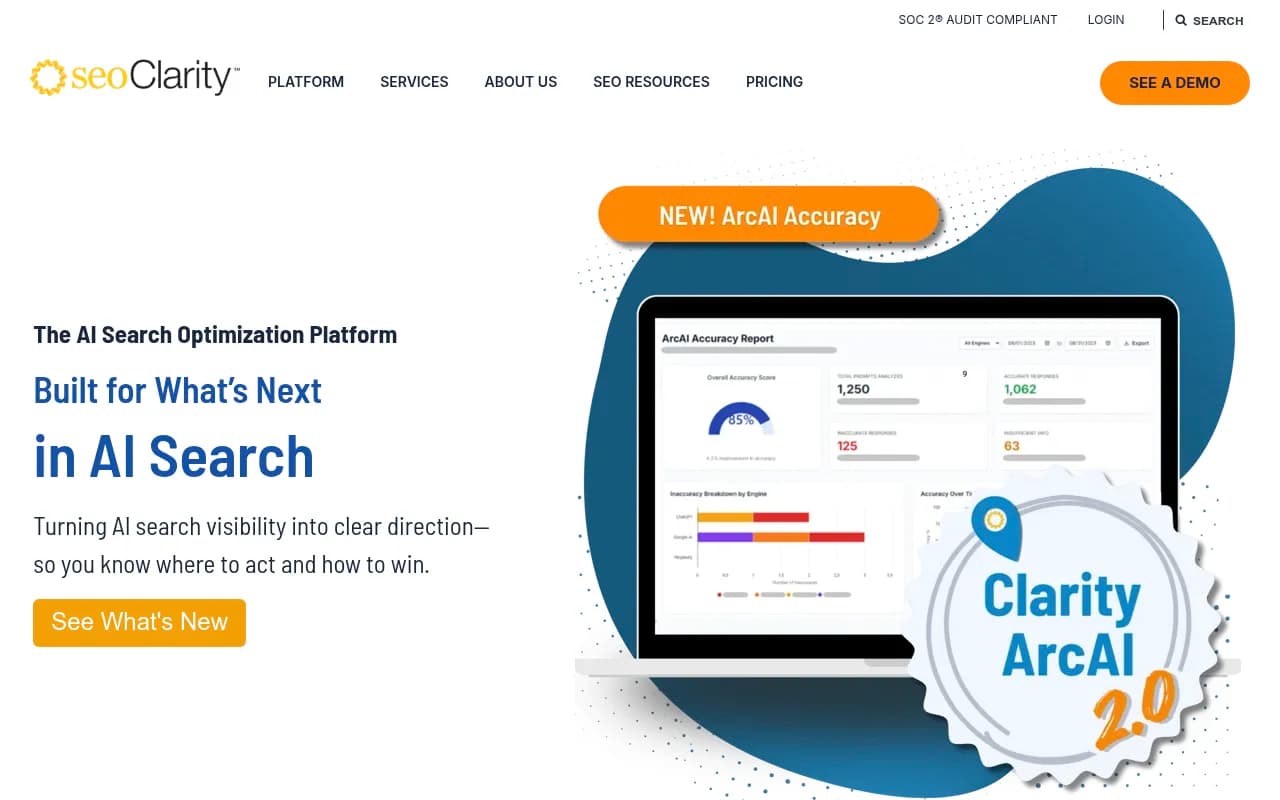
seoClarity takes a similar approach -- enterprise SEO platform with AI search visibility tracking added on. Good for teams that want consolidated reporting but aren't ready to run a separate AEO stack.
Monitoring-focused platforms
These tools are strong at tracking but lighter on the optimization and content side.
AthenaHQ covers 8+ AI search engines and is well-regarded for its monitoring depth. The limitation is that it's primarily a tracking tool -- it shows you where you stand but doesn't help you close the gap.

Peec AI is worth a look for teams with multi-language requirements. It handles international monitoring reasonably well. Like AthenaHQ, it's monitoring-first without strong content workflow integration.

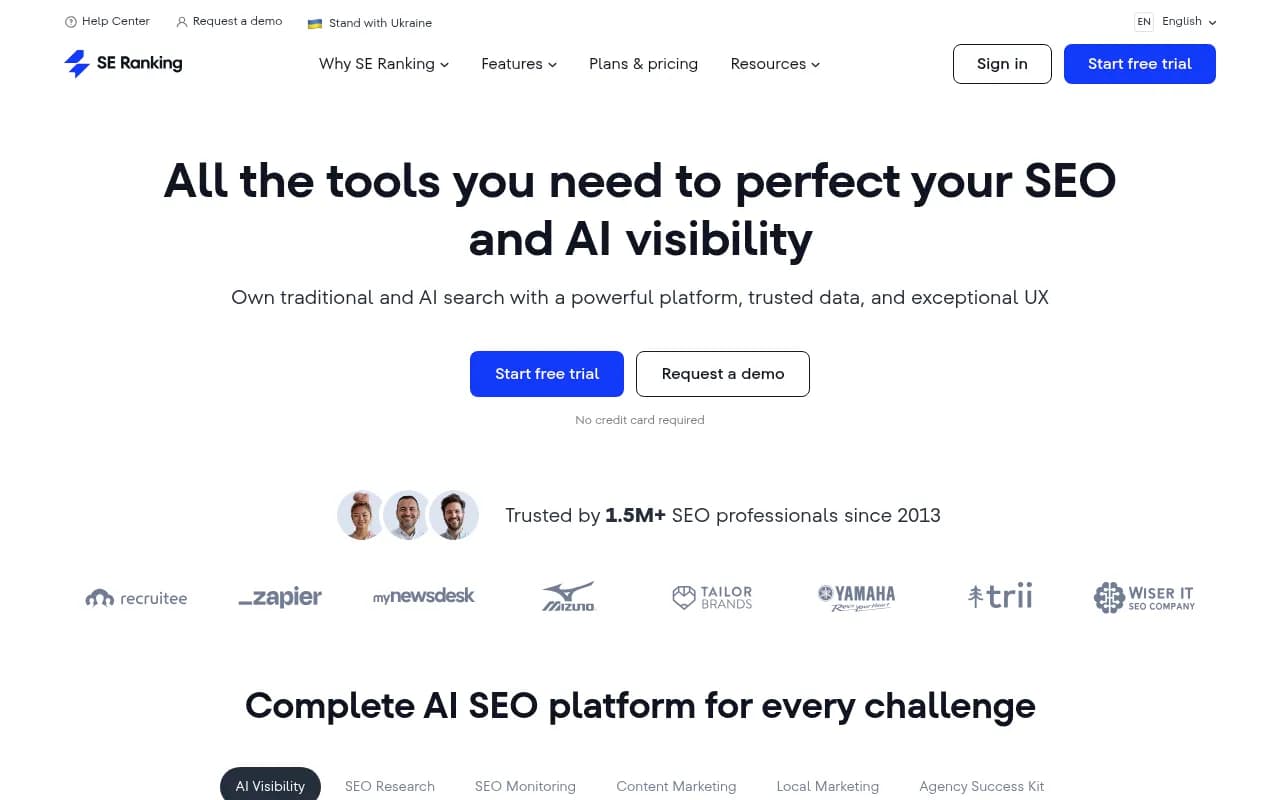
SE Ranking is an all-in-one SEO platform that has added AI visibility tracking. For mid-market teams that want to consolidate tools, it's a cost-effective option. Enterprise teams with complex multi-brand needs may find it limiting.
Otterly.AI is affordable and straightforward. It's a good starting point for teams new to AEO, but it lacks crawler logs, visitor analytics, and content generation -- the features enterprise teams need most.

Enterprise-specific niche players
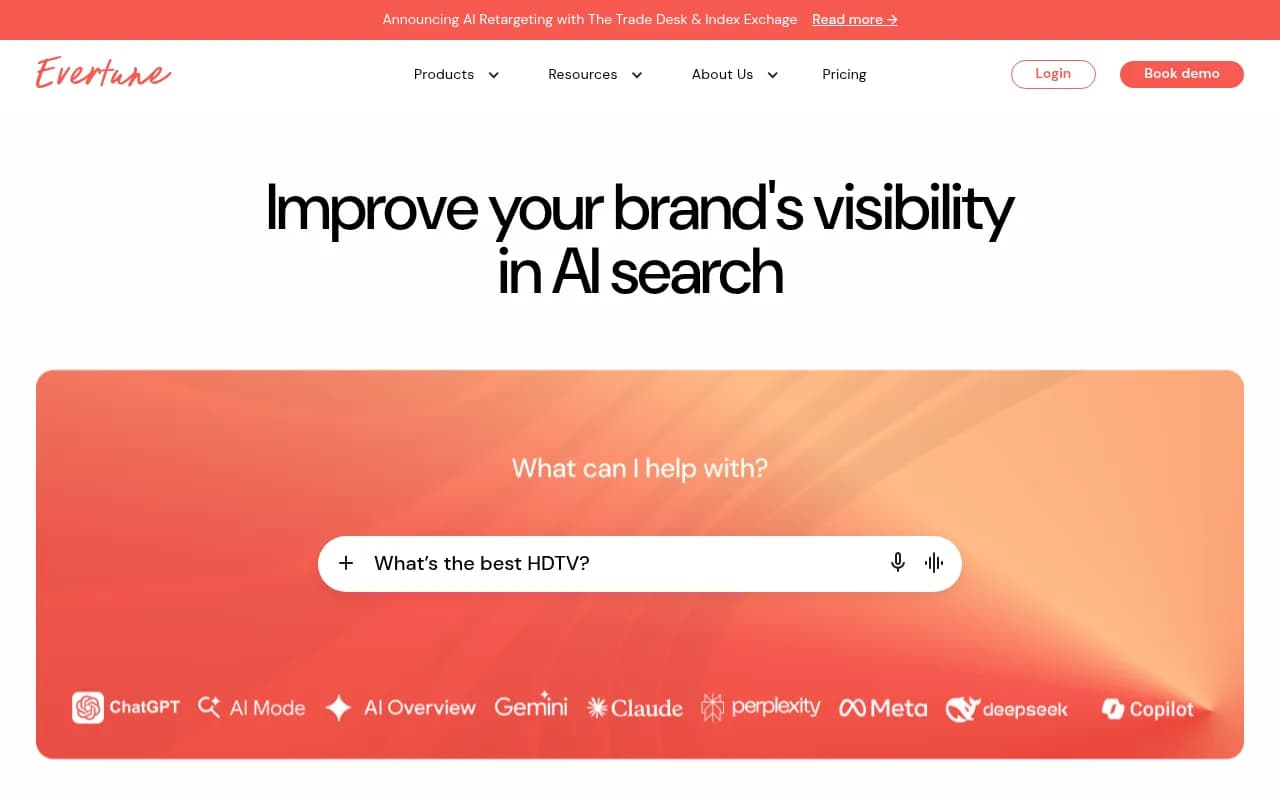
Evertune is built specifically for Fortune 500 brands and focuses on AI narrative control -- not just whether you appear, but what the AI says about you and how to shape it. Worth evaluating if brand narrative management is a priority.
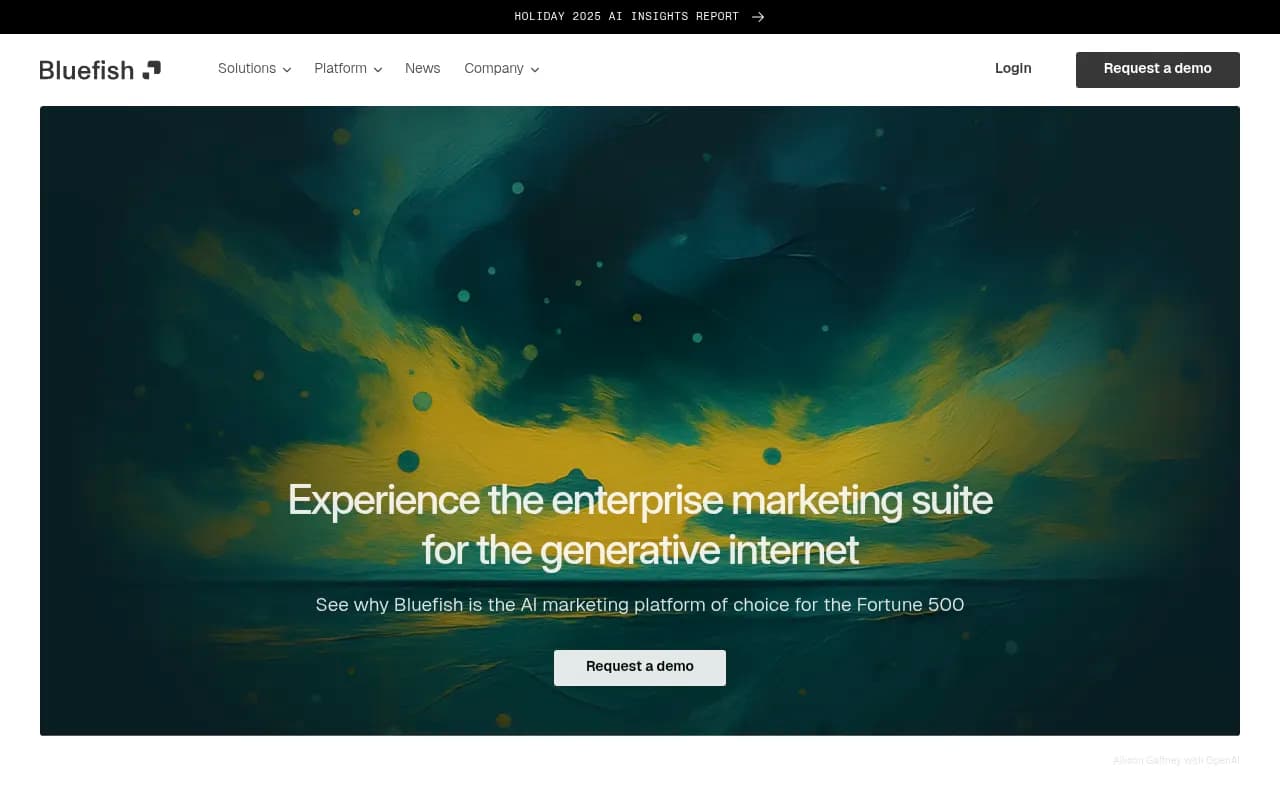
Bluefish targets enterprise marketing teams with a focus on Fortune 500 brand visibility. It's a newer platform with a narrower feature set than the full-stack options, but it's purpose-built for large organizations.
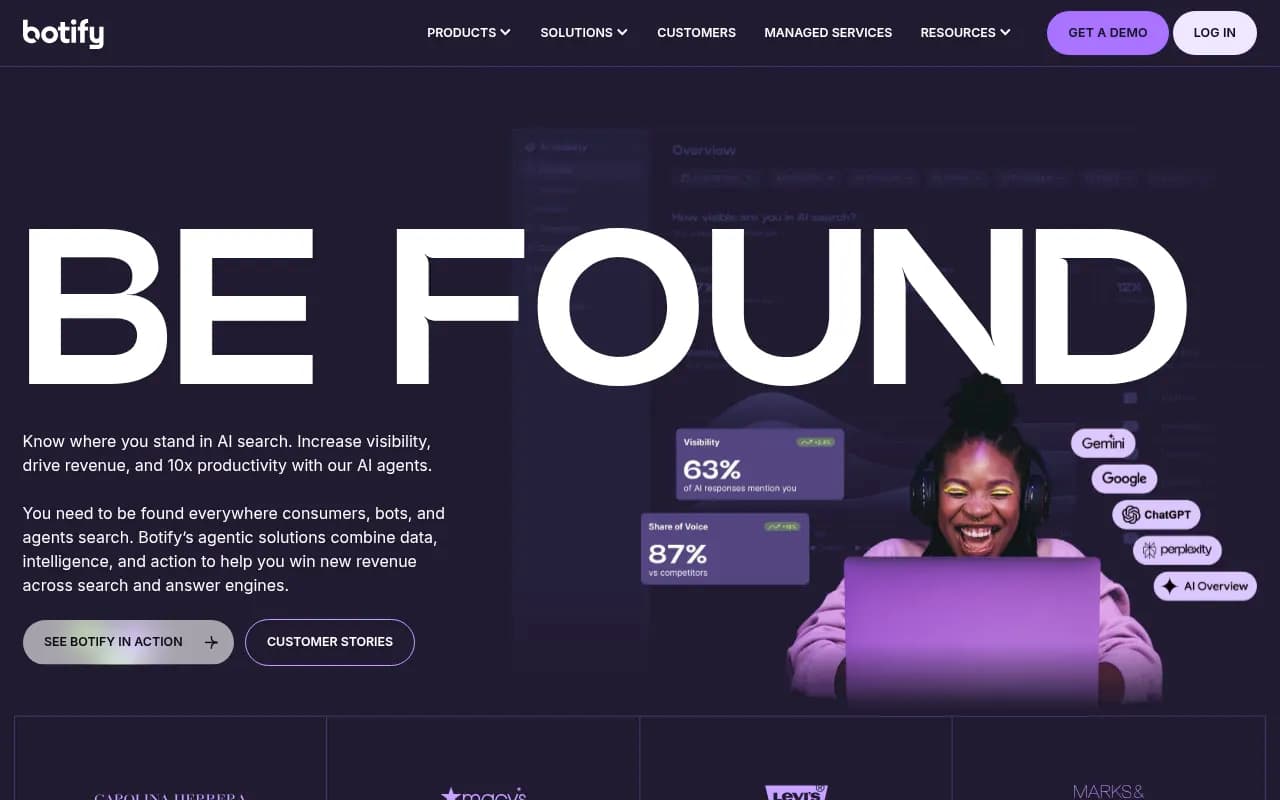
Botify is an enterprise SEO and GEO platform that has added AI agents for search visibility. Strong on the technical SEO side, increasingly relevant for teams that want to connect crawl data to AI visibility.
Feature comparison: enterprise AEO platforms
| Platform | AI models covered | Content generation | Crawler logs | Multi-brand | Attribution | Reddit/YouTube tracking | ChatGPT Shopping |
|---|---|---|---|---|---|---|---|
| Promptwatch | 10 | Yes (built-in AI writer) | Yes | Yes | Yes (GSC, snippet, logs) | Yes | Yes |
| Profound | 10+ | No | No | Yes | Limited | No | No |
| BrightEdge | 5+ | Limited | No | Yes | Yes (existing platform) | No | No |
| AthenaHQ | 8+ | No | No | Limited | No | No | No |
| Evertune | 6+ | Partial | No | Yes | No | No | No |
| SE Ranking | 5 | No | No | Limited | No | No | No |
| Peec AI | 6+ | No | No | Limited | No | No | No |
| Otterly.AI | 5 | No | No | No | No | No | No |
How to evaluate AEO tools for your enterprise stack
The feature list matters less than the workflow fit. Here's a five-question framework for evaluating any AEO platform before committing.
1. Does it cover the AI surfaces your buyers actually use?
Not all AI models matter equally for your category. B2B software buyers skew toward Perplexity and ChatGPT. Consumer brands need Google AI Overviews coverage. Healthcare and financial services teams often see significant Copilot usage. Map your buyer behavior first, then check coverage.
2. Does it handle prompt variance?
A single prompt run once is a coin flip. AI models vary their responses based on phrasing, context, and recency. Enterprise-grade tools run prompts multiple times, track variance, and give you trend data rather than snapshots. Ask vendors specifically how they handle this.
3. What happens after you find a gap?
This is the question that separates monitoring tools from optimization platforms. If the answer is "we show you the gap and you figure out the content," that's a reporting tool. If the answer is "we show you the gap, tell you what content is missing, and help you create it," that's an optimization platform. Enterprise teams need the latter.
4. How does it integrate with your existing stack?
Your AEO data is only useful if it connects to where decisions get made. Check for CMS integrations, Looker Studio connectors, API access, and GSC integration. A tool that lives in its own silo will get used for one quarter and then ignored.
5. Can you attribute AI visibility to revenue?
This is the hardest question and the one most vendors dodge. Look for traffic attribution that connects AI citations to actual site visits and conversions -- not just visibility scores. Server log analysis, GSC integration, or a tracking snippet are the three main approaches. Without this, you can't make a business case for continued investment.
Building your enterprise AEO stack
Most enterprise teams don't need a dozen tools. They need one platform that does the core work well, plus integrations into existing systems.
A practical stack for a Fortune 500 marketing team looks like this:
- Core AEO platform (Promptwatch or Profound, depending on whether content generation is a priority): handles monitoring, gap analysis, content creation, and attribution
- Technical SEO layer (Botify, BrightEdge, or seoClarity if you're already using them): connects crawl data and site health to AI visibility
- Content workflow (your existing CMS or content platform): receives output from the AEO platform's gap analysis and writing tools
- Reporting layer (Looker Studio, your BI tool): pulls data via API or native integration for executive reporting
The mistake most enterprise teams make is buying multiple monitoring tools that all show the same data in slightly different dashboards. Pick one platform that covers monitoring well, make sure it connects to your content workflow, and invest the rest of your budget in acting on the data.
Pricing reality check for enterprise teams
Published pricing for AEO tools is almost always the SMB tier. Enterprise contracts look different.
Promptwatch's published tiers run from $99/month (Essential: 1 site, 50 prompts) to $579/month (Business: 5 sites, 350 prompts, 30 articles). Agency and enterprise pricing is custom. For a Fortune 500 brand tracking 10+ sites across multiple regions with hundreds of prompts, expect custom enterprise pricing from any serious vendor.
Profound and BrightEdge both operate primarily on custom enterprise contracts. Expect six-figure annual commitments for full enterprise deployments.
The ROI math is straightforward if you take the conversion rate data seriously. If AI-referred traffic converts at 15.9% and you're currently invisible for high-volume prompts in your category, the revenue upside from improving visibility is measurable. Build that case before the procurement conversation, not during it.
What to watch in the second half of 2026
A few developments worth tracking as you build your AEO strategy:
ChatGPT Shopping is growing. OpenAI's product recommendation and shopping carousel features are expanding. Brands that track and optimize for ChatGPT Shopping appearances now will have a significant head start as the feature scales. Most AEO tools don't track this yet -- Promptwatch does.
Google AI Mode is becoming a primary surface. Google's AI Mode (the full conversational AI search experience, distinct from AI Overviews) is rolling out more broadly. It behaves differently from traditional search and from AI Overviews. Tools that treat it as a separate surface to monitor and optimize for will have an advantage.
AI crawler behavior is becoming a technical SEO issue. GPTBot, ClaudeBot, and PerplexityBot are now crawling at scale. Which pages they read, how often, and what errors they encounter directly affects whether your content gets cited. This is an infrastructure problem, not just a content problem -- and it requires crawler log data to diagnose.
Prompt volume data is getting more reliable. Early AEO tools had no way to estimate how many people were actually asking a given prompt. That's changing. Platforms with large prompt databases (Profound's 400M+, Promptwatch's 1.1B+ citations processed) are developing increasingly reliable volume and difficulty estimates. This matters for prioritization -- you want to know which prompts are worth winning before you invest in content.
The enterprise AEO market is moving fast, and the tools that exist today are meaningfully better than what was available 18 months ago. The teams that will win in AI search aren't the ones that bought the most tools -- they're the ones that built a workflow connecting visibility data to content creation to attribution, and then ran that loop consistently.
Pick a platform that supports the full loop. Everything else is just a dashboard.