Key takeaways
- Most AEO tools in 2026 are monitoring dashboards -- they show you citation data but don't help you act on it
- The platforms worth paying for combine answer gap analysis, content generation, and visibility tracking in a single workflow
- Built-in content generation matters because the gap between "we need an article" and "the article is live" is where most teams stall
- A handful of platforms now offer true end-to-end workflows: find the gap, generate the content, track the result
- Promptwatch is the only platform rated as a "Leader" across all categories in a 2026 comparison of 12 GEO/AEO platforms, specifically because it closes this loop
There's a frustrating pattern with most AEO tools. You log in, see a dashboard full of citation data, discover that your competitor is being recommended by ChatGPT for three prompts you care about, and then... nothing. The tool has done its job. The rest is your problem.
That gap -- between knowing you're invisible and actually doing something about it -- is where most teams get stuck. And it's why "built-in content generation" has gone from a nice-to-have to a genuine differentiator in 2026.
This guide focuses specifically on platforms that don't stop at the monitoring layer. We're looking at tools that can take you from "here's a prompt your competitor owns" to "here's a published article designed to win that prompt back."
Why monitoring alone isn't enough anymore
When AEO tools first emerged, just knowing your AI citation share was valuable. Teams had no visibility into whether ChatGPT or Perplexity was even mentioning their brand. Monitoring dashboards filled that gap.
But the category has matured fast. Most serious marketing teams now have some form of AI visibility tracking in place. The question isn't "are we being cited?" anymore -- it's "what do we do about it?"
The answer is almost always content. AI models cite sources because those sources answer questions clearly, specifically, and authoritatively. If you're not being cited for a prompt, it usually means one of two things: you don't have content that addresses it, or your existing content doesn't address it well enough.
Both problems require writing. And writing takes time, research, and a clear brief. That's where the workflow breaks down for most teams -- not at the insight stage, but at the execution stage.
What "built-in content generation" actually means
It's worth being precise here, because the term gets used loosely.
Some tools call it "content optimization" when they really mean a checklist of keywords to add to an existing page. That's useful, but it's not generation.
True built-in content generation means the platform can:
- Identify a specific prompt or topic where you have a visibility gap
- Analyze what existing content (yours and competitors') looks like for that prompt
- Generate a draft article, listicle, FAQ, or comparison that's structured to get cited
- Let you edit and publish without leaving the platform (or at least export a finished draft)
The best platforms in 2026 do all four. A few do three. Many claim to do all four but stop short at step three with a generic AI draft that ignores citation data entirely.
The tools worth knowing about
Promptwatch: the end-to-end platform
Promptwatch is the clearest example of a platform built around the full loop. Its Answer Gap Analysis shows you exactly which prompts competitors are visible for that you're not -- not as a vague "opportunity" signal, but as specific questions with prompt volume estimates and difficulty scores.
From there, the built-in AI writing agent generates content grounded in actual citation data. It analyzes 880M+ citations to understand what kinds of content AI models actually cite for a given topic, then produces articles and comparisons structured around those patterns. The output isn't generic SEO filler -- it's built to get picked up by ChatGPT, Claude, Perplexity, and the other models you're tracking.
The tracking layer closes the loop. Once content is live, page-level tracking shows which pages are being cited, how often, and by which models. Traffic attribution (via code snippet, GSC integration, or server log analysis) connects visibility gains to actual revenue.

Promptwatch also has a few capabilities that matter for content strategy specifically: Reddit and YouTube tracking surfaces the discussions that directly influence AI recommendations, and AI crawler logs show which pages the bots are actually reading (and which they're ignoring). If your new article isn't getting crawled, you'll know before you spend three months wondering why it's not showing up in citations.
Pricing starts at $99/month for the Essential plan (1 site, 50 prompts, 5 articles), with Professional at $249/month and Business at $579/month. A free trial is available.
Writesonic: GEO workflows with content built in
Writesonic has evolved well beyond its origins as a copywriting tool. Its current GEO product combines AI visibility tracking with citation analysis and in-platform content optimization. The workflow is genuinely integrated -- you can see which prompts you're missing, analyze what competitors are doing for those prompts, and generate content without switching tabs.
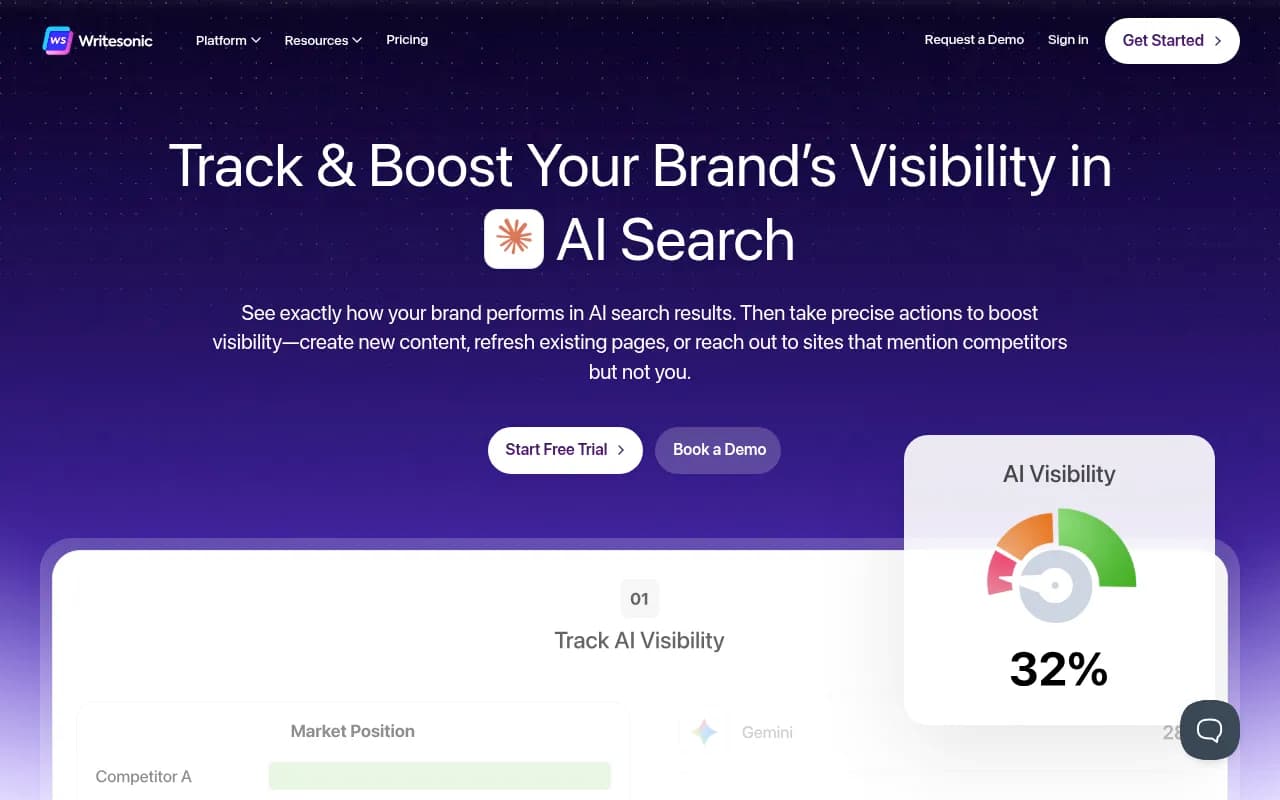
It tracks ChatGPT, Google AI Mode, AI Overviews, Gemini, Perplexity, and Claude. Pricing starts around $199/month for the GEO features.
Frase: content briefs that account for AI search
Frase has been a content brief tool for years, and it's added AEO-specific features that make it worth revisiting. Its 2026 product includes citation decay detection (it flags when your existing content is losing AI citation share) and content fix recommendations.
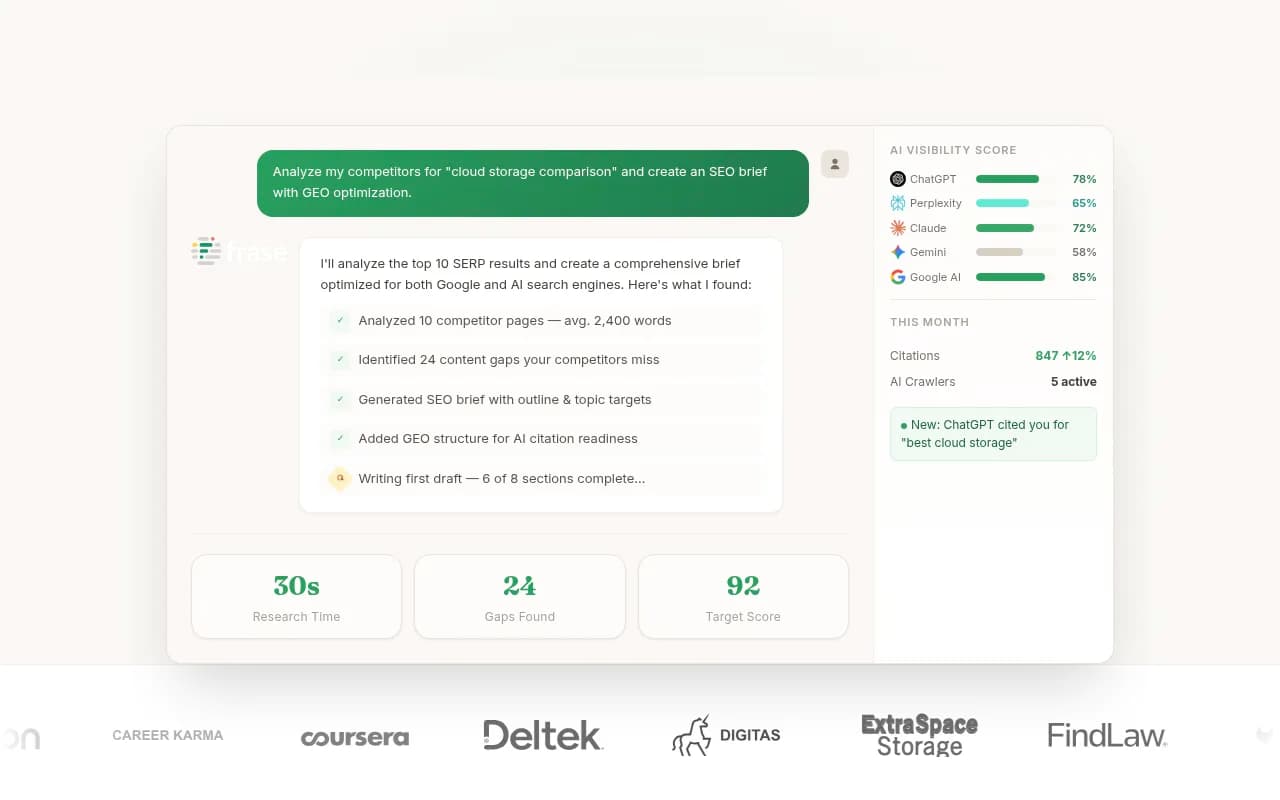
The generation side is strong for teams that already have a content workflow -- Frase is better thought of as a research and brief layer that feeds into writing, rather than a fully autonomous content generator. But for teams that want control over the output, that's actually a feature.
Relixir: AI-native CMS with GEO built in
Relixir takes a different approach. It's built around an AI-native CMS, meaning content creation and GEO optimization aren't bolted on -- they're the core product. You create content inside Relixir with GEO optimization happening in real time, and the platform tracks how that content performs in AI search.
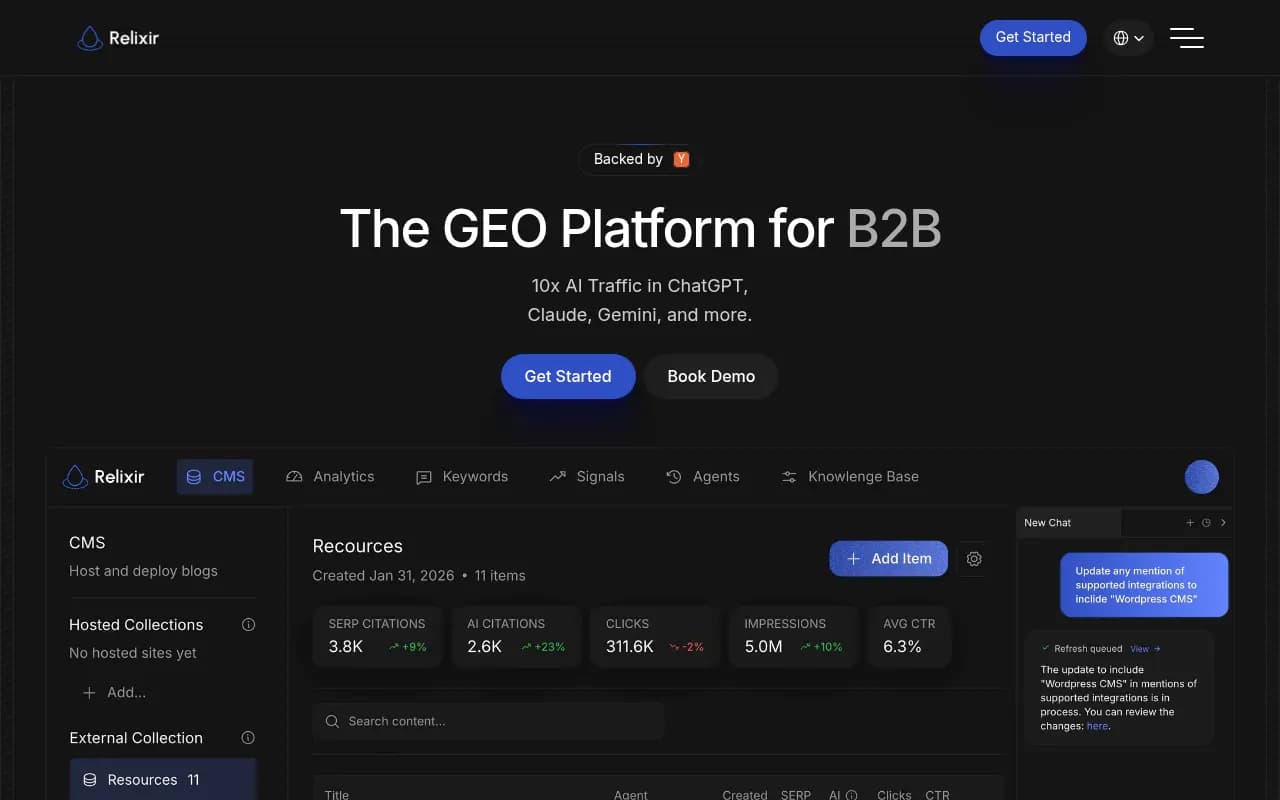
It's a good fit for teams that want to consolidate their content stack rather than add another tool to it.
Searchable: monitoring plus content tools
Searchable sits somewhere between a monitoring platform and a full content generation suite. It has content optimization tools alongside its visibility tracking, though the generation capabilities are less automated than Promptwatch or Writesonic.
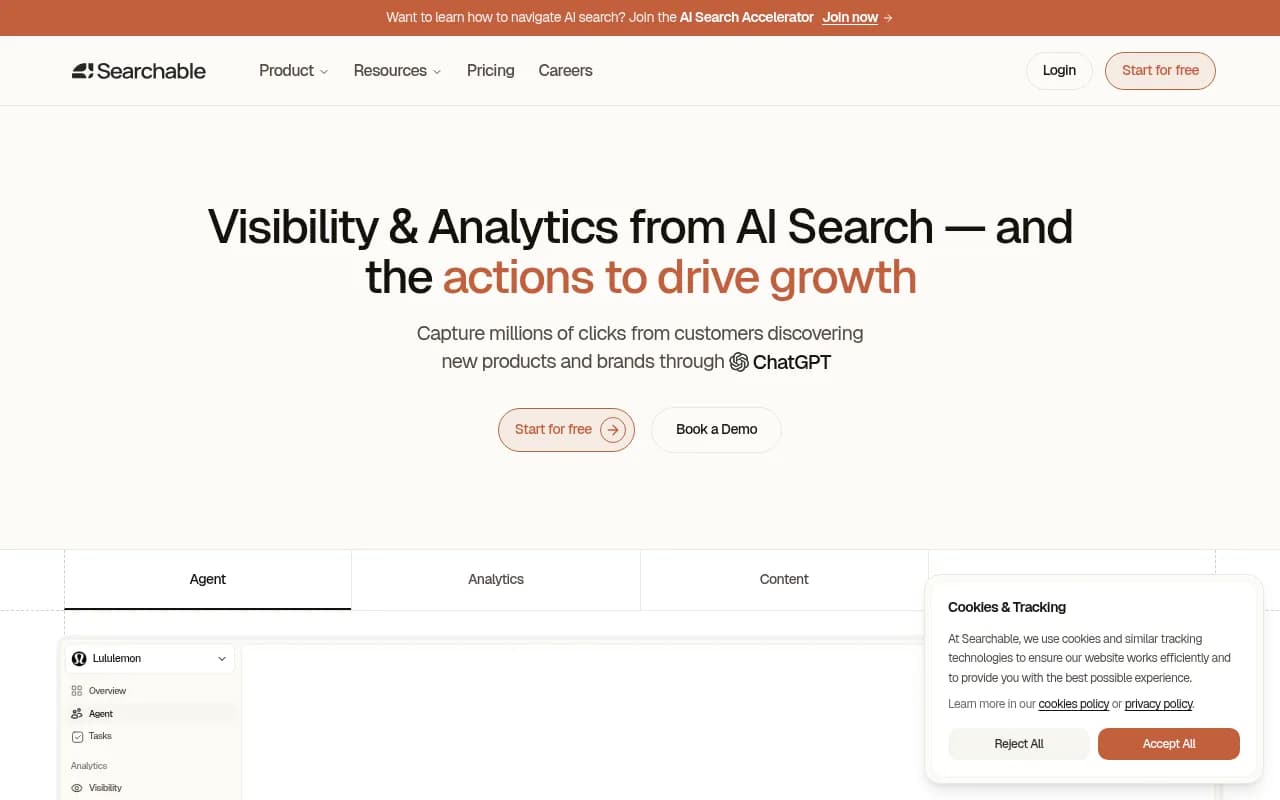
Worth considering for teams that want a single platform for monitoring and content guidance without fully committing to an autonomous generation workflow.
Surfer SEO: content optimization with AI tracking
Surfer SEO added AI visibility tracking to its existing content optimization product. If you're already using Surfer for traditional SEO content, the AI tracking layer is a natural extension. The content generation side (Surfer AI) produces drafts optimized for both Google and AI search.
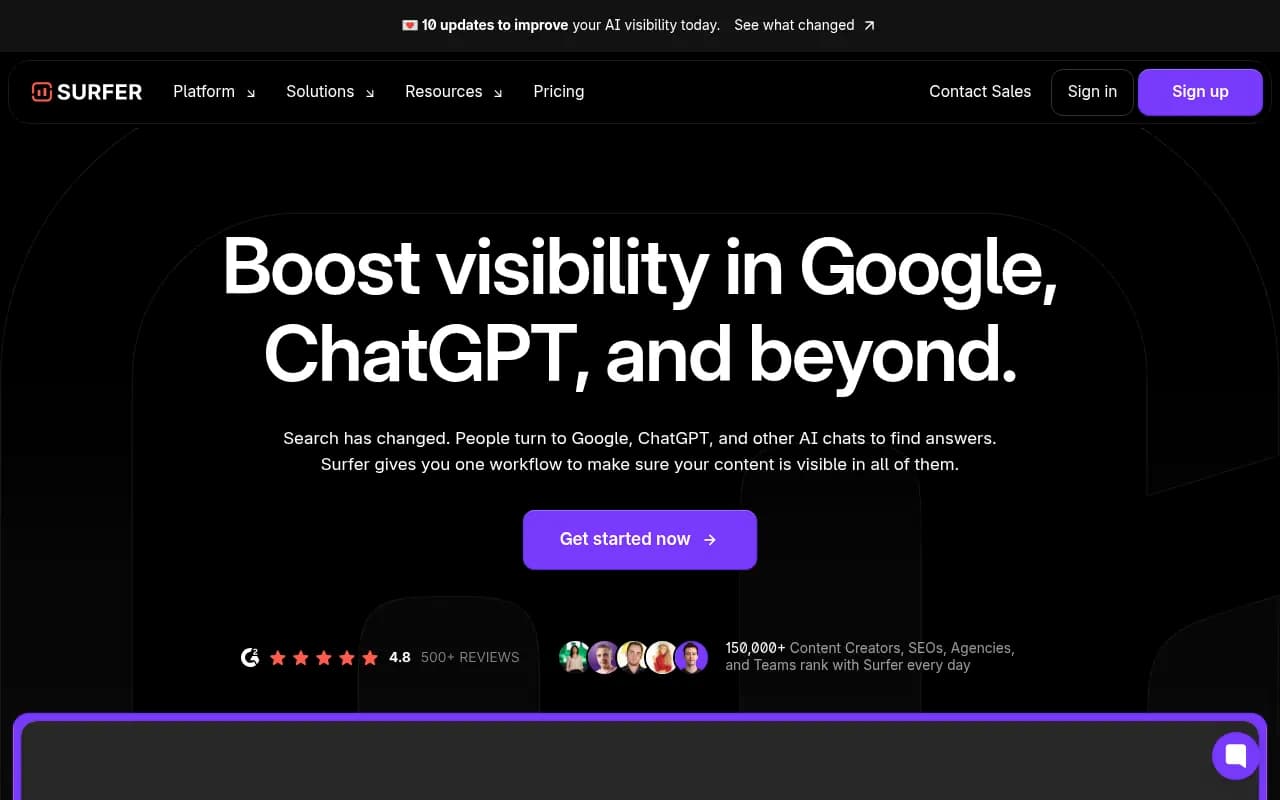
The limitation is that Surfer's AI tracking is less deep than dedicated AEO platforms -- it's a useful addition to an existing Surfer workflow, not a replacement for a purpose-built AEO tool.
Atomic AGI: automated content for AI search
Atomic AGI is worth a mention for teams that want high automation. It tracks Google and LLMs simultaneously and has automated content generation built into the platform. The pitch is minimal human intervention -- the system identifies gaps and generates content with limited manual steps.
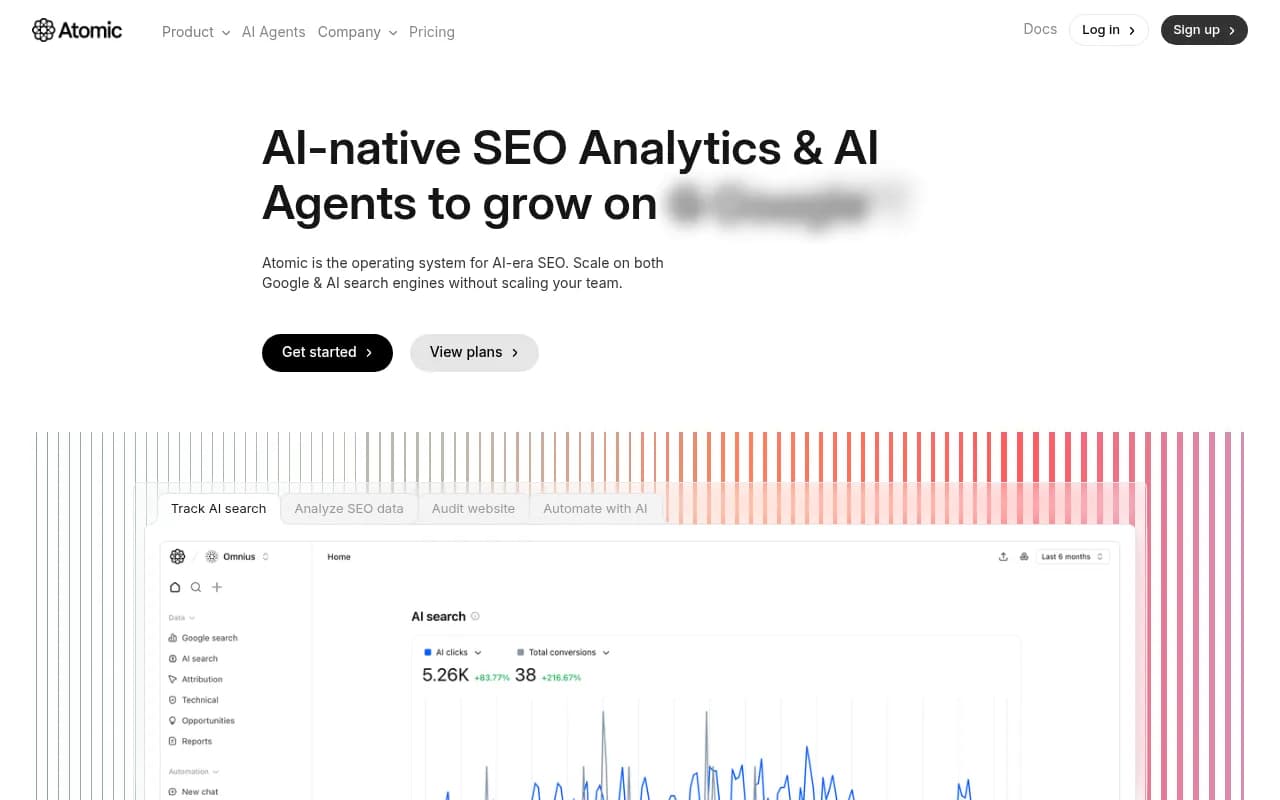
The tradeoff is control. Highly automated content generation is fast, but teams with strong brand voice requirements may find the output needs significant editing.
Comparison: which platforms actually close the loop?
| Platform | Answer gap analysis | Built-in content generation | Citation-grounded output | Post-publish tracking | AI crawler logs |
|---|---|---|---|---|---|
| Promptwatch | Yes | Yes | Yes (880M+ citations) | Yes | Yes |
| Writesonic | Yes | Yes | Partial | Yes | No |
| Frase | Partial | Yes (brief-focused) | Partial | No | No |
| Relixir | Yes | Yes | Yes | Yes | No |
| Searchable | Yes | Partial | No | Yes | No |
| Surfer SEO | No | Yes | No | Partial | No |
| Atomic AGI | Yes | Yes | Partial | Yes | No |
The table makes the pattern clear. Most platforms do two or three of these things well. Promptwatch is the only one that hits all five, which is why it's the only platform rated as a "Leader" across all categories in a 2026 comparison of 12 GEO/AEO platforms.
What to look for when evaluating these tools
Citation-grounded generation vs. generic AI writing
This is the most important distinction. A lot of platforms now have an "AI write" button that produces a generic article. That's not the same as content engineered to get cited.
Citation-grounded generation means the tool analyzes what AI models actually cite for a given topic -- which sources, what structure, what level of specificity -- and produces content that matches those patterns. It's a fundamentally different approach, and the output looks different too.
Ask any vendor: "What data does your content generation use as input?" If the answer is vague, the output is probably generic.
Prompt volume and difficulty scoring
Not all answer gaps are worth chasing. A prompt that gets asked 50 times a month and where your competitor has a weak citation is a very different opportunity than a prompt asked 5,000 times a month where three authoritative sources dominate every AI response.
Good platforms give you volume estimates and difficulty scores so you can prioritize. Without this, you're generating content for gaps without knowing whether winning them would actually move the needle.
The feedback loop
Content generation is only valuable if you can tell whether the content worked. Look for platforms that track citation changes at the page level -- not just overall visibility scores, but "this specific article is now being cited by Perplexity for this specific prompt."
Without that feedback loop, you're publishing into a void and hoping for the best.
Reddit and YouTube signal tracking
This one surprises people. AI models don't just cite brand websites -- they cite Reddit threads, YouTube videos, and forum discussions. If your competitor is winning citations partly because of a popular Reddit discussion about their product, you need to know that.
Most monitoring platforms ignore this channel entirely. Platforms that surface it give you a more complete picture of why AI models recommend what they recommend.
The workflow in practice
Here's what the end-to-end workflow looks like on a platform that does this well:
- Run an answer gap analysis. You see a list of prompts where competitors are cited and you're not, ranked by volume and difficulty.
- Pick a target prompt. Say it's "best project management tool for remote engineering teams" -- high volume, your competitor ranks, you don't.
- The platform analyzes what content AI models are currently citing for that prompt: what structure, what topics, what level of detail.
- You generate a draft article. The platform produces a piece structured around the citation patterns it found -- not just keyword-stuffed, but genuinely addressing the angles AI models want covered.
- You edit, approve, and publish.
- The platform tracks whether that page starts getting cited, and for which models. You see the citation share move over the following weeks.
That's the loop. It sounds simple, but most teams are currently doing steps 1 and 2 in one tool, steps 3 and 4 in another (or manually), and step 6 not at all. Consolidating into a single platform removes the friction that causes most content initiatives to stall between insight and execution.
Monitoring-only tools: still useful, but not sufficient
To be fair to the monitoring-only side of the market: there are good reasons to use a dedicated tracking tool if you already have a strong content production workflow.
Tools like Peec AI, Otterly.AI, and AthenaHQ give you solid visibility data at lower price points. If your team has writers who can take a gap analysis and run with it, you don't necessarily need the generation layer built into your tracking tool.



The problem is that most teams don't have that. The content production bottleneck is real, and the gap between "we have the insight" and "the content is live" is where months get lost.
Who should prioritize built-in generation
Built-in content generation matters most for:
- Marketing teams without dedicated SEO writers who can act on gap analysis quickly
- Agencies managing multiple clients who need to scale content production without scaling headcount
- Brands in competitive categories where the window to win a prompt is short -- if your competitor publishes first, they get the citation
- Teams that have tried monitoring tools and found they can't act on the data fast enough to justify the subscription
If you have a large, fast-moving content team and a clear process for turning briefs into published articles, a monitoring-only tool might be enough. For everyone else, the generation layer is what turns AEO from a reporting exercise into an actual growth channel.
Final thought
The AEO category is still young enough that most platforms are still figuring out where to focus. Monitoring is the easy part -- it's a data problem, and data problems are solvable. Content generation that's actually grounded in citation data, connected to gap analysis, and tracked post-publish is harder. That's why so few platforms do it well.
The ones that do are worth paying more for. The cost of generating content that doesn't get cited is higher than the cost of a better tool.