Key takeaways
- Most tools calling themselves "AI SEO platforms" in 2026 are traditional rank trackers with a chatbot bolted on — they don't actually monitor ChatGPT, Perplexity, or Google AI Overviews
- Real AI search tracking means querying live AI engines, capturing citations, and measuring brand visibility in generated answers — not just tracking Google positions
- A handful of purpose-built platforms do this properly; the rest are riding the buzzword wave
- The most useful tools go beyond monitoring to help you act on what they find — closing gaps, generating content, and tracking the results
Google's I/O 2026 announcement made something official that practitioners had already been living with for months: Search is no longer just a list of blue links. AI Mode, AI Overviews, and agentic search features have fundamentally changed where answers come from and who gets credit for them.
The problem is that the SEO tool market hasn't kept up honestly. Vendors saw "AI" trending and started stamping it on dashboards that hadn't changed since 2021. Some added a ChatGPT integration that generates a content brief. Some added a single "AI visibility" metric that nobody can explain. A few actually built something real.
This guide is about telling those apart.
What "tracking AI search" actually means
Before comparing tools, it's worth being precise about what genuine AI search tracking requires. There are a few distinct things a tool needs to do:
Query live AI engines. The tool needs to actually send prompts to ChatGPT, Perplexity, Google AI Overviews, Gemini, Claude, and others -- and capture the full responses, not just API outputs. This matters because user-facing answers often differ from what the API returns. Shopping recommendations, citation panels, and follow-up suggestions can all vary.
Extract citations and brand mentions. When an AI engine answers a question, it may cite sources or mention brands. A real tracking tool captures which sources got cited, how prominently, and in what context.
Track this over time. A one-time snapshot is nearly useless. You need to know whether your visibility is improving or declining, which prompts you're winning, and which competitors are eating your lunch.
Cover multiple models. A tool that only tracks ChatGPT is missing Perplexity (which sends real referral traffic), Google AI Overviews (which affects billions of searches), and a growing list of others. In 2026, single-model tracking is table stakes at best.
Most tools fail at step one. They don't query live AI engines at all -- they scrape Google's traditional results, add some NLP scoring, and call it "AI-optimized."
The three categories of tools you'll encounter
Category 1: Traditional SEO tools that added "AI" to their marketing
These are the most common. They're legitimate SEO platforms -- keyword research, rank tracking, site audits, backlink analysis -- that have added some AI-adjacent features without actually building AI search monitoring.
Semrush is the clearest example. It's genuinely excellent for traditional SEO. Keyword research, competitor analysis, content optimization -- it's comprehensive and well-built. But its "AI Visibility Toolkit" is limited: fixed prompt sets, no real-time LLM querying at scale, and no traffic attribution from AI referrals. The Indie Hackers review that burned $900 testing tools noted Semrush as a "Swiss Army knife" -- accurate for traditional SEO, but not a genuine AI search tracker.
Ahrefs is in a similar position. Brand Radar is a real feature, but it uses fixed prompts and doesn't offer AI traffic attribution. If you're already paying for Ahrefs for backlinks and keyword research, it's a fine bonus. If you're buying it specifically for AI visibility, you're overpaying for something incomplete.
SE Ranking has been more honest about this. Their AI Visibility feature is genuinely useful at the price point, but it's monitoring-only -- you see data, you don't get help acting on it.
Category 2: Purpose-built AI visibility trackers (monitoring only)
This is where most of the new entrants live. They were built specifically to track AI search, which means they actually query live engines and capture citations. That's a real step forward. The limitation is that most of them stop there -- they show you a dashboard and leave you to figure out what to do with it.
Otterly.AI fits here. It's affordable, it monitors multiple AI engines, and it gives you a clear picture of where your brand appears. But there's no content generation, no gap analysis that tells you why you're missing, and no crawler logs to understand how AI agents interact with your site.

Peec AI is similar -- solid multi-language monitoring, good for agencies tracking clients across regions, but the action layer is thin.

AthenaHQ covers 8+ AI engines and has a clean interface. Good for getting started. Doesn't help you fix what it finds.

Profound has a stronger feature set than most in this category -- better data depth, reasonable pricing for what you get. Still primarily a monitoring dashboard.

A few others worth knowing about in this space:
Category 3: Platforms that monitor AND help you act
This is the smallest category and the one that actually matters if your goal is improving visibility, not just measuring it.
The core problem with monitoring-only tools: knowing you're invisible in ChatGPT for "best project management software" doesn't tell you what to do about it. You need to know which content gaps exist, what topics competitors are being cited for that you're not, and what to actually write or fix.
Promptwatch is the most complete platform in this category. It tracks 10 AI models (ChatGPT, Perplexity, Google AI Overviews, Google AI Mode, Claude, Gemini, Meta/Llama, DeepSeek, Grok, Mistral, Copilot), but the differentiator is what happens after the data comes in. Answer Gap Analysis shows exactly which prompts competitors rank for that you don't. Content Agents then generate articles, comparisons, and briefs built around those specific gaps -- not generic SEO content, but pieces engineered around what AI models are already looking for. AI Crawler Logs show which pages AI agents are actually reading, how often they return, and when a page moves from crawled to cited. That last piece is something almost no competitor offers.

A few other tools are pushing toward this action-oriented model:
The "AI" features that are actually just rebranded old features
It's worth naming some specific patterns that show up constantly in tool marketing:
"AI-powered keyword research" usually means they added a language model to suggest related keywords. This is fine, but it has nothing to do with tracking how AI search engines respond to queries. Keyword.com, for instance, has added AI Mode tracking -- that's real -- but many tools use similar language to describe something much more mundane.
"AI content optimization" typically means NLP scoring against top-ranking pages. Surfer SEO and Clearscope do this well, and it's genuinely useful for traditional Google rankings. But it's not AI search tracking.
"AI insights" is the vaguest category. It usually means a dashboard widget that surfaces anomalies or generates a summary paragraph. Real insight would be: "You're not being cited by Perplexity for any prompts in the 'accounting software' category, but your competitor Xero appears in 73% of them. Here are the three content gaps causing this."
"LLM visibility score" without explanation of methodology is a red flag. Ask any vendor: which models do you query? How often? Are you hitting the actual user-facing interface or just the API? Do you track citations at the page level or just the domain level?
A practical comparison of the serious players
| Tool | Models tracked | Citation tracking | Content generation | Crawler logs | AI traffic attribution | Best for |
|---|---|---|---|---|---|---|
| Promptwatch | 10 | Page-level | Yes (Content Agents) | Yes | Yes | Full GEO optimization cycle |
| Profound | 5+ | Domain-level | No | No | No | Research-focused teams |
| AthenaHQ | 8+ | Domain-level | No | No | No | Brand monitoring |
| Otterly.AI | 5+ | Basic | No | No | No | Budget monitoring |
| Peec AI | 5+ | Basic | No | No | No | Multi-language monitoring |
| SE Ranking | 3-4 | Basic | No | No | No | Traditional SEO + basic AI |
| Semrush | Limited | No | No | No | No | Traditional SEO |
| Ahrefs Brand Radar | Limited | No | No | No | No | Backlinks + basic brand |
| Scrunch AI | 4+ | Basic | No | No | No | Brand visibility |
| Whitebox | 5+ | Yes | Agentic fixes | No | No | Automated GEO fixes |
What to actually look for when evaluating a tool
If you're evaluating platforms right now, here are the questions that separate real AI search tracking from marketing noise:
"Which AI engines do you query, and how?" If the answer is vague or they mention "API access" without clarifying whether they also capture user-facing responses, push harder. API outputs and user-facing answers can differ significantly, especially for shopping and local queries.
"Can you show me a citation at the page level?" Domain-level visibility ("your site appeared in 40% of responses") is less useful than page-level data ("this specific article is being cited by Perplexity for these 12 prompts"). The latter tells you what's working and what to replicate.
"What do I do when I find a gap?" If the answer is "you export the data and figure it out," that's a monitoring tool. If the answer involves content briefs, gap analysis, or generation features, you're looking at something more useful.
"Do you track AI crawler activity on my site?" This is a newer capability that very few tools offer. Knowing that GPTBot crawled your pricing page three times last week but never cited it is actionable information -- it suggests a content or structure issue worth fixing.
"How do you handle prompt volume and difficulty?" Not all prompts are worth chasing. A tool that helps you prioritize high-volume, winnable prompts is more useful than one that dumps 500 citations on you with no context.
The tools worth watching in 2026
Beyond the main players, a few newer entrants are doing interesting things:
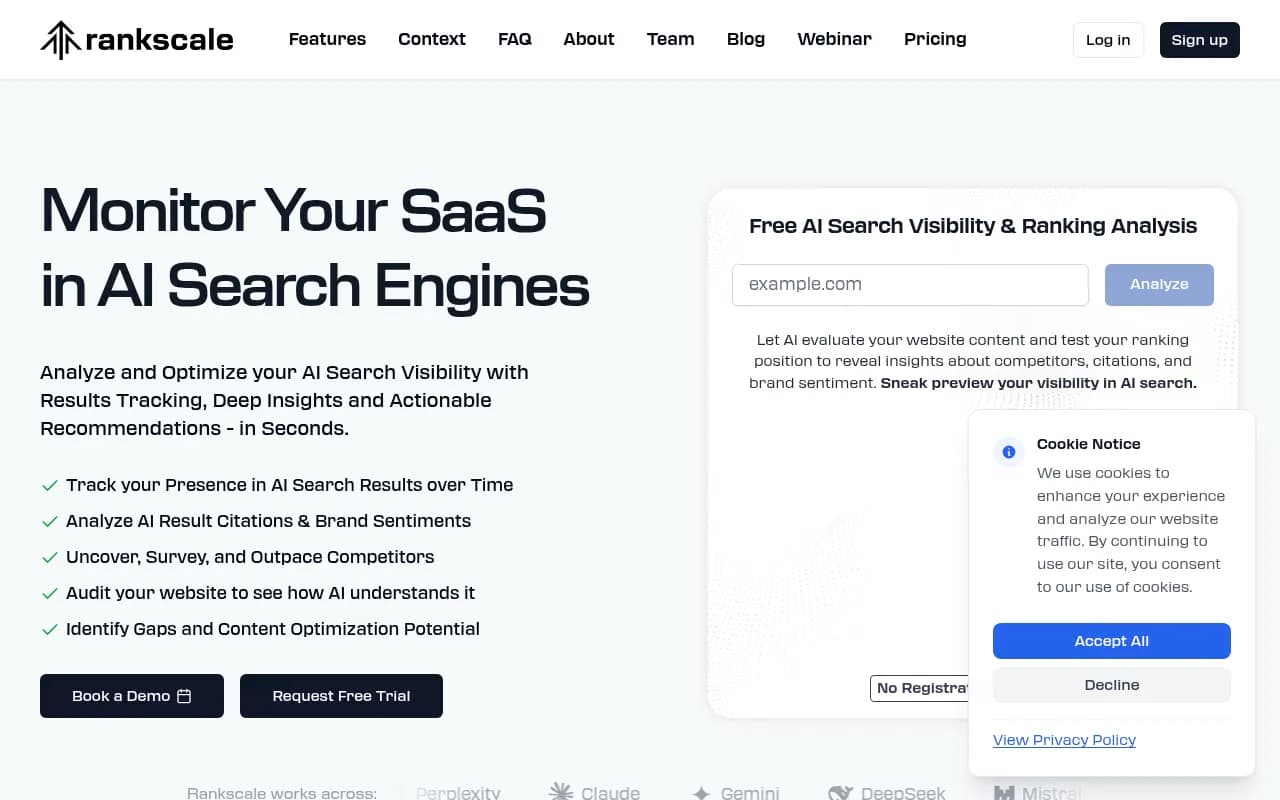
Rankscale is building out prompt-level tracking with difficulty scoring -- useful for prioritizing which gaps to close first.
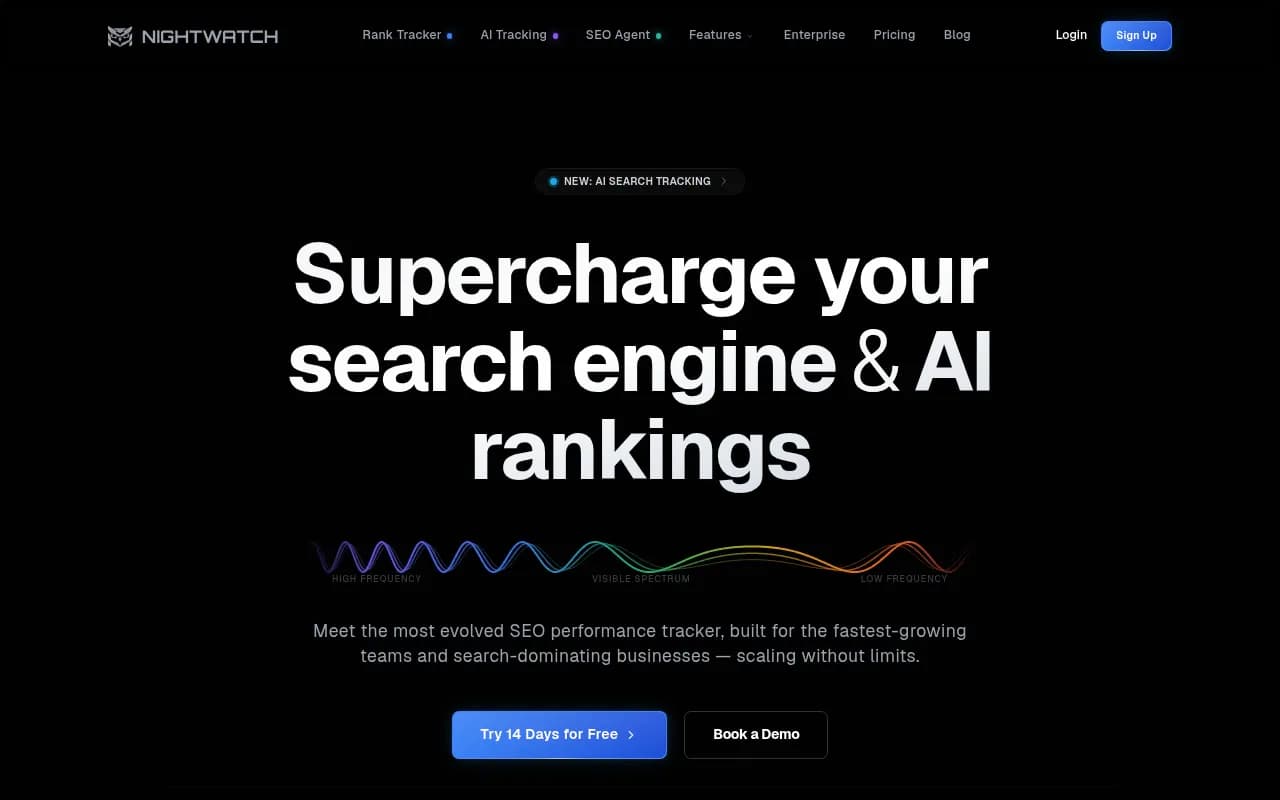
Nightwatch has added AI search monitoring alongside its traditional rank tracking, making it a reasonable option if you want both in one place without paying for two subscriptions.
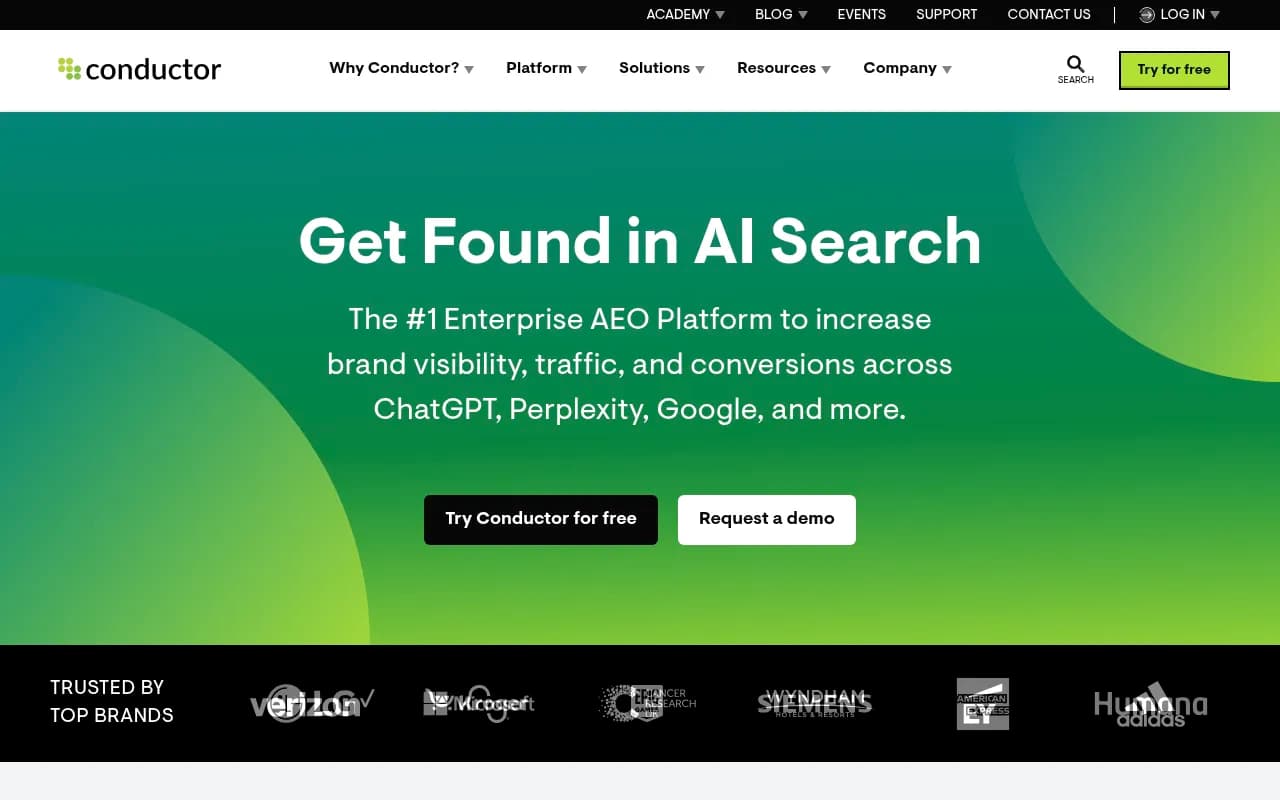
Conductor has persona customization for AI queries -- you can simulate how different user types prompt AI engines, which matters because a CFO asking about "expense management software" gets different answers than a startup founder asking the same question.
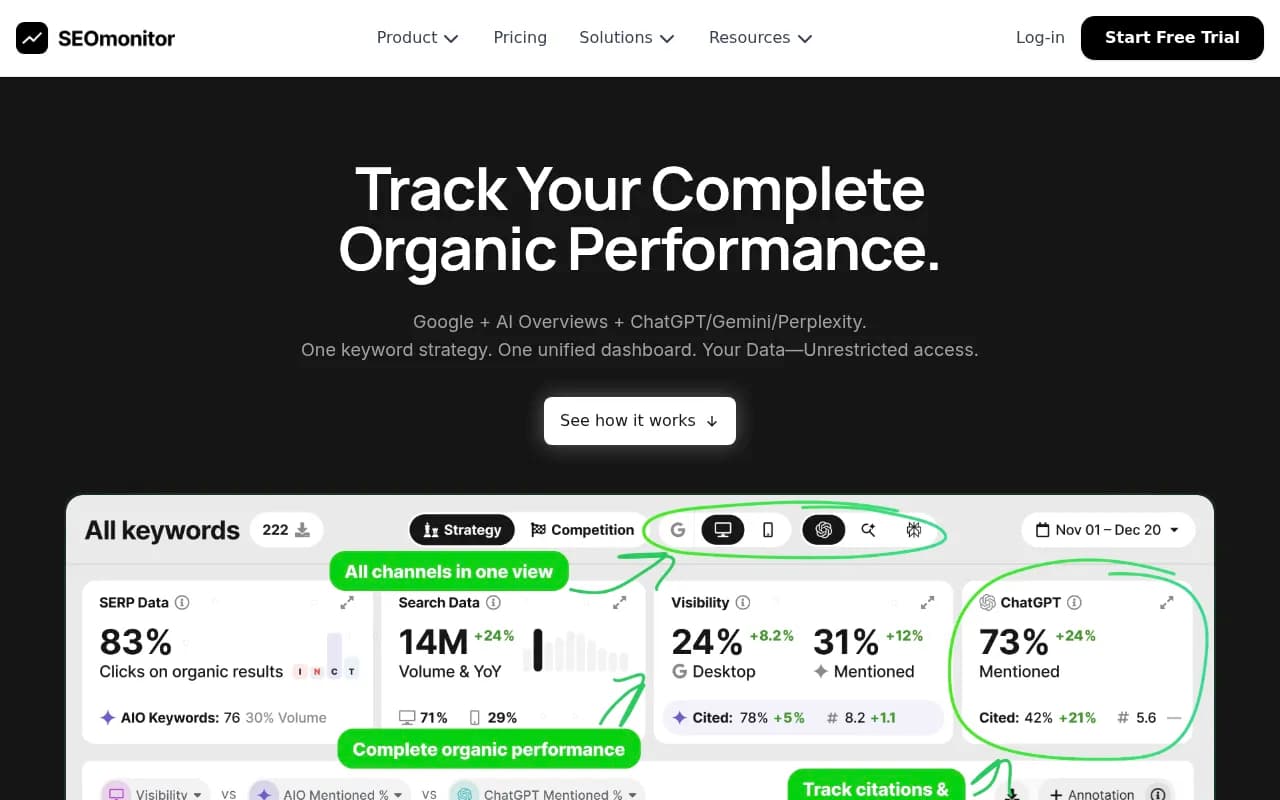
SEOmonitor is worth watching for agencies that need client reporting alongside AI visibility data.
BrightEdge remains the enterprise option for large organizations with existing contracts and complex reporting needs, though its AI tracking depth lags behind purpose-built platforms.
The honest bottom line
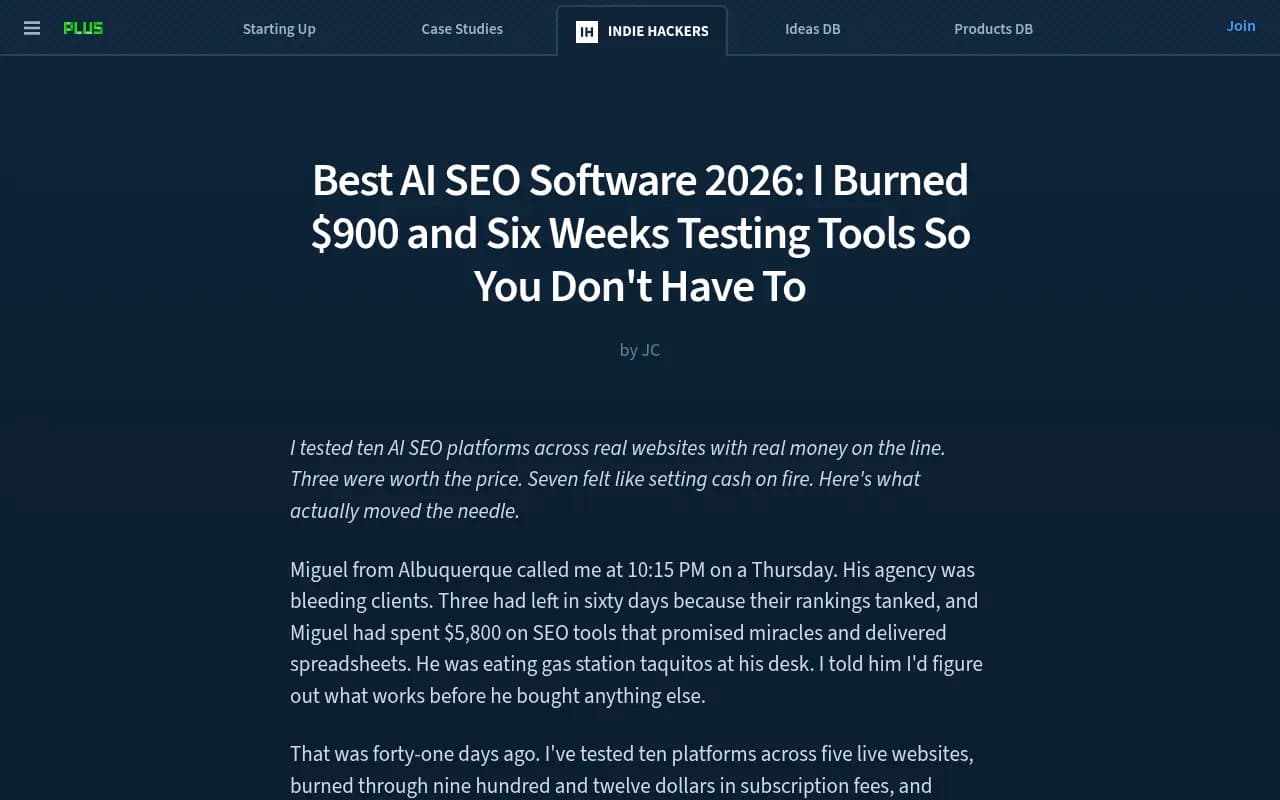
The Indie Hackers review that tested ten platforms with real money on real sites found that most tools "bolted a chatbot onto a 2022 dashboard and called it innovation." That's still accurate for the majority of the market.
The useful filter: does the tool actually query live AI engines and capture what they say? If yes, it's a real AI search tracker. If it's using the phrase "AI-powered" to describe keyword suggestions or content scoring, it's a traditional SEO tool with better marketing.
For most marketing teams in 2026, the practical path is:
- Keep your traditional SEO tool (Semrush, Ahrefs, SE Ranking) for keyword research, backlinks, and technical audits
- Add a dedicated AI visibility platform that actually queries live models and tracks citations
- Prioritize platforms that help you act on what they find, not just report it
The gap between "we can see you're invisible in AI search" and "here's the content that will fix it" is where most tools fall short -- and where the real value is.