Key takeaways
- Query fan-out is the process AI search engines use to decompose one user question into 8-12 parallel sub-queries before generating an answer.
- ChatGPT, Perplexity, and Google AI Mode all do this -- your content needs to answer the sub-queries, not just the surface-level question.
- A Surfer SEO study of 173,902 URLs found that 68% of pages cited in AI Overviews were NOT in the top 10 organic results -- fan-out behavior explains why.
- Traditional keyword research misses most of the retrieval surface. Topical depth and coverage matter more than ranking for a single phrase.
- Tools that expose fan-out data (not just parent prompt tracking) give you a real content roadmap instead of a visibility score.
The thing AI search engines don't tell you they're doing
You type a question into ChatGPT. You get a well-organized answer back. Simple, right?
Not really. Between your question and that answer, something interesting happens that most marketers have no idea about. The model doesn't just look up your exact words. It quietly rewrites your question into a bunch of narrower, more specific searches, runs all of them, reads the results, and then synthesizes everything into a single response.
That process is called query fan-out. And once you understand it, a lot of things about AI search visibility start making sense -- including why your content might rank well in Google but barely show up in ChatGPT.
What query fan-out actually means
The term comes from Google, which used it when introducing AI Mode. The idea is simple: one query "fans out" into many.
When a user asks "what's the best project management tool for remote teams," an AI search engine doesn't go looking for a page with that exact title. Instead, it fires off something like:
- "top project management software 2026"
- "remote team collaboration features comparison"
- "project management pricing tiers"
- "enterprise vs small team PM tools"
- "user reviews project management software"
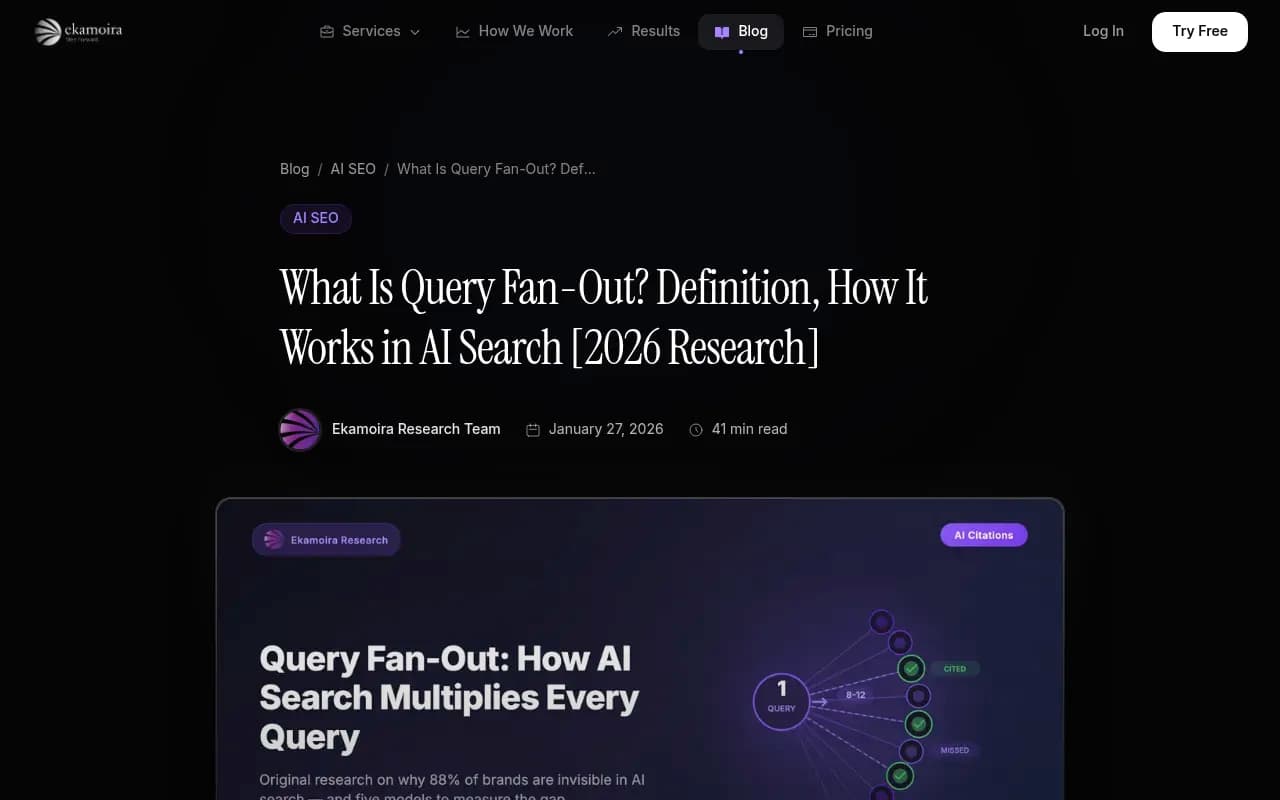
Each of those sub-queries retrieves different pages. The model reads all of them, extracts what's relevant, and writes a synthesized answer. Your content needs to satisfy not the original question, but the 8-12 sub-questions the model generated behind the scenes.
Research from Ekamoira puts the typical fan-out range at 8-12 sub-queries per prompt. That's not a small number. It means a single user question can trigger over a dozen retrieval events across the web.
Why this breaks traditional SEO logic
Here's the uncomfortable truth: ranking well in Google doesn't protect you in AI search.
A December 2025 Surfer SEO study analyzing 173,902 URLs across 10,000 keywords found that 68% of pages cited in AI Overviews were NOT in the top 10 organic results. Ekamoira's own research puts the miss rate even higher -- they estimate brands optimizing only for traditional SEO miss approximately 88% of AI citation opportunities.
The reason is fan-out. Traditional SEO optimizes for one query, one ranking. AI search retrieves across many sub-queries simultaneously. A page that ranks #1 for the parent query might not match any of the sub-queries the model actually fires. Meanwhile, a page buried on page 3 of Google might be a perfect match for one of those sub-queries and end up cited in the AI answer.
This is a fundamental shift, not a minor tweak. The content that gets cited in AI responses is often not the content that ranks highest in traditional search.
How fan-out works across different AI platforms
All retrieval-augmented AI engines do some version of query fan-out, but they handle it differently.
ChatGPT with search is probably the most studied. A LinkedIn analysis of 5 million ChatGPT fan-out queries found that ChatGPT regularly injects modifier terms like "best," "reviews," and "2026" into its sub-queries -- even when the user didn't include those words. So if someone asks "accounting software for freelancers," ChatGPT might actually search for "best accounting software for freelancers 2026" and "accounting software reviews freelancers." That has direct implications for how you write content.
Google AI Mode is where the term originated. Google's system is particularly aggressive about decomposition -- it's designed to assemble a complete answer on the results page, which means it needs to pull from many sources to cover all angles.
Perplexity does a similar thing, breaking questions into narrower retrievals before synthesizing. The exact number of sub-queries varies by question complexity, but the behavior is consistent.
The key point: none of these platforms are searching for your exact prompt. They're all searching for something adjacent to it.
What this means for your content strategy
The practical implication is that topical depth beats keyword targeting.
If you have one page optimized for "best CRM for small business," that page might match the parent query but miss sub-queries about pricing, integrations, ease of use, or comparisons with specific competitors. A competitor with five pages covering those angles -- even if none of them rank #1 -- will likely get cited more often.
A few things worth thinking about:
Cover the angles, not just the topic. For any important topic, ask yourself what sub-questions a curious person would have. What would they search next? What comparisons would they want? What objections would they have? Each of those is a potential sub-query the AI will fire.
Include the modifiers AI engines inject. Since ChatGPT regularly adds "best," "reviews," and year modifiers to sub-queries, content that naturally includes those signals (comparison sections, review-style summaries, explicit year references) tends to match more fan-out sub-queries.
Don't ignore long-tail angles. Sub-queries tend to be narrower and more specific than the parent query. Long-tail content that would have seemed too niche for traditional SEO might be exactly what an AI model retrieves for a sub-query.
Freshness matters more than you think. AI models inject year modifiers frequently. Content that's clearly dated or doesn't reference current context gets filtered out.
The tracking gap most teams don't know about
Here's where things get a bit frustrating for anyone running AI visibility monitoring.
Most AEO and GEO tracking tools -- and there are a lot of them -- monitor the parent prompt. They tell you whether you showed up when someone asked the question you're tracking. That's useful. But it doesn't tell you which sub-queries the model fanned that question into, and it doesn't tell you whether your pages matched any of them.
As one analysis put it: "You optimized for the question. The model retrieved for the sub-questions. Those are not the same documents."
This is why two brands can both "rank" for a tracked prompt and have very different citation rates. The one with better topical coverage across the sub-query space wins more often, even if neither team can see the sub-queries directly.
Tools that expose fan-out data -- showing you the actual sub-queries an AI engine fired for a given prompt -- give you a much more actionable content roadmap. Instead of knowing you're invisible for a prompt, you know exactly which sub-topics you're missing coverage on.
Promptwatch is one platform that surfaces this kind of query fan-out data alongside prompt volume and difficulty scoring, so you can prioritize which gaps are actually worth filling rather than guessing.

Comparing approaches to fan-out visibility
Not all tools handle this the same way. Here's a rough breakdown of what different types of platforms offer:
| Approach | What you see | What you miss | Best for |
|---|---|---|---|
| Parent prompt tracking only | Visibility score per prompt | Sub-query gaps, retrieval path | Brand monitoring |
| Fan-out query exposure | Sub-queries the AI fired | May still miss retrieval context | Content gap analysis |
| Page-level citation tracking | Which pages get cited and how often | Why those pages were chosen | Content optimization |
| Crawler log analysis | When AI bots visit your pages | What they retrieve vs. what they cite | Technical AI SEO |
| Full-stack GEO platform | All of the above in one place | Nothing major | Teams that want to act, not just monitor |
Most tools sit in row one. A few reach row two or three. Platforms that combine all of these give you the clearest picture of what's actually happening.
Here are some tools worth knowing about in this space:



Patterns researchers have found in ChatGPT fan-outs
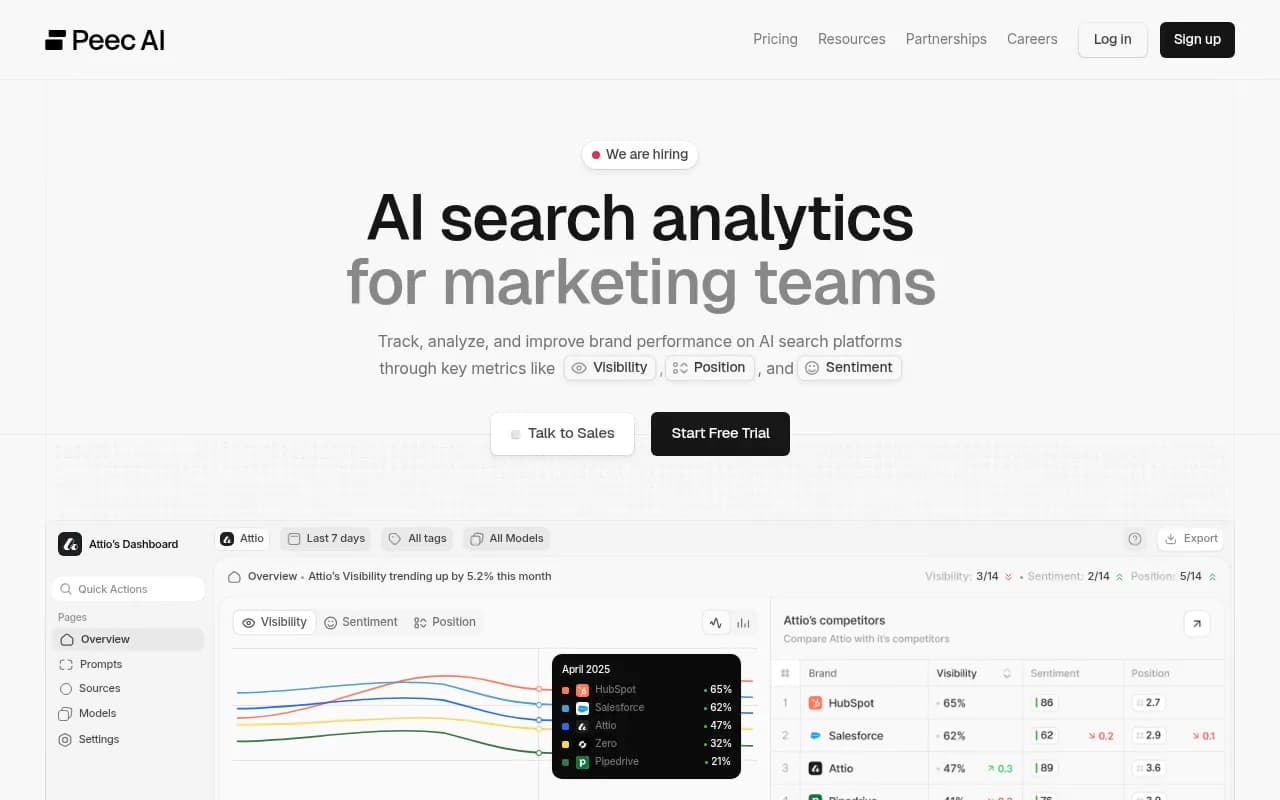
Peec.ai has published some of the most detailed research on fan-out patterns. A few things they've found:
Fan-out queries tend to cluster around a handful of consistent angles: definitions, comparisons, pricing, reviews, and use-case specifics. If your content covers all five of those angles for a topic, you're likely matching more sub-queries than a competitor who only has a single overview page.
The fan-out structure also reveals what AI models think is important about a topic. If every fan-out for "email marketing software" includes a sub-query about deliverability, that's a signal that deliverability content is table stakes for citation in that category -- even if users don't always explicitly ask about it.
This is genuinely useful data. It's not keyword research in the traditional sense. It's more like reading the AI's mind about what a complete answer to a question requires.
A practical checklist for fan-out optimization
If you want to improve your visibility in AI search responses, here's where to start:
- Map your key topics and ask what sub-questions a curious reader would have about each one
- Check whether you have content covering definitions, comparisons, pricing/cost, reviews/opinions, and specific use cases for your most important topics
- Add year references and "best of" framing to relevant pages, since AI engines inject those modifiers frequently
- Look at which pages are actually being cited in AI responses for your target prompts (not just which prompts you rank for)
- Use crawler log data to see when AI bots visit your pages and whether those visits lead to citations
- Identify competitor pages that get cited frequently and analyze what angles they cover that you don't
The last point is where answer gap analysis becomes really valuable. Instead of guessing what sub-queries you're missing, you can see exactly which prompts competitors appear in that you don't -- and work backward to understand what content is driving those citations.
The bigger picture
Query fan-out is one of those concepts that sounds technical but has very practical consequences. It explains why AI search doesn't just reward the highest-ranking pages. It rewards topical completeness.
The brands that will win in AI search over the next few years aren't necessarily the ones with the best single page on a topic. They're the ones with the most thorough coverage across all the angles an AI model might retrieve when decomposing a user's question.
That's a different kind of content strategy than most teams are used to. But once you see how fan-out works, the path forward is pretty clear: stop optimizing for one query, start covering the whole topic space.