Key takeaways
- The GEO platform market in 2026 splits cleanly into two camps: monitoring dashboards that show you data, and optimization platforms that help you act on it.
- Most tools -- including some well-funded ones -- stop at step one: they track where you appear and where you don't, then leave you to figure out what to do next.
- A small group of platforms have built genuine optimization loops: find content gaps, generate AI-optimized content, track results, and attribute traffic back to revenue.
- Choosing the wrong tool means paying for a dashboard you'll eventually outgrow. This report maps the landscape so you can pick based on what you actually need.
- Price is not a reliable proxy for capability. Some expensive platforms are still monitoring-only; some affordable ones have surprisingly deep optimization features.
Why the monitoring vs. optimization distinction matters now
Let's be direct about where we are. ChatGPT has over 800 million weekly active users. Google's AI Mode is no longer a beta experiment -- it's the default experience for a huge share of searches. And the brands that show up in AI answers are capturing attention that used to go to whoever ranked #1 in the blue links.
If you're not tracking your AI visibility, you're flying blind. But here's the thing: just tracking it isn't enough either.
The GEO tool market exploded in 2024 and 2025. Dozens of platforms launched, all promising to tell you how visible your brand is in ChatGPT, Perplexity, Claude, and the rest. Most of them do that reasonably well. The problem is that knowing you're invisible doesn't make you visible. You need to know why you're invisible, what to do about it, and whether your fixes actually worked.
That's the gap that separates monitoring tools from optimization platforms. And in 2026, that gap is the most important thing to understand before you spend money on any of these tools.
How we categorized the platforms
For this report, we evaluated platforms across four dimensions:
- Monitoring depth: How many AI models do they track? How granular is the data (prompt-level, page-level, persona-level)?
- Gap analysis: Can the tool tell you which prompts you're missing and why?
- Content optimization: Does the platform help you create or improve content to win more citations?
- Traffic attribution: Can you connect AI visibility to actual website traffic and revenue?
Based on those dimensions, we sorted platforms into three tiers: full optimization loops, partial optimization, and monitoring-only.
Tier 1: Full optimization loops
These platforms don't just show you the problem -- they help you solve it.
Promptwatch
Promptwatch is the clearest example of what a full optimization loop looks like in practice. It tracks your brand across 10 AI models (ChatGPT, Perplexity, Claude, Gemini, Google AI Overviews, Google AI Mode, Grok, DeepSeek, Copilot, and Meta AI), but the tracking is almost a side effect of the bigger picture.
The core workflow: Answer Gap Analysis surfaces the exact prompts where competitors are visible but you aren't. You see the specific content your site is missing -- the questions AI models want answered that you haven't addressed. Then the built-in AI writing agent generates articles, listicles, and comparisons grounded in 880M+ citations analyzed. This isn't generic content generation -- it's engineered around what actually gets cited. Then page-level tracking shows whether your new content is getting picked up, and traffic attribution (via code snippet, Google Search Console integration, or server log analysis) connects visibility to revenue.
A few things stand out that most competitors don't have: AI crawler logs that show you in real time which pages ChatGPT and Perplexity are reading (and which ones they're ignoring), Reddit and YouTube insights that surface discussions influencing AI recommendations, and ChatGPT Shopping tracking for brands selling products. Prompt volume estimates and difficulty scores let you prioritize which gaps to close first rather than guessing.
Used by 6,700+ brands and agencies including Booking.com and Center Parcs. Pricing starts at $99/month for the Essential tier (1 site, 50 prompts, 5 articles), with Professional at $249/month and Business at $579/month.

Relixir
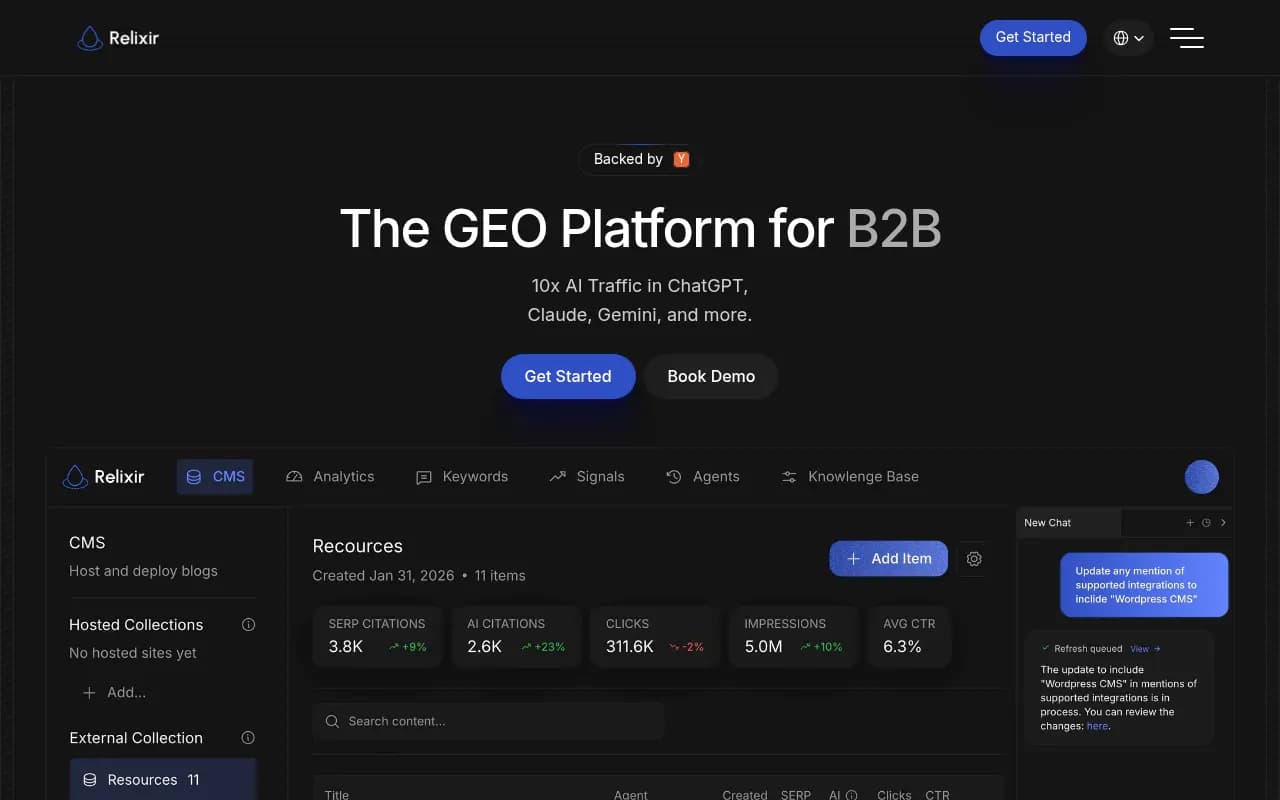
Relixir takes an interesting angle: it's built around an AI-native CMS that autonomously generates and publishes content designed to improve your AI search rankings. The "autonomous" part is both its appeal and its risk -- it moves fast, but you need to be comfortable with the level of automation involved.
Whitebox
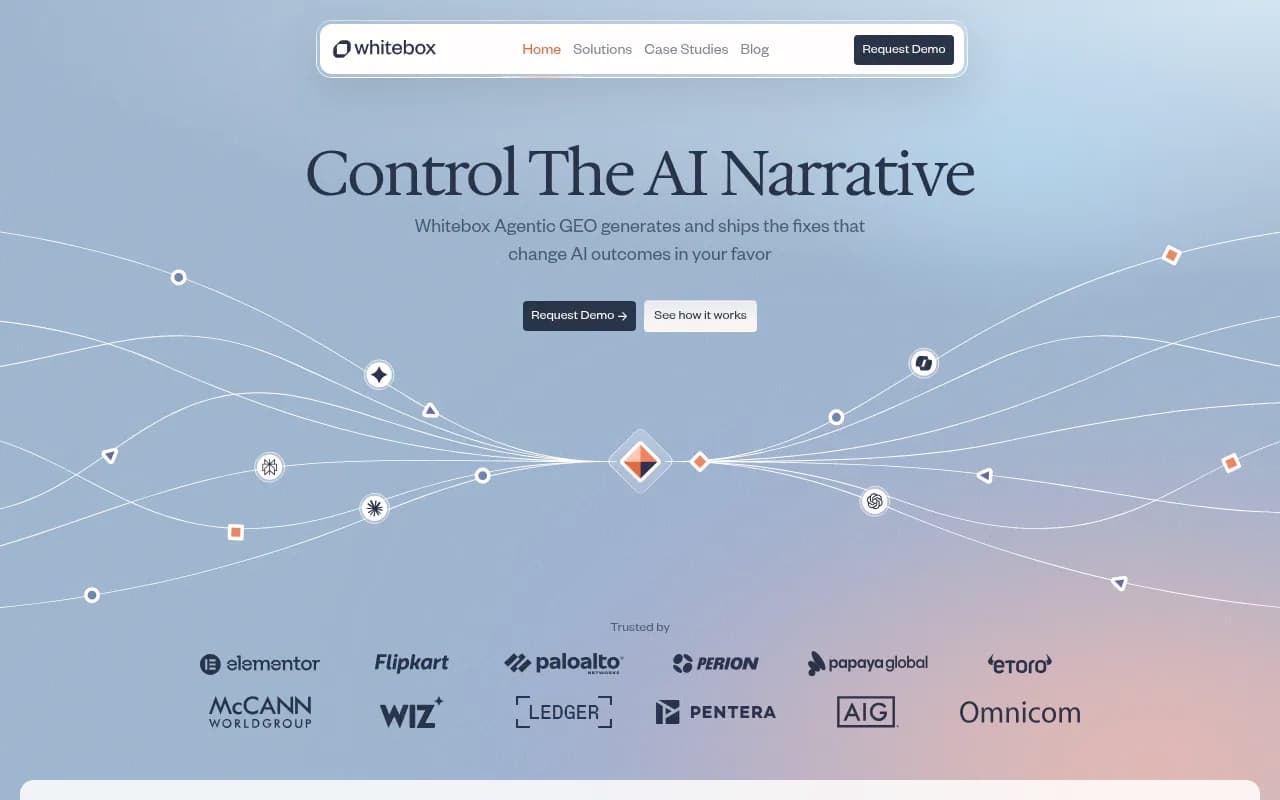
Whitebox describes itself as an "agentic GEO platform" -- it detects narrative gaps in how AI models talk about your brand and automatically generates fixes. The automation is more aggressive than most tools, which suits teams that want to move quickly without a lot of manual content work.
Tier 2: Partial optimization
These platforms go beyond pure monitoring but don't close the full loop. They might offer gap analysis without content generation, or content tools without attribution.
Profound
Profound is one of the more polished enterprise-grade platforms in this space. It covers monitoring across major AI models, competitive analysis, and some content guidance. The reporting is genuinely good -- the kind of thing you can put in front of a CMO. The gap is on the content creation side: Profound tells you what's missing but doesn't help you write it.

AthenaHQ
AthenaHQ tracks visibility across 8+ AI search engines with solid competitive benchmarking. It's monitoring-focused at its core, but it does offer some optimization guidance that pushes it past pure dashboards. The content generation piece is limited compared to full-loop platforms.

Rankscale
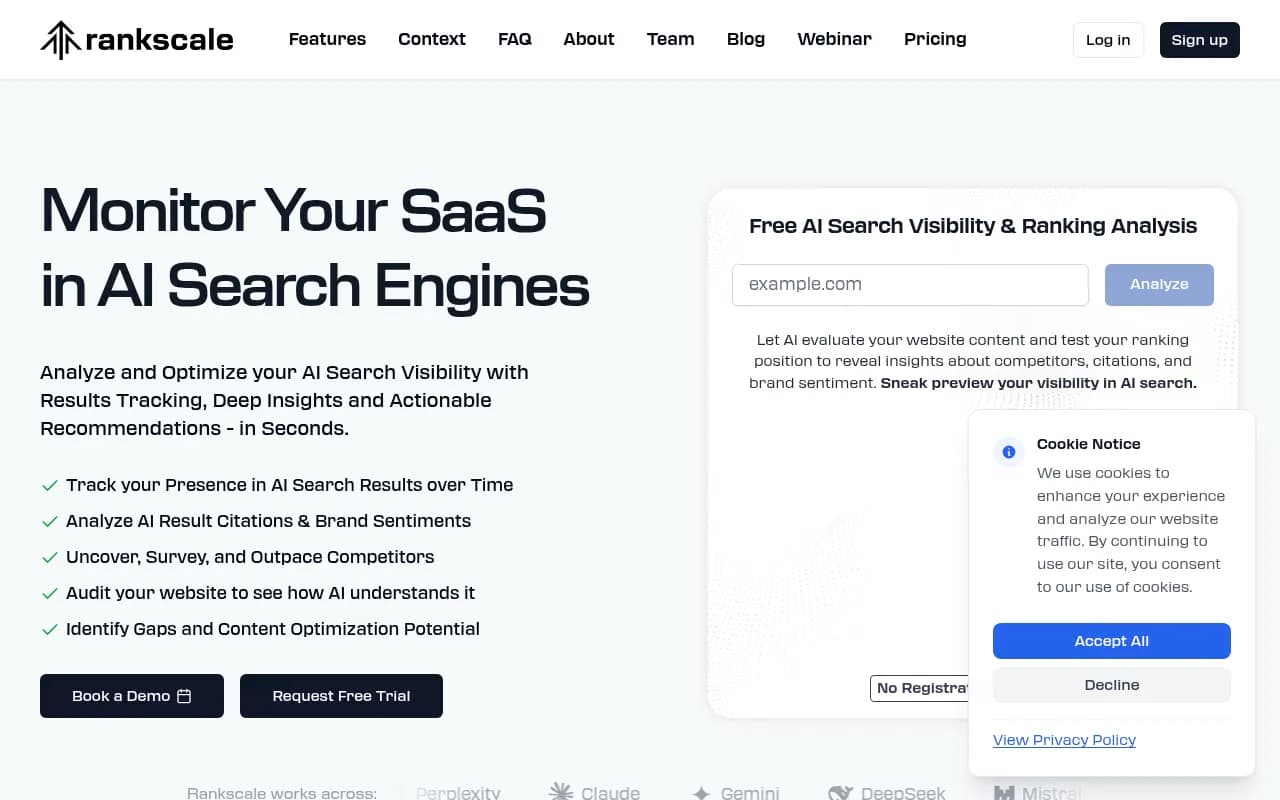
Rankscale has built a clean interface around AI search ranking data with some actionable recommendations layered on top. It's a step up from pure monitoring but stops short of generating content or attributing traffic.
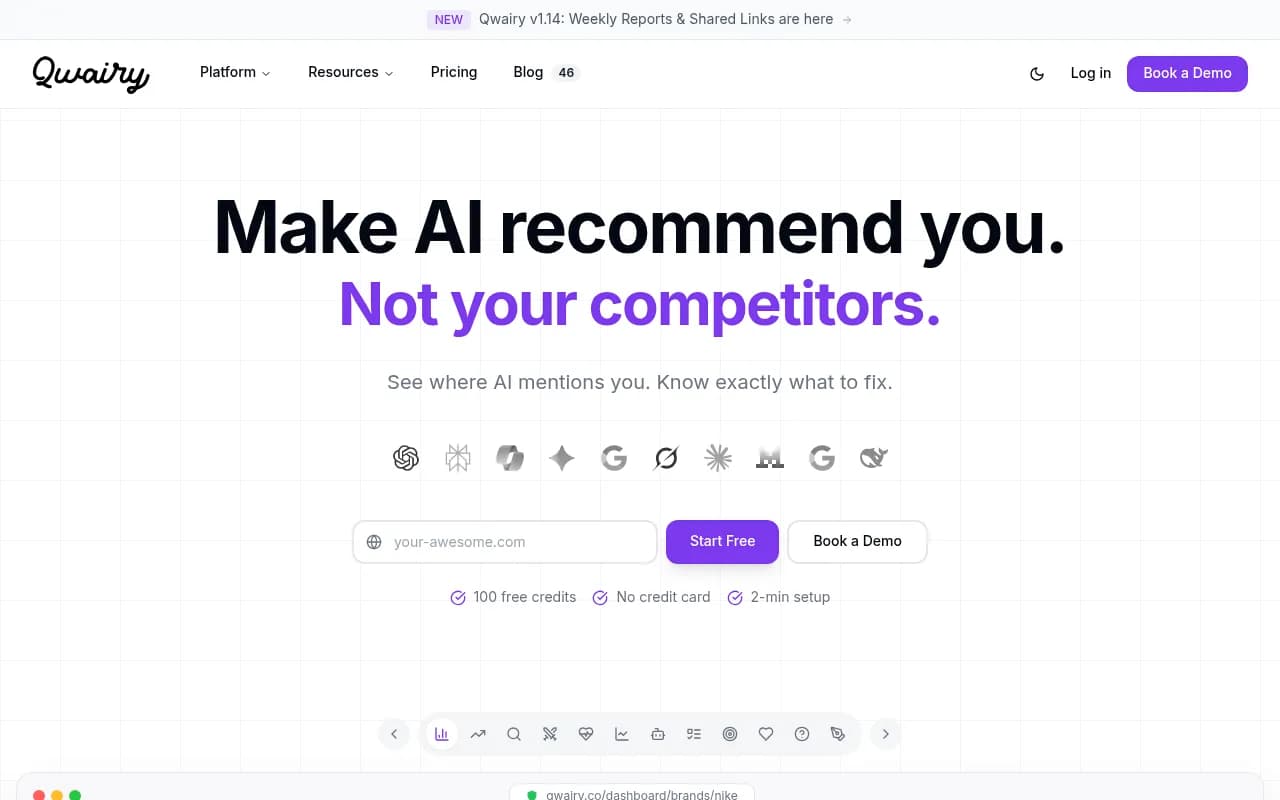
Qwairy
Qwairy positions itself as a GEO strategy platform, which means it leans into the "what should I do" question more than most. Strategy recommendations are present, but execution support (content generation, attribution) is limited.
Atomic AGI
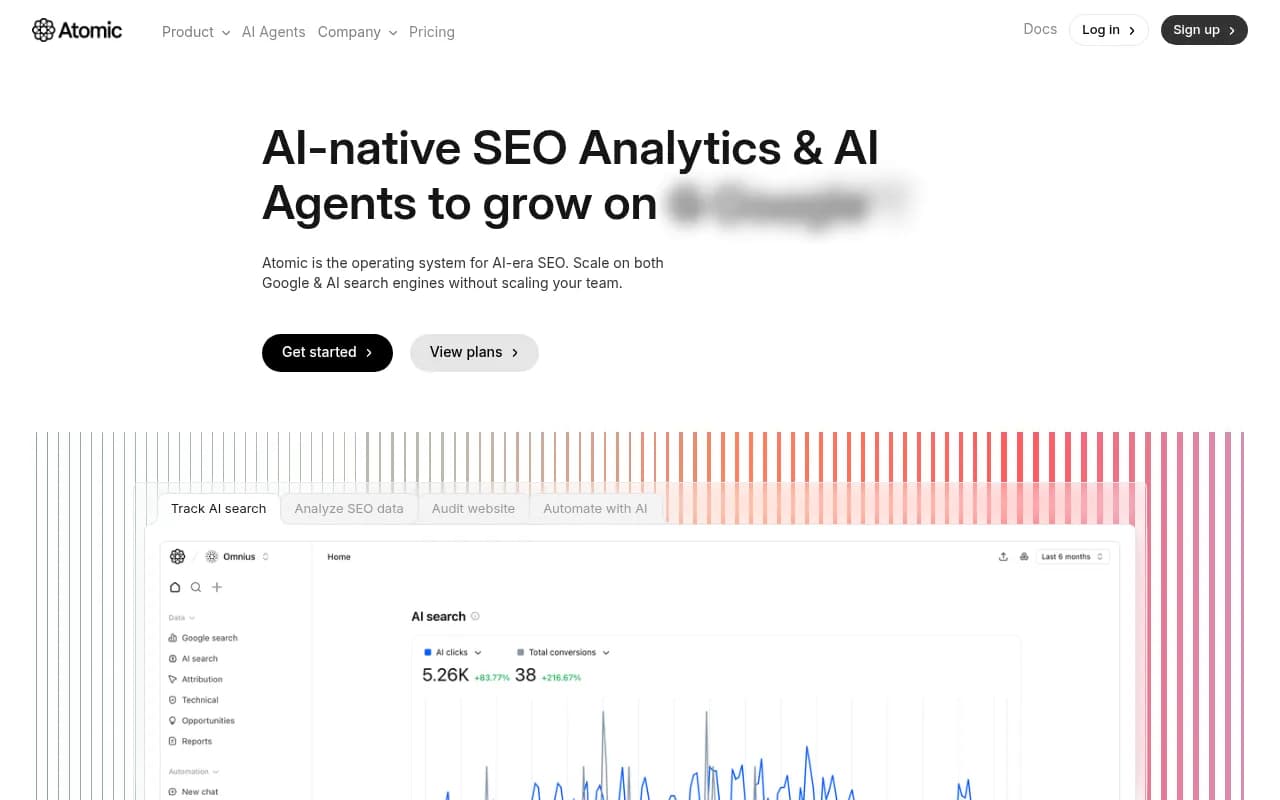
Atomic AGI tracks both Google and LLMs in a single platform and has some automated content optimization features. It's a hybrid SEO/GEO tool, which is useful if you're managing both channels and don't want two separate platforms.
Tier 3: Monitoring-only
These tools do one thing: show you where your brand appears (or doesn't) in AI responses. That's genuinely useful -- you need to know the baseline before you can improve it. But if you're looking for a platform that helps you act, these aren't it.
Otterly.AI
Otterly is one of the most affordable options in the market and has a clean, approachable interface. Good for teams that are just starting to track AI visibility and want something simple. No crawler logs, no content generation, no attribution.

Peec AI
Peec AI has strong multi-language tracking, which makes it genuinely useful for international brands. A case study on their blog reported a roughly 10x improvement in AI search visibility for one customer, though the methodology behind that number is worth scrutinizing. Core functionality is monitoring with some smart suggestions, but no content generation.

SE Visible
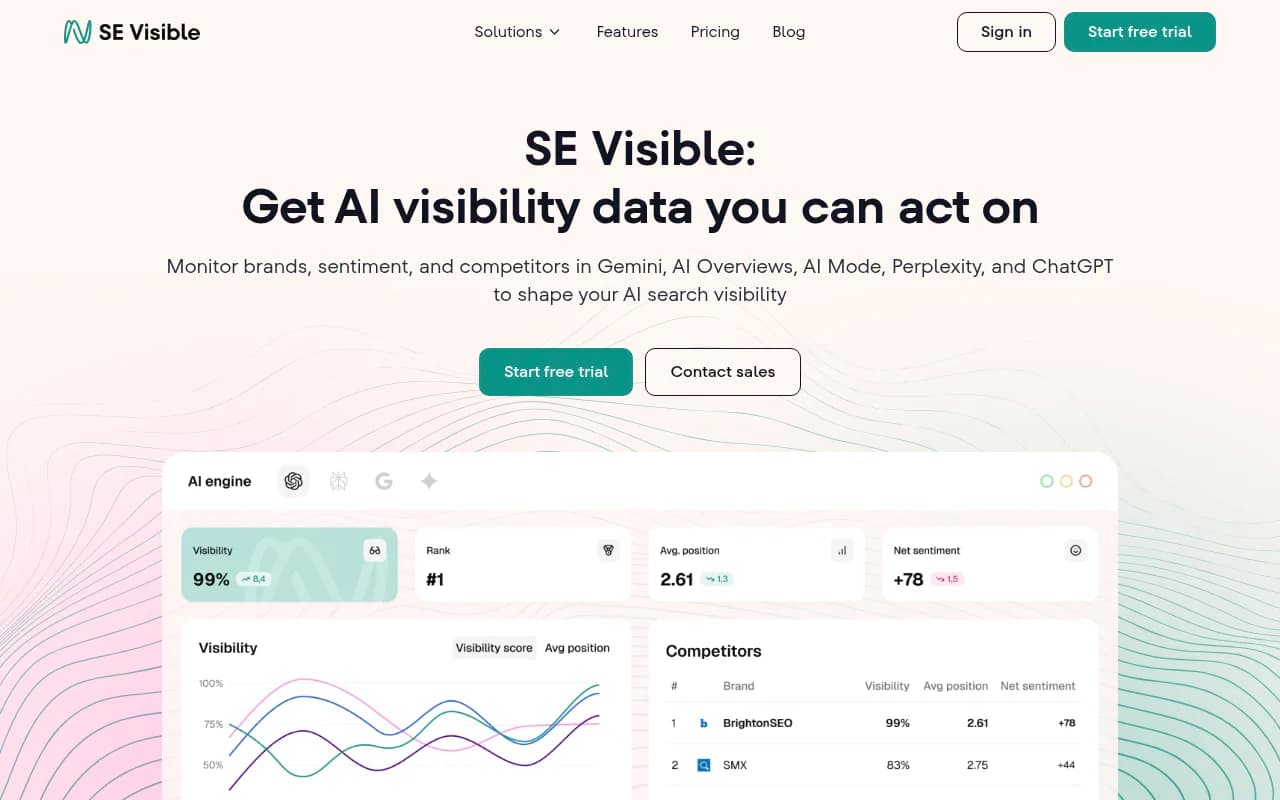
SE Ranking's AI visibility module (SE Visible) benefits from being part of a broader SEO platform. If you're already an SE Ranking customer, it's a reasonable way to add AI monitoring without a separate subscription. Standalone, it's limited.
Brandlight
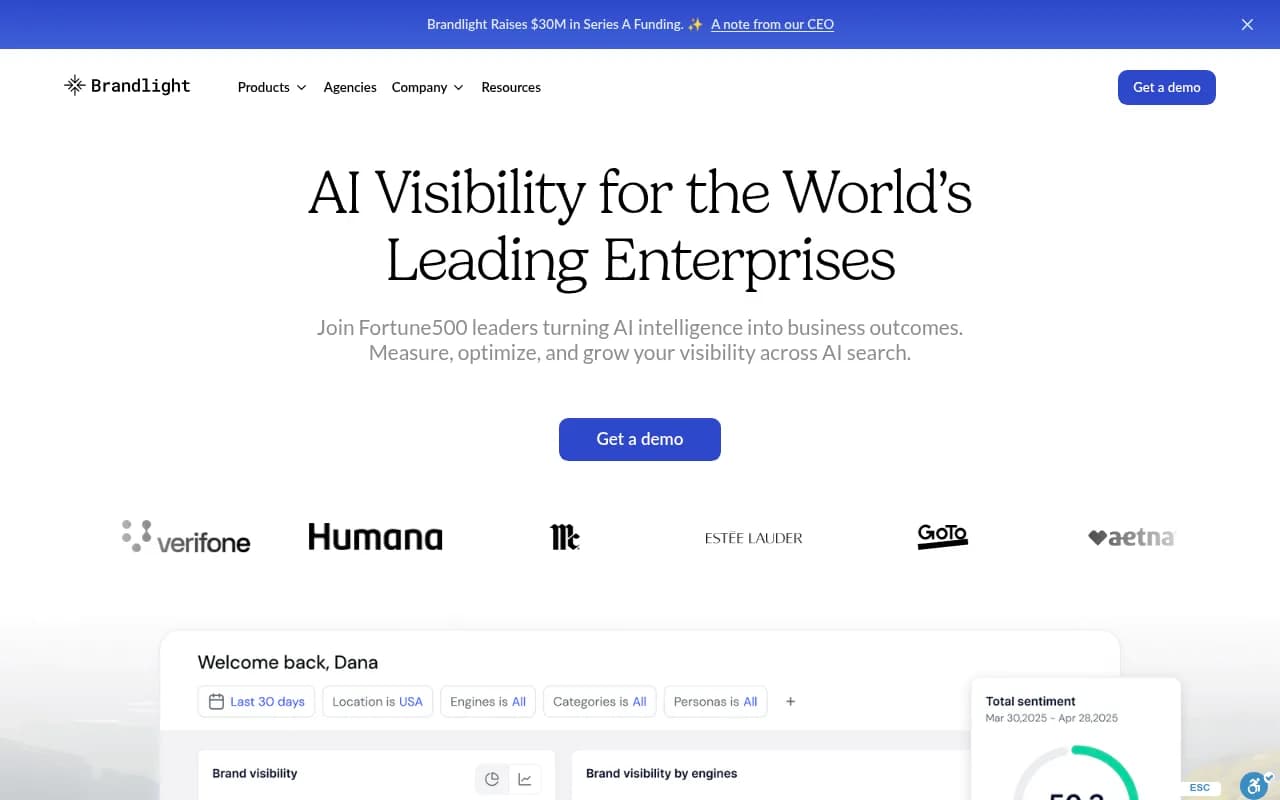
Brandlight focuses on brand visibility tracking with a clean dashboard. Monitoring-oriented with limited optimization features.
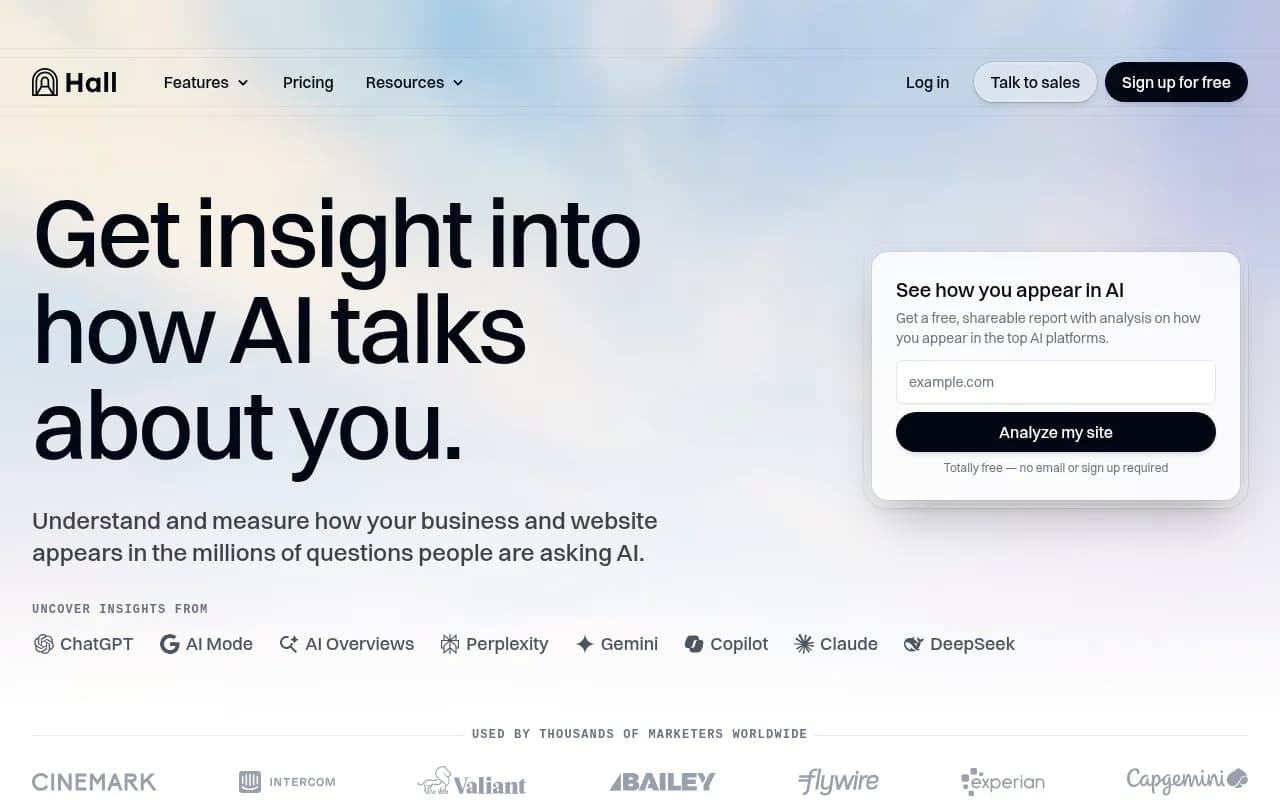
Hall AI
Hall AI tracks how AI platforms cite and discuss your brand with a focus on citation analysis. Useful for understanding your citation profile, but stops there.
Peasy
Peasy is a lightweight real-time AI performance tracker. Good for quick checks, not built for deep optimization workflows.
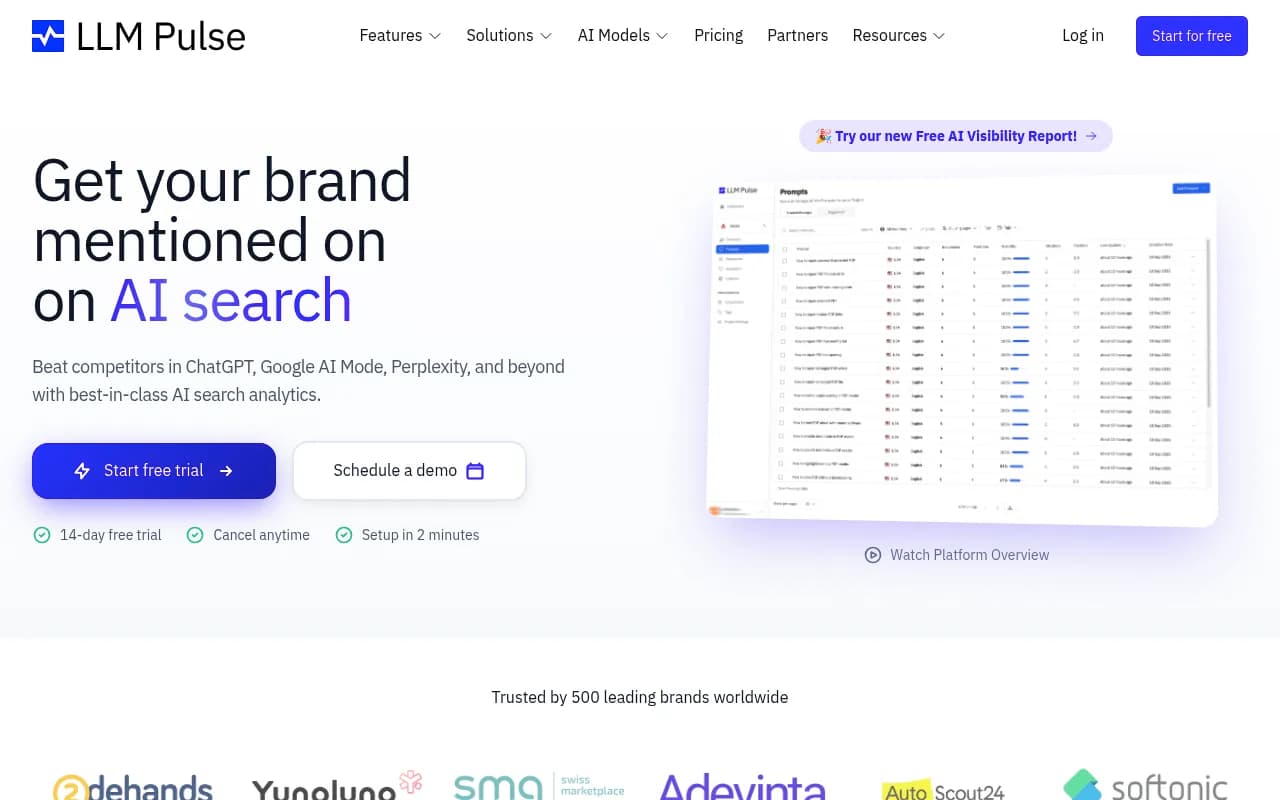
LLM Pulse
LLM Pulse covers comprehensive LLM response tracking across multiple models. Solid monitoring breadth, limited optimization depth.
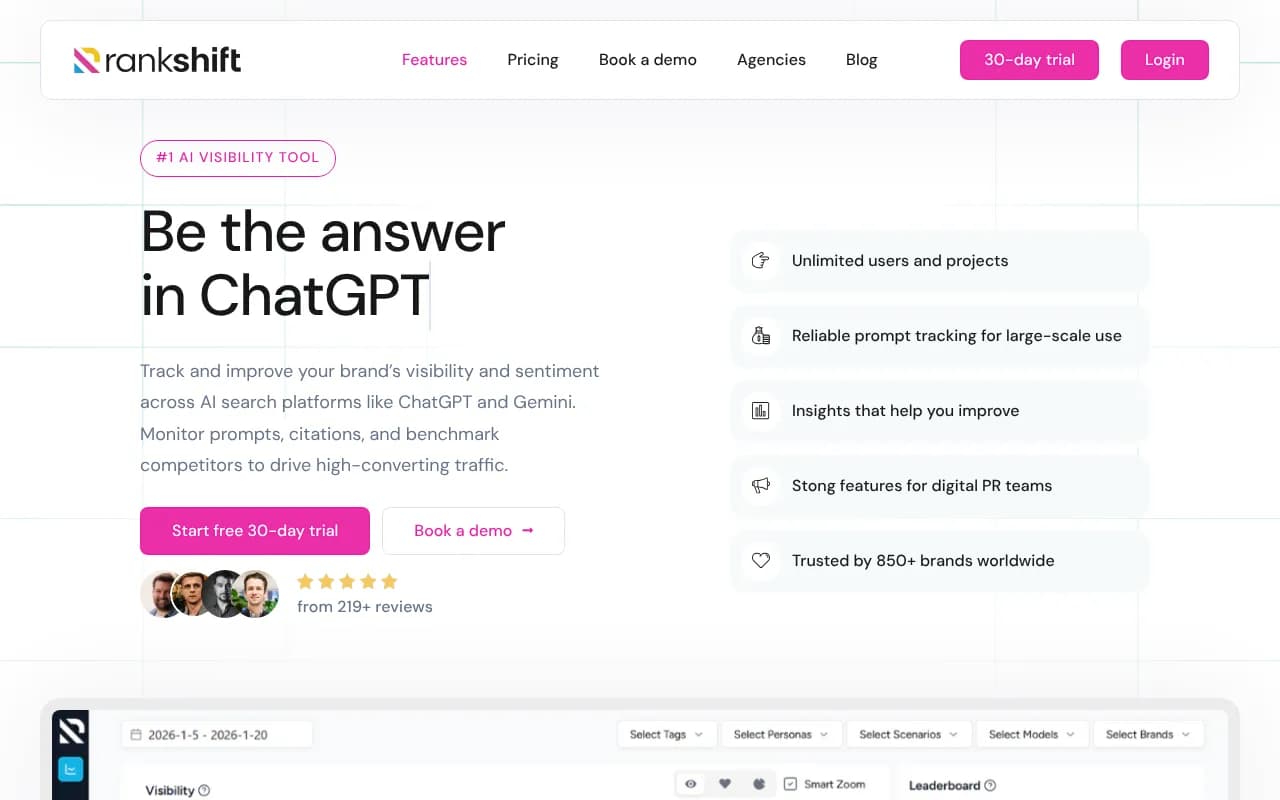
Rankshift
Rankshift is a focused LLM tracking tool with GEO-specific metrics. Clean data, no content tools.
The full comparison
| Platform | Models tracked | Gap analysis | Content generation | Traffic attribution | Crawler logs | Best for |
|---|---|---|---|---|---|---|
| Promptwatch | 10 | Yes (Answer Gap Analysis) | Yes (AI writing agent) | Yes (GSC, snippet, logs) | Yes | Full optimization loop |
| Relixir | 5+ | Yes | Yes (autonomous CMS) | Partial | No | Automated content publishing |
| Whitebox | 4+ | Yes | Yes (agentic fixes) | No | No | Fast narrative correction |
| Profound | 6+ | Partial | No | No | No | Enterprise reporting |
| AthenaHQ | 8+ | Partial | No | No | No | Competitive benchmarking |
| Rankscale | 4+ | Partial | No | No | No | Ranking data with guidance |
| Atomic AGI | Google + LLMs | Partial | Partial | No | No | SEO/GEO hybrid |
| Otterly.AI | 5+ | No | No | No | No | Affordable monitoring |
| Peec AI | 5+ | No | No | No | No | Multi-language tracking |
| SE Visible | 4+ | No | No | No | No | SE Ranking add-on |
| Brandlight | 4+ | No | No | No | No | Brand monitoring |
| Hall AI | 4+ | No | No | No | No | Citation analysis |
| LLM Pulse | 5+ | No | No | No | No | Response tracking |
What "monitoring-only" actually costs you
There's a tempting logic to starting with a monitoring tool: get the data first, figure out what to do with it later. The problem is that "later" tends to stretch indefinitely. You end up with a dashboard full of visibility scores and no clear path to improving them.
The real cost isn't the subscription fee -- it's the time spent manually trying to interpret data that wasn't designed to be actionable. Which prompts should you prioritize? What content should you create? How do you know if your content changes are working? Monitoring tools leave those questions unanswered.
The platforms in Tier 1 are built around the assumption that data without action is just overhead. That's the right framing for 2026.
How to choose the right tier for your situation
Not everyone needs a full optimization platform on day one. Here's a rough framework:
Start with monitoring if:
- You're just beginning to understand your AI visibility baseline
- You have a small budget and want to validate the channel before investing more
- You have a dedicated content team that can act on gap data without in-platform tools
Move to partial optimization if:
- You have clear visibility gaps but need help prioritizing which ones to close
- You're managing competitive intelligence for stakeholders and need strong reporting
- You're an agency that needs to show clients where they stand before pitching optimization work
Invest in a full optimization loop if:
- You're actively trying to grow AI search traffic, not just measure it
- You want to connect visibility improvements to revenue (not just impressions)
- You're running content at scale and need AI-assisted generation grounded in citation data
- You need to understand how AI crawlers are actually reading your site
The honest answer is that most teams eventually outgrow monitoring-only tools. The question is whether you want to pay for the upgrade later or start with a platform that scales with you.
A note on legacy SEO tools entering the GEO space
Semrush and Ahrefs both have AI visibility features now. Semrush's AI monitoring uses fixed prompts rather than your own custom prompt set, which limits how useful it is for specific brand tracking. Ahrefs Brand Radar has a similar constraint -- fixed prompts, no AI traffic attribution.
These tools are worth knowing about if you're already paying for them and want a rough sense of your AI visibility. But they're not purpose-built for GEO, and it shows. The depth of monitoring, the gap analysis capabilities, and anything resembling content optimization just isn't there yet.
The tools worth watching
A few platforms didn't fit neatly into the tiers above but are worth keeping an eye on:
ZipTie has built a reputation for deep analysis and detailed reporting. It's not a full optimization loop, but the analysis quality is genuinely strong.
Conductor offers persona customization in its AI visibility tracking, which is useful for brands with distinct customer segments that prompt differently.
GetCito is a newer entrant with both tracking and optimization features that are developing quickly.
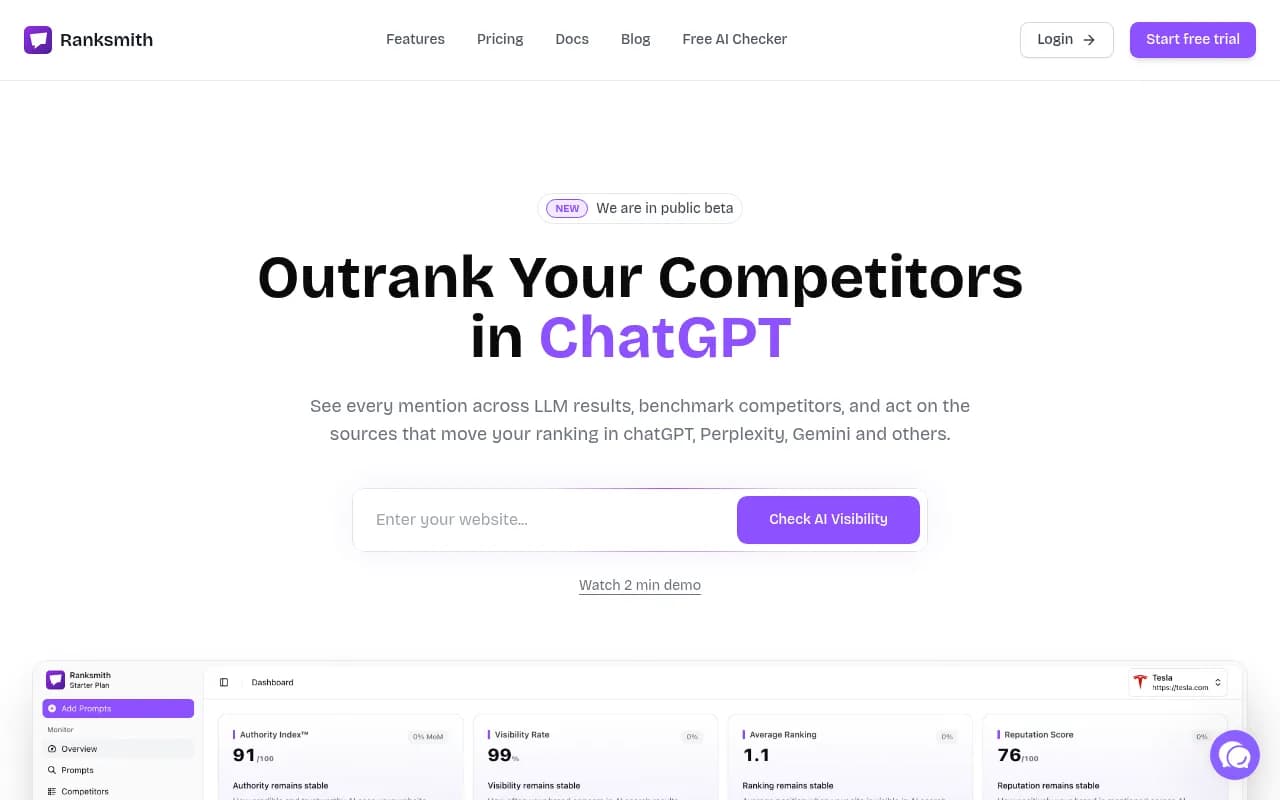
Ranksmith focuses on actionable insights rather than raw data, which puts it in an interesting middle ground.
The bottom line
The GEO platform market in 2026 is not short on options. What it's short on is platforms that actually help you do something with what you find.
Most tools will show you a visibility score. Fewer will show you exactly which prompts you're losing. Almost none will help you write the content to win those prompts back, track whether it worked, and connect the whole thing to revenue.
That gap between monitoring and optimization is where the real value lives. The platforms that have closed that loop -- and Promptwatch is the clearest example -- are operating in a different category than the dashboards that came before them. If you're serious about AI search visibility in 2026, that's the category worth investing in.