Key takeaways
- Goodie is a solid entry-level tool for tracking brand mentions across a handful of AI engines, but it lacks content optimization, AI crawler logs, and traffic attribution.
- Most Goodie alternatives fall into two camps: monitoring-only dashboards (Otterly.AI, Peec AI, AthenaHQ) and full optimization platforms (Promptwatch, Profound, Scrunch AI).
- If you want to do something with the data -- fix gaps, create content, track revenue -- you need a platform that goes beyond monitoring.
- Promptwatch is the only platform in this comparison rated as a "Leader" across all categories in a 2026 review of 12 GEO tools, largely because it closes the loop from gap analysis to content creation to traffic attribution.
- Budget matters: options range from free tiers to $99/mo entry plans all the way up to enterprise custom pricing.
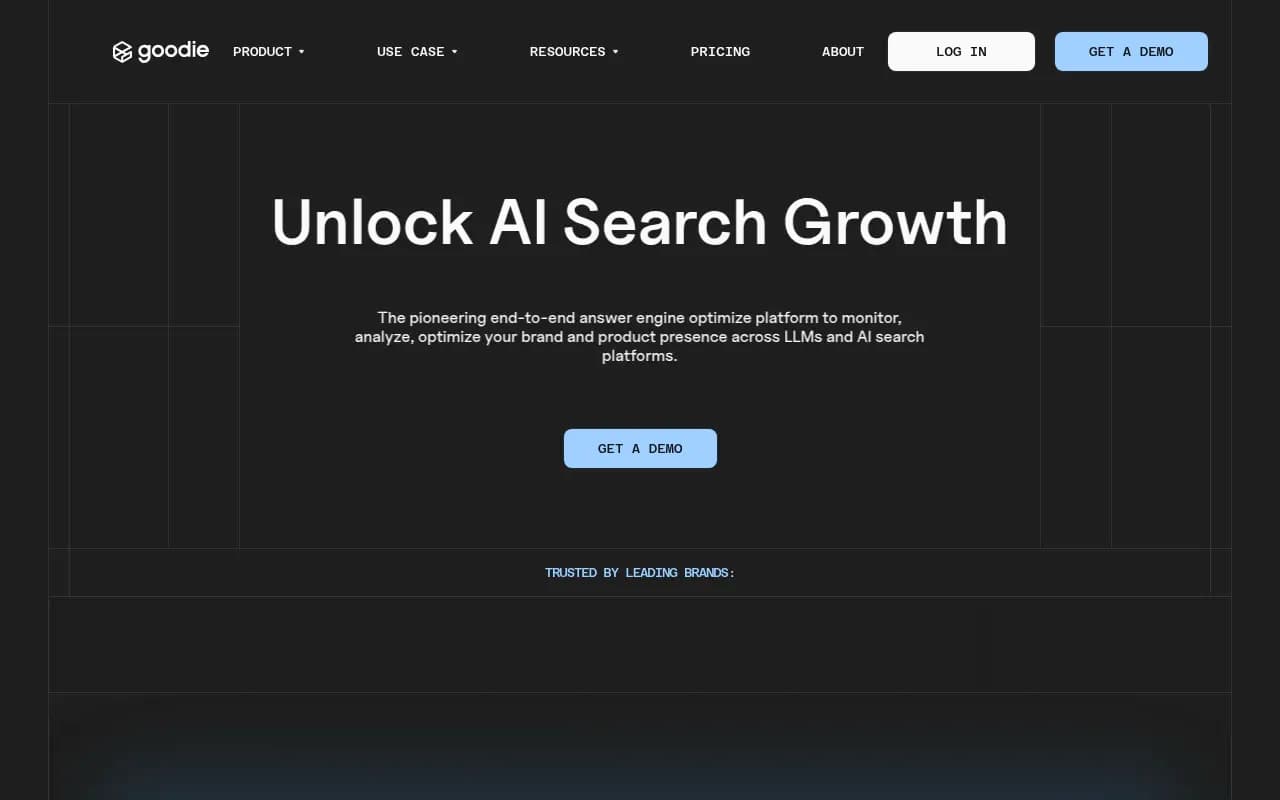
Goodie does what it says on the tin. You connect your brand, set up some prompts, and it tells you when ChatGPT, Perplexity, or Gemini mention you. For a lot of teams just waking up to AI search visibility, that's a useful starting point.
But at some point -- usually after a few weeks of staring at a dashboard -- you start asking harder questions. Why aren't we showing up for these prompts? What content do we need to create? Which pages are AI crawlers actually reading? Is any of this driving real traffic?
That's where Goodie runs short. And that's why this guide exists.
What to look for in a Goodie alternative
Before jumping into the list, it's worth being clear about what separates a useful tool from a monitoring-only dashboard.
The best AI visibility platforms in 2026 do at least some of the following:
- Track brand mentions across multiple AI engines (ChatGPT, Perplexity, Claude, Gemini, Google AI Overviews, etc.)
- Show you where competitors are visible and you're not -- the actual content gaps
- Help you create or optimize content to close those gaps
- Log AI crawler activity so you know which pages are being read and which are being ignored
- Connect visibility data to actual traffic and revenue
Most tools handle the first point. Very few handle all five. Keep that in mind as you read through the options below.
The best Goodie alternatives in 2026
Promptwatch -- best for brands that want to act on the data
Promptwatch is the most complete platform in this category. The core idea is an "action loop": find the prompts where competitors are visible and you're not, generate content engineered to get cited by AI models, then track whether your visibility actually improves.

What makes it different from most alternatives is the content generation layer. The built-in AI writing agent creates articles and comparisons grounded in real citation data -- not generic SEO filler, but content built around what AI models actually want to cite. That's backed by over 880 million citations analyzed across the platform.
It also has AI crawler logs, which almost no competitor offers. You can see exactly which pages ChatGPT, Claude, and Perplexity are crawling, how often they return, and what errors they're hitting. That's the kind of data that turns a vague "we're not showing up" problem into a fixable technical issue.
Monitoring covers 10 AI engines: ChatGPT, Perplexity, Google AI Overviews, Google AI Mode, Claude, Gemini, Meta/Llama, DeepSeek, Grok, and Mistral. Pricing starts at $99/mo for the Essential plan (1 site, 50 prompts, 5 articles/month), with Professional at $249/mo and Business at $579/mo. A free trial is available.
Used by 6,700+ brands and agencies including Booking.com and Center Parcs.
Otterly.AI -- best for budget-conscious teams starting out
Otterly.AI is consistently mentioned as the most accessible entry point in this category. Pricing is lower than most competitors, the interface is clean, and it covers the major AI engines without overwhelming you with features you don't need yet.

The tradeoff is that it's primarily a monitoring tool. You'll see where your brand appears (or doesn't), but Otterly won't tell you what to do about it. No content generation, no crawler logs, no traffic attribution. For teams just getting started with AI visibility tracking, that's often fine. For teams that want to optimize, it's a ceiling.
Profound -- best for agencies managing multiple clients
Profound has built a strong reputation among marketing agencies. Its agency mode includes brand configurations, pitch environments, and client management tools that most platforms don't bother with. The feature set is genuinely strong -- prompt volumes, answer engine insights, agent analytics -- and it's one of the few platforms that takes the agency workflow seriously.
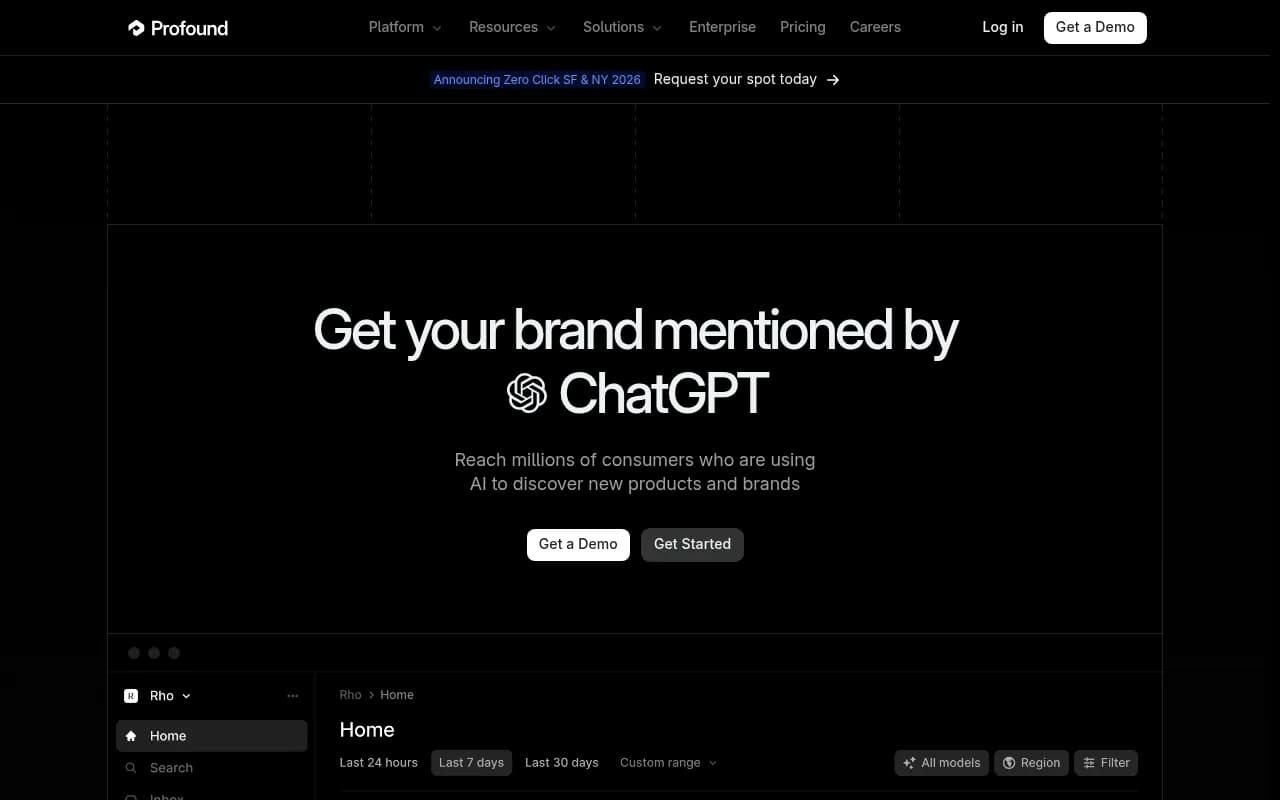
The main friction points are price (it's positioned at the higher end of the market) and the fact that it doesn't have Reddit tracking or ChatGPT Shopping monitoring. For pure agency use cases, it's hard to beat. For in-house teams, the pricing may be harder to justify.
Peec AI -- best for multi-language monitoring
If your brand operates across multiple languages and regions, Peec AI is worth a look. It handles multi-language AI visibility tracking better than most tools in this space, and it includes smart suggestions for improving visibility.

Like Otterly, it's primarily a monitoring platform. The suggestions are useful but don't extend to actual content generation. Still, for international brands that need coverage beyond English-language AI responses, it fills a real gap.
AthenaHQ -- best for tracking 8+ AI engines in one place
AthenaHQ covers more AI engines than most tools -- 8+ at last count -- and the interface is clean and well-organized. It's a solid monitoring platform for teams that need breadth of coverage.
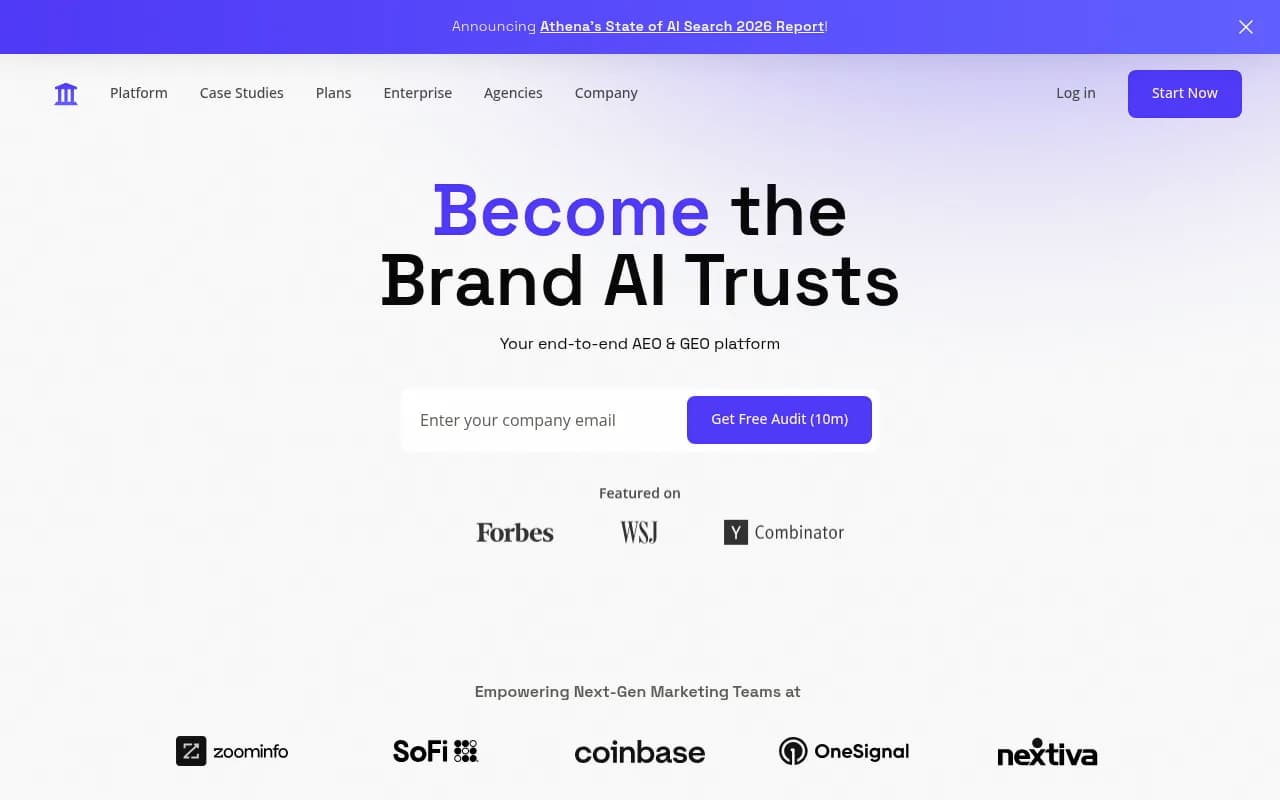
The limitation is the same as most monitoring-only tools: it shows you data but doesn't help you act on it. No content optimization, no crawler logs, no traffic attribution. If you're primarily trying to understand where you stand across AI engines, AthenaHQ does that well.
Scrunch AI -- best for automated prompt tracking at scale
Scrunch AI takes an interesting approach: it automatically tracks 1,000 industry-specific prompts rather than requiring you to manually define every query. For brands in crowded categories with lots of relevant prompts, that automation saves significant setup time.
It also analyzes your brand and suggests prompts to improve visibility, which is more proactive than pure monitoring tools. The feature set is narrower than Promptwatch or Profound, but for teams that want broad coverage without manual configuration, it's a practical choice.
SE Ranking -- best for teams that want SEO + AI visibility in one place
SE Ranking is primarily an SEO platform, but it's added a solid AI visibility toolkit that covers the major AI engines. If your team is already using SE Ranking for traditional SEO work, the AI visibility features are a natural extension rather than a separate tool to manage.
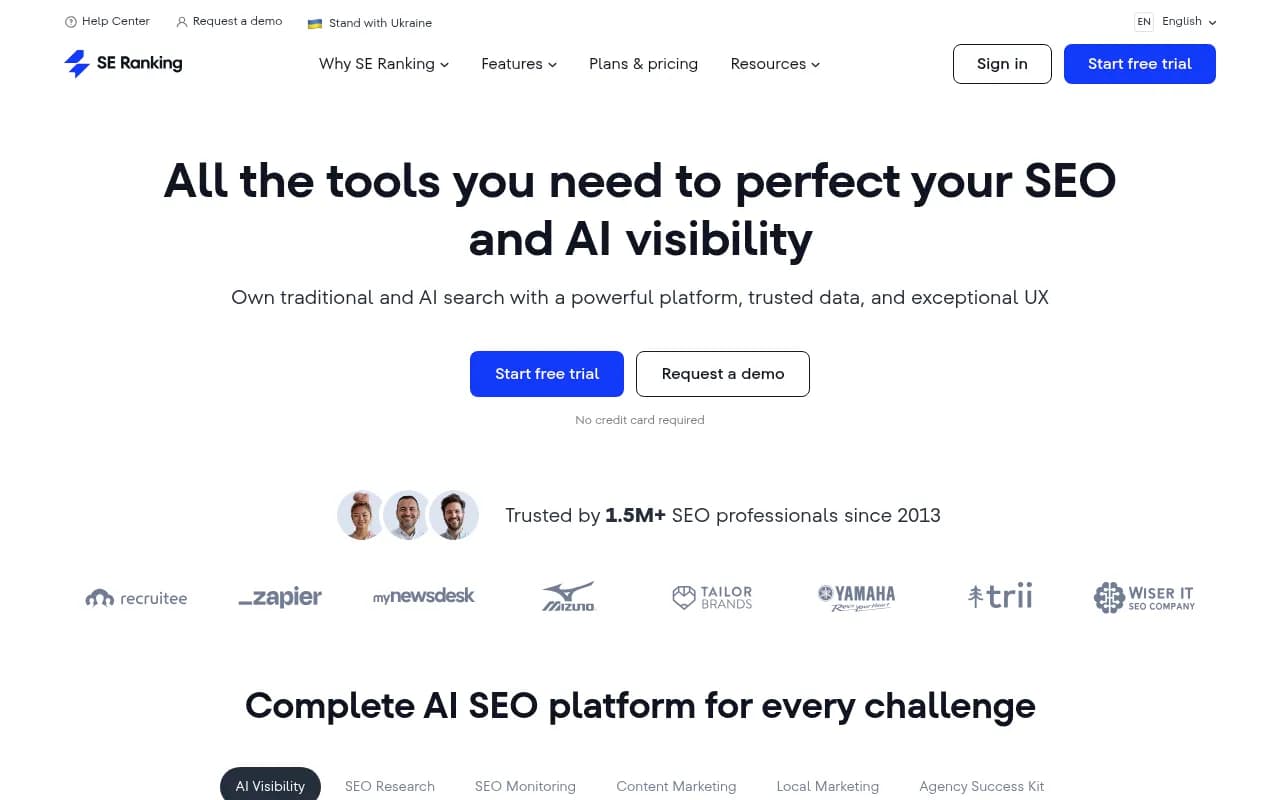
The depth of AI-specific features isn't as strong as dedicated GEO platforms, but the integration with keyword research, site auditing, and rank tracking makes it a sensible choice for teams that don't want to manage multiple subscriptions.
Ranksmith -- best for actionable insights without the complexity
Ranksmith focuses on making AI visibility data actionable for teams that don't have dedicated GEO specialists. The interface is designed to surface clear recommendations rather than raw data, which makes it easier to hand off to content or marketing teams.
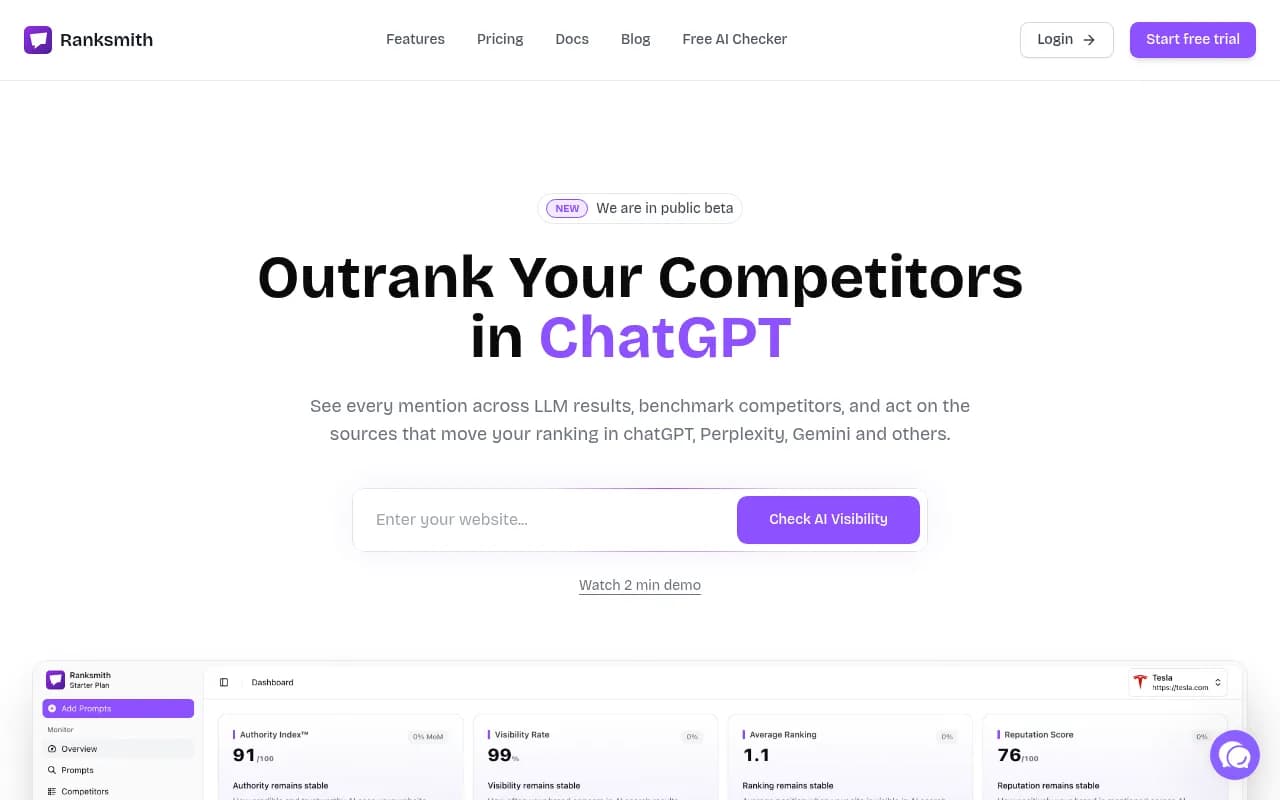
It's a newer platform and the feature set is still maturing, but for smaller teams that want clear direction without a steep learning curve, it's worth evaluating.
Side-by-side comparison
| Tool | AI engines monitored | Content generation | Crawler logs | Traffic attribution | Best for | Starting price |
|---|---|---|---|---|---|---|
| Promptwatch | 10 | Yes (AI writing agent) | Yes | Yes (GSC, code snippet, logs) | Full optimization loop | $99/mo |
| Goodie | 3 (ChatGPT, Perplexity, Gemini) | No | No | No | Basic brand tracking | Free tier available |
| Otterly.AI | Multiple | No | No | No | Budget monitoring | Low |
| Profound | Multiple | Limited | No | No | Agency workflows | Higher end |
| Peec AI | Multiple | No | No | No | Multi-language monitoring | Mid-range |
| AthenaHQ | 8+ | No | No | No | Broad engine coverage | Mid-range |
| Scrunch AI | Multiple | Suggestions only | No | No | Automated prompt tracking | Mid-range |
| SE Ranking | Multiple | No | No | No | SEO + AI visibility combo | $44/mo |
| Ranksmith | Multiple | Limited | No | No | Actionable insights | Low-mid |
How to choose the right tool
The honest answer is that it depends on where you are in your AI visibility journey.
If you're just starting out and want to understand whether your brand shows up in AI answers at all, Goodie or Otterly.AI will get you there quickly and cheaply. There's no shame in starting simple.
If you're past the "do we show up?" question and into "why don't we show up, and what do we do about it?" -- that's where monitoring-only tools hit their limit. You need something that can identify content gaps, help you create content that AI models will actually cite, and track whether your changes are working. That's the Promptwatch use case, and it's a meaningfully different product category.
For agencies managing multiple clients, Profound's agency mode is genuinely well-designed. The client management features alone justify the price for teams running GEO services at scale.
For international brands, Peec AI's multi-language support is hard to replicate elsewhere.
One thing worth noting: the AI visibility tool market has exploded in the last 18 months. A 2025 report from Nobori.ai found that B2B companies tracking AI search visibility jumped from 8% to 47% in a single year. That growth has brought a lot of new tools to market, and not all of them are mature products. When evaluating any tool in this space, check whether it's doing real-time queries to AI engines or relying on cached/simulated data -- the difference matters significantly for accuracy.
The monitoring vs. optimization gap
This is the thing most reviews of AI visibility tools don't say clearly enough: there's a fundamental difference between tools that show you data and tools that help you change your situation.
Most tools in this category -- including Goodie -- are monitoring dashboards. They're useful for understanding where you stand. But if your brand isn't showing up in AI answers, a dashboard that confirms that fact doesn't solve the problem.
The tools that actually move the needle are the ones that can tell you specifically which content is missing, help you create it, and then verify that the new content is getting cited. That's a much harder product to build, which is why most platforms haven't done it.
If you're evaluating tools right now, the most useful question to ask any vendor is: "After I see my visibility score, what does your platform help me do next?" The answer will tell you immediately whether you're looking at a monitoring tool or an optimization platform.
Final recommendation
For most brands that have outgrown Goodie, Promptwatch is the most complete option in 2026. It's the only platform in this space that covers the full loop from gap analysis to content creation to traffic attribution, and the crawler logs feature alone is something most competitors simply don't have.
That said, "most complete" doesn't always mean "right for you." If budget is the primary constraint, Otterly.AI is a reasonable step up from Goodie without a significant price jump. If you're an agency, Profound's client management tools are worth the premium. If you need multi-language coverage, Peec AI fills that gap specifically.
The worst outcome is staying with a monitoring-only tool while your competitors are actively optimizing their AI search presence. The category is moving fast -- brands that figure out the content side of AI visibility now will have a meaningful head start over those that treat it as a reporting exercise.