Key takeaways
- Goodie AI is a capable AEO platform, but its enterprise-leaning pricing and onboarding friction make it a poor fit for small teams with limited budgets
- The best alternatives for small teams combine affordable entry pricing, fast setup (under 10 minutes), and at least basic monitoring across multiple AI engines
- Most tools in this space are monitoring-only -- they show you where you're invisible but don't help you fix it; a handful go further with content gap analysis and optimization
- Promptwatch is the standout option if you want to move from tracking to actually improving your AI visibility, with plans starting at $99/month
- For teams that just want simple, cheap monitoring, Otterly.AI and Peec AI are solid starting points
Small teams have a specific problem with AI visibility tools: most of the good ones are built for enterprise. Custom pricing, sales calls before you can even see a demo, onboarding that takes weeks. Meanwhile, your brand is either showing up in ChatGPT and Perplexity answers or it isn't, and you'd like to know which.
Goodie AI sits in an awkward middle ground. It has a content writer, visibility tracking, and decent dashboards -- but the pricing skews toward mid-market and enterprise teams, and multiple users report friction getting started. If you're a team of two to five people trying to understand your AI search presence without burning a month's budget on a single tool, Goodie probably isn't your first call.
This guide covers the alternatives that actually work for small teams: tools with transparent pricing, fast setup, and enough depth to be useful beyond week one.
Why small teams struggle with most AI visibility tools
The AI visibility category is still young, which means pricing and product maturity vary wildly. A few patterns keep coming up when small teams evaluate these tools:
Opaque pricing. A lot of platforms hide their pricing behind "contact sales" pages. That's fine for enterprise buyers with procurement teams, but it's a dead end for a three-person marketing team that needs to know if something fits in a $200/month budget before getting on a call.
Onboarding that assumes a dedicated ops person. Some tools require custom integrations, tag manager setup, or lengthy configuration before you see any data. Small teams don't have someone to own that.
Monitoring without action. The most common complaint across this category: the tool shows you a dashboard of where you're invisible, then leaves you there. No guidance on what to do next, no content tools, no prioritization. That's fine as a starting point but gets frustrating fast.
Coverage gaps. Some cheaper tools only monitor two or three AI engines. If you care about ChatGPT, Perplexity, and Google AI Overviews -- which together represent the majority of AI search traffic -- you need at least those three covered.
The tools below address at least some of these problems. None are perfect, but each has a clear reason to exist for a small team.
The best Goodie alternatives for small teams in 2026
Promptwatch -- best for teams that want to act, not just track
Promptwatch is the most complete option in this list. It monitors 10 AI engines (ChatGPT, Perplexity, Claude, Gemini, Google AI Overviews, Google AI Mode, Grok, DeepSeek, Copilot, Mistral), but the real differentiator is what happens after you see the data.
The Answer Gap Analysis shows you exactly which prompts your competitors are appearing for that you're not. You see the specific topics and questions AI models want to answer but can't find on your site. Then the built-in AI writing agent generates content -- articles, listicles, comparisons -- grounded in citation data from over 880 million citations analyzed. It's not generic SEO filler; it's content designed to get cited by AI models.
For small teams, the Essential plan at $99/month covers one site, 50 prompts, and 5 articles per month. That's enough to get meaningful data and start producing content without a huge commitment. Setup is straightforward: add your domain, define your prompts, and you're seeing data within minutes.
The crawler logs feature (available on Professional at $249/month) is genuinely useful -- it shows which AI crawlers are visiting your site, which pages they're reading, and any errors they're hitting. Most competitors don't have this at all.

Otterly.AI -- best for simple, affordable monitoring
Otterly.AI is consistently recommended as the entry-level option in this category, and for good reason. The pricing is accessible, setup takes a few minutes, and user satisfaction scores are among the highest in the category according to ZipTie.dev's 2026 review of AI visibility tools.
It covers the major AI engines and gives you brand mention tracking, sentiment analysis, and basic competitive comparisons. What it doesn't do is help you act on any of that data -- no content tools, no gap analysis, no crawler insights. But if you're at the stage where you just need to know whether you're showing up, Otterly is a reasonable place to start.

Peec AI -- best for fast setup and European teams
Peec AI gets points for onboarding speed. According to ContentMonk's head-to-head comparison, setup takes about three minutes and requires no credit card for the trial. The interface is clean, citation tracking works reliably, and unlimited seats mean you're not paying per user.
The ceiling is real, though. All standard plans cover only three AI models. If you need broader coverage, you're into custom pricing territory. And like most tools in this tier, it's monitoring-only -- no content creation, no SEO features, no traffic attribution. It's a good starting point for European teams (strong GDPR compliance, multi-language support) but you'll likely outgrow it.

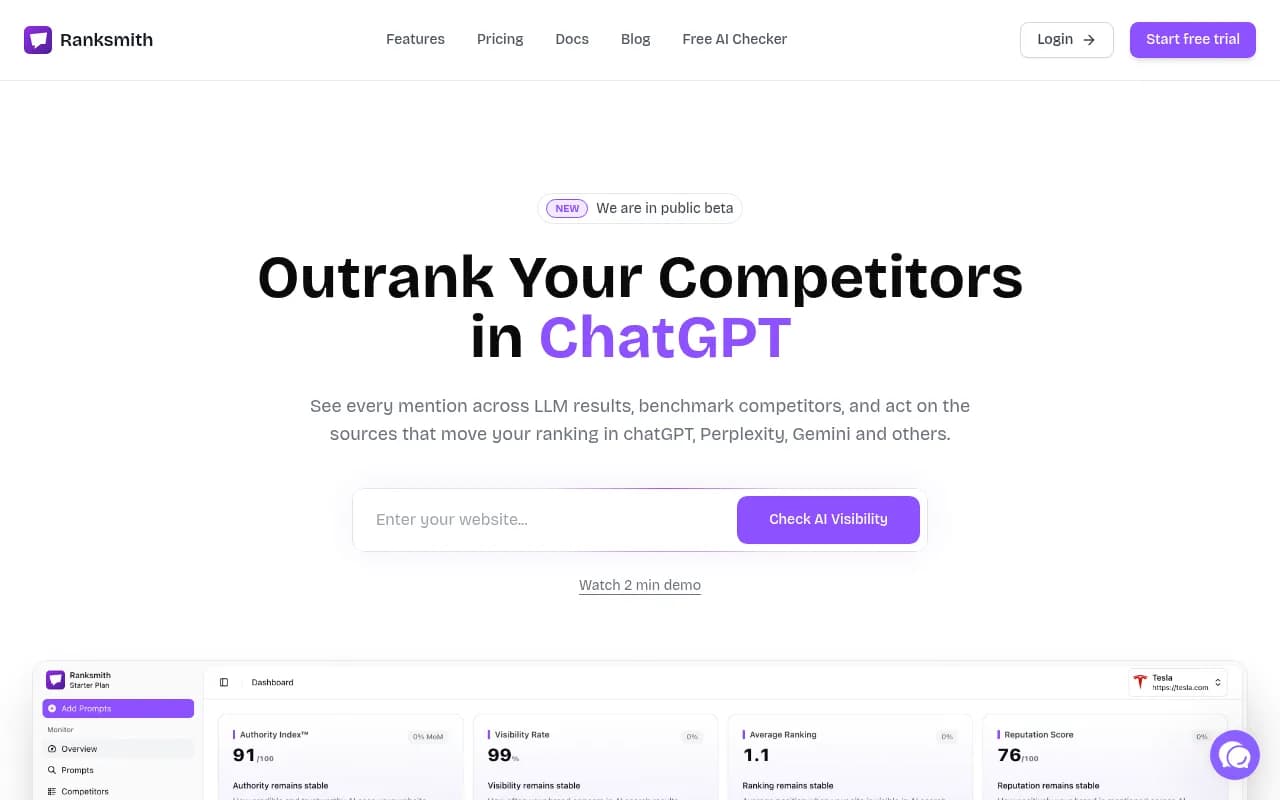
Ranksmith -- best for actionable insights without the complexity
Ranksmith focuses on turning AI visibility data into specific, prioritized recommendations. Rather than presenting a wall of metrics, it surfaces what to fix and roughly how to fix it. For a small team without a dedicated SEO analyst, that framing is genuinely useful.
Coverage is solid across the main AI engines, and the interface is designed for people who aren't data scientists. Pricing is more accessible than enterprise tools like Profound or Conductor.
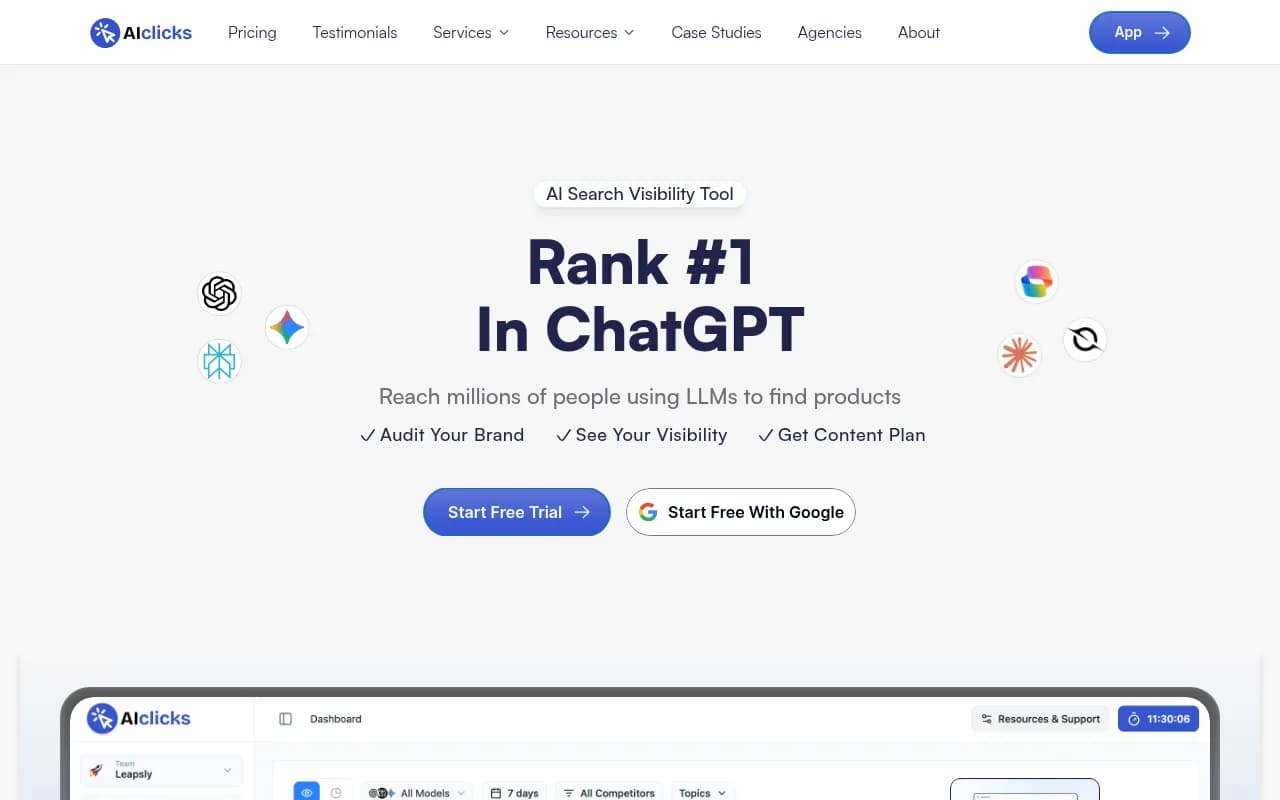
AIClicks -- best free starting point
AIClicks offers a free version alongside paid plans, which makes it one of the few options where a small team can validate the category before committing budget. The free tier is limited but functional -- you can track a handful of prompts across major AI engines and get a feel for where your brand stands.
According to AIClicks' own comparison of Goodie alternatives, it's specifically designed with smaller teams in mind alongside xSeek and Peec AI. The paid plans are affordable relative to the rest of the market.
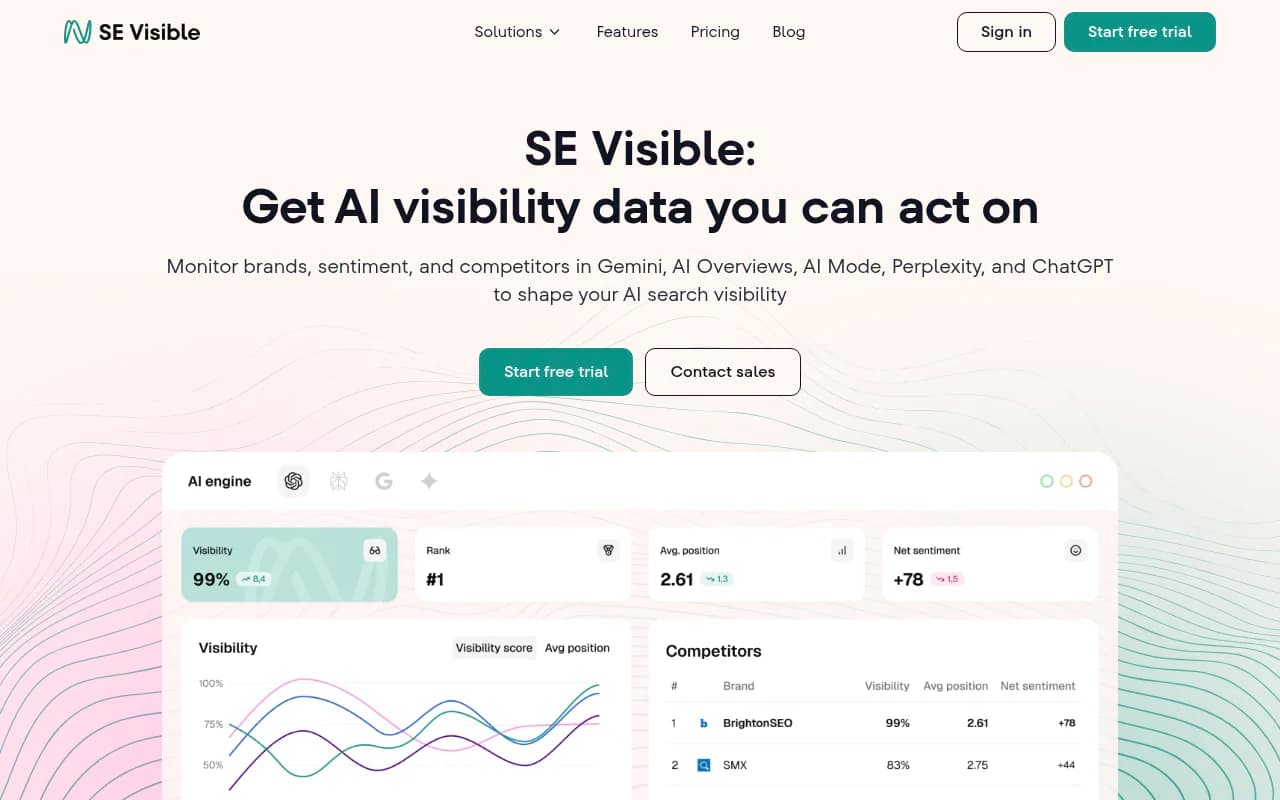
SE Visible -- best for teams coming from traditional SEO
SE Visible (from SE Ranking) is a good bridge for teams that are already using SE Ranking for traditional SEO and want to add AI visibility monitoring without switching platforms. The interface is familiar if you've used SE Ranking, onboarding is fast, and the pricing is reasonable.
It covers the main AI engines and provides brand mention tracking, sentiment analysis, and basic competitive data. The integration with SE Ranking's broader SEO data is a genuine advantage -- you can see traditional rankings and AI visibility side by side.
Profound -- best if you need depth and can stretch the budget
Profound is enterprise-grade in depth but has starter plans from around $99-399/month that put it within reach of some small teams. The data quality is exceptional -- Profound's research on citation drift (40-60% of cited domains change monthly across major platforms) is widely cited in the industry, which tells you something about how seriously they take measurement accuracy.
The tradeoff is that Profound is analytics-heavy and monitoring-focused. There are no content tools, no writing agents, no gap analysis that tells you what to create. You get very good data about where you stand; what you do with it is up to you. For a small team without an analyst, that can be overwhelming.

Feature comparison
| Tool | Starting price | AI engines covered | Content/gap tools | Crawler logs | Free trial | Best for |
|---|---|---|---|---|---|---|
| Promptwatch | $99/mo | 10 | Yes (full) | Yes ($249+ plan) | Yes | Teams that want to fix visibility, not just track it |
| Otterly.AI | Low/accessible | Major engines | No | No | Yes | Simple monitoring on a budget |
| Peec AI | Free trial, paid from low tier | 3 (standard) | No | No | Yes (no CC) | Fast setup, European teams |
| Ranksmith | Mid-range | Major engines | Partial | No | Yes | Actionable recommendations |
| AIClicks | Free tier available | Major engines | Limited | No | Yes (free tier) | Teams testing the category |
| SE Visible | Bundled with SE Ranking | Major engines | No | No | Yes | SEO teams adding AI monitoring |
| Profound | ~$99-399/mo | 10+ | No | No | Yes | Data-heavy teams needing accuracy |
What to actually look for when evaluating these tools
Onboarding time
Ask specifically: how long until I see real data? Some tools require you to set up tracking codes, configure integrations, or define complex prompt sets before anything appears. The best small-team tools get you to a working dashboard in under 10 minutes with just a domain name.
Prompt coverage vs. prompt limits
Most tools charge based on how many prompts you track. "Prompts" here means the specific questions or queries you're monitoring (e.g., "best project management software for startups"). A plan with 50 prompts is enough to get started; 150+ gives you room to build a real program. Watch for tools that charge per AI engine per prompt -- that math gets expensive fast.
What happens after the dashboard
This is the question most small teams forget to ask. You see a chart showing you're invisible for 80% of your target prompts. Now what? Tools that stop at monitoring leave you to figure out the rest. Tools with gap analysis and content generation (Promptwatch being the clearest example) give you a path forward without requiring you to hire a GEO specialist.
Traffic attribution
Eventually you'll want to know whether your AI visibility improvements are actually driving traffic and revenue. Most tools in this category don't have this. Promptwatch connects visibility to traffic via a code snippet, Google Search Console integration, or server log analysis. If revenue attribution matters to your team, check for this before committing.
Multi-engine coverage
The AI search landscape in 2026 is fragmented. ChatGPT, Perplexity, Google AI Overviews, Claude, Gemini, and Grok all have meaningful user bases. A tool that only covers two or three engines gives you a partial picture. If you're going to invest in tracking, make sure the engines your audience actually uses are covered.
The honest take on Goodie AI
Goodie AI isn't a bad product. It combines visibility tracking with a content writer and has decent dashboards for reporting to leadership. The problem for small teams is the pricing model (enterprise-leaning, often custom) and the onboarding experience, which several users describe as requiring more setup than expected.
If your team is five or fewer people, you probably don't need the enterprise reporting features that justify Goodie's price point. You need something that gets you to data fast, tells you what to do with it, and doesn't require a procurement process to buy.
The tools in this guide all fit that description better than Goodie does for small teams. Start with Otterly.AI or AIClicks if you're just testing the waters. Move to Promptwatch when you're ready to actually improve your visibility rather than just measure it.
Frequently asked questions
What is AI visibility and why does it matter for small teams?
AI visibility refers to how often and how favorably your brand appears in AI-generated answers from tools like ChatGPT, Perplexity, and Google AI Overviews. As more people use AI search instead of traditional search, being cited in AI answers is becoming as important as ranking in Google. Small teams that get ahead of this now have a real advantage.
How is AI visibility different from traditional SEO?
Traditional SEO focuses on ranking in blue-link search results. AI visibility focuses on whether AI models cite your content, mention your brand, or recommend your products in their responses. The optimization tactics overlap somewhat (good content, authoritative sources, clear structure) but the measurement and strategy are different.
Can I track AI visibility for free?
Yes, at a basic level. AIClicks has a free tier, and most paid tools offer free trials without requiring a credit card. Peec AI's trial is particularly frictionless. Free tiers are limited in prompts and engines, but they're enough to understand whether your brand is showing up at all.
How many prompts do I need to track?
For a small team just starting out, 20-50 well-chosen prompts is enough to get meaningful data. Focus on the specific questions your target customers are likely to ask AI tools -- product comparisons, "best X for Y" queries, and problem-specific questions in your category. Quality of prompt selection matters more than quantity.
What's the difference between monitoring and optimization?
Monitoring shows you where you stand -- which prompts you appear for, how often, which AI engines cite you. Optimization is the work of actually improving those numbers: identifying content gaps, creating content that AI models want to cite, fixing technical issues that prevent AI crawlers from reading your site. Most tools in this category only do monitoring. Promptwatch is the clearest example of a tool that does both.