Key takeaways
- Goodie offers basic AI brand monitoring but lacks content optimization, traffic attribution, and actionable gap analysis -- the features marketers now consider essential.
- The shift to AI search in 2026 means visibility tracking alone isn't enough; teams need tools that help them act on what they find.
- Several strong alternatives exist depending on your budget, team size, and whether you need full GEO optimization or just solid monitoring.
- The best replacements combine prompt tracking, citation analysis, and content generation in one workflow rather than forcing you to stitch together multiple tools.
Goodie launched at the right time. When brands first started asking "are we showing up in ChatGPT?", having any kind of answer felt like a win. A dashboard that told you whether your brand appeared in AI responses was genuinely useful in 2024.
But it's 2026 now, and the question has changed. It's no longer just "are we visible?" It's "why aren't we visible for these 40 prompts, and what do we do about it?" That's a harder question, and it's one Goodie wasn't really built to answer.
That's the core reason marketers are switching. Not because Goodie is broken, but because the category has matured faster than the product.
What Goodie actually does (and where it stops)
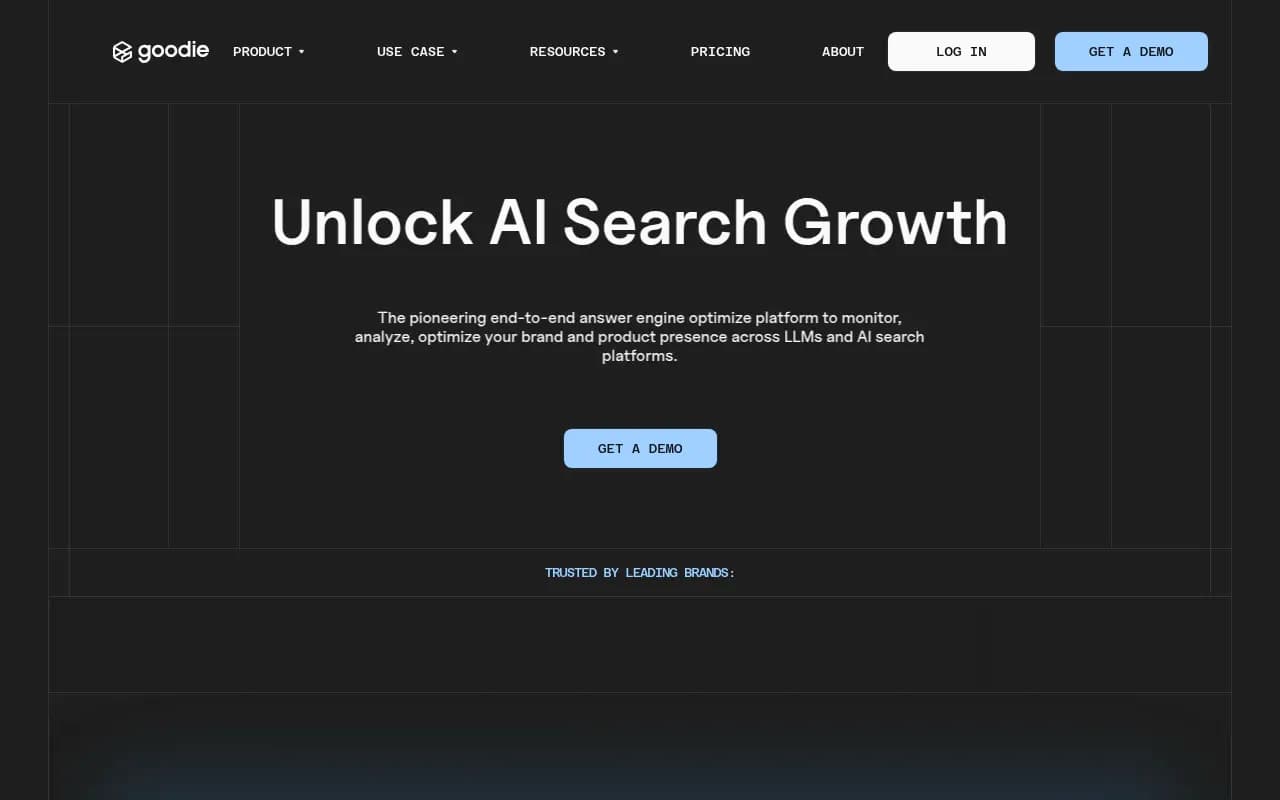
Goodie monitors your brand's presence across AI search engines -- ChatGPT, Perplexity, Gemini, and a few others. You set up prompts, it checks whether your brand appears in the responses, and you get a visibility score over time. That's genuinely useful for a baseline read on your AI presence.
The problems start when you want to do something with that data.
Goodie doesn't tell you which specific content gaps are causing you to lose to competitors. It doesn't help you create content that AI models are more likely to cite. It doesn't show you which pages on your site AI crawlers are actually reading (or ignoring). And it doesn't connect your AI visibility to actual traffic or revenue.
For teams that are still in "let's just see if we're showing up" mode, Goodie is fine. For teams that have moved past that -- which in 2026 is most serious marketing teams -- it starts to feel like a speedometer with no steering wheel.
Why 2026 specifically changed the calculus
A few things converged this year that made the monitoring-only approach feel inadequate.
AI shopping agents went mainstream. Kantar data shows 24% of AI users now use AI shopping assistants, and three-quarters of them rely on AI-driven recommendations. That's not a niche behavior anymore -- it's a meaningful chunk of your potential customers making purchase decisions through AI intermediaries. Knowing you're not visible to those agents is step one. Knowing what to publish to fix it is step two. Most monitoring tools only do step one.
Search advertising fragmentation accelerated. Google's grip on search intent has loosened as Perplexity, ChatGPT, and others capture more query volume. Marketers who used to optimize for one algorithm now need to think about ten. That complexity makes "we track five models" feel thin when you're trying to prioritize where to invest.
Marketing teams are being asked to prove ROI on everything. The era of "AI visibility is a nice-to-have experiment" is over. If you can't connect your GEO efforts to traffic, leads, or revenue, the budget conversation gets uncomfortable fast. Goodie doesn't offer traffic attribution, which makes that conversation harder than it needs to be.
The best Goodie alternatives in 2026
Here's an honest look at what's worth considering, organized by what kind of team you are.
For teams that want the full optimization loop
If you've outgrown monitoring and want a platform that finds gaps, helps you fix them, and tracks the results, Promptwatch is the most complete option available right now.
The difference from Goodie is structural. Promptwatch's Answer Gap Analysis shows you exactly which prompts competitors rank for that you don't -- not as a vague "you're behind" signal, but as a specific list of topics and questions your content isn't addressing. From there, a built-in AI writing agent generates articles grounded in real citation data (880M+ citations analyzed) that are engineered to get cited by ChatGPT, Claude, Perplexity, and others. Then you track whether those new pages actually improve your visibility scores.
It also includes AI crawler logs -- real-time data on which pages ChatGPT, Claude, and Perplexity are actually crawling on your site, and which ones they're skipping. That's something Goodie doesn't have at all, and it's genuinely useful for diagnosing why certain pages aren't getting cited.
Pricing starts at $99/month for one site and 50 prompts, which is competitive with Goodie's positioning.

For teams that want solid monitoring without the full suite
If you're not ready to invest in a full GEO platform and just want better monitoring than Goodie, a few options are worth looking at.
Otterly.AI is one of the more affordable monitoring tools in the space. It covers the major AI models and gives you brand mention tracking without a lot of complexity. The tradeoff is that it's monitoring-only -- no content generation, no crawler logs, no traffic attribution. But if budget is tight and you just need better coverage than Goodie, it's a reasonable step up.

Peec AI is worth considering if you have a multilingual audience. It handles AI visibility tracking across multiple languages and regions, which is something Goodie doesn't do well. If you're a European brand or operate in multiple markets, this matters more than most tools acknowledge.

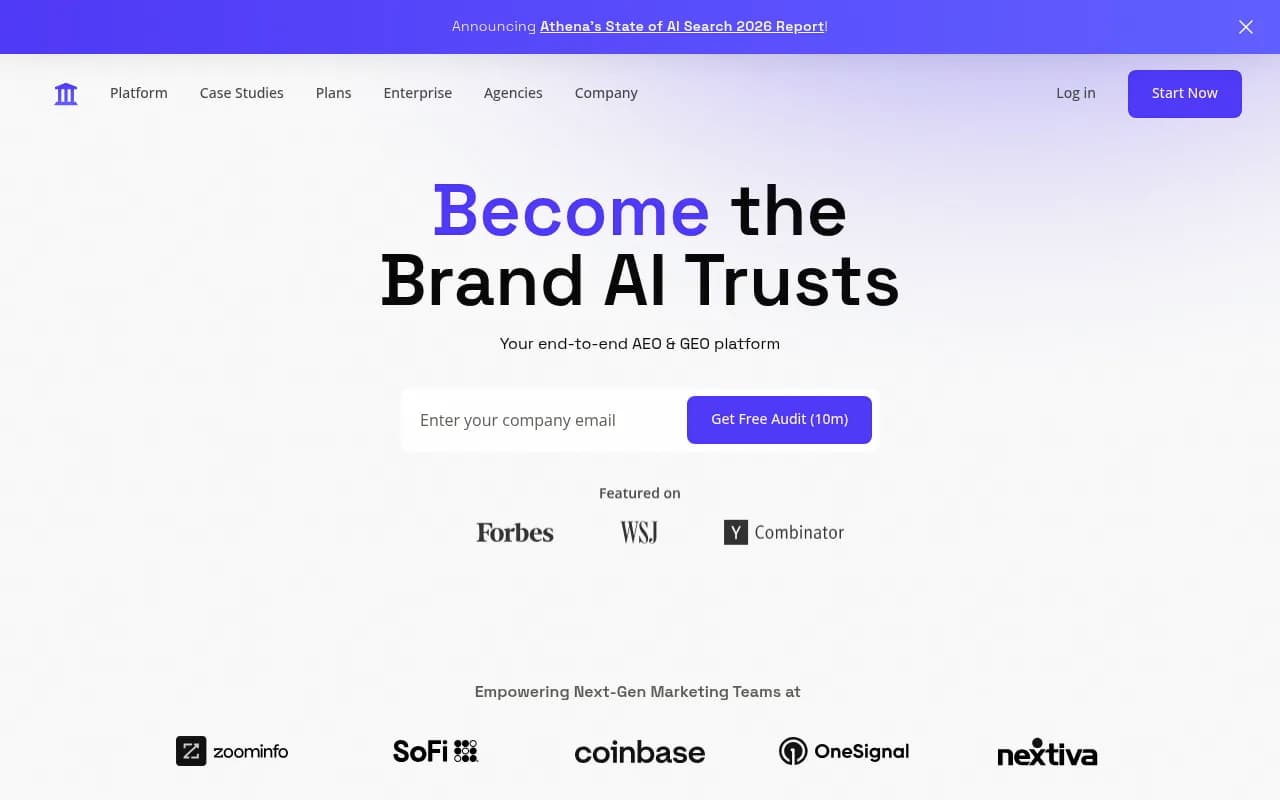
AthenaHQ covers 8+ AI search engines and has a clean interface for tracking brand visibility. Like Otterly and Peec, it's primarily a monitoring tool -- it shows you where you stand but doesn't help you improve. Still, the coverage is solid and the reporting is cleaner than Goodie's.
For enterprise teams with complex needs
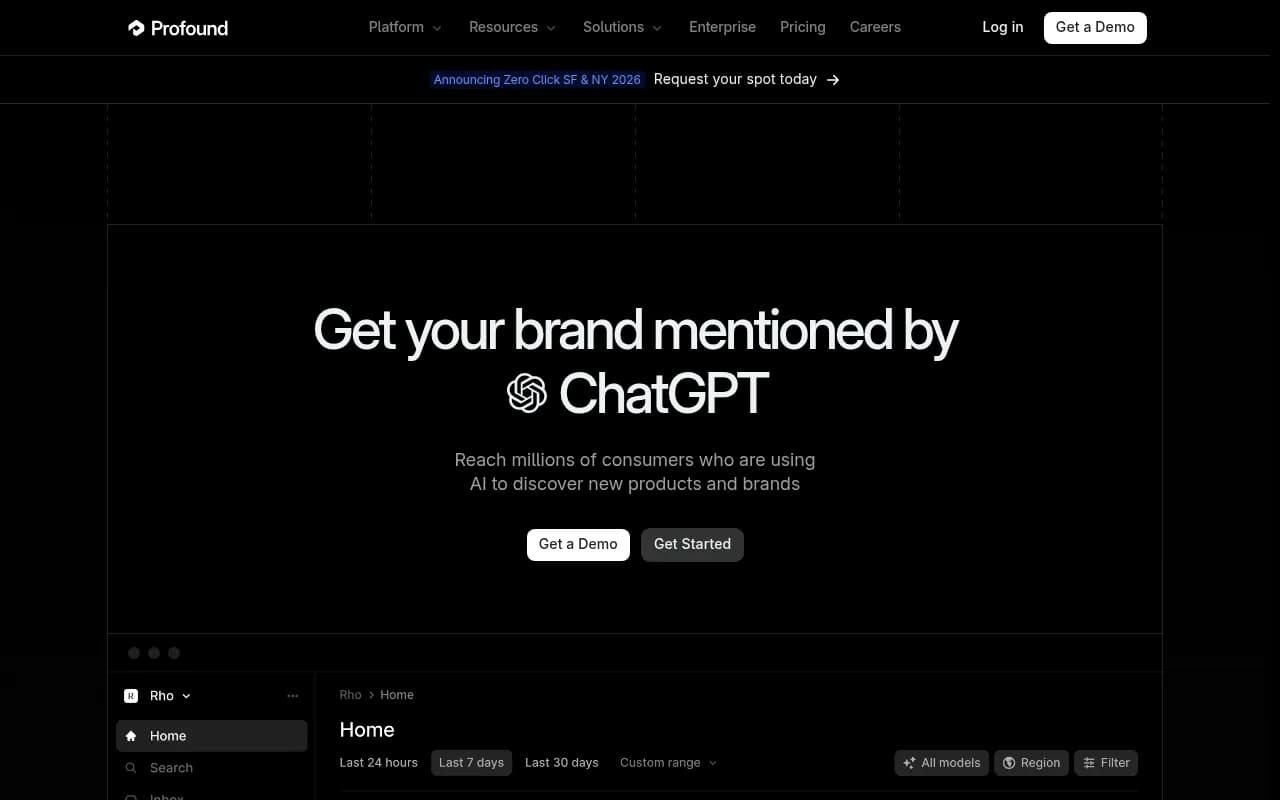
Profound is the most feature-rich option for larger organizations. It has strong tracking capabilities and handles multi-brand, multi-market setups that smaller tools can't manage. The price point reflects that -- it's not a small-team tool. But if you're running AI visibility programs across multiple product lines or geographies, it's worth evaluating.
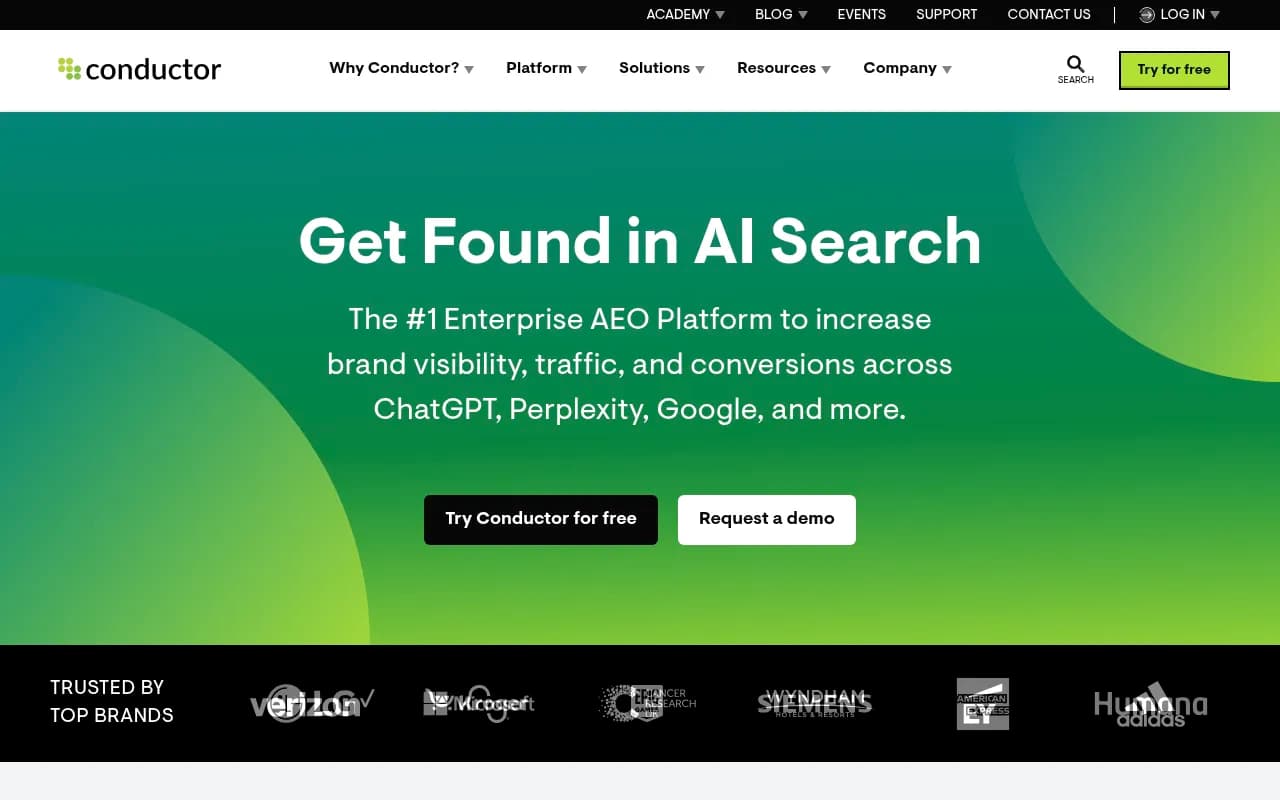
Conductor is another enterprise option, notable for its persona customization. You can configure how AI models are queried to match how your actual customers search, which makes the data more meaningful than generic prompt monitoring.
For content-focused teams
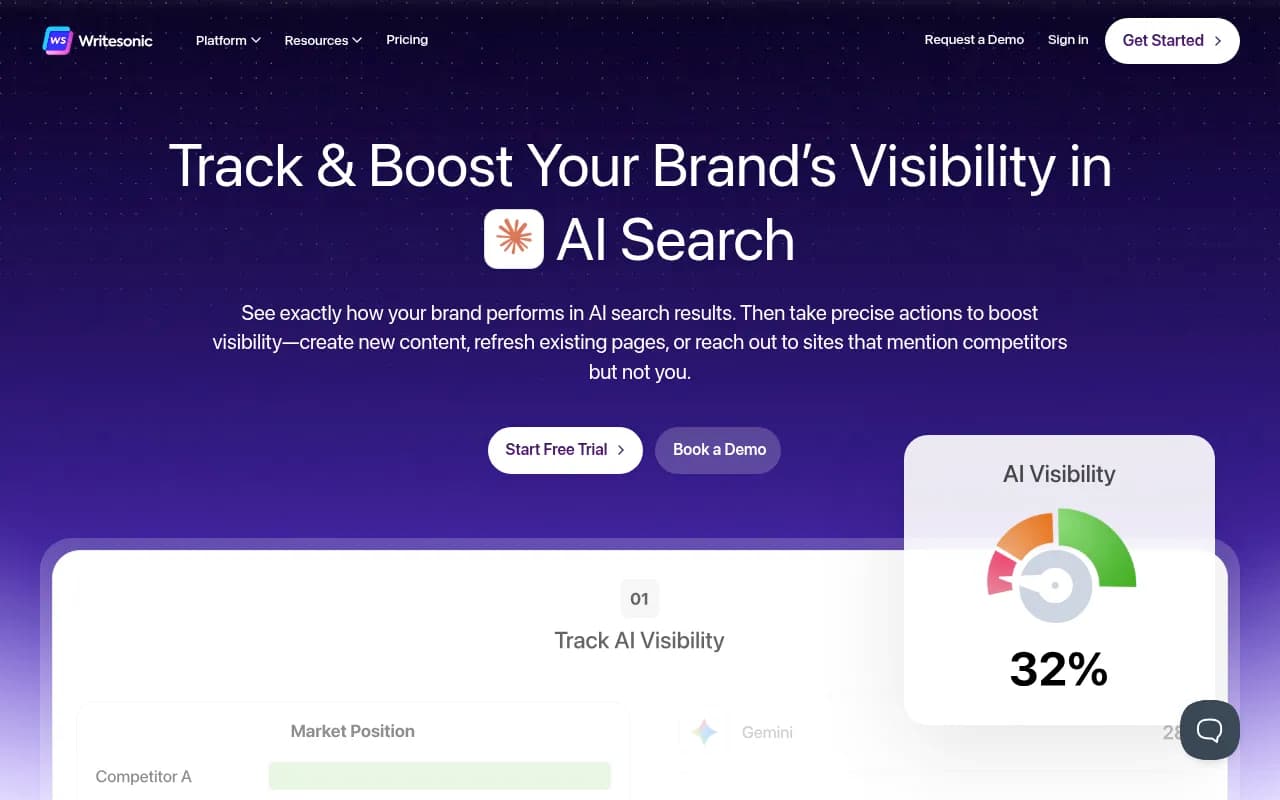
Writesonic has evolved beyond its origins as a writing tool and now includes AI search visibility tracking alongside content generation. If your primary need is creating content that performs in AI search -- and tracking is secondary -- it's a reasonable combination tool.
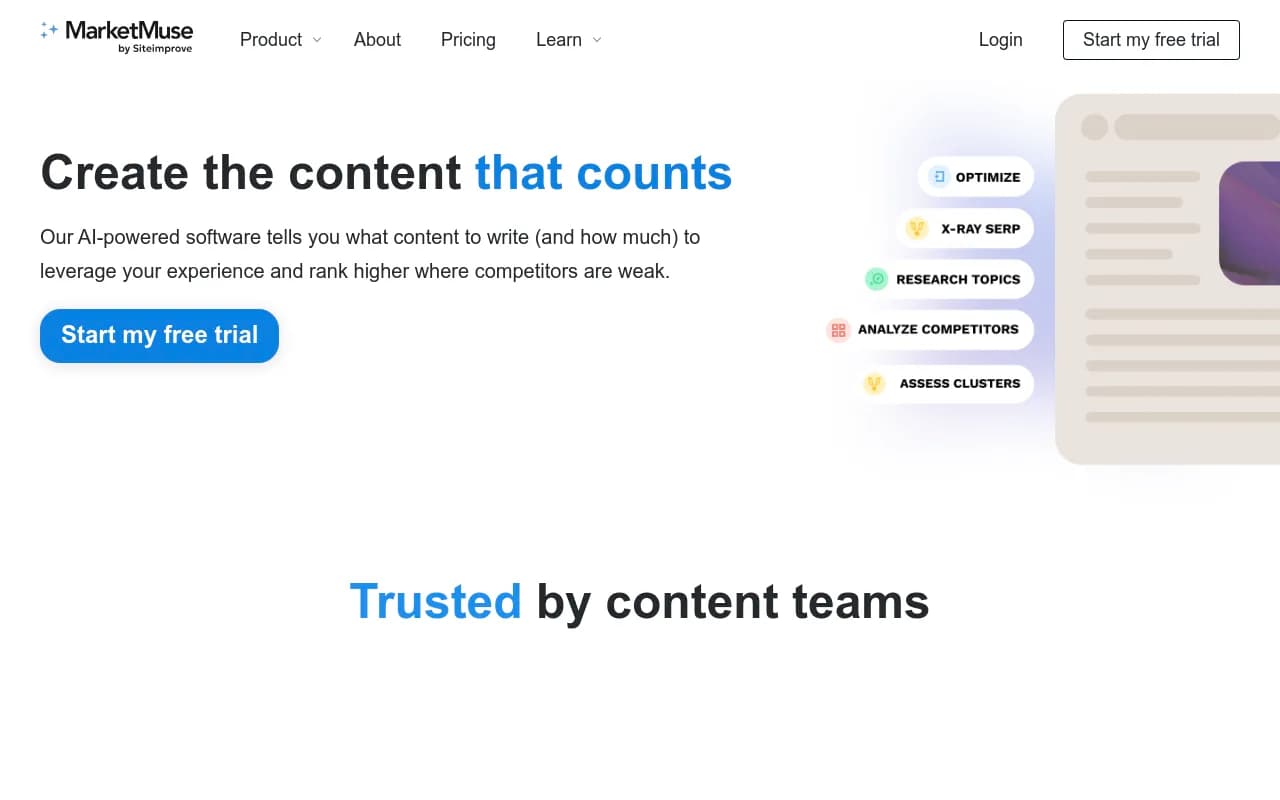
MarketMuse takes a content planning angle. It's less about real-time AI monitoring and more about building topical authority over time, which is one of the underlying drivers of AI citation. If your team thinks in content strategy terms rather than rank tracking terms, it fits that workflow better.
Head-to-head comparison
| Tool | AI models tracked | Content generation | Crawler logs | Traffic attribution | Reddit/YouTube tracking | Starting price |
|---|---|---|---|---|---|---|
| Goodie | ~5 | No | No | No | No | ~$49/mo |
| Promptwatch | 10+ | Yes | Yes | Yes | Yes | $99/mo |
| Otterly.AI | 6 | No | No | No | No | ~$49/mo |
| Peec AI | 5 | No | No | No | No | ~$59/mo |
| AthenaHQ | 8+ | No | No | No | No | ~$99/mo |
| Profound | 8+ | No | No | Limited | No | Custom |
| Conductor | 6+ | No | No | No | No | Custom |
| Writesonic | 5 | Yes | No | No | No | ~$79/mo |
| MarketMuse | Limited | Yes | No | No | No | ~$149/mo |
What to look for when switching
A few things worth checking before you commit to a replacement:
Prompt volume and difficulty data. Knowing that a prompt exists is less useful than knowing how often people actually ask it and how hard it is to rank for. Tools that give you volume estimates and difficulty scores let you prioritize instead of guessing.
Citation-level tracking. You want to know which specific pages on your site are being cited, not just whether your brand name appears somewhere in an AI response. Page-level citation data is what lets you connect your content efforts to visibility outcomes.
Query fan-outs. One prompt branches into dozens of sub-queries. Tools that show you this branching structure help you understand the full scope of a topic, not just the obvious head term.
Traffic attribution. If you can't connect AI visibility to actual site visits and conversions, you'll always be fighting for budget. Look for tools that offer a tracking snippet, GSC integration, or server log analysis.
Crawler log access. Understanding which pages AI bots are actually reading -- and which ones they're ignoring or encountering errors on -- is the diagnostic layer that most monitoring tools skip entirely.
The honest answer about switching costs
Switching tools is annoying. You lose historical data, your team has to learn a new interface, and there's always a period where you're not sure if the new numbers mean what you think they mean.
That said, the switching cost from Goodie is lower than from most tools because Goodie doesn't have deep integrations or complex data exports. Most teams can be up and running on a replacement within a week.
The more important question is what you're switching to. If you move from Goodie to another monitoring-only tool, you've paid the switching cost without actually solving the problem. The teams getting real value from GEO in 2026 are the ones that closed the loop -- find the gaps, create the content, track the results. That's worth the friction of switching.
Bottom line
Goodie made sense as an early-stage tool for brands that wanted to understand their AI visibility. In 2026, that's table stakes. The platforms worth using now are the ones that help you act on what you find -- whether that's through content generation, crawler diagnostics, traffic attribution, or all three.
If you're evaluating alternatives, start by being honest about what you actually need. A smaller team with a tight budget might be well-served by Otterly.AI or Peec AI. A team that's serious about GEO as a growth channel should look at something with a full optimization loop. The monitoring-only era of AI visibility tools is effectively over.