Key takeaways
- AI search traffic has surged 527% year over year, but 93% of AI Mode queries produce zero outbound clicks -- meaning citation is now more valuable than ranking
- Brands cited in AI Overviews earn 35% higher organic CTR and 91% higher paid CTR compared to uncited brands on the same queries
- Pages with structured data are 5x more likely to be cited by AI answers -- technical readiness is a prerequisite, not a nice-to-have
- Early citations create a compounding loop: more citations build entity authority, which triggers more citations across more AI models
- The brands winning in 2026 are doing it through earned mentions, original data, and comparison content -- not generic SEO optimization
There's a dynamic playing out in AI search right now that most marketing teams haven't fully internalized yet. It's not just that AI tools like ChatGPT, Perplexity, and Google AI Overviews are changing where people search. It's that the brands getting cited early are pulling further and further ahead -- and the gap is widening faster than most people expect.
This is the compound effect of AI visibility. And understanding it changes how you should be spending your time.
Why citations are the new rankings
Start with a number that should reframe your entire dashboard: 93%.
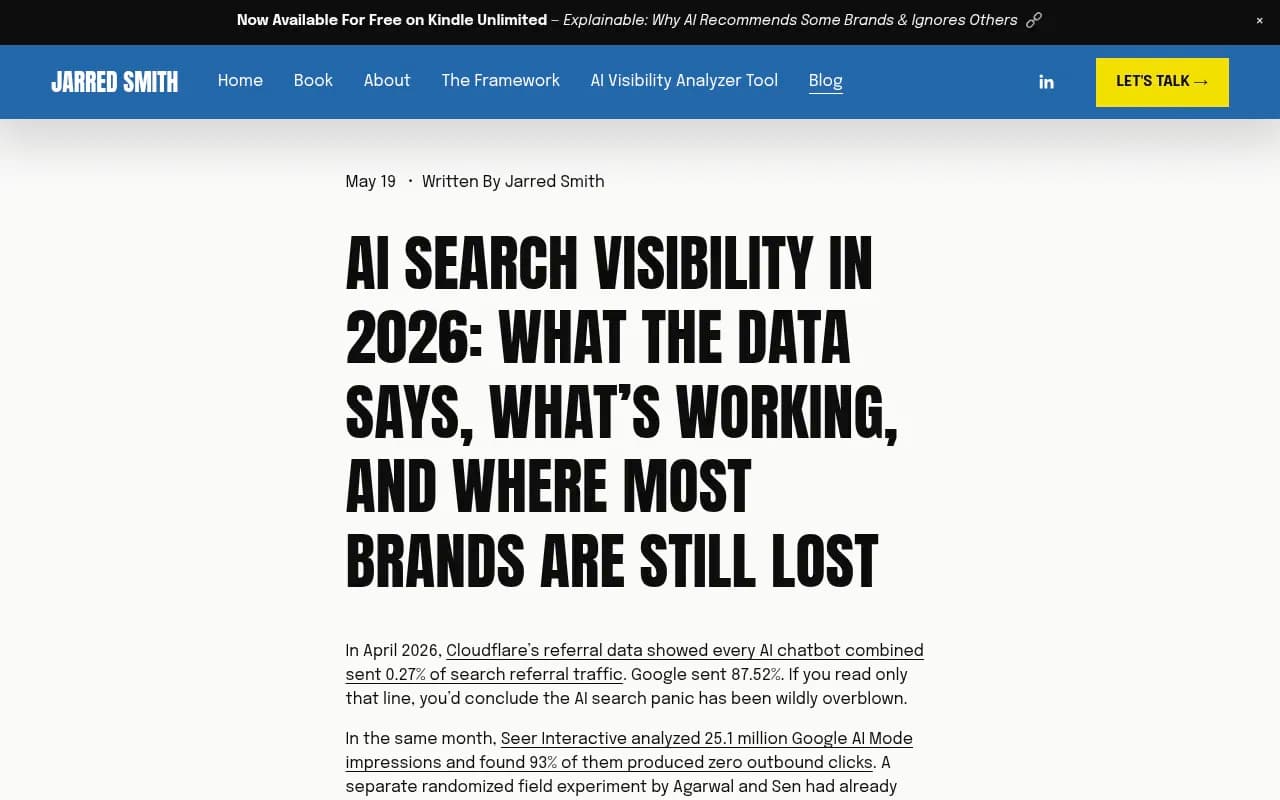
That's the zero-click rate for Google AI Mode queries, according to Seer Interactive's analysis of 25.1 million impressions. A separate field experiment by Agarwal and Sen found that when AI Overviews appeared, organic clicks dropped 38% and zero-click rates jumped from 54% to 72%.
Meanwhile, Cloudflare's referral data for April 2026 showed that every AI chatbot combined -- ChatGPT, Gemini, Claude, Perplexity -- sent 0.27% of search referral traffic. Google still sent 87.52%.
These two facts seem contradictory. If AI chatbots barely send clicks, why does any of this matter?
The answer is that you're measuring the wrong thing. The question isn't "how much traffic does Perplexity send me?" The question is "when someone asks an AI system to recommend a product, service, or solution in my category, do I exist?"
If you don't get cited, you don't exist in that moment. And that moment is increasingly where decisions get made.
According to The Digital Bloom's 2026 AI Citation Position & Revenue Report, brands cited in AI Overviews earn 35% higher organic CTR and 91% higher paid CTR compared to uncited brands on the same queries. The citation itself functions as a trust signal that carries over into every other channel.
The mechanics of the compounding loop
Here's what makes this genuinely different from traditional SEO: citations aren't just additive. They're multiplicative.
In traditional search, ranking #1 for a keyword gives you a fixed share of clicks. You can hold that position, lose it, or improve it. It's relatively linear.
AI citation works differently. When an AI model cites your content, several things happen simultaneously:
Your entity authority grows. AI models build internal representations of entities -- brands, people, concepts -- based on what they've seen cited across their training data and real-time retrieval. Each citation reinforces your entity's association with specific topics, increasing the probability you get cited again for related queries.
Your content gets crawled more frequently. AI crawlers (GPTBot, ClaudeBot, PerplexityBot, and others) revisit pages they've found valuable. More crawls mean more opportunities to surface updated content, which feeds back into citation frequency.
Your brand appears in more query fan-outs. A single user prompt typically branches into multiple sub-queries as the AI assembles its answer. If you're cited for the core query, you're more likely to appear in the sub-queries too. One citation begets several.
You become a reference point for competitors. When AI models discuss your category, they often frame comparisons around established players. Being cited early means you become the benchmark others are measured against.
This is the loop. Early citations create entity authority. Entity authority drives more citations. More citations expand your coverage across query types and AI models. That expanded coverage drives more citations still.
What the data says is actually working
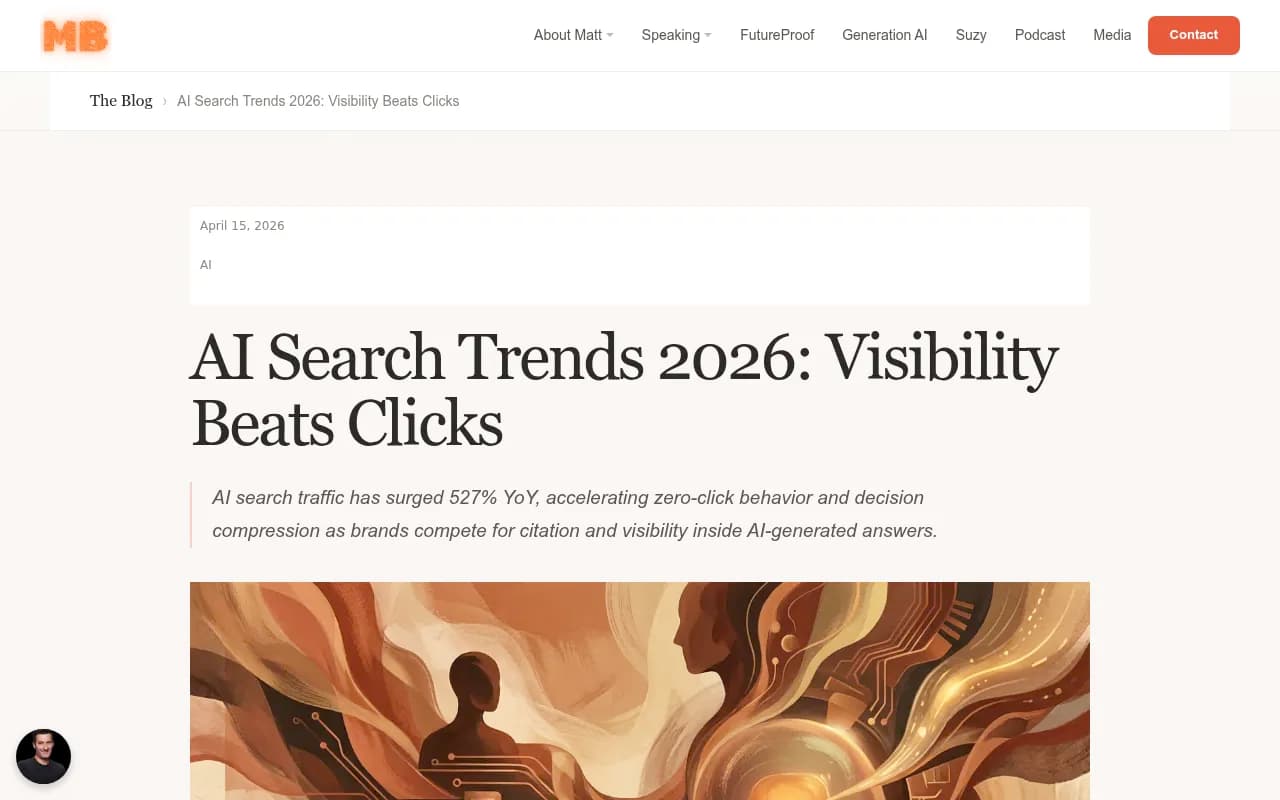
AI search traffic has surged 527% year over year, according to aggregated data from Semrush and industry trackers. That growth rate means the window for establishing early citation authority is closing faster than most teams realize.
So what's actually working? The honest answer is that a lot of what gets sold as "AEO best practice" doesn't survive contact with the data. But a few things consistently show up:
Original data and primary research
AI models strongly prefer citing sources that contain information they can't synthesize from elsewhere. If you publish original survey data, proprietary analysis, or unique case studies, you give AI systems a reason to cite you specifically rather than a generic summary.
Research across millions of AI citations found that AI-cited content is significantly fresher than what shows up in regular Google results. This isn't just about recency -- it's about novelty. New data, new angles, new findings.
Structured data and technical readiness
Neil Patel's analysis found that pages with robust structured data are 5x more likely to be cited by AI answers. This is one of the clearest levers available, and it's still being ignored by most sites.
Schema markup for articles, FAQs, products, and how-to content helps AI models parse and attribute your content correctly. Without it, even excellent content can get absorbed into an AI answer without attribution.
Earned mentions and third-party citations
AI visibility starts before the query. The entity signals that determine who gets cited are built from what AI models have seen across the web -- not just your own site. That means mentions on authoritative third-party sites, Reddit threads, YouTube videos, and industry publications all feed into your citation probability.
According to Search Engine Land's analysis, influence happens everywhere, and most of it shapes AI responses before a user ever types a query. Your PR strategy, your community presence, your guest content -- these aren't separate from your AI visibility strategy. They are your AI visibility strategy.
Comparison and category content
Brands that publish honest, detailed comparison content -- "X vs Y", "best tools for Z", "how to choose between A and B" -- consistently appear in AI answers for high-intent queries. AI models love this format because it directly answers the comparative questions users ask.
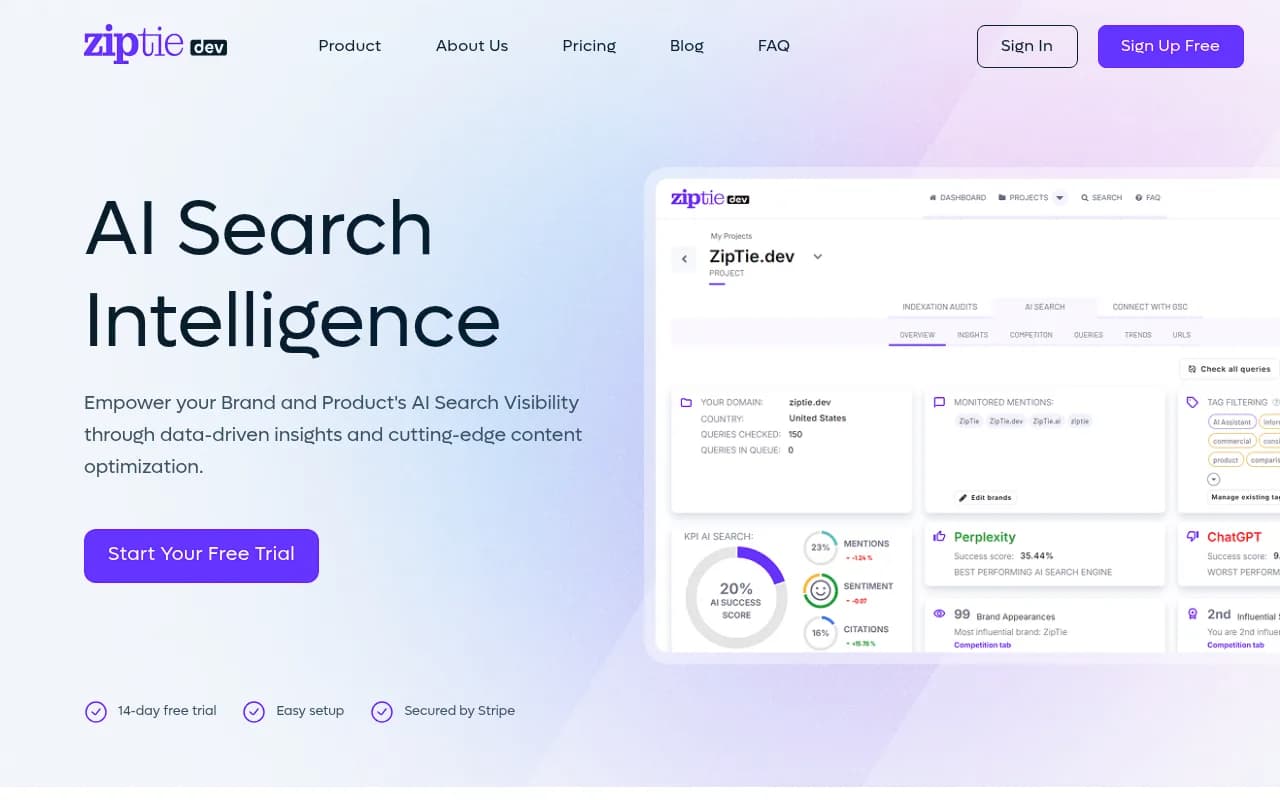
Only 14% of AI-cited URLs would have received significant traditional clicks, according to ZipTie's analysis. That means AI citation creates net-new visibility for content that traditional SEO would have buried. Comparison content that never ranked on page one can still become a frequently cited source in AI answers.
The attribution problem hiding the real impact
Here's why most companies are underestimating this: their attribution models are broken for AI search.
Traditional attribution gives credit to the last click before conversion. But AI search increasingly operates as a zero-click influence layer. A user asks ChatGPT for a recommendation, sees your brand cited, then searches directly for your brand name, visits your site, and converts. Your analytics show a branded organic search. The AI citation that drove the whole sequence gets zero credit.
As one analysis put it: "Search gets over-credited because it captures demand at the finish line, while the actual influence happened earlier." The AI citation is the starting gun. Your analytics only see the finish line.
This means the ROI of AI visibility is systematically underreported. Teams that measure only referral traffic from AI chatbots will conclude it doesn't matter. Teams that look at brand search volume, direct traffic trends, and conversion rates for users who exhibit AI-influenced behavior will see a very different picture.
The decision compression effect
Matt Britton's concept of "decision compression" is worth sitting with. AI reduces the distance between question and action, collapsing multiple comparison steps into a single algorithmically generated answer.
In a traditional search journey, a buyer might visit 7-10 sites before making a decision. In an AI-mediated journey, they might ask one question and get a synthesized recommendation. If you're in that recommendation, you've skipped the entire top-of-funnel. If you're not, you've been eliminated before the buyer even knew you existed.
This is why early citation authority matters so much. The brands that establish themselves as reliable sources now will be the ones AI models default to as the technology matures. The compounding effect isn't just about today's citations -- it's about the entity authority that accumulates over time and becomes increasingly difficult for late movers to displace.
How to start building citation authority now
The practical question is where to begin. Here's how to think about it:
Audit your current AI visibility
Before you can improve, you need to know where you stand. Which prompts in your category is your brand appearing for? Which competitors are getting cited when you're not? What content is being cited, and what's being ignored?
Tools like Promptwatch track your brand's citation frequency across ChatGPT, Perplexity, Claude, Gemini, Google AI Overviews, and other models -- and crucially, show you the specific prompts where competitors are visible but you're not. That gap analysis is where your content roadmap should start.

Fix your technical foundation
Run a structured data audit. Every article, product page, FAQ, and how-to guide should have appropriate schema markup. Check that your robots.txt isn't blocking AI crawlers (GPTBot, ClaudeBot, PerplexityBot). Make sure your most important pages are being crawled and indexed by AI systems, not just Google.
Publish content that AI models want to cite
This means original data, specific answers to specific questions, and comparison content that helps users make decisions. Generic "ultimate guides" that rehash existing information won't get cited. Content that contains something unique -- a dataset, a case study, a specific methodology -- will.
Think about the questions your buyers ask AI systems. Not just "what is X" but "which X is best for Y", "how does X compare to Z", "what should I look for when choosing X". These are the prompts where citation authority translates directly into purchase consideration.
Build your off-site entity signals
Your AI visibility isn't just determined by what's on your website. Get mentioned in industry publications. Participate in Reddit communities where your buyers ask questions. Publish on YouTube. Contribute to discussions that AI models will surface when users ask about your category.
This is the "full-stack content" approach: your owned content, your earned mentions, and your community presence all working together to build the entity signals that AI models use to decide who to cite.
Track the compounding effect over time
Set up tracking that goes beyond referral traffic. Monitor your brand search volume trends. Track citation frequency across AI models over time. Watch how your visibility score changes as you publish new content and build new mentions.
The compounding effect takes time to become visible, but once it starts, it accelerates. The brands that started building citation authority in 2024 and 2025 are now seeing the results in 2026. The brands starting now will see results in 2027 -- but only if they start now.
A comparison of AI visibility approaches
Different tools and strategies serve different parts of the citation-building process. Here's how the main approaches stack up:
| Approach | What it does | Time to impact | Best for |
|---|---|---|---|
| Structured data optimization | Makes content parseable and attributable | Fast (weeks) | All sites |
| Original data / research | Gives AI models unique citable facts | Medium (months) | Brands with research capacity |
| Comparison content | Captures high-intent decision queries | Medium (months) | SaaS, e-commerce, services |
| Earned media / PR | Builds off-site entity signals | Slow (6-12 months) | Established brands |
| AI visibility tracking | Measures gaps and progress | Immediate | All teams |
| Content gap analysis | Identifies missing citation opportunities | Fast (weeks) | Teams with content resources |
The most effective approach combines all of these -- but if you're starting from zero, fix the technical foundation first, then publish original content, then build your off-site signals.
The window is narrowing
The compounding effect of AI visibility is real, and it's already separating winners from everyone else. The brands that established citation authority early are now benefiting from entity signals that took months to build. That head start compounds every month.
This doesn't mean it's too late to start. But it does mean that waiting another quarter to "see how AI search develops" is a choice with a real cost. The citations your competitors are earning right now are building entity authority that will make them harder to displace six months from now.
The good news is that most brands haven't started yet. The zero-click data confuses teams into thinking AI search doesn't matter. The low referral numbers from chatbots make it look like a rounding error. That confusion is your opportunity.
Get cited now. The compounding takes care of the rest.