Key takeaways
- Tracking AI visibility is fundamentally different from keyword rank tracking -- you're measuring whether AI models cite you, not where you appear on a results page
- Organic CTR has dropped over 62% on queries that trigger AI summaries, so visibility in AI responses is no longer optional
- Most tools only monitor; the ones worth paying for help you close the gap between "you're invisible here" and "here's what to publish"
- You don't need to track every model equally -- prioritize based on where your audience actually searches
- The tracking loop that works: find gaps, create content targeting those gaps, then watch your citation scores move
If you've tried to get a handle on AI search visibility lately, you've probably opened five different dashboards, stared at a "share of voice" number with no clear meaning, and closed your laptop slightly more confused than when you started.
That's not a you problem. The category is genuinely chaotic right now. There are dozens of tools, most of them less than two years old, and the terminology alone -- GEO, AEO, LLM visibility, AI citations, share of voice -- is enough to make anyone's head spin.
This guide cuts through that. Here's what AI visibility tracking actually means, which models matter, how to set up a sane tracking system, and which tools are worth your time.
Why traditional rank tracking doesn't cover this
Your existing SEO tools measure where a page ranks in a list of blue links. That model is increasingly irrelevant for a large chunk of search behavior.
When someone asks ChatGPT "what's the best project management tool for remote teams," there's no page one. There's an answer. Either your brand appears in that answer or it doesn't. And the factors that determine whether you're cited -- the freshness of your content, how well it answers specific questions, whether it appears in sources AI models trust -- are different from the factors that drive traditional rankings.
A few numbers that put this in perspective:
- Organic click-through rates on queries that trigger AI summaries have dropped from 1.76% to 0.61%, a decline of over 62%
- Around 60% of AI Overview citations come from URLs that don't rank in the top 20 organic results
- Pages updated within the last year make up roughly 70% of AI-cited pages
That last point matters a lot. AI models aren't just reading your domain authority. They're reading your content and deciding whether it actually answers the question.
The 10 models worth tracking (and how to prioritize them)
Not all AI models are equal for your specific audience. Here's a quick breakdown:
| Model | Best for tracking if... | Citation behavior |
|---|---|---|
| ChatGPT (OpenAI) | B2B, SaaS, general consumer | High volume, broad topic coverage |
| Perplexity | Tech-savvy, research-oriented users | Heavy source citation, very transparent |
| Google AI Overviews | Any brand with SEO traffic | Pulls heavily from indexed pages |
| Google AI Mode | Conversational search users | Emerging, growing fast in 2026 |
| Gemini | Google ecosystem users | Integrated with Google products |
| Claude (Anthropic) | Professional, writing-heavy use cases | More cautious, prefers authoritative sources |
| Copilot (Microsoft) | Enterprise, Office 365 users | Bing-indexed sources, B2B skew |
| Grok (xAI) | Twitter/X-heavy audiences | Real-time data, social signal influence |
| DeepSeek | International markets, Asia-Pacific | Growing fast, different training data |
| Meta AI / Llama | Social media users (Instagram, WhatsApp) | Conversational, less citation-heavy |
For most brands, ChatGPT, Perplexity, and Google AI Overviews are the top three to nail first. The others matter depending on your audience. A B2B SaaS company should care about Copilot. A brand with significant Asia-Pacific exposure should watch DeepSeek.
The mistake most teams make is trying to track everything equally from day one. Start with three models, get your process right, then expand.
What you're actually measuring
Before picking a tool, get clear on what metrics matter. There are four things worth tracking:
Citation rate: When someone asks a relevant question, does an AI model cite your brand or your pages? This is the core metric. Everything else is downstream of this.
Share of voice: Out of all the prompts in your category, what percentage include your brand vs. competitors? This gives you a relative sense of where you stand.
Sentiment: When AI models do mention you, is the framing positive, neutral, or negative? A brand that gets cited but described as "expensive" or "complex" has a different problem than one that isn't cited at all.
Source attribution: Which specific pages on your site are being cited? This tells you what's working and where to invest more.
Most tools give you some version of these. The difference is in how actionable the data is -- whether the tool just shows you a number or helps you understand why it is what it is.
The practical tracking setup
Step 1: Define your prompt universe
AI visibility tracking works by running prompts through models and checking whether your brand appears. The quality of your tracking depends entirely on the quality of your prompt list.
Good prompts look like real buyer questions:
- "What's the best [category] tool for [use case]?"
- "How does [your brand] compare to [competitor]?"
- "What do people say about [your brand]?"
- "Which [category] tools are recommended for [industry]?"
Bad prompts are too generic ("best software") or too branded ("tell me about [your brand]"). You want the prompts your actual customers are typing.
Start with 30-50 prompts. You can always add more, but a tight, well-chosen list will teach you more than 500 vague ones.
Step 2: Pick your tools
The market has fragmented into a few categories. Here's an honest breakdown:
Full-platform tools (track + analyze + help you act): These are the most valuable but also the most expensive. Promptwatch sits in this category -- it tracks across 10 models, shows you which prompts competitors rank for that you don't, and has a built-in content generation tool to help you close those gaps. The difference between a monitoring-only tool and a platform like this becomes obvious after about two months of use: monitoring tools give you a dashboard that gets more depressing over time; optimization platforms give you a to-do list.

Monitoring-focused tools: These track citations and share of voice but stop there. They're cheaper and fine if you have a separate content team that can act on the data.



Enterprise/agency tools: Higher price points, more seats, more customization. Worth it if you're managing multiple brands or clients.

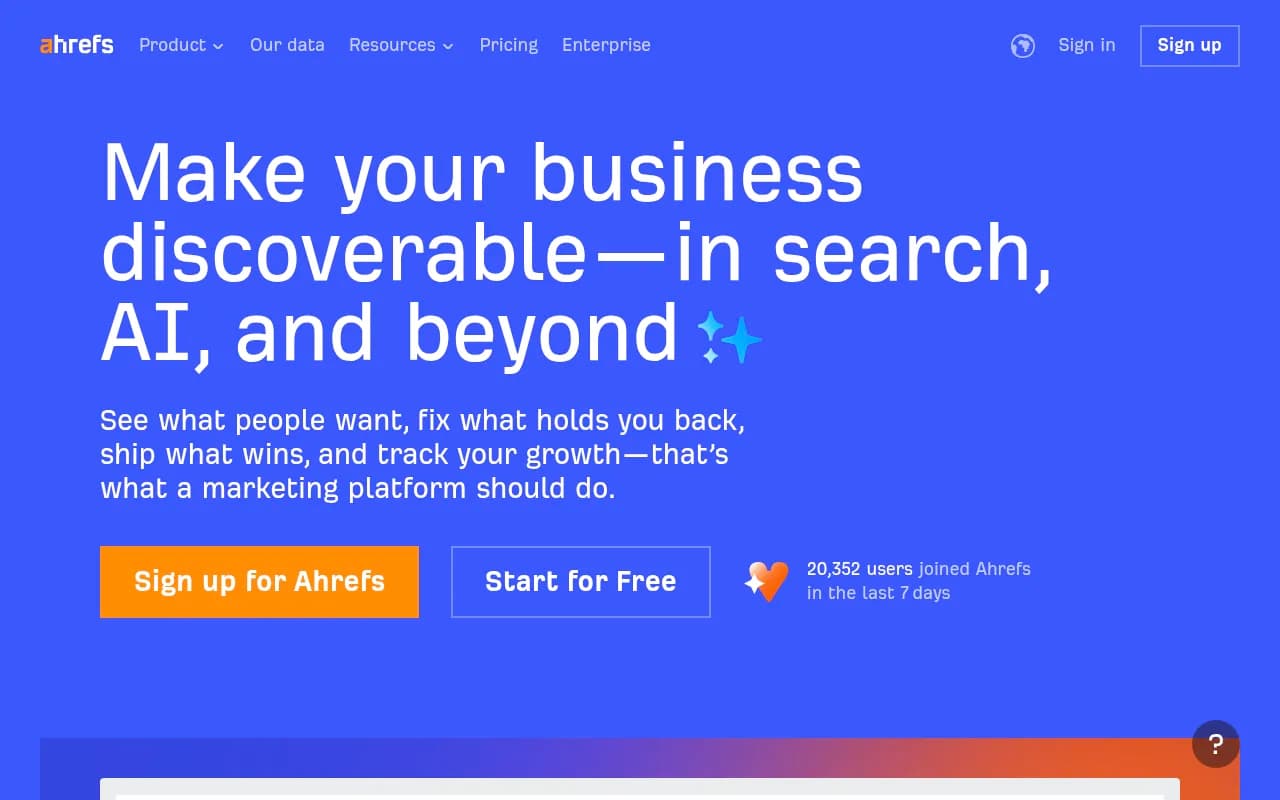
Traditional SEO tools with AI add-ons: Semrush and Ahrefs have both added AI visibility features. They're convenient if you're already paying for these platforms, but the AI tracking tends to be less deep -- fixed prompt sets, limited model coverage.
Step 3: Set up your baseline
Before you do anything else, run your full prompt list through your chosen tool and record where you stand. This is your baseline. Every optimization you do from here gets measured against it.
Things to capture in your baseline:
- Overall citation rate across all prompts
- Citation rate by model (you'll likely find you're strong on some, invisible on others)
- Which competitors appear in prompts where you don't
- Which of your pages are being cited (and which aren't)
This baseline is also useful for internal reporting. When your visibility score improves in three months, you want to be able to show the delta.
Step 4: Understand why you're missing
This is where most teams get stuck. They see "you're not cited for these 40 prompts" and don't know what to do next.
The answer is usually one of three things:
- You don't have content that answers the question. AI models can't cite what doesn't exist.
- You have content but it's structured poorly. AI models prefer content that directly answers questions, uses clear headers, and is written for humans rather than keyword density.
- You have good content but it's not being discovered. This is a crawler access issue -- AI bots need to be able to reach and index your pages.
Tools that show you AI crawler logs (which pages AI bots are actually visiting, how often, and whether they're hitting errors) are genuinely useful here. Most monitoring-only tools don't have this.
The content side of the equation
Tracking is only half the job. The brands that improve their AI visibility scores are the ones that create content specifically designed to be cited.
What AI models tend to cite:
- Long-form content that directly answers specific questions
- Pages with clear FAQ sections (schema-marked up where possible)
- Content that's been updated recently (within the last 12 months)
- Pages that are cited by other sources AI models trust
What doesn't work as well as you'd hope:
- Short landing pages optimized for conversions
- Content written primarily for keyword density
- Pages behind login walls or with heavy JavaScript rendering
Reddit threads and YouTube videos also influence AI recommendations more than most brands realize. Around 21% of Google AI Overview citations come from Reddit. That's not a reason to spam Reddit, but it is a reason to participate in communities where your customers ask questions.
A comparison of the main tracking approaches
| Approach | Cost | Setup time | Best for | Limitation |
|---|---|---|---|---|
| Dedicated GEO platform | $99-$579/mo | 1-2 hours | Teams serious about AI visibility | Requires ongoing prompt management |
| Traditional SEO tool AI add-on | Included in existing plan | 30 mins | Teams already using Semrush/Ahrefs | Limited model coverage, fixed prompts |
| Manual spot-checking | Free | Ongoing | Very early-stage brands | Not scalable, no trend data |
| Agency/white-label platform | Custom pricing | Varies | Agencies managing multiple clients | Overkill for single brands |
Common mistakes that waste your tracking budget
Tracking too many prompts too soon. A 500-prompt list sounds thorough. In practice, it's expensive and most of those prompts won't teach you anything actionable. Start tight.
Ignoring model differences. Your visibility on Perplexity and your visibility on ChatGPT can be completely different, because they use different retrieval methods and training data. Averaging them into a single score hides useful information.
Treating tracking as the end goal. The number of teams that buy a monitoring tool, watch their dashboard for six months, and then churn because "nothing changed" is genuinely high. Tracking without a content response is just watching yourself lose.
Not checking crawler access. If AI bots can't crawl your pages, you won't be cited regardless of how good your content is. Check your robots.txt and server logs to make sure you're not accidentally blocking the crawlers that matter.
Benchmarking against the wrong competitors. Your AI visibility competitors might not be your traditional SEO competitors. Check who's actually appearing in the prompts you care about -- sometimes it's a niche blog or a Reddit thread, not a direct competitor.
Tools worth exploring beyond the big names
The market has a long tail of specialized tools that are worth knowing about:
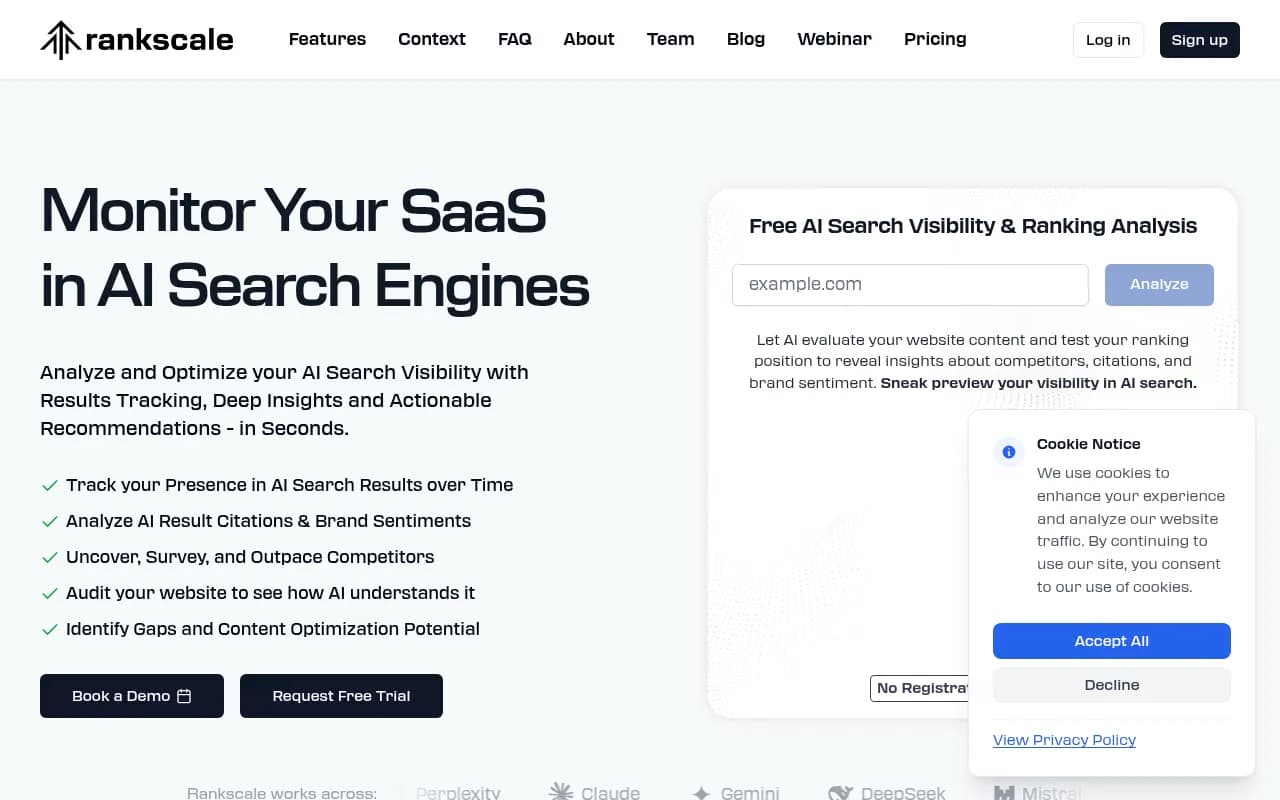
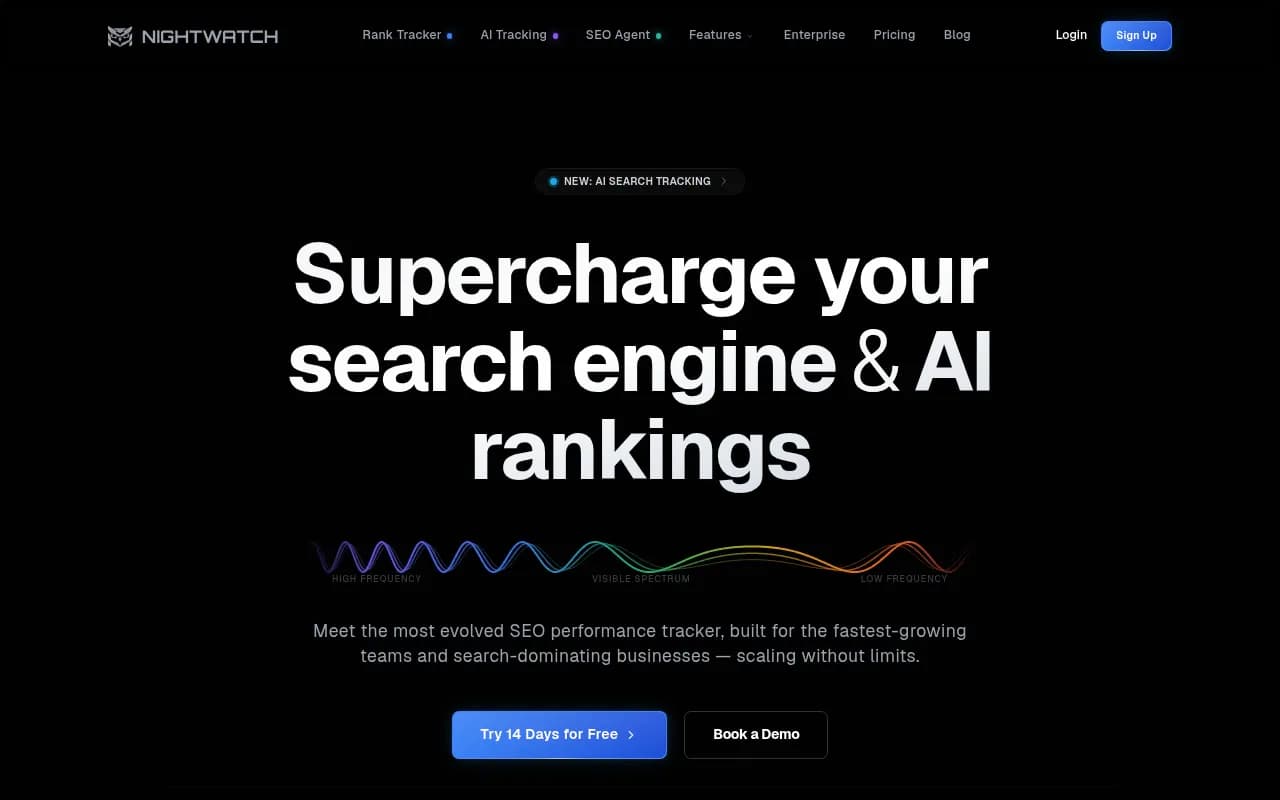
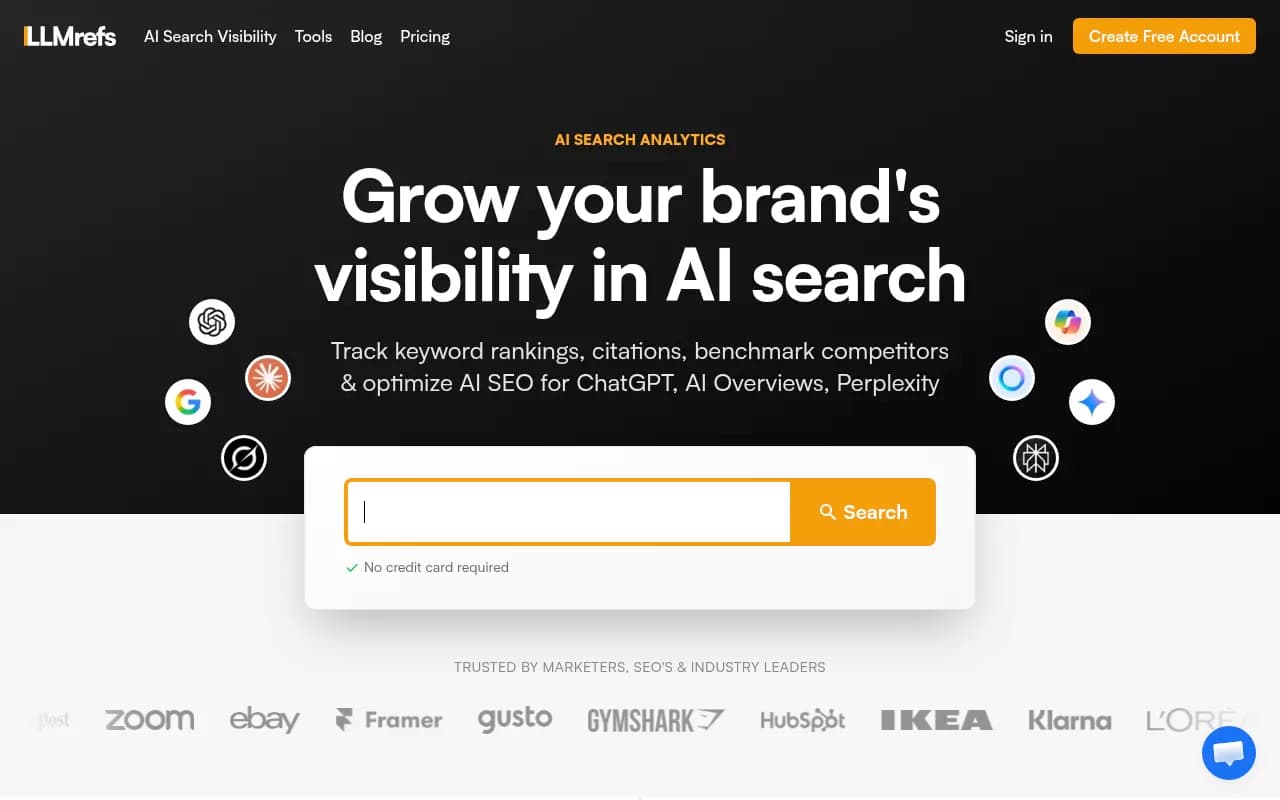
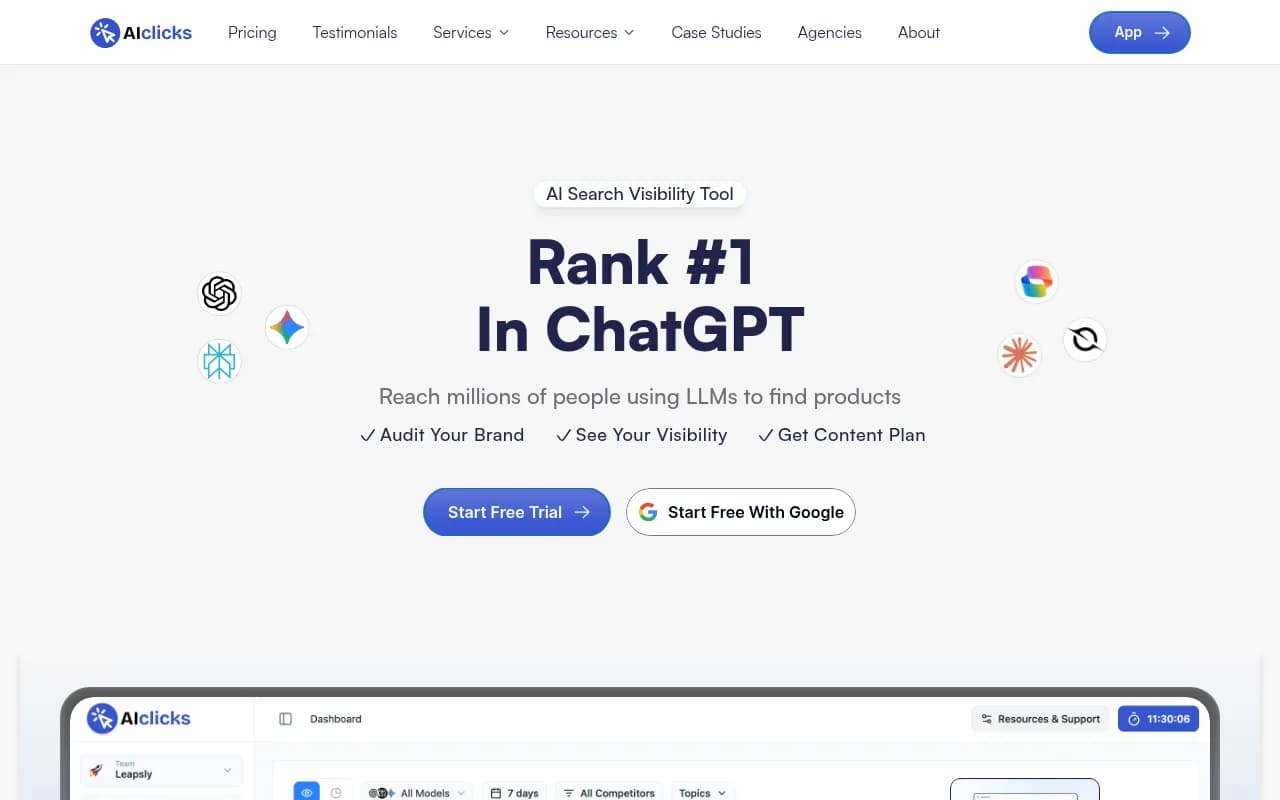
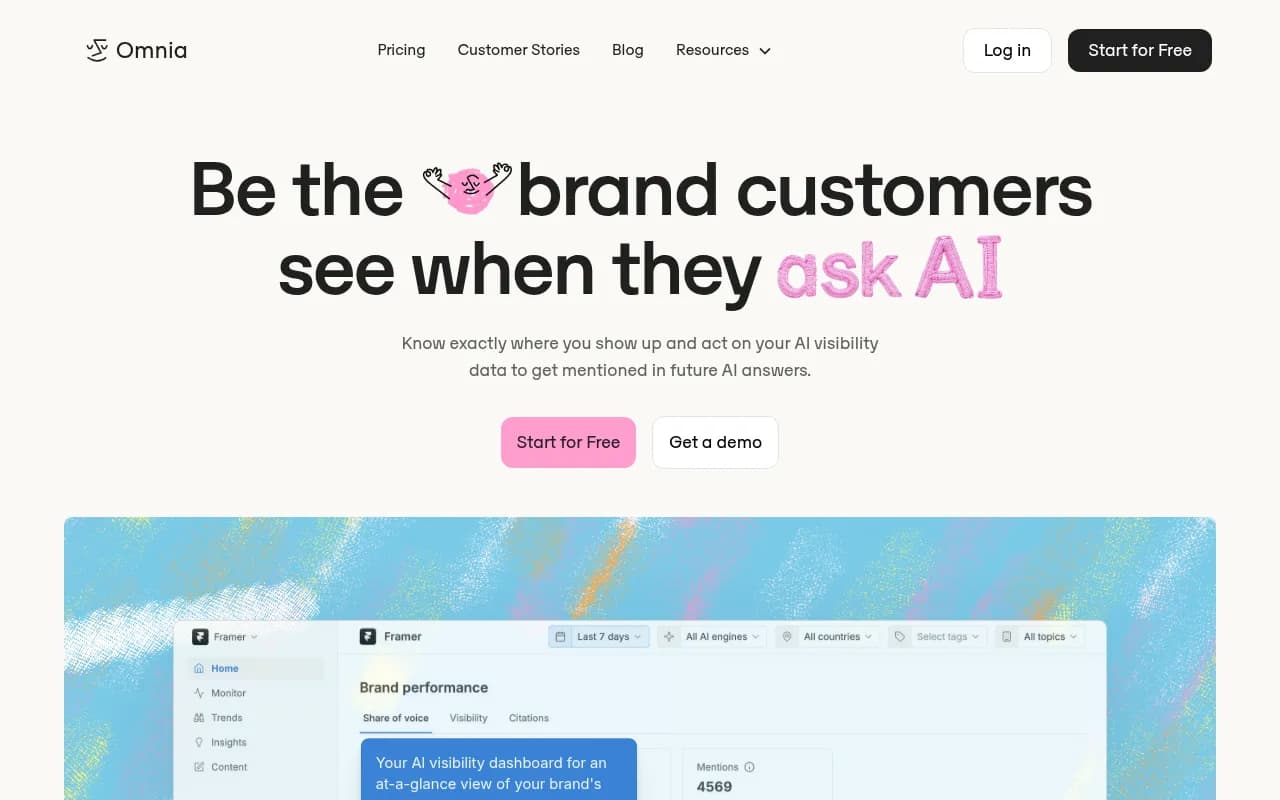
Some of these are narrower in scope but genuinely good at what they do. LLMrefs, for example, is focused specifically on tracking citations across ChatGPT, Perplexity, and Claude. Nightwatch has added AI monitoring on top of a solid traditional rank-tracking foundation. Omnia is strong on share-of-voice analytics.
What good looks like after 90 days
If you set this up properly, here's what you should be able to answer after three months:
- Which AI models cite you most often, and for which types of prompts?
- Which competitors are consistently appearing in prompts where you're absent?
- Which pages on your site are being cited, and which are being ignored?
- Has your citation rate moved since you started publishing content targeted at specific gaps?
- Is AI search driving measurable traffic to your site?
That last one requires traffic attribution -- either a tracking snippet, a Google Search Console integration, or server log analysis. The traffic from AI search is real and growing, but it shows up differently than organic traffic. Without attribution, you can't close the loop between visibility and revenue.
The brands that are winning in AI search right now aren't the ones with the biggest budgets or the most sophisticated tools. They're the ones that picked a small set of high-value prompts, figured out why they weren't appearing, published content that answered those questions well, and tracked the results. That cycle, run consistently, is what actually moves the needle.